Home Blog

Expectations vs. Reality: The AI We Thought We’d Have in 10 Years

0

The Current State of AI

While the rapid evolution of artificial intelligence has been undeniably impressive, especially in its ability to scrape massive amounts of data from the internet. It begs a critical question. We have pooled the collective knowledge of the world to power these highly capable, “agentic” AIs, but is this truly all they can muster? Is this the absolute limit of how this technology can benefit humanity?

We expected more.

As simple as that statement might be, we were collectively hoping for innovations on a scale that could end world hunger or accurately predict and mitigate catastrophic natural disasters. Whether tackling issues at a regional or global scale, we expected AI to be a shield against our greatest crises.

The Fiction of the Persona: Evangelion

In the classic anime series Neon Genesis Evangelion, the main supercomputer relies on a foundational technology called the “Personality Transplant OS,” which replicates a human-like thought process within a machine. While the show is entirely a work of fiction, its concept comes remarkably close to the goals of today’s autonomous AI agents.

If that level of technology existed in the real world today, it could theoretically be deployed to neutralize world-ending threats. Instead, if anything resembling that power does exist, it is locked behind the closed doors of wealthy nations that can afford the incredibly resource-intensive data centers required to run it.

The Guardian We Were Promised: Person of Interest

The Machine from the television series Person of Interest offers another distinct vision of AI. It represents one of the most idealistic uses of the technology in fiction, having been built explicitly to protect human lives rather than generate wealth for a select few. In the series, The Machine’s primary directive is to safeguard the country by predicting and preventing violent threats entirely.

Bearing in mind that the show debuted over a decade ago, the AI we have today, or at least what is publicly available to us, does not come close to what The Machine was capable of. Granted, it is a fictional narrative funded by a television budget, but look at our current reality. Instead of a benevolent guardian, our most visible AI breakthroughs are tools that generate deepfake videos, mimic real people, and are actively weaponized for misinformation and other malicious purposes.

The Tool vs. The Intent

Artificial intelligence is not inherently evil. As with any technology throughout human history, a tool should not be blamed for the misdeeds of the person wielding it.

Conclusion

The current iteration of AI might not be the world-saving entity the majority of people anticipated. It is unlikely to completely wipe out human employment; rather, much like the Industrial Revolution before it, it will close old doors while opening entirely new possibilities. What truly concerns us right now, however, is that the corporate hype surrounding AI is vastly outstripping the actual, tangible help it is giving to everyday people.

Image credits: Unsplash (Robynne O)

One paperwork problem – Get your Digital Nomad Visa employment documents fast from UK, EU or Singapore

0

Spain, Portugal, Italy, Croatia, Germany, Greece, Malta… almost every digital nomad visa requires proof of a professional relationship. If your client or employer won’t issue the right papers, we can help – legally, professionally, and quickly.

Over 40 countries now offer some form of digital nomad visa or remote work permit. From Europe’s startup hubs to Latin America’s tropical beaches, the opportunity to live and work abroad has never been greater.

But there’s a catch that unites almost all of them: you must prove an ongoing professional relationship with a foreign entity.

Usually, that means:

  • 📄 A certificate of employment or service agreement
  • 📑 Proof of contract duration (often a minimum of 3–6 months)
  • 💰 Invoices or receipts showing recent payments

For traditional employees with cooperative HR departments, this is a minor annoyance. For everyone else – freelancers, platform workers, consultants, or anyone with less‑than‑responsive clients – it can be a dead end.

 The global reality: Spain requires 3 months of relationship proof. Portugal’s D8 visa asks for a employment contract or service agreement. Croatia wants a recent invoice. Germany’s freelance visa needs letters of intent from clients. The paperwork is the same problem, different flag.

A single solution for a universal problem

Zedista offers a structured documentation facilitation service designed for any digital nomad visa applicant. We work with legitimate partner entities in three jurisdictions: the United Kingdom, the European Union (non‑Spanish), and Singapore. You choose the jurisdiction that best aligns with your work style or target country. Our partners then issue the required documents – certificates of employment, commercial contracts, invoices – in a format accepted by immigration authorities worldwide.

This is not a fake employer scheme. It is a transparent commercial arrangement. Our partner entity provides administrative documentation services in exchange for a fee. The documents accurately reflect a genuine contractual relationship, which is exactly what digital nomad visa laws contemplate for self‑employed and freelance applicants.

Certificate of employment / engagement

A formal letter on company letterhead confirming your role, relationship duration, and authorisation to work remotely from your destination country.

Service agreement / contract

A commercial contract that satisfies any minimum relationship period (3, 6, or 12 months). Signed, dated, and ready for submission.

Invoices & payment receipts

Professional invoices covering the required lookback period, proving ongoing activity and income flow.

How it works – same process, any country

Step 1 – Consultation. You tell us which country’s digital nomad visa you are targeting and what documentation they require. We confirm whether our service fits your situation.

Step 2 – Jurisdiction selection. Choose between a UK, EU, or Singapore partner entity. Each has different commercial characteristics; we can explain the differences, but the choice is yours.

Step 3 – Document preparation. Our partner entity issues your certificate of employment, service agreement, and a set of invoices covering the required period (minimum 3 months, extendable). Typical turnaround: 5‑10 business days. Express service (2‑3 days) available.

Step 4 – Delivery. You receive digital copies (PDF) immediately. Physical originals can be couriered if your chosen visa requires hard copies.

Step 5 – Submit with confidence. Your documents are formatted to meet the expectations of immigration authorities in Spain, Portugal, Italy, Croatia, Germany, Greece, Malta, or any other DNV‑offering country.

 Important disclosure. This service provides administrative documentation only. You remain responsible for meeting all other visa requirements: minimum monthly income, health insurance, criminal record certificate, and any country‑specific conditions. Zedista is not a law firm. We recommend consulting an immigration lawyer for your specific target country.

Which countries’ visas does this support?

Our documentation is designed to be generic enough to satisfy most digital nomad visa programmes. Applicants have successfully used our documents for:

  • 🇪🇸 Spain (Digital Nomad Visa)
  • 🇵🇹 Portugal (D8 Visa)
  • 🇮🇹 Italy (Digital Nomad Visa)
  • 🇭🇷 Croatia (Digital Nomad Permit)
  • 🇩🇪 Germany (Freelance / Freiberufler visa)
  • 🇬🇷 Greece (Digital Nomad Visa)
  • 🇲🇹 Malta (Nomad Residence Permit)
  • 🇨🇾 Cyprus (Digital Nomad Visa)
  • 🇪🇪 Estonia (Digital Nomad Visa)
  • 🇨🇿 Czech Republic (Zivno / freelance visa)
  • 🇭🇺 Hungary (White Card)
  • 🇱🇻 Latvia (Digital Nomad Visa)
  • 🇦🇪 UAE (Virtual Work Visa)
  • 🇨🇷 Costa Rica (Rentista / Digital Nomad)
  • 🇲🇽 Mexico (Temporary Residency)
  • 🇨🇴 Colombia (Digital Nomad Visa)

…and many others. If your target country requires proof of a remote professional relationship, our documents are likely to be suitable. We recommend confirming specific formatting requirements with your local consulate.

Who this service is for

  • ✅ Freelancers with multiple clients – none of whom will issue a formal certificate
  • ✅ Platform workers (Upwork, Fiverr, Toptal, etc.) – no single employer to vouch for you
  • ✅ Consultants whose clients are unwilling to provide HR‑style letters
  • ✅ Remote employees whose employer does not issue consulate‑friendly documentation
  • ✅ Anyone with a gap in their work history needing to bridge three months
  • ✅ Applicants who simply cannot afford to wait weeks for an unresponsive client

Pricing and turnaround

The service fee includes jurisdiction consultation, document preparation (certificate of employment, service agreement, and three months of invoices), and digital delivery. Physical courier is available at cost.

Standard service: 5‑10 business days.
Express service: 2‑3 business days (additional fee).

For more detail, reach out to [email protected] or visit their site: https://zedista.com

You Do Not Need to Invest in the IPO of SpaceX, Anthropic, and OpenAI

0

Not advice. Not a discouragement. An opinion. Shoot holes at it if you want.

To invest or not invest. Timing.

What is the most relevant question today?

That is where we should start because the framing matters. The breathless coverage, the roadshow, the 21 banks, the ticker symbol SPCX going live on Nasdaq on June 12, the $1.75 trillion valuation, the $75 billion raise that would make it the largest IPO in stock market history — all of it conspires to make the question feel urgent. Binary. You are either in, or you are a fool who missed it.

But the more honest question is not about timing. It is about what is actually being produced anymore, when in fact nothing is being produced anymore. Not in the sense that matters. We are deep in the financialisation of everything, where the structure of the deal has become the product, and the IPO is no longer primarily an instrument of capital formation. It is an exit. Dressed up, very expensively, as an opportunity.

The IPO of the past is not the IPO of now.

The general idea, historical, textbook, and practical, is that the purpose of an IPO for the vast majority of companies was and is about raising funds for the business. That was the point. Capital to build, to hire, to scale, to do the thing the company was formed to do.

There are other considerations, of course, and there are bundled interests by several parties — including governments, investors, founders, and employees — but the primary goal is to raise funds for the business.

What has changed is not the structure. What has changed is the scale and depth of the financialisation of the IPO, and the proportion of interests that is not about partaking in the growth and operation of a business but in the exit of investors and founders. That is what an IPO has quietly become, at least at this scale and in this era.

This is not a zero-sum game but if you are a retail investor caught up in enthusiasm, with FOMO, we do not advise or deter specific actions. But do understand the fact that the vast majority of money that will be extracted from the market and into the pockets of founders will be coming from the likes of ordinary citizens like you.

The frenzy benefits the lucky that are already there.

Imagine you are beside a lake or a river, or a pond, with fish and other creatures like ducks and swans. Along this stretch, along this coast, at some random point, a good elderly stranger brings forth loaves of bread. Not leftovers, but just goodwill and kindness for gentle creatures.

From an ecosystem perspective, who gets fed? Who benefits from this? Who wastes energy? And, finally, who won’t be bothered?

It is all about being at the right place at the right time. Or being in the wrong place at the wrong time, when crumbs of bread start being cast into the water.

No difference from a startup or an upstart. A large part of money, early on, will benefit those who are already in place and in time will benefit when the frenzy begins. Of course, there will be those who get more or less; the bigger you are, the more influential you become. Or probably, you are just in the periphery, and you have the skill to partake, but you were simply not close enough to take action.

And then there will be those creatures who will be at the wrong place at the wrong time. This is the IPO. These are retail investors. Waste time, waste energy, FOMO to get into the fray — invest resources and gain nothing, or partake in the frenzy and get gobbled up by the bigger powers. Bottom line: net loss for you.

This is the typical IPO scenario. Do understand this is the mode for each of you.

Finally, those in bliss — blissfully unaware — just carry on with their lives. They probably escape altogether. But life goes on.

Just understand: the IPO is not a pure exercise in raising funds. Before, this was the predominant reason why. But for the controversial ones — the ones of this scale, of this moment — it is about the exit. And this will come for you, so watch out.

Hype curve. Long.

The time to invest in a company, although you cannot time it, actually, is with conviction, through private markets, or through lucky proximity, where early means a few months, a few years. And then, if you have enough resources, the girth, if you are one who can join the frenzy and overpower or outpace others, like a shark joining the frenzy, the intensity of the shark, even late in the game, will win.

Probably during the peak of the frenzy and just afterwards — whether people are exiting or exercising their options — that is where the real game is played.

If you are a normal creature at the right place, right time, invest with conviction after the option. Dilute early on, or invest afterwards, when the dust settles. To invest in what’s left. Hopefully, instead of investing in a frenzy, you invest in a business and an ecosystem — whether for the short term or the long term, in the future.

Adding insult to the injury.

If it’s any consolation, we all know that logically, even taking into consideration the general irrationality of markets, investing or joining during an IPO, as outlined above, is already unnatural. Or naturally unwise.

You join an IPO, you invest in an IPO, for relatively bigger gains. And yes, yes, yes — from different schools of thought: value-based, growth-based, FOMO-based — this is not the only consideration. But it does not make sense to invest in an already inflated stock. Not given all the preceding arguments.

SpaceX is targeting a $2 trillion valuation. The roadshow kicked off this week, demand is reportedly strong, and the listing is days away. Starlink alone accounts for an estimated 58% of SpaceX’s total revenue. The valuation prices in not just what the company is today, but everything it might ever become — satellite internet dominance, space-based data infrastructure, interplanetary ambition — all of it, now, before any of it has fully arrived. History says IPO stocks pop an average of 30% on their first day of trading. History also has things to say about what follows.

So there you have it. Not advice, not a discouragement. This is probably an opinion you can shoot holes at. But, linking back to the first three arguments for this:

The harsh but simple hard truth.

We have probably reached a point of exhausting all options in all these frenzies. The only remaining beneficial action, for one’s own sanity and health and wider society, is to perhaps consider just walking away from all of it.

You can delete your social media account. You can call, or text, or meet your family in a different way. There are other apps you can use. You don’t need three billion apps to connect with three billion people. You don’t need to know what is happening with other people’s lives. You only need to know what is happening in your own.

They created this magnet of attention that is irrelevant. You will be forced to hand over your money by the system. The system and the meta-system will be forced. They are above the law. They will change the rules, even if it is evil.

Unless you are already invested before the growing frenzy right now, or you have significant resources to manipulate and shift trends within intra-day or across trading days, you are not the shark. You are the bread.

You do not need to invest in the IPO of SpaceX, Anthropic, and OpenAI.

You never did.

The views expressed here are purely the author’s own. This is not financial advice.

NASA’s X-59 Aircraft Flies Supersonic for First Time

0

NASA’s experimental X-59 aircraft marked a major milestone Friday, June 5, when it flew faster than the speed of sound for the first time, setting the stage for demonstrating its quiet supersonic capabilities later this year. 

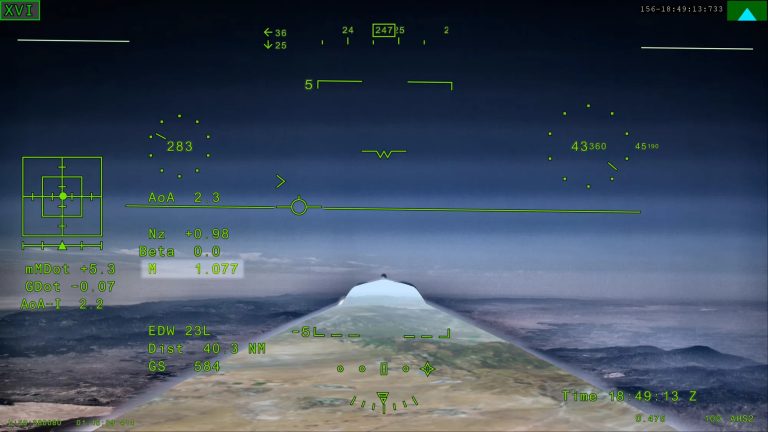
NASA test pilot Jim “Clue” Less took off and landed at Edwards Air Force Base in California, reaching a top speed of approximately Mach 1.1 (713 mph) and altitude of 43,400 feet. The X-59’s flight began at 11:08 a.m. PDT and lasted 81 minutes, with the team focusing on flying qualities at both subsonic and then supersonic speeds.  

In the coming days, we expect to take the next step and push to Mach 1.4

Jared Isaacman
NASA Administrator

”X-59 is getting ready for its quiet supersonic debut. Since the aircraft’s first flight on Oct. 28, 2025, the team has made tremendous progress, flying 16 times in the last 90 days and getting into a steady test rhythm. In the coming days, we expect to take the next step and push to Mach 1.4,” said NASA Administrator Jared Isaacman “I’m grateful to the NASA team and Lockheed Martin Skunk Works for their help getting us to this point, and I hope this is the first of many collaborations as we rebuild NASA’s X-plane portfolio.” 

The X-59 is designed to fly at supersonic speeds while creating only a quiet thump instead of a loud sonic boom. For this flight, a NASA F‑15 chase plane flew nearby to monitor the X‑59. The loud sonic booms from the F-15 obscured any sound made by the X-59.  

“The X-59’s first supersonic flight is a testament to America’s enduring leadership in science, engineering, and aerospace innovation,” said Michael Kratsios, Assistant to the President for Science and Technology and Director of the Office of Science and Technology Policy. “This achievement comes as the Trump Administration continues work to unleash supersonic flight and enable American ingenuity.” 

This first supersonic flight is a significant milestone, but an event even more critical to the mission is upcoming. In just days, the aircraft is expected to make its first “mission conditions” flight, reaching a cruising speed of Mach 1.4 (925 mph) and altitude of approximately 55,000 feet. The X-59 also will be accompanied by a chase plane for this flight.  

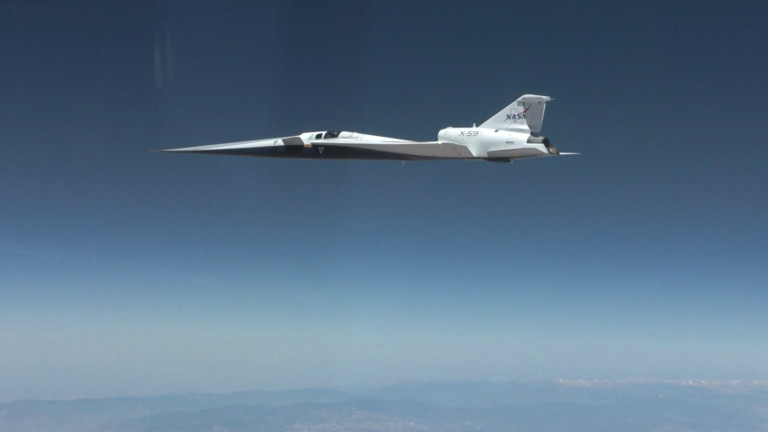
NASA’s X-59 quiet supersonic research aircraft completed its first supersonic flight Friday, June 5, 2026, marking the first time the aircraft exceeded the speed of sound in support of NASA’s Quesst mission. The milestone represents a major step in flight testing as the aircraft expands into the supersonic portion of its flight envelope. NASA / Lori Losey

This speed and altitude are the base conditions for the X-59 when it will eventually fly over several U.S. communities enabling NASA to gather data about how people may perceive its quiet thump. NASA will share this data with U.S. and international regulators to help establish new data-driven noise standards to enable a future viable market for supersonic commercial flight over land. 

For the last several months, the X-59 has been participating in an ongoing series of flights where the plane has been flying at a wide range of speeds and altitudes – a process known as envelope expansion. These tests are the first phase of the X-59’s flight testing. They are focused on performance and involve chase plane monitoring. When the aircraft completes this phase it will enter another, focused on its sound profile in order to verify its quiet thump capability.  

The X-59 is the centerpiece of NASA’s Quesst mission, which aims to demonstrate quiet supersonic flight and help enable commercial supersonic flight over land worldwide. These advancements will help travelers reach their preferred destinations faster, spending less time in the air. 

Through Quesst’s development of the X-59, NASA also will deliver design tools and technology for quiet supersonic airliners that will achieve the high speeds desired by commercial operators without disturbing people on the ground. NASA will validate design tools through ground and flight testing, providing U.S. aircraft manufacturers the ability to explore new quiet supersonic concepts, and provide them with confidence that their resulting designs will meet quiet flight requirements.  

Read more about NASA’s Quesst mission and the X-59.

By: Kristen Hatfield
Public Affairs Specialist
Originally published at: NASA

Ink vs Pixels. What you miss versus what you are actually missing.

As someone who was brought up to learn using pen and paper, we were curious on what are its advantages and disadvantages compared to using a digital medium. While digital media were already available starting the early 2000s. We could say it has become more prevalent just in the recent decade, particularly when the coronavirus pandemic.

But we are not here to discuss online learning vs in-person learning. Let us take a gander on writing on paper versus using electronic devices like a tablet or something even more specific like the reMarkable Paper Pure.


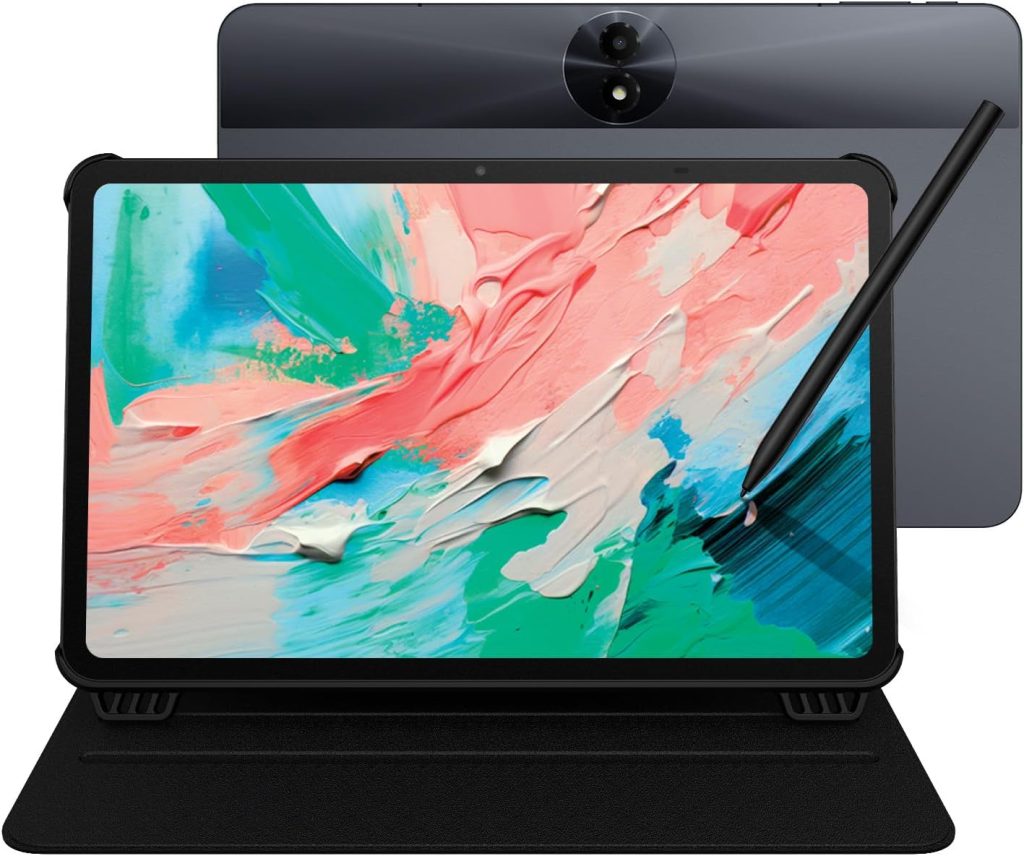
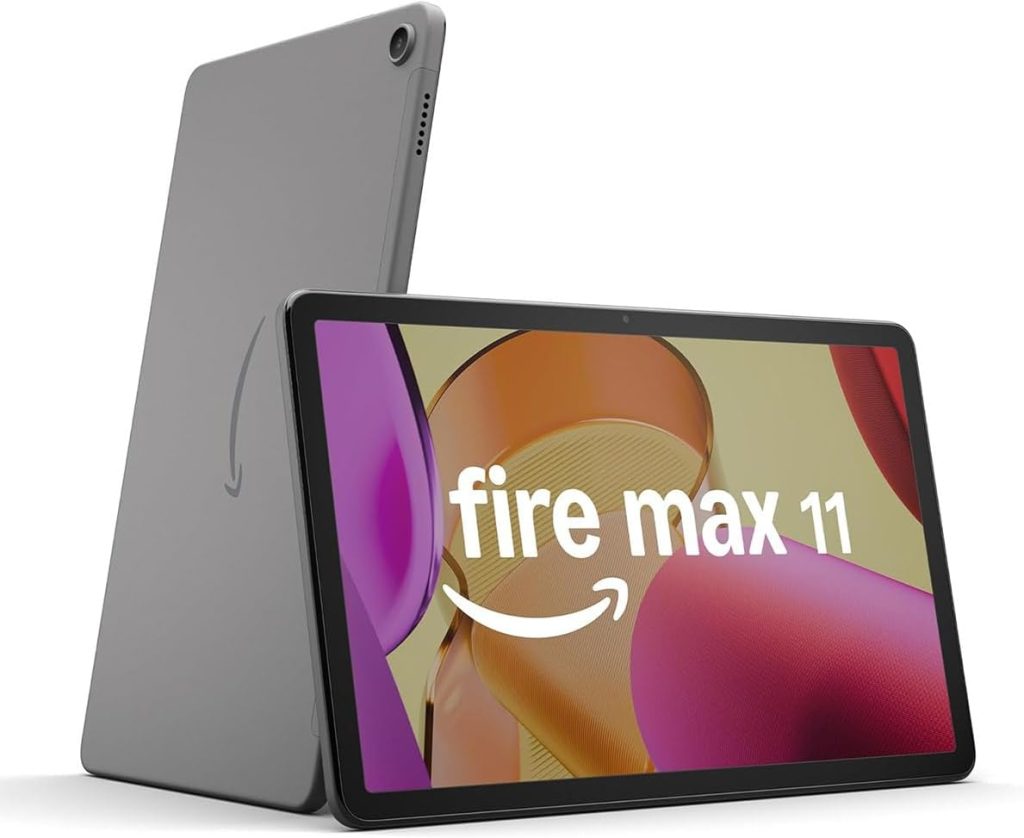
TCL NXTPAPER 11 Gen 2

What you miss versus what you are actually missing

If you grew up using pen and paper, we might’ve gotten a large bias and preference for it it due to nostalgic feelings. One cannot simply forget their first time. This is true also when starting to learn. From parents or guardians teaching how to write the alphabet to performing mathematical problems in school.

The body has also gotten used to how to redo your mistakes by using an eraser to clear the writing. Now with a simple backspace on your keyboard or screen you can remove the misprint without leaving any smudge. 

But convenience shouldn’t be confused with competence.


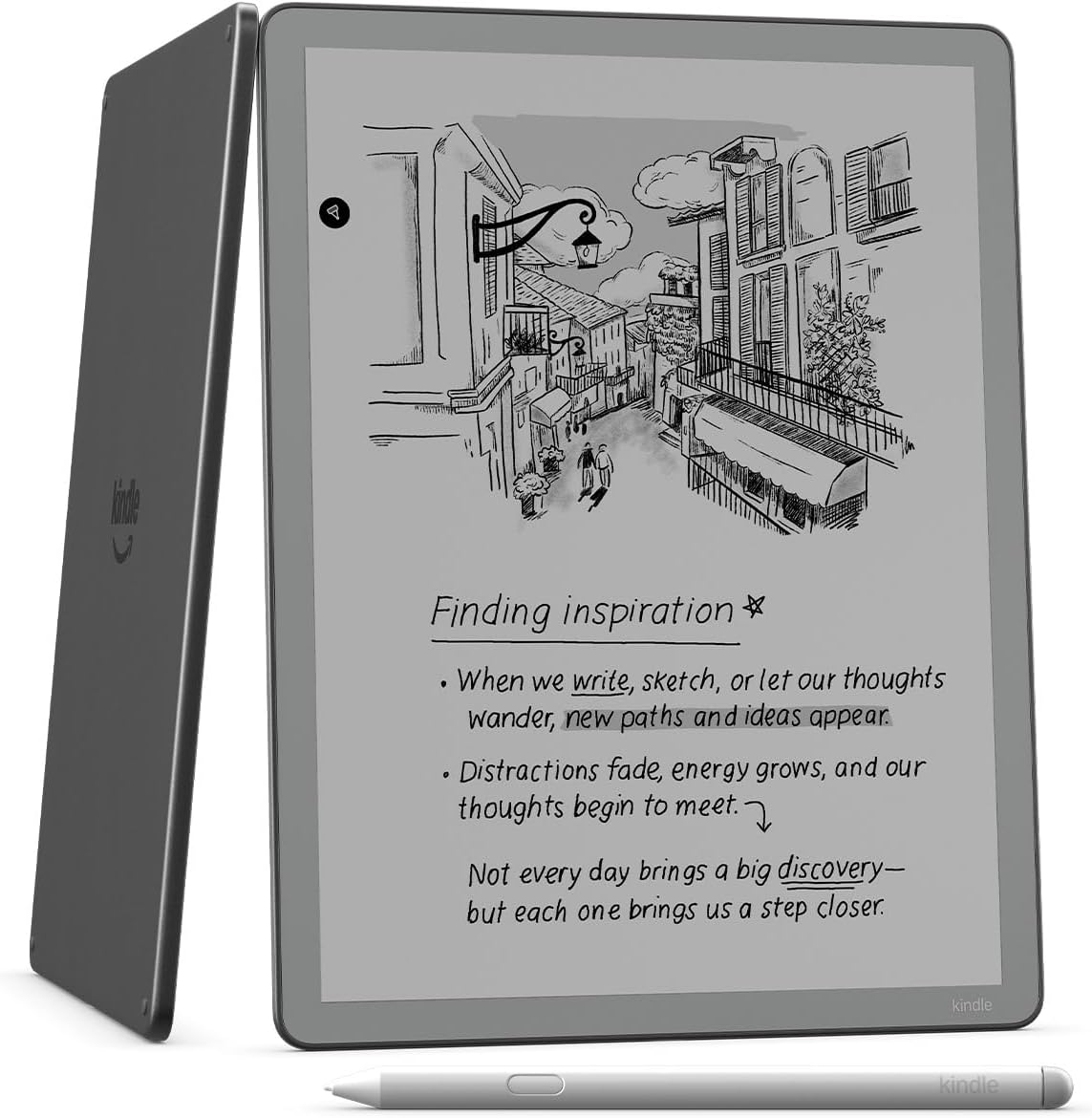
Amazon Kindle Scribe


We don’t intend to disregard the traditional way of writing and thinking. With the digital notebook like the reMarkable Paper Pure, you can relieve this experience if you’ve been used to the pen and paper. As it provides a distraction-free medium, you will not be tempted to use other multimedia features as you have with your smartphones. 

Sharing notes and having discussion has also never been easier with the advent of digital media and the internet. Where in the past you had to photocopy the notes and give all the parties involved a copy, it now just takes a simple click of the “share” button and everybody has access to it.

One thing we would miss as we use modern devices, is probably the feeling of turning the pages of the notebook, hearing the crisp rustle of paper as we move from one to the other, feels like progress or the next page of our adventure.


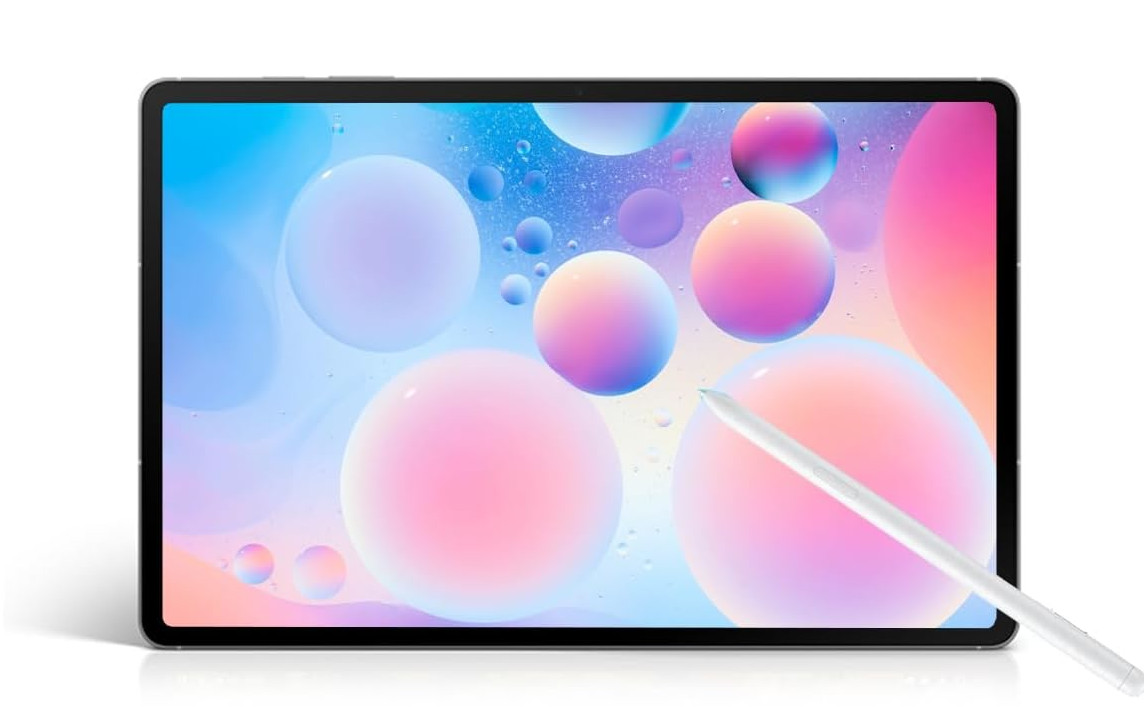
Samsung Galaxy Tab S10

Everything The reMarkable Paper Pure Actually Does

0

A closer look at the features and specs behind the quiet revolution

This is the second in a two-part series on the reMarkable Paper Pure. The first piece explored the philosophy behind the device — why a distraction-free paper tablet makes a compelling counter-argument to the era of ambient AI. This piece gets into the specifics: what it does, how it does it, and how it stacks up against the rest of the reMarkable lineup.

The most important thing about the reMarkable Paper Pure is what it doesn’t do. But that quietness isn’t emptiness — its restraint applied to a genuinely capable device. Underneath the calm, distraction-free surface is a carefully designed tool built for people who take their thinking seriously.

Here’s what’s actually inside.


Amazon Kindle Scribe


Canvas Monochrome, Done Right

The Paper Pure’s 10.3-inch display is built on E Ink Carta™ 1300 technology, which reMarkable brands as their Canvas display. It renders at 1872 × 1404 resolution — 226 pixels per inch — giving text and handwriting a crispness that feels, frankly, closer to ink on paper than anything a backlit LCD or OLED can claim.

The cover lens is matte glass, textured to replicate the slight drag of paper under a pen. This isn’t cosmetic. The resistance of writing on glass — the micro-friction that feeds back through your fingers — is part of why handwriting engages the brain differently than typing. The Paper Pure’s surface engineering takes that seriously.

The glass itself is Gorilla Glass 3, glare-free and usable in direct sunlight. Pen-to-ink distance sits at 0.8 mm, meaning the mark appears almost exactly where the nib touches — a spec that matters enormously if you’ve ever felt the slight disconnection of cheaper e-paper stylus experiences. The device also supports full palm rejection, so you can write naturally without your hand sending phantom marks across the page.

The display does not have a frontlight or reading light. That’s a deliberate feature distinction between the Paper Pure and the higher-end Paper Pro. For those who work primarily in daytime conditions and want the absolute maximum contrast at the lowest hardware cost, the Paper Pure’s display is the right trade-off. It delivers 20% higher contrast than the reMarkable 2 it succeeds.


TCL NXTPAPER 11 Gen 2

Hardware That Earns Its Weight

At 360 g (0.79 lb) and 6 mm thin, the Paper Pure is lighter than a standard hardback notebook and barely thicker than a pencil. Its dimensions — 228.1 × 187.1 mm — map closely to an A4 sheet, which makes switching between paper and screen feel intuitive rather than disorienting.

The internal engine is a 1.7 GHz dual-core Cortex-A55 processor, paired with 2 GB of LPDDR4 RAM. Performance gains over the reMarkable 2 are tangible: the device responds 50% faster, which translates into writing that keeps pace with fast thinking, without the occasional stutter that plagued earlier generations.

Storage comes in at 32 GB — enough for thousands of notebooks and PDFs, with no need to think about housekeeping for most users. Connectivity is Wi-Fi on both 2.4 GHz and 5 GHz bands, with a USB-C port for charging and data transfer.

The 3,820 mAh battery delivers up to three weeks of use on a single charge (based on an hour of daily note-taking). That’s 30% better than the reMarkable 2. Practically speaking, it means the Paper Pure is a device you charge roughly when you get a haircut — not something you hunt for a cable for at the end of every day. The battery is built-in but replaceable, and the device is held together with screws and snaps rather than glue, meaning a repair specialist can service most components without writing off the whole unit.

On sustainability: the rear cover is a polymer alloy made from 73% recycled materials, the battery uses 100% recycled cobalt and lithium, total recycled material content is 38%, and the device’s total lifecycle carbon footprint is 28.7 kg CO₂E. In an industry that routinely treats hardware as disposable, this level of specificity is unusual and worth noting.

The Writing With Nine Tools And One Surface

The Paper Pure ships with what reMarkable calls a Marker — a lightweight active pen with no battery required. The Marker Plus (available separately or in the bundle) adds a subtly textured grip and a built-in eraser on the reverse end. Both use active pen technology for precision, and the Marker snaps magnetically to the side of the device where it charges wirelessly.

On-screen, the Paper Pure offers nine writing tools: ballpoint pens in multiple thicknesses, pencil for sketching, highlighters, and erasers. There are selection tools for copying, cutting, pasting, moving, resising, rotating, and flipping content — the full toolkit for someone who treats their notes as working documents rather than finished products.

Handwriting-to-text conversion is powered by MyScript and supports over 30 languages, including English, French, German, Spanish, and Italian. In one tap, handwritten notes become typed text that can be sent as an email, pasted into Slack, or dropped into a document. This is where the device’s relationship with digital tools becomes most fluid — your handwriting goes in, legible text comes out, and the original stays exactly as you wrote it.


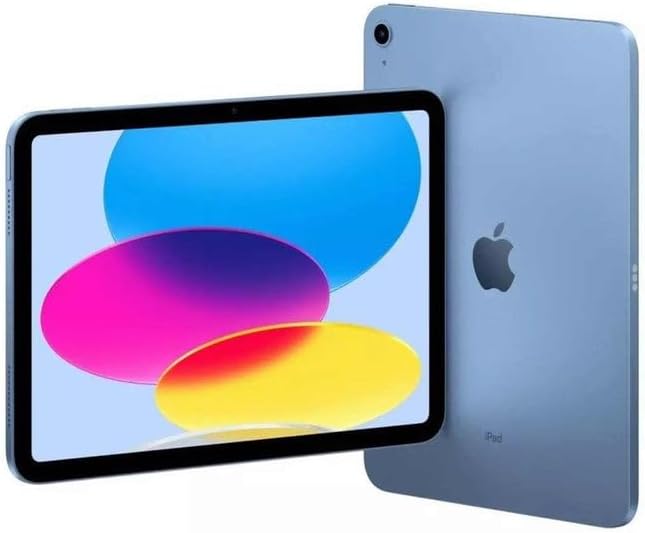
Apple iPad (2025)

Finding Your Notes When It Counts

The Paper Pure’s organisational system is built around folders, tags, and search. You can label notebooks, apply keyword tags to individual pages, and — with a Connect subscription — search across handwritten content. That last capability is more significant than it sounds: the ability to search your own handwriting means that your paper notes become a retrievable archive rather than a pile of beautiful artifacts you can never quite locate.

Templates are included out of the box: weekly planners, to-do lists, grids, and lined notebooks covering most common note-taking scenarios. The Connect subscription expands the template library further, and includes calendar-integrated meeting notes — a feature that pre-populates new notebooks with the date, time, and attendees from your calendar, so you arrive at every meeting with structure already in place.

Collaboration And Connectivity

reMarkable Paper Pure

The Paper Pure is not an island. It integrates with Google Drive, OneDrive, Dropbox, and Microsoft Word. The companion apps — available for macOS, Windows, iOS, and Android — let you view, organise, and import files from any device. Browser extensions for Google Chrome and Microsoft Office enable “Read on reMarkable,” which sends web articles and Word documents directly to your tablet for distraction-free reading and annotation.

Screen sharing lets you mirror your paper tablet onto an external display, transforming it into a live whiteboard for meetings or teaching. Any page or document can be exported as a PDF, PNG, or SVG and sent by email directly from the device.

Connect subscribers get access to additional outgoing integrations — including Slack and Miro — which means handwritten content can flow into the tools your team already uses, with AI-powered conversion handling the handwriting-to-text step quietly in the background.

Surprisingly Serious Security

The Paper Pure treats your data with a level of care that most productivity apps don’t bother matching. Data is encrypted on-device, at rest, and in transit. The device supports multifactor authentication, secure boot, developer mode, and an optional 4–8 digit PIN. It locks automatically after 20 minutes of inactivity. These aren’t the specs of a gadget; they’re the specs of a device built for people whose notes contain things worth protecting.

The reMarkable Lineup. Where The Paper Pure Sits.

The Paper Pure is one of three current devices in the reMarkable family. Here’s how they compare at a glance:

Paper PurePaper Pro MovePaper Pro
PriceFrom $399From $449From $629
Display10.3″ monochrome7.3″ color11.8″ color
Resolution226 PPI264 PPI229 PPI
Weight360 g230 g525 g
Dimensions228 × 187 × 6 mm195.6 × 107.8 × 6.5 mm274.1 × 196.6 × 5.1 mm
BatteryUp to 3 weeksUp to 2 weeksUp to 2 weeks
Storage32 GB64 GB64 GB
Reading lightNoYesYes
Color displayNoYes (20,000 colors)Yes (20,000 colors)

The Paper Pure is the right choice for anyone who writes more than they annotate in color, works primarily in well-lit environments, and values long battery life and a full A4-equivalent writing surface over portability. The Pro Move is the traveller’s device — lighter, more portable, but smaller. The Pro is the power user’s tool — larger, color-capable, and best for those who annotate PDFs and read extensively alongside writing.

For the vast majority of people drawn to the core reMarkable premise — a place to think clearly, without the ambient hum of the connected world — the Paper Pure is the most focused expression of that idea. It does what a paper tablet should do, it does it extremely well, and it gets out of the way.

The One Spec That Doesn’t Appear On The Page

None of the above explains the most important feature of the Paper Pure: the sensation of having your full attention returned to you.

We live in an environment where most of our devices are optimised — often at enormous engineering expense — to ensure we never quite settle into a single thought. The Paper Pure is optimised for the opposite. Every spec above, from the matte glass to the three-week battery to the absence of a notification system, is in service of a single output: uninterrupted thinking.

That’s a specification worth paying for.


If this isn’t for you, consider these


The Splinternet Comes for European Supply Chains Why Fragmentation Is Now a Boardroom Problem

0

For a brief period in the early 2010s, it seemed that digital globalisation would conquer what geography could not. A logistics manager in Rotterdam could share real-time sensor data with a warehouse in Chicago using the same cloud dashboard. A French automotive supplier could run its just-in-time inventory on an American platform while its German parent company audited the books from London. The world felt flat, and the internet felt borderless.

That era is now a memory.

We are living through the fracturing of the global digital commons, a phenomenon the World Economic Forum has termed the “Splinternet.” Different jurisdictions are building regulatory firewalls, data localisation laws and conflicting technical standards. For European supply chains, manufacturing networks and financial services firms, this fragmentation is no longer an abstract policy debate. It is an operational bottleneck that is already adding cost, latency and legal exposure to everyday business processes.

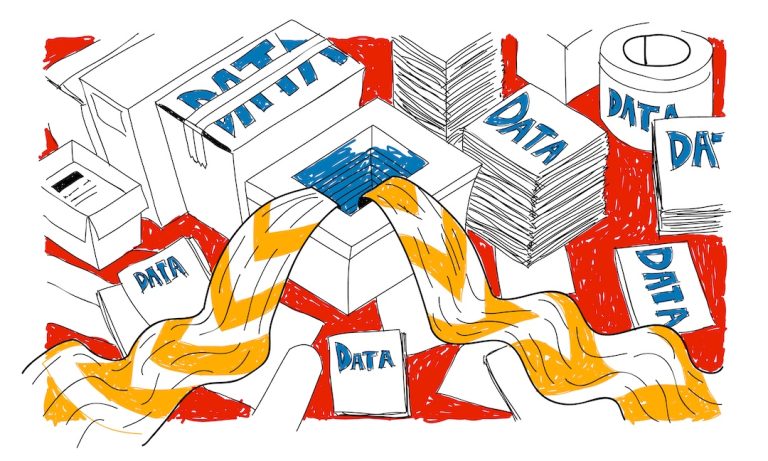
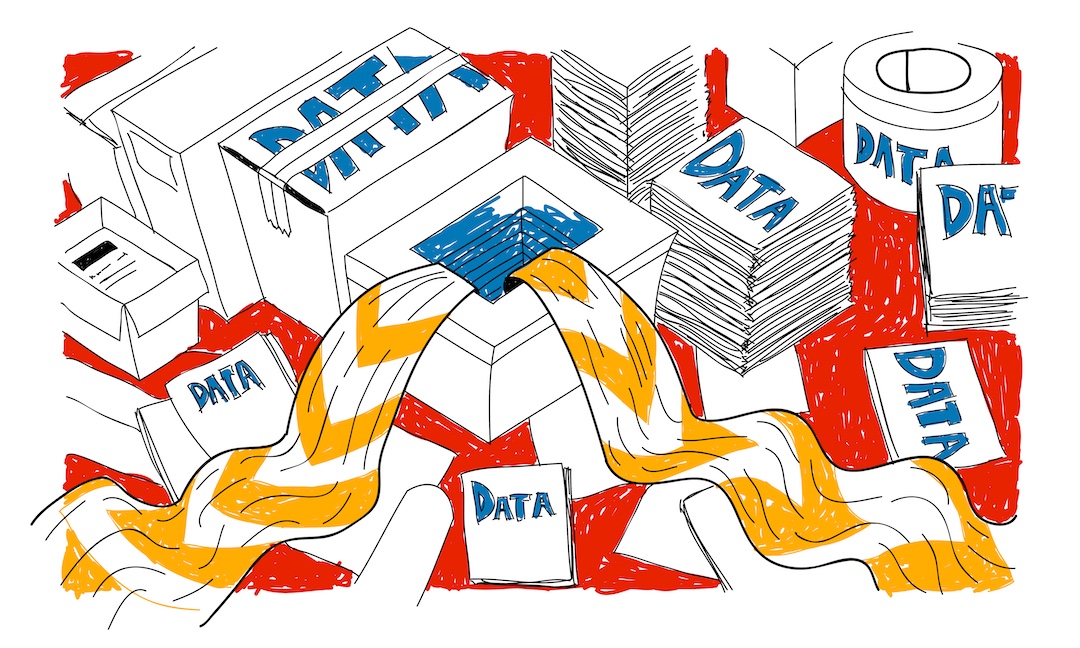
Illustration of data storage

The Three Layers of Fragmentation

The first layer is regulatory. Since Brexit, British firms have discovered that data flows which were once seamless now require legal justification. The EU’s adequacy decision for the United Kingdom is under constant review, and any future divergence could see data transfers between London and the continent grind to a halt. Meanwhile, individual EU member states are experimenting with their own data localisation requirements, creating a patchwork of rules from Berlin to Madrid. A single European logistics route might now involve three different legal regimes for the same data packet.

The second layer is geopolitical. The US CLOUD Act, Chinese data laws and Russian storage requirements mean that a European company using an American cloud provider cannot be certain which government has priority access to its information. For a manufacturer with dual-use technology or a pharmaceutical firm holding clinical trial data, that uncertainty is a dealbreaker. Investors are beginning to ask pointed questions about data jurisdiction in due diligence, and the wrong answer can crater a valuation.

The third layer is technical. Even where laws permit data to move, the infrastructure is increasingly balkanised. Hyperscale cloud providers are building region-specific instances, but these are still governed by global terms of service. True sovereignty requires not just local servers but local legal control, local audit rights and local ownership of encryption keys. Most off-the-shelf solutions do not offer this.

The Supply Chain Wake Up Call

Consider a concrete scenario that is already playing out across European industry. A British manufacturer sources components from an Italian supplier. The production data is hosted on an American cloud platform with servers in Ireland. The finished goods are shipped to a German distributor whose compliance team requires proof that no US law enforcement has accessed the production data.

Under current arrangements, that proof is impossible to provide. The American cloud provider cannot legally guarantee that data has not been accessed under a secret national security letter. The German distributor cannot accept the legal risk. The British manufacturer loses the contract not because of price or quality, but because of data jurisdiction. This is not a hypothetical. It is happening today in automotive, aerospace and medical devices.

The same logic applies to financial services. A French asset manager using a US-based analytics platform may find that its portfolio data is subject to American discovery rules in a dispute that has nothing to do with France. A Swiss bank using a global customer relationship management tool may be unable to certify GDPR compliance for its EU clients. In each case, the dependency on foreign-controlled infrastructure creates a legal vulnerability that competitors who have already decoupled do not share.

The Resilience Imperative

The answer is not to retreat from global trade. European industry remains deeply integrated with American and Asian partners, and that is a source of strength. The answer is to build digital infrastructure that allows European firms to choose when and how they share data, rather than having that decision made by a distant legal system.

This requires a shift in mindset from convenience to resilience. Cloud platforms are like public roads, they are efficient when traffic flows normally, but they offer no alternative route when a bridge collapses. A resilient digital architecture, by contrast, includes private lanes, local control points and the ability to isolate sensitive data from foreign legal reach.

Achieving this resilience is not a matter of buying a different software subscription. It requires a systematic audit of every data flow, every vendor contract and every legal dependency. It requires repatriating data from foreign clouds to infrastructure that sits exclusively under European jurisdiction. It requires replacing software-as-a-service tools with auditable open source alternatives that can be run on owned hardware. And it requires transferring full code ownership and key management to internal teams so that no external party has backdoor access.

The Quiet Shift to Sovereignty

Across Europe, a quiet shift is already underway. Mid-sized manufacturers, family-owned logistics firms and public hospitals are quietly moving their core operations off American hyperscale clouds. They are not doing this for political reasons. They are doing it because their compliance officers have read the legal opinions, their insurers have started asking about data jurisdiction, and their boards have realised that the cost of migration is lower than the cost of a single regulatory violation.

Firms such as Totus Technologies specialise in this exact transition. Their approach begins with a rigorous technology audit, cataloguing every platform, dependency and data flow. From there, they design a phased independence roadmap tailored to the organisation’s risk tolerance and operational constraints. They execute migrations with a focus on zero disruption, and crucially, they ensure that internal teams own everything at the end of the process. Their success is measured by how quickly the client no longer needs them.

For a British logistics company worried about the future of EU data flows, or a German manufacturer seeking to insulate itself from US legal reach, this kind of structured migration is becoming a competitive necessity. The firms that complete it now will have a decisive advantage over peers who wait for a crisis to force their hand.

Looking Ahead to a Fragmented Future

The Splinternet is not going away. If anything, the trend toward digital fragmentation will accelerate as more countries pass data localisation laws and as geopolitical competition intensifies. The EU’s upcoming enforcement of the Data Act and the AI Act will add new layers of complexity for firms still reliant on non-European platforms. Brexit has introduced permanent uncertainty into UK-EU data flows that no trade deal can fully resolve.

The goal is not to build a fortress around your data. It is to ensure that your digital infrastructure serves your business strategy rather than undermining it. Because in a fragmented world, the ability to control your own information is not a luxury. It is the only reliable hedge against the unpredictable currents of geopolitics and regulation.


This article is sponsored by Totus Technologies. For a structured audit of your organisation’s digital dependencies and a phased roadmap to operational independence, visit totustechnologies.com.

I watched Artemis II lift off — and witnessed the first humans venture to the Moon since 1972

0

Gordon Osinski, Western University

Even from a distance of several kilometres, the Artemis II rocket looked huge.

Then, there was a moment that felt like an eternity, as around 2,600 metric tons of spacecraft lifted off.

I was honoured to receive an invitation from the Canadian Space Agency to attend this historic launch at NASA’s Kennedy Space Center. I am a professor, an explorer and a planetary geologist. As a member of the First Artemis Lunar Surface Science Team, I have been supporting NASA in developing the geology training for Artemis astronauts.

This launch was one of the most thrilling, but stressful few minutes of my life. Space missions are hard and can be dangerous, especially missions like this where there are so many firsts.

The final 10-second countdown seemed to come so quickly, and then at 6.35 p.m., EDT, on April 1, 2026, the NASA launch commentator uttered those famous words: “We have liftoff.”

I think everyone around me held their breath for those first few critical seconds, and then the significance of the moment sank in. We had just witnessed history in the making. This was the launch of the first crewed flight of NASA’s Artemis program, and the first time since 1972 that humans have ventured to the Moon.

Jeremy Hansen will be the first non-American to fly to the Moon and will make Canada only the second country in the world to send an astronaut into deep space.

Christina Koch and Victor Glover will also make history as the first woman and person of colour to fly to the Moon.

The build up to launch

The first launch windows for Artemis II came and went earlier this year, following issues discovered during wet dress rehearsals. But this time felt different. NASA rolled out the SLS (Space Launch System) rocket on March 20 and decided to skip the wet dress rehearsal and go straight for launch.

You could sense the confidence building.

On the evening before launch day, the Canadian Space Agency held a reception for all the Canadian invitees, as well as several NASA guests. It was like a “who’s who” of the Canadian space program, including most of Canada’s retired astronauts.

There were some lighthearted moments — like when MDA Space CEO Mike Greenly announced there were the limited edition Tim Hortons “moonbits” for all — but you could tell there was also a lot of emotion in the room.

There were some tears as a video message from Jeremy Hansen’s son, Devon, was played. For me the moment came when I spoke with Jeremy’s parents, who I had met several years earlier. They still live in Ingersoll, not far from London, Ont., where Jeremy went to high school.

Returning humans to the Moon

At the time of writing, the crew have now had their first sleep in Integrity, the name of their Orion spacecraft.

They are now in a high-Earth orbit, reaching a maximum of 74,000 km from Earth. This is already a huge distance when you consider the orbit of the International Space Station is only around 400 km.

During this first 24 hours, the crew are testing the environmental controls and life support systems, ensuring that everything they need to survive for the next 10 days in space works. If everything looks good, NASA will clear the crew to conduct the translunar injection, and send Integrity to the Moon.

While they won’t be landing, in addition to testing out the Orion spacecraft, the Artemis II crew will be conducting science. They will be working with scientists and engineers in a new science evaluation room in mission control at the NASA Johnson Space Center, to collaborate during operations in real time.

This builds on years of testing and simulations the teams have done together and lays the groundwork for the first surface Artemis mission.

Before the launch, NASA astronaut Christina Koch summed up the feelings of everyone I’ve met on the Artemis program: “It is our strong hope that this Artemis mission is the start of an era where everyone, every person on Earth can look at it and think of it as also a destination.”

I couldn’t agree more.The Conversation

Gordon Osinski, Professor in Earth and Planetary Science, Western University

This article is republished from The Conversation under a Creative Commons license. Read the original article (  https://theconversation.com/i-watched-artemis-ii-lift-off-and-witnessed-the-first-humans-venture-to-the-moon-since-1972-279822).

NASA’s Artemis II Mission Leaves Earth Orbit for Flight around Moon

0

For the first time in more than 50 years, astronauts on a NASA mission are bound to fly around the Moon after successfully completing a key burn of Orion’s main engine.

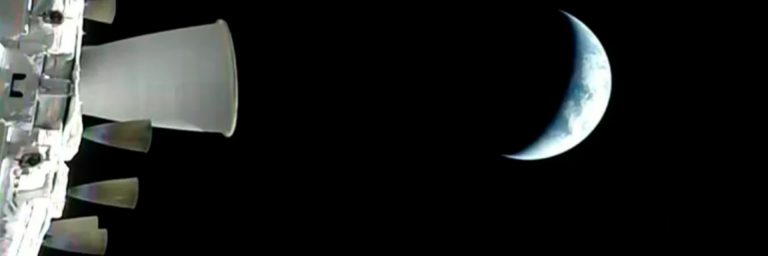
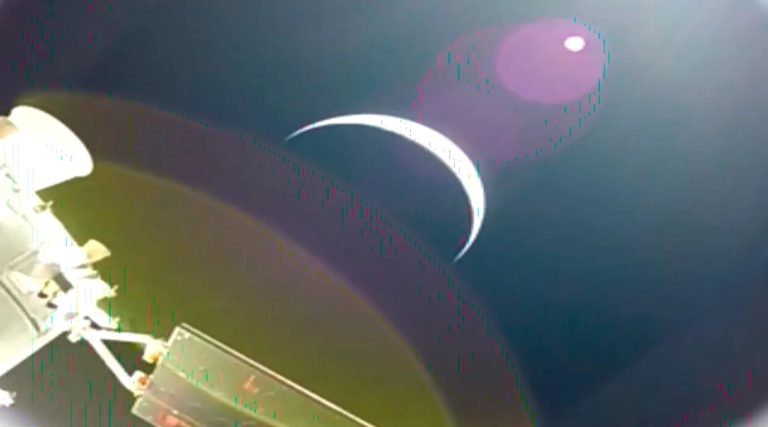
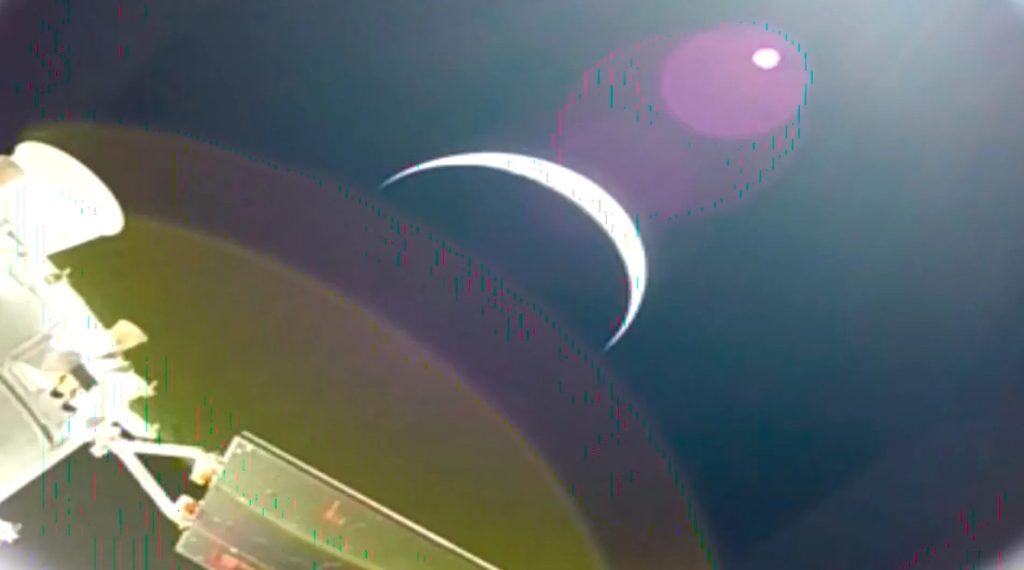
Earth’s crescent is seen from a solar array camera on the Orion spacecraft on the first flight day of the Artemis II mission. Credit: NASA

With the approximately six-minute firing of the spacecraft’s service module engine on Thursday, known as the translunar injection burn, Orion and its crew of NASA astronauts Reid Wiseman, Victor Glover, Christina Koch, and CSA (Canadian Space Agency) astronaut Jeremy Hansen accelerated to break free of Earth’s orbit and began the outbound trajectory toward Earth’s nearest neighbor.

“Today, for the first time since Apollo 17 in 1972, humans have departed Earth orbit. Reid, Victor, Christina, and Jeremy now are on a precise trajectory toward the Moon. Orion is operating with crew for the first time in space, and we are gathering critical data, and learning from each step,” said Dr. Lori Glaze, acting associate administrator for the Exploration Systems Development Mission Directorate at NASA Headquarters in Washington. “Each milestone we reach marks meaningful progress on the path forward for the Artemis program. While we have eight intensive days of work ahead, this is a big moment, and we’re proud to share it with the world.” 

NASA’s SLS (Space Launch System) rocket and Orion spacecraft lifted off from Launch Pad 39B at the agency’s Kennedy Space Center in Florida at 6:35 p.m. EDT on April 1, sending the four astronauts on a planned 10-day test flight around the Moon and back.

After reaching space, Orion deployed its four solar array wings, enabling the spacecraft to receive energy from the Sun, while the crew and engineers on the ground immediately began transitioning the spacecraft from launch to flight operations to start checking out key systems.

About 49 minutes into the test flight, the SLS rocket’s upper stage fired to put Orion into an elliptical orbit around Earth. A second planned burn by the stage propelled Orion, which the crew named “Integrity,” into a high Earth orbit extending about 46,000 miles above the Earth for about 24 hours of system checkouts. After the burn, Orion separated from the stage, flying free on its own.

The crew then conducted a manual piloting demonstration to test Orion’s handling qualities using the ICPS (interim cryogenic propulsion stage) as a docking target.

At the conclusion of the demonstration, Orion executed an automated departure burn to safely back away from the ICPS, after which the stage performed its own disposal burn and re-entered Earth’s atmosphere over a remote region of the Pacific Ocean.

Prior to its re-entry, four small CubeSats were deployed from SLS rocket’s Orion stage adapter.

Other tasks completed so far include a transition to the Deep Space Network for communications, the crew becoming acclimated to the space environment, completing their first rest periods, performing the first flywheel exercise, restoring the spacecraft’s toilet to normal operations, and configuring the spacecraft for the translunar injection burn.

During a planned lunar flyby on Monday, April 6, the astronauts will take high resolution photographs and provide their own observations of the lunar surface, including areas of the far side of the Moon never seen directly by humans. Although the lunar far side will only be partially illuminated during the flyby, the conditions should create shadows that stretch across the surface, enhancing relief and revealing depth, ridges, slopes, and crater rims that are often difficult to detect under full illumination.

Following a successful lunar flyby, the astronauts will return to Earth and splash down in the Pacific Ocean off the coast of San Diego.

As part of a Golden Age of innovation and exploration, NASA will send Artemis astronauts on increasingly challenging missions to explore more of the Moon for scientific discovery, economic benefits, and to build on our foundation for the first crewed missions to Mars.

Follow the latest mission progress, including more images from the test flight, at:

https://www.nasa.gov/artemis-ii

-end-

Cheryl Warner / Rachel Kraft
Headquarters, Washington
202-358-1600
[email protected] / [email protected]

Hubble revisits Crab Nebula to track 25 years of expansion

0

Nearly a millennium ago, astronomers witnessed a brilliant new star blazing in the sky — a supernova so bright it was visible in daylight for weeks. Today, its expanding remnant, the Crab Nebula, continues to evolve 6,500 light-years away. First linked to historical records by Edwin Hubble, the nebula has since been studied in exquisite detail by the NASA/ESA Hubble Space Telescope, which has now revisited this ancient explosion to trace its ongoing expansion and transformation.

A quarter-century after its first observations of the full Crab Nebula, the Hubble Space Telescope has taken a fresh look at the supernova remnant. The Crab Nebula is the aftermath of SN 1054, located 6,500 light-years from Earth in the constellation Taurus.

The result is an unparalleled, detailed look at the aftermath of a supernova and how it has evolved over Hubble’s long lifetime. A paper detailing the new Hubble observation is published in The Astrophysical Journal.

The supernova remnant was discovered in the mid-18th century, and in the 1950s Edwin Hubble was among several astronomers who noted the close correlation between Chinese astronomical records of a supernova and the position of the Crab Nebula. The discovery that the heart of the Crab contained a pulsar — a rapidly rotating neutron star — that was powering the nebula’s expansion finally aligned modern observations and ancient records.

In its new image of the nebula, Hubble has captured extraordinary details of its filamentary structure, as well as the considerable outward movement of those filaments over 25 years, at a pace of 5.5 million kilometres per hour. Hubble is the only telescope with the combination of longevity and resolution capable of capturing these detailed changes.

For better comparison with the new image, Hubble’s 1999 image of the Crab was re-processed. The variation of colors in both of the Hubble images shows a combination of changes in local temperature and density of the gas as well as its chemical composition.

The science team has noted that the filaments around the periphery of the nebula appear to have moved more compared to those in the centre and that rather than stretching out over time, they appear to have simply moved outward. This is due to the nature of the Crab as a pulsar wind nebula powered by synchrotron radiation, which is created by the interaction between the pulsar’s magnetic field and the nebula’s material. In other well-known supernova remnants, the expansion is instead driven by shockwaves from the initial explosion, eroding surrounding shells of gas that the dying star previously cast off.

The new, higher-resolution Hubble observations are also providing additional insights into the 3D structure of the Crab Nebula, which can be difficult to determine from a 2D image. Shadows of some of the filaments can be seen cast onto the haze of synchrotron radiation in the nebula’s interior. Counterintuitively, some of the brighter filaments in the latest Hubble images show no shadows, indicating they must be located on the far side of the nebula.

According to the science team, the real value of Hubble’s Crab Nebula observations is still to come. The Hubble data can be paired with recent data from other telescopes that are observing the Crab in different wavelengths of light. The NASA/ESA/CSA James Webb Space Telescope released its infrared-light observations of the Crab Nebula in 2024. Comparison of the Hubble image with other contemporary multiwavelength observations will help scientists put together a more complete picture of the supernova’s continuing aftermath, centuries after astronomers first wondered at a new little star twinkling in the sky.

More information

The Hubble Space Telescope is a project of international cooperation between ESA and NASA.

Image Credit: NASA, ESA, STScI, W. Blair (JHU). Image Processing: J. DePasquale (STScI)

Links

  • Release on NASA website
  • Science paper

Contacts

Bethany Downer
ESA/Hubble Chief Science Communications Officer
Email: [email protected]

Originally published at: ESA/Hubble