
Home Blog Page 102

ispace Successfully Carries Out Second HAKUTO-R Orbital Control Maneuver 2 Jan 2023

0
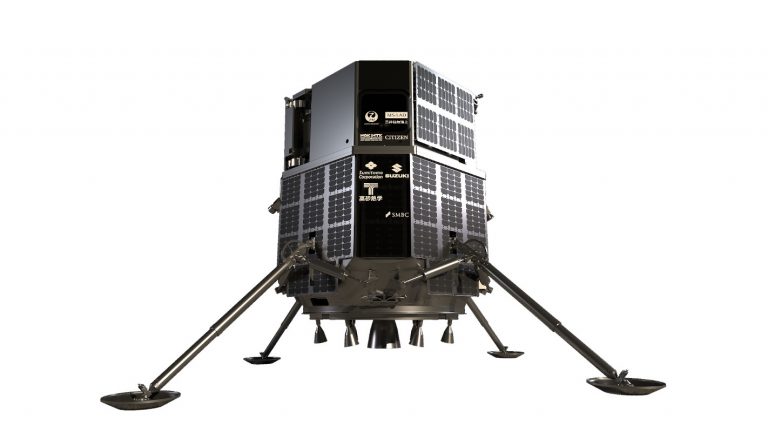
HAKUTO-R Mission 1 lunar lander

ispace, inc., a global lunar exploration company, announced today that its HAKUTO-R Mission 1 lunar lander has successfully carried out its second orbital control maneuver in accordance with its mission operations plan.

The maneuver was carried out shortly after midnight on Jan. 2, 2023 (Japan Standard Time) and operations were managed from ispace’s mission control center located in Nihonbashi, Tokyo. This orbital control maneuver is the second maneuver to occur while the lander has been traveling to the moon. The first orbital control maneuver was completed on December 15, 2022.

The second maneuver was carried out at a greater distance from Earth and lasted for a longer period than the first maneuver, verifying the company’s capability to carry out orbital maneuvers under various conditions.

As of Jan. 2, 2023, the lander has traveled approximately 1.24 million kilometers from the Earth and is scheduled to be at its farthest point of approximately 1.4 million km from the Earth by Jan. 20, 2023. Once the lander reaches its farthest point from Earth, a third orbital control maneuver may be performed, depending on its navigational status.

Since its launch on Dec. 11, 2022, the lander has maintained stable navigation in accordance with the mission plan. Once the lander has navigated deep space for one month, it will have achieved Mission 1 Milestone Success 5, at which an announcement is expected to be made.

Further updates about the status of the lander continue to be made on social media.

@ispace_inc (https://twitter.com/ispace_inc)

Mission 1 Milestones

For Mission 1, ispace has set 10 milestones between launch and landing, and aims to achieve the success criteria established for each of these milestones. Recognizing the possibility of an anomaly during the mission, the results will be weighed and evaluated against the criteria and incorporated into future missions already in development between now and 2025. Mission 2 and Mission 3, which also will contribute to NASA’s Artemis Program, will further improve the maturity of ispace’s technology and business model. Future announcements on progress of milestone achievement are expected to be released once attained.

About ispace, inc.

ispace, a global lunar resource development company with the vision, “Expand our Planet. Expand our Future.”, specializes in designing and building lunar landers and rovers. ispace aims to extend the sphere of human life into space and create a sustainable world by providing high-frequency, low-cost transportation services to the Moon. The company has offices in Japan, Luxembourg, and the United States with more than 200 employees worldwide. ispace technologies U.S., inc. is part of a team led by Draper, which was awarded a NASA Commercial Lunar Payload Services (CLPS) Program contract to land on the far side of the Moon by 2025. Both ispace, and ispace EUROPE S.A. (ispace EU) were awarded contracts to collect and transfer ownership of lunar regolith to NASA, and ispace EU was selected by ESA to be part of the Science Team for PROSPECT, a program which seeks to extract water on the Moon.

Established in 2010, ispace operated “HAKUTO” which was one of five finalist teams in the Google Lunar XPRIZE race. The company’s first mission as part of its HAKUTO-R lunar exploration program launched on Dec. 11, 2022, from the United States on a SpaceX Falcon 9 rocket and is currently expected to land on the lunar surface at the end of April 2023. Subsequent missions are in development process with launches expected in 2024 and 2025. ispace has also launched a lunar data business concept to support new customers as a gateway to conduct business on the Moon.


By Keith Cowing
Source SpaceRef
Perseverance Rover Collects Martian Regolith

0
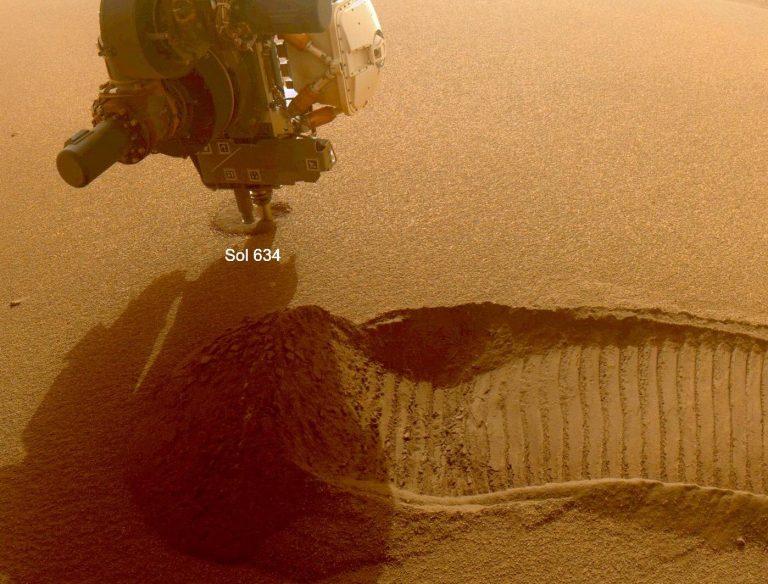
NASA’s Perseverance Mars rover collecting two samples of regolith – broken rock and dust – with a regolith sampling bit on the end of its robotic arm.

The samples were collected on Dec. 2 and 6, 2022, the 634th and 639th Martian days, or sols, of the mission. The images were taken by one of the rover’s front hazard cameras.

One of the two regolith samples will be considered for deposit on the Martian surface in coming weeks as part of the Mars Sample Return campaign. Studying regolith with powerful lab equipment back on Earth will allow scientists to better understand the processes that have shaped the surface of Mars and help engineers design future missions as well as equipment used by future Martian astronauts.

A key objective for Perseverance’s mission on Mars is astrobiology, including the search for signs of ancient microbial life. The rover will characterize the planet’s geology and past climate, pave the way for human exploration of the Red Planet, and be the first mission to collect and cache Martian rock and regolith (broken rock and dust).

Subsequent NASA missions, in cooperation with ESA (European Space Agency), would send spacecraft to Mars to collect these sealed samples from the surface and return them to Earth for in-depth analysis. The Mars 2020 Perseverance mission is part of NASA’s Moon to Mars exploration approach, which includes Artemis missions to the Moon that will help prepare for human exploration of the Red Planet.

NASA ID: PIA25654 Movie
Larger image


By Keith Cowing
Source SpaceRef

ESA’s Comet Interceptor Construction Moves Forward

0
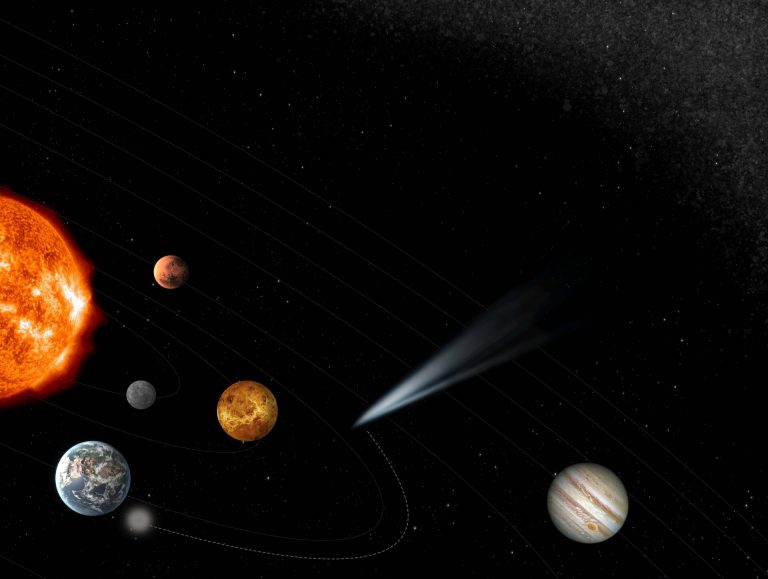
ESA’s Comet Interceptor. ESA.

ESA and OHB have signed a contract to move forward with the design and construction of ESA’s ambitious Comet Interceptor spacecraft, planned for launch in 2029.

Unlike other missions, Comet Interceptor’s target has not yet been discovered. That’s because it would take too long to build a mission on the short timeframe of a potential target entering the Solar System for a spacecraft to reach in time. Instead, Comet Interceptor will be ready and, unless a suitable target is identified before launch, waiting 1.5 million km ‘behind’ Earth as viewed from the Sun (at the gravitationally stable Lagrange point 2) for a suitable comet or even an interstellar object to enter the inner Solar System for the first time.

Perhaps hailing from the vast Oort Cloud of comets that surround the Solar System, Comet Interceptor’s target will not have undergone the same ‘processing’ as comets on shorter orbits such as those visited by ESA’s pioneering Giotto and Rosetta missions. As such the target may contain precious material surviving from the time when the Sun and planets formed 4.6 billion years ago.

“Comet Interceptor’s ground-breaking aims include characterising the surface composition, shape and structure of a pristine comet for the first time ever and sampling the composition of its gas and dust coma,” says Michael Kueppers, ESA’s Comet Interceptor study scientist. “Having access to this material is vital for understanding our origins, in terms of how our Solar System formed and evolved over time.”

Once a suitable comet or instellar object is identified, Comet Interceptor will be deployed from its parking orbit to intersect its trajectory. The mission comprises three modules: a main spacecraft and two probes. They will separate several days prior to intercepting the comet to perform simultaneous observations from multiple angles, creating an exceptional 3D profile of the comet or interstellar object.

ESA is leading the development of the main spacecraft and one of the probes, both carrying different but complementary instruments built by European scientific institutes and industry. JAXA, the Japan Aerospace Exploration Agency, is providing the other probe and its instruments.

“Comet Interceptor is an ambitious mission that requires a unique spacecraft – three novel spacecraft in fact – and after an intensive study and planning phase we are ready to start building the European elements,” says Nicola Rando, ESA’s Comet Interceptor project manager.

“European scientists, engineers and flight operators are set to strengthen their positions as leaders in all aspects of cometary exploration as we take this important step in building ESA’s next iconic comet mission,” says ESA Director of Science Günther Hasinger.

The signing of the contract was celebrated between ESA and OHB with a small ceremony at ESA Headquarters in Paris on 15 December.

Comet Interceptor was proposed to ESA in July 2018 and selected in June 2019. It is an example of a ‘fast’ development or F-class mission. Comet Interceptor is foreseen for launch as co-passenger with ESA’s exoplanet-studying Ariel spacecraft in 2029.


By Keith Cowing
Source SpaceRef
NASA Developing AI To Steer Using Landmarks – On The Moon

0
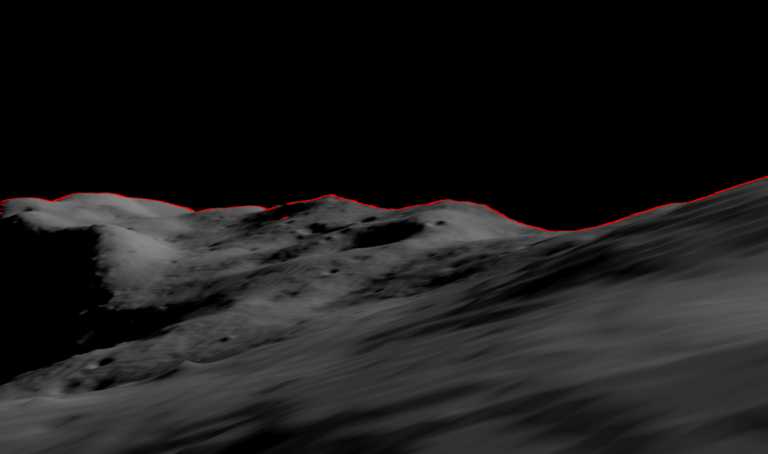
The collection of ridges, craters, and boulders that form a lunar horizon can be used by an artificial intelligence to accurately locate a lunar traveler. A system being developed by Research Engineer Alvin Yew would provide a backup location service for future explorers, robotic or human. Credits: NASA/MoonTrek/Alvin Yew

Much like how familiar landmarks can give travelers a sense of direction when their smart phones lose their lock on GPS signals, a NASA engineer is teaching a machine to use features on the Moon’s horizon to navigate across the lunar surface.

“For safety and science geotagging, it’s important for explorers to know exactly where they are as they explore the lunar landscape,” said Alvin Yew, a research engineer at NASA’s Goddard Space Flight Center in Greenbelt, Maryland. “Equipping an onboard device with a local map would support any mission, whether robotic or human.”

NASA is currently working with industry and other international agencies to develop a communications and navigation architecture for the Moon. LunaNet will bring “internet-like” capabilities to the Moon, including location services.

However, explorers in some regions on the lunar surface may require overlapping solutions derived from multiple sources to assure safety should communication signals not be available.

“It’s critical to have dependable backup systems when we’re talking about human exploration,” Yew said. “The motivation for me was to enable lunar crater exploration, where the entire horizon would be the crater rim.”

Yew started with data from NASA’s Lunar Reconnaissance Orbiter, specifically the Lunar Orbiter Laser Altimeter (LOLA). LOLA measures slopes, lunar surface roughness, and generates high resolution topographic maps of the Moon. Yew is training an artificial intelligence to recreate features on the lunar horizon as they would appear to an explorer on the lunar surface using LOLA’s digital elevation models. Those digital panoramas can be used to correlate known boulders and ridges with those visible in pictures taken by a rover or astronaut, providing accurate location identification for any given region.

“Conceptually, it’s like going outside and trying to figure out where you are by surveying the horizon and surrounding landmarks,” Yew said. “While a ballpark location estimate might be easy for a person, we want to demonstrate accuracy on the ground down to less than 30 feet (9 meters). This accuracy opens the door to a broad range of mission concepts for future exploration.”

Making efficient use of LOLA data, a handheld device could be programmed with a local subset of terrain and elevation data to conserve memory. According to work published by Goddard researcher Erwan Mazarico, a lunar explorer can see at most up to about 180 miles (300 kilometers) from any unobstructed location on the Moon. Even on Earth, Yew’s location technology could help explorers in terrain where GPS signals are obstructed or subject to interference.

Yew’s geolocation system will leverage the capabilities of GIANT (Goddard Image Analysis and Navigation Tool). This optical navigation tool developed primarily by Goddard engineer Andrew Liounis previously double-checked and verified navigation data for NASA’s OSIRIS-REx mission to collect a sample from asteroid Bennu (see CuttingEdge, Summer 2021).

In contrast to radar or laser-ranging tools that pulse radio signals and light at a target to analyze the returning signals, GIANT quickly and accurately analyzes images to measure the distance to and between visible landmarks. The portable version is cGIANT, a derivative library to Goddard’s autonomous Navigation Guidance and Control system (autoGNC) which provides mission autonomy solutions for all stages of spacecraft and rover operations.

Combining AI interpretations of visual panoramas against a known model of a moon or planet’s terrain could provide a powerful navigation tool for future explorers.


By Keith Cowing
Source SpaceRef
Meteosat Third Generation Imager Satellite: New Era Of Weather Forecasting Begins

0
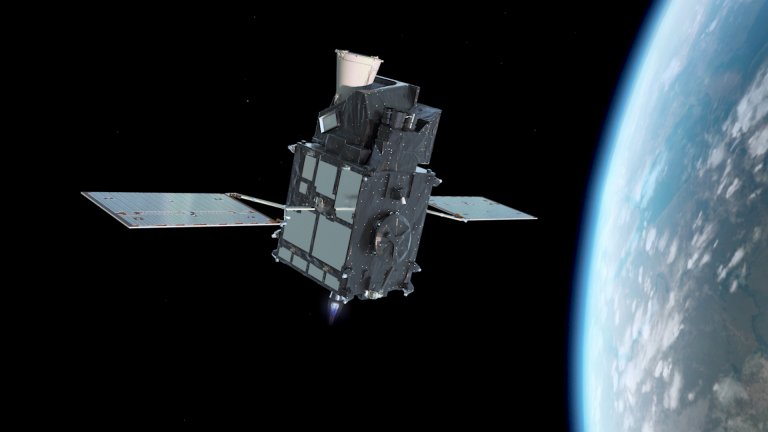
MTG-I1. ESA.

The Meteosat Third Generation Imager satellite, set to revolutionise short-term weather forecasting in Europe, lifted off on an Ariane 5 rocket at 21:30 CET (17:30 local time in Kourou) on 13 December from Europe’s Spaceport in French Guiana.

The satellite separated from the rocket 34 minutes later and then Malindi ground station in Kenya received the signal from MTG-I1, indicating the satellite is in good health.

Building on the long-standing partnership between ESA and Eumetsat, the Meteosat Third Generation Imager-1 (MTG-I1) is the first of a new generation of satellites providing crucial observations for the early detection and prediction of fast-developing severe storms, weather forecasting and climate monitoring.

This third generation of weather satellites will not only guarantee the continuity of data for weather forecasting from geostationary orbit for the next two decades, but also offers significant enhancement of the current imager capabilities and near realtime lightning imaging – a new capability for European weather satellites.

Paul Blythe, ESA’s Meteosat Programme Manager, commented, “After over a decade of close cooperation and hard work of all involved, to see the first of the MTG-I satellites take to the skies is a profound experience for me. Thanks to all who have made this possible including our friends in the industrial teams throughout Europe ably led by Thales Alenia Space France, my ESA team who have supported me throughout, many of whom have been with me since the start of this adventure and Eumetsat our partners and ultimately owners of the MTG satellites.

“Most recently a big thank you must go to Arianespace and those at Europe’s Spaceport in French Guiana for what has been a flawless launch campaign which has culminated in this beautiful launch.”

ESA’s Director of Earth Observation Programmes, Simonetta Cheli, said, “I’m extremely proud to see a new era of satellite meteorology begin. I would like to personally thank the teams involved who have dedicated their time, talent and tenacity to make this a success. We would not be here without you.

“MTG was developed thanks to the expertise of ESA, Eumetsat and a highly competitive European space industry. With the satellite’s innovative design and its novel ‘lightning catcher’, MTG will push European weather forecasting into the future. I am very much looking forward to the next decades of working with our European partners, especially the ESA Member States participating in the MTG programme whose contribution will ensure Europe remains a world leader in satellite meteorology, as well as Eumetsat, and all our partners involved. Our cooperation demonstrates the truly global spirit of Earth observation.”

“Meteosat Third Generation is a European success story. The purpose of this multi-billion-euro investment is to provide meteorological services with a vastly increased amount of more precise information which will help them protect lives, property and infrastructure. This system will, literally, save lives,” added Phil Evans, Director General at Eumetsat.

MTG-I1’s journey to space

Thirty-five minutes after launch, MTG-I1 separated from the Ariane 5 at an altitude of 250 km starting the automated post-separation sequence including solar array deployment and orientation towards the Sun ensuring the safety of the satellite. In its initial few orbits around Earth, the team switched on the satellite to open its solar arrays, and turned them to face the Sun.

From there, the team will boost the satellite from the initial geostationary transfer orbit, which is highly elliptical, to the circular geostationary orbit through a series of burns from the main apogee engine. This phase lasts around five days from where it will be positioned close to its final operational location at zero degrees longitude directly over Ivory Coast.

MTG-I1 and its two rideshare partners – Intelsat’s Galaxy 35 and Galaxy 36 telecommunications satellites – made up a total payload mass close to 11 tonnes, including the adapter that stacked them up for the ride to space. This is very nearly the mass record for an Ariane 5 launch to geostationary transfer orbit.

A new era of satellite meteorology

MTG-I1 is the first of six satellites that form the full MTG system, which will provide critical data for short-term and early detection of potential extreme weather events over the next 20 years. In full operations, the mission will comprise two MTG-I satellites and one MTG Sounding (MTG-S) satellite working in tandem.

The MTG-I satellites carry two completely new instruments, a Flexible Combined Imager and Europe’s first Lightning Imager, to deliver high-quality data for better short-term weather forecasting.

The innovative Lightning Imager will be able to capture individual lightning events in the sky, whether day or night. This is the first time a geostationary weather satellite has the capability to detect lightning across Europe, Africa and the surrounding waters. It will continuously monitor more than 80% of the Earth disc for lightning discharges, taking place either between clouds or between clouds and the ground.

The Flexible Combined Imager will utilise two scanning services to build a picture of fast-evolving events. Through its full disc scanning service, the imager will scan the entire Earth disc in just 10 minutes. Through the rapid scanning service, the imager will scan Europe and northern Africa every 2.5 minutes.

Data acquired across 16 different spectral bands provide precise information about everything from clouds to water vapour, to oceans, to local fires. Images will enable earlier prediction of severe weather events, improvements to forecasts and enhancements of essential meteorological systems and environmental events.

The MTG-I satellites also carry two smaller payloads for data collection from remote science beacons and for search and rescue by detecting emergency beacons. These all-new instruments will allow severe storms to be detected in their early stages and will therefore be key for issuing timely warnings.

The MTG mission is a cooperation between Eumetsat and ESA. ESA is responsible developing and procuring the six MTG satellites. Eumetsat defines the system requirements, develops the ground systems, procures the launch services, operates the satellites, and makes the data available to users.

The MTG satellites are built by a large consortium of European industries, led by Thales Alenia Space in cooperation with OHB. The innovative Lightning Imager is developed by Leonardo in Italy. Telespazio provides Eumetsat with launch and in-orbit services.

By Keith Cowing
Source SpaceRef

HIRISE Spots Martian Crater Deposits

0

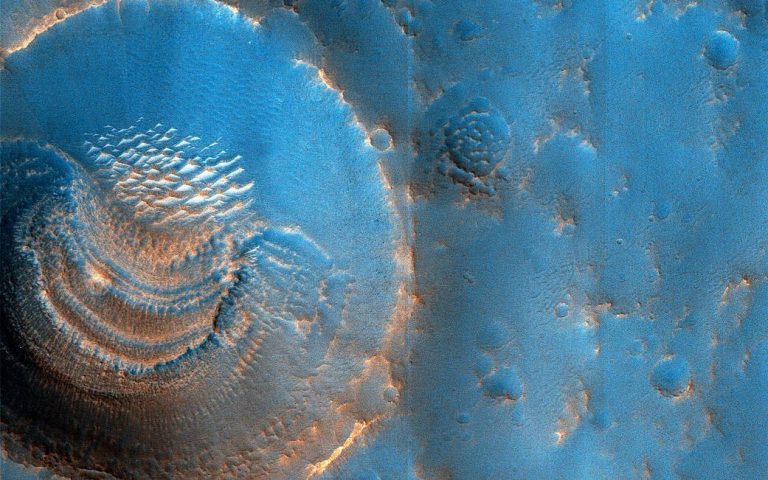
This image taken by the Mars Reconnaissance Orbiter spacecraft’s HIRISE instrument on Oct. 23, 2022, of the northern plains of Arabia Terra shows craters that contain curious deposits with mysterious shapes and distribution. For instance, the deposits are located on the south sides of the craters, but not usually in the north, and are found only in craters larger than 600 meters in diameter. Scientists suspect that these features formed by sublimation of ice-rich material.

Learn more about these crater deposits.

Image Credit: NASA/JPL-Caltech/University of Arizona

By Monika Luabeya
Source NASA

Researchers Discover Solar Wind-Derived Water In Lunar Soils

0
A schematic depiction of high-speed hydrogen ions injected from the solar surface into the lunar surface and enriched on the surface of lunar soil particles CREDIT Prof. LIN Yangting’s group

Due to its crucial importance in future space exploration, the abundance, distribution and origin of lunar surface water have received a lot of attention recently.

A joint research team from the National Space Science Center (NSSC) and the Institute of Geology and Geophysics (IGG), both affiliated with the Chinese Academy of Sciences (CAS), have discovered that the Chang’e-5 lunar soil grain rims have high concentrations of hydrogen and low deuterium/hydrogen (D/H) ratios that are consistent with lunar water originating from the solar wind (SW).

The findings were published in PNAS on Dec. 12, 2022.

The researchers conducted simulations on the preservation of hydrogen in lunar soils at different temperatures. They found that SW-originated water could be well preserved in the middle and high latitude regions of the lunar surface. “The polar lunar soils could contain more water than Chang’e-5 samples,” said Prof. LIN Yangting from IGG, corresponding author of the study.

Previous studies have proved that water (OH/H2O) on the lunar surface varies with latitude and time of day (up to 200 ppm). Such an obvious change implies a rapid desorption rate from the lunar surface.

In contrast to the six Apollo and three Luna missions, which all landed at low latitudes (8.97°S—26.13°N), the Chang’e-5 mission returned soil samples from a middle latitude location (43.06°N). In addition, the Chang’e-5 samples were collected from the youngest known lunar basalts (2.0 Ga) and the driest basaltic basement. Therefore, Chang’e-5 samples are key to addressing the spatial-temporal distribution and retention of SW-derived water in the lunar regolith.

On 17 lunar soil grains returned by the Chang’e-5 mission, the researchers took NanoSIMS depth-profiling measurements of hydrogen abundance and calculated deuterium/hydrogen ratios.

Results showed that the majority of the grain rims (topmost ~100 nm) exhibited high concentrations of hydrogen (1,116—2,516 ppm) with extremely low δD values (-908‰ to -992‰), implying an SW origin. Based on the grain size distribution of the lunar soils and their hydrogen content, the bulk SW-derived water content was estimated to be 46 ppm for the Chang’e-5 lunar soils, consistent with the remote sensing result.

Heating experiments on a subset of the grains demonstrated that the SW-implanted hydrogen could be preserved after burial. Using this information along with previous data, the researchers established a model of the dynamic equilibrium between the implantation and outgassing of SW-hydrogen in soil grains on the moon, revealing that temperature (latitude) plays a key role in the implantation and migration of hydrogen in lunar soils.

Using this model, they predicted an even higher abundance of hydrogen in the grain rims in the lunar polar regions. “This discovery is of great significance for the future utilization of water resources on the moon,” said Prof. LIN. “Also, through particle sorting and heating, it is relatively easy to exploit and use the water contained in the lunar soil.”

High abundance of solar wind-derived water in lunar soils from the middle latitude, PNAS


By Keith Cowing
Source SpaceRef
Future Of Space Engineering Is Model-Based

0
A hackathon challenged aerospace students to develop a detailed digital system model for a robotic assistant for astronauts on the Moon. ESA.

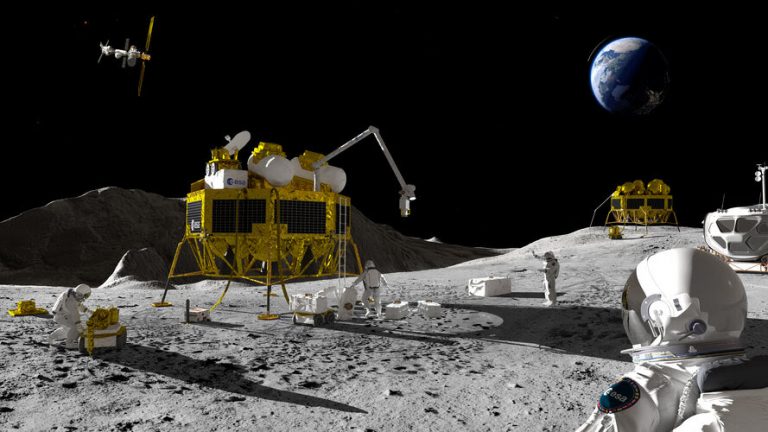
A hackathon challenged aerospace students to develop a detailed digital system model for a robotic assistant for astronauts on the Moon, able to identify key areas of interest in advance of any humans landing, guide them to their habitat and even rescue any moonwalkers in distress.

The winning team, from France’s Institut Supérieur de l’Aéronautique et de l’Espace, completed their task within just two weeks, using Model Based System Engineering to do so. This method involves creating digital models of space missions to manage their design, construction, test and operation – and has been highlighted by ESA Director General Josef Aschbacher as key to the future of the Agency, and Europe’s wider competitiveness in space.

The results of the 10-team hackathon, supported by Thales and French space agency CNES, were presented at this year’s Model Based Space Systems and Software Engineering workshop, MBSE2022, which took place at the Airbus Leadership Academy in Toulouse, co-organised by ESA, Airbus and CNES.

This annual event presents the work of the Model Based for System Engineering Advisory Group (MB4SE), a multidisciplinary team of experts from ESA, national space agencies and industry, tasked with encouraging the use of Model Based System Engineering (MBSE) in the space sector.

ESA Director General Josef Aschbacher has made this a priority objective in his Agenda 2025: “ESA projects are characterized by heavy engineering efforts form geographically dispersed teams in ESA and industry. Digital continuity throughout the life cycle of projects allows the substantial reduction of cost and efforts, and will shorten schedules. ESA will therefore digitalise its full project management, enabling the development of digital twins, both for engineering by using Model Based System Engineering and for procurement and finance, achieving full continuity with industry.”

Spacecraft are among the most complex machines ever built, so systems engineering has always been an essential element in their realisation, focused on a space system as a whole rather than its individual subsystems. System engineers design the mission architecture, define a strategy for building and oversee the integration of its subsystems, as well as the verification and validation of the overall system.

Traditional systems engineering for a mission is based around documentation. MBSE seeks to improve on that approach by using digital models instead to describe all the different subsystems and elements, and their relations with each other. Information that would usually be included in documents is instead expressed in a more structured and digitally processable way – as interactive diagrams, for example, rather than solely in the form of words. This allows it to be more easily processed and inspected, and used within different design and analysis software tools.

The main benefit of this approach is the improvement in communication between all stakeholders. As soon as an update is made to the model then that change becomes accessible to everyone, immediately.

The models can also be used to support the design and analysis, well before the system is being built. For example, virtual testing can be carried out in simulators far in advance of any physical hardware taking shape, and any lessons learned can be applied to optimise the design. The planning for testing and operations can also be guided by the model. A lot of data becomes generally accessible, rather than lost within individual disciplines or project phases, available for analysis using artificial intelligence and machine learning techniques to identify possible improvements, even to plan out procurement.

Those attending MBSE2022 are tasked with making this ambituous vision happen: More than 300 engineers gathered in person, along with another hundred remote attendees, for about 50 presentations, addressing the broad diversity of the European space community.

Among the key challenges under discussion was the need to create a standardised categorisation system defining the properties of all system elements and the relations between them – to enable interoperability along the digital workflow, allowing different software tools to work on the same data.

A quartet of keynote speakers dealt with this and other challenges, with contributions from the International Council on Systems Engineering, Thales, Airbus and ESA itself. Pierrik Vuilleumier of the Agency’s Earth Observation Programmes Department highlighted the fact that many ESA missions in development are already making use of MBSE.

One early pioneer was ESA Clean Space’s e.Deorbit mission, intended to retrieve space debris, which did not progress to its production phase but has a successor in the form of the commercial ClearSpace-1 mission, also using MBSE, due to remove part of a Vega launcher upper stage from orbit in 2025.

Euclid – tasked with mapping the large scale geometry of the Universe to cast light on dark matter and dark energy – was ESA Science’s early adopter, subsequently joined by the exoplanet-detecting Plato and EnVision mission to Venus. And the Agency’s TRUTHS mission, planned to measure incoming solar radiation and of radiation reflected from Earth back out into space, is a pioneer on the Earth Observation side.

Other large scale programmes harnessing MBSE include Moonlight – a constellation of lunar satellites to bring telecommunications and navigation services to the Moon – and Galileo Second Generation, as well as ESA’s Earth Return Orbiter of the international Mars Sample Return programme. The same is true of ESA’s contributions to the lunar Gateway and the Argonaut European Lunar Logistics Lander, for pinpoint landing of supplies to the Moon.

ESA is supporting this work with multiple research activities within its Discovery and Preparation programme, including more than 80 projects to date proposed through its open-to-everyone Open Space Innovation Platform, illustrating the wide interest in digitalisation as the future of space engineering.


By Keith Cowing
Source SpaceRef

Watch The Latest Water Satellite Unfold Itself In Space

0

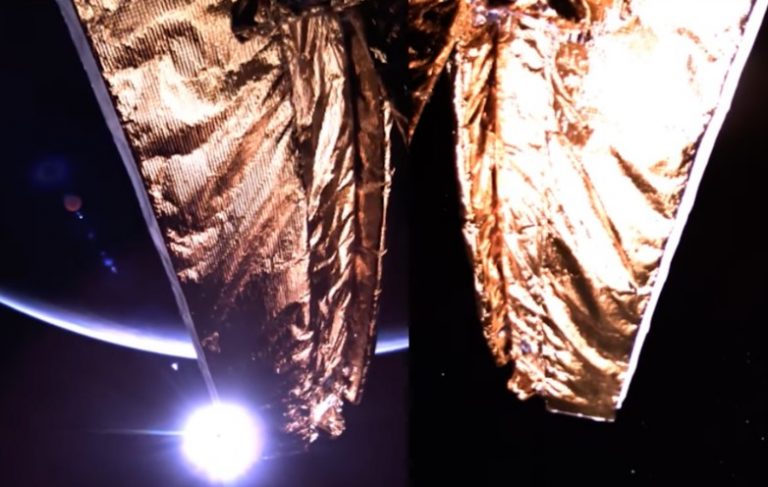
Cameras on the Surface Water and Ocean Topography spacecraft captured the antennas for its main science instrument unfurling in orbit.

Two cameras aboard the Surface Water and Ocean Topography (SWOT) satellite captured the large mast and antenna panels of the spacecraft’s main science instrument deploying over four days, a process that was completed on Dec. 22, 2022. The masts, which unfold from opposite sides of the spacecraft, can be seen extending out from the spacecraft and locking in place, but the cameras stopped short of capturing the antennas at the ends of the masts being fully deployed (a milestone the team confirmed with telemetry data). This video places the two camera views side by side.
Credit: NASA/JPL-Caltech/CNES

The Surface Water and Ocean Topography (SWOT) satellite launched into Earth orbit on Friday, Dec. 16, from Vandenberg Space Force Base in central California, and engineers are working to prepare the mission to begin measuring the height of water on over 90% of Earth’s surface, providing a high-definition survey of our planet’s water for the first time.

But before it can do that, the satellite would need to unfold its large mast and antenna panels (see above) after successfully deploying the solar panel arrays that power the spacecraft. The mission monitors and controls the satellite using telemetry data, but it also equipped spacecraft with four customized commercial cameras to record the action.

The solar arrays fully deployed shortly after launch, taking about 10 minutes.

This series of images shows the deployment of the solar arrays that power the international Surface Water and Ocean Topography (SWOT) satellite. The mission, led by NASA and the French space agency Centre National d’Études Spatiales (CNES), captured the roughly 10-minute process with two of the four commercial cameras aboard the satellite (the same type used to capture NASA’s Perseverance rover landing on Mars). SWOT launched Dec. 16, 2022, at 3:46 a.m. PST from Vandenberg Space Force Base in California, and the arrays started their deployment at 5:01 a.m. PST.

 Credit: NASA/JPL-Caltech/CNES

The antennas successfully deployed over four days, a process that was completed on Dec. 22. The two cameras focused on the KaRIn antennas captured the mast extending out from the spacecraft and locking in place but stopped short of capturing the antennas being fully deployed (a milestone the team confirmed with telemetry data.)

Thirty-three feet (10 meters) apart, at either end of the mast, the two antennas belong to the groundbreaking Ka-band Radar Interferometer (KaRIn) instrument. Designed to capture precise measurements of the height of water in Earth’s freshwater bodies and the ocean, KaRIn will see eddies, currents, and other ocean features less than 13 miles (20 kilometers) across. It will also collect data on lakes and reservoirs larger than 15 acres (62,500 square meters) and rivers wider than 330 feet (100 meters) across.

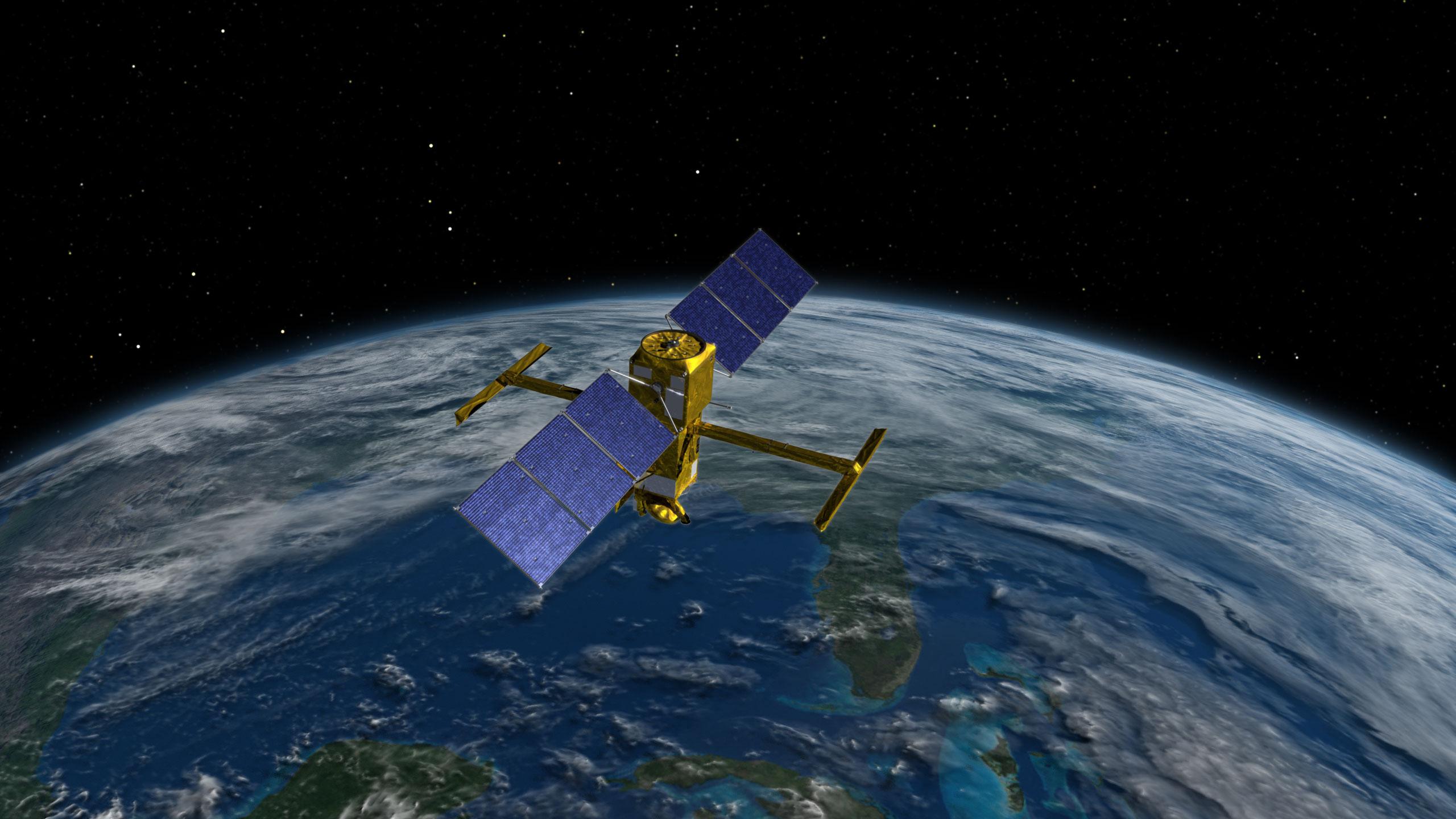
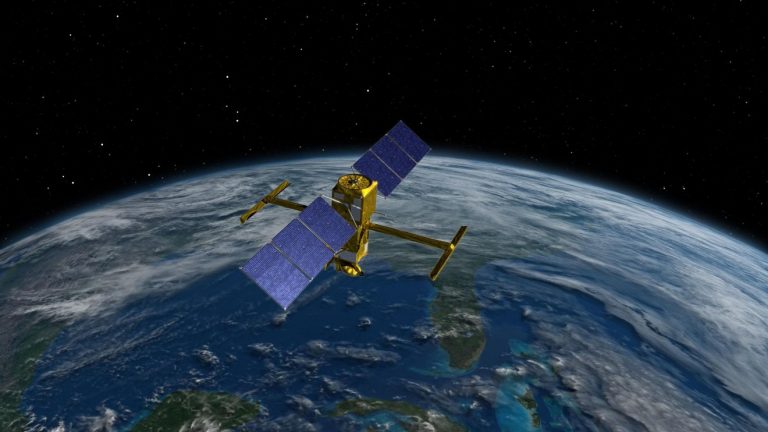
This illustration shows the SWOT satellite, which will use the Ka-band Radar Interferometer (KaRIn) instrument to measure the height of water in lakes, rivers, reservoirs, and ocean.
This illustration shows the SWOT spacecraft with its antenna mast and solar arrays fully deployed.
 Credit: NASA/JPL-Caltech 
Full Image Details

KaRIn will do this by bouncing radar pulses off the surface of water on Earth and receiving the signals with both of those antennas, collecting data along a swath that’s 30 miles (50 kilometers) wide on either side of the satellite.

The data SWOT provides will help researchers and decision-makers address some of the most pressing climate questions of our time and help communities prepare for a warming world.

More About the Mission

SWOT was jointly developed by NASA and the French space agency Centre National d’Études Spatiales (CNES), with contributions from the Canadian Space Agency (CSA) and the UK Space Agency. JPL, which is managed for NASA by Caltech in Pasadena, California, leads the U.S. component of the project. For the flight system payload, NASA is providing the Ka-band Radar Interferometer (KaRIn) instrument, a GPS science receiver, a laser retroreflector, a two-beam microwave radiometer, and NASA instrument operations. CNES is providing the Doppler Orbitography and Radioposition Integrated by Satellite (DORIS) system, the dual frequency Poseidon altimeter (developed by Thales Alenia Space), the KaRIn radio-frequency subsystem (together with Thales Alenia Space and with support from the UK Space Agency), the satellite platform, and ground operations. CSA is providing the KaRIn high-power transmitter assembly. NASA is providing the launch vehicle and the agency’s Launch Services Program, based at Kennedy Space Center, is managing the associated launch services.

To learn more about SWOT, visit: https://swot.jpl.nasa.gov/

Hubble Captures Dual Views Of An Unusual Star Cluster

0
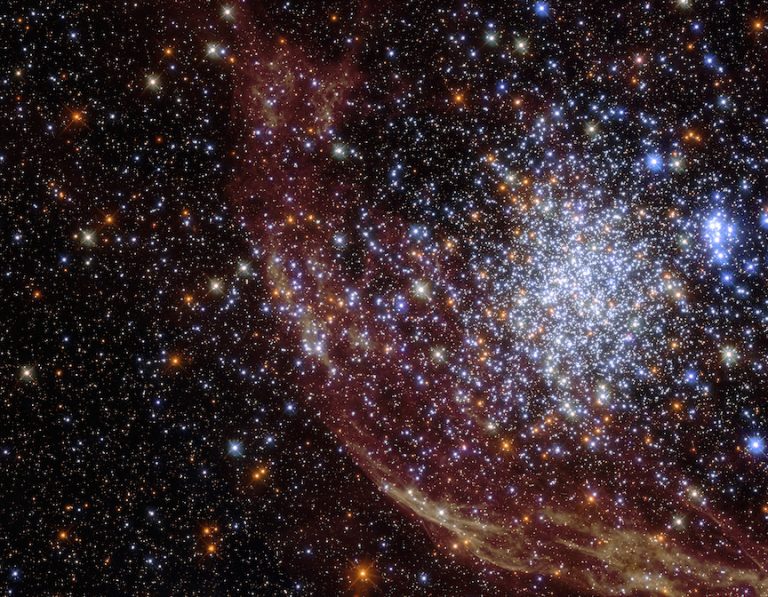
This Hubble image shows the star cluster NGC 1850, located about 160,000 light-years away. For this image, five filters were used with the camera to gather data. Two of the filters were at near-ultraviolet wavelengths, two more at visible light wavelengths, and the final one was in the near-infrared. The data gathered through the two ultraviolet filters is violet and blue. The data from the two visible light filters is green and orange. The color red denotes near-infrared data. The image follows chromatic order, which means the shortest wavelength in the image is blue while the longest wavelength is red. Chromatic order allows us to visualize wavelengths of light beyond our eye’s sensitivity in a way that is familiar to us. Credits: NASA, ESA and N. Bastian (Donostia International Physics Center); Processing: Gladys Kober (NASA/Catholic University of America)

While these two images may look dazzlingly different, they are actually pictures of the same cosmic object: NGC 1850.

Although the same Hubble instrument took both images, different filters with different assigned colors were used to study particular wavelengths of light emanating from these objects. The image with blue nebulosity includes some near-infrared light along with visible light (what our human eyes can detect), whereas the image with red nebulosity (also a different “pointing” at the same object) covers a much broader range from the near-ultraviolet to the beginnings of the infrared spectrum. Ultraviolet observations are ideal for detecting the light from the hottest and youngest stars, as seen in this luminous, starry view.

This 100 million-year-old globular cluster is located in the Large Magellanic Cloud, a satellite galaxy of the Milky Way and a birthplace for billions of stars. The cluster is approximately 160,000 light-years away in the constellation Dorado. Typical of globular clusters, it is a spherical collection of densely packed stars held together by mutual gravitational attraction. Unlike most globular clusters, however, the stars of NGC 1850 are relatively young. Globular clusters with young stars such as NGC 1850 are not present in our own Milky Way galaxy.

Astrophysicists theorize that when the first generation of stars in NGC 1850 was born, the stars ejected matter like dust and gas into the surrounding cosmos. The density of the newly formed star cluster was so high that this ejected matter could not escape the cluster’s gravitational pull, causing it to stay nearby. The intense gravity of the cluster also pulled in hydrogen and helium gas from its surroundings. These two sources of gas combined to form a second generation of stars, increasing the density and size of this globular cluster.

In 2021, scientists detected the presence of a black hole in NGC 1850. They have also detected many brighter blue stars (seen on the right of the second image) that burn hotter and die younger than red stars. Also present are around 200 red giants, stars that have run out of hydrogen in their centers and are fusing hydrogen further from their core, causing the outer layers to expand, cool, and glow red (seen throughout the second image). Surrounding the cluster is a pattern of nebulosity, diffuse dust and gas theorized to come from supernova blasts (the blue veil-like structures on the first image and the red ones on the second image).

NGC 1850 is approximately 63,000 times the mass of the Sun, and its core is roughly 20 light-years in diameter. Astronomers used Hubble Space Telescope observations at a wide range of wavelengths to image this large star cluster and learn more about star formation.

additional imagery


By Keith Cowing
Source SpaceRef