Astronomers have made the most extensive study yet of how magnetically active stars are when they are young.
This gives scientists a window into how X-rays from stars like the Sun, but billions of years younger, could partially or completely evaporate the atmospheres of planets orbiting them.
Many stars begin their lives in “open clusters,” loosely packed groups of stars with up to a few thousand members, all formed roughly at the same time. This makes open clusters valuable for astronomers investigating the evolution of stars and planets, because they allow the study of many stars of similar ages forged in the same environment.
A team of astronomers led by Konstantin Getman of Penn State University studied a sample of over 6,000 stars in 10 different open clusters with ages between 7 million and 25 million years. One of the goals of this study was to learn how the magnetic activity levels of stars like our Sun change during the first tens of millions of years after they form. Getman and his colleagues used NASA’s Chandra X-ray Observatory for this study because stars that have more activity linked to magnetic fields are brighter in X-rays.
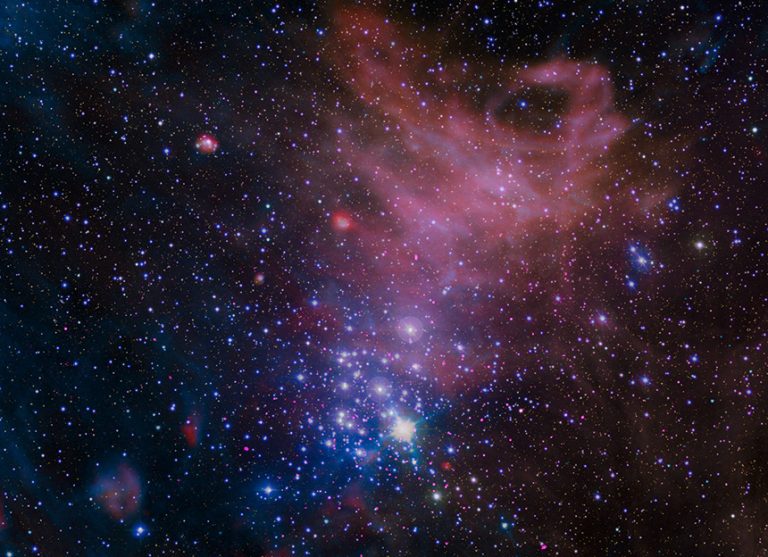
This composite image shows one of those clusters, NGC 3293, which is 11 million years old and is located about 8,300 light-years from Earth in the Milky Way galaxy. The image contains X-rays from Chandra (purple) as well as infrared data from ESA’s Herschel Space Observatory (red), longer-wavelength infrared data from NASA’s retired Spitzer Space Telescope (blue and white), and optical data from the MPG/ESO 2.2-meter telescope at ESO’s La Silla Observatory in Chile appearing as red, white and blue.
The researchers combined the Chandra data of the stars’ activity with data from ESA’s Gaia satellite — not shown in the new composite image — to determine which stars are in the open clusters and which ones are in the foreground or background. The team identified nearly a thousand members of the cluster.
They combined their results for the open clusters with previously published Chandra studies of stars as young as 500,000 years old. The team found that the X-ray brightness of young, Sun-like stars is roughly constant for the first few million years, and then fades from 7 to 25 million years of age. This decrease happens more quickly for heftier stars.
To explain this decline in activity, Getman’s team used astronomers’ understanding of the interior of the Sun and Sun-like stars. Magnetic fields in such stars are generated by a dynamo, a process involving the rotation of the star as well as convection, the rising and falling of hot gas in the star’s interior.
Around the age of NGC 3293, the dynamos of Sun-like stars become much less efficient because their convection zones become smaller as they age. For stars with masses smaller than that of the Sun, this is a relatively gradual process. For more massive stars, a dynamo dies away because the convection zone of the stars disappears.
How active a star is directly affects the formation processes of planets in the disk of gas and dust that surrounds all nascent stars. The most boisterous, magnetically active young stars quickly clear away their disks, halting the growth of planets.
This activity, measured in X-rays, also affects the potential habitability of the planets that emerge after the disk has disappeared. If a star is extremely active, as with many NGC 3293 stars in the Chandra data, then scientists predict it will blast planets in its system with energetic X-rays and ultraviolet light. In some cases, this high-energy barrage could cause an Earth-sized rocky planet to lose much of its original, hydrogen-rich atmosphere through evaporation within a few million years. It might also strip away a carbon dioxide-rich atmosphere that forms later, unless it is protected by a magnetic field. Our planet possesses its own magnetic field that prevented such an outcome for Earth.
A paper describing these results was published in the August issue of The Astrophysical Journal and is available online. Coauthors of the paper are Eric D. Feigelson and Patrick S. Broos from Penn State University, Gordon P. Garmire from the Huntingdon Institute for X-ray Astronomy, Michael A. Kuhn from the University of Hertsfordshire, Thomas Preibisch from Ludwig-Maximilians-Universitat, and Vladimir S. Airapetian from NASA’s Goddard Space Flight Center.
NASA’s Marshall Space Flight Center manages the Chandra program. The Smithsonian Astrophysical Observatory’s Chandra X-ray Center controls science operations from Cambridge, Massachusetts, and flight operations from Burlington, Massachusetts.
Webb’s Infrared Capabilities Pierce Through Dust Clouds to Make Rare Find
Searching for buried treasure can be a painstaking, even frustrating, process. Sifting through the proverbial sand for hours and hours, to rarely hit the jackpot, is common. However, with NASA’s James Webb Space Telescope, researchers are getting a taste of these often elusive bounties.
A “deep dive” for buried treasure into one of Webb’s iconic First Images, the Cosmic Cliffs, has revealed a hotbed of young stars in a particularly elusive stage of development. Close analysis of data from a specific wavelength of light, only captured by Webb, is now opening new doors to intriguing finds.
Scientists taking a “deep dive” into one of Webb’s iconic first images have discovered dozens of energetic jets and outflows from young stars previously hidden by dust clouds. The discovery marks the beginning of a new era of investigating how stars like our Sun form, and how the radiation from nearby massive stars might affect the development of planets.
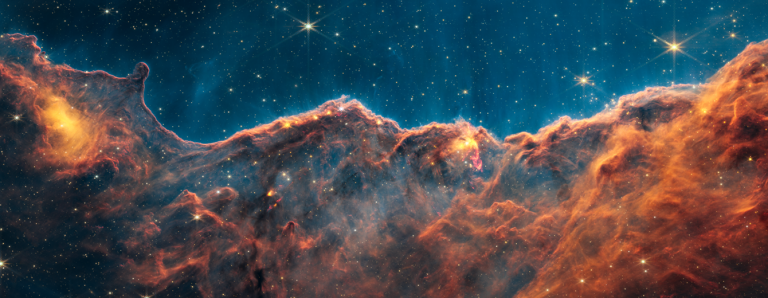
The Cosmic Cliffs, a region at the edge of a gigantic, gaseous cavity within the star cluster NGC 3324, has long intrigued astronomers as a hotbed for star formation. While well-studied by the Hubble Space Telescope, many details of star formation in NGC 3324 remain hidden at visible-light wavelengths. Webb is perfectly primed to tease out these long-sought-after details since it is built to detect jets and outflows seen only in the infrared at high resolution. Webb’s capabilities also allow researchers to track the movement of other features previously captured by Hubble.
Recently, by analyzing data from a specific wavelength of infrared light (4.7 microns), astronomers discovered two dozen previously unknown outflows from extremely young stars revealed by molecular hydrogen. Webb’s observations uncovered a gallery of objects ranging from small fountains to burbling behemoths that extend light-years from the forming stars. Many of these protostars are poised to become low mass stars, like our Sun.
“What Webb gives us is a snapshot in time to see just how much star formation is going on in what may be a more typical corner of the universe that we haven’t been able to see before,” said astronomer Megan Reiter of Rice University in Houston, Texas, who led the study.
Molecular hydrogen is a vital ingredient for making new stars and an excellent tracer of the early stages of their formation. As young stars gather material from the gas and dust that surround them, most also eject a fraction of that material back out again from their polar regions in jets and outflows. These jets then act like a snowplow, bulldozing into the surrounding environment. Visible in Webb’s observations is the molecular hydrogen getting swept up and excited by these jets.
“Jets like these are signposts for the most exciting part of the star formation process. We only see them during a brief window of time when the protostar is actively accreting,” explained co-author Nathan Smith of the University of Arizona in Tucson.
Previous observations of jets and outflows looked mostly at nearby regions and more evolved objects that are already detectable in the visual wavelengths seen by Hubble. The unparalleled sensitivity of Webb allows observations of more distant regions, while its infrared optimization probes into the dust-sampling younger stages. Together this provides astronomers with an unprecedented view into environments that resemble the birthplace of our solar system.
“It opens the door for what’s going to be possible in terms of looking at these populations of newborn stars in fairly typical environments of the universe that have been invisible up until the James Webb Space Telescope,” added Reiter. “Now we know where to look next to explore what variables are important for the formation of Sun-like stars.”
This period of very early star formation is especially difficult to capture because, for each individual star, it’s a relatively fleeting event – just a few thousand to 10,000 years amid a multi-million-year process of star formation.
“In the image first released in July, you see hints of this activity, but these jets are only visible when you embark on that deep dive – dissecting data from each of the different filters and analyzing each area alone,” shared team member Jon Morse of the California Institute of Technology in Pasadena. “It’s like finding buried treasure.”
In analyzing the new Webb observations, astronomers are also gaining insights into how active these star-forming regions are, even in a relatively short time span. By comparing the position of previously known outflows in this region caught by Webb, to archival data by Hubble from 16 years ago, the scientists were able to track the speed and direction in which the jets are moving.
This science was conducted on observations collected as part of Webb’s Early Release Observations Program. The paper was published in the Monthly Notices of the Royal Astronomical Society in December 2022.
The James Webb Space Telescope is the world’s premier space science observatory. Webb will solve mysteries in our solar system, look beyond to distant worlds around other stars, and probe the mysterious structures and origins of our universe and our place in it. Webb is an international program led by NASA with its partners, ESA (European Space Agency), and CSA (Canadian Space Agency).
Credits
NASA, ESA, CSA, STScI
MEDIA CONTACT:
Hannah Braun Space Telescope Science Institute, Baltimore, Maryland
Christine Pulliam Space Telescope Science Institute, Baltimore, Maryland
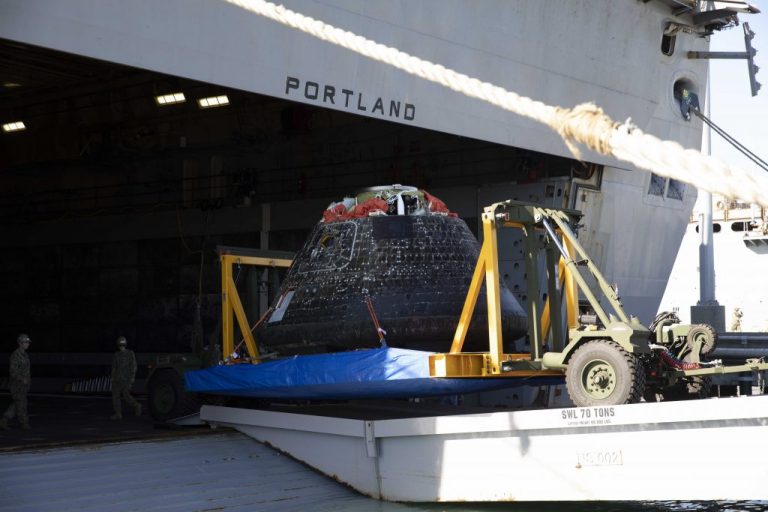
Team members with NASA’s Exploration Ground Systems program successfully removed the Artemis I Orion spacecraft from the USS Portland Dec. 14, after the ship arrived at U.S. Naval Base San Diego.
Team members with NASA’s Exploration Ground Systems program successfully removed the Artemis I Orion spacecraft from the USS Portland Dec. 14, after the ship arrived at U.S. Naval Base San Diego a day earlier. The spacecraft successfully splashed down Dec. 11 in the Pacific Ocean west of Baja California after completing a 1.4 million-mile journey beyond the Moon and back, and was recovered by NASA’s Landing and Recovery team and personnel from the Department of Defense.
Engineers will conduct inspections around the spacecraft’s windows before installing hard covers and deflating the five airbags on the crew module uprighting system in preparation for the final leg of Orion’s journey over land. It will be loaded on a truck and transported back to the agency’s Kennedy Space Center in Florida for post-flight analysis.
Before its departure, teams will open Orion’s hatch as part of preparations for the trip to Kennedy and remove the Biology Experiment-1 payload which flew onboard Orion. The experiment involves using plant seeds, fungi, yeast, and algae to study the effects of space radiation before sending humans to the Moon and, eventually, to Mars. Removing the payload prior to Orion’s return to Kennedy allows scientists to begin their analysis before the samples begin to degrade.
Once it arrives to Kennedy, Orion will be delivered to the Multi-Payload Processing Facility where additional payloads will be taken out, its heat shield and other elements will be removed for analysis, and remaining hazards will be offloaded.
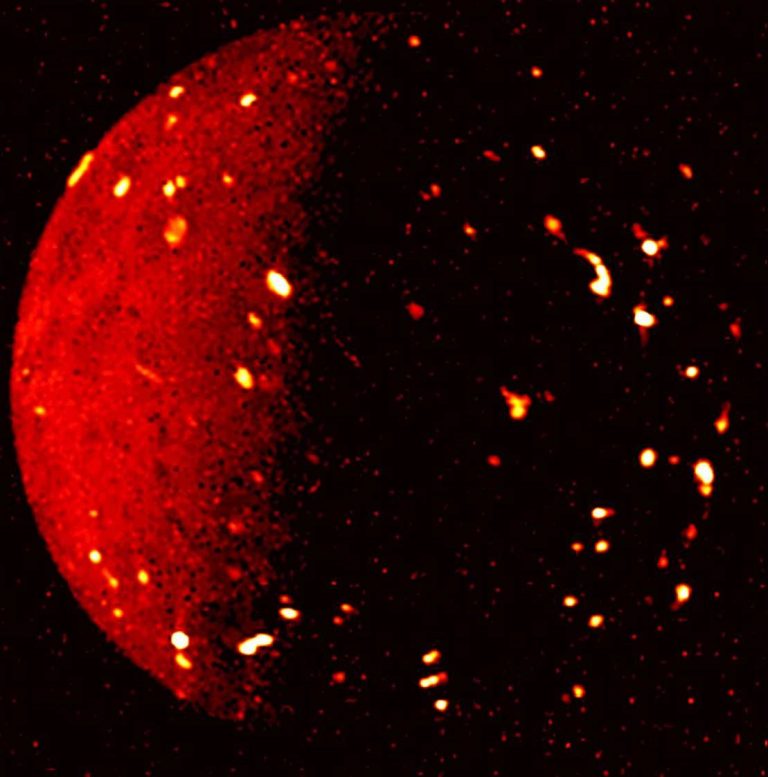
NASA’s Juno mission captured this infrared view of Jupiter’s volcanic moon Io on July 5, 2022, when the spacecraft was about 50,000 miles (80,000 kilometers) away. This infrared image was derived from data collected by the Jovian Infrared Auroral Mapper (JIRAM) instrument aboard Juno. In this image, the brighter the color the higher the temperature recorded by JIRAM. Credit: NASA/JPL-Caltech/SwRI/ASI/INAF/JIRAM Full Image Details
After revealing a trove of details about the moons Ganymede and Europa, the mission to Jupiter is setting its sights on sister moon Io.
NASA’s Juno mission is scheduled to obtain images of the Jovian moon Io on Dec. 15 as part of its continuing exploration of Jupiter’s inner moons. Now in the second year of its extended mission to investigate the interior of Jupiter, the solar-powered spacecraft performed a close flyby of Ganymede in 2021 and of Europa earlier this year.
“The team is really excited to have Juno’s extended mission include the study of Jupiter’s moons. With each close flyby, we have been able to obtain a wealth of new information,” said Juno Principal Investigator Scott Bolton of the Southwest Research Institute in San Antonio. “Juno sensors are designed to study Jupiter, but we’ve been thrilled at how well they can perform double duty by observing Jupiter’s moons.”
This animation illustrates how the magnetic field surrounding Jupiter’s moon Ganymede (represented by the blue lines) interacts with and disrupts the magnetic field surrounding Jupiter (represented by the orange lines). Credit: NASA/JPL-Caltech/SwRI/Duling
Several papers based on the June 7, 2021, Ganymede flyby were recently published in the Journal of Geophysical Research and Geophysical Research Letters. They include findings on the moon’s interior, surface composition, and ionosphere, along with its interaction with Jupiter’s magnetosphere, from data obtained during the flyby. Preliminary results from Juno’s Sept. 9 flyby of Europa include the first 3D observations of Europa’s ice shell.
Below the Ice
During the flybys, Juno’s Microwave Radiometer (MWR) added a third dimension to the mission’s Jovian moon exploration: It provided a groundbreaking look beneath the water-ice crust of Ganymede and Europa to obtain data on its structure, purity, and temperature down to as deep as about 15 miles (24 kilometers) below the surface.
Visible-light imagery obtained by the spacecraft’s JunoCam, as well as by previous missions to Jupiter, indicates Ganymede’s surface is characterized by a mixture of older dark terrain, younger bright terrain, and bright craters, as well as linear features that are potentially associated with tectonic activity.
“When we combined the MWR data with the surface images, we found the differences between these various terrain types are not just skin deep,” said Bolton. “Young, bright terrain appears colder than dark terrain, with the coldest region sampled being the city-sized impact crater Tros. Initial analysis by the science team suggests Ganymede’s conductive ice shell may have an average thickness of approximately 30 miles or more, with the possibility that the ice may be significantly thicker in certain regions.”
Magnetospheric Fireworks
During the spacecraft’s June 2021 close approach to Ganymede, Juno’s Magnetic Field (MAG) and Jovian Auroral Distributions Experiment (JADE) instruments recorded data showing evidence of the breaking and reforming of magnetic field connections between Jupiter and Ganymede. Juno’s ultraviolet spectrograph (UVS) has been observing similar events with the moon’s ultraviolet auroral emissions, organized into two ovals that wrap around Ganymede.
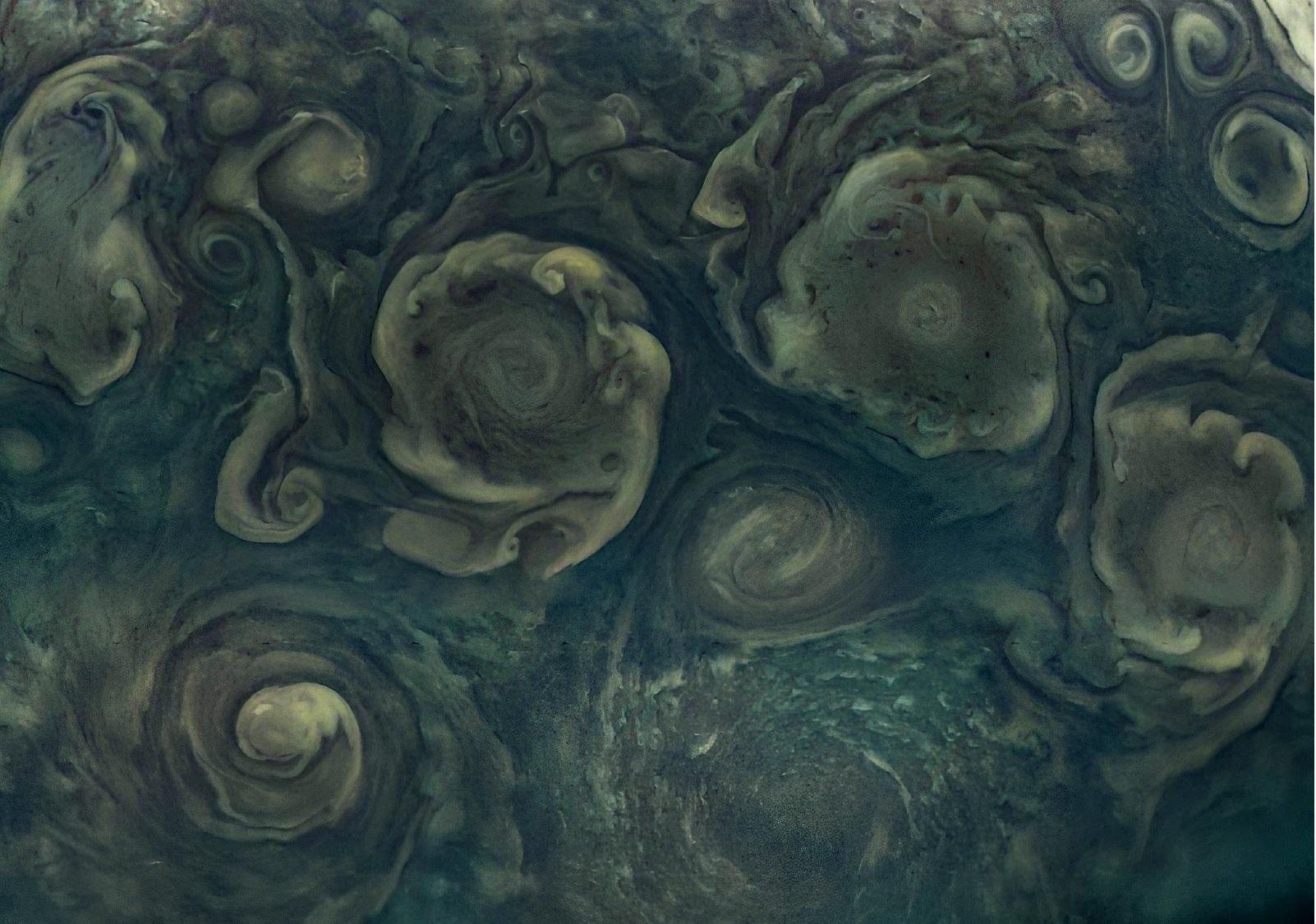
JunoCam took this image of Jupiter’s northernmost cyclone (visible to the right along the bottom edge of image) on September 29, 2022. Credit: Image data: NASA/JPL-Caltech/SwRI/MSSSImage processing by Navaneeth Krishnan S CC BY 3.0 Full Image Details
“Nothing is easy – or small – when you have the biggest planet in the solar system as your neighbor,” said Thomas Greathouse, a Juno scientist from SwRI. “This was the first measurement of this complicated interaction at Ganymede. This gives us a very early tantalizing taste of the information we expect to learn from the JUICE” – the ESA (European Space Agency) JUpiter ICy moons Explorer – “and NASA’s Europa Clipper missions.”
Volcanic Future
Jupiter’s moon Io, the most volcanic place in the solar system, will remain an object of the Juno team’s attention for the next year and a half. Their Dec. 15 exploration of the moon will be the first of nine flybys – two of them from just 930 miles (1,500 kilometers) away. Juno scientists will use those flybys to perform the first high-resolution monitoring campaign on the magma-encrusted moon, studying Io’s volcanoes and how volcanic eruptions interact with Jupiter’s powerful magnetosphere and aurora.
With three giant blades stretching out some 66 feet (20 meters) from its cylindrical, six-sided body, the Juno spacecraft is a dynamic engineering marvel, spinning to keep itself stable as it makes oval-shaped orbits around Jupiter. View the full interactive experience at Eyes on the Solar System.
More About the Mission
NASA’s Jet Propulsion Laboratory, a division of Caltech in Pasadena, California, manages the Juno mission for the principal investigator, Scott J. Bolton, of the Southwest Research Institute in San Antonio. Juno is part of NASA’s New Frontiers Program, which is managed at NASA’s Marshall Space Flight Center in Huntsville, Alabama, for the agency’s Science Mission Directorate in Washington. Lockheed Martin Space in Denver built and operates the spacecraft.
Methane from the waste sector makes up about 20% of human-caused methane emissions. A new project from a nonprofit group, Carbon Mapper, will use NASA instruments and data to measure emissions from landfills around the globe.
A nonprofit group, Carbon Mapper, will use data from NASA’s EMIT mission, plus current airborne and future satellite instruments, to survey waste sites for methane emissions.
Observations from the Earth Surface Mineral Dust Source Investigation (EMIT) and other NASA science instruments will be part of a global survey of point-source emissions of methane from solid waste sites such as landfills. The multiyear effort is being developed and conducted by the nonprofit Carbon Mapper organization.
Methane is a potent greenhouse gas, the source of roughly a quarter to a third of global warming caused by humans. The aim of the new initiative is to establish a baseline assessment of global waste sites that emit methane at high rates. This information can support decision-makers as they work to reduce the concentration of the gas in the atmosphere and limit climate change.
Methane produced by the waste sector contributes an estimated 20% of human-caused methane emissions. Ton for ton, methane is more than 80 times more potent than carbon dioxide in trapping heat in the atmosphere. But where carbon dioxide remains in the air for centuries, methane has an atmospheric lifetime of only about a decade or two. That means some immediate slowing of atmospheric warming could be achieved if methane emissions were significantly reduced.
“Currently, there is limited actionable information about methane emissions from the global waste sector. A comprehensive understanding of high-emission point sources from waste sites is a critical step to mitigating them,” said Carbon Mapper CEO Riley Duren. “New technological capabilities that are making these emissions visible – and therefore actionable – have the potential to change the game, elevating our collective understanding of near-term opportunities in this often overlooked sector.”
Carbon Mapper received a grant from the Grantham Foundation for the Protection of the Environment to support its operations related to the waste-site initiative, including potential funding to cover airborne methane surveys using NASA airborne assets. The project will entail conducting an initial remote-sensing survey in 2023 of more than 1,000 managed landfills across the United States and Canada, and in key locations in Latin America, Africa, and Asia. To collect data from these regions, researchers will use aircraft-based sensors, including the Airborne Visible/Infrared Imaging Spectrometer-Next Generation (AVIRIS-NG), which was developed at NASA’s Jet Propulsion Laboratory in Southern California. In addition, they will use Arizona State University’s Global Airborne Observatory from the Center of Global Discovery and Conservation Science, which uses another JPL-built imaging spectrometer.
As part of the Carbon Mapper project, researchers will analyze methane data from EMIT as well. The JPL-managed imaging spectrometer was installed on the International Space Station in July 2022 to measure the mineral content at the surface of Earth’s major dust-producing regions.
In October, scientists demonstrated that EMIT can also identify methane plumes from “super-emitters.” In so doing, the team added another tool to help with NASA’s broader efforts to monitor greenhouse gases.
“NASA JPL has a decadelong track record of using airborne imaging spectrometers to make high-quality observations of methane point-source emissions,” said Robert Green, EMIT’s principal investigator at JPL. “With EMIT we have employed the same technology in a spaceborne instrument, enabling us to collect information on localized methane sources from orbit.”
After the first year of the Carbon Mapper project, researchers will conduct a broader survey of more than 10,000 landfills around the world using two satellites in the Carbon Mapper satellite program. The pair of spacecraft will be equipped with imaging spectrometer technology developed at JPL. The team is targeting a launch in late 2023 in coordination with Planet Labs PBC, among other partners.
EMIT was selected from the Earth Venture Instrument-4 solicitation under the Earth Science Division of NASA’s Science Mission Directorate and was developed at NASA’s Jet Propulsion Laboratory, which is managed for the agency by Caltech in Pasadena, California. The instrument’s data will be delivered to the NASA Land Processes Distributed Active Archive Center (DAAC) for use by other researchers and the public.
The Airborne Visible/Infrared Imaging Spectrometer-Next Generation (AVIRIS-NG) was built at JPL and designed to measure wavelengths of light from 380 to 2,510 nanometers. It has flown numerous missions, studying phenomena such as plant ecology, mineralogy, snow and ice hydrology, and environmental hazards.
Carbon Mapper is a nonprofit organization focused on facilitating timely action to mitigate greenhouse gas emissions. Its mission is to fill gaps in the emerging global ecosystem of methane and carbon dioxide monitoring systems by delivering data at facility scale that is precise, timely, and accessible to empower science-based decision making and action. The organization is leading the development of the Carbon Mapper constellation of satellites supported by a public-private partnership composed of Planet Labs PBC, JPL, the California Air Resources Board, the University of Arizona, Arizona State University, and RMI, with funding from High Tide Foundation, Bloomberg Philanthropies, Grantham Foundation for the Protection of the Environment, and other philanthropic donors.
An artistic rendering showing the concept of collecting solar energy in space and beaming converted RF energy to a terrestrial rectenna. Credit: Northrop Grumman.
In the 1940s, science fiction author Isaac Asimov theorized the concept of collecting the sun’s energy in space, then beaming that energy down to Earth.
Today, Northrop Grumman’s Space Solar Power Incremental Demonstrations and Research (SSPIDR) Project team is making that science fiction a reality with steady progress towards transmitting solar energy from space to anywhere on Earth. SSPIDR technology can be especially useful in forward operating and contested areas where warfighters need steady power to maintain mission operations.
Harnessing solar power for use on Earth has enormous potential for communities where energy is scarce. For example, when military personnel establish a forward operating base one of the most dangerous parts of the ground operation is getting power. Convoys and supply lines, which are major targets for adversaries, are the usual methods to supply power. However, solar-powered beaming energy technology can provide constant, consistent and logistically agile power to expeditionary forces operating in hard-to-reach areas – assuring power is transmitted via radio frequency (RF) from space and reducing reliance on fuel convoys and other energy generation methods.
Utilizing one of the company’s test chambers specifically designed for RF at its Baltimore manufacturing and test campus, the SSPIDR team successfully demonstrated the transmission of directed RF energy to a ground-based rectifying antenna (rectenna) – a critical milestone in the development of this pioneering technology. In this demonstration, engineers steered RF energy to rectenna hardware, energizing a series of lights that indicated successful formation of an energy beam and conversion to useful electrical current.
As part of this laboratory demonstration, engineers also showcased the ability to beam RF energy to multiple fixed points by electronically steering and controlling the power beam using Active Electronically Scanned Array (AESA) capabilities.
“Space solar power beaming has the potential to provide energy anywhere on Earth at any time, making consistent and reliable energy available to remote locations when its needed most,” said Tara Theret, SSPIDR program director, Northrop Grumman. “With this demonstration, we are one step closer to taking this technology out of the lab and putting it on orbit.”
As ambitious as it is revolutionary, the SSPIDR Project which is under contracted development partnership with the U.S. Air Force Research Laboratory (AFRL) will utilize on-orbit, highly-efficient photovoltaic cells to collect solar energy. This solar energy will then be converted into RF energy and beamed to a receiving station on Earth — like a power plant, but for space solar energy — where it would be converted to usable energy.
Having successfully demonstrated the conversion of solar energy to transmittable RF energy and wireless beaming capabilities in a laboratory environment, engineers are continuing to fine-tune the array to strengthen beam steering capabilities.
What has for decades been a science fiction concept will soon be on its way to space-based demonstration with AFRL’s anticipated mission launch in 2025.
Exercise looks a little different en route to the Red Planet, so Professor Marni Boppart got creative.
Boppart and her colleagues at the Beckman Institute for Advanced Science and Technology received $1 million from the Translational Research Institute for Space Health, a NASA-funded institute, to explore the regenerative power of cells in space. Their research will help protect human health aboard Orion, the spacecraft destined to ferry astronauts from the Earth to the moon and Mars.
Because of the Earth’s mass, our daily movement is generally sufficient to keep our muscles in fine working order. Astronauts soaring through space are not afforded the luxury of gravitational pull.
“Astronauts can lose up to 20% of muscle mass after just two weeks, and 1-2% of bone mineral density every month. The longer the space travel, the greater the deterioration of tissues and physiological systems in the human body,” said Boppart, a professor of kinesiology and community health studying the science of exercise at the University of Illinois Urbana-Champaign.
Before joining the university, Boppart specialized in high-altitude health hazards as an officer and aerospace physiologist in the U.S. Air Force. Her current research in the College of Applied Health Sciences focuses on the molecular underpinning of muscle loss and gain. She hopes to develop cell-inspired strategies for recovering strength in circumstances — like spaceflight — when movement and mobility are limited.
When TRISH invited researchers to explore new ways to protect astronaut health and performance by enhancing the human body’s own maintenance and cellular repair abilities, Boppart seized the opportunity. Her project reimagines interstellar fitness with a cellular flair. The institute was scouting for strategies to protect astronaut health during long-duration space exploration missions, including NASA’s ongoing Artemis program, which will set up a sustainable presence on the Moon and prepare for future missions to Mars.
The Artemis program’s chosen vessel is the spacecraft Orion, which launched unmanned from the Kennedy Space Center in November. At the top of the vessel’s formidable to-do list is ferrying the first woman and first person of color from the Earth to the moon, followed closely by establishing humanity’s first long-term lunar presence and eventually trekking to the Red Planet.
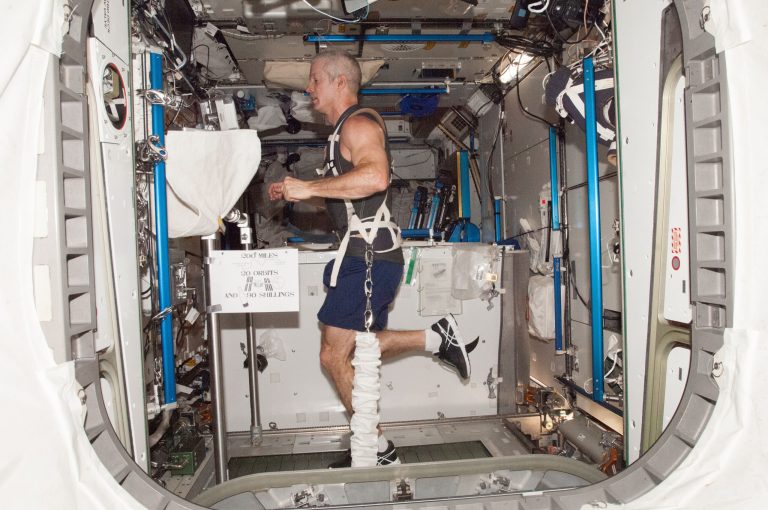
Square footage is limited on Orion, which assumes the trifold identities of dormitory, dining hall, and control room all in one. The spacecraft is understandably bereft of the specialized resistance and endurance equipment that astronauts have access to on the International Space Station.
“But even the most intense [exercise] protocols performed in space are not sufficient to overcome the negative impacts of microgravity,” said Boppart. “Alternatives to traditional exercise, ideally based on exercise principles, are required.”
With an approach fit for space travel, Boppart’s proposal turns our traditional understanding of exercise on its head — or rather, inside out. Instead of defining exercise by heavy footfalls or flailing limbs, she’s focusing squarely on the cellular relay underway within our muscles.
Honed by relentless evolution, our cells have yet to catch on to the concept of exercising for fun. When we lift heavy weights or engage in rigorous activities, our cells react with a well-intentioned stress response, deploying a battalion of chemicals into the bloodstream to boost our body’s ability to survive future threats. If a weight that once seemed too heavy becomes manageable with time and training, you have your overprotective, stressed-out cells to thank.
These chemical payloads don’t navigate the bloodstream’s harsh terrain on their own. Some are wrapped in a protective lipid layer called an extracellular vesicle, named for its pickup and delivery routes that transfer restorative chemicals from cell to cell.
Boppart believes that the extracellular vesicles our bodies generate after exercising, and the chemicals they contain, can trigger the restorative effects of exercise — even when no exercise has taken place.
“When we exercise, it’s not only our muscles that benefit, but all tissues, including the brain and skin. Our TRISH-sponsored work will directly test the ability of extracellular vesicles released after exercise to protect human health in space,” Boppart said.
The broad aim of Boppart’s study is to use extracellular vesicles generated naturally by volunteers on Earth, or even artificially, to replicate the restorative effect of exercise in astronauts, essentially enabling their muscles to engage in post-exercise recovery without ever having to lift a space-suited finger.
“Astronauts are the target population for this funded study, but the result could potentially be used to prevent, maintain, or treat a variety of conditions associated with inactivity and disuse, including aging, disability, or even disease, which would be exceptionally fulfilling,” Boppart said.
Her interdisciplinary collaborators at the Beckman Institute include: Justin Rhodes, a professor of psychology; Taher Saif, a professor of mechanical science and engineering; Jonathan Sweedler, a professor of chemistry; and Hyunjoon Kong, a professor of chemical and biomolecular engineering. UIUC professor of kinesiology and community health Nicholas Burd is also a co-investigator.
Research for the project titled “Design of an extracellular vesicle approach to protect human health in space” is expected to begin in October 2023. The $1 million award will be dispersed over two years. This study is funded by the Translational Research Institute for Space Health at Baylor College of Medicine. TRISH is funded by the NASA Human Research Program. The award was administered through the TRISH Biomedical Research Advances for Space Health solicitation.
About Beckman: The Beckman Institute for Advanced Science and Technology is an interdisciplinary research institute located on the University of Illinois Urbana-Champaign campus. Founded in 1989 by philanthropist and inventor Arnold O. Beckman, the institute supports research across disciplines among University of Illinois faculty members to foster scientific advances that would not be possible elsewhere. Researchers at the Beckman Institute develop imaging tools, study the origins of intelligence, and harness molecules to create better drugs and materials.
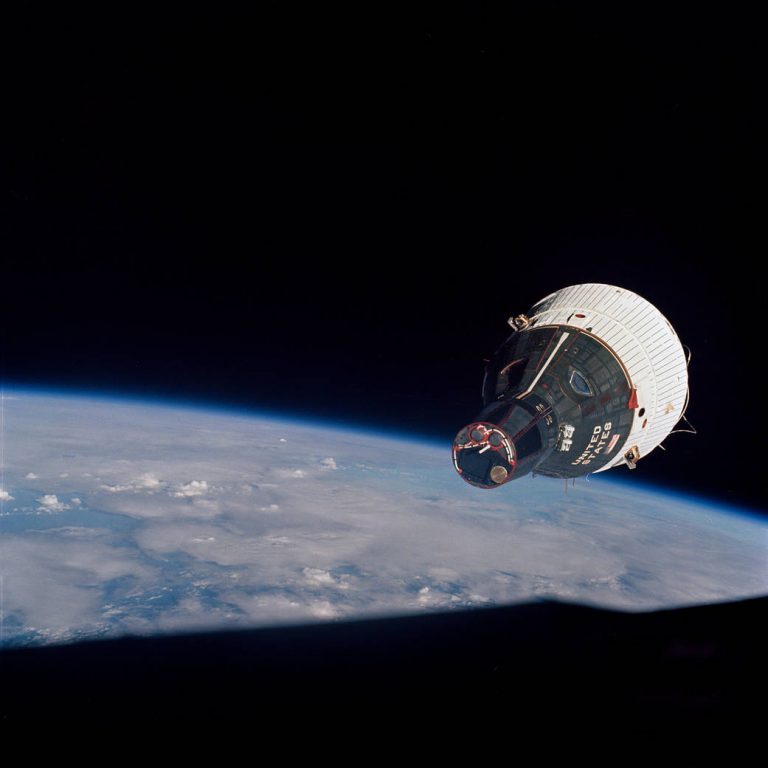
In this photo from Dec. 15, 1965, the Gemini-VII spacecraft is seen from the Gemini-VI-A spacecraft during their rendezvous mission in space. The two spacecraft are approximately 43 feet apart.
Astronauts Jim Lovell and Frank Borman launched on Gemini-VII on Dec. 4, 1965, and eventually spent two weeks in orbit, the longest-duration flight at that time.
Just as Orion and the International Space Station are helping NASA learn how to go to Mars, the Gemini program defined and tested the skills NASA would need to go to the Moon in the 1960s and 1970s. Gemini had four main goals: to test an astronaut’s ability to fly long-duration missions (up to two weeks in space); to understand how spacecraft could rendezvous and dock in orbit around the Earth and the Moon; to perfect re-entry and landing methods; and to further understand the effects of longer space flights on astronauts.
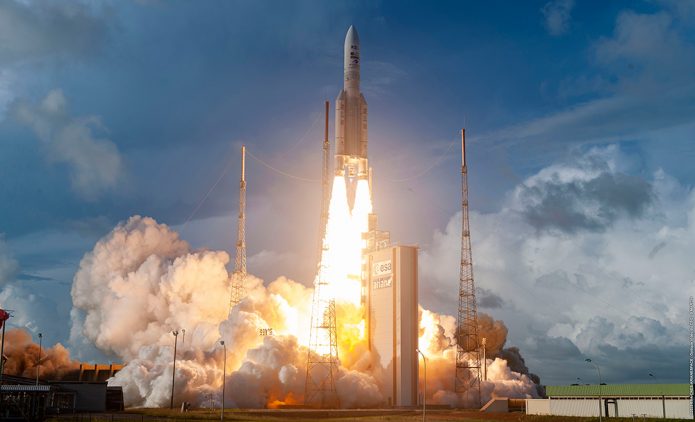
ArianeGroup and Arianespace conducted the 115th Ariane 5 launch, its 3rd launch of the year.
On Tuesday, December 13th, 2022 at 05:30 pm local time, an Ariane 5 launcher, operated by Arianespace, successfully lifted off from Europe’s Spaceport in Kourou, French Guiana (South America), carrying the MTG-I1 meteorological satellite and the Galaxy 35 and Galaxy 36 telecommunication satellites.
The Meteosat Third Generation (MTG) system will help meteorologists meet one of their main challenges – the rapid detection and forecasting of severe weather events – so that timely warnings can be given to citizens, civil authorities and first responders. The data from MTG-I1 (the “I” stands for “Imager”) will have a wide range of uses, from enabling aircraft to avoid storms and earlier alerts of flooding, to more precise monitoring of fires and fog. It will help to protect lives, property and infrastructure and bring economic benefits to Europe and Africa. The MTG satellites are developed and procured in cooperation with the European Space Agency by an industrial consortium led by Thales Alenia Space and OHB. The satellites are developed according to the requirements defined by EUMETSAT after consultation with the users of its meteorological data.
Galaxy 35 and Galaxy 36 are the next satellites in Intelsat’s comprehensive Galaxy fleet refresh plan, a new generation of spacecraft that will provide Intelsat media customers in North America with high-performance media distribution capabilities and unmatched penetration of cable headends. These two satellites will bring C-band contribution capacity to support high-profile events, such as collegiate and professional football, auto racing, baseball, golf, boxing and professional wrestling. The satellites also offer in-orbit protection for select customers in the broadcast arc serving North America.
“With the successful launch of VA259, Arianespace is proud to serve the interests of EUMETSAT and Intelsat, two operators with whom we have been working since 1981 and 1983, respectively”, said Stéphane Israël, CEO of Arianespace. “This mission serves both Europe and North America and is a perfect illustration of the versatility of our heavy-lift launcher, which is capable of meeting the needs of both institutional and commercial operators. Its passengers also reflect our own values, which are to make Space work for a better life on Earth, by improving our meteorological knowledge and connectivity.”
“For its last flight of the year, Ariane 5 once again demonstrated its power and competitiveness, achieving a new performance of almost 11 tons to geostationary orbit. It also proved its responsiveness to the needs of Arianespace’s customers, by launching three satellites at once. Only two more Ariane 5 remain to be launched. The teams at ArianeGroup and Arianespace, with the support of ESA and the French space agency CNES, are preparing together for Ariane 6’s entry into service in autumn 2023”, said André-Hubert Roussel, CEO of ArianeGroup.
By delivering 10.972 tons to geostationary orbit, Ariane 5 achieved its second highest performance after the launch of Syracuse A4 and SES-17 in October 2021. The Ariane 5 was adapted for this mission so that it could accommodate three satellites under its fairing. This triple configuration is made possible by a raising cylinder and a long fairing, increasing the space allocated to the satellites by 20m3. This is the third time in its history that Ariane 5 has done a triple launch.
After this mission, just two Ariane 5 launches are left, including the JUICE mission, before Ariane 6 takes up the baton, supporting Europe’s institutional missions and meeting the growing needs of the commercial market.
The Ariane 5 heavy-lift launcher is an ESA program carried out in cooperation between public institutions and industry across 12 European partner states. The launches are operated by Arianespace.
ArianeGroup is the lead contractor for the development and production of Ariane 5, as well as being responsible for launcher preparation operations up to lift-off. As prime contractor for Ariane 5 and Ariane 6, in charge of development and production, ArianeGroup is at the head of a vast industrial network of more than 600 companies, including 350 small and medium-size enterprises (SME). ArianeGroup delivers a flightworthy launcher on the launch pad to its subsidiary Arianespace, which sells and operates Ariane 5 from the Guiana Space Center (CSG) in French Guiana. During launch campaigns, Arianespace works closely with the French space agency (CNES), which is the design authority for Ariane 5 and is responsible for the satellite preparation facilities and the launch base.
The launch at a glance
345th: Launch operated by Arianespace.
More than 1,140 satellites launched by Arianespace.
3rd: Ariane 5 launch operated by Arianespace in 2022.
This launch was carried out on December 13, 2022 from the European Space Port in Kourou, French Guiana at 05:30 pm local time (08:30 pm UTC).
115th: Ariane 5 launch from the CSG.
10,972 kg: Total payload carried by the launcher for this mission.
89th: consecutive launch with nominal operation of the Vulcain 2 main-stage engine.
115th: consecutive launch with nominal operation of the solid boosters.
155th: consecutive launch with nominal operation of the HM7B upper-stage engine.
About Arianespace
Arianespace uses space to make life better on Earth by providing launch services for all types of satellites into all orbits. It has orbited over 1,100 satellites since 1980. Starting in 2022, Arianespace will operate the new-generation Ariane 6 and Vega C launchers, developed by ESA. Arianespace is headquartered in Evry, near Paris, and has a technical facility at the Guiana Space Center in French Guiana, plus local offices in Washington, D.C., Tokyo and Singapore. Arianespace is a subsidiary of ArianeGroup, which holds 74% of its share capital, with the balance held by 15 other shareholders from the European launcher industry.
About ArianeGroup
ArianeGroup is lead contractor for civil and defense space launcher systems, responsible for the design and the entire production process of Europe’s Ariane 5 and Ariane 6, including marketing and operation by its Arianespace subsidiary, as well as for the design, manufacture, and operational condition maintenance of the missiles of the French oceanic deterrent force. Internationally recognized for its innovative, competitive solutions, ArianeGroup has expertise in all aspects of state-of-the-art space propulsion technologies. ArianeGroup and its subsidiaries also offer their specialist skills in space equipment, services, space surveillance, and critical infrastructure to benefit other industrial sectors. ArianeGroup is a joint venture equally owned by Airbus and Safran, and employs around 7,000 highly qualified staff in France and Germany. Group revenues in 2021 amounted to €3.1 billion.
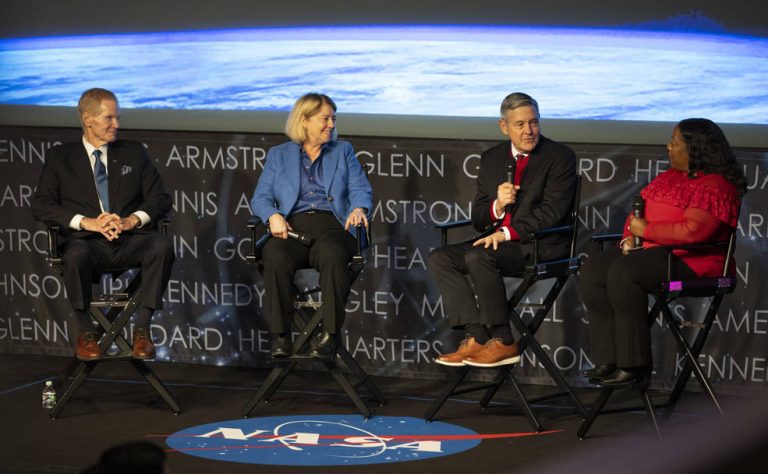
NASA Administrator Bill Nelson, left, NASA Deputy Administrator Pam Melroy, second from left, NASA Associate Administrator Bob Cabana, second from right, and Michelle Jones of NASA Communications, right, are seen Tuesday, Dec. 13, 2022, during an end-of-the year all hands with senior leadership at the Mary W. Jackson NASA Headquarters building in Washington. Nelson, Melroy, and Cabana highlighted the agency’s 2022 accomplishments and looked forward to what is coming in 2023 and beyond. Credits: NASA/Joel Kowsky
2022 is one for the history books as NASA caps off another astronomical year.
NASA launched its mega Moon rocket for the first time, sending its uncrewed Orion spacecraft around the Moon; kicked off a new era in astronomy with the Webb Space Telescope’s record-breaking new imagery from the cosmos; moved an asteroid in humanity’s first ever planetary defense demonstration; working with its partners, sent astronauts on regular missions to the International Space Station, tested new technologies, including an inflatable heat shield for Mars; continued development of quieter supersonic aircraft, and much more.
On Nov. 28, 2022, Orion reached its maximum distance from Earth during the Artemis I mission when it was 268,563 miles away from our home planet. Credits: NASA
“There is no doubt that 2022 was out of this world! From the history-making splashdown of the Artemis I mission, to the groundbreaking images from NASA’s James Webb Space Telescope to the innovative LOFTID technology demonstration, the smashing success of the DART mission, incredible progress in our aeronautics programs, and the growth of partnerships with commercial and international partners,
2022 will go down in the history books as one of the most accomplished years across all of NASA’s missions,” said NASA Administrator Bill Nelson. “There’s so much to look forward to in 2023 too: More stunning discoveries from Webb telescope, climate missions that will tell us more about how our Earth is changing, continued science on the International Space Station, groundbreaking aeronautics developments with the X-59 and X-57 experimental aircraft, the selection of the first astronauts to go to the Moon in more than 50 years, and more. Space is the place and NASA proves humanity’s reach is limitless!”
In support of the Biden-Harris Administration’s priorities, the agency remained a global leader in providing data related to climate change including unveiling a concept for a new Earth Information Center, and published NASA’s first Equity Action Plan. Congress also passed, for the first time in five years, a NASA Authorization Act. And in 2022, NASA reached a decade of excellence by being named as the Best Place to Work in the federal government among large agencies by the Partnership for Public Service for an unprecedented 10th consecutive time.
Below is a summary of accomplishments, demonstrating how in 2022, NASA explored the unknown in air and space, innovated for the benefit of humanity, and inspired the world through discovery.
Preparing for human lunar exploration
Among the accomplishments for NASA’s human spaceflight programs, the agency successfully launched, for the first time, its Space Launch System (SLS) rocket, which put NASA’s Orion spacecraft on a path that traveled farther than any spacecraft built for astronauts has been before. Through Artemis, the agency advanced plans to send the first woman and first of color to the Moon. Leading up to the historic
NASA’s Space Launch System rocket carrying the Orion spacecraft launches on the Artemis I flight test, Wednesday, Nov. 16, 2022, from Launch Complex 39B at NASA’s Kennedy Space Center in Florida. Credits: NASA
Nov. 16 launch of Artemis I, as well as a successful Orion splashdown on Dec. 11, NASA completed multiple key milestones for SLS, Orion, and ground systems:
Worked to assemble the rocket’s core stage at the agency’s Michoud Assembly Facility in New Orleans and the crew module at Kennedy, selected the vehicle that will transport astronauts to the launch pad, and qualified the final launch abort system engine for the Artemis II mission, the first flight with crew.
Completed manufacturing the booster segments and delivered the engine section to Kennedy for the Artemis III mission, which will be humanity’s first return to the lunar surface in more than 50 years and land the first woman on the Moon.
Fired a ground-based version of a booster in Promontory, Utah, for future missions, completed the critical design review for the more powerful evolved configuration of the SLS rocket, known as Block 1B, and began moving toward a services contract model for long-term SLS hardware production and operations to reduce costs.
The agency also completed numerous key Artemis milestones that will ensure not only a human return to the lunar surface, but long-term exploration on and around the Moon in preparation for sending the first astronauts to Mars:
Identified 13 candidate landing regions near the lunar South Pole where the next American astronauts on the Moon could land during Artemis III, selected Axiom Space to provide the moonwalking system, including spacesuits, that astronauts will use during Artemis III, as well as awarded a task order to Collins Aerospace to develop new spacesuits for the International Space Station.
Awarded a contract modification to SpaceX to further develop its Starship human landing system to meet agency requirements for long-term human exploration of the Moon, including a second crewed landing demonstration mission during Artemis IV, and announced a call to companies to provide proposals for sustainable lunar lander development as the agency works toward a regular cadence of Moon landings beyond Artemis IV.
Released a revised set of Moon to Mars Objectives, forming a blueprint for shaping human exploration throughout the solar system.
Researchers from the University of Florida grew Arabidopsis thaliana plants in lunar soil gathered during Apollo missions, showing that plants have the potential to grow on the Moon.
Maintaining human presence in low-Earth orbit
The NASA Authorization Act passed by Congress extended America’s participation in the International Space Station through at least Sept. 30, 2030, enabling the U.S. to continue to reap the benefits for the next decade while the agency works with American industry to develop commercial destinations and markets for a thriving space economy.
This was the 22nd continuous year of human presence aboard the orbiting laboratory. Here are some accomplishments in 2022:
NASA and SpaceX successfully launched and returned crew members to and from the International Space Station from the agency’s Kennedy Space Center in Florida. Regular crew rotation flights to and from station continue to help maximize science in space, including:
NASA astronauts Kayla Barron, Raja Chari, Tom Marshburn, Kjell Lindgren, Mark Vande Hei, Bob Hines, Jessica Watkins, Frank Rubio, Nicole Mann, and Josh Cassada lived and worked aboard the station.
This year saw Vande Hei completing the longest single human spaceflight mission by an American with a record-breaking 355 days in space.
Crew-3 returned to Earth in May with Barron, Chari and Marshburn, as well as ESA (European Space Agency) astronaut Matthias Maurer. During their science expedition aboard the orbiting laboratory, the Crew-3 astronauts conducted experiments, including a study on concrete hardening in microgravity, research on cotton varieties that could help develop drought-resistant plants, and executed a space archaeology study that could provide information that contributes to the design of future space habitats.
Crew-5 arrived at station in October carrying Mann and Cassada, as well as JAXA (Japan Aerospace Exploration Agency) astronaut Koichi Wakata and Roscosmos cosmonaut Anna Kikina. Crew-5 is spending several months aboard the space station conducting new scientific research in areas such as cardiovascular health, bioprinting, and fluid behavior in microgravity to prepare for human exploration beyond low-Earth orbit and to benefit life on Earth.
NASA and Boeing successfully launched and returned the company’s CST-100 Starliner spacecraft from Florida’s Cape Canaveral Space Force Station and landed in the desert of the western United States, completing the uncrewed Orbital Flight Test-2 (OFT-2) to the space station to help prove the system is ready to fly astronauts. Starliner and its crew of NASA astronauts Barry Wilmore and Sunita Williams are preparing for the first flight with astronauts in 2023, the final demonstration prior to regular flights to the microgravity complex.
Crew members welcomed the first NASA-enabled private astronaut mission, Axiom Mission 1, to the orbital complex advancing the agency’s goal of commercializing low-Earth orbit.
Space station crew members are planned to complete 14 spacewalks to upgrade and conduct maintenance at the orbiting laboratory. NASA astronauts continued work to install the International Space Station Rollout Solar Arrays (iROSA), which will increase power generation capability by up to 30% when fully complete, and its partners continued outfitting the Nauka module and new European robotic arm.
Northrop Grumman’s Cygnus spacecraft completed its first limited reboost of the International Space Station – the first mission to feature this enhanced capability as a standard service for NASA.
The International Space Station performed a critical demonstration focused on in-orbit housekeeping by deploying about 172 pounds of trash from the NanoRacks Bishop Airlock for a safe disposal in Earth’s atmosphere.
Four commercial cargo missions delivered more than 30,000 pounds of science investigations, tools, and critical supplies to the space station, and two returned about 8,900 pounds of investigations and equipment to researchers on Earth.
Selected seven new additions to the team of flight directors to oversee operations of the space station, commercial crew, and Artemis missions to the Moon.
Advancing our understanding of Earth, climate change
In 2022, NASA continued its commitment to understanding impacts of climate change on planet Earth, maintaining its role as a leader in understanding climate and Earth science. Among the accomplishments in this area, the agency:
Launched NASA’s newest Earth science instrument to the International Space Station — the Earth Surface Mineral Dust Source Investigation, or EMIT, which is providing information about how mineral dust affects the heating and cooling of the planet and which has a capability to detect methane.
Plans to launch the Surface Water Ocean Topography mission in partnership with the French space agency Centre National d’Études Spatiales, which will provide a global survey of nearly all water on Earth’s surface, providing insight into the ocean’s role in how climate change unfolds.
Announced and released the first concept for NASA’s Earth Information Center, which will allow people to see how our planet is changing. It will also provide easy-to-use information and resources to support decision makers in developing the tools they need to mitigate, adapt, and respond to climate change.
Celebrated 50 years of the Landsat program in partnership with the U.S. Geological Survey, continuing to help scientists track both natural and human-caused changes on Earth’s land surface.
Continued field campaigns that provide information about Earth’s changing climate, including impacts on the Arctic region, the effects of intense summer thunderstorms, and ocean and atmosphere dynamics and their impacts on Earth’s climate
Along with partners, including the U.S. Department of Agriculture, NASA continued to put Earth science data into the hands of America’s farmers to help them increase food security, improve crop resilience, and reduce the volatility of food prices.
NASA participated in the Commodity Classic conference for the first time, America’s largest farmer-led, farmer-focused educational and agricultural experience.
NASA’s Cynthia Rosenzweig received the 2022 World Food Prize from the World Food Prize Foundation for her research to understand the relationship between climate and food systems and forecast how both will change in the future.
Announced NASA’s new domestic agriculture consortium at the University of Maryland, which will lead management of $15 million, supporting efforts to increase and enable sustained uses of Earth observations for the advancement of U.S. agricultural practices.
Worked with national and international partners to collaborate on a global response to climate change, with actions including participating in the 27th United Nations Climate Change Conference, issuing a comprehensive climate action plan with FEMA, finalizing an agreement with ESA to advance global understanding of Earth science and ensure continuity of Earth observation, and continuing a 60-year successful partnership with the Australian Space Agency to study Earth’s changing climate.
Continued planning for the next generation of Earth-observing satellites designed to propel us forward in understanding our changing planet — NASA’s Earth System Observatory.
Launched two weather satellites for the National Oceanic and Atmospheric Administration, building on a partnership of over 50 years, successfully launching more than 60 satellites to improve weather forecasting, severe storm and hurricane prediction, and climate observations.
Solar system, beyond
While preparing for a robotic return to the lunar surface, NASA advanced its Commercial Lunar Payload Services (CLPS) initiative closer to home. Meanwhile, farther in the solar system, NASA’s James Webb Space Telescope deployed and captured new images, Hubble continued to make new discoveries, the agency conducted two Venus flybys, and more:
Behind the curtain of dust and gas in these “Cosmic Cliffs” are previously hidden baby stars, now uncovered by James Webb Space Telescope. Credits: NASA, ESA, CSA, and STScI
NASA’s Double Asteroid Redirection Test (DART) successfully impacted its target asteroid in the world’s first-ever test for planetary defense. Since then, the mission’s Investigation Team confirmed DART’s kinetic impact successfully moved its target asteroid into a new orbit, marking the first-time humanity has ever altered a celestial body’s motion in space.DART’s final look at the asteroid moonlet Dimorphos before impact. The spacecraft’s on board DRACO imager took this final image ~4 miles (~6 kilometers) from the asteroid and only 1 second before impact. DART’s impact occurred during transmission of the image to Earth, resulting in a partial picture. The image shows a patch of the asteroid that is 51 feet 16 meters) across. Ecliptic north is toward the bottom of the image. This image is shown as it appears on the DRACO detector and is mirror flipped across the x-axis from reality.Credits: NASA/Johns Hopkins APL
Through CLPS, NASA selected two new science instrument suites – including one that will study the mysterious Gruithuisen Domes for the first time – for priority Artemis science on the Moon through the agency’s Payloads and Research Investigations on the Surface of the Moon (PRISM) call for proposals. NASA also awarded Draper a contract to deliver Artemis science investigations to the Moon in 2025. The experiments riding on Draper’s SERIES-2 lander are headed to Schrödinger Basin, a large lunar impact crater on the far side of the Moon, close to the lunar South Pole.
NASA’s Hubble Space Telescope spotted the farthest individual star ever seen, whose light took 12.9 billion years to reach Earth – a huge leap further back in time from the previous record holder. For the first time, Hubble also provided direct evidence for a lone black hole drifting through interstellar space by a precise mass measurement of the phantom object.
In a cosmic milestone, the total number of confirmed exoplanets in NASA’s Exoplanet Archive reached 5,000, representing a 30-year journey of discovery led by NASA space telescopes.
When the Hunga Tonga-Hunga Ha‘apai volcano erupted in January, it sent atmospheric shock waves, sonic booms, and tsunami waves around the world. Scientists analyzed data from NASA’s Ionospheric Connection Explorer, or ICON, mission and ESA’s Swarm satellites to find that the volcano’s effects also reached space.
As Voyager, NASA’s longest-lived mission, logs 45 years in space and studies the very nature of space far beyond the planets, NASA selected Geospace Dynamics Constellation to help improve our understanding of the dynamics of the Sun, the Sun-Earth connection, and the constantly changing space environment. Multi-slit Solar Explorer and HelioSwarm missions to help improve our understanding of the dynamics of the Sun, the Sun-Earth connection, and the constantly changing space environment.
Researchers continued to pioneer scientific discovery using NASA’s Cold Atom Lab, the first quantum physics facility aboard the International Space Station.
Supporting future Artemis missions and lunar science with Biological Experiment-01. Four investigations aboard Artemis I helped pave the way for future missions to the Moon and beyond.
Celebrated 25 years of continuous robotic exploration of Mars, with at least one spacecraft operating at all times, either on the surface or in orbit around the planet.
NASA and ESA entered into a formal agreement on the next step in their campaign to return scientifically selected samples from Mars and are proceeding with the creation of a sample tube depot on the Red Planet.
After eight successful years of science operations, the Stratospheric Observatory for Infrared Astronomy (SOFIA) completed its final science flight. This now-retired mission leaves behind a legacy of scientific accomplishments and engineering ingenuity.
Developing New Technologies for Benefit of All
NASA advances capabilities for space exploration, tapping entrepreneurs, researchers, and innovators across the country for solutions that will enable missions for decades to come. From launching space missions to demonstrating advanced technologies to supporting the development of early-stage concepts, 2022 highlights include:
CAPSTONE – short for Cislunar Autonomous Positioning System Technology Operations and Navigation Experiment – launched and entered a unique orbit at the Moon, beginning its mission to test the orbit planned for Artemis’ Gateway outpost and demonstrate new technologies.The Low-Earth Orbit Flight Test of an Inflatable Decelerator, or LOFTID, heat shield rests on the deck of the recovery boat after it splashed down and was retrieved from the Pacific Ocean.Credits: NASA/Greg Swanson
LOFTID, or the Low-Earth Orbit Flight Test of an Inflatable Decelerator, successfully demonstrated an inflatable heat shield technology that could be used for human missions to Mars.
Launched Lunar Flashlight to the Moon, where the small satellite will use lasers to hunt for ice in permanently shadowed regions at the Moon’s South Pole.
An instrument on the Perseverance rover, MOXIE – short for the Mars Oxygen In-Situ Resource Utilization Experiment – completed more runs on the Red Planet, producing a total of 140 minutes to date of breathable oxygen from Mars’ carbon dioxide rich atmosphere.
NASA and the Department of Energy announced fission surface power concept awards to three companies.
Awarded a contract for the development of a next-generation spaceflight computing processor to enable future exploration missions.
Selected three companies to further advance work on deployable vertical solar array systems that will help power the agency’s human and robotic exploration of the Moon under Artemis.
More than 700 organizations from all 50 U.S. states and 46 countries joined NASA in fostering lunar technology development through the Lunar Surface Innovation Consortium.
Winners of the inaugural NASA TechLeap Prize – Autonomous Observation Challenge No. 1 tested their technologies on high-altitude balloon flights less than a year after the competition was launched.
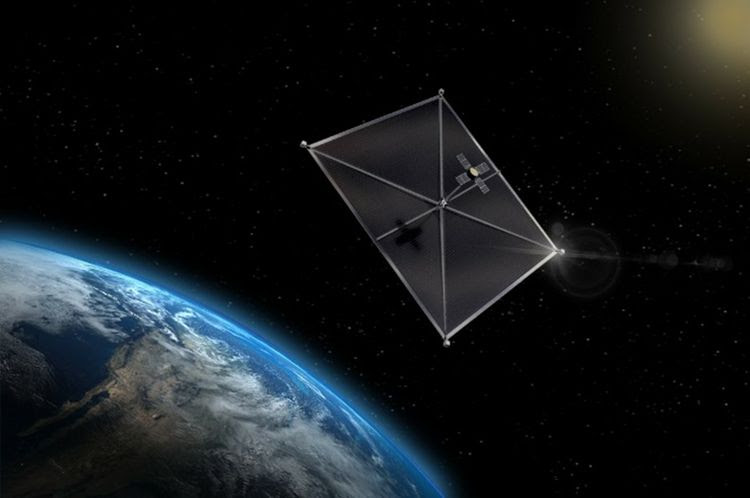
NASA Innovative Advanced Concepts fostered early-stage, futuristic ideas, such as custom, 3D-printed spacesuits, swimming micro-robots to explore ocean worlds, and a new kind of solar sail.
NASA’s Small Business Innovation Research and Small Business Technology Transfer programs supported the investment of approximately $230 million to hundreds of U.S. small businesses to foster technology development supporting the agency’s goals.
NASA transferred technologies and software to industry and entrepreneurs, executing 164 licensing agreements and 4,772 software usage agreements.
Agency investments in the development of novel roll-out solar arrays (ROSAs) were used to power the DART mission and enable a sufficient future power supply for the International Space Station.
Early career researchers advanced agency capabilities in areas including nanosensor technologies, dynamic visual displays for spacesuit helmets, and modular, reconfigurable robotic arms for in-space assembly through new and continuing projects under the Early Career Initiative.
In partnership with multiple agencies, NASA issued a joint solicitation to extend the lifespan of 3D tissue chips.
Progressing toward new era of air travel
NASA worked with its partners and the private sector to advance sustainable aviation by developing and testing new green technologies that will revolutionize air transportation. The knowledge and technology generated by the agency will provide regulators and industry with new ways to integrate sustainable solutions. Over the past year, the agency:
Tested the high-voltage systems and batteries for the all-electric X-57 Maxwell aircraft before installing its 400-pound battery packs, paving the way for future ground and flight tests. The project will share its knowledge to advance U.S. development of smaller sustainable all-electric vehicles.
Issued a call for private sector proposals under its Sustainable Flight Demonstrator project for an aircraft and technologies that can help inform the design of low-emission, single-aisle commercial airliners in the near future. NASA will issue an award in early 2023.
Completed ground tests with the Boeing ecoDemonstrator program to compare the levels of soot particles in sustainable aviation fuel versus traditional jet fuel burning in a 777-200ER aircraft’s engines.
Unveiled upgrades to the AAM National Campaign’s Mobile Operations Facility, which be used to support AAM flight testing.
Tested Transonic Truss-Braced Wing aircraft technology designed to burn 8-10% less fuel than traditional winged aircraft.
Conducted research for the agency and private sector using its Electric Aircraft Testbed including tests of a hybrid electric propulsion system powerful enough for a single-aisle commercial airliner.
Advanced development of an innovative, solid-state battery pack that would be lighter, safer, and more suited to aviation than today’s batteries.
Used a 3D printing process to develop a new metal alloy, known as GRX-810, that can be used for applications including the insides of aircraft and rocket engines. The alloy can endure temperatures over 2,000 degrees Fahrenheit and survive 2,000 times longer than existing alloys.
Partnered with Boeing to create shape-shifting devices that can raise or lower an airplane’s vortex generators, wing components that cut down on drag a save on fuel consumption.
Provided researchers from the Scalable Traffic Management for Emergency Response Operations with training from the U.S. Forest Service and the California Department of Forestry and Fire Protection to understand controlled burns and aerial firefighting strategies.
Broke ground for the Flight Dynamics Research Facility at NASA’s Langley Research Center in Hampton, Virginia. This new wind tunnel will have new capabilities and lower maintenance costs.
Selected new participants for the University Leadership Initiative, with students and researchers taking on some of the toughest challenges in aeronautics.
Launched its newest competition for university students, Runway Functions: Predict Reconfigurations at U.S. Airports.
Prioritizing Diversity, Equity, Inclusion, and Accessibility (DEIA)
This year, NASA developed and launched an agencywide DEIA Strategic Plan to recruit, hire, support, engage, and retain the most talented and promising individuals, from all backgrounds and life experiences, to be part of the NASA family. NASA also:
Launched its first Equity Action Plan to expand opportunities for traditionally underserved, underrepresented, and untapped communities to work with and learn from NASA.
Through its Spanish-language outreach, NASA continued to translate many of its products, particularly those related to the agency’s science missions. As part of the Equity Action Plan, NASA is committed to growing its Spanish-language communications team and translation capabilities.
Ensured accessibility of NASA collected Earth science information, by making 54 of the most requested environmental data sets available on the cloud, with full transfer of NASA Earth science data to the cloud by 2025.
Supported ongoing efforts to advance racial equity and expand research opportunities for historically underserved and underrepresented communities in the federal government through Earth science research grants for Minority Serving Institutions.
Hosted an Equity Stakeholder Town Hall to openly share ideas on how the agency will continue to support underserved and underrepresented communities, and to gain insights from attendees on how to best implement the next phase of the plan.
NASA awarded 39 proposals ($6.9 million for up to three years) focused on advancing progress on equity and environmental justice in the U.S. through the application of Earth science, geospatial, and socioeconomic information.
Developed a 360-degree, interactive Artemis exhibit for nationwide events that includes excerpts from NASA’s First Woman graphic novel and underscores the agency’s plans to land the first woman and first person of color on the Moon.
NASA astronaut Nicole Mann was the first Indigenous woman for NASA to go to space as part of Crew-5 mission to the International Space Station, and NASA astronaut Jessica Watkins became the first Black woman to serve a long duration mission aboard the orbiting laboratory.
Produced and released a documentary, The Color of Space, featuring a conversation between seven current and former Black astronauts, each of whom were selected to become part of NASA’s astronaut corps and train for missions to space.
Launched the SMD Bridge Program to foster collaboration and partnerships between NASA centers and Historically Black Colleges and Universities, Minority-Serving Institutions, Primarily Undergraduate Institutions, and high research universities. The program focuses on paid research and engineering internships, apprenticeships, and research experiences for faculty.
Hosted a series of dialogues with agency leaders and other subject matter experts during the 51st Congressional Black Caucus Legislative Conference in Washington.
Hosted a Twitter Spaces with science experts who discussed how space imagery is an experience people can read, touch, and hear via alternative text, rich image descriptions, tactile panels, 3D printed models, tactile plates, and sonifications.
Connected more than 220 industry stakeholders and businesses with federal procurement experts and other leaders during its first virtual LGBTQ+ Vendor Equity Forum.
Inspiring Artemis Generation through Science, Technology, Education, and Math
Through a variety of STEM outreach activities, NASA sought to inspire a new generation of students and encourage them to become the next scientists, engineers, and astronauts. NASA conducts its STEM work through partnering with key organizations, awarding a variety of grants, and more. STEM highlights in 2022 include:
NASA Administrator Bill Nelson helped kick-off a new initiative to deliver food and hands-on STEM kits, called Artemis Learning Lunchboxes, this summer. The joint initiative with the Center of Science and Industry (COSI), has since expanded across the country, landing most recently at public school in Washington Dec. 8.
Collaborated with the Department of Education to enhance the federal Historically Black Colleges and Universities (HBCU) Scholar Recognition Program using NASA entrepreneurial expertise. A NASA pitch competition for students at higher education institutions it became part of the HBCU Scholar Recognition Program, part of the White House Initiative on Advancing Educational Equity, Excellence, and Economic Opportunity. The competition will be a small-scale version of NASA’s Minority University Education and Research Program (MUREP) Innovation and Tech Transfer Idea Competition (MITTIC).
The agency’s Minority University Education and Research Program (MUREP) Innovation and Tech Transfer Idea Competition (MITTIC), a Shark Tank-style competition for students at minority-serving institutions, was officially included in the 2022 historically Black colleges and universities (HBCU) Scholar Recognition Program.
Awarded a total of nearly $600,000 to 10 minority-serving institutions (MSIs) across the U.S. to amplify the voices of diverse innovators and help their ideas find a way into NASA’s programs through MUREP and STMD through M-STTR.
Chose two students as winners of the Lunabotics Junior Contest, a national competition for K-12 students featuring the agency’s Artemis missions. Contestants were charged with designing a robot that can dig and move lunar soil, or regolith, from one area of the lunar South Pole to a holding container near a future Artemis Moon base. design.
Selected 57 winning teams in its inaugural nationwide TechRise Student Challenge, designed to attract, engage, and prepare future science, technology, engineering, and mathematics professionals.
Vice President Kamala Harris hosted an evening of NASA STEM activities at the Naval Observatory for military families and local students and their families in June, which included a special screening of Disney Pixar’s Lightyear.
NASA and Rice University in Houston hosted multiple events in September to celebrate the 60th anniversary of John F. Kennedy’s historic speech at Rice Stadium, rallying the nation to land astronauts on the Moon before the end of the decade and bring the crew safely back to Earth.
Awarded more than $4 million to institutions across the U.S. to help bring the excitement of authentic NASA experiences to groups of middle and high school students who are traditionally underserved and underrepresented in STEM.
Public engagement
Inspiration remains the foundation of NASA’s public engagement programs. While safely returning to regularly conducting in-person activities as well as hosting virtual events and digital communications, NASA provided opportunities to connect people around the world with agency content. Highlights in 2022 included:
Grew the agency’s social media following to 330 million so far in 2022 – up 18 percent from 280 million in 2021.
Shares on social media posts across the agency reached 8.7 million in 2022, surpassing the pace of 2021 (8.3 million shares), but lower than 2020’s record of 12.7 million shares, stimulated by NASA’s SpaceX demonstration flight with crew and the Mars Perseverance rover launch.
Four flagship NASA accounts reached follower milestones this year, passing 65 million (Twitter), 25 million (Facebook) and 85 million (Instagram). NASA’s flagship YouTube channel passed 10 million subscribers. The NASA Headquarters photo team surpassed three million followers on Twitter and over 36,000 followers on Flickr.
On Sept. 26, the audience for our DART mission’s intentional crash into target asteroid Dimorphos peaked at one million live viewers; the audience for the liftoff of Artemis I peaked at 960,000 viewers on Nov. 16. Many more viewers watched recordings of agency broadcasts, with the Artemis I launch, our first-ever live launch broadcast in HD, surpassing 10 million YouTube plays. The replay of DART’s impact has gotten more than 5.4 million views.
“The Astronaut’s Perspective” was nominated for an Emmy in the Outstanding Science and Technology Documentary category. This video includes beautiful Earth views and reflections from NASA and international partner astronauts.
NASA hosted 14 Twitter Spaces in 2022, including the agency’s first-ever Spaces events in Spanish. Over 465,000 unique listeners joined a live Spaces.
Returned to hosting in-person NASA Social events in 2022, beginning with NASA’s SpaceX Crew-4 launch to the International Space Station. Social media guests also attended NASA Socials for the reveal of the Webb telescope’s first images, the DART mission impact, the launch of SpaceX Crew-5, and the Artemis I test flight.
On NASA.gov, the “Where Is Webb” feature tracking the telescope’s journey to L2 and deployment had 36 million pageviews in 2022, the fourth-most-visited page on all NASA websites. Six of the top 10 most-viewed agency news releases in 2022 were about the telescope; two of these releases were in Spanish.
There were almost 4.5 million pageviews of the Send Your Name on Artemis special feature, with nearly 3.4 million members of the public signing up for a boarding pass around the Moon on Artemis I. Web specials highlighting Artemis, the Artemis I test flight, and tracking Artemis I each topped 2 million pageviews.
During the first half of the Artemis I 25-day flight test, the app for tracking the mission received more than 2.1 million visits.
NASA launched a virtual educational platform for STEM+Arts Day and a digital launch packet, focused on the agency’s Webb telescope.
The agency incorporated images from the Webb Telescope in its exhibits and media events at the Space Symposium in Colorado Springs, Colorado, and the International Astronautical Congress in Paris.
Among the many collaborations that allowed NASA to educate and inspire new audiences:
Astronaut Snoopy took a ride around the Moon on Orion as the zero gravity indicator for the Artemis I mission as part of a partnership with Peanuts Worldwide that extends back to the Apollo era.
LEGO Education held a four-day build event at NASA Kennedy featuring STEM challenges connected to the “Build to Launch” STEM series that LEGO Education created in partnership with NASA. The agency also worked with LEGO to help identify NASA content that fed into several Artemis-inspired LEGO City Moon sets.
Krispy Kreme released a one-day Artemis doughnut to celebrate Artemis I.
NASA and Google Arts & Culture partnered to create a digital gallery called, “Our Solar System: A 3D adventure through our cosmic neighborhood with NASA,” which includes more than 60 3D models of planets, Moons and NASA spacecraft. These models, along with a newly released SLS 3D model, are also featured via Google Search results.
NASA worked with Google on a Webb telescope Doodle celebrating the first images, as well as a DART easter egg where, after the successful DART asteroid redirect, results on Google’s search page were skewed when a user searched for DART on Google’s home page.
Multiple screens in Times Square and in Piccadilly Circus featured the Webb First Light Images shortly after their release in July, sharing the excitement these images created with even more people around the world.
NASA unveiled a new partnership with Crayola Education in 2021 and worked with Crayola and Harper Publishing to help celebrate the 75th anniversary of the iconic children’s story, Goodnight Moon.
NASA worked with Mattel and the ISS National Lab, which sponsored the project, to film NASA astronauts Kayla Baron and Raja Chari on the space station for an episode of a Barbie series, “You Can Be Anything.” The purpose of the free video was to inspire young students to be interested in STEM careers.
NASA maintains high visibility, engaging new audiences in innovative ways, whether it’s through partnerships, arts or entertainment projects that reach millions of people. In 2022, NASA collaborated on over 150 documentary projects, 29 notable television programs and 19 feature films which reached audiences globally.
NASA developed an exhibition of 15 pieces from the agency’s art collection at the National Academy of Sciences in Washington, which had not been on display in over a decade. New items included the Kehinde Wiley Moon Person award, on loan from MTV, and Andy Warhol paintings in the collection.
NASA collaborated with studios on feature films, including Roland Emmerich’s Moonfall starring Halle Berry (Lionsgate), Lightyear (Disney), Richard Linklater’s Apollo 10/1-2 (Netflix), A Million Miles Away (Amazon: post-production) starring Michael Pena, and Project Artemis (Apple TV: preproduction) produced by Scarlett Johansson. The agency also collaborated on more than a dozen Artemis documentaries with outlets ranging from Smithsonian/Paramount+ to National Geographic/Disney. TV programs of note include Snoopy Season 2 (Apple TV), Top Chef, Jeopardy, and Comedy Central’s The Daily Show with Trevor Noah, which included an interview with Webb Space Telescope Program Director Greg Robinson
The agency attracted major talent for various mission related projects and outreach initiatives. These included:
Video content for Artemis I with Eddie Vedder, Yo-Yo Ma and the Philadelphia Orchestra, Josh Groban and Herbie Hancock, Jack Black, Keke Palmer, Patrick Wilson and Chris Evans.
Halle Berry conducted an Instagram live with NASA’s Johnson Space Center Director Vanessa Wyche and NASA astronaut Victor Glover. She also walked the red carpet for Moonfall with NASA astronaut Jeanette Epps.
NASA astronaut Tom Marshburn visited the agency’s Jet Propulsion Laboratory with Chris Evans for a tour and downlink with the space station. Marshburn also attended the premiere of Buzz Lightyear. A special screening of the film was held at the VP’s residence with NASA astronauts, Keke Palmer and Uzo Aduba.
Coldplay did a special Webb image global release during their concert tour in Berlin.
Additional talent that visited NASA’s Johnson including Carrie Underwood, Taraji P. Henson, Nick Jonas, and Marshawn Lynch. Actor Channing Tatum visited NASA’s Kennedy Space Center in Florida.
Space station downlinks were arranged between astronauts and Eddie Vedder, Jack Black, Richard Linklater and Yo-Yo Ma.
Special movie screenings aboard the space station included Apollo 10-1/2 and Buzz Lightyear.
NASA also participated in a National Symphony Orchestra concert at Wolf Trap for Star Wars: The Empire Strikes Back with a special segment on the Webb telescope.
For more about NASA’s missions, research, and discoveries, visit: https://www.nasa.gov