Home Blog Page 105

Webb Telescop Sees Through Dust To Find Young Stars

0
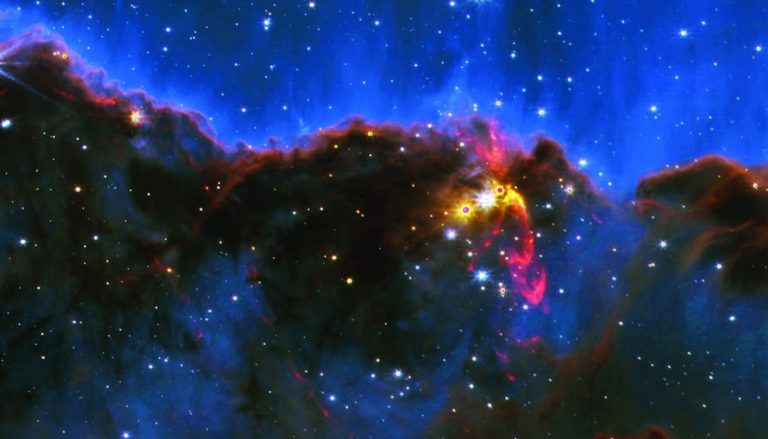
Matter flows away from the poles of newborn stars in fast-moving columns that plow through nebular clouds. Gas and dust pile up in front of these outflows, forming waves called “bow shocks” in much the same way that bow waves form at the leading edge of seagoing ships. This false-color infrared image from the James Webb Space Telescope shows bow shocks of molecular hydrogen (red) streaming away from newborn stars in a star-forming region called the Cosmic Cliffs in the southern constellation Carina. (Credit: NASA, ESA, CSA and STScI)

Images from NASA’s James Webb Space Telescope contain telltale signs of two dozen previously unseen young stars about 7,500 light years from Earth, say researchers.

The findings, which appear in the Monthly Notices of the Royal Astronomical Society, offer a glimpse of what astronomers will find with Webb’s near-infrared camera. The instrument is designed to peer through clouds of interstellar dust that have previously blocked astronomers’ view of stellar nurseries, especially those that produce stars similar to Earth’s sun.

Megan Reiter, an assistant professor of physics and astronomy at Rice University, and coauthors analyzed a portion of Webb’s first images of the Cosmic Cliffs , a star-forming region in a cluster of stars known as NGC 3324.

“What Webb gives us is a snapshot in time to see just how much star formation is going on in what may be a more typical corner of the universe that we haven’t been able to see before,” says Reiter, who led the study.

Located in the southern constellation Carina, NGC 3324 hosts several well-known regions of star formation that astronomers have studied for decades. Many details from the region have been obscured by dust in images from the Hubble Space Telescope and other observatories. Webb’s infrared camera was built to see through dust in such regions and to detect jets of gas and dust that spew from the poles of very young stars.

Reiter and colleagues focused their attention on a portion of NGC 3324 where only a few young stars had previously been found. By analyzing a specific infrared wavelength, 4.7 microns, they discovered two dozen previously unknown outflows of molecular hydrogen from young stars. The outflows range in size, but many appear to come from protostars that will eventually become low-mass stars like Earth’s sun.

“The findings speak both to how good the telescope is and to how much there is going on in even quiet corners of the universe,” Reiter says.

Within their first 10,000 years, newborn stars gather material from the gas and dust around them. Most young stars eject a fraction of that material back into space via jets that stream out in opposite directions from their poles. Dust and gas pile up in front of the jets, which clear paths through nebular clouds like snowplows. One vital ingredient for baby stars, molecular hydrogen, gets swept up by these jets and is visible in Webb’s infrared images.

“Jets like these are signposts for the most exciting part of the star formation process,” says study coauthor Nathan Smith of the University of Arizona. “We only see them during a brief window of time when the protostar is actively accreting.”

The accretion period of early star formation has been especially difficult for astronomers to study because it is fleeting—usually just a few thousand years in the earliest portion of a star’s multimillion-year childhood.

Study coauthor Jon Morse of the California Institute of Technology says jets like those discovered in the study “are only visible when you embark on that deep dive—dissecting data from each of the different filters and analyzing each area alone.

“It’s like finding buried treasure,” Morse says.

Reiter says the size of the Webb telescope also played a role in the discovery.

“It’s just a huge light bucket,” Reiter says. “That lets us see smaller things that we might have missed with a smaller telescope. And it also gives us really good angular resolution. So we get a level of sharpness that allows us to see relatively small features, even in faraway regions.”

The Webb Space Telescope program is led by NASA in partnership with the European Space Agency (ESA) and the Canadian Space Agency (CSA). The telescope’s science and mission operations are led by the Space Telescope Science Institute (STScI) in Baltimore.

The research had support from NASA, STScI, and a Dorothy Hodgkin Fellowship from the UK’s Royal Society.

Source: Rice University

Original Study DOI: 10.1093/mnras/stac2820


By Jade Boyd-Rice
Source Futurity

First Two O3b mPOWER Satellites Sending, Receiving Signals After Successful Dual-Stack Launch

0
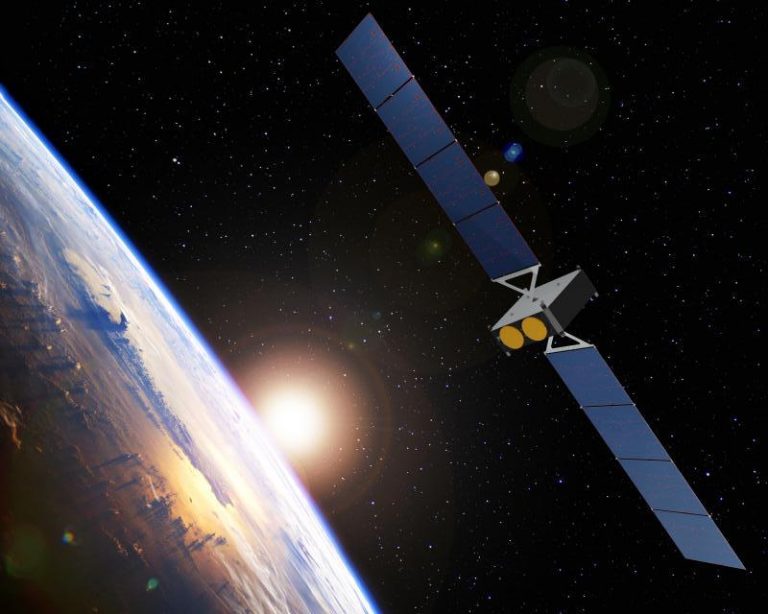
O3b mPOWER Satellite. Boeing

The first two Boeing [NYSE:BA]-built O3b mPOWER satellites are sending and receiving signals as they continue their journey into Medium Earth Orbit (MEO) following their successful dual-configuration launch.

Developed for service provider SES, the satellites lifted off atop a SpaceX Falcon 9 rocket from Florida’s Cape Canaveral Space Force Station on Dec. 16 at 5:48 PM ET.

O3b mPOWER is SES’s second-generation MEO system designed to transform industries with terabit-level scale, roundtrip latency of less than 150 milliseconds, and unmatched service availability.

“Today’s launch marks the next milestone of our MEO journey. With O3b mPOWER, we are bringing game-changing technology to deliver a unique combination of high-throughput, guaranteed reliability and service flexibility that is the first in the industry,” said Steve Collar, chief executive officer, SES. “O3b mPOWER is the satellite system of choice for applications where performance matters most.”

The O3b mPOWER ecosystem comprises an initial 11 satellites each equipped with more than 5,000 digitally formed beams. Coupled with an extensive ground infrastructure, the software-driven system enables SES to address current and future connectivity needs for governments, mobile network operators, energy companies, cruise lines and enterprises across the globe.

Boeing will oversee the satellites’ orbit raising and in-orbit testing before handover to SES in approximately 5 months.

“From concept to reality, the partnership with SES while developing the first-of-its-kind technology has been remarkable,” said Jim Chilton, senior vice president of Boeing Space and Launch. “The next few months will be another critical collaboration period as we prepare the next nine satellites for launch and enable these first satellites to fulfill their mission to connect people around the world.”

The O3b mPOWER satellite constellation will kick off commercial service in the third quarter of 2023.

For more information on how O3b mPOWER can bring a new level of performance to satellite-enabled communications, visit SES’s newsroom.

As a leading global aerospace company, Boeing develops, manufactures and services commercial airplanes, defense products and space systems for customers in more than 150 countries. As a top U.S. exporter, the company leverages the talents of a global supplier base to advance economic opportunity, sustainability and community impact. Boeing’s diverse team is committed to innovating for the future, leading with sustainability, and cultivating a culture based on the company’s core values of safety, quality and integrity. Join our team and find your purpose at boeing.com/careers.

By Keith Cowing
Source SpaceRef

Hubble Views A Star-Studded Cosmic Cloud

0

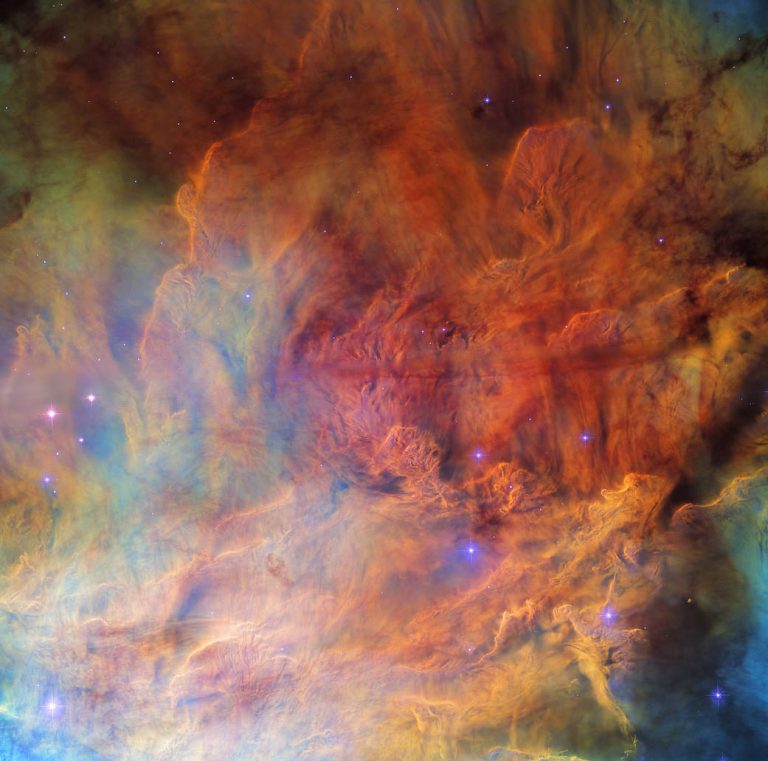
A portion of the open cluster NGC 6530 appears as a roiling wall of smoke studded with stars in this image from the NASA/ESA Hubble Space Telescope. NGC 6530 is a collection of several thousand stars lying around 4,350 light-years from Earth in the constellation Sagittarius. The cluster is set within the larger Lagoon Nebula, a gigantic interstellar cloud of gas and dust. Hubble has previously imaged the Lagoon Nebula several times, including these images released in 2010 and 2011. It is the nebula that gives this image its distinctly smoky appearance; clouds of interstellar gas and dust stretch from one side of the image to the other.

Astronomers investigated NGC 6530 using Hubble’s Advanced Camera for Surveys and Wide Field Planetary Camera 2. They scoured the region in the hope of finding new examples of proplyds, a particular class of illuminated protoplanetary discs surrounding newborn stars. The vast majority of known proplyds are found in only one region, the nearby Orion Nebula. This makes understanding their origin and lifetimes in other astronomical environments challenging.

Hubble’s ability to observe at near-infrared wavelengths – particularly with Wide Field Camera 3 – have made it an indispensable tool for understanding star birth and the origin of exoplanetary systems. The new NASA/ESA/CSA James Webb Space Telescope’s unprecedented observational capabilities at infrared wavelengths will complement Hubble observations by allowing astronomers to peer through the dusty envelopes around newly born stars and investigate the faintest, earliest stages of star birth.

Text credit: European Space Agency (ESA)
Image credit: ESA/Hubble & NASA, O. De Marco; Acknowledgment: M.H. Özsaraç

Media Contact:

Claire Andreoli
NASA’s Goddard Space Flight CenterGreenbelt, MD
301-286-1940

By Andrea Gianopoulos
Source NASA

NASA’s Perseverance Rover To Begin Building Martian Sample Depot

0

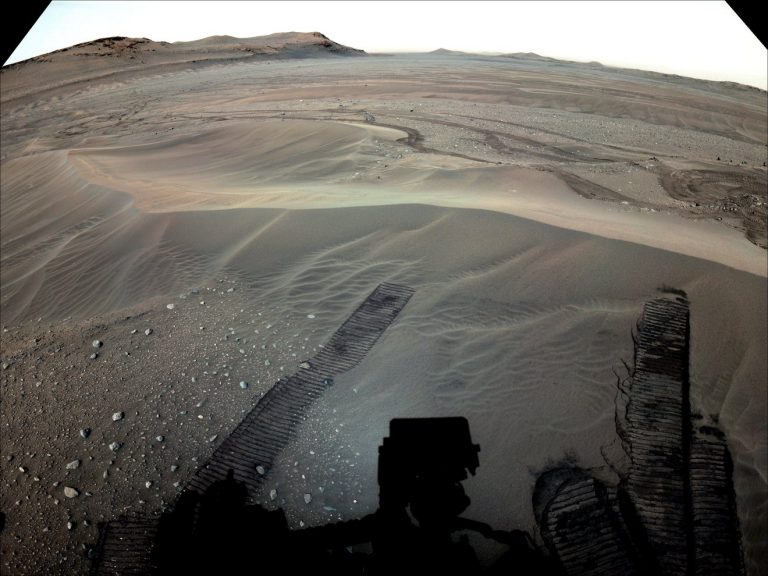
The location where NASA’s Perseverance will begin depositing its first cache of samples is shown in this image taken by the Mars rover on Dec. 14, 2022, the 646th Martian day, or sol, of the mission. Credit: NASA/JPL-Caltech/ASU/MSSS

The 10 sample tubes being dropped on Mars’ surface so they can be studied on Earth in the future carry an amazing diversity of Red Planet geology.

In the coming days, NASA’s Perseverance rover is expected to begin building the first sample depot on another world. This will mark a crucial milestone in the NASA-ESA (European Space Agency) Mars Sample Return campaign, which aims to bring Mars samples to Earth for closer study.

The depot-building process starts when the rover drops one of its titanium sample tubes carrying a chalk-size core of rock from its belly 2.9 feet (88.8 centimeters) onto the ground at an area within Jezero Crater nicknamed “Three Forks.” Over the course of 30 or so days, Perseverance will deposit a total of 10 tubes that carry samples representing the diversity of the rock record in Jezero Crater.

NASA’s Perseverance Mars rover used its Mastcam-Z camera to capture this rocky hilltop nicknamed “Rockytop” on July 24, 2022, the 507th Martian day, or sol, of the mission. 
Credit: NASA/JPL-Caltech/ASU/MSSS

The rover has been taking a pair of samples from each of its rock targets. Half of every pair will be deposited at Three Forks as a backup set, and the other half will remain inside Perseverance, which will be the primary means to convey the collected samples to the Mars launch vehicle as part of the campaign.

“The samples for this depot – and the duplicates held aboard Perseverance – are an incredible set representative of the area explored during the prime mission,” said Meenakshi Wadhwa, the Mars Sample Return program principal scientist from Arizona State University. “We not only have igneous and sedimentary rocks that record at least two and possibly four or even more distinct styles of aqueous alteration, but also regolith, atmosphere, and a witness tube.”

This map shows where NASA’s Perseverance Mars rover will be dropping 10 samples that a future mission could pick up.
This map shows where NASA’s Perseverance Mars rover will be dropping 10 samples that a future mission could pick up. The orange circles represent areas where a Sample Recovery Helicopter could safely operate to acquire the sample tubes. 
Credit: NASA/JPL-Caltech

How to Build a Depot

One of the first requirements to build a sample depot on Mars is to find a level, rock-free stretch of terrain in Jezero Crater where there’s room for each tube to be deposited.

“Up to now, Mars missions required just one good landing zone; we need 11,” said Richard Cook, Mars Sample Return program manager at NASA’s Jet Propulsion Laboratory in Southern California. “The first one is for the Sample Retrieval Lander, but then we need 10 more in the vicinity for our Sample Recovery Helicopters to perform takeoffs and landings, and driving too.”

This short animation features key moments of NASA and ESA’s Mars Sample Return campaign, from landing on Mars and securing the sample tubes to launching them off the surface and ferrying them back to Earth.
 Credit: NASA/ESA/JPL-Caltech/GSFC/MSFC

After settling on a suitable site, the campaign’s next task was to figure out exactly where and how to deploy the tubes within that location. “You can’t simply drop them in a big pile because the recovery helicopters are designed to interact with only one tube at a time,” said Cook. The helicopters are intended to serve as a backup, just like the depot. To ensure a helicopter could retrieve samples without disturbing the rest of the depot or encountering any obstructions from the occasional rock or ripple, each tube-drop location will have an “area of operation” at least 18 feet (5.5 meters) in diameter. To that end, the tubes will be deposited on the surface in an intricate zigzag pattern, with each sample 16 to 49 feet (5 to 15 meters) apart from one another.

The depot’s success will depend on accurate placement of the tubes – a process that will take over a month. Before and after Perseverance drops each tube, mission controllers will review a multitude of images from the rover. This assessment will also give the Mars Sample Return team the precise data necessary to locate the tubes in the event of the samples becoming covered by dust or sand before they are collected.

This map shows the planned route NASA’s Perseverance Mars rover will take across the top of Jezero Crater’s delta in 2023.
This map shows the planned route NASA’s Perseverance Mars rover will take across the top of Jezero Crater’s delta in 2023. The rover’s planned route is in black while the ground it already covered is in white.
 
Credit: NASA/JPL-Caltech

Perseverance’s Extended Mission

Perseverance’s prime mission will conclude on Jan. 6, 2023 – one Mars year (about 687 Earth days) after its Feb. 18, 2021, landing.

“We will still be working the sample depot deployment when our extended mission begins on Jan. 7, so nothing changes from that perspective,” said Art Thompson, Perseverance’s project manager at JPL. “However, once the table is set at Three Forks, we’ll head to the top of the delta. The science team wants to take a good look around up there.”

Called the Delta Top Campaign, this new science phase will begin when Perseverance finishes its ascent of the delta’s steep embankment and arrives at the expanse that forms the upper surface of the Jezero delta, probably sometime in February. During this approximately eight-month campaign, the science team will be on the lookout for boulders and other materials that were carried from elsewhere on Mars and deposited by the ancient river that formed this delta.

“The Delta Top Campaign is our opportunity to get a glimpse at the geological process beyond the walls of Jezero Crater,” said JPL’s Katie Stack Morgan, deputy project scientist for Perseverance. “Billions of years ago a raging river carried debris and boulders from miles beyond the walls of Jezero. We are going to explore these ancient river deposits and obtain samples from their long-traveled boulders and rocks.”

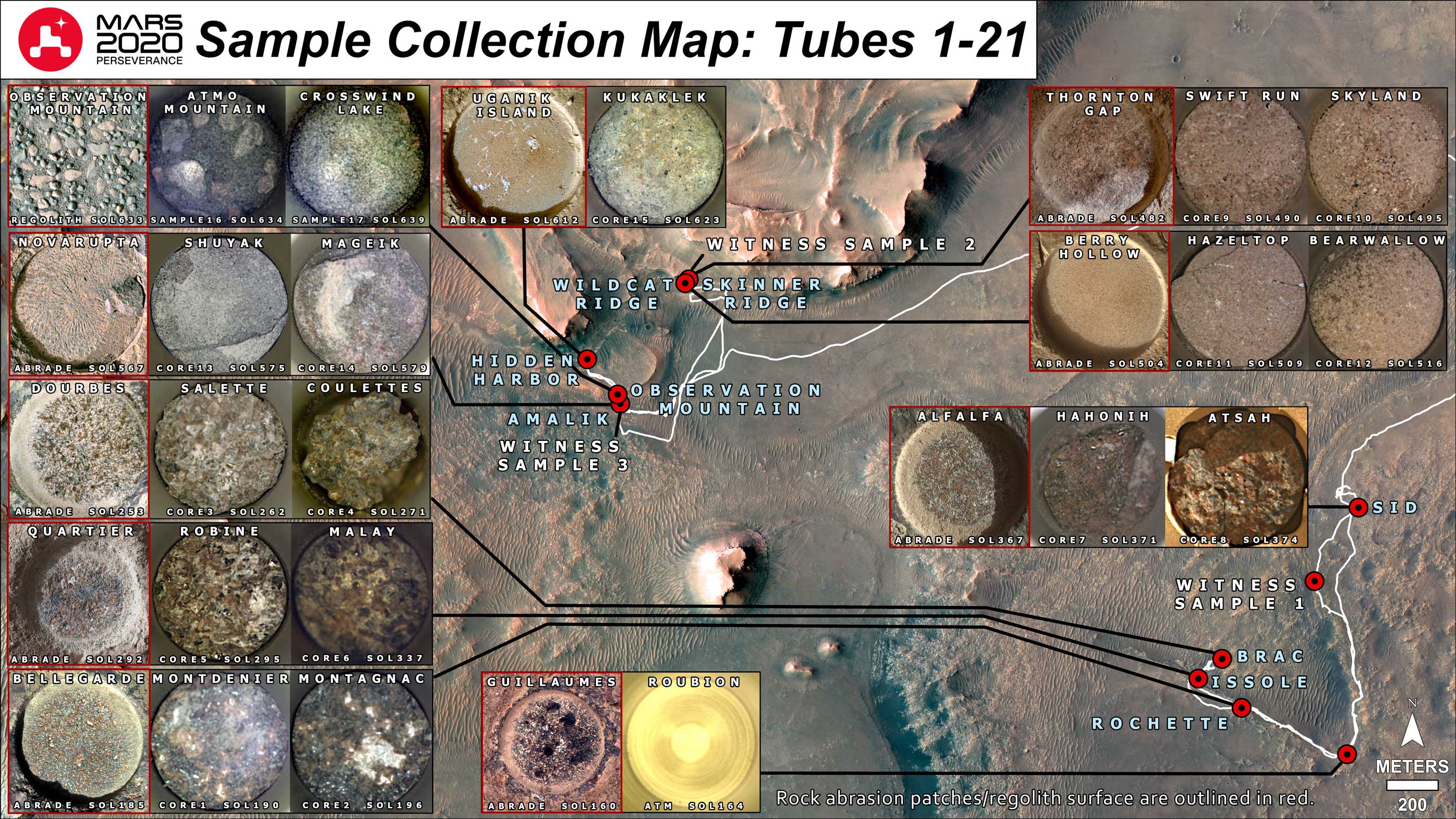
Shown here is a representation of the 21 sample tubes (containing rock, regolith, atmosphere, and witness materials) that have been sealed to date by NASA’s Perseverance Mars rover.
Shown here is a representation of the 21 sample tubes (containing rock, regolith, atmosphere, and witness materials) that have been sealed to date by NASA’s Perseverance Mars rover. The samples Perseverance is depositing into a depot are highlighted in green.
 
Credit: NASA/JPL-Caltech

More About the Mission

A key objective for Perseverance’s mission on Mars is astrobiology, including caching samples that may contain signs of ancient microbial life. The rover will characterize the planet’s geology and past climate, pave the way for human exploration of the Red Planet, and be the first mission to collect and cache Martian rock and regolith.

Subsequent NASA missions, in cooperation with ESA, would send spacecraft to Mars to collect these sealed samples from the surface and return them to Earth for in-depth analysis.

The Mars 2020 Perseverance mission is part of NASA’s Moon to Mars exploration approach, which includes Artemis missions to the Moon that will help prepare for human exploration of the Red Planet.

JPL, which is managed for NASA by Caltech, built and manages operations of the Perseverance rover.

For more about Perseverance: https://mars.nasa.gov/mars2020/

More About the Campaign

The NASA-ESA Mars Sample Return Campaign will revolutionize humanity’s understanding of Mars by bringing scientifically selected samples to Earth for study using the most sophisticated instruments around the world. The campaign would fulfill a solar system exploration goal, a high priority since the 1970s and in the last three National Academy of Sciences Planetary Decadal Surveys.

This strategic NASA and ESA partnership would be the first mission to return samples from another planet and the first launch from the surface of another planet. The samples collected by Perseverance during its exploration of an ancient river delta are thought to present the best opportunity to reveal the early evolution of Mars, including the potential for life. By better understanding the history of Mars, we would improve our understanding of all rocky planets in the solar system, including Earth.

Learn more about the Mars Sample Return Program here: https://mars.nasa.gov/msr/

Healthier Diets For Astronauts May Improve Health And Performance

0
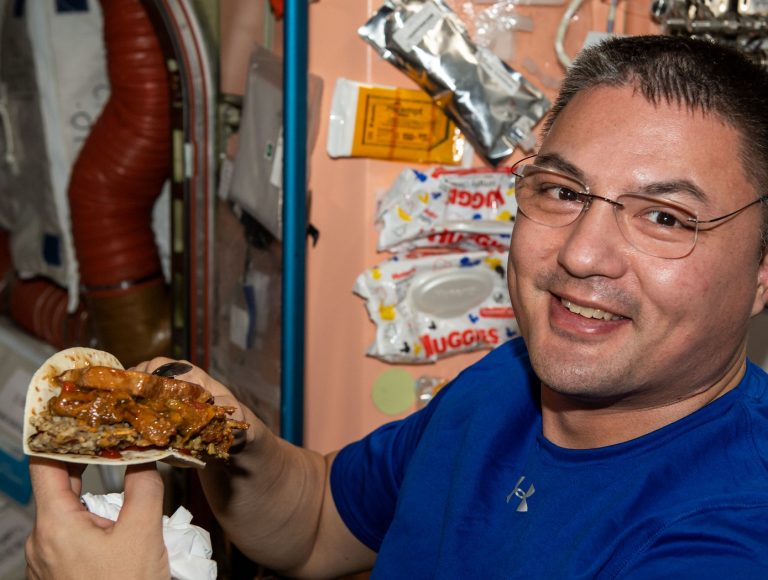
NASA astronaut and Expedition 67 Flight Engineer Kjell Lindgren prepares to enjoy a taco during dinner time aboard the International Space Station. iss067e341284 (Aug. 16, 2022) — Larger image

Astronauts could be given an enhanced diet during spaceflights that includes a greater variety and quantity of fruits, vegetables, and fish to improve their health and performance compared to standard spaceflight food, reports a study published in Scientific Reports.

Although conducted in a spaceflight simulation chamber on Earth with 16 individuals, these findings may have implications for astronaut health and decisions about food resource priorities on spaceflights.

Long-duration spaceflight is known to impact human health, and spacecraft size and power constraints limit what can be taken into space. The food astronauts eat may have the potential to mitigate some negative health changes during spaceflight, but in turn the food can be limited by mass, volume, shelf-life, and storage requirements.

Grace Douglas and colleagues investigated the difference in impact of 2 diets on 16 individuals (10 males and 6 females). Four individuals participated in each of the four 45-day missions in an Earth-based, closed chamber designed to simulate the confined spaceflight environment, alongside the practicality of storing different foodstuffs in these conditions.

Individuals ate either an enhanced diet or a standard diet. The enhanced diet included an increased number of servings and variety of fruits and vegetables, along with more fish and sources of omega-3 fatty acids. The standard spaceflight diet is currently used on the International Space Station, and while it meets most requirements, the authors propose that it could use more sources of fruits and vegetables, and more sources of omega-3 fatty acids.

The enhanced diet provided more than six servings of fruits and vegetables per day and between two to three servings of fish per week, amongst other healthy foods. All foods were shelf-stable, which is a requirement to support the room temperature, extended storage conditions on current space missions. To simulate real spaceflight conditions, the food was stored in the chamber before the start of each mission. Individuals provided samples of saliva, urine, blood, and stool and completed cognitive assessment tasks throughout the missions.

The authors found that individuals who consumed the enhanced spaceflight diet had lower cholesterol levels, lower cortisol levels (suggesting lower stress), greater cognitive speed, accuracy and attention, and a more stable microbiome than individuals consuming the standard diet.

The authors conclude that an enhanced spaceflight diet has significant health and performance benefits for individuals and may be beneficial for astronauts, even on short space missions. Although further investigation is needed to assess healthier diets in space, these findings may help to guide food resource priorities on space exploration missions in future.

Impact of diet on human nutrition, immune response, gut microbiome, and cognition in an isolated and confined mission environment, Scienctific Reports

By Keith Cowing
Source NASA

NASA Conducts First Test of Redesigned Moon Rocket Engine At Stennis

0
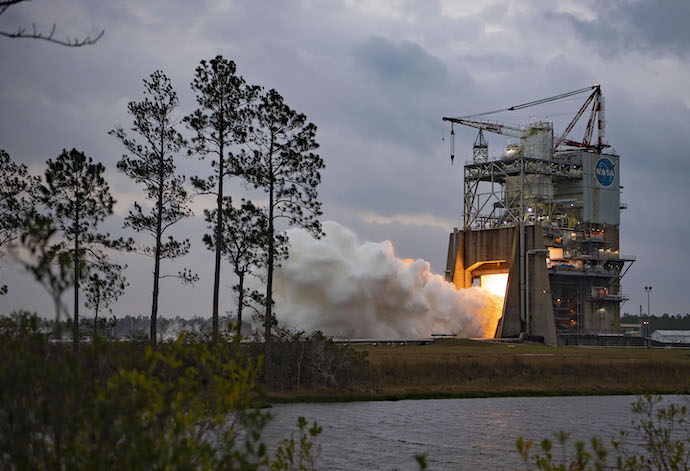
NASA conducts an RS-25 hot fire on the Fred Haise Test Stand at Stennis Space Center in south Mississippi on Dec. 14. Credits: NASA/SSC

NASA conducted the first test of the newly redesigned RS-25 engine for future flights of the Space Launch System (SLS) rocket Dec. 14, completing 209.5 seconds of a scheduled 500 second hot fire at the agency’s Stennis Space Center near Bay St. Louis, Mississippi.

The hot fire test was shut down early by a non-flight system used to monitor the engine. NASA and Space Launch System lead engine contractor Aerojet Rocketdyne are analyzing data to review the monitoring system, evaluate engine performance, and identify the reason for the early test cutoff. Because the test was being done for redesigned engines in support of Artemis V and beyond, no impacts to RS-25 hardware for earlier missions is expected.

“Much like launch, test campaigns are dynamic events that allow us to learn more about the SLS rocket hardware,” said Johnny Heflin, liquid engines manager for the Space Launch System at NASA’s Marshall Space Flight Center in Huntsville, Alabama. “NASA and Aerojet Rocketdyne teams were successful in running the first test of the new RS-25 restart engine for 209.5 seconds that will help power future missions with the SLS rocket. Preliminary data indicates the engine was performing nominally. Data analysis is underway.”

The single-engine hot fire, known as a confidence test, was designed to confirm all is ready to proceed with a series of certification tests early next year on a full RS-25 certification engine. NASA and the company modified 16 of the engines remaining after the Space Shuttle Program for use on Artemis mission I through IV. The upcoming series of testing is for the RS-25 engines that will be used beginning with Artemis V.

“Each test, even one that does not go full duration, helps us gather valuable data and helps us prepare to fly safely,” said Chip Ellis, Stennis RS-25 project manager.

The test on the Fred Haise Test Stand at Stennis came just days after NASA successfully completed the Artemis I flight test in preparation for future missions to the Moon.

The test provided initial data to aid NASA and Aerojet Rocketdyne as the company prepares to begin production of new RS-25 engines to power future Artemis missions to the Moon and beyond. For each SLS flight, four RS-25 engines, along with a pair of solid rocket boosters and core stage, help power the rocket at liftoff.

The hot fire was testing new RS-25 components to be used in production of future engines, including a new powerhead component. Additional components, including a new nozzle and controller, will be installed on the engine prior to the start of the certification series.

The hot fire marked the first test on the Fred Haise Test Stand since March when NASA completed developmental testing for Aerojet Rocketdyne efforts to modernize manufacturing processes and reduce production costs of future engines. Since that time, Stennis teams have completed critical test stand maintenance projects to support the RS-25 testing program. These included work to upgrade the stand’s high-pressure industrial water system, flame deflector, thrust vector control system, and data acquisition system.

Four RS-25 engines help power each SLS flight, firing simultaneously to generate a combined 1.6 million pounds of thrust at launch and 2 million pounds of thrust during ascent. Every RS-25 engine that will help power SLS will be tested at Stennis. RS-25 tests at the site are conducted by a combined team of NASA, Aerojet Rocketdyne and Syncom Space Services operators. Syncom Space Services is the prime contractor for Stennis facilities and operations.

Through Artemis missions, NASA will land the first woman and the first person of color on the surface of the Moon, paving the way for a long-term lunar presence and serving as a steppingstone on the way to Mars.

By Keith Cowing
Source SpaceRef

AstroAccess Successfully Completes First Weightless Research Flight With International Disabled Crew 

0
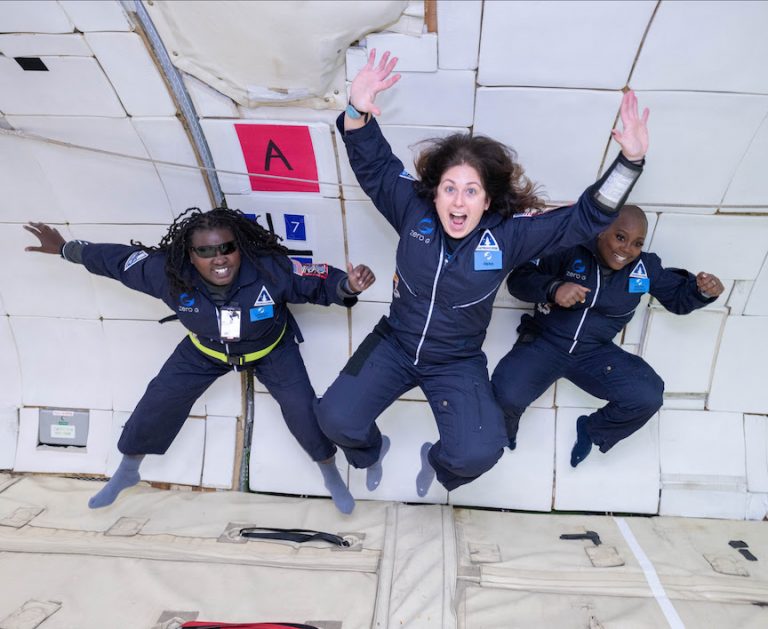
AstroAccess Team Members

AstroAccess, a project dedicated to promoting disability inclusion in space, announced the successful completion of its first formal research flight ‘AA2’ onboard Zero-G Corporation’s aircraft. The flight included 14 disabled crew members from five different countries: Australia, Brazil, Germany, Spain, and the US.

The Zero-G aircraft ascended to an altitude of 25,000 feet, at which point the vehicle commenced 18 parabolic maneuvers. The flight was completed in Houston, Texas on December 15, 2022. The mission took off and landed at Ellington Airport, adjacent to the Houston Spaceport and the NASA Johnson Space Center, the home to US human spaceflight training.

The AstroAccess AA2 flight was completed just weeks after the European Space Agency (ESA) announced that John McFall, a person with a disability, would be part of the 2022 ESA Astronaut Class. AstroAccess is proud to have Johann Dietrich Worner, the former Director General of ESA under whom their disabled astronaut initiative was conceived, on its Advisory Board.

Anna Voelker, the executive director of AstroAccess, stated, “While there is still work to be done to make space accessible for everyone, the success of this historic parabolic flight and ESA’s selection of John McFall show strong movement in the right direction.”

The flight was sponsored by George Whitesides, the co-founder of AstroAccess, and Dylan Taylor, the space entrepreneur. Mr. Taylor stated, “AstroAccess is proving that space can one day be accessible for everyone.”

AA2 was the first full charter research flight for AstroAccess. In Zero-G Research Flights, the cabin is configured for research demonstrations and the number of parabolas is extended. During the AA2 flight, the disabled crew conducted a variety of scientific demonstrations to advance universal design in space:

  • The Blind Crew tested an innovative set of tactile graphics to be added to cabin walls that will allow both blind crew members and sighted crew members to stay oriented during emergencies and find emergency gear in zero gravity if the lights go off.
  • The Blind and Mobility Crews also demonstrated for the first time that a disabled person can independently get into a launch seat and safely fasten the five-point seat harness, making it clear that disabled people can safely fly aboard suborbital space missions.
  • In collaboration with Sony and SonicCloud, the Hard-of-Hearing and Blind Crews demonstrated a system to enable improved speech understanding using SonicCloud’s innovative sound personalization software, which allows the user to tailor the audio to their hearing ability, in conjunction with Sony headphones.
  • The Deaf crew continued their work on linguistics studies of intelligibility of American Sign Language (ASL) in zero gravity. This group previously worked on ASL comprehension on the Aurelia Institute Horizon flight early this year and as part of a scuba diving experiment at the University of Arizona’s Biosphere 2 in Tucson, Arizona last month.

The Biosphere2 experiment was made possible through the partnership and generosity of Uplift Aerospace, which has selected AstroAccess as the official philanthropic beneficiary of the Space+5, a commercial astronaut program. This work was also supported by CHaSE, the Center for Human Space Exploration.

“From our time with Steven Hawking to our relationship with AstroAccess, Zero G believes that the only limits you have are the ones you place on yourself,” said Matt Gohd, CEO of Zero G Corporation. “We are honored to share this amazing experience and the first steps to space with this extraordinary group of individuals. Space should be open to everyone.”

“Inclusiveness and innovation go hand in hand,” said Arturo Machuca, Director of Houston Spaceport and Ellington Airport. “As a focal point for aerospace innovation, we stand proud with partners like AstroAccess, who strive to level the playing field for space exploration.”

The success of AstroAccess AA2 highlights the growth of AstroAccess over the past year. AstroAccess continues to form partnerships and have conversations with major stakeholders in the commercial space industry, including commercial space station companies.

AstroAccess is funded entirely by charitable donations, which can be made via the website: https://astroaccess.org/donate/.

To learn more about becoming an AstroAccess sponsor, please contact [email protected].

More details about AstroAccess, including how to join the crew, can be found at https://astroaccess.org/. Information can also be found by following AstroAccess on your favorite social media site.

About AstroAccess

AstroAccess is dedicated to advancing disability inclusion in space exploration for the benefit of humankind, with the ultimate goal of flying one or more team members to space in the coming years. The project is supported through the Whitesides Foundation and is part of SciAccess, Inc., an international non-profit dedicated to advancing disability inclusion in STEM. The fiscal sponsor of the project is the Spacekind Foundation, a non-profit space advocacy organization.

For general inquiries: [email protected]
For press and media Inquires: [email protected]

About Zero Gravity Corporation

Zero Gravity Corporation is a privately held space entertainment and tourism company whose mission is to make the excitement and adventure of space accessible to the public. The experience offered by Zero-G gives individuals the opportunity to experience true “weightlessness” without going to space. Zero-G’s attention to detail, excellent service and quality of experience combined with its exciting history has set the foundation for exhilarating adventure-based tourism. You can learn more by visiting the Zero-G website at www.gozerog.com.

About Uplift Aerospace

Uplift Aerospace, Inc. is an emerging leader in the rapidly transforming space industry, pioneering revolutionary systems to manufacture, trade, and deliver products for a multiplanetary economy. For more information, visit https://www.upliftaerospace.com/investors.

About the Houston Spaceport


Owned and managed by the Houston Airport System, the Houston Spaceport has a clear goal to create a focal point for aerospace innovation with a cluster of aerospace companies that will lead the nation in the transition from a government-driven to a commercially-driven space program. Licensed for horizontal launch by the FAA in 2015, the Houston Spaceport has worked to create meaningful, tangible value for our tenants and partners by ensuring our aerospace cluster offers the crucial tools and facilities to support aviation and space businesses.

AstroAccess AA2 Flight Crew
New Flyers

Lindsay Yazzolino (she/her) is a totally blind nonvisual designer with backgrounds in cognitive neuroscience research and public transit accessibility. She graduated from Brown University and spent several years as a cognitive neuroscience researcher investigating how blindness shapes cognitive abilities such as Braille reading, language, and touch and sound perception. Lindsay currently works as a user experience designer at CVS Health and is also a tactile technology specialist, collaborating with scientists, museums, and product developers to create multisensory, hands-on experiences.

Lucas Radaelli (he/him) is blind and was born in Brazil. He works as a senior software engineer at Google in San Francisco, California. Lucas is a tech lead in a team that develops accessibility solutions for people with disabilities. He wants to advance STEM accessibility for blind people so they can pursue careers in engineering and mathematics.

Denna Lambert (she/her) is currently serving as the Diversity, Equity, Inclusion, and Accessibility Lead for NASA’s Early Stage Innovations & Partnerships (ESIP) portfolio within the Agency Space Technology Mission Directorate located at NASA Headquarters in Washington, D.C. Denna received her Master’s in Public Administration from the George Washington University and her bachelors in business administration from the University of Arkansas-Fayetteville.

Dr. Carlos Archilla-Cady (he/him) currently works as a Pediatric Anesthesiologist in Orlando, Florida and is a Veteran of the United States Navy. Carlos is a bilateral cornea transplant recipient. He has conducted visual physiology experiments examining the effects of microgravity on eye health and would like to advance research on visual physiologic changes experienced in space travel. After executive education at the Harvard and Wharton Schools of Business, he recently obtained a Global Executive Master’s in Business Administration from the IESE Business School.

Victoria Garcia (she/her) works at NASA’s Marshall Space Flight Center as a launch vehicle systems engineer. Her work includes several projects that further technology for human space exploration. Victoria was born Deaf and often serves as a guest speaker for students of all ages. She received her Bachelor of Science degree in Mechanical Engineering from Rensselaer Polytechnic Institute and her Master of Science degree in Mechanical Engineering from the Georgia Institute of Technology.

Sheila Xu (she/her) is currently pursuing dual MPP and MBA degrees at Harvard University and the Wharton School of the University of Pennsylvania. Sheila earned her Bachelor of Science in Humanities and Science from the Massachusetts Institute of Technology. She is the first Deaf Asian female pilot and has interned at NASA’s Jet Propulsion Laboratory. Sheila is interested in developing and investing in accessible space technology and advocating for policy changes to open up aerospace and aviation traditionally closed to people with disabilities.

Dr. K Renee Horton (she/her) is a hard of hearing advocate for diversity and inclusion in STEM and the founder of Unapologetically Being, Inc. She is from Baton Rouge, Louisiana and is a graduate of Louisiana State University with a Bachelor of Science degree in Electrical Engineering. Renee is also the first African American to receive a Ph.D. in Material Science with a concentration in Physics from the University of Alabama. She currently works as a NASA Airworthiness Deputy on the Electric Powertrain Flight Demonstrator project.

Jose Luis de Augusto (he/him) is an aerospace engineer,commercial pilot, flight instructor, and a wheelchair user. Jose has worked at Airbus as a certification engineer and a flight test engineer. In 2019, he founded Newwings, a pilot school for persons with disabilities. Jose was among the pre-selected candidates for the European Space Agency’s “Parastronaut Project.”

Michi Benthaus (she/her) earned a Bachelor of Science degree in Mechatronics Engineering and is pursuing a master’s degree in Aerospace Engineering with a focus on space and astrophysics at the Technical University of Munich. She is currently doing an internship at the German Aerospace Center (DLR). Michi is a sports enthusiast who loves to play wheelchair tennis and go-karting.

Dwayne Fernandes (he/him) is an Indian-Born Australian and a double amputee. He works as a New South Wales (NSW) Accessible Delivery manager for the state government. Dwayne also co-founded Minds at Play, a national social gaming company that builds essential social and communication skills for players through games like Dungeons and Dragons and Minecraft. He works on engaging and expanding people’s understanding of disability inclusion when it comes to infrastructure, service delivery, and employment.

John D. Kemp (he/him) is a person with a disability and a graduate of Georgetown University and Washburn University School of Law. John co-founded the American Association of People with Disabilities, serves as President & CEO of Lakeshore Foundation and chairs Delta Air Lines’ Advisory Board on Disability. John has been awarded the Henry B. Betts Award, regarded as America’s highest honor for disability leadership and service, and the Dole Leadership Prize, which includes Nelson Mandela and two former U.S. presidents as past honorees.

Caeley Looney (she/her) is neurodivergent and a Space Mission Analyst at L3Harris Technologies. She graduated from Embry-Riddle Aeronautical University with a Bachelor of Science in Aerospace Engineering and earned a master’s degree in Space Systems Engineering at Johns Hopkins University. Caeley is the founder and CEO of Reinvented Inc., a nonprofit focused on empowering young girls to pursue STEM fields.

Returning Flyers

Dr. Sheri Wells-Jensen (she/her) is an associate professor at Bowling Green State University. She earned her PhD from the State University of New York at Buffalo in linguistics. Sheri’s research interests are in social aspects of astrobiology, disability studies, and how body shape and sensory input might affect language structure of any extraterrestrial intelligence we may someday find. She is the 2022-2023 Baruch S. Blumberg NASA Library of Congress Chair in Astrobiology, Exploration, and Scientific Innovation. Sheri flew as part of the Blind Crew on AA1.

Eric Ingram (he/him) is the Founder and CEO of SCOUT Inc., a U.S.-based company developing orbital products and services to enable a new era of space safety and transparency. He is also a Board Member at the Space Frontier Foundation. Previous to SCOUT, Eric served as an Aerospace Engineer for the Licensing and Evaluation Division of the FAA’s Office of Commercial Space Transportation. Eric flew as part of the Mobility Crew on AA1.

Eric Shear (he/him) is a graduate student at the University of Florida, where he is studying chemical engineering with the goal of working in the space industry on life support and in-situ resource utilization. Eric currently works as a research assistant at the University of North Florida on novel hydrogen production techniques. He previously earned degrees in physics and planetary science at York University in Toronto. Eric flew as part of the Deaf Crew on AA1.

Mary Cooper (she/her) is a student pursuing a Master of Science in Aeronautical & Astronautical Engineering at Stanford University, where she recently graduated with an undergraduate degree in Aerospace Engineering & Computer Science. Mary is a champion athlete and a below-the-knee amputee. She is also a 2020 Brooke Owens Fellow, 2020 Lime Connect Fellow, and a 2021 Matthew Isakowtiz Fellow. Mary worked at SpaceX on the astronaut training team to help prepare Polaris Dawn, NASA Crew-5 and Crew-6 for spaceflight. Mary flew as part of the Mobility Crew on AA1.

By Keith Cowing
Source SpaceRef

NASA Launches International Mission To Survey Earth’s Water

0
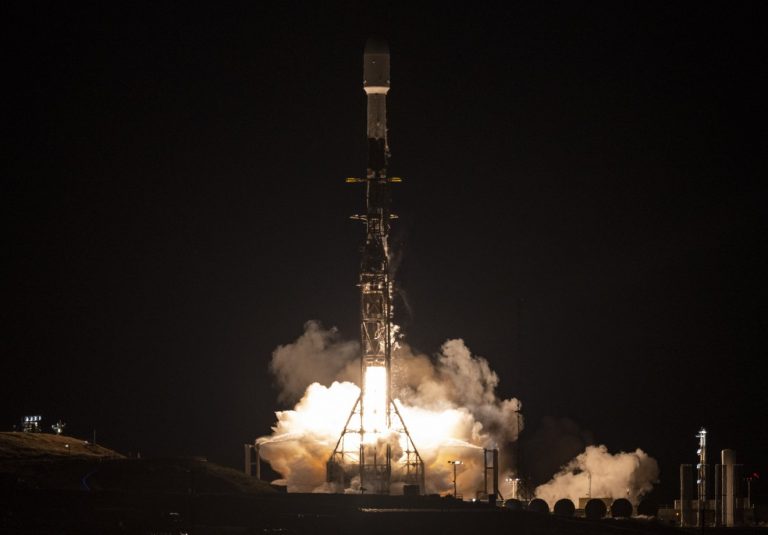
A SpaceX Falcon 9 rocket launches with the Surface Water and Ocean Topography (SWOT) spacecraft onboard, Friday, Dec. 16, 2022, from Space Launch Complex 4E at Vandenberg Space Force Base in California. Jointly developed by NASA and Centre National D’Etudes Spatiales (CNES), with contributions from the Canadian Space Agency (CSA) and United Kingdom Space Agency, SWOT is the first satellite mission that will observe nearly all water on Earth’s surface, measuring the height of water in the planet’s lakes, rivers, reservoirs, and the ocean. Credit: NASA/Keegan BarberCredit: NASA/Keegan Barber

Led by NASA and the French space agency CNES, the Surface Water and Ocean Topography mission will provide high-definition data on the salt- and fresh water on Earth’s surface.

A satellite built for NASA and the French space agency Centre National d’Études Spatiales (CNES) to observe nearly all the water on our planet’s surface lifted off on its way to low-Earth orbit at 3:46 a.m. PST on Friday. The Surface Water and Ocean Topography (SWOT) spacecraft also has contributions from the Canadian Space Agency (CSA) and the UK Space Agency.

Credit: NASA/JPL-Caltech

The SWOT spacecraft launched atop a SpaceX rocket from Space Launch Complex 4E at Vandenberg Space Force Base in California with a prime mission of three years. The satellite will measure the height of water in freshwater bodies and the ocean on more than 90% of Earth’s surface. This information will provide insights into how the ocean influences climate change; how a warming world affects lakes, rivers, and reservoirs; and how communities can better prepare for disasters, such as floods.

After SWOT separated from the second stage of a SpaceX Falcon 9 rocket, ground controllers successfully acquired the satellite’s signal. Initial telemetry reports showed the spacecraft in good health. SWOT will now undergo a series of checks and calibrations before it starts collecting science data in about six months.

“Warming seas, extreme weather, more severe wildfires – these are only some of the consequences humanity is facing due to climate change,” said NASA Administrator Bill Nelson. “The climate crisis requires an all-hands-on-deck approach, and SWOT is the realization of a long-standing international partnership that will ultimately better equip communities so that they can face these challenges.”

SWOT will cover the entire Earth’s surface between 78 degrees south and 78 degrees north latitude at least once every 21 days, sending back about one terabyte of unprocessed data per day. The scientific heart of the spacecraft is an innovative instrument called the Ka-band radar interferometer (KaRIn), which marks a major technological advance. KaRIn bounces radar pulses off the water’s surface and receives the return signal using two antennas on either side of the spacecraft. This arrangement – one signal, two antennas – will enable engineers to precisely determine the height of the water’s surface across two swaths at a time, each of them 30 miles (50 kilometers) wide.

“We’re eager to see SWOT in action,” said Karen St. Germain, NASA Earth Science Division director. “This satellite embodies how we are improving life on Earth through science and technological innovations. The data that innovation will provide is essential to better understanding how Earth’s air, water, and ecosystems interact – and how people can thrive on our changing planet.”

Among the many benefits the SWOT mission will provide is a significantly clearer picture of Earth’s freshwater bodies. It will provide data on more than 95% of the world’s lakes larger than 15 acres (62,500 square meters) and rivers wider than 330 feet (100 meters) across. Currently, freshwater researchers have reliable measurements for only a few thousand lakes around the world. SWOT will push that number into the millions.

Along the coast, SWOT will provide information on sea level, filling in observational gaps in areas that don’t have tide gauges or other instruments that measure sea surface height. Over time, that data can help researchers better track sea level rise, which will directly impact communities and coastal ecosystems.

Such an ambitious mission is possible because of NASA’s long-standing commitment to working with agencies around the world to study Earth and its climate. NASA and CNES have built upon a decades-long relationship that started in the 1980s to monitor Earth’s oceans. This collaboration pioneered the use of a space-based instrument called an altimeter to study sea level with the launch of the TOPEX/Poseidon satellite in 1992.

“This mission marks the continuity of 30 years of collaboration between NASA and CNES in altimetry,” said Caroline Laurent, CNES Orbital Systems and Applications director. “It shows how international collaboration can be achieved through a breakthrough mission that will help us better understand climate change and its effects around the world.”

SWOT measurements will also help researchers, policymakers, and resource managers better assess and plan for things, including floods and droughts. By providing information on where the water is – where it’s coming from and where it’s going – researchers can improve flood projections for rivers and monitor drought effects on lakes and reservoirs.

“SWOT will provide vital information, given the urgent challenges posed by climate change and sea level rise,” said Laurie Leshin, NASA’s Jet Propulsion Laboratory director. JPL developed the KaRIn instrument and manages the U.S. portion of the mission. “That SWOT will fill gaps in our knowledge and inform future action is the direct result of commitment, innovation, and collaboration going back many years. We’re excited to get SWOT science underway.”

More Mission Information

JPL, which is managed for NASA by Caltech in Pasadena, California, leads the U.S. component of the project. For the flight system payload, NASA is providing the KaRIn instrument, a GPS science receiver, a laser retroreflector, a two-beam microwave radiometer, and NASA instrument operations. CNES is providing the Doppler Orbitography and Radioposition Integrated by Satellite (DORIS) system, the dual frequency Poseidon altimeter (developed by Thales Alenia Space), the KaRIn radio-frequency subsystem (together with Thales Alenia Space and with support from the UK Space Agency), the satellite platform, and ground control segment. CSA is providing the KaRIn high-power transmitter assembly. NASA is providing the launch vehicle and the agency’s Launch Services Program, based at Kennedy Space Center, is managing the associated launch services.

To learn more about SWOT, visit: https://www.nasa.gov/swot

News Media Contact

Tylar Greene
NASA Headquarters, Washington
202-358-0030
[email protected]

Jane J. Lee / Andrew Wang
Jet Propulsion Laboratory, Pasadena, Calif.
818-354-0307 / 626-379-6874
[email protected] / [email protected]

Leejay Lockhart / Laura Aguiar
Kennedy Space Center, Fla.
321-747-8310 / 321-593-6245
[email protected] / [email protected]

Two Exoplanets May Be Mostly Water, NASA’s Hubble And Spitzer Find

0
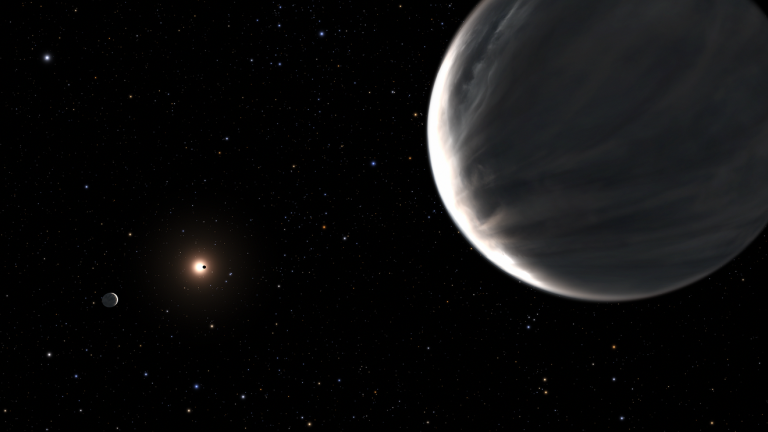
In this illustration, exoplanet Kepler-138 d is in the foreground and Kepler-138 c is on the left. In the background, Kepler 138 b is passing in front of its parent star. The low densities of Kepler-138 c and Kepler-138 d indicate that they must be composed largely of water. Credit: NASA, ESA, Leah Hustak (STScI)

Though the telescopes can’t directly observe the planets’ surfaces, their densities indicate they’re lighter than rock worlds but heavier than gas-dominated ones.

A team led by of researchers at the University of Montreal has found evidence that two exoplanets orbiting a red dwarf star are “water worlds,” where water makes up a large fraction of the entire planet. These worlds, located in a planetary system 218 light-years away in the constellation Lyra, are unlike any planets found in our solar system.

The team, led by Caroline Piaulet of the Institute for Research on Exoplanets (iREx) at the University of Montreal, published a detailed study of this planetary system, known as Kepler-138, in the journal Nature Astronomy today.

Piaulet and colleagues observed exoplanets Kepler-138c and Kepler-138d with NASA’s Hubble and the retired Spitzer space telescopes and discovered that the planets could be composed largely of water. These two planets and a smaller planetary companion closer to the star, Kepler-138b, had been discovered previously by NASA’s Kepler Space Telescope. The new study found evidence for a fourth planet, too.

Water wasn’t directly detected at Kepler-138c and d, but by comparing the sizes and masses of the planets to models, astronomers conclude that a significant fraction of their volume – up to half of it – should be made of materials that are lighter than rock but heavier than hydrogen or helium (which constitute the bulk of gas giant planets like Jupiter). The most common of these candidate materials is water.

“We previously thought that planets that were a bit larger than Earth were big balls of metal and rock, like scaled-up versions of Earth, and that’s why we called them super-Earths,” explained Björn Benneke, study co-author and professor of astrophysics at the University of Montreal. “However, we have now shown that these two planets, Kepler-138c and d, are quite different in nature and that a big fraction of their entire volume is likely composed of water. It is the best evidence yet for water worlds, a type of planet that was theorized by astronomers to exist for a long time.”

This illustration shows cross-sections of the Earth and the exoplanet Kepler-138d. Measurements of Kepler-138d’s density suggest it could have a water layer that makes up more than 50% of its volume, to a depth of about 1,243 miles (2,000 kilometers).  Credit: Benoit Gougeon (University of Montreal)

With volumes more than three times that of Earth and masses twice as big, planets c and d have much lower densities than Earth. This is surprising because most of the planets just slightly bigger than Earth that have been studied in detail so far all seemed to be rocky worlds like ours. The closest comparison, say researchers, would be some of the icy moons in the outer solar system that are also largely composed of water surrounding a rocky core.

“Imagine larger versions of Europa or Enceladus, the water-rich moons orbiting Jupiter and Saturn, but brought much closer to their star,” explained Piaulet. “Instead of an icy surface, they would harbor large water-vapor envelopes.”

Researchers caution the planets may not have oceans like those on Earth directly at the planet’s surface. “The temperature in Kepler-138d’s atmosphere is likely above the boiling point of water, and we expect a thick, dense atmosphere made of steam on this planet. Only, under that steam atmosphere there could potentially be liquid water at high pressure, or even water in another phase that occurs at high pressures, called a supercritical fluid,” Piaulet said.

In 2014, data from NASA’s Kepler Space Telescope allowed astronomers to announce the detection of three planets orbiting Kepler-138. This was based on a measurable dip in starlight as the planet momentarily passed in from of their star.

Benneke and his colleague Diana Dragomir, from the University of New Mexico, came up with the idea of re-observing the planetary system with the Hubble and Spitzer space telescopes between 2014 and 2016 to catch more transits of Kepler-138d, the third planet in the system, in order to study its atmosphere.

A new exoplanet in the system

The two possible water worlds, Kepler-138c and d, are not located in the habitable zone, the area around a star where temperatures would allow liquid water on the surface of a rocky planet. But in the Hubble and Spitzer data, researchers additionally found evidence for a new planet in the system, Kepler-138e, in the habitable zone.

This newly found planet is small and farther from its star than the three others, taking 38 days to complete an orbit. The nature of this additional planet, however, remains an open question because it does not seem to transit its host star. Observing the exoplanet’s transit would have allowed astronomers to determine its size.

With Kepler-138e now in the picture, the masses of the previously known planets were measured again via the transit timing-variation method, which consists of tracking small variations in the precise moments of the planets’ transits in front of their star caused by the gravitational pull of other nearby planets.

The researchers had another surprise: They found that the two water worlds Kepler-138c and are “twin” planets, with virtually the same size and mass, while they were previously thought to be drastically different. The closer-in planet, Kepler-138b, on the other hand, is confirmed to be a small Mars-mass planet, one of the smallest exoplanets known to date.

“As our instruments and techniques become sensitive enough to find and study planets that are farther from their stars, we might start finding a lot more of these water worlds,” Benneke concluded.

More About the Mission

The entire body of scientific data collected by Spitzer during its lifetime is available to the public via the Spitzer data archive, housed at the Infrared Science Archive at IPAC at Caltech in Pasadena, California. NASA’s Jet Propulsion Laboratory, a division of Caltech, managed Spitzer mission operations for the agency’s Science Mission Directorate in Washington. Science operations were conducted at the Spitzer Science Center at IPAC at Caltech. Spacecraft operations were based at Lockheed Martin Space in Littleton, Colorado.

For more information about NASA’s Spitzer mission, go to:

https://www.jpl.nasa.gov/missions/spitzer-space-telescope

News Media Contact

Calla Cofield

Jet Propulsion Laboratory, Pasadena, Calif.

626-808-2469

[email protected]

Hubble Captures Majestic Barred Spiral

0

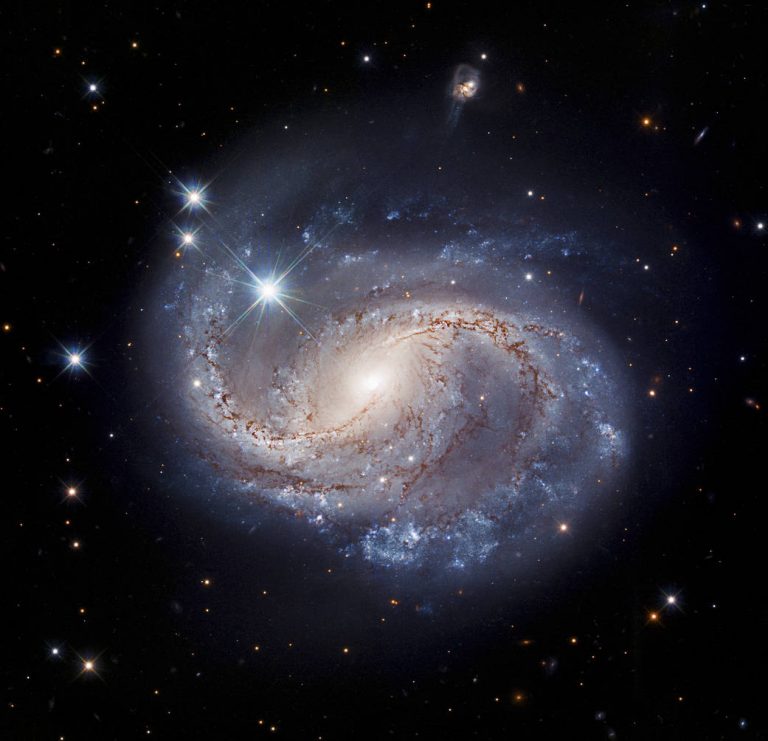
Against an inky black backdrop, the blue swirls of spiral galaxy NGC 6956 stand out radiantly. NGC 6956 is a barred spiral galaxy, a common type of spiral galaxy with a bar-shaped structure of stars in its center. This galaxy exists 214 million light-years away in the constellation Delphinus.

Scientists used NASA’s Hubble Space Telescope to image NGC 6956 to study its Cepheid variable stars, which are stars that brighten and dim at regular periods. Since the period of Cepheid variable stars is a function of their brightness, scientists can measure how bright these stars appear from Earth and compare it to their actual brightness to calculate their distance. As a result, these stars are extremely useful in determining the distance of cosmic objects, which is one of the hardest pieces of information to measure for extragalactic objects.

This galaxy also contains a Type Ia supernova, which is the explosion of a white dwarf star that was gradually accreting matter from a companion star. Like Cepheid variable stars, the brightness of these types of supernovae and how fast they dim over time enables scientists to calculate their distance. Scientists can use the measurements gleaned from Cepheid variable stars and Type Ia supernovae to refine our understanding of the rate of expansion of the universe, also known as the Hubble Constant.

Image Credit: NASA, ESA, and D. Jones (University of California – Santa Cruz); Processing: Gladys Kober (NASA/Catholic University of America)

Media Contact:

Claire Andreoli
NASA’s Goddard Space Flight CenterGreenbelt, MD
301-286-1940

By Andrea Gianopoulos
Source Hubble