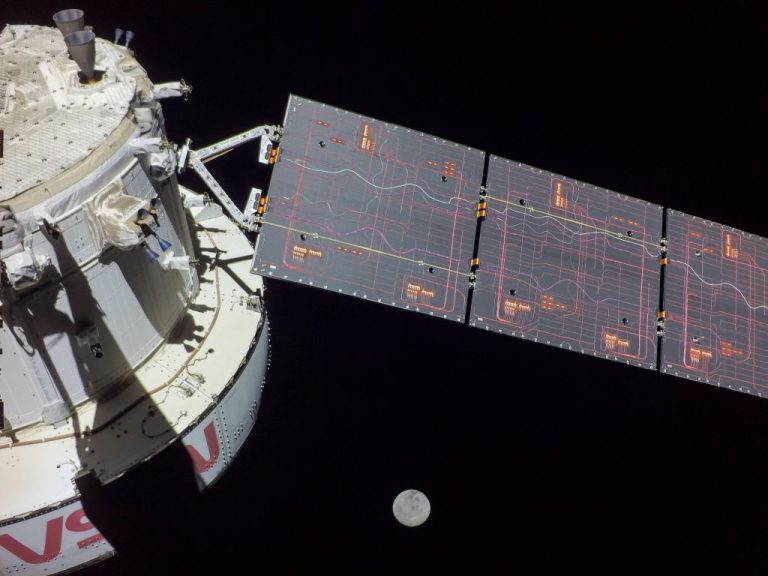
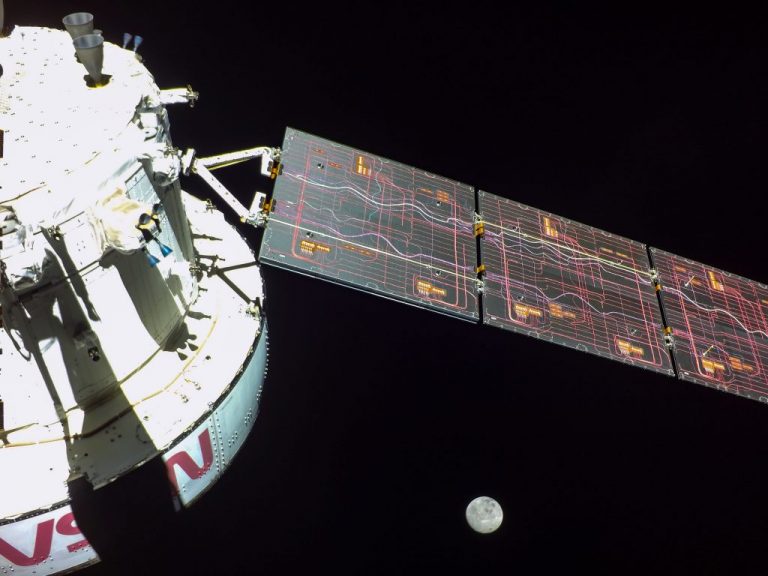
art001e001933 (Dec. 2, 2022) A camera mounted on one of Orion’s four solar arrays captured this image of the Moon on flight day 17 of the 25.5-day Artemis I mission from a distance of more than 222,000 miles from Earth. Orion has exited the distant lunar orbit and is heading for a Dec. 11 splashdown in the Pacific Ocean.
Orion re-entered the lunar sphere of influence at 4:45 p.m. CST Saturday, Dec. 3, making the Moon the main gravitational force acting on the spacecraft. Entry into the lunar sphere of entry occurred when the spacecraft was about 39,993 miles from the lunar surface. It will exit the lunar sphere of influence for a final time on Tuesday, Dec. 6, one day after the return powered flyby about 79 miles above the lunar surface.
On Flight Day 18, engineers also performed a development flight test objective that changed the minimum jet firing time for the reaction control thrusters over a period of 24 hours. This test objective is designed to exercise the reaction control system jets in a pre-planned sequence to model jet thruster firings that will be incorporated into the crewed Artemis II mission.
The test used the reaction control system (RCS) thrusters, built by ArianeGroup, on the European Service Module. All firings of RCS thrusters during the flight test to date have used those on the service module. Another set of 12 RCS thrusters, built by Aerojet Rocketdyne, are located on the crew module.
While the crew module thrusters will be tested a few days before Orion’s splashdown on Earth, their primary role takes place in the final hour before splashdown in the Pacific Ocean. After the crew module and service module separate the crew module’s RCS thrusters will be used to ensure the spacecraft is properly oriented for re-entry, with its heat shield pointed forward, and stable during descent under parachutes.
Orion will be out of communication with NASA’s Deep Space Network for about 4.5 hours from 7:40 p.m. to 12:00 a.m. while network teams reconfigure ground stations. The flight control team has adjusted the activity timeline, and there is no impact to the mission’s trajectory. Automated commands will guide the spacecraft during this period, and Orion will reacquire signal as it passes within range of the Canberra ground station.
Just after 4:30 p.m. on Dec. 3, Orion was traveling 221,630 miles from Earth and 40,086 miles from the Moon, cruising at 2,777 miles per hour.
Images from the mission are available on NASA’s Johnson Space Center Flickr account and Image and Video Library. When bandwidth allows, live views from Orion are available in real-time.
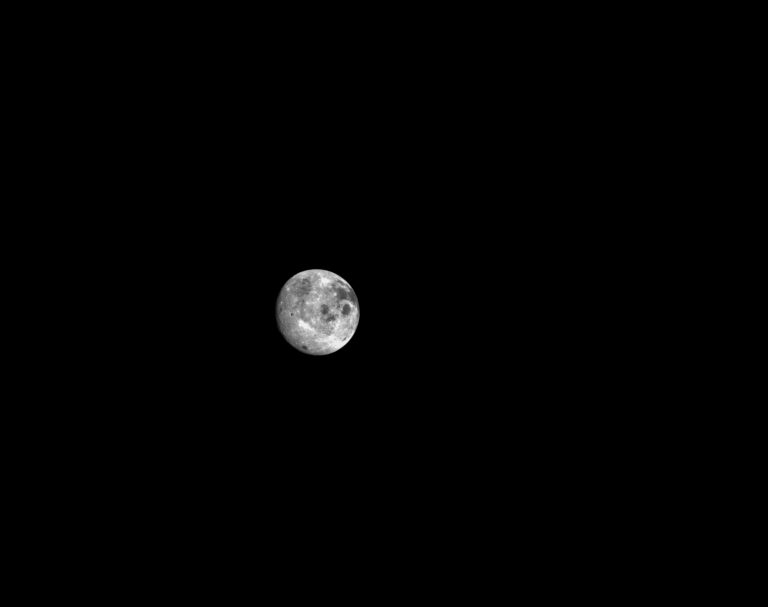
art001e001859 (Dec. 1, 2022) Orion’s optical navigation camera captured this image of the Moon on flight day 16 of the Artemis I mission. Orion uses the optical navigation camera to capture imagery of the Earth and the Moon at different phases and distances, providing an enhanced body of data to certify its effectiveness under different lighting conditions as a way to help orient the spacecraft on future missions with crew.
After departing distant retrograde orbit the afternoon of Thursday, Dec. 1, Orion completed a planned trajectory correction burn to fine-tune its course toward the Moon. The five-second burn occurred at 9:54 p.m. CST Thursday, and changed the spacecraft’s velocity by about 0.3 mph or less than half a foot per second.
Dec. 2, teams collected additional images with Orion’s optical navigation camera and downlinked a wide variety of data files to the ground, including data from the Hybrid Electronic Radiation Assessor, or HERA. The radiation detector measures charged particles that pass through its sensors. Measurements from HERA and several other radiation-related sensors and experiments aboard Artemis I will help NASA better understand the space radiation environment future crews will experience and develop effective protections. On crewed missions, HERA will be part of the spacecraft’s caution and warning system and will sound a warning in the case of a solar energetic particle event, notifying the crew to take shelter. NASA is also testing a similar HERA unit aboard the International Space Station.
Orion carries other experiments to gather data on radiation, including several radiation area monitors about the size of a matchbox that record the total radiation dose during the mission, dosimeters provided by ESA (European Space Agency) mounted inside the cabin to collect radiation data with time stamps to allow scientists to assess dose rates during various mission phases, and three “purposeful passengers” collecting additional information on what crews will experience during future missions. Four space biology investigations, collectively called Biology Experiement-1, are examining the impact of deep space radiation on seeds, fungi, yeast, and algae.
Orion will reenter the lunar sphere of influence on Saturday, Dec. 3, making the Moon the main gravitational force acting on the spacecraft. It will exit the lunar sphere of influence for a final time on Tuesday, Dec. 6, one day after its return powered flyby about 79 miles above the lunar surface.
A total of about 7,940 pounds of propellant has been used, which is about 150 pounds less that the amount expected before launch. Approximately 2,040 pounds of margin is available beyond what flight controllers plan to use for the remainder of the mission, which is nearly 130 pounds more than expected amounts before launch. About 97 gigabytes of data have been sent to the ground by the spacecraft.
Just after 1 p.m. CST on Dec. 2, Orion was traveling 229,812 miles from Earth and 50,516 miles from the Moon, cruising at 2,512 miles per hour.
Images from the mission are available on NASA’s Johnson Space Center Flickr account and Image and Video Library. When bandwidth allows, live views from Orion are available in real-time.
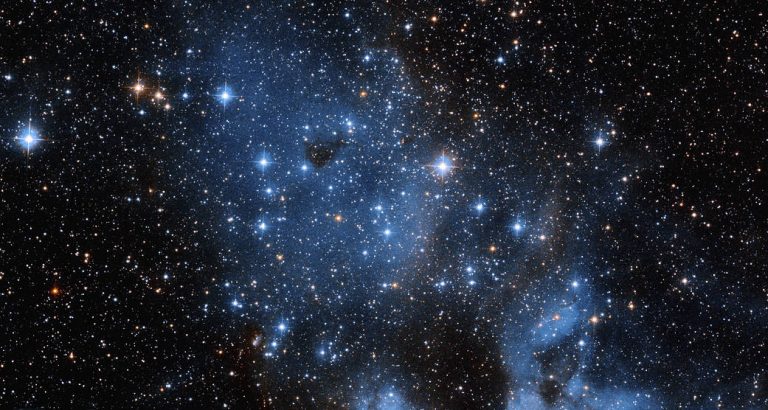
Against a backdrop littered with tiny pinpricks of light glint a few, brighter stars. This whole collection is NGC 1858, an open star cluster in the northwest region of the Large Magellanic Cloud, a satellite galaxy of our Milky Way that boasts an abundance of star-forming regions. NGC 1858 is estimated to be around 10 million years old.
Open clusters are a type of star cluster with loose gravitational attraction between the stars, which causes the cluster to be irregularly shaped and its stars to be spread out. NGC 1858 is also an emission nebula, which is a cloud of interstellar gas that has been ionized by ultraviolet wavelengths radiating off of nearby stars. The gas of the nebula emits its own light at visible wavelengths, seen here as a faint cloud that populates the middle and bottom right of the image.
The stars within this young cluster are at different phases of their evolution, making it a complex collection. Within NGC 1858, researchers have detected a protostar, a very young, emerging star, indicating that star formation within the cluster may still be active or has stopped very recently. The presence of an emission nebula also suggests that star formation recently occurred here, since the radiation required to ionize the gas of the nebula comes from stars that only live a short time.
NGC 1858 is located about 160,000 light-years away in the constellation Dorado and contains multiple massive stars, which can be seen shining brightly throughout the center of the image. The cluster is located in a crowded area of the sky, and the large number of stars around the cluster makes it difficult to study alone. To survey these distant stars, scientists relied on the Hubble Space Telescope’s unique resolution and sensitivity at visible and infrared wavelengths.
Image Credit: NASA, ESA and G. Gilmore (University of Cambridge); Processing: Gladys Kober (NASA/Catholic University of America)
In 1916, shortly after publishing his theory of general relativity, Albert Einstein predicted the existence of gravitational waves – warps in space time caused by accelerating matter that ripple outward at the speed of light. However, he believed these ripples would be so slight as to be undetectable, before eventually abandoning the concept altogether. But following decades of scientific developments suggesting their existence, as well as technological innovations making their detection possible, in 2015 a team of researchers at the Massachusetts Institute of Technology (MIT) and the California Institute of Technology recorded humanity’s first direct observation of the phenomena.
Created by the US filmmakers Sarah Klein and Tom Mason in collaboration with the MIT School of Science, this documentary tracks how the US physicist Rai Weiss, now professor emeritus at MIT, stood on the shoulders of his fields’ biggest giant to prove the existence of gravitational waves, a century after Einstein had predicted them. Relaying an inspiring story of imagination, ingenuity and dedication giving rise to a monumental breakthrough, the documentary reflects on how scientific ideas travel – often circuitously – across generations.
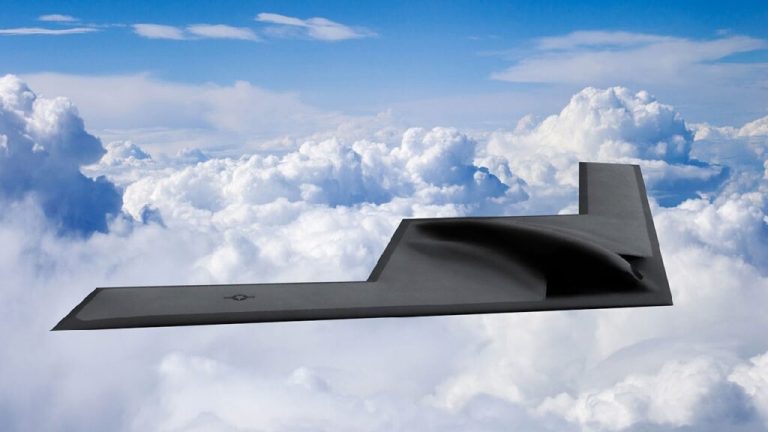
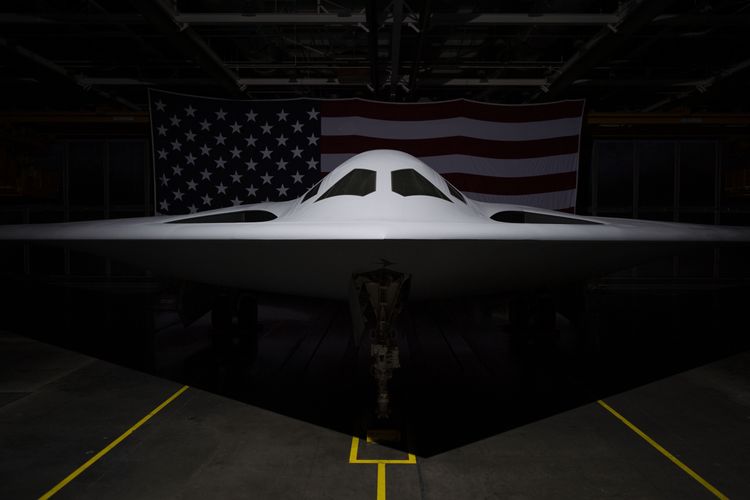
Northrop Grumman Corporation (NYSE: NOC) and the U.S. Air Force unveiled the B-21 Raider to the world today. The B-21 joins the nuclear triad as a visible and flexible deterrent designed for the U.S. Air Force to meet its most complex missions.
“The Northrop Grumman team develops and delivers technology that advances science, looks into the future and brings it to the here and now,” said Kathy Warden, chair, chief executive officer and president, Northrop Grumman. “The B-21 Raider defines a new era in technology and strengthens America’s role of delivering peace through deterrence.”
The B-21 Raider forms the backbone of the future for U.S. air power, leading a powerful family of systems that deliver a new era of capability and flexibility through advanced integration of data, sensors and weapons. Its sixth-generation capabilities include stealth, information advantage and open architecture.
Northrop Grumman and the U.S. Air Force introduce the B-21 Raider, the world’s first sixth-generation aircraft. Credit: Northrop Grumman
“The B-21 Raider is a testament to America’s enduring advantages in ingenuity and innovation. And it’s proof of the Department’s long-term commitment to building advanced capabilities that will fortify America’s ability to deter aggression, today and into the future. Now, strengthening and sustaining U.S. deterrence is at the heart of our National Defense Strategy,” said Secretary of Defense Lloyd J. Austin III. “This bomber was built on a foundation of strong, bipartisan support in Congress. And because of that support, we will soon fly this aircraft, test it and then move into production.”
The B-21 is capable of networking across the battlespace to multiple systems, and into all domains. Supported by a digital ecosystem throughout its lifecycle, the B-21 can quickly evolve through rapid technology upgrades that provide new capabilities to outpace future threats.
“With the B-21, the U.S. Air Force will be able to deter or defeat threats anywhere in the world,” said Tom Jones, corporate vice president and president, Northrop Grumman Aeronautics Systems. “The B-21 exemplifies how Northrop Grumman is leading the industry in digital transformation and digital engineering, ultimately delivering more value to our customers.”
The B-21 Raider is named in honor of the Doolittle Raids of World War II when 80 men, led by Lt. Col. James “Jimmy” Doolittle, and 16 B-25 Mitchell medium bombers set off on a mission that changed the course of World War II. The designation B-21 recognizes the Raider as the first bomber of the 21st century.
Northrop Grumman is a technology company, focused on global security and human discovery. Our pioneering solutions equip our customers with capabilities they need to connect, advance and protect the U.S. and its allies. Driven by a shared purpose to solve our customers’ toughest problems, our 90,000 employees define possible every day.
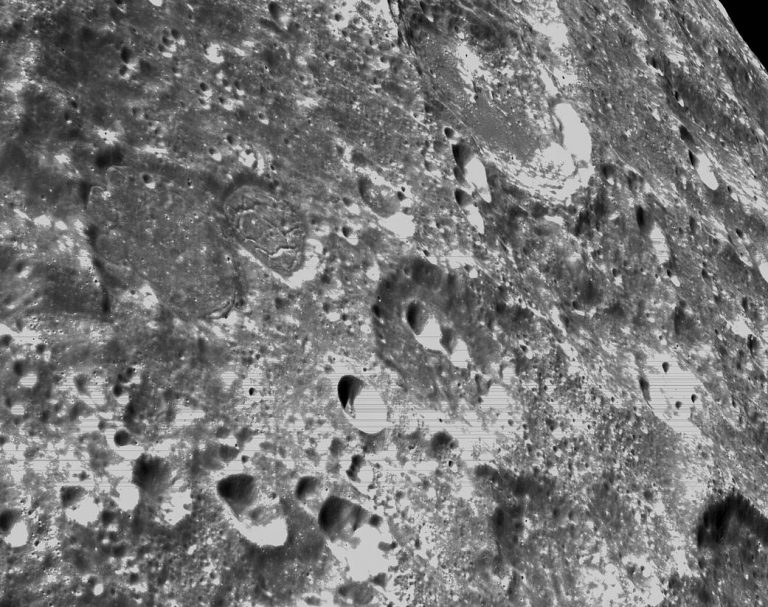
On the sixth day of the Artemis I mission, Nov. 21, 2022, the Orion spacecraft’s optical navigation camera captured black-and-white images of craters on the Moon below. This photo and others captured are the closest photos of the Moon from a human-rated vessel since Apollo. The optical navigation camera takes black-and-white imagery of the Earth and the Moon at different phases and distances; this technology demonstration will help prove its effectiveness for future missions with crew.
Hires Veteran NASA Astronaut and Former Head of ISS Medical Operations Dr. Tom Marshburn as Chief Medical Officer
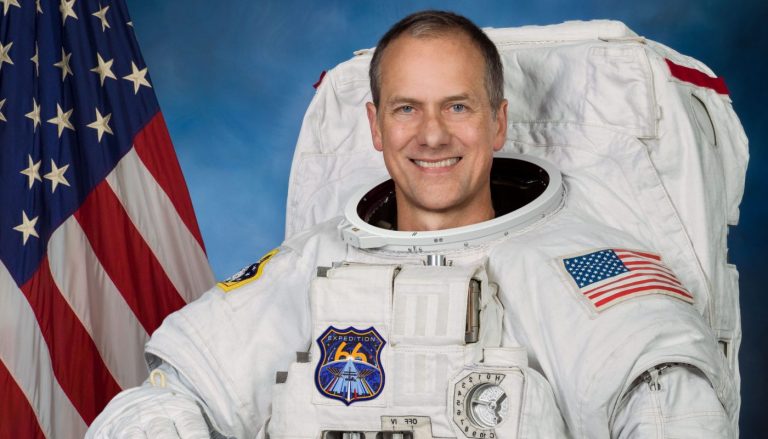
Sierra Space, a leading space company building the first end-to-end business and technology platform in space, today announced Thomas H. Marshburn, M.D., as Chief Medical Officer for the company’s Human Spaceflight Center and Astronaut Training Academy. Dr. Marshburn will report to Sierra Space President and former NASA astronaut, Dr. Janet Kavandi.
Dr. Marshburn, also a veteran astronaut, will be based out of Sierra Space’s facilities located at NASA’s Kennedy Space Center in Florida. He is a veteran of three spaceflights, STS-127, Expedition 34/35, and Expedition 66/67 as part of Crew-3. Prior to becoming an astronaut, Marshburn served as a Flight Surgeon, assigned to Space Shuttle Medical Operations and to the joint U.S./Russian Space Program. Dr. Mashburn went on to become the Medical Operations Lead for the International Space Station.
“Today is a landmark for Sierra Space, as we welcome Tom to the team,” said Sierra Space President Dr. Janet Kavandi. “With the development of the Sierra Space Human Spaceflight Center and Astronaut Training Academy, we are changing the landscape of the commercial space economy. Tom will play a pivotal role in shaping Sierra Space’s bold and ambitious plans. We look forward to seeing all the contributions that his expertise, capabilities and strengths as a physician and veteran leader will provide Sierra Space and the future astronauts we will train.”
Marshburn served as pilot of the NASA SpaceX Crew-3 mission to the International Space Station (ISS), which launched on November 10, 2021. He also served as a flight engineer on Expedition 66 and commander of Expedition 67 during that mission. Returning on May 6, 2022, the international crew of four spent 177 days in orbit.
“I am thrilled to join Sierra Space in this important role with the Human Spaceflight Center,” added Marshburn. “I look forward to creating and developing the rules, regulations and training that will ensure Sierra Space properly equips the future astronaut corps with the tools to succeed as the company expands humanity’s reach into space with the launch of the Dream Chaser spaceplane and Orbital Reef space station.”
Marshburn received a Bachelor of Science degree in Physics from Davidson College, North Carolina, in 1982; a Masters in Engineering Physics from the University of Virginia in 1984; a Doctorate of Medicine degree from Wake Forest University in 1989; and a Masters in Medical Science from the University of Texas Medical Branch (UTMB) in 1997.
Sierra Space is building the world’s first commercial space platform, enabling a vibrant new space economy where companies in multiple industries can develop their next breakthrough products and services in the unique environment of space, delivering the discoveries of tomorrow to benefit life on Earth. The company’s new Human Spaceflight Center and Astronaut Training Academy will recruit, train and prepare the future astronaut corps required for the developing commercial space economy.
About Sierra Space
Sierra Space (www.sierraspace.com) is a leading commercial space company at the forefront of innovation and the commercialization of space in the Orbital Age. Sierra Space is building platforms in space to benefit life on Earth. The company is in the latter stages of doubling its headcount, with large presences in Colorado, Florida and Wisconsin. Significant investors in Sierra Space include General Atlantic, Coatue, and Moore Strategic Ventures.
With more than 30 years and 500 missions of space flight heritage, Sierra Space is enabling the future of space transportation with Dream Chaser®, the world’s only winged commercial spaceplane. Under construction at its Colorado headquarters and expected to launch in 2023 on the first of a series of NASA missions to the International Space Station, Dream Chaser® can safely carry cargo – and eventually crew – to on-orbit destinations, returning to land on compatible commercial airport runways worldwide. The company is also establishing a Human Spaceflight Center and Astronaut Training Academy. Sierra Space is additionally building an array of in-space destinations for low-Earth orbit (LEO) commercialization including the LIFE™ (Large Integrated Flexible Environment) habitat at the Kennedy Space Center in Florida, a three-story commercial habitation and science platform designed for LEO. Both Dream Chaser and LIFE are central components to Orbital Reef, a mixed-use business park in LEO being developed by principal partners Sierra Space and Blue Origin, which is expected to be operational by the end of the decade.
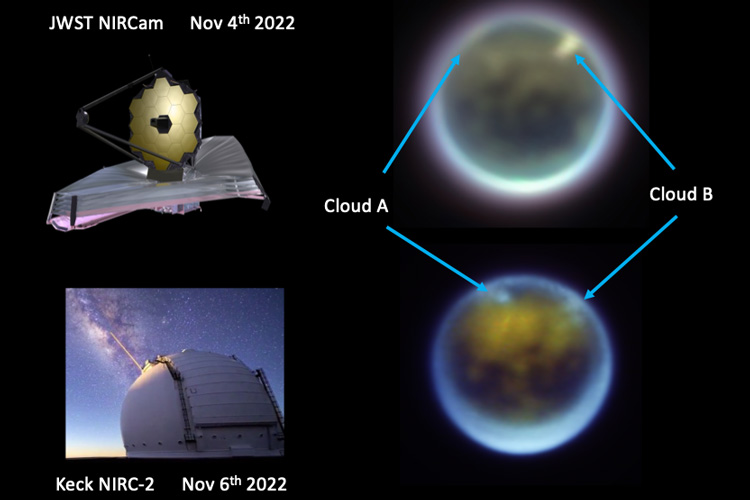
Evolution of clouds on Titan over 30 hours between Nov. 4 and Nov. 6, as seen by near-infrared cameras on the James Webb Space Telescope (top) and Keck Telescope. Titan’s trailing hemisphere seen here is rotating from left (dawn) to right (evening) as seen from Earth and the sun. Cloud A appears to be rotating into view, while Cloud B appears to be either dissipating, or moving behind Titan’s limb. Clouds are not long-lasting on Titan or Earth, so those seen on Nov. 4 may not be the same as those seen on Nov. 6. (Image credit: NASA/STScI/Keck Observatory/Judy Schmidt)
The James Webb Space Telescope (JWST) has turned its infrared cameras on Saturn’s moon Titan, giving astronomers another eye on the largest and one of the most unusual moons in the solar system.
The only satellite with a dense atmosphere, it’s also the only world besides Earth that has standing bodies of liquid on its surface, including rivers, lakes and seas — though the liquid is thought to be methane, ethane and other hydrocarbons that are toxic to humans.
The new observations, combined with those from Earth-bound telescopes, will help astronomers understand the weather patterns on Titan in advance of a NASA mission to the moon, called Dragonfly, that is scheduled for launch in 2027. A multirotor lander, Dragonfly will assess the habitability of Titan’s unique environment, investigate the moon’s unusual chemical stew, and search for signatures of water-based or hydrocarbon-based life.
Astronomers have observed Titan for decades, since before the Voyager encounter in 1980. Over approximately the past 25 years, they focused powerful ground-based and orbital telescopes on the satellite, complementing observations by NASA’s Cassini mission to Saturn, which observed Titan between 2004 and 2017. University of California, Berkeley, astronomer Imke de Pater led many Titan observations using high-resolution adaptive optics on the Keck Telescopes in Hawai’i.
A Keck telescope image of Titan taken on Nov. 7, 2022, showing bright clouds in the Northern Hemisphere at 11 o’clock and 1 o’clock. (Image credit: NASA/STScI/Keck Observatory/Judy Schmidt)
After the JWST imaged Titan on Nov. 4, the telescope’s Titan team saw what looked like two clouds in the atmosphere. Titan team lead Conor Nixon quickly emailed de Pater and Katherine de Kleer — a UC Berkeley Ph.D. who is now an assistant professor of planetary science and astronomy at the California Institute of Technology — to help confirm the clouds and track their movement with the Keck Telescope.
A series of Keck images taken about 30 and 54 hours later showed similar clouds — likely the same ones — but slightly displaced because of the moon’s rotation relative to Earth.
“We were concerned that the clouds would be gone when we looked at Titan one and two days later with Keck, but to our delight there were clouds at the same positions, looking like they might have changed in shape,” said de Pater, a UC Berkeley Professor of the Graduate School.
The power of JWST
Though the quality of the JWST and Keck images may look about the same to the untrained eye, de Pater noted that JWST has instruments that can measure aspects of Titan’s atmosphere that Keck cannot, complementing one another. In particular, JWST’s infrared spectroscopic capability allows it to pinpoint the altitudes of clouds and hazes with much better accuracy.
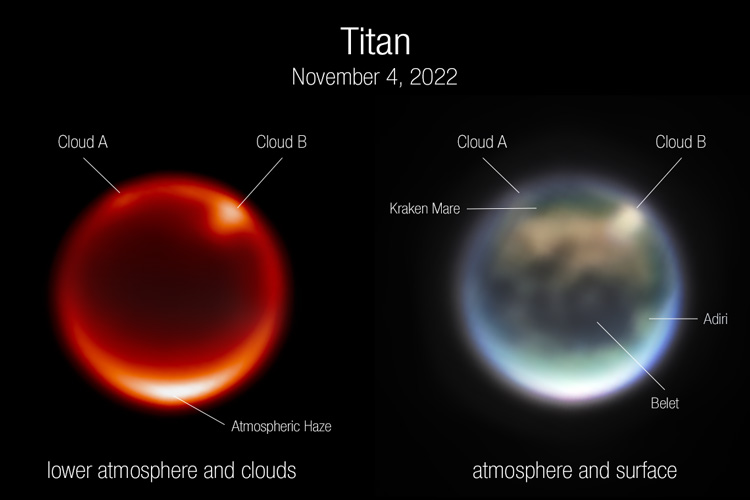
Saturn’s moon Titan captured by the James Webb Space Telescope’s NIRCam instrument on Nov. 4, 2022. The left image, taken through a 2.12-micron filter, shows clouds and lower atmospheric haze. The right image is a color composite using four filters. Kraken Mare is thought to be a methane sea; Belet is composed of dark-colored sand dunes; Adiri is a bright feature. (Image credit: NASA, ESA, CSA, A. Pagan [STScI]. Science: JWST Titan GTO Team)
In particular, at wavelengths where Earth’s atmosphere is opaque — that is, Titan cannot be seen from any Earth-based telescope — JWST can observe and provide information on the lower atmosphere and surface.
In early September, and again earlier this week, de Pater and de Kleer participated in an international observing campaign to catch the occultation by Titan of a distant star. Organized by Eliot Young, a senior program manager at the Southwest Research Institute in Boulder, Colorado, the occultation offered an opportunity to probe Titan’s atmospheric structure in more detail using the Keck Telescope and the Very Large Telescope in Chile. These observations are coordinated with occultations observed from other large telescopes and Doppler wind retrievals on Titan from the Atacama Large Millimeter Array, a radio telescope in Chile.
In conjunction with recent wind modeling results, these observations contribute to a broader understanding of atmospheres on Earth, on planets around other stars, and on our neighboring planets and moons in the solar system.
“This is some of the most exciting data we have seen of Titan since the end of the Cassini-Huygens mission in 2017, and some of the best we will get before NASA’s Dragonfly arrives in 2032,” said Zibi Turtle of Johns Hopkins University, who is Dragonfly’s principal investigator. “The analysis should really help us to learn a lot about Titan’s atmosphere and meteorology.”
art001e001820 (Dec. 1, 2022): On flight day 16, a camera mounted on one of Orion’s solar arrays snapped this image of our Moon as the spacecraft prepared to exit distant retrograde orbit during the Artemis I mission.
Orion has left its distant lunar orbit and is on its return journey home. The spacecraft successfully completed the distant retrograde departure burn at 3:53 p.m. CST, firing its main engine for 1 minute 45 seconds to set the spacecraft on course for a close lunar flyby before its return home.
The burn changed Orion’s velocity by about 454 feet per second and was performed using the Orion main engine on the European Service Module. The engine is an orbital maneuvering system engine modified for use on Orion and built by Aerojet Rocketdyne. The engine has the ability to provide 6,000 pounds of thrust. The proven engine flying on Artemis I flew on 19 space shuttle flights, beginning with STS-41G in October 1984 and ending with STS-112 in October 2002.
The burn is one of two maneuvers required ahead of Orion’s splashdown in the Pacific Ocean on Dec. 11. The second will occur on Monday, Dec. 5, when the spacecraft will fly 79.2 miles above the lunar surface and perform the return powered flyby burn, which will commit Orion on its course toward Earth.
Teams also continued thermal tests of the star trackers during their eighth and final planned test. Star trackers are a navigation tool that measure the positions of stars to help the spacecraft determine its orientation. In the first three flight days of the mission, engineers evaluated initial data to understand star tracker readings correlated to thruster firings.
A trajectory correction burn is planned for approximately 9:53 p.m. CST today, when Orion’s auxiliary thrusters will fine-tune the spacecraft’s path.
Just after 4:30 p.m. CST on Dec. 1, Orion was traveling 237,600 miles from Earth and 52,900 miles from the Moon, cruising at 2,300 mph.
Images are available on NASA’s Johnson Space Center Flickr account and Image and Video Library. When bandwidth allows, views of the mission are available in real-time.
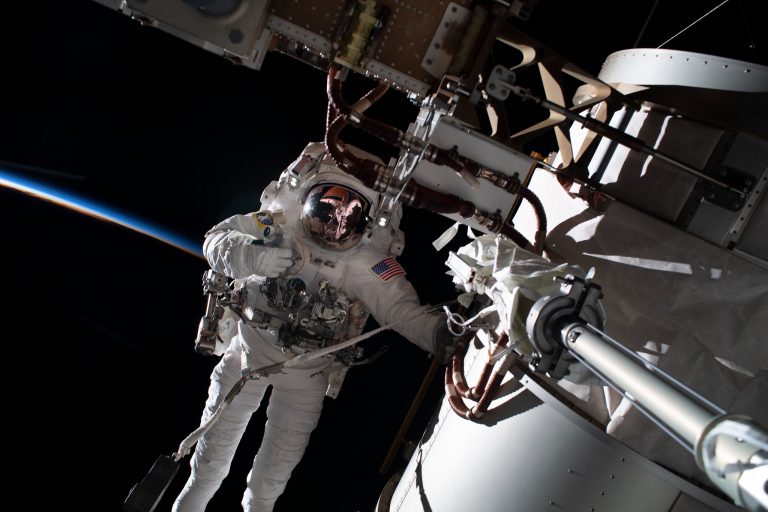
NASA astronaut and Expedition 68 Flight Engineer Frank Rubio is pictured during a spacewalk tethered to the International Space Station’s starboard truss structure. Credits: NASA
Astronauts aboard the International Space Station will conduct a pair of U.S. spacewalks in December to install rollout solar arrays to increase electrical power in support of station operations and scientific research.
NASA will provide live coverage of the first spacewalk beginning at 6 a.m. EST on Saturday, Dec. 3 on NASA Television, the NASA app, and the agency’s website. The spacewalk is scheduled to begin at 7:25 a.m. and last about seven hours.
NASA astronauts Josh Cassada and Frank Rubio will exit the station’s Quest airlock to install an International Space Station Roll-Out Solar Array (iROSA) to augment power generation for the 3A power channel on the station’s starboard truss structure.
In addition to installing an iROSA, the spacewalkers will disconnect a cable to ensure the 1B channel can be reactivated. Flight controllers recently changed electrical power routing to remove one of the eight International Space Station power channels from use to ensure batteries were being charged at expected levels. Station systems normally powered by the 1B channel are currently using electricity from the 1A power channel with no impact to station operations.
This spacewalking task will restore redundancy for affected station systems following unexpected tripping observed on the 1B channel Nov. 26. By isolating a section of the impacted array, which was one of several damaged strings, the goal is to restore 75% of the array’s functionality.
Cassada and Rubio are scheduled to conduct the next U.S. spacewalk Dec.19, this time to install an iROSA on the 4A power channel on the port truss. The exact times of the spacewalk and NASA coverage will be determined later.
For the Dec. 3 spacewalk Cassada will serve as extravehicular crew member 1 (EV 1) and will wear a suit with red stripes. Rubio will serve as extravehicular crew member 2 (EV 2) and will wear the unmarked suit. For the Dec. 19 spacewalk, Rubio will serve as extravehicular crew number 1 (EV 1) and will wear a suit with red stripes. Cassada will serve as extravehicular crew member 2 and will wear the unmarked suit. The spacewalks will be the second and third spacewalks in both Cassada and Rubio’s careers.
The iROSAs arrived at the space station on Nov. 27, following a launch aboard the agency’s 26th SpaceX Dragon commercial resupply mission on Nov. 26.
These will be the third and fourth iROSAs installed on space station out of a total six planned for installation. Overall, the iROSAs will increase power generation capability by up to 30%, increasing the station’s total available power from 160 kilowatts to up to 215 kilowatts.
Get breaking news, images and features from the space station on Instagram, Facebook, and Twitter.
Learn more about the International Space Station and its crew at: