Are you a nerd who loves programming, coding, and solving problems? Do you want to express your passion and personality through your clothing? If so, you need to check out guzz, the online shop that offers the best apparel and accessories for nerds like you.
guzz is not just another apparel brand. It is a lifestyle, a statement, a way of being. guzz shirts are designed by nerds, for nerds, with witty, clever, and original designs that reflect your interests and hobbies. Whether you are into Python, Java, C++, or any other programming language, you will find a shirt that speaks to you.
But guzz is not only about fun and humour. It is also about quality, comfort, and style. guzz shirts are made from premium materials, with soft and breathable fabrics, durable stitching, and vibrant colours. They are also cut to fit your body shape, with sizes ranging from XS to XXL. You can wear them casually, or dress them up with a jacket or a blazer. They are versatile, adaptable, and suitable for any occasion.
For the nerds coding the future and the shy types just trying to survive ‘til the weekend – we have the styles to let your nerd flag fly high all week. guzz shirts are perfect for your Monday-to-Friday routine. Whether you are working from home, attending a meeting, or going out with friends, you can find a shirt that matches your mood and your agenda. For the Bare or Rare Mondays, the Hello’s on Tuesdays, the planning on Wednesdays, the Real Work on Thursdays, and the Thank God It’s Fridays, the Coda Line has got you covered.
So what are you waiting for? Visit guzz today and get your Monday to Friday shirts. Feed your inner nerd and show the world who you are. guzz is the ultimate online shop for the nerd in you.
Welcome to a realm where pixels play with patterns and algorithms align with aesthetics. Get ready to upgrade your wardrobe with our Ideals Collection – a spectacular blend of art, mathematics, geometry, and programming. It’s more than fashion; it’s a statement!
Where Every Thread Tells a Story
Imagine wearing a shirt that’s not just a garment but a conversation starter, a piece of art, and a brain teaser all in one. Our designs are a symphony of abstract prints, calculated patterns, and rhythmic shapes – each telling its own unique story. These aren’t just clothes; they’re wearable expressions of your love for the smart and the beautiful.
For the Bold, the Brainy, and the Beautifully Geeky
Are you a techie, a math whiz, or a programming guru? Or maybe just someone who appreciates the clever interplay of numbers and nature? Either way, our shirts are tailored just for you. Flaunt your geek chic, show off your intellectual flair, and let your nerd flag fly high with pride!
Comfort and Style in Perfect Harmony
Bid farewell to boring, uncomfortable clothing! Our shirts are crafted for ultimate comfort, ensuring you feel as good as you look. Soft, breathable, and designed for every body type, they’re perfect for a long day at work or a casual day out. Who says smart can’t be stylish?
Join the Revolution of Smart Fashion Today!
This is your invitation to be part of something extraordinary. Don’t just dress up; dress smart. Elevate your style quotient and be the one who turns heads not just for how you look, but for what you represent – a perfect blend of intellect and fashion.
Discover your style at guzz – Where fashion meets the future. Don’t just wear it; live it!
This collection is a collaboration between guzz & Z/O/E. For more details, visit guzz at guzz.co.uk.
Bag lovers, bag enthusiast, bag collectors, and those simply in need of a bag to secure their belongings. We are gathered here for one thing. That is, to take advantage of the sale that is happening this Black Friday. But remember to take a moment to give gratitude this thanksgiving.
Now then, here are 25 different kind of bags and accessories.
“Get the most out of your shopping with an Amazon Prime membership! Sign up now to enjoy free one-day delivery, unlimited streaming, exclusive deals, membership perks and more. Sign up today to enjoy a 30-day free trial and if you’re a student enjoy up to 6 months free trial. Click here to signup now! 👉 https://amzn.to/46Jm3AX”
Let’s face it, technology has been part of our daily fun. From reading your favorite books on a Kindle, to watching the latest movies on the comfort of your home in front of your wide screen smart TV. Electronics, embrace it, it makes a lot of things easier and efficient. This let’s you do more and enjoy your life with your loved ones and don’t forget yourself.
Starting of with the king of entertainment, the television. A home entertainment system won’t be complete without it. This 55 inches OLED Smart TV (also available in 65 and 77 inch) has over 8.3 million self-lit pixels that turn on and off individually for perfect black and incredible colors. It’s also AI powered that that automatically improves quality of what your are watching. For smart assistance, it is supported by both Amazon Alexa and Hey Google.
Enjoy watching the latest movies and series in 4K resolution!
Specifications:
Brand Name : LG
Item weight: 43.9 pounds
Product dimensions: 9.7 x 48.3 x 29.3 inches
Output Wattage: 20 Watts
Color: Black
Bluetooth support: Yes(v5.0)
Wi-Fi Standard: Wi-Fi Certified (Wi-Fi 5)
USB Ports (v 2.0) : 2ea (v 2.0)
Smart Phone Connectivity: Yes
This television, at the time of publication is on a discount price of$996.99(originally it costs $1,296.99, saving you $300.00).
Book lovers, do not be wary of the might Kindle. It’s ok to love both. You might’ve been used to the magic of physical books. The Kindle has it’s own advantages, one of them is to add highlights and notes to the pages. But the best thing might be to able to easily see the list of notes you made. If you’re like me, and make bookmarks and notes, this is a time saver.
An Android phone that is unlocked globally. The convenience it provide is just a big plus. While it is not a powerful phone, for it’s relatively cheap price. It’s a good option for day-to-day use.
This phone, at the time of publication is on a discount price of $99.99 (originally it costs $169.99, saving you $70).
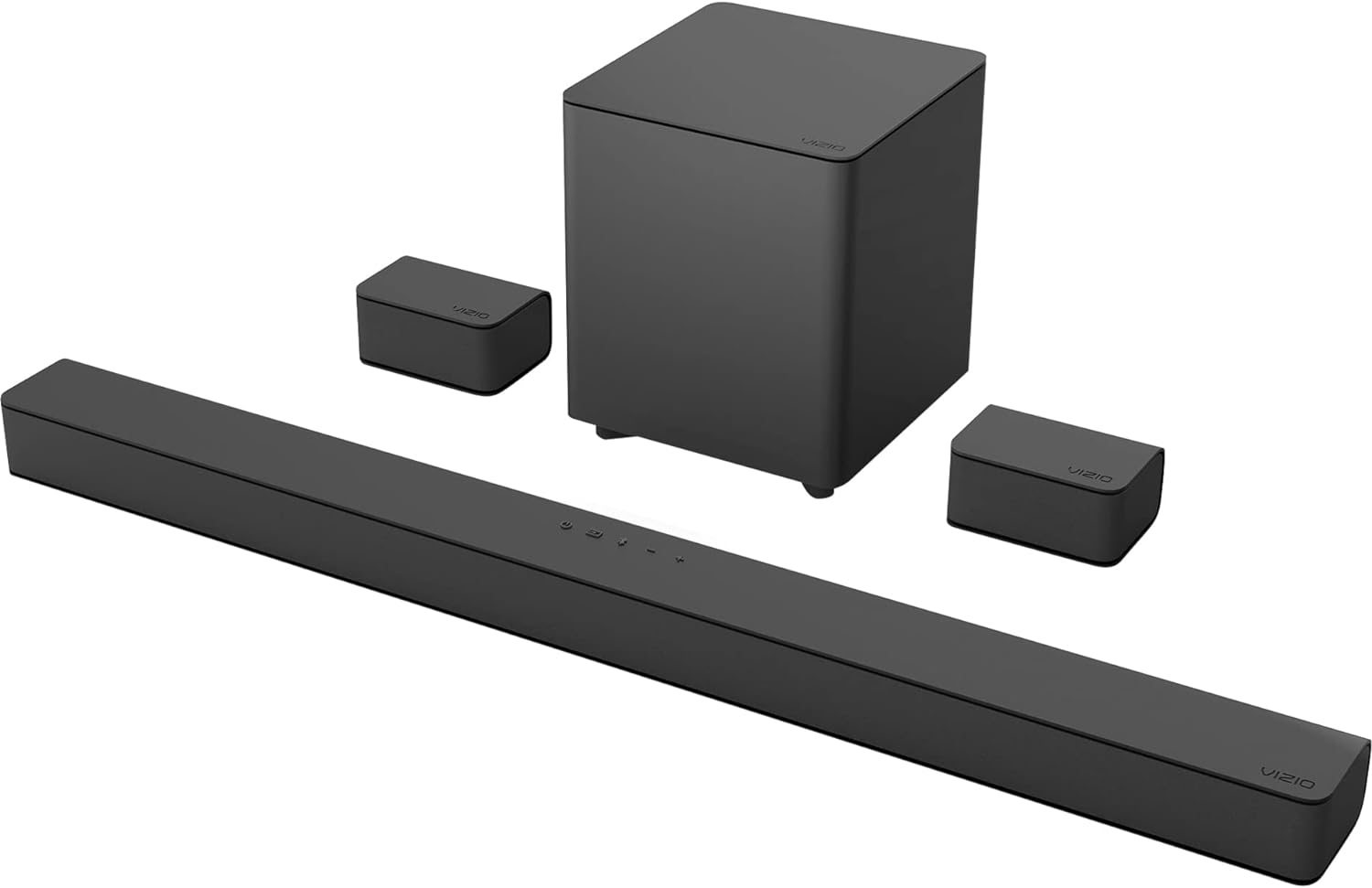
With a 36-inches soundbar speaker it would do well during family movie time. Together with subwoofer and the feel of a home theatre really does take the cake. It would be a shame if you couldn’t watch the latest movies and series without your very own movie theatre.
The home home theater sound bar at the time of publication is on a discount price of $159.99 (originally it costs $219.99, saving you $60).
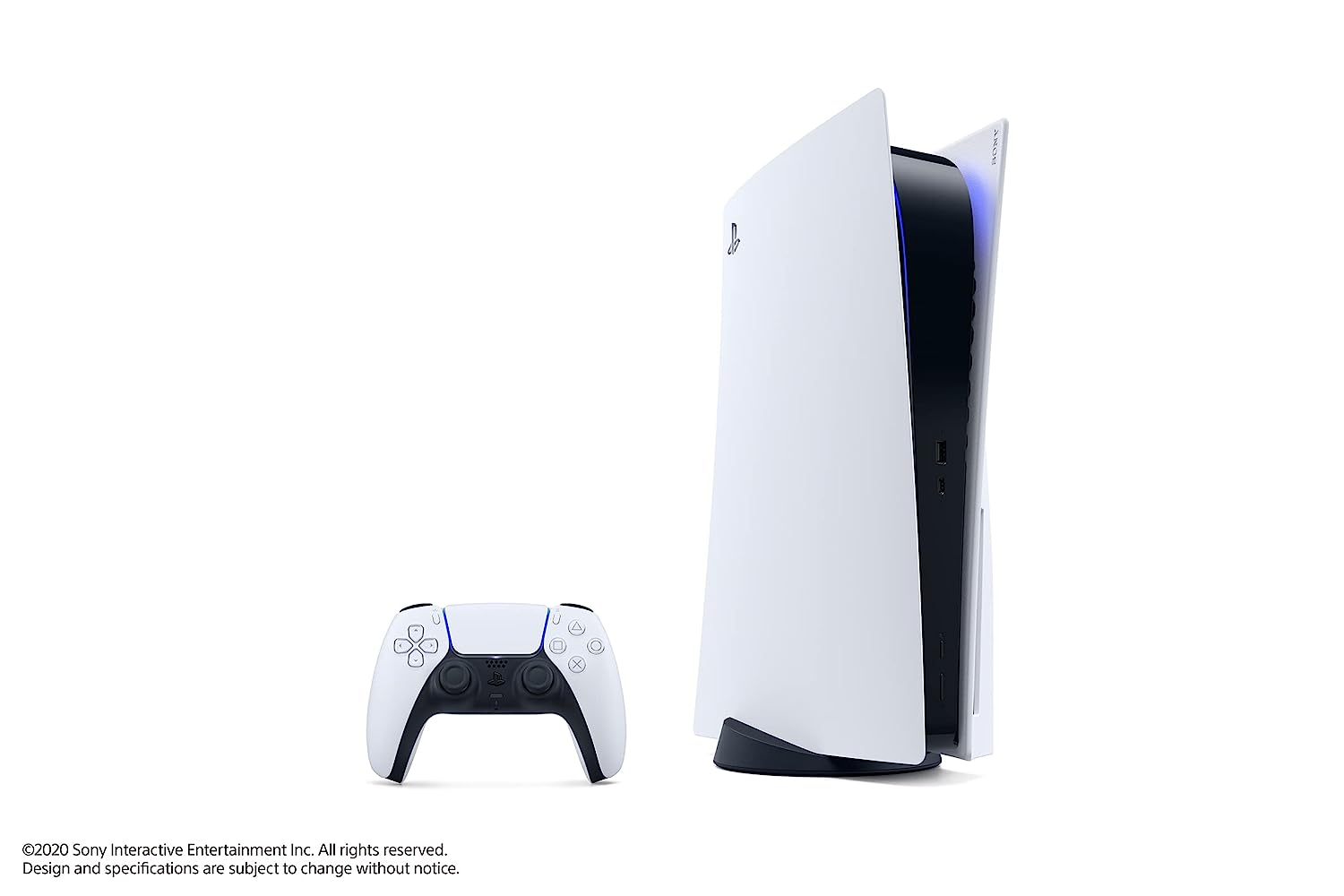
Gaming consoles are a great way to spend your leisure time. While some may argue that they are a waste of time, but with moderation it should be worth it. Popular choice includes the powerful XBox and PS5, and portable handhelds Steam Deck and Nintendo Switch. Each with it’s own exclusives, so make sure that if you are aiming for specific games to check whether it’s available to the platform.
The Steam Deck at the time of publication is on a discount price of $579.49 (originally it costs $691.87, saving you $112.38).
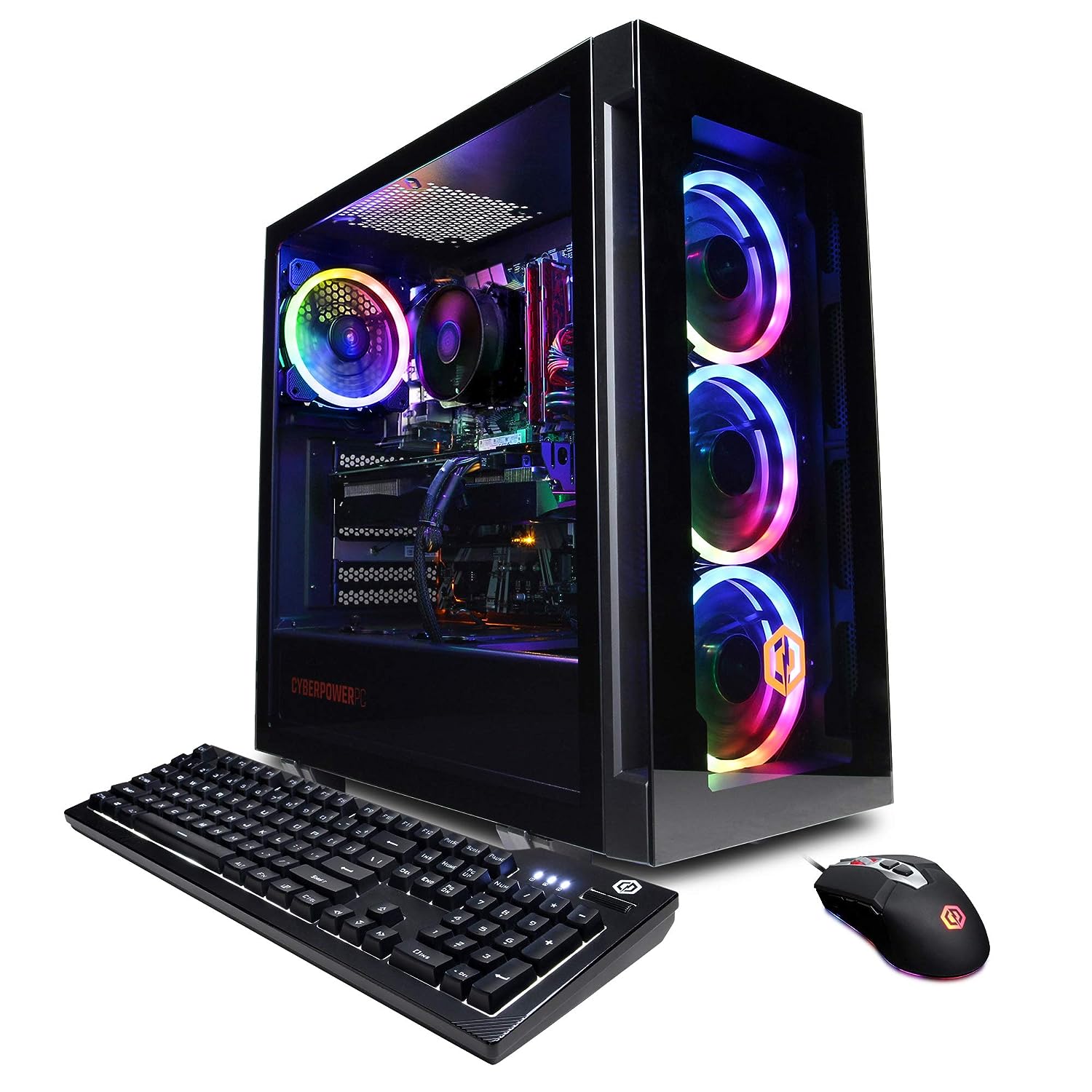
If gifting a game console seems too confusing that you don’t know which to pick. Then a safe option is to buy a powerful computer or more likely a gaming computer. These kinds of computer are well built not just for gaming but also for high workloads such as video editing and 3D rendering.
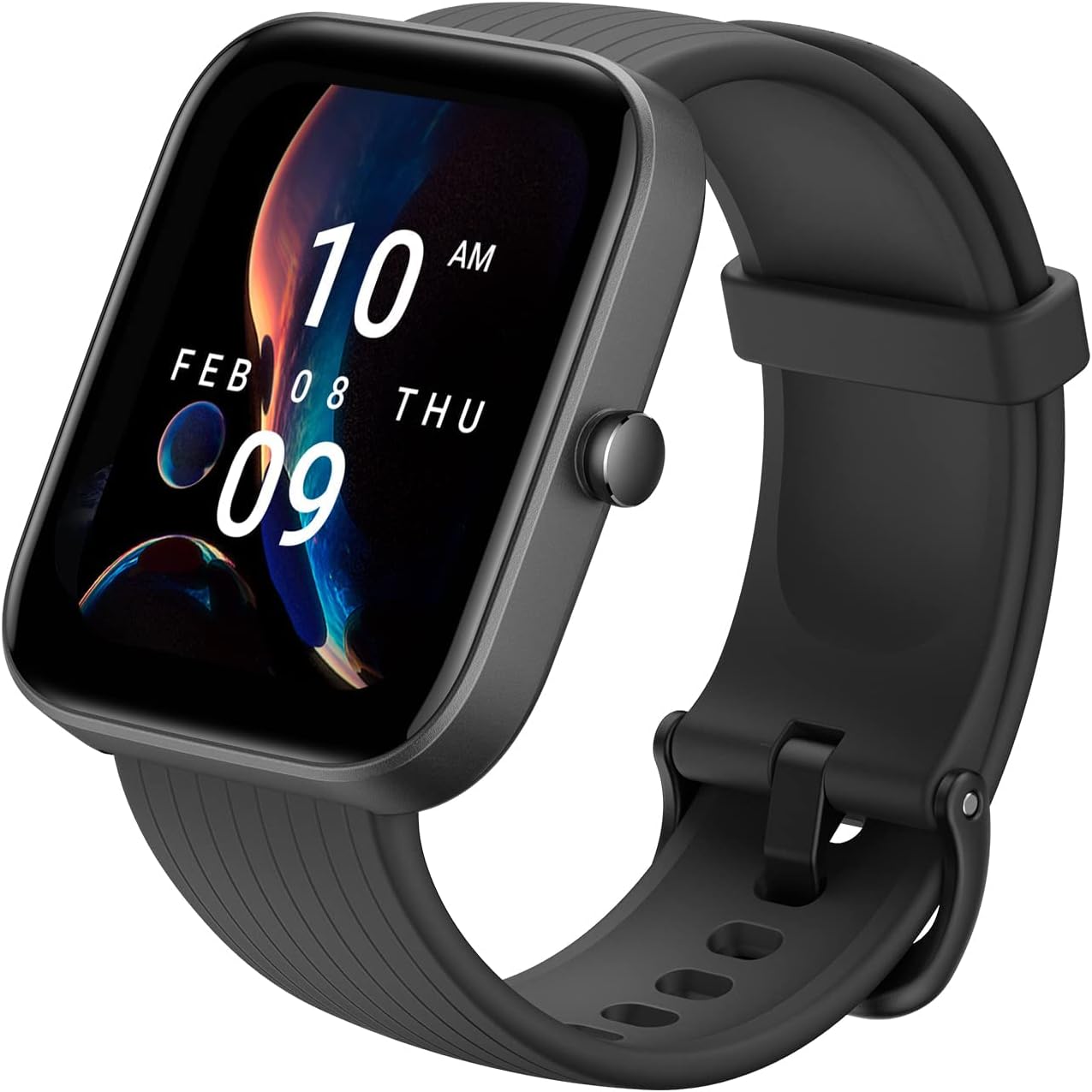
“A smart partner for your phone” indeed. Supported both by Android and iOS phones. This small beast can monitor your health from different perspectives. It’s main advantage over it’s non-pro counterpart is the built-in GPS. Reviews also pointed out that it could be one of the best smart watch that is under $100.
This smart watch, at the time of publication is on a discount price of $54.99 (originally it costs $69.99, saving you $15).
This 5th generation Amazon Echo Dot smart speaker has better sound quality and new tap gestures. It has a wide array of Alexa skills at your disposal. From setting up alarms, playing music, setting reminders, listening to the news and other fun activities. Overall, it’s a great purchase if you are getting this as your first smart speaker.
This Echo Dot at the time of publication is on a discount price of $22.99 (originally it costs $49.99, saving you $27.00).
“Get the most out of your shopping with an Amazon Prime membership! Sign up now to enjoy free one-day delivery, unlimited streaming, exclusive deals, membership perks and more. Sign up today to enjoy a 30-day free trial and if you’re a student enjoy up to 6 months free trial. Click here to signup now! 👉 https://amzn.to/46Jm3AX”
“You’re getting a TV! You’re getting a Tablet! You’re getting a Smart Watch! Everybody is getting something something!” as one talkshow host would say. She’s not wrong though. As cyber monday is closely approaching, deals and sales will be available left and right. So we’ve consolidated the list for you. A gift for yourself, your family, a friend, a co-coworker. It’s all here, or most of the electronics that you can think of.
“Get the most out of your shopping with an Amazon Prime membership! Sign up now to enjoy free one-day delivery, unlimited streaming, exclusive deals, membership perks and more. Sign up today to enjoy a 30-day free trial and if you’re a student enjoy up to 6 months free trial. Click here to signup now! 👉 https://amzn.to/46Jm3AX”
ATLANTA (Nov. 19, 2023) — Former First Lady Rosalynn Carter, a passionate champion of mental health, caregiving, and women’s rights, passed away Sunday, Nov. 19, at 2:10 p.m. at her home in Plains, Georgia, at the age of 96. She died peacefully, with family by her side.
Mrs. Carter was married for 77 years to Jimmy Carter, the 39th president of the United States and the 2002 Nobel Peace Prize recipient, who is now 99 years old.
President & Mrs Carter, 1979
“Rosalynn was my equal partner in everything I ever accomplished,” President Carter said. “She gave me wise guidance and encouragement when I needed it. As long as Rosalynn was in the world, I always knew somebody loved and supported me.”
She is survived by her children — Jack, Chip, Jeff, and Amy — and 11 grandchildren and 14 great-grandchildren. A grandson died in 2015.
“Rosalynn was my equal partner in everything I ever accomplished,” President Carter said. “She gave me wise guidance and encouragement when I needed it. As long as Rosalynn was in the world, I always knew somebody loved and supported me.”
“Besides being a loving mother and extraordinary First Lady, my mother was a great humanitarian in her own right,” said Chip Carter. “Her life of service and compassion was an example for all Americans. She will be sorely missed not only by our family but by the many people who have better mental health care and access to resources for caregiving today.”
The schedule of memorial events and funeral ceremonies will be distributed as soon as possible to media and posted on www.rosalynncartertribute.org. This tribute website includes the family’s official online condolence book and opportunities for memorial gifts, as well as an official biography and downloadable photos.
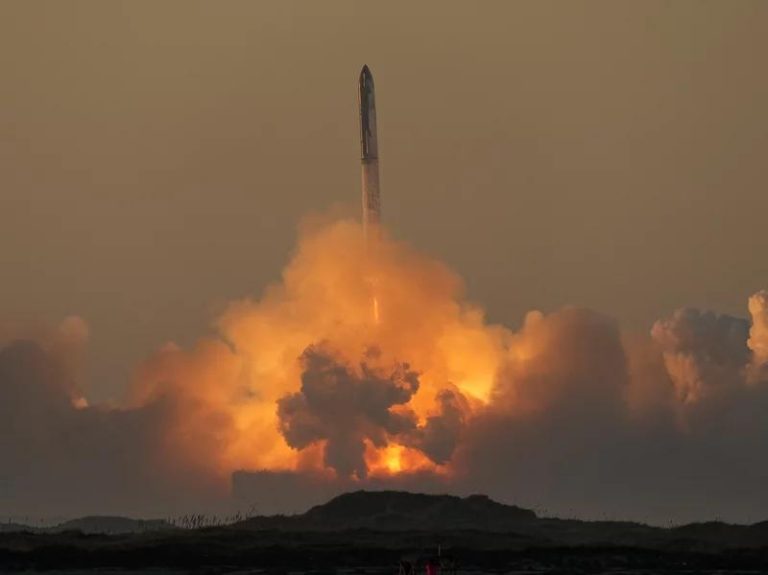
SpaceX’s mega rocket Starship launches for a test flight from Starbase in Boca Chica, Texas, on Saturday. Eric Gay/AP
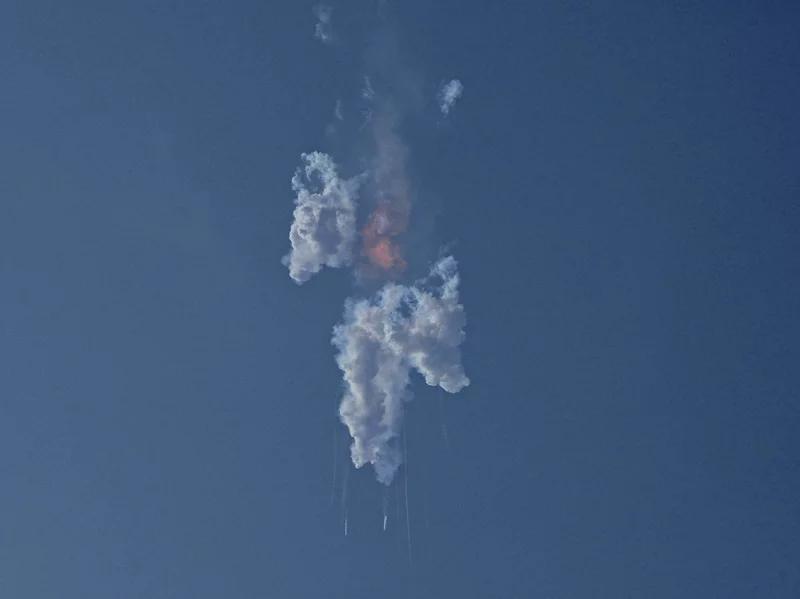
Amid wild cheers and applause, SpaceX’s giant Starship rocket successfully lifted off around 8:03 a.m. ET from its launch pad in Texas. The Starship successfully separated from its first-stage booster as planned. But minutes later, the cheers subsided as mission control appeared to lose contact with the vehicle. SpaceX said it believes that Starship’s self-destruct system activated, presumably because of a problem on board.
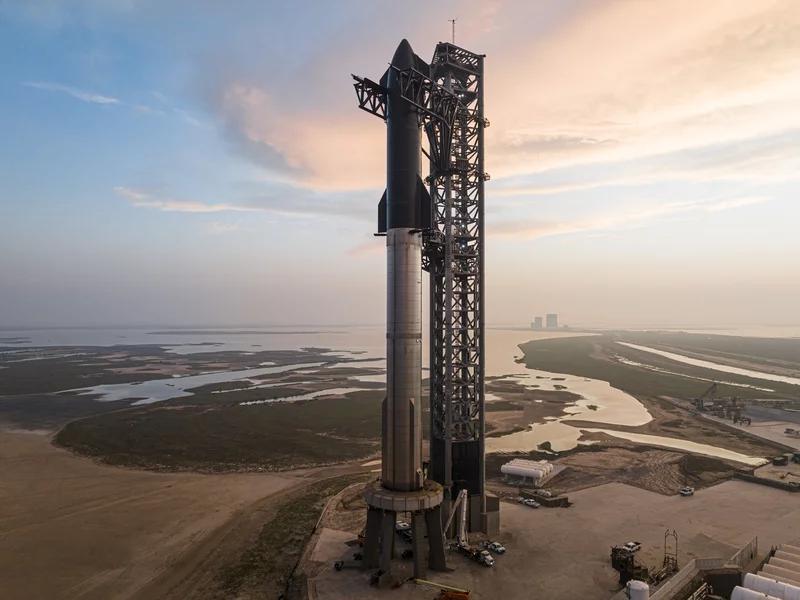
This was the SpaceX’s second attempt to launch the largest rocket the world has ever seen. The stainless-steel monster stands nearly 400 feet tall. Its massive first stage, known only as “Super Heavy,” is powered by 33 Raptor engines that must fire in perfect synchrony to carry Starship into orbit.
Congratulations to the entire SpaceX team on an exciting second integrated flight test of Starship!
Starship successfully lifted off under the power of all 33 Raptor engines on the Super Heavy Booster and made it through stage separation pic.twitter.com/JnCvLAJXPi
SpaceX founder Elon Musk hopes that Starship can one day become a cheap, rapidly reusable system that will jumpstart human exploration of the moon and Mars.
The plan for this second launch attempt was to lift off from Texas, briefly enter space and then splash down in the Pacific Ocean near Hawaii. But making it all the way through flight was always going to be a difficult goal to reach.
Here’s more on Starship and what this latest test means for the company.
Starship is the largest rocket ever built. Elon Musk hopes it will one day carry people to Mars.
SpaceX
Starship’s first flight in April did not go according to plan
The first test flight of any rocket is going to be tough — and for its April 20 launch attempt, SpaceX tried to manage expectations. Somewhat tongue-in-cheek, the official countdown timeline promised “excitement guaranteed” after the launch.
The rocket lifted off shortly after 8:30 a.m. local time. Almost immediately it was clear that some of the 33 engines in the first stage had failed, and as it climbed into the sky, further engines flamed out.
Before the Starship could separate from its booster, the entire rocket began spinning out of control. It exploded roughly 4 minutes into flight.
Starship’s first launch attempt ended in failure. The rocket spun out of control before exploding about four minutes after liftoff.
Eric Gay/AP
In the aftermath, it emerged that Starship’s flight termination system, which was designed to destroy the vehicle if it went out of control, had failed to do its job. On top of that, the rocket’s first stage pulverized the concrete launch pad during liftoff, sending particulate dust and chunks of debris flying.
The failure of the pad in particular was embarrassing, says Jonathan McDowell, an astronomer at the Center for Astrophysics, Harvard & Smithsonian. “This enormous rocket basically blew the pad apart and showered concrete over miles of Texas,” he says.
These rocketry goof-ups also caught the eye of government regulators. The Federal Aviation Administration grounded Starship pending a safety and environmental review. Earlier this week, the regulator cleared SpaceX for a second try, in part because of changes the company made to the design.
This time, SpaceX made some major upgrades
First, engineers have added more oomph to Starship’s self-destruct system. They put in larger explosive charges meant to destroy the beefy rocket, if it strayed off course as it did back in April.
That investment seemed to pay off on Saturday. As Starship’s second stage neared the end of its flight, mission control suddenly lost contact. The company says that the automated flight termination system triggered very late in the rocket’s burn.
In a statement, the FAA said Starship was lost due to an “anomaly.”
“No injuries or public property damage have been reported,” the agency said.
For this second test, the company also created an entirely new system for attaching the Starship to its booster rocket. It allows the spacecraft to use its engines to separate from the booster during flight, and continue its journey into orbit. But this so-called “hot staging” strategy is new to SpaceX, and isn’t used very often on American rockets.
It appeared to work well, allowing Starship to smoothly power away from the Super Heavy booster. But shortly after separation, the booster, which is supposed to be reusable, exploded. Hot staging can cause damage to the booster, though it’s too early to say if that’s what happened.
Third, the Super Heavy booster rocket being used in this flight has some considerable improvements over the previous one, the company claims. Most importantly, it uses an electrical mechanism to control the thrust of its dozens of engines. Sure enough, all 33 engines on the first stage appeared to perform flawlessly throughout the flight.
Super Heavy Booster 9 static fire successfully lit all 33 Raptor engines, with all but two running for the full duration. Congratulations to the SpaceX team on this exciting milestone! pic.twitter.com/1hzs768vHg
Finally, there was a big upgrade to the launchpad, which got blasted in the first flight test. This time, SpaceX has installed a water deluge system that should keep the pad from getting too hot. Such systems are commonly used for other launch pads. Again, the spaceflight company seemed to come out with a win: No chunks of concrete were reported flying from the pad.
Starship is a big part of SpaceX’s business plans
SpaceX is investing heavily in Starship. Musk has previously said that the company has spent $2 billion this year alone in development.
The company has focused on the mammoth rocket in part because Starship is central to Musk’s dream of colonizing Mars. He hopes that a fleet of starships will one day be able to put enough supplies into orbit to carry the first settlers to the red planet.
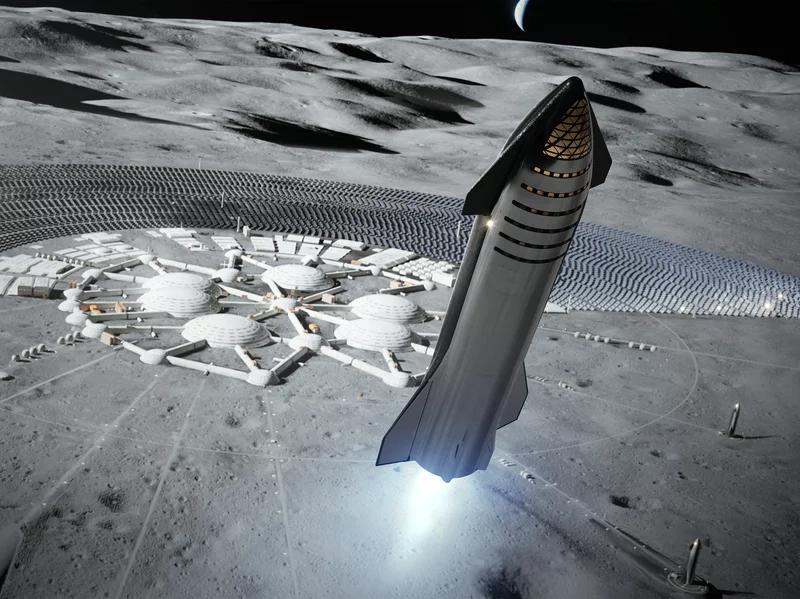
The rocket is also a big part of SpaceX’s business with NASA. The space agency has awarded around $4 billion in contracts to SpaceX so that it can develop Starship into a lunar lander. NASA plans on using a version of the rocket for some of its upcoming Artemis missions to the moon’s surface, which could start as soon as 2025.
Finally, Starship has a very important role in SpaceX’s business much closer to Earth. The company’s Starlink satellite internet system is awaiting a major upgrade, but SpaceX’s current rockets aren’t big enough to carry the newest, third generation of Starlink satellites into orbit, according to Chris Quilty, the president of Quilty Space, a private space analytics firm.
“Not only is the development of Starship burning a ton of cash, but it’s also holding back their ability to launch these gen-3 satellites,” Quilty says.
It worked! Kind of.
NASA is paying SpaceX billions to develop Starship into a lunar landing craft, but first it has to prove itself on Earth.
SpaceX
Ahead of this test, it wasn’t clear how Starship would perform. SpaceX conducted two test fires of the new Super Heavy booster in August. The first, conducted on Aug. 6, ended prematurely after four engines failed to function properly. The second, conducted on Aug. 22, was successful, although two engines failed to run for the full duration of the six-second test.
McDowell says given that the first stage worked, and Starship separated from its booster and kept flying, this test should be considered a “successful failure,” even though it eventually exploded.
Quilty believes that SpaceX’s business won’t be affected by the test. The company is currently dominating the market for launching commercial satellites, thanks in part to past innovations, like a first stage that can land vertically on a barge. “They’re doing absolutely fine without Starship,” he says.
But McDowell adds that given the big ambitions of SpaceX, this monster rocket will have to make it all the way into space sooner or later.
“They need Starship to work eventually,” he says. “The big question for me is: ‘How much eventually can they get away with? How many failures can they tolerate?’ “
For those who are on gift-giving exchange that ranges up to maximum budget of a 100 bucks, these are some of the deals we found that will meet that criteria. Some are even discounted, be sure to check it out before the promo ends.
“Get the most out of your shopping with an Amazon Prime membership! Sign up now to enjoy free one-day delivery, unlimited streaming, exclusive deals, membership perks and more. Sign up today to enjoy a 30-day free trial and if you’re a student enjoy up to 6 months free trial. Click here to signup now! 👉 https://amzn.to/46Jm3AX”
This laser communications terminal, developed at Lincoln Laboratory, aims to transmit data at high rates from the ISS to ground stations via NASA’s first two-way laser communications relay system.
Ariana Tantillo | MIT Lincoln Laboratory MIT News (https://news.mit.edu/2023/illuma-t-launches-international-space-station-1113)
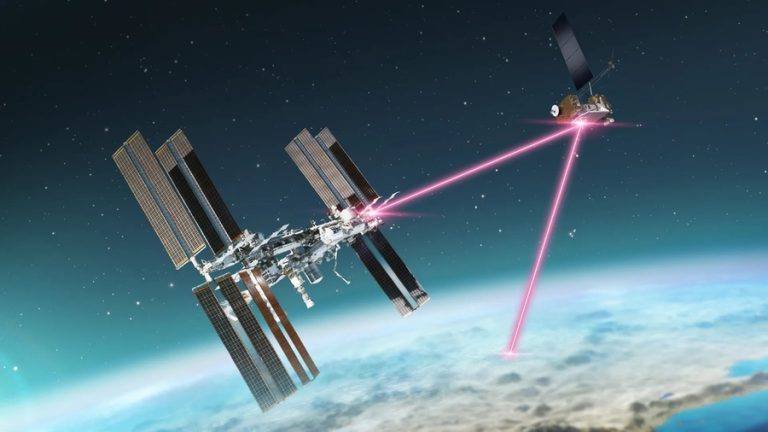
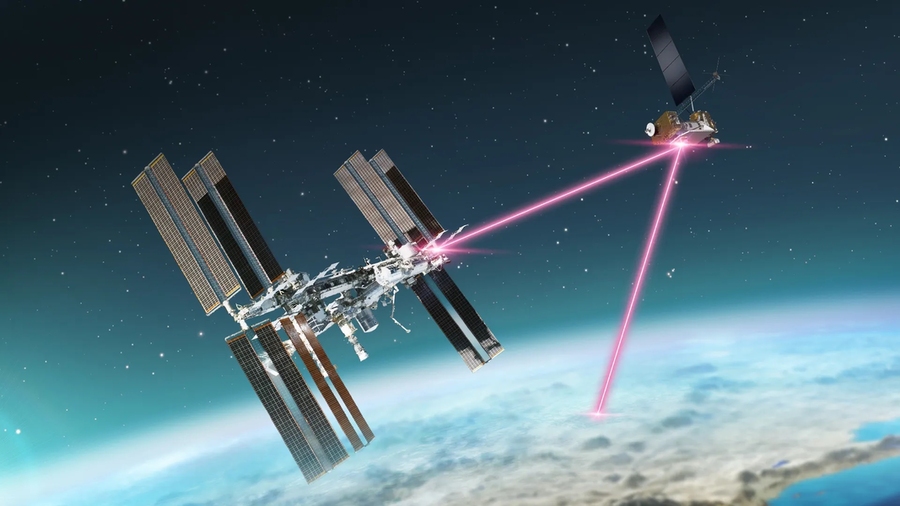
Lincoln Laboratory’s ILLUMA-T, deployed on the International Space Station (large structure), communicates through laser signals with NASA’s Laser Communications Relay Demonstration satellite, which relays the data to Earth.
Credits:
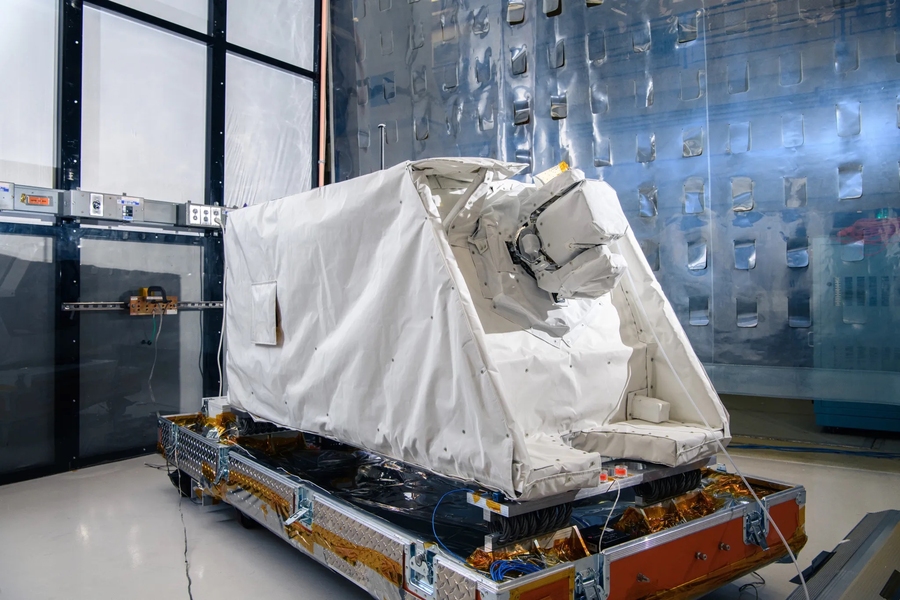
Image: Dave Ryan/NASA Prior to launch, the ILLUMA-T payload, approximately the size of a standard refrigerator, sits in a cleanroom at NASA Goddard Space Flight Center.
Credits:
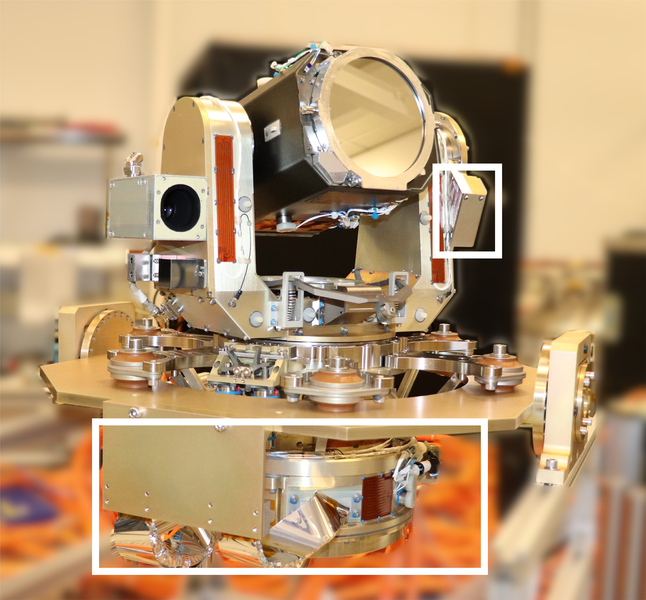
Photo: Dennis Henry/NASA The gimbal (top box) of the MAScOT optical module points the telescope, through which laser light is emitted and received. The backend optical assembly (bottom box) couples this light to optical fibers.
Credits:
Photo: Steven Gillmer/MIT Lincoln Laboratory
On Nov. 9, a Lincoln Laboratory–developed laser communications terminal integrated on a NASA-built payload was launched aboard a SpaceX Falcon 9 vehicle. Cameras inside the launch vehicle enabled the laboratory and a NASA Goddard Space Flight Center team to watch as the payload headed for the International Space Station (ISS), a football-field-sized research platform orbiting Earth about 250 miles above its surface, an altitude known as low Earth orbit (LEO).
On the ISS, the terminal — called ILLUMA-T (for Integrated Laser Communications Relay Demonstration LEO User Modem and Amplifier Terminal) — will participate in a technology demonstration to showcase the advantages of laser communications for missions in LEO. The team seeks to demonstrate that ILLUMA-T can enable high data-transmission rates from the ISS to NASA’s Laser Communications Relay Demonstration (LCRD) satellite in geosynchronous orbit (GEO) and ultimately to ground stations on Earth, and also from the ground back up to the ISS.
“We’re excited for ILLUMA-T and LCRD to demonstrate NASA’s first LEO-GEO optical communications relay,” says Bryan Robinson, an associate leader of the laboratory’s Optical and Quantum Communication Technology Group. “Our close collaboration with Goddard on engineering development and operations was critical to this mission.”
Artist’s rendition of ILLUMA-T being removed from the SpaceX trunk and installed on the Japanese Experiment Module. Video: MAGIK Robotic analysis team
Lighting the way for future space communication
Most space-based missions today use radio frequencies (RF) for communication. But infrared laser light (owing to its shorter wavelength) can transmit data at rates 10 to 100 times faster. This speedup means missions can send more data — for example, images, videos, sensor outputs, and command-and-control information — to and from space in much less time. Laser communications systems also require less volume, weight, and power than their RF counterparts, translating to lower mission costs.
NASA first performed two-way space communication with laser light instead of RF in 2013 with the Lunar Laser Communications Demonstration (LLCD), for which the laboratory designed and built the space and ground terminals. That year, LLCD made history by transmitting data at record-breaking download and upload rates over the 239,000 miles between the moon and Earth (more specifically, to a laboratory-built ground station in New Mexico). As LLCD was winding down, NASA embarked on another laser communications development effort: LCRD. Goddard built the two laser communications terminals for LCRD based on the LLCD design. Since launching into GEO 22,000 miles above Earth’s surface in 2021, LCRD has been relaying data between ground stations in Hawaii (built by the laboratory) and in California (built by Caltech’s Jet Propulsion Laboratory), with NASA conducting experiments and assessing system performance.
“The next question NASA asked as they finished LLCD and invested in LCRD was whether the LLCD terminal design could be put onto a LEO spacecraft,” Robinson says. “The ISS was always the target for that demonstration.”
Redesigning the terminal
The design of the LLCD terminal was constrained in some ways that made its transfer onto a LEO satellite difficult. The biggest constraint was related to its field of regard, or the directions in which the terminal can point when LCRD is within sight of the LEO satellite. As a LEO satellite orbits the Earth (about once every 90 minutes), the laser beam must be moved quickly to stay pointing toward a GEO satellite over all angles. However, the original terminal design was limited to about 20-degrees motion in both the vertical and horizontal directions.
“That range of motion works great in GEO because the satellite is in a fixed position; it’s not moving relative to the Earth, and the extent of Earth is within those 20 degrees,” Robinson explains. “So, you can point anywhere on Earth and you don’t have to move very fast.”
The laboratory team started reworking the terminal design after the LLCD program completed operations in 2014. They added a two-axis gimbal (pivoted support that allows an object to rotate about an axis) capable of pointing anywhere in the hemisphere of directions as the satellite moves through LEO. The gimbal can quickly pivot to track a GEO satellite.
In addition to making the terminal design more functional, the team made it more manufacturable. While coming up with and testing initial concepts, they sought input from industry partners and tailored several aspects of the design accordingly. For example, they incorporated all the fine-pointing mechanisms — such as light-focusing lenses, tracking sensors, and fast-steering mirrors — in a backend optical assembly. In this new design, the mechanisms are slightly larger and easier to align. Such alignment is necessary to precisely point the laser beam in the desired direction for communication, and the team incorporated additional pointing-correction mechanisms to relax the alignment tolerance requirements. The assembly is separated from the telescope, which is exposed to more-extreme space environments, enabling better control of the temperature and pointing stability of the optics.
NASA then initiated an effort to put this terminal, called MAScOT (for Modular, Agile, Scalable Optical Terminal), on the ISS. ILLUMA-T is now bringing MAScOT into space for the very first time.
Embarking on a six-month mission
Over the next two weeks, ILLUMA-T, packaged in an enclosure compatible with ISS interfaces, will be installed on an external module of the ISS, the Japanese Experiment Module – Exposed Facility. Two separate cranes will lift the ILLUMA-T payload into its designated space. Thanks to cameras stationed on the ISS, the team will be able to follow the installation process, unlike previous laser communications missions like LLCD, in which the payload was launched and never seen again.
Once installation is complete, the team will power on ILLUMA-T and perform in-orbit checkouts. Following this one-month commissioning phase, they will attempt to attain first light — that is, when ILLUMA-T transmits its first beam of laser light through its optical telescope to LCRD.
After achieving this critical milestone, the team will begin laser communications experiments to send data from ILLUMA-T on the ISS to LCRD to the ground (return direction) and vice versa (forward direction). They plan to demonstrate a return rate of 1.2 gigabits per second (Gbps) and a forward rate of 51 megabits per second (Mbps), with additional modes operating up to 155 Mbps. These return and forward rates are considerably higher (about two and six times higher, respectively) than those currently provided by radio systems on the ISS and are achieved with a terminal much smaller than the RF terminal.
“High data rates are useful when astronauts are involved in the mission,” says Farzana Khatri, senior staff in the laboratory’s Optical and Quantum Communication Technology Group. “A reliable data link from the ground to space is important for streaming internet and staying connected with the astronauts to perform telehealth, for example. Also, on the ISS are many computers, all of which need to be regularly updated and patched.”
ILLUMA-T, composed of the MAScOT optical module and a modem, is connected via Ethernet to the ISS local area network, which computers and other experiments plug into. So, ILLUMA-T can send various kinds of data from the ISS, such as scientific measurements and system health and status indicators.
“Our goal during the experiments is to ensure the optical links work as expected and provide the defined data rates,” Robinson says.
Employing the terminal design in future missions
The experiments will span five months, after which ILLUMA-T is anticipated to de-orbit from the ISS, with another system taking its place. But ILLUMA-T only represents the initial use of MAScOT. The same terminal design will be employed in the Orion Artemis II Optical Communications System (O2O). Scheduled to launch aboard NASA’s Orion spacecraft in November 2024, O2O will bring laser communications to the moon for the human-crewed Artemis II mission. The four Artemis II astronauts will be the first humans since 1972 to take the trip to the moon. The laboratory team has already built and delivered the optical terminal for O2O to Kennedy Space Center, where it has been installed on Orion and is undergoing testing.
The team is now exploring how MAScOT could be integrated with a high-rate optical modem to support the Event Horizon Explorer (EHE), which requires data link rates of more than 200 Gbps. The Event Horizon Telescope (EHT) captured the first-ever image of a black hole in 2019; the EHE seeks to extend the ground-based EHT with a space-based node in GEO to capture even sharper images, revealing intricate details such as halos of light formed by particles orbiting a black hole. One possibility for the high-rate optical modem is that used for the laboratory-developed TeraByte Infrared Delivery (TBIRD) laser communications payload launched into LEO in 2022. While ILLUMA-T uses a 1.2 Gbps industry-produced modem specifically designed to operate in space and work with the signaling used by the LCRD spacecraft, TBIRD uses an augmented 100 Gbps commercial modem designed for terrestrial fiber-optic networks — the ones that power internet, telephone, and television services across the globe today. TBIRD demonstrated a successful link from LEO to the ground with a very small telescope. However, for EHE and other GEO missions, closing the much-longer link (about 100 times longer) from GEO to the ground with a high-rate commercial modem will require a larger telescope, like that of MAScOT, and higher transmit powers.
“We developed MAScOT to be more flexible than the terminals for LLCD and LCRD,” says Robinson. “Many missions now and in the future are expected to benefit from this new design.”
The ILLUMA-T payload is managed by NASA Goddard. The ISS program office at NASA’s Johnson Space Center is a partner. ILLUMA-T is funded by the Space Communications and Navigation (SCaN) program at NASA Headquarters in Washington.
Reprinted with permission of MIT News (http://news.mit.edu/)
Our state-of-the-art model delivers 10-day weather predictions at unprecedented accuracy in under one minute
The weather affects us all, in ways big and small. It can dictate how we dress in the morning, provide us with green energy and, in the worst cases, create storms that can devastate communities. In a world of increasingly extreme weather, fast and accurate forecasts have never been more important.
In a paper published in Science, we introduce GraphCast, a state-of-the-art AI model able to make medium-range weather forecasts with unprecedented accuracy. GraphCast predicts weather conditions up to 10 days in advance more accurately and much faster than the industry gold-standard weather simulation system – the High Resolution Forecast (HRES), produced by the European Centre for Medium-Range Weather Forecasts (ECMWF).
GraphCast can also offer earlier warnings of extreme weather events. It can predict the tracks of cyclones with great accuracy further into the future, identifies atmospheric rivers associated with flood risk, and predicts the onset of extreme temperatures. This ability has the potential to save lives through greater preparedness.
GraphCast takes a significant step forward in AI for weather prediction, offering more accurate and efficient forecasts, and opening paths to support decision-making critical to the needs of our industries and societies. And, by open sourcing the model code for GraphCast, we are enabling scientists and forecasters around the world to benefit billions of people in their everyday lives. GraphCast is already being used by weather agencies, including ECMWF, which is running a live experiment of our model’s forecasts on its website.
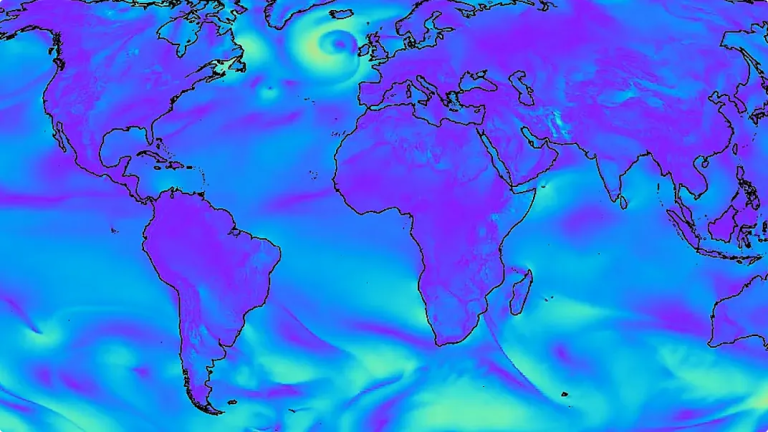
A selection of GraphCast’s predictions rolling across 10 days showing specific humidity at 700 hectopascals (about 3 km above surface), surface temperature, and surface wind speed.
The challenge of global weather forecasting
Weather prediction is one of the oldest and most challenging–scientific endeavours. Medium range predictions are important to support key decision-making across sectors, from renewable energy to event logistics, but are difficult to do accurately and efficiently.
Forecasts typically rely on Numerical Weather Prediction (NWP), which begins with carefully defined physics equations, which are then translated into computer algorithms run on supercomputers. While this traditional approach has been a triumph of science and engineering, designing the equations and algorithms is time-consuming and requires deep expertise, as well as costly compute resources to make accurate predictions.
Deep learning offers a different approach: using data instead of physical equations to create a weather forecast system. GraphCast is trained on decades of historical weather data to learn a model of the cause and effect relationships that govern how Earth’s weather evolves, from the present into the future.
Crucially, GraphCast and traditional approaches go hand-in-hand: we trained GraphCast on four decades of weather reanalysis data, from the ECMWF’s ERA5 dataset. This trove is based on historical weather observations such as satellite images, radar, and weather stations using a traditional NWP to ‘fill in the blanks’ where the observations are incomplete, to reconstruct a rich record of global historical weather.
GraphCast: An AI model for weather prediction
GraphCast is a weather forecasting system based on machine learning and Graph Neural Networks (GNNs), which are a particularly useful architecture for processing spatially structured data.
GraphCast makes forecasts at the high resolution of 0.25 degrees longitude/latitude (28km x 28km at the equator). That’s more than a million grid points covering the entire Earth’s surface. At each grid point the model predicts five Earth-surface variables – including temperature, wind speed and direction, and mean sea-level pressure – and six atmospheric variables at each of 37 levels of altitude, including specific humidity, wind speed and direction, and temperature.
While GraphCast’s training was computationally intensive, the resulting forecasting model is highly efficient. Making 10-day forecasts with GraphCast takes less than a minute on a single Google TPU v4 machine. For comparison, a 10-day forecast using a conventional approach, such as HRES, can take hours of computation in a supercomputer with hundreds of machines.
In a comprehensive performance evaluation against the gold-standard deterministic system, HRES, GraphCast provided more accurate predictions on more than 90% of 1380 test variables and forecast lead times (see our Science paper for details). When we limited the evaluation to the troposphere, the 6-20 kilometer high region of the atmosphere nearest to Earth’s surface where accurate forecasting is most important, our model outperformed HRES on 99.7% of the test variables for future weather.
For inputs, GraphCast requires just two sets of data: the state of the weather 6 hours ago, and the current state of the weather. The model then predicts the weather 6 hours in the future. This process can then be rolled forward in 6-hour increments to provide state-of-the-art forecasts up to 10 days in advance.
Better warnings for extreme weather events
Our analyses revealed that GraphCast can also identify severe weather events earlier than traditional forecasting models, despite not having been trained to look for them. This is a prime example of how GraphCast could help with preparedness to save lives and reduce the impact of storms and extreme weather on communities.
By applying a simple cyclone tracker directly onto GraphCast forecasts, we could predict cyclone movement more accurately than the HRES model. In September, a live version of our publicly available GraphCast model, deployed on the ECMWF website, accurately predicted about nine days in advance that Hurricane Lee would make landfall in Nova Scotia. By contrast, traditional forecasts had greater variability in where and when landfall would occur, and only locked in on Nova Scotia about six days in advance.
GraphCast can also characterize atmospheric rivers – narrow regions of the atmosphere that transfer most of the water vapour outside of the tropics. The intensity of an atmospheric river can indicate whether it will bring beneficial rain or a flood-inducing deluge. GraphCast forecasts can help characterize atmospheric rivers, which could help planning emergency responses together with AI models to forecast floods.
Finally, predicting extreme temperatures is of growing importance in our warming world. GraphCast can characterize when the heat is set to rise above the historical top temperatures for any given location on Earth. This is particularly useful in anticipating heat waves, disruptive and dangerous events that are becoming increasingly common.
Severe-event prediction – how GraphCast and HRES compare.
Left: Cyclone tracking performances. As the lead time for predicting cyclone movements grows, GraphCast maintains greater accuracy than HRES.
Right: Atmospheric river prediction. GraphCast’s prediction errors are markedly lower than HRES’s for the entirety of their 10-day predictions
The future of AI for weather
GraphCast is now the most accurate 10-day global weather forecasting system in the world, and can predict extreme weather events further into the future than was previously possible. As the weather patterns evolve in a changing climate, GraphCast will evolve and improve as higher quality data becomes available.
To make AI-powered weather forecasting more accessible, we’ve open sourced our model’s code. ECMWF is already experimenting with GraphCast’s 10-day forecasts and we’re excited to see the possibilities it unlocks for researchers – from tailoring the model for particular weather phenomena to optimizing it for different parts of the world.
GraphCast joins other state-of-the-art weather prediction systems from Google DeepMind and Google Research, including a regional Nowcasting model that produces forecasts up to 90 minutes ahead, and MetNet-3, a regional weather forecasting model already in operation across the US and Europe that produces more accurate 24-hour forecasts than any other system.
Pioneering the use of AI in weather forecasting will benefit billions of people in their everyday lives. But our wider research is not just about anticipating weather – it’s about understanding the broader patterns of our climate. By developing new tools and accelerating research, we hope AI can empower the global community to tackle our greatest environmental challenges.
By: Remi Lam on behalf of the GraphCast team Originally published at: Google DeepMind