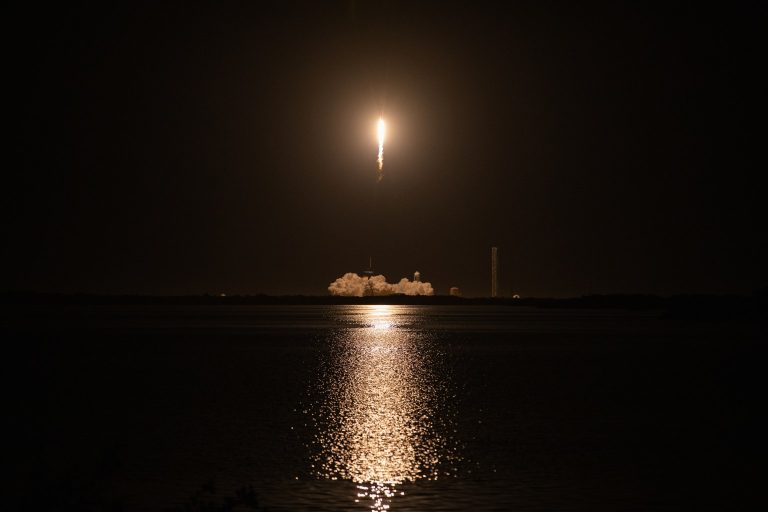
In this photo from Nov. 9, 2023, a SpaceX Falcon 9 rocket illuminates the water as it launches at night from NASA’s Kennedy Space Center in Florida. The 29th commercial resupply mission of the Cargo Dragon spacecraft brought new scientific research, technology demonstrations, crew supplies, and hardware to the International Space Station, including NASA’s Integrated Laser Communications Relay Demonstration Low Earth Orbit User Modem and Amplifier Terminal (ILLUMA-T) and Atmospheric Waves Experiment (AWE).
Magnetic damping device will ensure satellites remain more stable to improve future active debris removal
Airbus’ patented Detumbler device designed to prevent satellites at the end of their lives from tumbling, was launched on Saturday 11 November and will be tested in space on the mission in association with Exotrail and EnduroSat early in 2024.
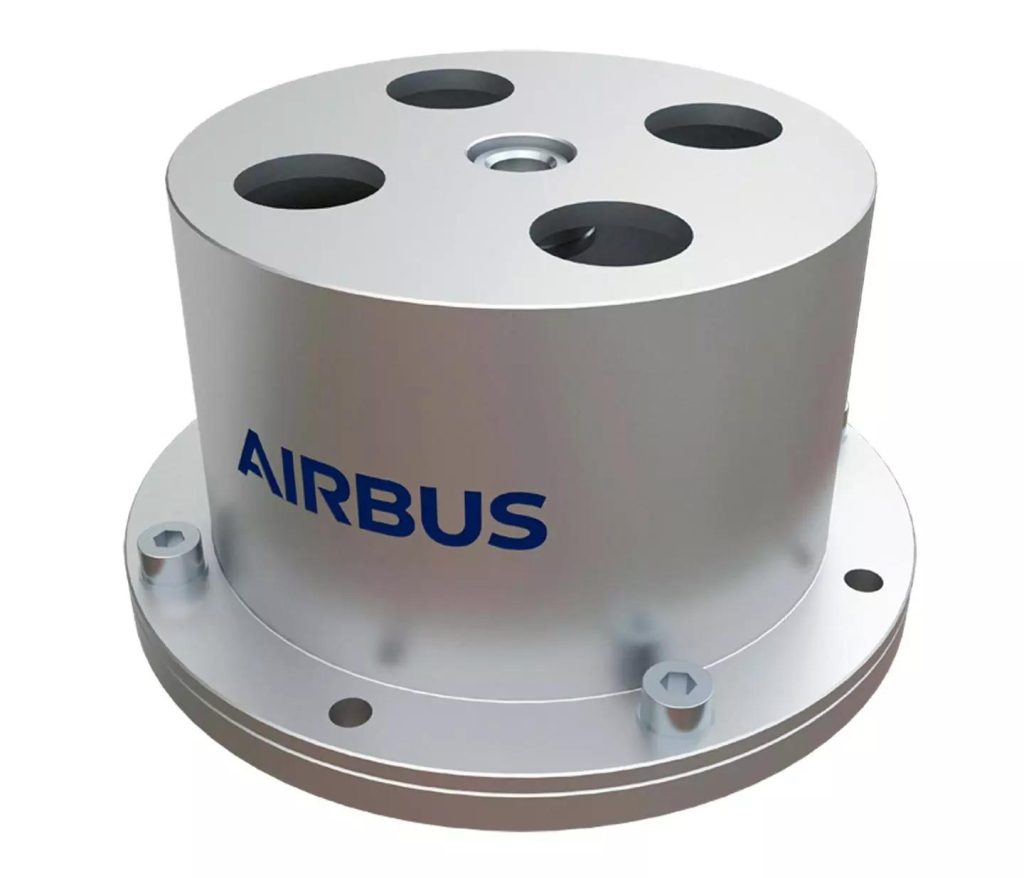
Developed in 2021 by Airbus, and supported by the French Space Agency CNES under their Tech4SpaceCare initiative, the Detumbler is a magnetic damping device that would be attached to a satellite. The Detumbler includes a central rotor wheel and magnets that interact with the Earth’s magnetic field. When the satellite is flying normally the rotor acts like a compass following the magnetic field, but should the spacecraft begin to tumble the rotor movement induces eddy currents acting like a friction torque thus damping the motion.
CAD view of the reference design. The design involves the stator housing, with its bottom plate and top cover, and the rotor comprising the central axle, the rotor wheel and the magnets.
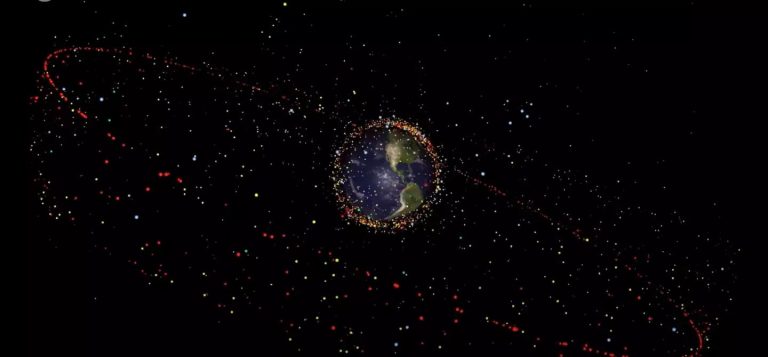
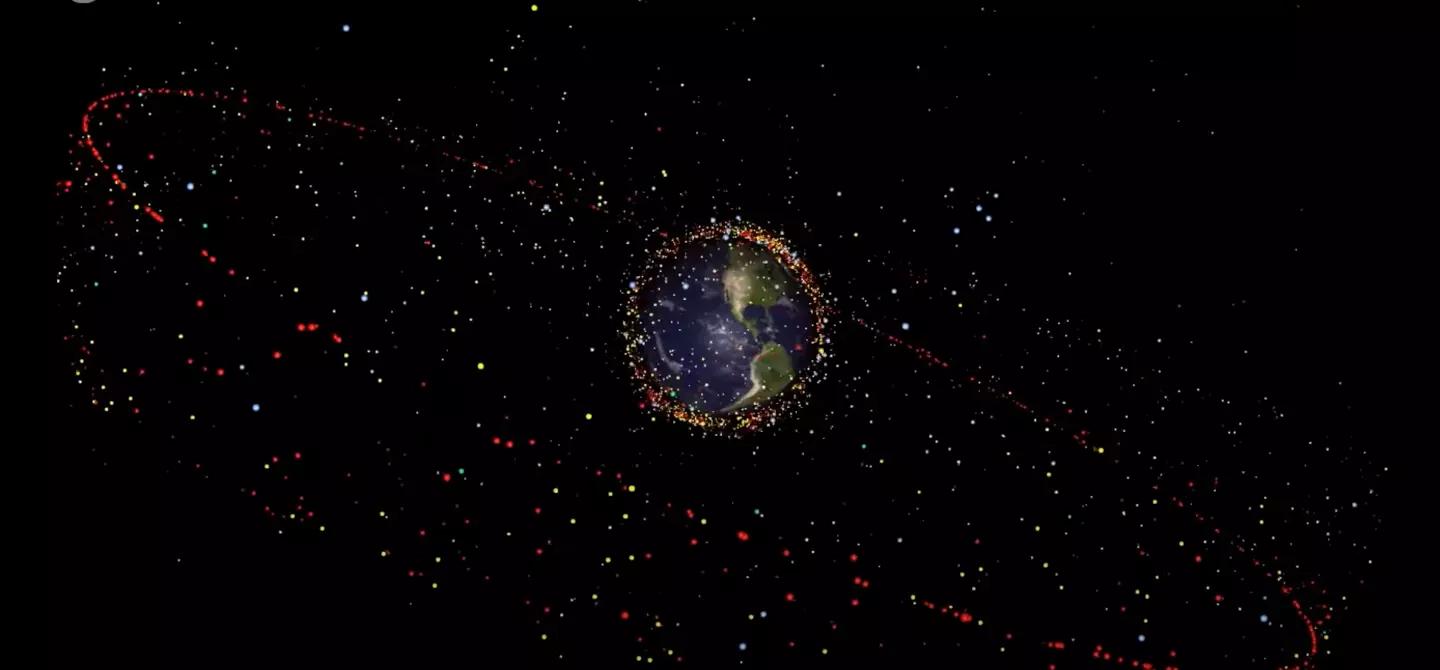
Dead satellites, especially in low Earth orbit (LEO), often end up tumbling which is natural behaviour due to orbital flight dynamics. Future active debris removal missions will face a greater challenge if spacecraft are tumbling. The Airbus Detumbler – weighing in at around 100g – could therefore be a useful tool for future missions to prevent satellites tumbling after their end of life, making them easier to capture on debris clearing missions.
The in-orbit demonstration of the Detumbler is scheduled for early 2024 on a mission from Exotrail (SpaceVan) which will include the Exo-0 nanosatellite from EnduroSat. Dedicated detumbling tests will take place to verify the ability of the Detumbler to dampen movement.
@AirbusSpace @CNES @exotrail @EnduroSat
Your contact
Ralph Heinrich Head of External Communications – Airbus Space Systems Phone: +49 171 304 9751 [email protected]
Jeremy Close External Communications – Airbus Space Systems, UK Phone: +44 776 653 6572 [email protected]
Guilhem Boltz External Communications – Airbus Space Systems, France Phone: +33 6 34 78 14 08 [email protected]
Francisco Lechón External Communications – Airbus Space Systems, Spain Phone: +34 630 196 993 [email protected]
Unprecedented Test of Softgoods Structure is a Significant Milestone in the Development of World’s First Commercial Space Station, Orbital Reef
Low-Volume Launches Become High-Volume Space Stations on Orbit
LOUISVILLE, Colo. – Nov. 13, 2023– Sierra Space, a leading pureplay commercial space company building the first end-to-end business and technology platform in space, announced today that it is on the brink of a historic moment as the company prepares for its biggest-ever “burst test” of Sierra Space’s inflatable, expandable space station technology.
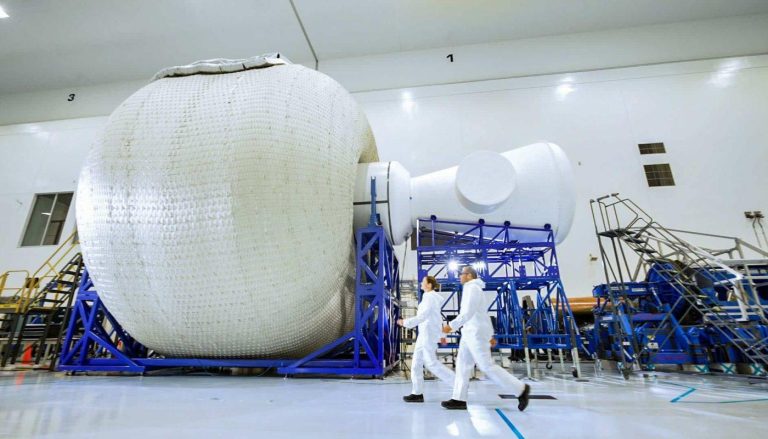
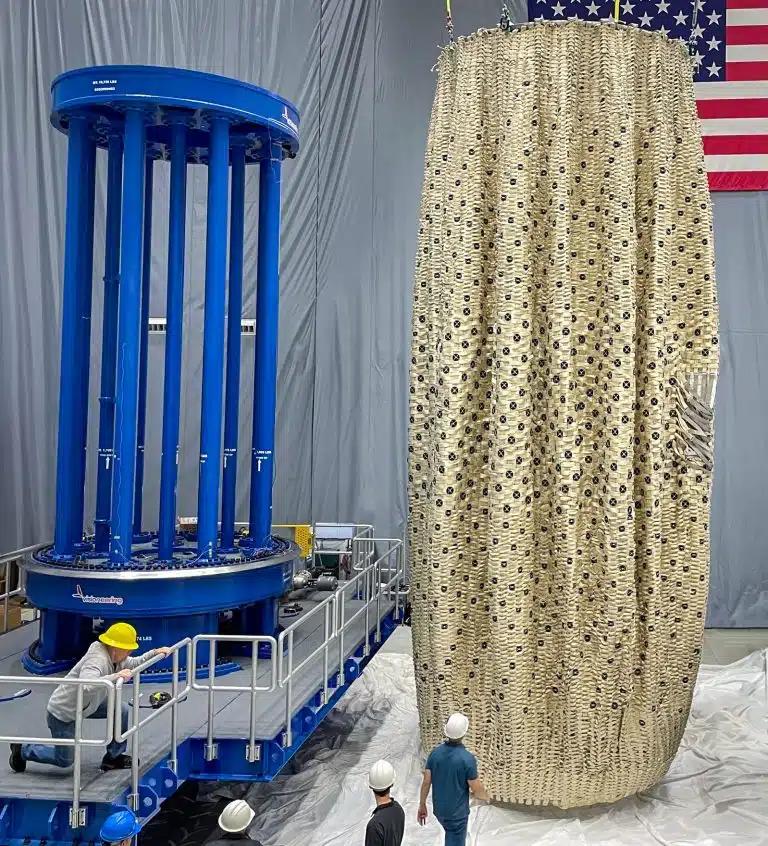
This groundbreaking endeavor marks a critical step in Sierra Space’s co-development of Orbital Reef with Blue Origin, as the company plans to stress test – for the first time in history – a full-scale version of its LIFE™ habitat structure and bring the unit to failure under pressure. LIFE is constructed of high-strength “softgoods” materials, which are sewn and woven fabrics – primarily Vectran – that become rigid structures when pressurized on orbit. To date, Sierra Space has conducted five stress tests on subscale test articles; this next one will be 18x larger – nearly 300 m³ of pressurized volume.
Scheduled for December 2023 at the NASA Marshall Space Flight Center in Huntsville, Ala., the Ultimate Burst Pressure (UBP) test is expected to provide Sierra Space and the Orbital Reef program team with critical data in support of NASA’s softgoods certification guidelines. The over-pressurization to failure during the test will not only demonstrate the habitat’s capabilities but also open avenues for structural enhancements.
Sierra Space’s expandable space station module technology is highly scalable and flexible to all existing and planned launch vehicle fairing sizes. The softgoods structures launch packed inside conventional rocket fairings – 5m, 7m, 9m and beyond – inflating to capacity on orbit. Low-volume launches become high-volume space stations. The module volume will always be the square of its expansion diameter. For example, with a 2.5x expandable configuration, the volume would be 6.25x of a rocket fairing.
“Sierra Space’s inflatable space station module technology offers the absolute largest in-space pressured volume, the best unit economics per on-orbit volume and lowest launch and total operating costs,” said Sierra Space CEO Tom Vice. “Having the best unit economics positions Sierra Space as the category leader in microgravity research and product development – providing customers with the most attractive return on their investment.”
Key Dimensions:
Full scale LIFE habitat with a height of 20.5 feet (Total height with ground support equipment: 29.5 feet)
Diameter: 27 feet
Volume: 10,000 cubic feet (283.17 m3)
Current Progress:
All components and ground support equipment are in the integration phase at NASA Marshall Space Flight Center
Upcoming Steps:
Softgoods integration into the test stand will be followed by transportation, utilizing the legendary NASA KAMAG transporter tractor, to the historic testing location adjacent to the flame trench of the Saturn 1/1B test stand — where NASA tested rockets for the Apollo program
Setup and calibration of sensors and cameras, alongside operational run-throughs, will prepare for the full-scale UBP test in December 2023
Objectives and Lessons Learned:
The recent successes of subscale burst tests have emboldened Sierra Space to undertake the full-scale burst test with confidence
Sierra Space aims to further refine its technical approach to safety factors and structural integrity through this test
Insights from previous tests contribute to technical maturation in support of higher-fidelity manufacturing processes
Core Materials and Blanking Plates:
The restraint layer for LIFE is constructed of high-strength “softgoods” materials, which are sewn and woven fabrics – primarily Vectran – that become rigid structures when pressurized
Under normal operating pressure, the Vectran softgoods materials become 5x stronger than steel, exceeding station lifetime performance safety factors
The restraint layer is complemented by a bladder allowing controlled inflation and pressurization to ultimate burst pressure test failure
Two metallic blanking plates are strategically inserted into the restraint layer, designed for seamless integration into the structural shell with minimal performance degradation or knockdown; blanking plates are metal placeholders for integrating windows, airlocks, robotic arms and other features, into the softgoods layer
About Sierra Space
Sierra Space is a leading, pureplay commercial space company at the forefront of innovation and the commercialization of space in the Orbital Age™, building an end-to-end business and technology platform in space to benefit life on Earth. With more than 30 years and 500 missions of space flight heritage, the company is enabling the future of space transportation with Dream Chaser®, the world’s only commercial spaceplane, and is bringing LIFE™ (Large Integrated Flexible Environment) to low-Earth orbit with its modular, three-story commercial habitation and science platform. Both Dream Chaser and LIFE are central components to Orbital Reef, a mixed-use business park in LEO being developed by principal partners Sierra Space and Blue Origin, which is expected to be operational by the end of the decade. Sierra Space also builds and delivers a host of systems and subsystems across solar power, mechanics and motion control, environmental control, life support, propulsion and thermal control, offering myriad space-as-a-service solutions for the new space economy.
###
MEDIA CONTACTS: Alex Walker, Sierra Space (303) 803-2297 | [email protected]
The team’s new algorithm finds failures and fixes in all sorts of autonomous systems, from drone teams to power grids.
Jennifer Chu | MIT News MIT News (https://news.mit.edu/2023/mit-engineers-failure-finding-algorithm-1109)
MIT engineers have developed a new approach that can be paired with any autonomous system, to quickly identify a range of potential failures in that system. What’s more, the approach can find fixes to the failures, and suggest repairs to avoid system breakdowns. Credits:Image: iStock
From vehicle collision avoidance to airline scheduling systems to power supply grids, many of the services we rely on are managed by computers. As these autonomous systems grow in complexity and ubiquity, so too could the ways in which they fail.
Now, MIT engineers have developed an approach that can be paired with any autonomous system, to quickly identify a range of potential failures in that system before they are deployed in the real world. What’s more, the approach can find fixes to the failures, and suggest repairs to avoid system breakdowns.
The team has shown that the approach can root out failures in a variety of simulated autonomous systems, including a small and large power grid network, an aircraft collision avoidance system, a team of rescue drones, and a robotic manipulator. In each of the systems, the new approach, in the form of an automated sampling algorithm, quickly identifies a range of likely failures as well as repairs to avoid those failures.
The new algorithm takes a different tack from other automated searches, which are designed to spot the most severe failures in a system. These approaches, the team says, could miss subtler though significant vulnerabilities that the new algorithm can catch.
“In reality, there’s a whole range of messiness that could happen for these more complex systems,” says Charles Dawson, a graduate student in MIT’s Department of Aeronautics and Astronautics. “We want to be able to trust these systems to drive us around, or fly an aircraft, or manage a power grid. It’s really important to know their limits and in what cases they’re likely to fail.”
Dawson and Chuchu Fan, assistant professor of aeronautics and astronautics at MIT, are presenting their work this week at the Conference on Robotic Learning.
Sensitivity over adversaries
In 2021, a major system meltdown in Texas got Fan and Dawson thinking. In February of that year, winter storms rolled through the state, bringing unexpectedly frigid temperatures that set off failures across the power grid. The crisis left more than 4.5 million homes and businesses without power for multiple days. The system-wide breakdown made for the worst energy crisis in Texas’ history.
“That was a pretty major failure that made me wonder whether we could have predicted it beforehand,” Dawson says. “Could we use our knowledge of the physics of the electricity grid to understand where its weak points could be, and then target upgrades and software fixes to strengthen those vulnerabilities before something catastrophic happened?”
Dawson and Fan’s work focuses on robotic systems and finding ways to make them more resilient in their environment. Prompted in part by the Texas power crisis, they set out to expand their scope, to spot and fix failures in other more complex, large-scale autonomous systems. To do so, they realized they would have to shift the conventional approach to finding failures.
Designers often test the safety of autonomous systems by identifying their most likely, most severe failures. They start with a computer simulation of the system that represents its underlying physics and all the variables that might affect the system’s behavior. They then run the simulation with a type of algorithm that carries out “adversarial optimization” — an approach that automatically optimizes for the worst-case scenario by making small changes to the system, over and over, until it can narrow in on those changes that are associated with the most severe failures.
“By condensing all these changes into the most severe or likely failure, you lose a lot of complexity of behaviors that you could see,” Dawson notes. “Instead, we wanted to prioritize identifying a diversity of failures.”
To do so, the team took a more “sensitive” approach. They developed an algorithm that automatically generates random changes within a system and assesses the sensitivity, or potential failure of the system, in response to those changes. The more sensitive a system is to a certain change, the more likely that change is associated with a possible failure.
The approach enables the team to route out a wider range of possible failures. By this method, the algorithm also allows researchers to identify fixes by backtracking through the chain of changes that led to a particular failure.
“We recognize there’s really a duality to the problem,” Fan says. “There are two sides to the coin. If you can predict a failure, you should be able to predict what to do to avoid that failure. Our method is now closing that loop.”
Hidden failures
The team tested the new approach on a variety of simulated autonomous systems, including a small and large power grid. In those cases, the researchers paired their algorithm with a simulation of generalized, regional-scale electricity networks. They showed that, while conventional approaches zeroed in on a single power line as the most vulnerable to fail, the team’s algorithm found that, if combined with a failure of a second line, a complete blackout could occur.
“Our method can discover hidden correlations in the system,” Dawson says. “Because we’re doing a better job of exploring the space of failures, we can find all sorts of failures, which sometimes includes even more severe failures than existing methods can find.”
The researchers showed similarly diverse results in other autonomous systems, including a simulation of avoiding aircraft collisions, and coordinating rescue drones. To see whether their failure predictions in simulation would bear out in reality, they also demonstrated the approach on a robotic manipulator — a robotic arm that is designed to push and pick up objects.
The team first ran their algorithm on a simulation of a robot that was directed to push a bottle out of the way without knocking it over. When they ran the same scenario in the lab with the actual robot, they found that it failed in the way that the algorithm predicted — for instance, knocking it over or not quite reaching the bottle. When they applied the algorithm’s suggested fix, the robot successfully pushed the bottle away.
“This shows that, in reality, this system fails when we predict it will, and succeeds when we expect it to,” Dawson says.
In principle, the team’s approach could find and fix failures in any autonomous system as long as it comes with an accurate simulation of its behavior. Dawson envisions one day that the approach could be made into an app that designers and engineers can download and apply to tune and tighten their own systems before testing in the real world.
“As we increase the amount that we rely on these automated decision-making systems, I think the flavor of failures is going to shift,” Dawson says. “Rather than mechanical failures within a system, we’re going to see more failures driven by the interaction of automated decision-making and the physical world. We’re trying to account for that shift by identifying different types of failures, and addressing them now.”
This research is supported, in part, by NASA, the National Science Foundation, and the U.S. Air Force Office of Scientific Research.
Reprinted with permission of MIT News (http://news.mit.edu/)
We bet everyone couldn’t wait for Cyber Monday or your just like us and want to plan things ahead. Truth be told, we also don’t want to be in a rush during that time of the year. Well, you are simply in luck, as there are deals available here and there.
To find the best deals we have selected items that not only have multiple purpose and big discount, but also those that are well-loved by many. Here are our top picks for gifts to others or if you are rewarding yourself for the coming holidays.
Republic of Gaming commonly knowns as ROG made by ASUS was made with the goal of creating world’s most powerful and versatile gaming laptops. They currently have 3 series of laptops: Flow, Zephyrus and Strix. The G16 is part of the Strix series. Just released earlier this year, it is powered by Intel® Core™ i9 and boasting 16GB memory.
While you may think that this is only for gaming, nothing is stopping you to use it for work or watching cat videos on YouTube. While the default hardware setup is powerful enough to get you through. As with any modern laptop it can be upgraded for additional RAM or video card. This can be an option for those intending to use it for intensive operations such as 3D scanning.
While this also made by ASUS, this is a different series called TUF, short for The Ultimate Force. These are built for affordability that are low to mid range specifications (When compared to the ROG series). If you are leaning towards AMD CPUs this laptop might be for you. It can also be upgraded up to Ryzen™9 7940HS.
If you are not going to use this for gaming or any other resource-intensive workload. It does have two powerful Dolby Atmos speakers that has a Two-way AI Noise cancellation. Which is excellent for watching movies on Netflix, Amazon Prime or any other streaming services you can think of.
Pros
Cheaper than the ASUS ROG Strix G16 (2023)
Upgradable hardware
Cons
Battery life
Not a mechanical keyboard (Might not be an issue for those that doesn’t mind)
There are different things to consider when buying SD Cards. One of course is the brand, which determines a lot of things. From reliability, durability and even warranty. While storage is almost always the attribute that makes us think on what to get, read and write speed is second.
First and foremost, check what your intended device can support. If it’s maximum size is not even 256GB, then this is certainly not for you. It should be able to support 256GB. The speed of this is classified as Class 10, which is able to read at 180 MB/s and write up to 130MB/s.
A storage device is always a good option for giving as a gift or you are upgrading your own device. Specially if you are playing a lot of games with your Nintendo Switch or Smartphone.
Pros:
Performance and reliability from the worlds #1 brand for Flash memory
High capacity Micro SDXC
10-year limited warranty
Cons:
Smaller in size when compared to its 512GB counterpart. But that is not on sale right now.
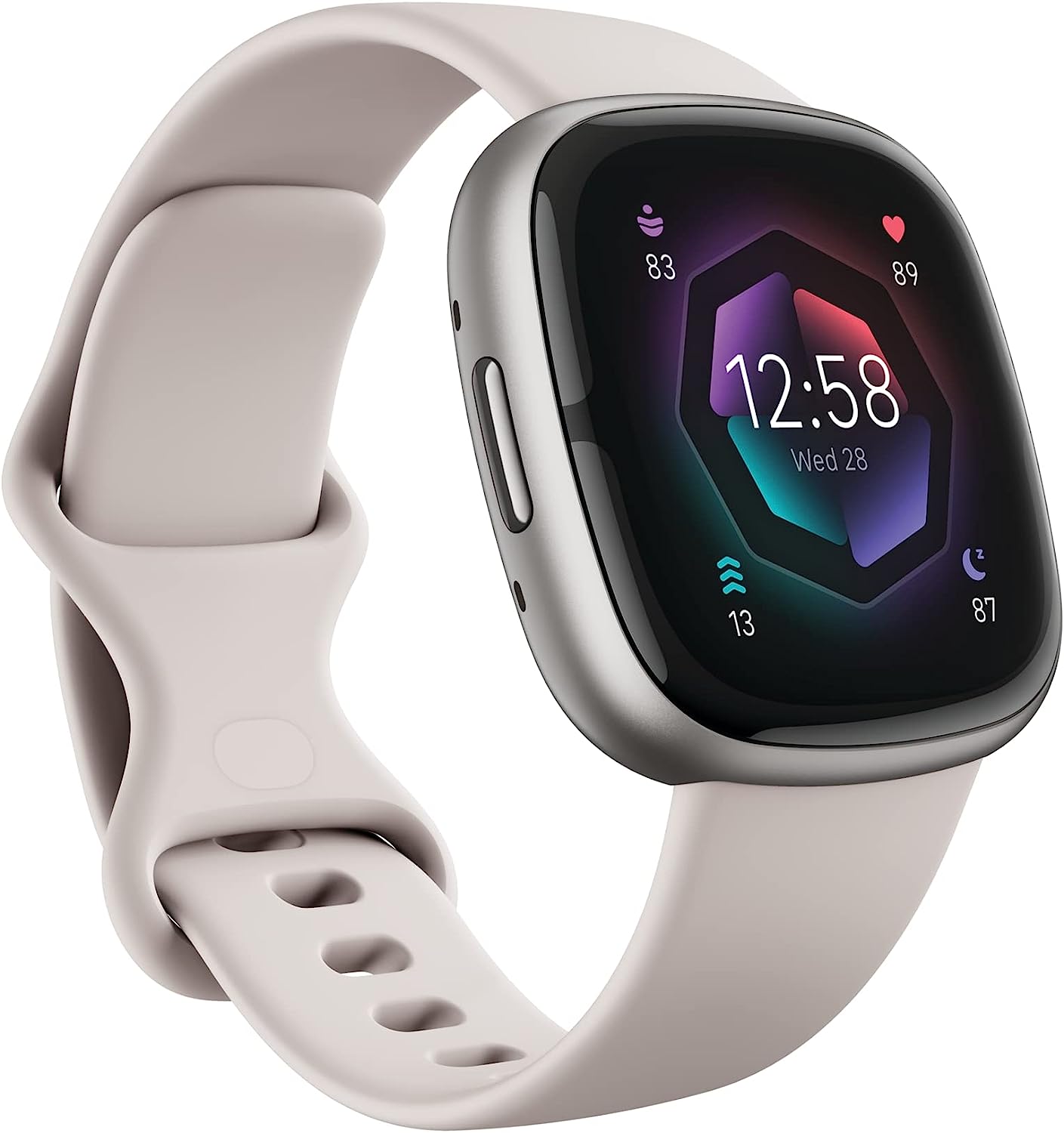
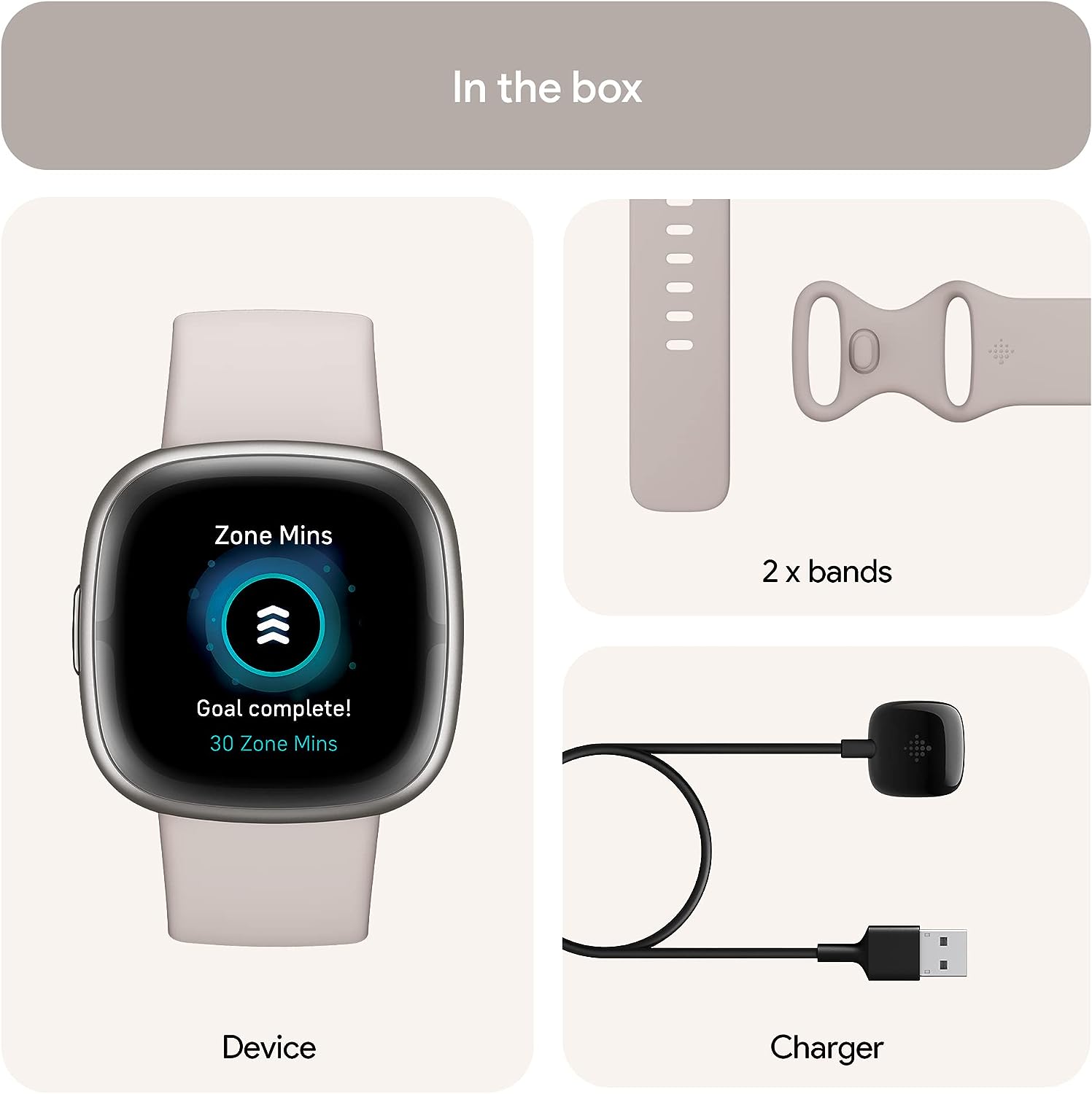
Electrical sensor to measure skin conductance (cEDA) for body response tracking
Multipurpose electrical sensors compatible with ECG app & EDA app. ECG not available in all countries.
Red and infrared sensors for oxygen saturation (SpO2) monitoring
Gyroscope
Altimeter
3-axis accelerometer
Skin temperature sensor
Ambient light sensor
WiFi (deactivated, cannot be turned on)
NFC
Built-in GPS + GLONASS
Vibration motor
Speaker (75dB SPL @10cm)
Microphone
Fitbit, even before being acquired by Google has been one of the most advanced health and fitness monitor. And with Google now owning them, the compatibility with Android device have been widely supported. That means that if you have an Android device, then this is one of the best option as your fitness watch.
Having a smart watch with fitness monitoring is like having a simulation game. Only the character that you have take care of is now yourself. The handy way that it monitors your heart rate is already a big plus for those who might have heart condition. Also excellent when going for a workout.
Pros
Has a variety of health monitors.
Integration with Android device
A great gift for anyone who does not currently have a fitness watch. You could easily tell also if someone doesn’t have it yet.
Cons
ECG is not available in all countries
Sleep profile and sleep score requires Fitbit premium
“Get the most out of your shopping with an Amazon Prime membership! Sign up now to enjoy free one-day delivery, unlimited streaming, exclusive deals, membership perks and more. Sign up today to enjoy a 30-day free trial and if you’re a student enjoy up to 6 months free trial. Click here to signup now! 👉 https://amzn.to/46Jm3AX”
Another November 11th is upon us, bringing with it familiar rituals that exalt peace while honouring the fallen. But as we pause to remember past conflicts, ongoing global violence serves as a sobering reminder that remembrance alone cannot break the repetitive cycle of bloodshed imprinted upon human history.
From solemn cenotaphs commemorating the world wars to emerging memorials for those killed in Iraq, Afghanistan, Syria and beyond, each monument stands testament to lives lost under the banner of securing peace. Yet despite refrains of “never again”, the drums of war continue to beat relentlessly.
This Remembrance Day arrives amidst Russia’s brutal war in Ukraine claiming thousands of innocent lives. It comes as humanitarian disasters unfold in Yemen, South Sudan and Myanmar. As the Israeli-Palestinian conflict remains locked in a perpetual death grip and extremism sows chaos across Africa.
The majestic monuments littering our landscape are now tributes to a species doomed to repeat past sins, unable to escape endless cycles of conflict. The recited poems ring with melancholy beauty, the ceremonies executed with gravitas. But orations and wreaths only do so much. The wars rage on, and more memorials accumulate atop the ashes of calamities past.
The refrain “lest we forget” rings hollow, as we seem cursed to perpetually forget the lessons these memorials represent. Our remembrance is superficial, our remorse fleeting.
What more will it take before we learn the futility of armed aggression? How many more lives lost and towns reduced to rubble? A century of Remembrance Days has failed to instil a longing for enduring peace, raising despair about our capacity to retain history’s lessons.
On this day of sombre reflection, let us not just pay tribute to the fallen, but also commit to a future where their sacrifice was not in vain. We must advocate diplomacy over aggression, foster global cooperation, and make the pursuit of peace paramount. Only then may “lest we forget” become a pledge to build a world free from war’s horror.
We owe it to past, present and future generations to break the cycle of violence haunting human civilisation. As the melancholy strains of wartime laments fill the November air this Remembrance Day, our shared responsibility is to move beyond hollow platitudes and truly work towards making these ceremonies obsolete.
True remembrance lies not in wreaths and monuments, but in action to break free from the cycles that necessitated them. We owe that much to those who made the ultimate sacrifice.
The SpaceX-29 commercial resupply spacecraft will deliver numerous physical sciences and space biology experiments, along with other cargo, to the International Space Station. The research aboard this resupply services mission will help researchers learn how humans, and the plants needed to sustain them, can thrive in deep space.
The biological and physical sciences investigations headed to the Space Station are:
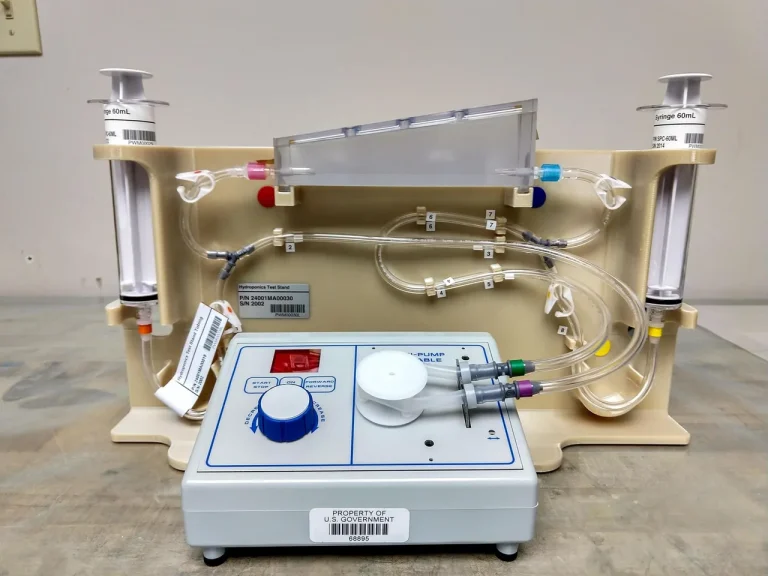
Plant Water Management-5 and 6 (PWM-5 and 6)
NASA has grown plants on the Space Station even without the help of gravity. But microgravity does present challenges and affects Space Station plants’ ability to receive adequate hydration and nutrition. The Plant Water Management-5 and 6 (PWM-5 and 6) investigation uses the physical properties of fluids, such as surface tension and wetting, as a mechanism to provide hydration and aeration for plants. Results could advance understanding of the physical aspects of fluid flow and inform designs of fluid delivery systems for reduced gravity environments.
Plant Water Management (PWM) Harness and Soil Test Article.
NASA
Plant Habitat-06 (PH-06)
Plant Habitat-06 investigates whether the spaceflight environment affects the ability of tomato plants to defend themselves against disease-causing microorganisms. The study will investigate whether a hormone called salicylic acid is involved in processes that regulate plant immune system function in microgravity. Results could support the development of strategies to minimize crop loss and low produce quality in future space agricultural settings caused by harmful microbes.
Rodent Research-20 (RR-20)
Extended missions to the Moon and Mars require a critical understanding on the impact of spaceflight to reproductive health for female astronauts. Throughout the course of three shuttle missions, alterations in ovarian function were detected in female mice that could potentially lead to fertility issues. This latest mission to the International Space Station (RR-20) will further probe whether space-flown female mice have temporary or permanent alterations to their reproductive capability and whether dysfunctional hormone signaling is linked with bone loss.
Bacterial Adhesion and Corrosion (BAC)
Polymicrobial Biofilm Growth and Control during Spaceflight, Bacterial Adhesion and Corrosion (BAC) is a joint space biology and physical sciences payload that explores conditions of multi-species biofilms in microgravity. Microorganisms in biofilms can become resistant to traditional cleaning chemicals, leading to contamination of water treatment systems and potential health risks to astronauts. This investigation identifies bacterial genes used during biofilm growth and examines whether these biofilms can corrode stainless steel, in addition to evaluating the effectiveness of silver-based disinfectants.
GPT-4 Turbo with 128K context and lower prices, the new Assistants API, GPT-4 Turbo with Vision, DALL·E 3 API, and more.
Today, we shared dozens of new additions and improvements, and reduced pricing across many parts of our platform. These include:
New GPT-4 Turbo model that is more capable, cheaper and supports a 128K context window
New Assistants API that makes it easier for developers to build their own assistive AI apps that have goals and can call models and tools
New multimodal capabilities in the platform, including vision, image creation (DALL·E 3), and text-to-speech (TTS)
We’ll begin rolling out new features to OpenAI customers starting at 1pm PT today.
Learn more about OpenAI DevDay announcements for ChatGPT. (https://openai.com/blog/introducing-gpts)
GPT-4 Turbo with 128K context
We released the first version of GPT-4 in March and made GPT-4 generally available to all developers in July. Today we’re launching a preview of the next generation of this model, GPT-4 Turbo.
GPT-4 Turbo is more capable and has knowledge of world events up to April 2023. It has a 128k context window so it can fit the equivalent of more than 300 pages of text in a single prompt. We also optimized its performance so we are able to offer GPT-4 Turbo at a 3x cheaper price for input tokens and a 2x cheaper price for output tokens compared to GPT-4.
GPT-4 Turbo is available for all paying developers to try by passing gpt-4-1106-preview in the API and we plan to release the stable production-ready model in the coming weeks.
Function calling updates
Function calling lets you describe functions of your app or external APIs to models, and have the model intelligently choose to output a JSON object containing arguments to call those functions. We’re releasing several improvements today, including the ability to call multiple functions in a single message: users can send one message requesting multiple actions, such as “open the car window and turn off the A/C”, which would previously require multiple roundtrips with the model (learn more). We are also improving function calling accuracy: GPT-4 Turbo is more likely to return the right function parameters.
Improved instruction following and JSON mode
GPT-4 Turbo performs better than our previous models on tasks that require the careful following of instructions, such as generating specific formats (e.g., “always respond in XML”). It also supports our new JSON mode, which ensures the model will respond with valid JSON. The new API parameter response_format enables the model to constrain its output to generate a syntactically correct JSON object. JSON mode is useful for developers generating JSON in the Chat Completions API outside of function calling.
Reproducible outputs and log probabilities
The new seed parameter enables reproducible outputs by making the model return consistent completions most of the time. This beta feature is useful for use cases such as replaying requests for debugging, writing more comprehensive unit tests, and generally having a higher degree of control over the model behavior. We at OpenAI have been using this feature internally for our own unit tests and have found it invaluable. We’re excited to see how developers will use it. Learn more (https://platform.openai.com/docs/guides/text-generation/reproducible-outputs).
We’re also launching a feature to return the log probabilities for the most likely output tokens generated by GPT-4 Turbo and GPT-3.5 Turbo in the next few weeks, which will be useful for building features such as autocomplete in a search experience.
Updated GPT-3.5 Turbo
In addition to GPT-4 Turbo, we are also releasing a new version of GPT-3.5 Turbo that supports a 16K context window by default. The new 3.5 Turbo supports improved instruction following, JSON mode, and parallel function calling. For instance, our internal evals show a 38% improvement on format following tasks such as generating JSON, XML and YAML. Developers can access this new model by calling gpt-3.5-turbo-1106 in the API. Applications using the gpt-3.5-turbo name will automatically be upgraded to the new model on December 11. Older models will continue to be accessible by passing gpt-3.5-turbo-0613 in the API until June 13, 2024. Learn more (https://platform.openai.com/docs/models/gpt-3-5).
Assistants API, Retrieval, and Code Interpreter
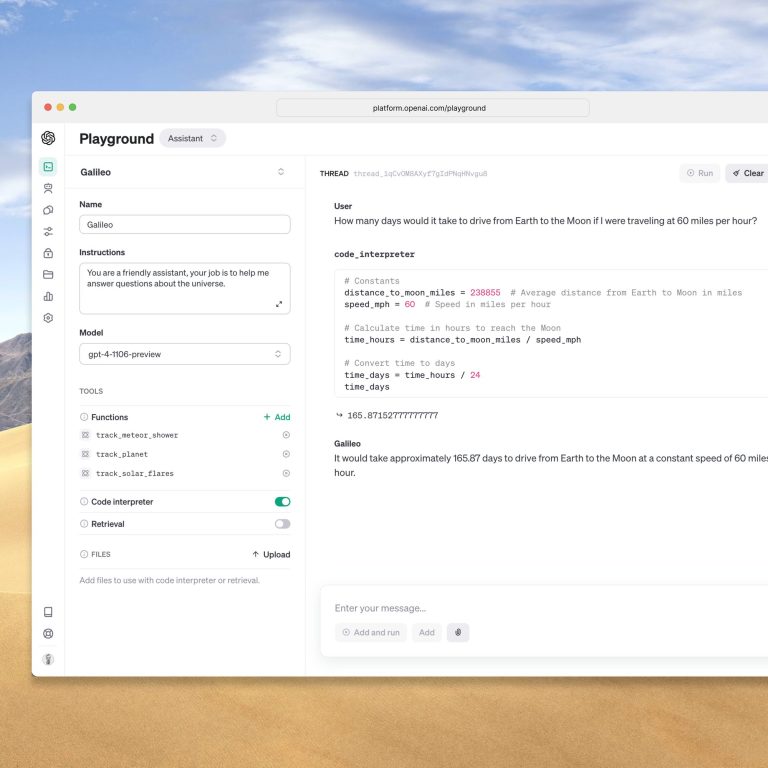
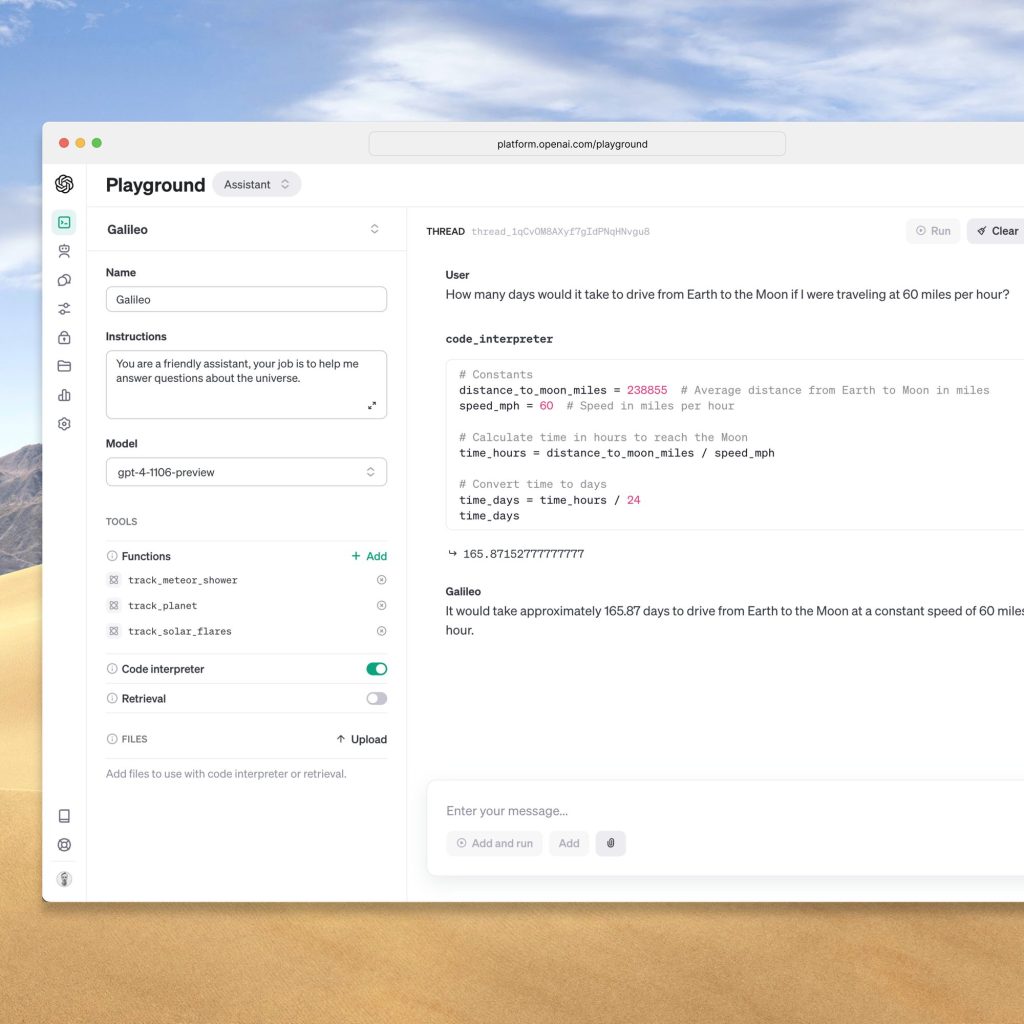
Today, we’re releasing the Assistants API, our first step towards helping developers build agent-like experiences within their own applications. An assistant is a purpose-built AI that has specific instructions, leverages extra knowledge, and can call models and tools to perform tasks. The new Assistants API provides new capabilities such as Code Interpreter and Retrieval as well as function calling to handle a lot of the heavy lifting that you previously had to do yourself and enable you to build high-quality AI apps.
This API is designed for flexibility; use cases range from a natural language-based data analysis app, a coding assistant, an AI-powered vacation planner, a voice-controlled DJ, a smart visual canvas—the list goes on. The Assistants API is built on the same capabilities that enable our new GPTs product: custom instructions and tools such as Code interpreter, Retrieval, and function calling.
A key change introduced by this API is persistent and infinitely long threads, which allow developers to hand off thread state management to OpenAI and work around context window constraints. With the Assistants API, you simply add each new message to an existing thread.
Assistants also have access to call new tools as needed, including:
Code Interpreter: writes and runs Python code in a sandboxed execution environment, and can generate graphs and charts, and process files with diverse data and formatting. It allows your assistants to run code iteratively to solve challenging code and math problems, and more.
Retrieval: augments the assistant with knowledge from outside our models, such as proprietary domain data, product information or documents provided by your users. This means you don’t need to compute and store embeddings for your documents, or implement chunking and search algorithms. The Assistants API optimizes what retrieval technique to use based on our experience building knowledge retrieval in ChatGPT.
Function calling: enables assistants to invoke functions you define and incorporate the function response in their messages.
As with the rest of the platform, data and files passed to the OpenAI API are never used to train our models and developers can delete the data when they see fit.
You can try the Assistants API beta without writing any code by heading to the Assistants playground.
Use the Assistants playground to create high quality assistants without code.
The Assistants API is in beta and available to all developers starting today. Please share what you build with us (@OpenAI) along with your feedback which we will incorporate as we continue building over the coming weeks. Pricing for the Assistants APIs and its tools is available on our pricing page.
New modalities in the API
GPT-4 Turbo with vision
GPT-4 Turbo can accept images as inputs in the Chat Completions API, enabling use cases such as generating captions, analyzing real world images in detail, and reading documents with figures. For example, BeMyEyes uses this technology to help people who are blind or have low vision with daily tasks like identifying a product or navigating a store. Developers can access this feature by using gpt-4-vision-preview in the API. We plan to roll out vision support to the main GPT-4 Turbo model as part of its stable release. Pricing depends on the input image size. For instance, passing an image with 1080×1080 pixels to GPT-4 Turbo costs $0.00765. Check out our vision guide.
DALL·E 3
Developers can integrate DALL·E 3, which we recently launched to ChatGPT Plus and Enterprise users, directly into their apps and products through our Images API by specifying dall-e-3 as the model. Companies like Snap, Coca-Cola, and Shutterstock have used DALL·E 3 to programmatically generate images and designs for their customers and campaigns. Similar to the previous version of DALL·E, the API incorporates built-in moderation to help developers protect their applications against misuse. We offer different format and quality options, with prices starting at $0.04 per image generated. Check out our guide to getting started with DALL·E 3 in the API.
Text-to-speech (TTS)
Developers can now generate human-quality speech from text via the text-to-speech API. Our new TTS model offers six preset voices to choose from and two model variants, tts-1 and tts-1-hd. tts is optimized for real-time use cases and tts-1-hd is optimized for quality. Pricing starts at $0.015 per input 1,000 characters. Check out our TTS guide to get started.
Listen to voice samples
Select textScenicDirectionsTechnicalRecipe
As the golden sun dips below the horizon, casting long shadows across the tranquil meadow, the world seems to hush, and a sense of calmness envelops the Earth, promising a peaceful night’s rest for all living beings.
Model customization
GPT-4 fine tuning experimental access
We’re creating an experimental access program for GPT-4 fine-tuning. Preliminary results indicate that GPT-4 fine-tuning requires more work to achieve meaningful improvements over the base model compared to the substantial gains realized with GPT-3.5 fine-tuning. As quality and safety for GPT-4 fine-tuning improves, developers actively using GPT-3.5 fine-tuning will be presented with an option to apply to the GPT-4 program within their fine-tuning console.
Custom models
For organizations that need even more customization than fine-tuning can provide (particularly applicable to domains with extremely large proprietary datasets—billions of tokens at minimum), we’re also launching a Custom Models program, giving selected organizations an opportunity to work with a dedicated group of OpenAI researchers to train custom GPT-4 to their specific domain. This includes modifying every step of the model training process, from doing additional domain specific pre-training, to running a custom RL post-training process tailored for the specific domain. Organizations will have exclusive access to their custom models. In keeping with our existing enterprise privacy policies, custom models will not be served to or shared with other customers or used to train other models. Also, proprietary data provided to OpenAI to train custom models will not be reused in any other context. This will be a very limited (and expensive) program to start—interested orgs can apply here (https://openai.com/form/custom-models).
Lower prices and higher rate limits
Lower prices
We’re decreasing several prices across the platform to pass on savings to developers (all prices below are expressed per 1,000 tokens):
GPT-4 Turbo input tokens are 3x cheaper than GPT-4 at $0.01 and output tokens are 2x cheaper at $0.03.
GPT-3.5 Turbo input tokens are 3x cheaper than the previous 16K model at $0.001 and output tokens are 2x cheaper at $0.002. Developers previously using GPT-3.5 Turbo 4K benefit from a 33% reduction on input tokens at $0.001. Those lower prices only apply to the new GPT-3.5 Turbo introduced today.
Fine-tuned GPT-3.5 Turbo 4K model input tokens are reduced by 4x at $0.003 and output tokens are 2.7x cheaper at $0.006. Fine-tuning also supports 16K context at the same price as 4K with the new GPT-3.5 Turbo model. These new prices also apply to fine-tuned gpt-3.5-turbo-0613 models.
To help you scale your applications, we’re doubling the tokens per minute limit for all our paying GPT-4 customers. You can view your new rate limits in your rate limit page. We’ve also published our usage tiers that determine automatic rate limits increases, so you know what to expect in how your usage limits will automatically scale. You can now request increases to usage limits from your account settings.
Copyright Shield
OpenAI is committed to protecting our customers with built-in copyright safeguards in our systems. Today, we’re going one step further and introducing Copyright Shield—we will now step in and defend our customers, and pay the costs incurred, if you face legal claims around copyright infringement. This applies to generally available features of ChatGPT Enterprise and our developer platform.
Whisper v3 and Consistency Decoder
We are releasing Whisper large-v3, the next version of our open source automatic speech recognition model (ASR) which features improved performance across languages. We also plan to support Whisper v3 in our API in the near future.
We are also open sourcing the Consistency Decoder, a drop in replacement for the Stable Diffusion VAE decoder. This decoder improves all images compatible with the by Stable Diffusion 1.0+ VAE, with significant improvements in text, faces and straight lines.
Learn more about our OpenAI DevDay announcements for ChatGPT.
You can now create custom versions of ChatGPT that combine instructions, extra knowledge, and any combination of skills.
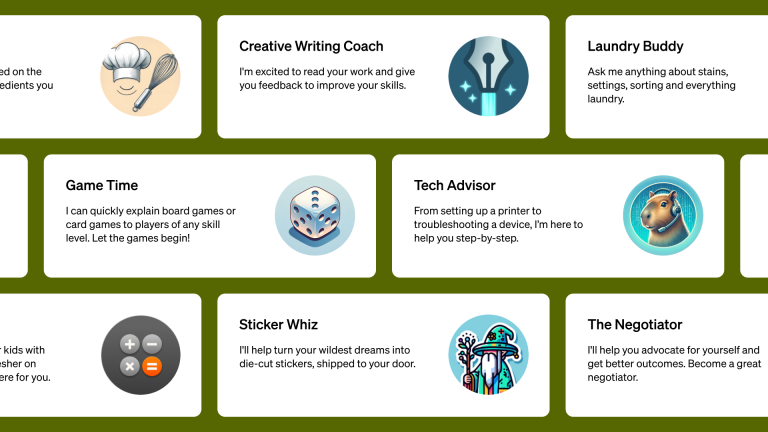
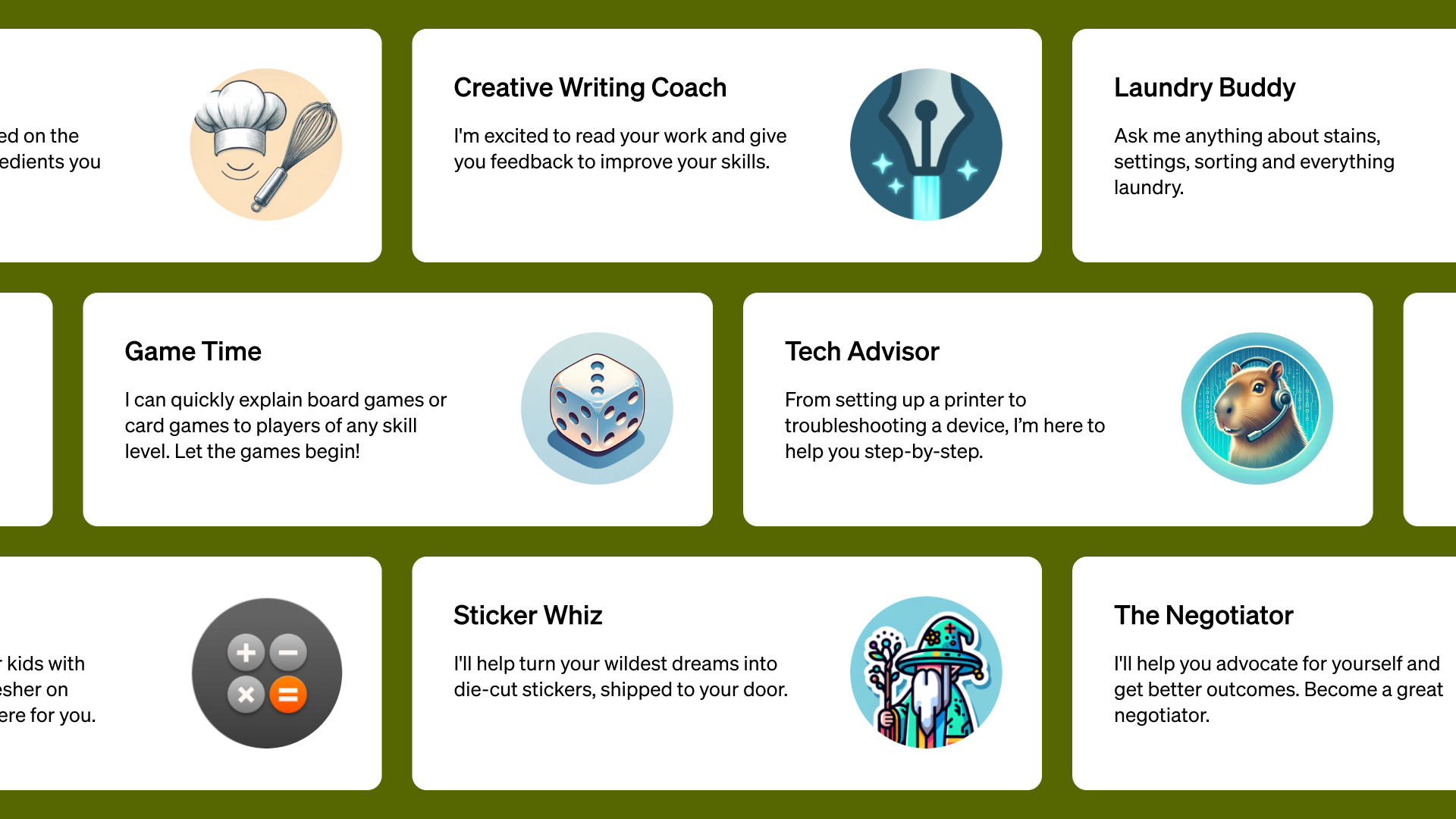
We’re rolling out custom versions of ChatGPT that you can create for a specific purpose—called GPTs. GPTs are a new way for anyone to create a tailored version of ChatGPT to be more helpful in their daily life, at specific tasks, at work, or at home—and then share that creation with others. For example, GPTs can help you learn the rules to any board game, help teach your kids math, or design stickers.
Anyone can easily build their own GPT—no coding is required. You can make them for yourself, just for your company’s internal use, or for everyone. Creating one is as easy as starting a conversation, giving it instructions and extra knowledge, and picking what it can do, like searching the web, making images or analyzing data. Try it out at chat.openai.com/create.
Example GPTs are available today for ChatGPT Plus and Enterprise users to try out including Canva and Zapier AI Actions. We plan to offer GPTs to more users soon.
GPTs let you customize ChatGPT for a specific purpose
Since launching ChatGPT people have been asking for ways to customize ChatGPT to fit specific ways that they use it. We launched Custom Instructions in July that let you set some preferences, but requests for more control kept coming. Many power users maintain a list of carefully crafted prompts and instruction sets, manually copying them into ChatGPT. GPTs now do all of that for you.
The best GPTs will be invented by the community
We believe the most incredible GPTs will come from builders in the community. Whether you’re an educator, coach, or just someone who loves to build helpful tools, you don’t need to know coding to make one and share your expertise.
The GPT Store is rolling out later this month
Starting today, you can create GPTs and share them publicly. Later this month, we’re launching the GPT Store, featuring creations by verified builders. Once in the store, GPTs become searchable and may climb the leaderboards. We will also spotlight the most useful and delightful GPTs we come across in categories like productivity, education, and “just for fun”. In the coming months, you’ll also be able to earn money based on how many people are using your GPT.
We built GPTs with privacy and safety in mind
As always, you are in control of your data with ChatGPT. Your chats with GPTs are not shared with builders. If a GPT uses third party APIs, you choose whether data can be sent to that API. When builders customize their own GPT with actions or knowledge, the builder can choose if user chats with that GPT can be used to improve and train our models. These choices build upon the existing privacy controls users have, including the option to opt your entire account out of model training.
We’ve set up new systems to help review GPTs against our usage policies. These systems stack on top of our existing mitigations and aim to prevent users from sharing harmful GPTs, including those that involve fraudulent activity, hateful content, or adult themes. We’ve also taken steps to build user trust by allowing builders to verify their identity. We’ll continue to monitor and learn how people use GPTs and update and strengthen our safety mitigations. If you have concerns with a specific GPT, you can also use our reporting feature on the GPT shared page to notify our team.
GPTs will continue to get more useful and smarter, and you’ll eventually be able to let them take on real tasks in the real world. In the field of AI, these systems are often discussed as “agents”. We think it’s important to move incrementally towards this future, as it will require careful technical and safety work—and time for society to adapt. We have been thinking deeply about the societal implications and will have more analysis to share soon.
Developers can connect GPTs to the real world
In addition to using our built-in capabilities, you can also define custom actions by making one or more APIs available to the GPT. Like plugins, actions allow GPTs to integrate external data or interact with the real-world. Connect GPTs to databases, plug them into emails, or make them your shopping assistant. For example, you could integrate a travel listings database, connect a user’s email inbox, or facilitate e-commerce orders.
The design of actions builds upon insights from our plugins beta, granting developers greater control over the model and how their APIs are called. Migrating from the plugins beta is easy with the ability to use your existing plugin manifest to define actions for your GPT.
Enterprise customers can deploy internal-only GPTs
Since we launched ChatGPT Enterprise a few months ago, early customers have expressed the desire for even more customization that aligns with their business. GPTs answer this call by allowing you to create versions of ChatGPT for specific use cases, departments, or proprietary datasets. Early customers like Amgen, Bain, and Square are already leveraging internal GPTs to do things like craft marketing materials embodying their brand, aid support staff with answering customer questions, or help new software engineers with onboarding.
Enterprises can get started with GPTs on Wednesday. You can now empower users inside your company to design internal-only GPTs without code and securely publish them to your workspace. The admin console lets you choose how GPTs are shared and whether external GPTs may be used inside your business. Like all usage on ChatGPT Enterprise, we do not use your conversations with GPTs to improve our models.
We want more people to shape how AI behaves
We designed GPTs so more people can build with us. Involving the community is critical to our mission of building safe AGI that benefits humanity. It allows everyone to see a wide and varied range of useful GPTs and get a more concrete sense of what’s ahead. And by broadening the group of people who decide ‘what to build’ beyond just those with access to advanced technology it’s likely we’ll have safer and better aligned AI. The same desire to build with people, not just for them, drove us to launch the OpenAI API and to research methods for incorporating democratic input into AI behavior, which we plan to share more about soon.
We’ve made ChatGPT Plus fresher and simpler to use
Finally, ChatGPT Plus now includes fresh information up to April 2023. We’ve also heard your feedback about how the model picker is a pain. Starting today, no more hopping between models; everything you need is in one place. You can access DALL·E, browsing, and data analysis all without switching. You can also attach files to let ChatGPT search PDFs and other document types. Find us at chatgpt.com.
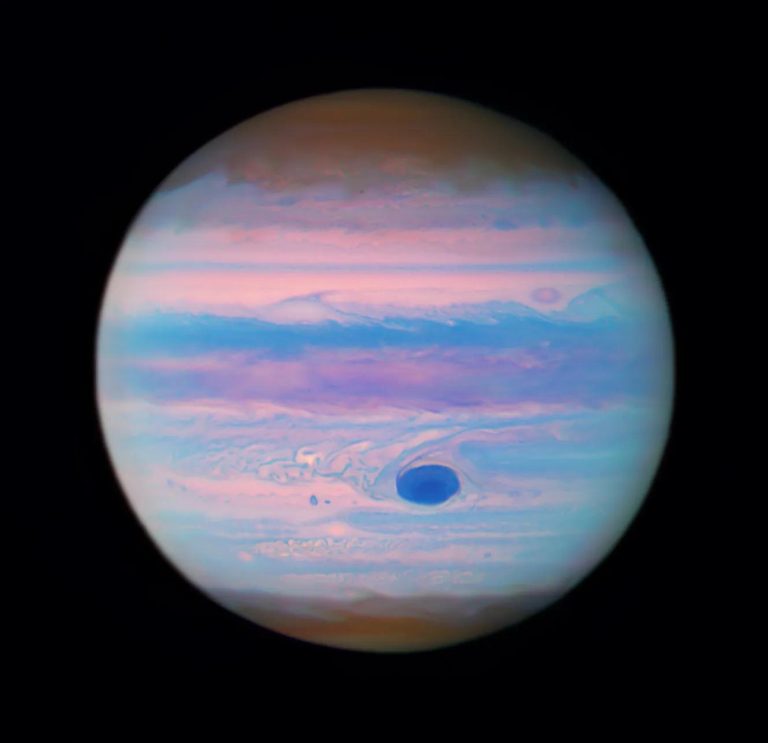
NASA’s Hubble Space Telescope reveals an ultraviolet view of Jupiter. NASA, ESA, and M. Wong (University of California – Berkeley); Processing: Gladys Kober (NASA/Catholic University of America)
This newly released image from the NASA Hubble Space Telescope shows the planet Jupiter in a color composite of ultraviolet wavelengths. Released in honor of Jupiter reaching opposition, which occurs when the planet and the Sun are in opposite sides of the sky, this view of the gas giant planet includes the iconic, massive storm called the “Great Red Spot.” Though the storm appears red to the human eye, in this ultraviolet image it appears darker because high altitude haze particles absorb light at these wavelengths. The reddish, wavy polar hazes are absorbing slightly less of this light due to differences in either particle size, composition, or altitude.
The data used to create this ultraviolet image is part of a Hubble proposal that looked at Jupiter’s stealthy superstorm system. The researchers plan to map deep water clouds using the Hubble data to define 3D cloud structures in Jupiter’s atmosphere.
Hubble has a long history of observing the outer planets. From the Comet Shoemaker-Levy 9 impacts to studying Jupiter’s storms, Hubble’s decades-long career and unique vantage point provide astronomers with valuable data to chart the evolution of this dynamic planet.
Hubble’s ultraviolet-observing capabilities allow astronomers to study the short, high-energy wavelengths of light beyond what the human eye can see. Ultraviolet light reveals fascinating cosmic phenomena, including light from the hottest and youngest stars embedded in local galaxies; the composition, densities, and temperatures of the material between stars; and the evolution of galaxies.
This is a false-color image because the human eye cannot detect ultraviolet light. Therefore, colors in the visible light spectrum were assigned to the images, each taken with a different ultraviolet filter. In this case, the assigned colors for each filter are: Blue: F225W, Green: F275W, and Red: F343N.
Media Contact:
Claire Andreoli NASA’s Goddard Space Flight Center, Greenbelt, MD [email protected]
By: NASA Hubble Mission Team Originally published at: NASA