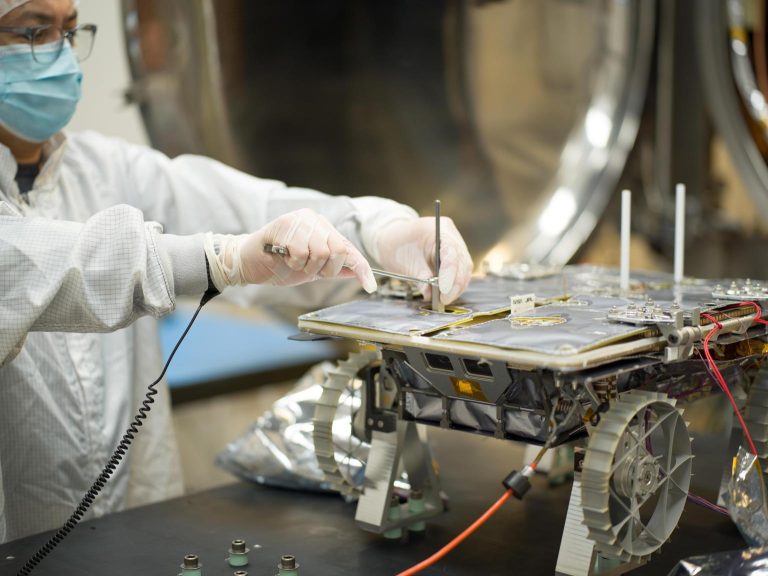
An engineer prepares a small rover for testing in a thermal vacuum chamber on Oct. 24, 2023, at NASA’s Jet Propulsion Laboratory in Southern California. This rover is part of the agency’s Cooperative Autonomous Distributed Robotic Exploration (CADRE) technology demonstration that’s headed to the Moon as part of the Commercial Lunar Payload Services initiative. CADRE is designed to demonstrate that multiple robots can cooperate and explore together autonomously – without direct input from human mission controllers.
Learn more about these miniature rovers. (https://www.jpl.nasa.gov/images/pia25669-cadre-rover-getting-prepped-for-testing)
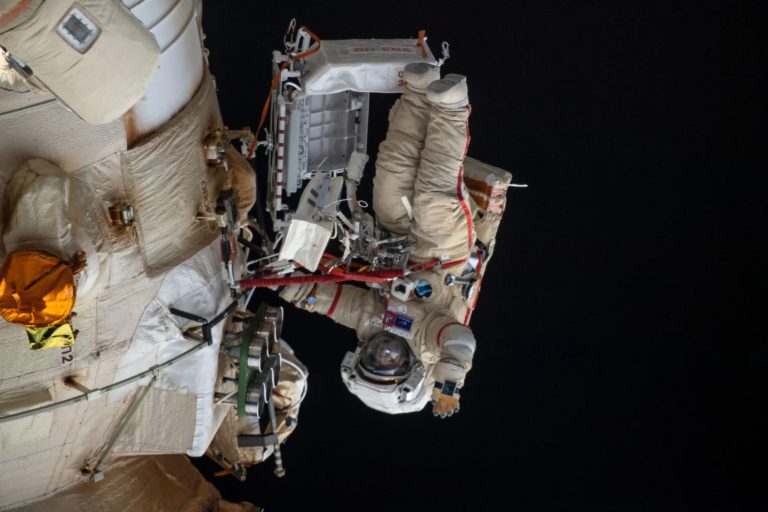
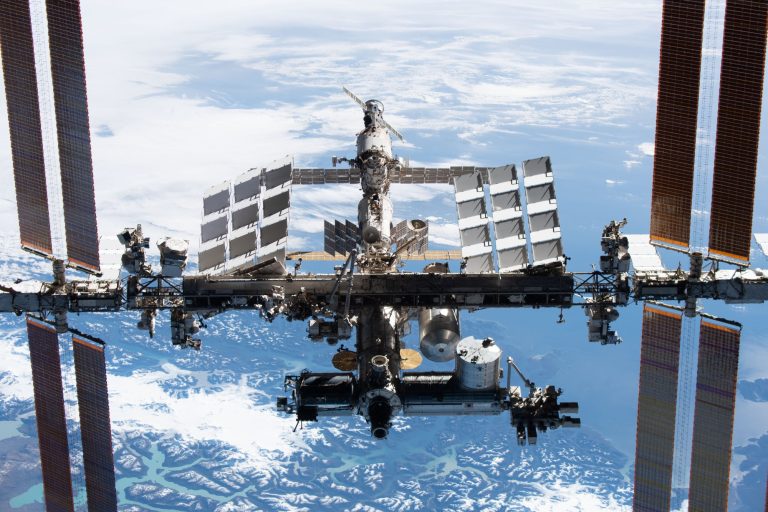
(April 18, 2022) — Cosmonaut Oleg Artemyev waves to the camera while working outside the Nauka multipurpose laboratory module during a spacewalk that lasted for six hours and 37 minutes to outfit Nauka and configure the European robotic arm on the International Space Station’s Russian segment.
Editor’s note: This advisory was updated Oct. 23, 2023, to reflect a change in the scheduled time for the spacewalk.
NASA will provide live coverage as two Roscosmos cosmonauts conduct a spacewalk outside the International Space Station Wednesday, Oct. 25, to install communications hardware and inspect a portion of the orbital complex.
Coverage begins at 1:30 p.m. EDT on NASA Television, the NASA app, and the agency’s website. The spacewalk is expected to begin at 1:55 p.m. and could last up to seven hours.
Expedition 70 cosmonauts Oleg Kononenko and Nikolai Chub will venture outside of the station’s Poisk module to install a synthetic radar communications system and release a nanosatellite to test solar sail technology. While outside the station, they also will inspect and photograph an external backup radiator on the Nauka multipurpose laboratory module that experienced a coolant leak on Oct. 9.
The spacewalk will be the 268th in support of space station assembly, maintenance, and upgrades. It will be the sixth for Kononenko, who will wear the Orlan spacesuit with red stripes and the first for Chub, who will wear the spacesuit with blue stripes.
Get breaking news, images and features from the space station on the station blog, Instagram, Facebook, and X.
Learn more about International Space Station research and operations at:
The day of the dead is coming in a few days. It is a holiday that is mostly celebrated in Mexico. A way to remember those that have already passed, and also treated as a family reunion. It’s the time of the year were you get to spend the time your family on a special occasion.
Here are some suggestions to include in your own personal costume.
Whether you are honoring those that have already passed on or going with a costume for Halloween, one of the most important things to keep in mind is why you want to do it. And if your are doing, why not give it your best.
“Get the most out of your shopping with an Amazon Prime membership! Sign up now to enjoy free one-day delivery, unlimited streaming, exclusive deals, membership perks and more. Sign up today to enjoy a 30-day free trial and if you’re a student enjoy up to 6 months free trial. Click here to signup now! 👉 https://amzn.to/46Jm3AX”
New technologies have always made their way into the classroom. From chalkboards in schoolhouses and textbooks in classrooms to computer-based learning in the digital age, methods have continually evolved with the times.
Artificial intelligence (AI) and machine learning (ML) are once again transforming how we learn and teach. This has become especially pronounced over the past year, as educators have been raising the alarm over the use of generative AI programs (such as ChatGPT).
Banning or embracing the use of AI in the classroom has been hotly debated, as educators, parents, and technologists alike weigh in on the pros and cons. There has been much speculation about how it will impact students’ quality of education, the types of challenges faced by teachers, and the shape of our society as today’s youth become tomorrow’s leaders.
There have been many fears over technological advances in years past – for example, that calculators would erode children’s math skills or that typewriters would hurt children’s handwriting abilities. And so, as in the past, we are again forced to stop, assess the opportunities and threats of this new technology, and adjust accordingly.
In other words, how do we integrate AI into our education systems to maximize the benefits and minimize the pitfalls?
Amii is launching a program for school-aged students
“We are excited to support teachers as they help students build a baseline understanding of AI and ML … and how to think critically about its application.”
Jill Kowalchuk, Amii Education Advisor
Aligning with Amii’s mission to make AI For Good and For All, we are prioritizing AI literacy in the next generation. Leading out this initiative is Amii’s Education Advisor, Jill Kowalchuk, M.Ed.
This past year, Kowalchuk has been developing Amii’s AI in K-12 pilot program, which aims to prepare K-12 students with a strong foundation in AI and ML as they move toward post-secondary education.
As a former teacher, Kowalchuk understands that the best pathway to educate students is to ensure that teachers themselves are equipped with the resources, education and context they need to engage with the subject meaningfully.
“We are excited to support teachers as they help students build a baseline understanding of AI and ML,” says Kowalchuk. “We are confident that the programming will not only teach fundamental knowledge about the technologies, but also help students develop an understanding of AI’s possible benefits and drawbacks, and how to think critically about its application.”
The pilot program launched in May 2023, with 58 high school teachers participating across Alberta.
Teacher-consulted Learning Kits
Program development began with stakeholder engagement sessions with teachers from participating schools. This early engagement identified a need for more consistency in STEM programming across school districts, with teachers calling for more access to support and resources for content delivery. Teachers also mentioned a growing demand for high-quality AI and ML resources for students preparing to transition into a digitally transformed workforce and post-secondary environment.
Informed by those early engagement sessions, Amii created learning kits to be provided to participants and deployed over the fall semester (September 2023 to January 2024). The program’s design was based on the Alberta Student Competencies, which lays out what skills and knowledge Alberta students should build through their studies.
In the end, four learning kits were created, each with a distinct theme:
Harnessing the Potential of ChatGPT equips teachers with the necessary background knowledge of Large Language Models (LLMs) such as ChatGPT, and helps students utilize LLMs responsibly.
AI in the Real World focuses on the impacts of AI on various aspects of society, helping students to think critically – not only about AI, but technology more generally.
Careers Reimagined helps students understand the profound impact AI has on diverse industries and recognize the wide range of career pathways it opens up.
Computer Science in the Age of AI focuses on illuminating the AI-related outcomes in the Computer Science Program of Studies by providing projects and learning activities for students.
Each learning kit includes a teacher handbook/introductions, sample lesson plans, slide decks, learning tasks, assessments, videos and discussion prompts for teachers to readily use in their multidisciplinary classrooms.
In addition to the learning kits, Amii is providing additional support to teachers through teacher engagement PD sessions, coaching sessions, classroom visits, guest speakers and field trip opportunities. To ensure smooth adoption in the classroom, Amii also offers regular check-ins and a mid-point evaluation.
Program launch and expansion
Following the conclusion of the pilot in January 2024, Amii will gather qualitative data and feedback from participants and stakeholders, and make any necessary revisions to the materials. From there, the program will soft launch an expansion of the high school programming, aiming to have all four learning kits publicly available for interested teachers by the Winter of 2024.
“We know that students have a diversity of learning needs and that teaching this material will require a multifaceted approach,” explains Kowalchuk. “We’re hoping that the feedback provided by teachers will help us identify what we’re doing well and what we need to adjust to best facilitate the teaching and learning of AI and ML-related concepts.”
Amii plans to expand the pilot program beyond high school, launching elementary and junior high stakeholder engagement sessions in the spring of 2024.
By: Britt Ayotte, Lynda Vang and Jill Kowalchuk Originally published at: Amii
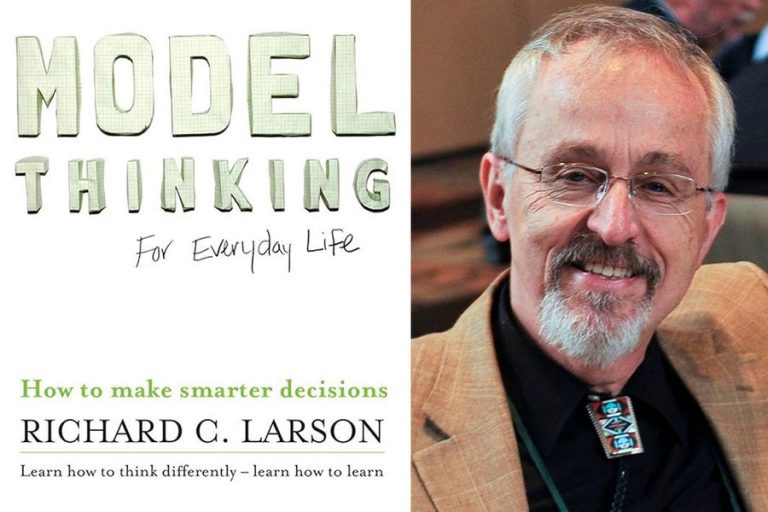
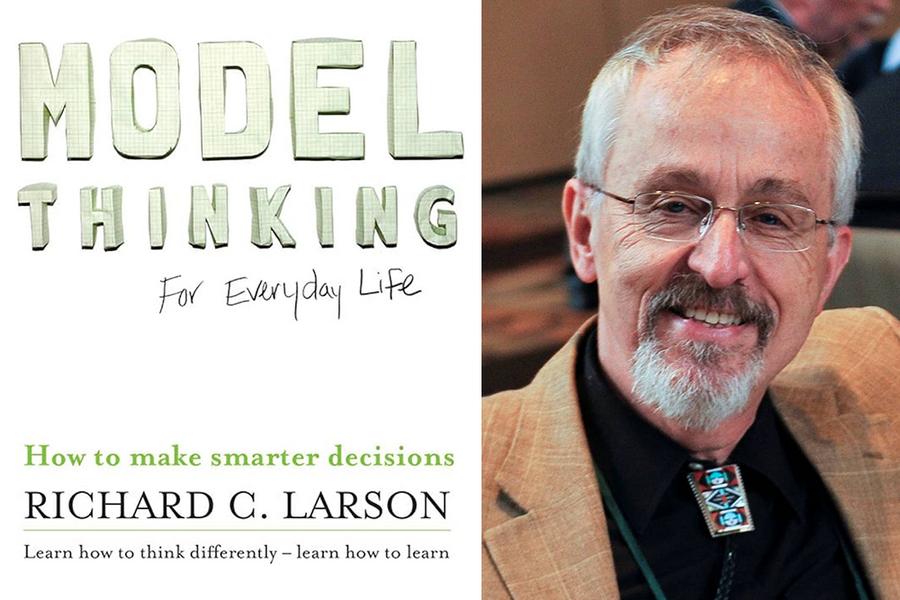
In a new book, Richard “Dick” Larson draws on a lifelong commitment to STEM education at MIT to offer accessible advice on solving everyday problems and making smarter decisions.
Scott Murray | Institute for Data, Systems, and Society MIT News (https://news.mit.edu/2023/learning-how-to-learn-model-thinking-1019)
Caption:“Faced with a new problem, people often lack the ability to frame and formulate it using basic principles,” argues Professor Richard Larson. “Our emphasis is on problem framing and formulation, with mathematics and physics playing supporting roles.” Credits:Photo courtesy of Richard Larson.
Suppose you need to be on today’s only ferry to Martha’s Vineyard, which leaves at 2 p.m. It takes about 30 minutes (on average) to drive from where you are to the terminal. What time should you leave?
This is one of many common real-life examples used by Richard “Dick” Larson, a post-tenure professor in the MIT Institute for Data, Systems, and Society (IDSS), to explore exemplary problem-solving in his new book “Model Thinking for Everyday Life: How to Make Smarter Decisions.”
Larson’s book synthesizes a lifelong career as an MIT professor and researcher, highlighting crucial skills underpinning all empirical, rational, and critical thinking. “Critical thinkers are energetic detectives … always seeking the facts,” he says. “Additional facts may surface that can result in modified conclusions … A critical thinker is aware of the pitfalls of human intuition.”
For Larson, “model” thinking means not only thinking aided by conceptual and/or mathematical models, but a broader mode of critical thought that is informed by STEM concepts and worthy of emulation.
In the ferry example, a key concept at play is uncertainty. Accounting for uncertainty is a core challenge faced by systems engineers, operations researchers, and modelers of complex networks — all hats Larson has worn in over half a century at MIT.
Uncertainty complicates all prediction and decision-making, and while statistics offers tactics for managing uncertainty, “Model Thinking” is not a math textbook. There are equations for the math-curious, but it doesn’t take a degree from MIT to understand that
an average of 30 minutes would cover a range of times, some shorter, some longer;
outliers can exist in the data, like the time construction traffic added an additional 30 minutes
“about 30 minutes” is a prediction based on past experience, not current information (road closures, accidents, etc.); and
the consequence for missing the ferry is not a delay of hours, but a full day — which might completely disrupt the trip or its purpose.
And so, without doing much explicit math, you calculate variables, weigh the likelihood of different outcomes against the consequences of failure, and choose a departure time. Larson’s conclusion is one championed by dads everywhere: Leave on the earlier side, just in case.
“The world’s most important, invisible profession”
Throughout Larson’s career at MIT, he has focused on the science of solving problems and making better decisions. “Faced with a new problem, people often lack the ability to frame and formulate it using basic principles,” argues Larson. “Our emphasis is on problem framing and formulation, with mathematics and physics playing supporting roles.”
This is operations research, which Larson calls “the world’s most important invisible profession.” Formalized as a field during World War II, operations researchers use data and models to try to derive the “physics” of complex systems. The goal is typically optimizing things like scheduling, routing, simulation, prediction, planning, logistics, and queueing, for which Larson is especially well-known. A frequent media expert on the subject, he earned the moniker “Dr. Q” — and his research has led to new approaches for easing congestion in urban traffic, fast-food lines, and banks.
Larson’s experience with complex systems provides a wealth of examples to draw on, but he is keen to demonstrate that his purview includes everyday decisions, and that “Model Thinking” is a book for everyone.
“Everybody uses models, whether they realize it or not,” he says. “If you have a bunch of errands to do, and you try to plan out the order to do them so you don’t have to drive as much, that’s more or less the ‘traveling salesman’ problem, a classic from operations research. Or when someone is shopping for groceries and thinking about how much of each product they need — they’re basically using an inventory management model of their pantry.”
Larson’s takeaway is that since we all use conceptual models for thinking, planning, and decision-making, then understanding howour minds use models, and learning to use them more intentionally, can lead to clearer thinking, better planning, and smarter decision-making — especially when they are grounded in principles drawn from math and physics.
Passion for the process
Teaching STEM principles has long been a mission of Larson’s, who co-founded MIT BLOSSOMS (Blended Learning Open Source Science or Math Studies) with his late wife, Mary Elizabeth Murray. BLOSSOMS provides free, interactive STEM lessons and videos for primary school students around the world. Some of the exercises in “Model Thinking” refer to these videos as well.
“A child’s educational opportunities shouldn’t be limited by where they were born or the wealth of their parents,” says Larson of the enterprise.
It was also Murray who encouraged Larson to write “Model Thinking.” “She saw how excited I was about it,” he says. “I had the choice of writing a textbook on queuing, say, or something else. It didn’t excite me at all.”
Larson’s passion is for the process, not the answer. Throughout the book, he marks off opportunities for active learning with an icon showing the two tools necessary to complete each task: a sharpened pencil and a blank sheet of paper.
“Many of us in the age of instant Google searches have lost the ability — or perhaps the patience — to undertake multistep problems,” he argues.
Model thinkers, on the other hand, understand and remember solutions better for having thought through the steps, and can better apply what they’ve learned to future problems. Larson’s “homework” is to docritical thinking, not just read about it. By working through thought experiments and scenarios, readers can achieve a deeper understanding of concepts like selection bias, random incidence, and orders of magnitude, all of which can present counterintuitive examples to the uninitiated.
For Larson, who jokes that he is “an evangelist for models,” there is no better way to learn than by doing — except perhaps to teach. “Teaching a difficult topic is our best way to learn it ourselves, is an unselfish act, and bonds the teacher and learner,” he writes.
In his long career as an educator and education advocate, Larson says he has always remained a learner himself. His love for learning illuminates every page of “Model Thinking,” which he hopes will provide others with the enjoyment and satisfaction that comes from learning new things and solving complex problems.
“You will learn how to learn,” Larson says. “And you will enjoy it!”
Reprinted with permission of MIT News (http://news.mit.edu/)
2021 NASA Aeronautics Academy UAS flight test for mapping ability. Credits: NASA
About the NASA Academy at Langley
Langley’s NASA Academy’s rigorous and diverse summer research program prioritizes collaboration, teamwork, leadership, innovation, and creativity.
Academy participants experience the challenges aerospace professionals face while conducting their research. Along with a team research project, the program includes:
Invited lectures on technical topics
Weekly discussions with NASA professionals
Access to NASA’s advanced research facilities
What are the eligibility requirements?
Be a U.S. Citizen
Be pursuing a major in Engineering (Aero, Computer, Electrical, Mechanical, Systems), Computer Science, Mechatronics, Electronics Technology, Applied Math, Applied Physics, or a similar field.
Be a full-time student or recent graduate with a minimum GPA of 3.2 or higher.
Candidates are preferred to have completed at least three full college years (except for two-year college students transferring to a four-year institution), but those who have completed two full college years are welcome to apply.
Duration: The summer program runs for 10-12 weeks, from mid-May through August. The exact dates will be determined before the start of the program.
How to Apply?
To apply, you must submit a personal statement, a current resume, an unofficial transcript, two letters of recommendation from supervisors or college professors, and contact information (emails/phone) for the two references. Ready to apply? Please visit the Academy Application website to apply and learn more information about the eligibility requirements.
If you have any questions, please contact Dr. Elizabeth Ward, Program Director, at [email protected].
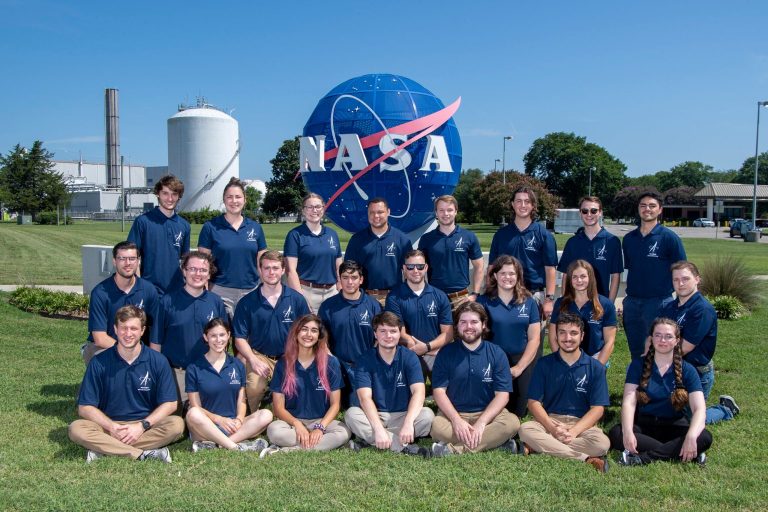
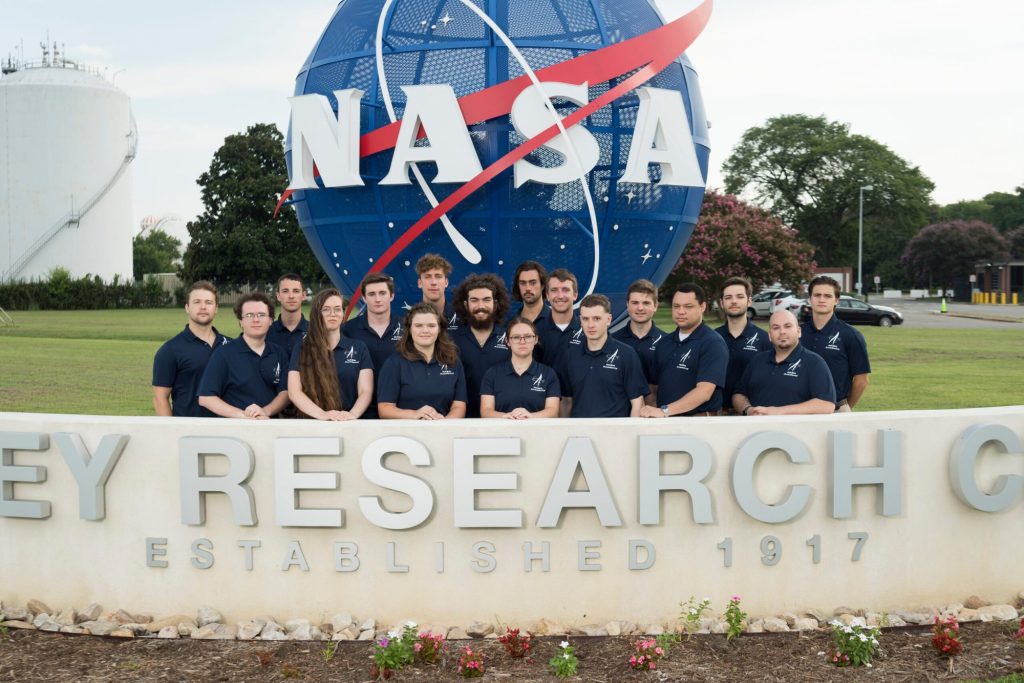
Images of 2022 NASA ARD (Aeronautics Research Directorate) MULTIDISCIPLINARY RESEARCH ACADEMY
Learn more about past NASA Academies
The 2022 Academy had 17 students nationwide and multidisciplinary participation from multiple states.
The 2021 NASA Academy at Langley Research Center had 23 students from 16 different universities and six different disciplines. They were able to spend time on the center for one day to test sensors they had developed for a NASA UAV.
Halloween is fast approaching. If you are in a hurry and you want the best for your children, you can buy a complete costume. They are easier to manage and has dependable quality.
Cool and calculating, these are only some of the characteristics you could say for Wednesday Adams. If you’ve the recent Netflix series, Wednesday, then you know how both beautiful and scary she can be.
While it is simple and might be unrecognizable if going alone. But if one the kids is going as Wednesday, this will make the theme of Adams family prominent.
Going as Mavis from Hotel Transylvania is iconic to children as the movie did have sequels. Just note that this not include makeup, but some powder and black lipstick should do the trick.
“Get the most out of your shopping with an Amazon Prime membership! Sign up now to enjoy free one-day delivery, unlimited streaming, exclusive deals, membership perks and more. Sign up today to enjoy a 30-day free trial and if you’re a student enjoy up to 6 months free trial. Click here to signup now! 👉 https://amzn.to/46Jm3AX”
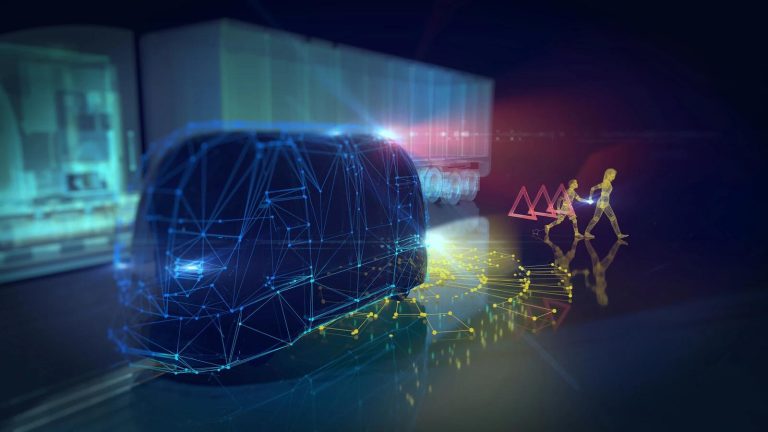
Autonomous mobility could have many benefits, including enhanced safety and efficiency, but there are challenges.
Saudi Arabia is in the early stages of incorporating autonomous mobility into the country’s transportation landscape.
Here are three factors that will be key to supporting the safe and responsible adoption of autonomous mobility.
Saudi Arabia is currently at the nascent stages of incorporating autonomous mobility technology into its transportation landscape.
Ambitious projects like the NEOM urban area and Red Sea Global have been conceived with sustainable transportation systems in mind, offering autonomous mobility choices such as airtaxis and volocopters, autonomous pods for transporting people and goods.
Furthermore, several mega projects in cities like Al Ula, Thuwal, and Riyadh are also set to provide autonomous vehicles (AVs) as part of their transportation options.
AV technology, driven by advanced computing, artificial intelligence, machine learning and faster communication networks, offers substantial economic benefits. In the US alone, it is estimated that it could annually save more than $750 billion by reducing vehicle crashes and optimizing travel time.
Autonomous air mobility has similar potential, enhancing safety, efficiency, and air traffic management, with wide-reaching impacts on aviation, logistics, urban transport, healthcare and agriculture.
There are also risks, including cybersecurity, unemployment, skills gaps and infrastructure challenges. However, the central concern in adopting autonomous mobility technology is public safety.
Safety vital for autonomous mobility development
Demonstrating safety and responsible development is crucial and a key focus of the World Economic Forum’s Global Future Council on the Future of Autonomous Mobility, with active participation from Saudi Arabia.
To support the adoption of these new mobility systems in both passenger and logistics sectors, the National Transport and Logistics Strategy (NTLS) has been put in place, in line with the country’s Saudi Vision 2030.
This strategic move has been further reinforced by the Transportation General Authority’s (TGA) sector-specific strategy for land transport. This sets ambitious targets which aim to transition 25% of goods transport vehicles into autonomous vehicles by the year 2030.
TGA efforts align with other parts of the government, including the Ministry of Transport and Logistic Services, the Ministry of Municipal and Rural Affairs and Housing, the Ministry of Communications and Information Technology, the Saudi Authority for Data and Artificial Intelligence.
Saudi Arabia’s experience shows that safe and responsible adoption of autonomous mobility hinges on a combination of three factors. These are:
1. Enabling innovation with safety and transparency
Currently, the Centre for the Fourth Industrial Revolution (C4IR) in Saudi Arabia is exploring the use of ‘regulatory framework’ governance models to ensure the safety of this autonomous mobility technologies.
Innovation in this space can greatly benefit from such models as they could potentially result in increased safety assurance and fewer obstacles to innovation adoption. A regulatory sandbox provides exemptions from existing regulations, but with strict limitation in scope and duration requirements to disclose data.
For example, the US state of California has granted on-road state testing permits to more that 65 companies, one of which being NURO. These waivers require that only basic information is reported to regulators on the frequency of “disengagements”.
This low level reporting, some argue, is not sufficient to evaluate the safety of AVs, and will likely not support a regulatory agency’s work to establish safety standards given the short timespan required for the mass adoption of AVs.
2. Fostering inter-agency collaboration
Collaboration between governmental, private, local and international organizations, as well as research institutions, is vital for the advancement and development of autonomous mobility technologies.
For example, the TGA is leading a national level Future of Mobility Committee, headed by the Vice Minister of Transportation and Logistics Services (MotLS), that is composed of 10 government stakeholders, aims to align the strategies, initiatives and projects owned by the stakeholders and develop a national master plan and incentives for future of mobility.
C4IR Saudi Arabia is teaming up with various organizations, including TGA, MoTLS, King Abdullah University for Science and Technology (KAUST) and the Royal Commission for Al Alu (RCU) to ensure a unified approach to autonomous mobility in the country, and to advance regulation, testing and validation of autonomous mobility solutions.
This effort is supported by a memorandum of understanding signed between C4IR KSA and MoTLS on October 9. These organizations will jointly participate in an upcoming workshop led by C4IR Saudi Arabia, which aims to create responsible policies for autonomous systems in the country, covering ground and air mobility.
Several other collaborations are also taking place. For example, NEOM, in collaboration with Volocopter and Saudi Arabia’s General Authority of Civil Aviation (GACA), is actively working towards preparing and expanding electric vertical take-off and landing (eVTOL) aircraft operations within Saudi Arabia.
This collaboration includes the establishment of an airtaxi testbed within the NEOM area to facilitate the development and growth of eVTOL technology in the country. This represents significant progress toward the adoption and future commercial operation of eVTOL aircraft in the NEOM special economic zone and neighbouring regions.
3. Intermodal learning
C4IR Saudi Arabia’s autonomous mobility portfolio comprises two main tracks: one centred around autonomous vehicles and the other dedicated to heavy lift drones. While these modes have unique characteristics and demands, there is a valuable need for a cohesive framework.
Additionally, the TGA, as it pursues its mission of safe and responsible adoption of autonomous technology, also encompasses autonomous sea mobility.
The Global Future Council on the Future of Autonomous Mobility addresses various modes, promoting the exchange of best practices and synergies among them.
In the realm of autonomous air mobility, Saudi Arabia is concentrating on advancing heavy lift drones and assisting stakeholders in defining the regulatory and operational prerequisites essential for positioning the Kingdom as a pioneer in autonomous cargo aircraft.
It’s important to note that autonomous mobility encompasses deployments on roads, in the air, and at sea. Just like the Global Future Council on Autonomous Mobility, Saudi Arabia aims to emphasize the importance of cross-mode knowledge-sharing.
Whilst the country is in the early stages of its journey, it is steadfastly progressing in the right direction on autonomous mobility. It is also committed to ensuring that efforts and activities remain aligned and well-coordinated, through collaborative efforts, allowing successful achievement of its goals and targets.
By: Omaimah Bamasag (Deputy, Transportation Enablement, Transport General Authority – Kingdom of Saudi Arabia), Basma AlBuhairan (Managing Director, Centre for the Fourth Industrial Revolution Saudi Arabia) and Waleed Gowharji (Project Fellow, Autonomous Vehicles, World Economic Forum) Originally published at: World Economic Forum
NASA will host a media teleconference at 11 a.m. EDT Thursday, Oct. 26, to discuss a laser communications system and new research to understand the interactions between weather on Earth and in space. The investigations are two of many research and technology experiments bound for the International Space Station next month aboard the agency’s SpaceX 29th commercial resupply services mission.
Audio of the media call will stream live at: https://www.nasa.gov/nasatv
Launch is targeted for no earlier than 10:01 p.m. EST Sunday, Nov. 5. The SpaceX Dragon spacecraft, carried on the company’s Falcon 9 rocket, will lift off from Launch Complex 39A at NASA’s Kennedy Space Center in Florida.
The mission will carry scientific research, technology demonstrations, crew supplies, and hardware to the space station to support its Expedition 70 crew, including NASA’s Integrated Laser Communications Relay Demonstration Low Earth Orbit User Modem and Amplifier Terminal (ILLUMA-T) and Atmospheric Waves Experiment (AWE).
To ask questions during the teleconference, media must RSVP no later than two hours before the event to Claire O’Shea at claire.a.o’[email protected]. NASA’s media accreditation policy is available online. The public can submit questions on social media using #AskNASA.
David Brady, associate program scientist for the International Space Station Program at NASA’s Johnson Space Center in Houston, will provide an overview of the research and technology launching aboard the Dragon spacecraft.
Other teleconference participants include:
Dr. Jason Mitchell, director for the Advanced Communications and Navigation Technologies Division in the Space Communication and Navigation (SCaN) Program, Space Operations Mission Directorate at NASA Headquarters in Washington
Glenn Jackson, acting project manager for ILLUMA-T, NASA’s Goddard Space Flight Center in Greenbelt, Maryland
David Cheney, program executive for the Heliophysics Science Division, Science Mission Directorate, NASA Headquarters
Jeff Forbes, deputy principal investigator for AWE, University of Colorado, Boulder
Once installed on the station’s exterior, ILLUMA-T aims to test high data rate laser communications from the space station to the agency’s Laser Communications Relay Demonstration in geosynchronous orbit, which will relay the data to Earth. The system uses invisible infrared light to send and receive information at higher data rates than traditional radio frequency systems. Working together, ILLUMA-T and the Laser Communications Relay Demonstration will complete NASA’s first two-way laser communications relay system.
Also installed on the station’s exterior, AWE will use an infrared imaging instrument to measure the characteristics, distribution, and movement of atmospheric gravity waves, which roll through the Earth’s atmosphere when air is disturbed. Researchers also will look at how atmospheric gravity waves contribute to space weather, which affects space-based and ground-based communications, navigation, and tracking systems. Increased insight into atmospheric gravity waves could improve understanding of Earth’s atmosphere, weather, and climate and development of ways to mitigate the effects of space weather.
Goddard manages ILLUMA-T in partnership with Johnson and the Massachusetts Institute of Technology Lincoln Laboratory for SCaN. As a Mission of Opportunity, AWE is under NASA’s Heliophysics Explorers Program. The program is managed by Goddard for the agency’s Science Mission Directorate.
The International Space Station continues to advance scientific knowledge in Earth, space, physical, and biological sciences for the benefit of people living on our home planet. The station also is the world’s leading laboratory where researchers conduct cutting-edge research and technology development that will enable human and robotic exploration of destinations beyond low Earth orbit, including the Moon and Mars.
Learn more about the space station, including research and technology at:
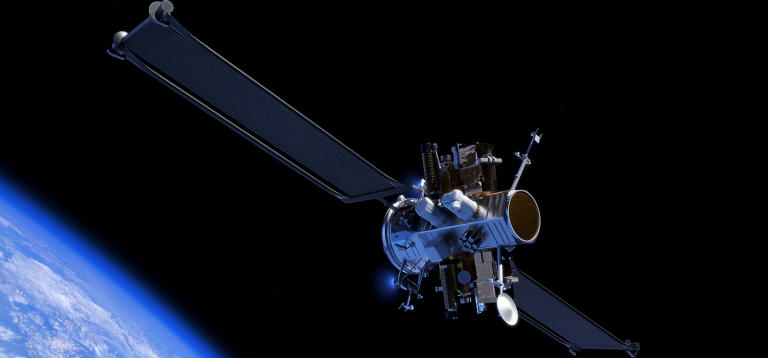
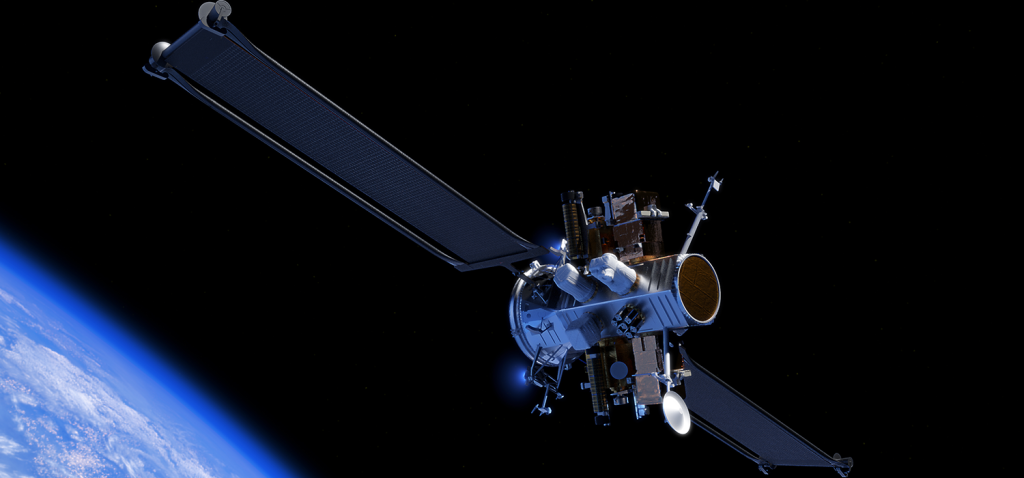
Expanding upon its mission to build a road to space for the benefit of Earth, Blue Origin has unveiled Blue Ring, a spacecraft platform focused on providing in-space logistics and delivery.
Blue Ring serves commercial and government customers and can support a variety of missions in medium Earth orbit out to the cislunar region and beyond. The platform provides end-to-end services that span hosting, transportation, refueling, data relay, and logistics, including an “in-space” cloud computing capability. Blue Ring can host payloads of more than 3,000 kg and provides unprecedented delta-V capabilities and mission flexibility.
“Blue Ring addresses two of the most difficult challenges in spaceflight today: growing space infrastructure and increasing mobility on-orbit,” said Paul Ebertz, Senior Vice President of Blue Origin’s In-Space Systems. “We’re offering our customers the ability to easily access and maneuver through a variety of orbits cost-effectively while having access to critical data to ensure a successful mission,” Ebertz added.
Blue Ring is part of a newly formed Blue Origin business unit called In-Space Systems.
A Blue Ring rendering in space (image not to scale).