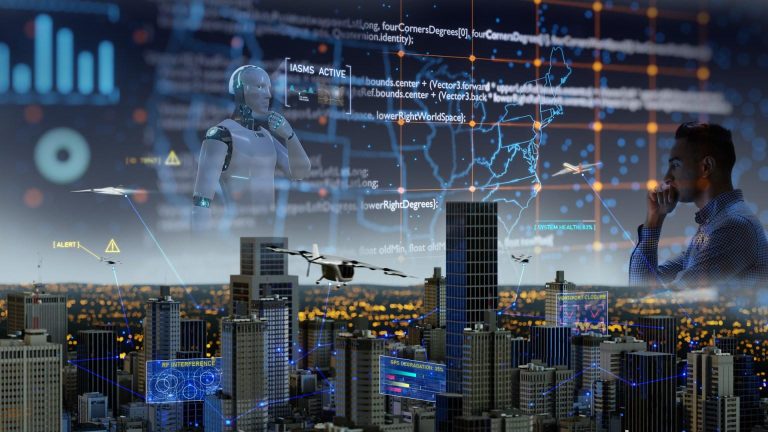
NASA’s transformational vision for the skies above our communities includes enabling safer and more efficient air travel. Part of this goal involves using advanced new technology to prevent safety risks long before they have a chance to arise. MTSI / NASA
NASA’s aeronautical innovators have completed a significant step in their pursuit of safer, more efficient aviation technologies that spot hazards before they occur.
Through its System-Wide Safety project, NASA and its partners in government, industry, and academia are exploring new technologies and techniques to improve current aviation safety and potentially enable widespread use of new types of aircraft such as drones or air taxis.
The project recently completed Technical Challenge 1 (TC-1), Terminal Area Risk Management, the first step towards achieving what is known as an In-Time Aviation Safety Management System. This new type of aviation safety technology can effectively address potential hazards expected with the rise in demand for the number and types of aircraft flying in the National Airspace System.
As aviation operations continue to grow in scale and diversity, and with new modes of flight expected to rise in the near future, keeping the skies safe becomes increasingly complex and drives the need to transform the way order is maintained above our communities.
“What we’ve accomplished with TC-1 is really just beginning to scratch the surface of what’s possible,” said Kyle Ellis, NASA’s project manager for System-Wide Safety. “Developing these systems enables a new economy for aviation uses that will benefit us all in the future.”
Planning Ahead
In a busy aviation environment, an In-Time Aviation Safety Management System can efficiently identify and predict safety issues a human would be hard tasked to keep up with.
In today’s airspace safety system, let’s say an air traffic manager is looking at their screen and guiding 10 airplanes towards their destinations. This person would use a combination of established safety rules and pattern recognition to make sure those aircraft remain a safe distance apart. If this person saw a hazard that posed a safety risk, they would work with the pilots aboard the aircraft and resolve the issue.
Now, let’s think about the airspace of tomorrow. Instead of 10 airplanes total, 10 air taxis, 10 ultra-efficient airliners, and 10 commercial supersonic jets might be sharing the same confined airspace. Preventing and addressing hazards would become a more complex issue nearly impossible for a person to identify in time to prevent an accident.
An In-Time Aviation Safety Management System is designed to identify these events much more rapidly than human operators, then quickly deliver actionable safety procedures to prevent the dangerous situation long before it develops.
Furthermore, preventing these situations from ever arising in the first place increases the efficiency of the airspace overall, since not as much time and effort would be spent by managers keeping things running smoothly.
Laying the Foundation
TC-1 contributed several important pieces of technology working towards the development of such a system. These contributions improve aviation safety not just for tomorrow – but also for today.
For example, part of the research included using new machine learning algorithms to analyze data gathered from major airlines, which use existing aviation safety management systems, to discover potential safety risks that had previously been undefined – overall making things safer.
Researchers also gathered information on exact ways human safety managers, pilots, air traffic controllers, and others interact with safety procedures. The team identified useful, efficient practices, as well as those that could potentially lead to safety risks. Their work contributes substantially to improving training and safety operations.
Additionally, researchers studied human performance and fatigue, partnering with pilots to study how various factors such as flight scheduling, certain short-haul routes, and even the COVID-19 pandemic affect operations.
Other results include prototype safety tools and surveys on human performance.
With this more comprehensive understanding of the safety landscape, NASA and its partners can more effectively continue ushering in new safety technologies.
“We focused on gathering data on current-day operations, but always have an eye for the near future,” said Nikunj Oza, subproject manager for TC-1. “We can use the lessons learned about current aviation safety to best inform new systems.”
By: John Gould (Aeronautics Research Misson Directorate) Originally published at: NASA
Rishi Sunak hails conference as diplomatic coup after it produces international declaration to address AI risks
Ursula von der Leyen, Kamala Harris and Rishi Sunak attend the AI safety summit at Bletchley Park in Milton Keynes, England. Photograph: Tolga Akmen/EPA
Rishi Sunak has hailed this week’s artificial intelligence summit as a diplomatic breakthrough after it produced an international declaration to address risks with the technology.
Here are five things we have learned from the summit.
The UK pulled off a diplomatic coup
The prime minister spent diplomatic capital convening global leaders, tech executives, academics and civil society figures at Bletchley Park in Milton Keynes, the base for second world war codebreakers.
Those attending included the US vice-president, Kamala Harris, the European Commission president, Ursula von der Leyen, award-winning computer scientists, executives at all the leading AI companies – and Elon Musk.
Even if Emmanuel Macron and Joe Biden were among the no-shows, the gathering had political and commercial heft.
Tino Cuéllar, the president of the Carnegie Endowment for International Peace, said it was a “remarkable achievement” in diplomatic terms. This was symbolised by the signing of an international declaration that recognised the need to address risks represented by AI development, backed by more than 25 countries and the EU. France will host the next full-blown AI safety summit in 2024 – guaranteeing that Sunak’s initiative will live on.
The US is a hard power in AI
The White House made clear its power to set the AI agenda this week. Biden issued an executive order requiring tech firms to submit test results for powerful AI systems to the government before they are released to the public. Harris gave a speech about AI in London on day one of the summit and announced the establishment of an AI safety institute, echoing a similar announcement by Biden last week.
The UK tech secretary, Michelle Donelan, said she was unfazed by the US initiatives, pointing to the fact the majority of cutting-edge AI companies, such as the ChatGPT developer OpenAI, are based in the US. That remark underlined the fact that the US has commercial, as well as political, strength in AI.
Elon Musk has the star power
Elon Musk brought the glitz to the AI safety summit. Photograph: Reuters
The world’s richest man attended the summit and brought glitz, as well as distraction, to the gathering. Sunak invited him to Downing Street for a streamed fireside chat and the Tesla CEO’s warning that AI was “one of the biggest threats to humanity” overshadowed more nuanced contributions.
Some guests viewed the attendance of Musk, whose nascent AI venture xAI is nowhere near the scale of the bigger players, as an example of Fomo (fear of missing out). But his presence brought extra attention to the summit.
Existential risk is divisive, but short-term risk is not
The possibility that AI can wipe out humanity – a view held by less hyperbolic figures than Musk – remains a divisive one in the tech community. That difference of opinion was not healed by two days of debate in Buckinghamshire.
But if there is a consensus on risk among politicians, executives and thinkers, then it focuses on the immediate fear of a disinformation glut. There are concerns that elections in the US, India and the UK next year could be affected by malicious use of generative AI.
Nick Clegg, president of global affairs at Mark Zuckerberg’s Meta, said this week that existential fears were being overplayed but he was concerned about the immediate threat to democratic polls. “We have some things which we need to deal with now,” he said.
Countries are moving at their own speeds
Every delegation at Bletchley was keen to claim preeminence in AI regulation, from European diplomats noting they had started the regulatory process four years ago to Americans talking up the power of their new AI safety institute.
While the EU is moving closer to passing its AI act, UK officials have made clear they do not think regulation is needed, or even possible at this stage given how fast the industry is moving.
But most agree on the importance of international summits such as this one, not least to help define the problem different countries are trying to tackle.
One official said: “What we need most of all from the international stage is a panel like the International Panel on Climate Change, which at least establishes a scientific consensus about what AI models are able to do.”
By: Dan Milmo and Kiran Stacey Originally published at: The Guardian
The First Spaceplane in the Revolutionary New Dream Chaser® Fleet
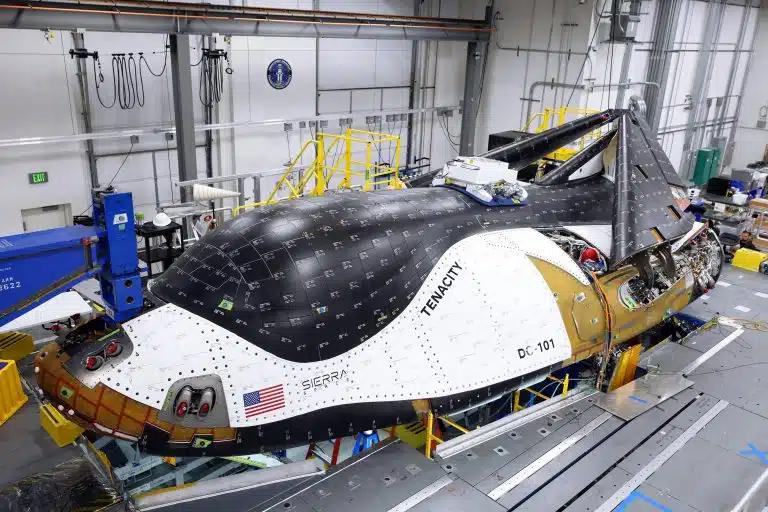
LOUISVILLE, Colo. – Nov. 2, 2023– Sierra Space, a leading pureplay commercial space company building the first end-to-end business and technology platform in space, today proudly revealed the fruit of years of passionate determination, countless breakthrough innovations and relentless commitment – the remarkable Dream Chaser spaceplane. The first vehicle is complete and will ship to NASA’s Neil A. Armstrong Test Facility in Ohio for environmental testing in coming weeks.
Dream Chaser is a leap forward in space technology, heralded as the world’s sole commercial runway-capable spaceplane. Supported by a substantial contract from NASA to resupply the International Space Station, Dream Chaser is poised to lead the way in democratizing access to space, forging a path towards shared space exploration and international cooperation.
“Today we have arrived at a profound milestone in both our company’s journey and our industry’s future – one that has been years in the making and is shaped by audacious dreaming and tenacious doing,” said Sierra Space CEO Tom Vice.
“I am reminded of a comment made by Steve Jobs that every once in a while, a revolutionary product comes along that changes everything. I think Dream Chaser is that product. This breakthrough shifts paradigms and redefines space travel. The Dream Chaser is not just a product; it’s a testament to human spirit, determination and the relentless pursuit of what lies beyond.”
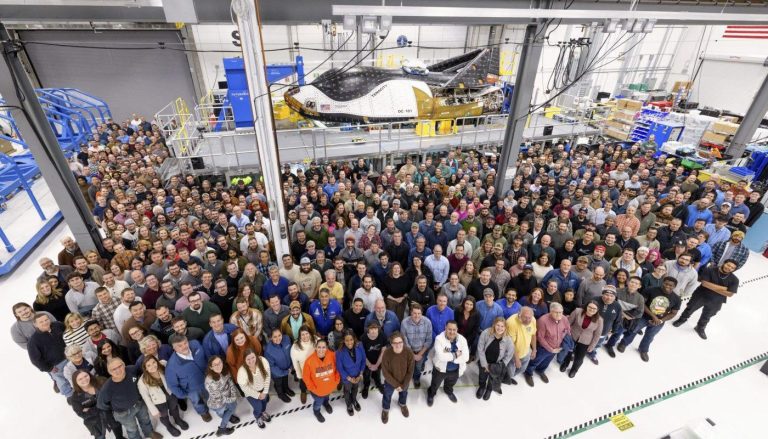
Sierra Space team members gathered to celebrate this milestone moment on October 30th, at the company’s Louisville, CO, production facility.
Unlocking Opportunities for Space Access
The versatile Dream Chaser spaceplane fleet is meticulously designed to facilitate the transportation of cargo and, in the future, crew to low-Earth orbit (LEO). This multi-mission platform offers customization options to cater to the needs of both domestic and international customers, further enhancing its role in global space operations. Under NASA’s Commercial Resupply Services 2 (CRS-2) contract, Dream Chaser has been selected to provide essential cargo delivery, return, and disposal services for the International Space Station.
Unparalleled Design and Precision
At the heart of Dream Chaser is an unparalleled design, meticulously crafted with precision. Every curve and contour of this remarkable vehicle is engineered for excellence, seamlessly merging engineering with a beautiful design, and enabling the seamless integration of space travel and hypersonic atmospheric speeds.
Pinnacle of Technological Advancement
Harnessing cutting-edge technology, Dream Chaser showcases its mettle by safely withstanding temperatures exceeding 3,000 degrees during re-entry, all while being cool to the touch mere minutes after landing. The incorporation of the most advanced autonomous flight system, ensuring a minimum 15-mission lifespan, marks a monumental leap forward in space transportation.
Safety as a Cornerstone
Safety remains at the core of the Dream Chaser’s mission. Advanced safety mechanisms fortify the spaceplane, guaranteeing the integrity of the cargo – including sensitive scientific payloads – and the well-being of all those aboard the International Space Station who will interact with the new vehicle.
A Commitment to Sustainability
While we soar towards the heavens in pursuit of dreams, we remain resolutely anchored to our commitment to the planet. Dream Chaser is designed with sustainability as a foundational principle, working toward a better future for all. Years of dedication have resulted in the creation of a revolutionary new propulsion and oxidizer-fuel system, a testament to our pledge to a more eco-friendly and responsible approach to space travel.
Tenacity’s Historic Mission
The inaugural Dream Chaser spaceplane, “Tenacity,” is poised to embark on its initial seven cargo missions to and from the International Space Station, carrying essential supplies such as food, water and scientific experiments. One of Dream Chaser’s groundbreaking features is its capability to safely return critical cargo to Earth at fewer than 1.5g’s, ensuring the preservation of invaluable payloads. This innovative spaceplane offers unparalleled flexibility and can land at any compatible commercial runway worldwide, just like a narrow body commercial airliner.
Setting New Standards for Reusability and Adaptability
Dream Chaser’s high reusability and adaptability set it apart, making it an optimal choice for a wide range of applications while ensuring rapid turnaround times to meet various LEO requirements. The launch for this extraordinary journey is schedule to occur from NASA’s Kennedy Space Center. Sierra Space’s launch provider, United Launch Alliance (ULA), will carry Dream Chaser into orbit on the second Vulcan Centaur rocket. Tenacity’s maiden resupply mission will culminate with the vehicle’s return, landing at the historic NASA Space Shuttle Landing Facility.
As we unveil the Dream Chaser, we invite you to join us on this extraordinary journey. Together, we embark on a new chapter in space transportation, redefining what’s possible and shaping the future of human exploration. Sierra Space’s Dream Chaser spaceplane symbolizes the dawn of a new era in space commercialization – The Orbital Age™, marked by heightened efficiency, extensive reusability and boundless opportunities. As “Tenacity” embarks on its maiden mission, it sets the stage for a brighter future of space transportation and cooperation, bringing humanity’s dreams of space exploration one step closer to reality.
About Sierra Space
Sierra Space is a leading, pureplay commercial space company at the forefront of innovation and the commercialization of space in the Orbital Age™, building an EarthspaceTM ecosystem to benefit life on Earth. With more than 30 years and 500 missions of space flight heritage, the company is enabling the future of space transportation with Dream Chaser®, the world’s only commercial spaceplane, and is bringing LIFE™ (Large Integrated Flexible Environment) to Low Earth Orbit with its modular, three-story commercial habitation and science platform. Sierra Space also builds and delivers a host of systems and subsystems across solar power, mechanics and motion control, environmental control, life support, propulsion and thermal control, offering myriad space-as-a-service solutions for the new space economy.
###
MEDIA CONTACT: Alex Walker, Sierra Space (303) 803-2297 | [email protected]
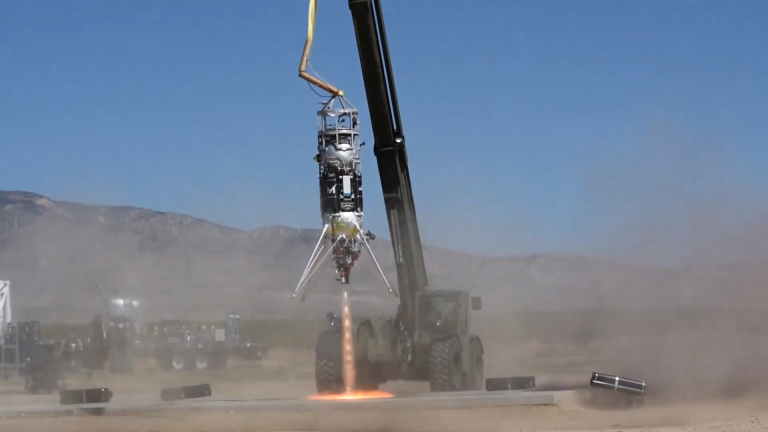
University of Central Florida researchers tested an instrument designed to measure the size and speed of surface particles kicked up by the exhaust from a rocket-powered lander on the Moon or Mars. The four tethered flights on Astrobotic’s Xodiac rocket-powered lander took place in Mojave, California, from Sept. 12 through Oct. 4, 2023. Researchers tested the Ejecta STORM technology’s integration with a lander and operation in flight conditions that simulated the plume effects of a lunar lander. Credits: Astrobotic
A research team from the University of Central Florida recently tested an instrument designed to measure the size and speed of surface particles kicked up by the exhaust from a rocket-powered lander on the Moon or Mars. Supported by NASA’s Flight Opportunities program, researchers evaluated the instrument in a series of flight tests on Astrobotic’s Xodiac rocket-powered lander in Mojave, California.
When spacecraft land on the Moon or Mars, the rocket exhaust plume creates regolith ejecta – abrasive dust and large particles moving at high speeds – that can damage the lander and surrounding structures. Understanding how a rocket engine’s exhaust affects this ejecta will help mission designers plan more effectively for lunar landings by allowing them to model the soil erosion rate, the particle size distribution, and the velocities associated with plume-surface interaction.
Researchers at the University of Central Florida developed the laser-based instrument, named Ejecta STORM (Sheet Tracking, Opacity, and Regolith Maturity), to answer this need while embracing the Flight Opportunities program’s “fly, fix, fly” ethos to quickly advance the technology.
Four tethered flights enabled researchers to test the system’s integration with a lander and operation in flight conditions that simulated the plume effects of a lunar lander. These tests build on data collected during a 2020 flight campaign leveraging Xodiac. These 2020 flight tests, funded by the program’s TechFlights solicitation, allowed researchers to measure the density and size of particles during terrestrial simulations of lunar landings.
Researchers expect the technology to inform model development and reduce risk for future lunar landings, ultimately improving mission design for rover-based planetary science missions, crewed missions to the Moon and other bodies, and in-situ resource utilization. Flight Opportunities is managed at NASA’s Armstrong Flight Research Center in Edwards, California, and is part of the agency’s Space Technology Mission Directorate.
REDONDO BEACH, Calif. – Oct. 30, 2023 – The Space Development Agency (SDA) awarded Northrop Grumman Corporation (NYSE: NOC) an agreement with a total potential value of approximately $732 million to design and build 38 data transport satellites. These satellites will support Tranche 2 Transport Layer – Alpha (T2TL-Alpha), the latest iteration of SDA’s low-Earth orbit Proliferated Warfighter Space Architecture (PWSA).
This Alpha announcement follows an August 2023 award to Northrop Grumman of 36 satellites as part of Tranche 2 Transport Layer – Beta (T2TL-Beta); Alpha and Beta satellites are designed to interoperate on orbit.
This contract includes supporting ground elements and five years of operations and sustainment with the satellites scheduled to launch starting December 2026.
Northrop Grumman was also awarded a contract for Tranche 1 Transport Layer 1 (T1TL), which similarly provide low latency, high volume data transport supporting U.S. military missions around the world.
Northrop Grumman’s approach to the PWSA contracts is to combine our satellite technology and mission experience with strategic commercial partnerships to move at the pace the environment demands.
Expert:
Blake Bullock, vice president, communication systems, Northrop Grumman: “Northrop Grumman, in partnership with our industry teammates, is fully committed to the Space Development Agency’s vision of fielding a next-generation, low-Earth orbit architecture connecting and protecting our warfighters wherever they serve. Our Northrop Grumman team is bringing our deep Military SATCOM experience to this mission, and we’re executing on our commitments.”
Details on the Proliferated Warfighter Space Network:
Northrop Grumman provides both space vehicles and ground systems for the SDA’s PWSA, a next-generation constellation in low-Earth orbit. PWSA has two major lines of effort:
The Transport Layer: Designed to provide low-latency, high volume data connectivity supporting U.S. military missions around the world.
The Tracking Layer: Designed to detect, track and ultimately target hypersonic and ballistic missiles.
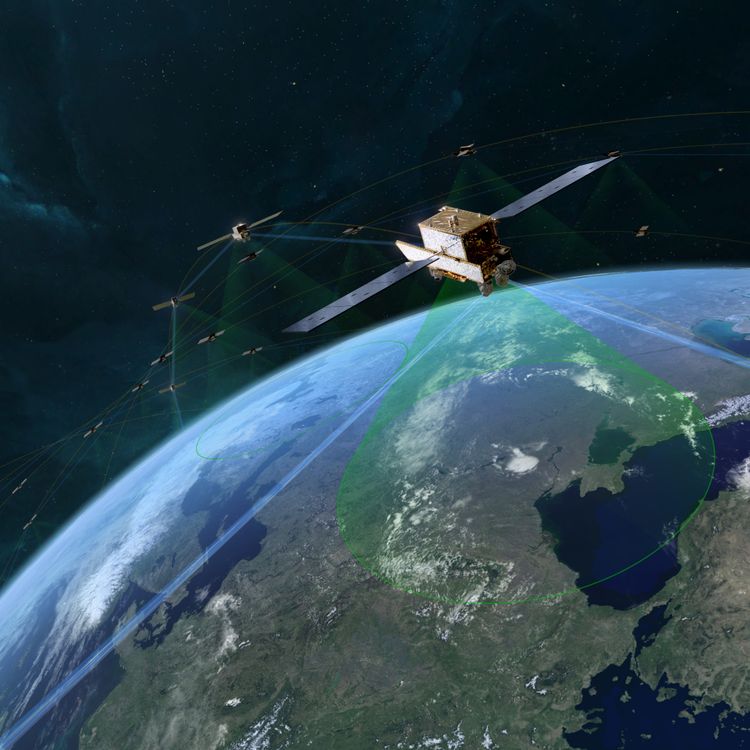
An artist’s rendering of Northrop Grumman’s Tranche 2 Transport Layer satellites on orbit. Space Development Agency announced October 30 it had awarded Northrop Grumman 38 satellites as part of its Tranche 2 Transport Layer Alpha program. Artist Rendering (Credit: Northrop Grumman)
An artist’s rendering of Northrop Grumman’s Tranche 2 Transport Layer satellites on orbit. Space Development Agency announced October 30 it had awarded Northrop Grumman 38 satellites as part of its Tranche 2 Transport Layer Alpha program. Artist Rendering (Credit: Northrop Grumman)
Both layers are designed to interoperate in space using a common data standard allowing satellites made by various manufacturers to communicate seamlessly with one another. Taken together, these satellites are designed to connect elements of an integrated sensing architecture, and the network they create will deliver persistent, secure connectivity, serving as a critical element for Joint All Domain Command Control.
To date, SDA has announced awards to Northrop Grumman of 132 satellites.
Northrop Grumman is a leading global aerospace and defense technology company. Our pioneering solutions equip our customers with the capabilities they need to connect and protect the world, and push the boundaries of human exploration across the universe. Driven by a shared purpose to solve our customers’ toughest problems, our employees define possible every day.
Apple unveils M3, M3 Pro, and M3 Max, the most advanced chips for a personal computer
The industry’s first 3-nanometer chips for a personal computer debut a next-generation GPU architecture and deliver dramatic performance improvements, a faster CPU and Neural Engine, and support for more unified memory
CUPERTINO, CALIFORNIA Apple today announced M3, M3 Pro, and M3 Max, three chips featuring groundbreaking technologies that deliver dramatically increased performance and unleash new capabilities for Mac. These are the first personal computer chips built using the industry-leading 3-nanometer process technology, allowing more transistors to be packed into a smaller space and improving speed and efficiency. Together, M3, M3 Pro, and M3 Max show how far Apple silicon for the Mac has come since the debut of the M1 family of chips.
The M3 family of chips features a next-generation GPU that represents the biggest leap forward in graphics architecture ever for Apple silicon. The GPU is faster and more efficient, and introduces a new technology called Dynamic Caching, while bringing new rendering features like hardware-accelerated ray tracing and mesh shading to Mac for the first time. Rendering speeds are now up to 2.5x faster than on the M1 family of chips.1 The CPU performance cores and efficiency cores are 30 percent and 50 percent faster than those in M1, respectively, and the Neural Engine is 60 percent faster than the Neural Engine in the M1 family of chips. And, a new media engine now includes support for AV1 decode, providing more efficient and high-quality video experiences from streaming services. The M3 family of chips continues the tremendous pace of innovation in Apple silicon, and brings massive enhancements and new features to the new MacBook Pro and iMac.
“Apple silicon has completely redefined the Mac experience. Every aspect of its architecture is designed for performance and power efficiency,” said Johny Srouji, Apple’s senior vice president of Hardware Technologies. “With 3-nanometer technology, a next-generation GPU architecture, a higher-performance CPU, faster Neural Engine, and support for even more unified memory, M3, M3 Pro, and M3 Max are the most advanced chips ever built for a personal computer.”
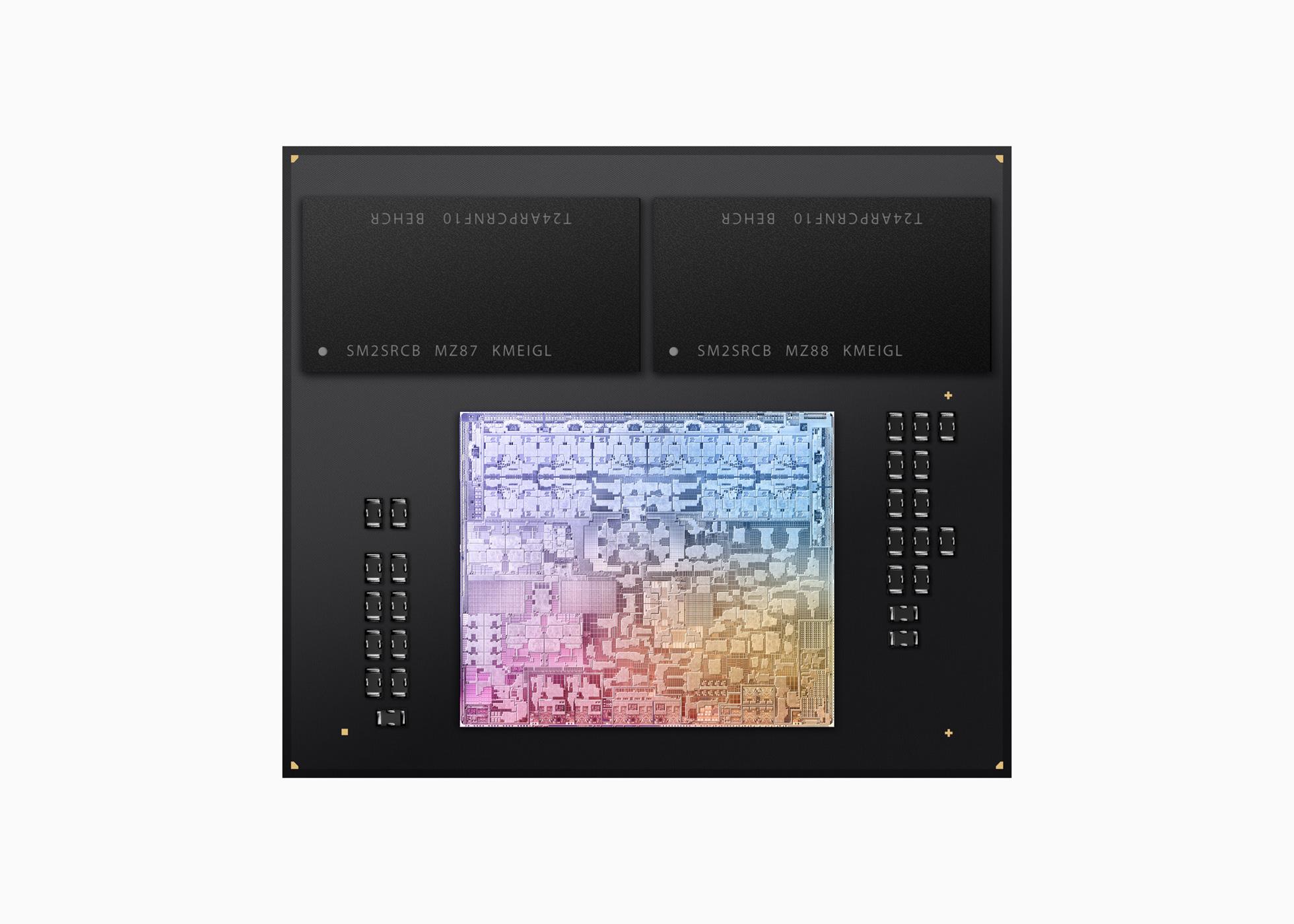
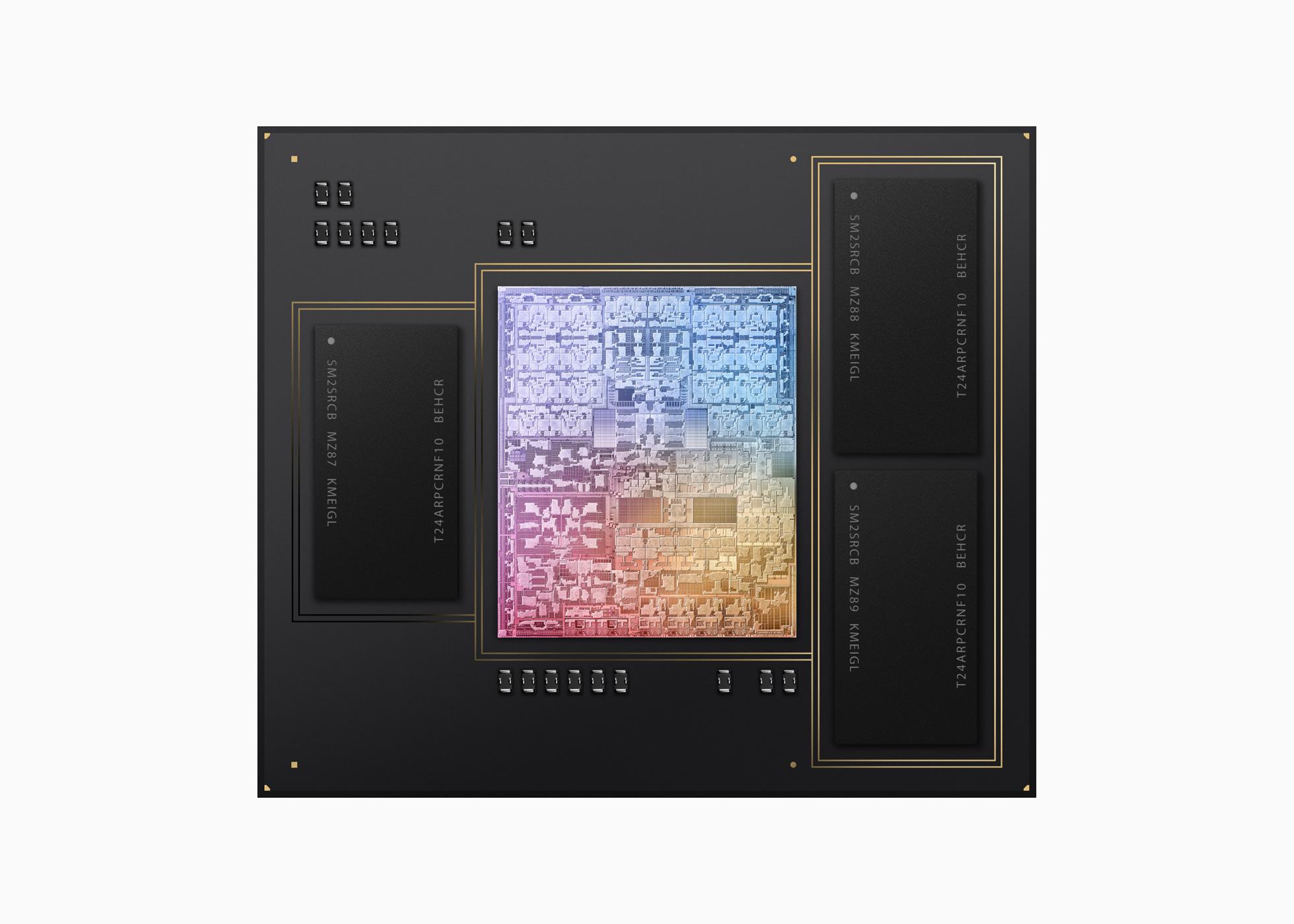
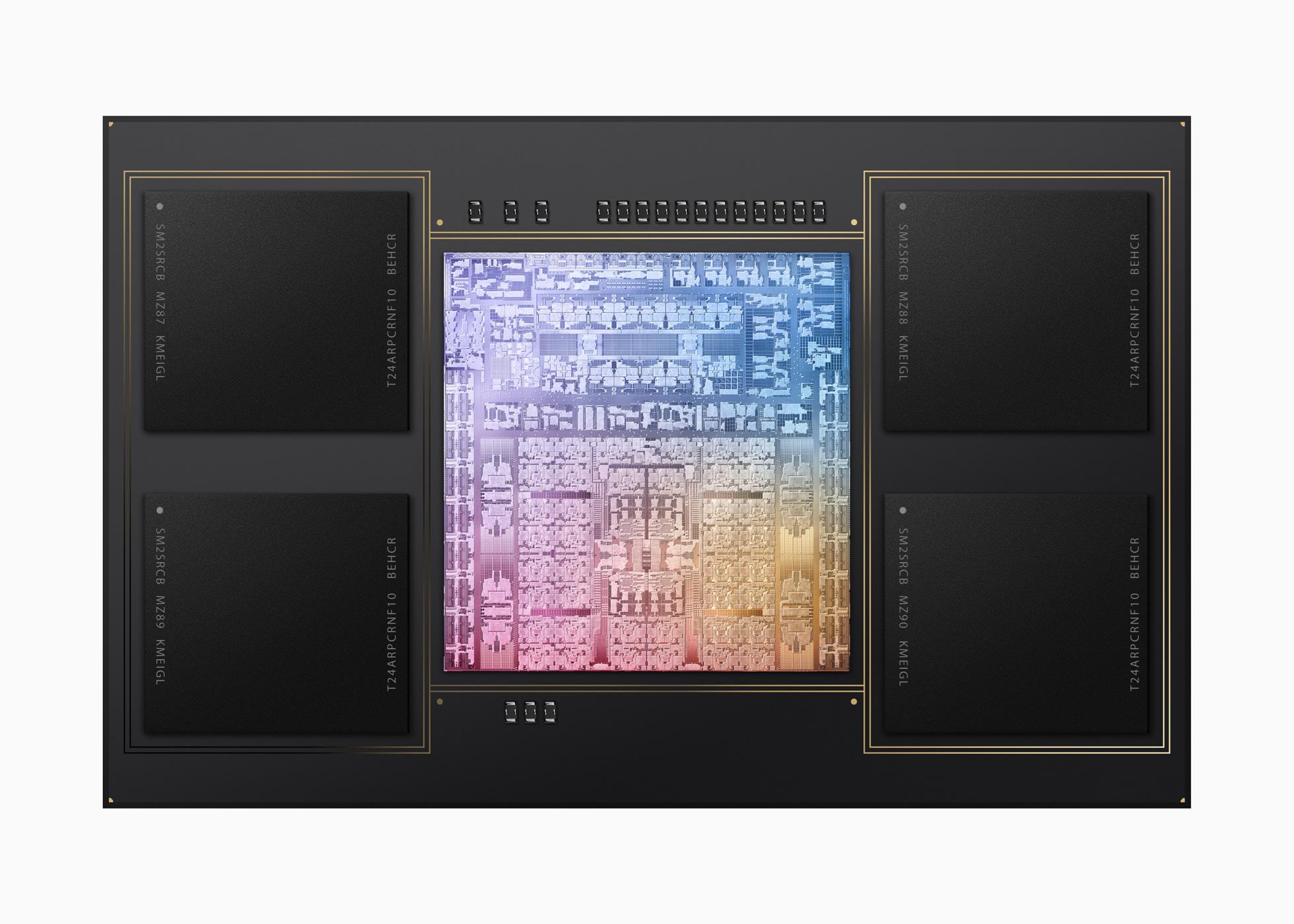
The M3 family of chips is built using the industry-leading 3-nanometer process technology, and continues the tremendous pace of innovation in Apple silicon.
All-New GPU Features Dynamic Caching, Mesh Shading, and Hardware-Accelerated Ray Tracing
The next-generation GPU inside the M3 family of chips represents the largest leap forward in graphics architecture for Apple silicon. It features Dynamic Caching that, unlike traditional GPUs, allocates the use of local memory in hardware in real time. With Dynamic Caching, only the exact amount of memory needed is used for each task. This is an industry first, transparent to developers, and the cornerstone of the new GPU architecture. It dramatically increases the average utilization of the GPU, which significantly increases performance for the most demanding pro apps and games.
With the M3 family of chips, hardware-accelerated ray tracing comes to the Mac for the first time. Ray tracing models the properties of light as it interacts with a scene, allowing apps to create extremely realistic and physically accurate images. This, along with the new graphics architecture, allows pro apps to deliver up to 2.5x the speed of the M1 family of chips. Game developers can use ray tracing for more accurate shadows and reflections, creating deeply immersive environments. Additionally, the new GPU brings hardware-accelerated mesh shading to the Mac, delivering greater capability and efficiency to geometry processing, and enabling more visually complex scenes in games and graphics-intensive apps. This breakthrough GPU architecture enables all of these enhancements and features while maintaining Apple silicon’s legendary power efficiency. In fact, the M3 GPU is able to deliver the same performance as M1 using nearly half the power, and up to 65 percent more performance at its peak.
A Faster and More Efficient CPU
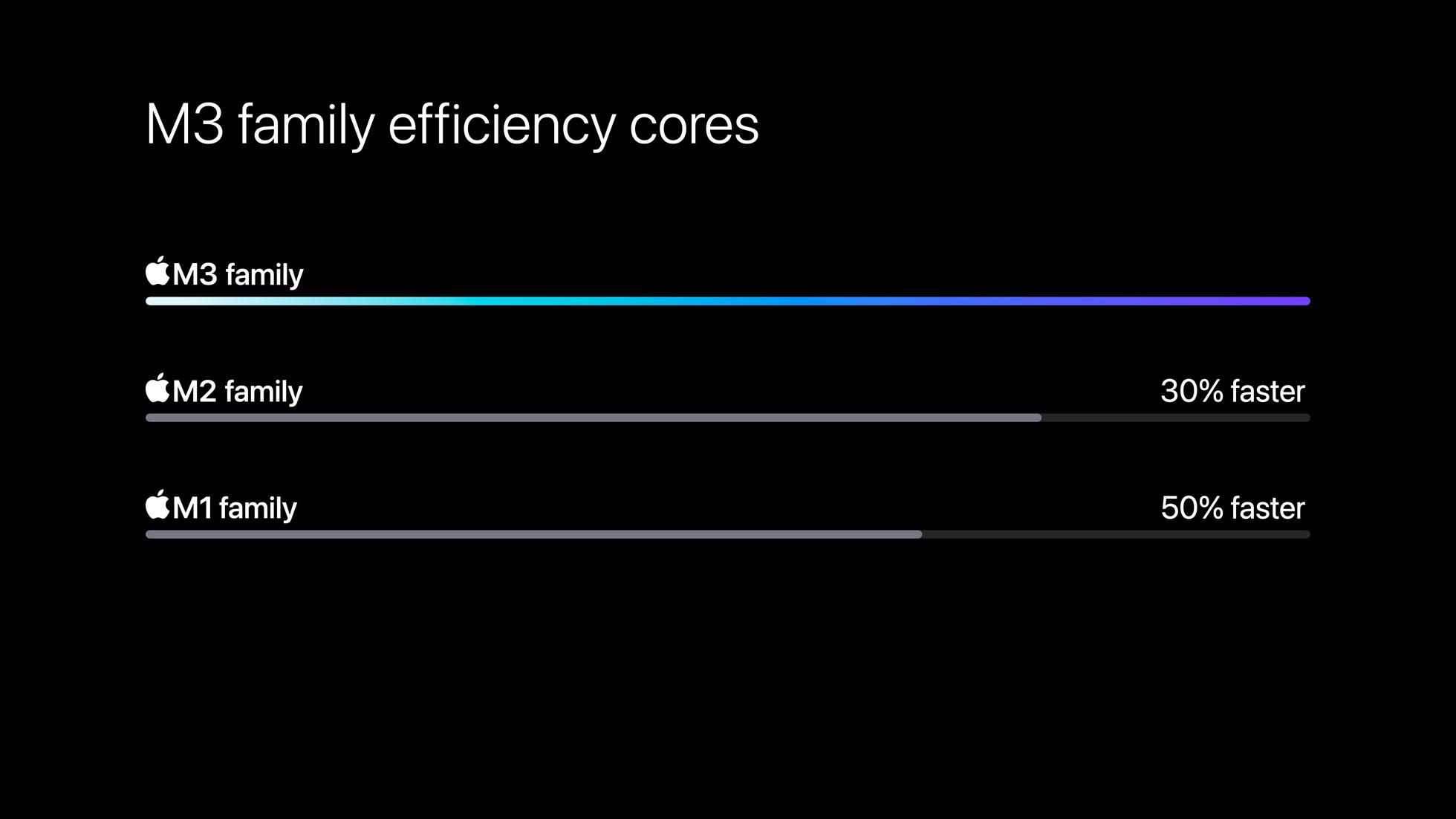
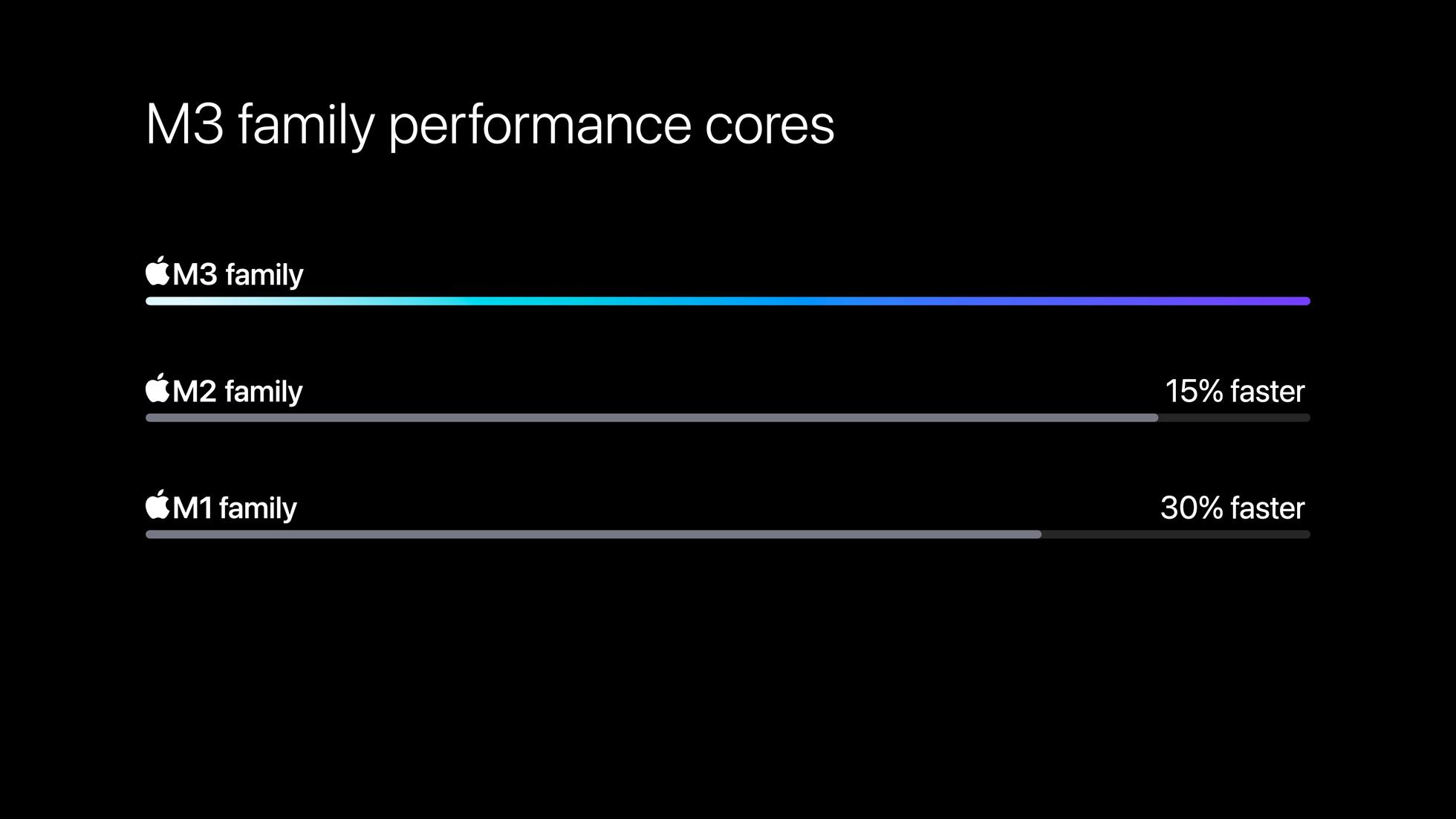
The next-generation CPU in M3, M3 Pro, and M3 Max features architectural improvements to the performance and efficiency cores. The performance cores are up to 30 percent faster than those in the M1 family, so tasks like compiling and testing millions of lines of code in Xcode are even faster, and musicians can use hundreds of audio tracks, plug-ins, and virtual instruments in Logic Pro. The efficiency cores are up to 50 percent faster than the efficiency cores in M1, so everyday tasks are faster than ever, while allowing the system to maximize battery life. Together, these cores create a CPU that delivers the same multithreaded performance as M1 using as little as half the power, and up to 35 percent more performance at peak power.
The M3 family of chips feature efficiency cores that are up to 50 percent faster than those in the M1 family.The performance cores of the M3 family of chips are up to 30 percent faster than those in the M1 family.
Unrivaled Unified Memory Architecture, up to 128GB
Each chip in the M3 family features a unified memory architecture, a hallmark of Apple silicon. This delivers high bandwidth, low latency, and unmatched power efficiency. Having a single pool of memory within a custom package means all of the technologies in the chip can access the same data without copying it between multiple pools of memory, further improving performance and efficiency, and reducing the amount of memory a system requires for the majority of tasks. Additionally, support for up to 128GB of memory unlocks workflows previously not possible on a laptop, such as AI developers working with even larger transformer models with billions of parameters.
The unified memory architecture of M3 delivers high bandwidth, low latency, unmatched power efficiency, and supports up to 24GB of fast, unified memory.The unified memory architecture of M3 Pro supports up to 36GB of fast, unified memory, enabling larger projects to be tackled on MacBook Pro when users are on the go.The unified memory architecture of M3 Max supports up to 128GB of fast, unified memory, allowing pros to accomplish tasks previously not possible on a laptop.
Custom Engines for AI and Video
M3, M3 Pro, and M3 Max also have an enhanced Neural Engine to accelerate powerful machine learning (ML) models. The Neural Engine is up to 60 percent faster than in the M1 family of chips, making AI/ML workflows even faster while keeping data on device to preserve privacy. Powerful AI image processing tools, like noise reduction and super resolution in Topaz, get even faster. Scene edit detection in Adobe Premiere and Smart Conform in Final Cut Pro also see a boost in performance.
All three chips in the M3 family also have an advanced media engine, providing hardware acceleration to the most popular video codecs, including H.264, HEVC, ProRes, and ProRes RAW. And for the first time, the media engine supports AV1 decoding, enabling power-efficient playback of streaming services to further extend battery life.
The Neural Engine in M3, M3 Pro, and M3 Max is up to 60 percent faster than in the M1 family of chips, making AI and machine learning workflows even faster.
M3: Phenomenal Performance for the Most Popular Systems
M3 features 25 billion transistors — 5 billion more than M2. It has a 10-core GPU featuring the next-generation architecture that is 65 percent faster than M1 for graphics performance. Games like Myst have incredibly realistic lighting, shadows, and reflections. M3 has an 8-core CPU, with four performance cores and four efficiency cores, that is up to 35 percent faster than M1 for CPU performance. And it supports up to 24GB of unified memory.
M3 Pro: For Users Who Need Even More Performance
M3 Pro consists of 37 billion transistors and an 18-core GPU, delivering extremely fast performance when working on more graphics-intensive tasks. The GPU is up to 40 percent faster than M1 Pro. Support for unified memory goes up to 36GB, enabling larger projects to be tackled on MacBook Pro when users are on the go. The 12-core CPU design has six performance cores and six efficiency cores, offering single-threaded performance that is up to 30 percent faster than M1 Pro. Actions like stitching together and manipulating enormous panoramic photos in Adobe Photoshop are faster than ever with M3 Pro on the new MacBook Pro.
M3 Max: A Tremendous Leap in Performance for the Most Demanding Pro Workloads
M3 Max pushes the transistor count up to 92 billion and takes pro performance to the next level. The 40-core GPU is up to 50 percent faster than M1 Max, and support for up to 128GB of unified memory allows AI developers to work with even larger transformer models with billions of parameters. The 16-core CPU features 12 performance cores and four efficiency cores, achieving astonishing performance that’s up to 80 percent faster than M1 Max. And with two ProRes engines, M3 Max makes video post-production work on even the highest-resolution content fast and fluid, whether using DaVinci Resolve, Adobe Premiere Pro, or Final Cut Pro. M3 Max is designed for pros needing the highest performance available in a MacBook Pro with industry-leading battery life in a pro laptop.
M3 Max consists of 92 billion transistors and delivers a tremendous increase in performance for the most demanding pro workloads.
Better for the Environment
The power-efficient performance of M3, M3 Pro, and M3 Max helps the new MacBook Pro and iMac meet Apple’s high standards for energy efficiency, and helps the new MacBook Pro achieve the longest battery life ever in a Mac — up to 22 hours.2 This results in less time needing to be plugged in and less energy consumed over its lifetime.
Today, Apple is carbon neutral for global corporate operations, and by 2030, plans to have net-zero climate impact across the entire business, which includes the entire manufacturing supply chain and life cycle of every product. This means that every chip in every Mac, from design to manufacturing, will be carbon neutral.
About Apple
Apple revolutionized personal technology with the introduction of the Macintosh in 1984. Today, Apple leads the world in innovation with iPhone, iPad, Mac, Apple Watch, and Apple TV. Apple’s five software platforms — iOS, iPadOS, macOS, watchOS, and tvOS — provide seamless experiences across all Apple devices and empower people with breakthrough services including the App Store, Apple Music, Apple Pay, and iCloud. Apple’s more than 100,000 employees are dedicated to making the best products on earth, and to leaving the world better than we found it.
Results are compared to the previous-generation 16-inch MacBook Pro with M1 Max, a 10-core CPU, a 32-core GPU, 64GB of RAM, and 8TB SSD.
Testing was conducted by Apple in September and October 2023 using preproduction 16-inch MacBook Pro systems with Apple M3 Pro, a 12-core CPU, an 18-core GPU, 36GB of RAM, and 512GB SSD. The wireless web test measures battery life by wirelessly browsing 25 popular websites with display brightness set to eight clicks from the bottom. The Apple TV app movie playback test measures battery life by playing back HD 1080p content with display brightness set to eight clicks from the bottom. Battery life varies by use and configuration. See apple.com/batteries for more information.
October 30, 2023 PRESS RELEASE Apple supercharges 24‑inch iMac with new M3 chip
The world’s best all-in-one gets even better, featuring the M3 chip and up to 2x faster performance in its strikingly thin design with expansive 4.5K Retina display
CUPERTINO, CALIFORNIA Apple today unveiled the new 24-inch iMac featuring the amazing M3 chip, making the world’s best all-in-one even more powerful and more capable. Thanks to the efficiency of Apple silicon, the new iMac delivers a huge leap in performance in its remarkably thin design and spectrum of seven vibrant colors that users love. iMac with M3 is up to 2x faster than the prior generation with M1.1 And for those upgrading from an Intel-based iMac, the new iMac is up to 2.5x faster than the most popular 27-inch models,2 and 4x faster than the most powerful 21.5-inch model.3 It also features an expansive 4.5K Retina display with 11.3 million pixels and over a billion colors, faster wireless connectivity, and a seamless experience with iPhone. Combined with its best-in-class camera, speakers, and mics, along with macOS Sonoma, iMac with M3 is better than ever — perfect for everyone, from families to small businesses, aspiring creatives, students, and gamers. Customers can order the new iMac starting today, with availability beginning Tuesday, November 7.
“We’re excited to give iMac a big boost in performance with the M3 chip,” said John Ternus, Apple’s senior vice president of Hardware Engineering. “Millions of users absolutely love iMac for its stunning design and expansive 24-inch, 4.5K Retina display that’s the perfect size to spread out with all their favorite apps and get things done. And now M3 brings even more speed to everything users do, whether multitasking, creating captivating images and videos, working on a business plan, or playing their favorite games. The new iMac with M3 is incredible for anyone, especially those who haven’t yet upgraded from Intel, providing a giant leap in performance and capabilities only possible with Apple silicon.”
The new iMac with M3 delivers even more performance and capabilities to everyone, from families to small businesses to aspiring creatives, along with students and gamers.
Supercharged by M3
The M3 chip brings another huge leap in performance to iMac, featuring an 8-core CPU, up to a 10-core GPU, and support for up to 24GB of unified memory. It’s up to 2x faster than the previous generation with M1.1 Users will feel the speed and power of M3 in everything they do, from multitasking across everyday productivity apps to exploring creative passions like editing high-resolution photos or multiple streams of 4K video. Featuring the next-generation GPU of M3, iMac supports hardware-accelerated mesh shading and ray tracing, providing more accurate lighting, reflections, and shadows for extremely realistic gaming experiences, and making three-dimensional design and creation even faster. With a 16-core Neural Engine and the latest media engine, iMac also delivers blazing machine learning and video performance.
iMac delivers phenomenal productivity to small businesses, students, gamers, and everyday consumers. When compared to the previous-generation 24-inch iMac:1
Safari, the world’s fastest browser, performs up to 30 percent faster.
Productivity apps like Microsoft Excel perform up to 30 percent faster.
Games load even faster, and users will experience up to 50 percent fasterframe rates.
From content creation to video editing or photography, iMac is perfect for aspiring creatives. When compared to the previous-generation 24-inch iMac,1 creatives can:
Edit and play back up to 12 streams of 4K video, which is 3x more than before.
Produce video projects in Final Cut Pro and Adobe Premiere Pro up to 2x faster.
Process photos in apps like Adobe Photoshop up to 2x faster.
iMac with M3 brings more performance to everything users do.
A Perfect Desktop for Intel Upgraders and New Mac Users
For Intel-based upgraders, iMac with M3 delivers a huge difference in performance and features. Upgraders will experience 4x faster performance than the most powerful 21.5-inch iMac model,3 and up to 2.5x faster performance when compared to the most popular 27-inch iMac models.2 They’ll love the immersive 24-inch, 4.5K Retina display with 11.3 million pixels, and it’s the perfect size and resolution to replace both the 4K and the 5K Intel-based models in an even more versatile design. Upgraders also get its industry-leading camera, speakers, and mics, the advanced technologies of Apple silicon, like the Neural Engine and media engine, and the option to choose Touch ID.4
New iMac customers will enjoy all of these benefits and see up to 4x faster performance than the bestselling 24-inch all-in-one PC with the latest Intel Core i7 processor.5 The stunning 4.5K Retina display features 5x more pixels than the bestselling 24-inch all-in-one PC. Additionally, Migration Assistant makes getting started on the Mac easy, and Continuity features let users work effortlessly between iPhone and their other Apple devices.
The World’s Best All-in-One
iMac features an industry-leading 4.5K Retina display, the latest wireless connectivity, and best-in-class camera, speakers, and mics, all in a strikingly thin design — making it the world’s best all-in-one.
Expansive Retina display: iMac features a 24-inch, 4.5K Retina display with 11.3 million pixels, a P3 wide color gamut, over a billion colors, and 500 nits of brightness.6 iMac delivers a vivid and brilliant viewing experience, whether users are working on presentations, managing their small businesses, editing photos, or watching movies and shows.
Advanced connectivity: iMac now features Wi-Fi 6E, which delivers download speeds that are up to twice as fast as the previous generation, and Bluetooth 5.3, which allows users to connect to the latest Bluetooth accessories. It also features up to four USB‑C ports, including two Thunderbolt ports for superfast data transfer; support for Gigabit Ethernet standard on select models; and up to a 6K display.
Camera, mics, and speakers: With a 1080p FaceTime camera and studio-quality mics, iMac delivers an unmatched video conferencing experience, so users can look and sound their best while taking calls from home or the office. It also boasts a six-speaker sound system with support for Spatial Audio when playing music or video with Dolby Atmos for a theater-like experience.
Standout design: iMac transforms any space with its spectrum of seven vibrant colors. Available in green, yellow, orange, pink, purple, blue, and silver, iMac comes with new, bold, color-matched wallpapers, and its strikingly thin, all-in-one design measures just 11.5 millimeters, which is only possible with Apple silicon.
Color-matched accessories and Touch ID: iMac features a color-matched keyboard, mouse, and trackpad. With the option to choose a Magic Keyboard with Touch ID,4 users can easily and securely unlock their computer, use Apple Pay, and download apps. Additionally, Touch ID works with Fast User Switching, so customers can change to a different user profile with just the press of a finger.
Better together with iPhone: With the magic of Continuity, iMac delivers a seamless experience with iPhone and other Apple devices on a big, beautiful screen. Users can send a message or answer a phone call right from their iMac, or scan a document with their iPhone and watch it instantly appear on their iMac. And with Universal Clipboard, they can easily copy images, video, or text from an app on iPhone and seamlessly paste them into another app on a nearby iMac. All together with iPhone, iMac delivers an unmatched experience.
iMac features a 1080p FaceTime HD camera so users can look their best on video calls.
macOS Sonoma Brings the iMac Experience to the Next Level
macOS Sonoma brings a rich set of features to iMac that make work and play even more powerful. Widgets unlock an entirely new way to personalize. Users can now place widgets right on the desktop, interact with them with just a click, and through the magic of Continuity, access the extensive ecosystem of iPhone widgets on their iMac. Video conferencing gets more engaging with great features to help users present remotely, like Presenter Overlay, which places a presenter on top of the content being shared, and Reactions, which enables fun gesture-triggered video effects in cinematic quality. Significant updates come to Safari, taking the web experience to the next level. Profiles keeps browsing separate between multiple topics or projects, and web apps provide faster access to favorite sites. macOS Sonoma also comes with a collection of stunning new screen savers featuring slow-motion videos of locations around the world. With Game Mode, gaming gets even better by prioritizing graphics tasks to deliver consistently high frame rates and drastically reducing latency with wireless accessories, so users can enjoy even more immersive gameplay with titles like Baldur’s Gate 3, Lies of P, and DEATH STRANDING DIRECTOR’S CUT.
Together with macOS Sonoma, the new iMac experience is unrivaled.
Better for the Environment
iMac is designed to minimize its impact on the environment. The new iMac with M3 is built using 100 percent recycled aluminum in the stand, recycled rare earth magnets, recycled tin soldering in multiple printed circuit boards, and, in a first for iMac, 100 percent recycled gold in the plating of multiple printed circuit boards. iMac is also free of numerous harmful substances such as beryllium, brominated flame retardants, and mercury, and 100 percent of the wood fiber in the packaging is recycled or comes from responsibly managed forests.
Today, Apple is carbon neutral for global corporate operations, and by 2030, plans to be carbon neutral across the entire manufacturing supply chain and all product life cycles. This means that every Apple device sold, from component manufacturing, assembly, transport, customer use, all the way to recycling and material recovery, will be carbon neutral.
Pricing and Availability
The new 24-inch iMac with M3 is available to order today, Monday, October 30, on apple.com/store and in the Apple Store app in 27 countries and regions, including the U.S. It will begin arriving to customers and will be in Apple Store locations and Apple Authorized Resellers starting Tuesday, November 7.
iMac with 8-core GPU starts at $1,299 (U.S.) and $1,249 (U.S.) for education, and is available in green, pink, blue, and silver. It features an 8-core CPU, 8GB of unified memory, 256GB SSD, two Thunderbolt ports, Magic Keyboard, and Magic Mouse.
iMac with 10-core GPU starts at $1,499 (U.S.) and $1,399 (U.S.) for education, and is available in green, yellow, orange, pink, purple, blue, and silver. It features an 8-core CPU, 8GB of unified memory, 256GB SSD, two Thunderbolt ports, two additional USB 3 ports, Magic Keyboard with Touch ID, Magic Mouse, and Gigabit Ethernet.
Additional technical specifications, configure-to-order options, and accessories are available at apple.com/mac.
With Apple Trade In, customers can trade in their current computer and get credit toward a new Mac. Customers can visit apple.com/shop/trade-in to see what their device is worth.
Every customer who buys a Mac from Apple can enjoy a free Online Personal Session with an Apple Specialist, get their product set up in select stores — including help with data transfer — and receive guidance on how to make their new Mac work the way they want.
About Apple Apple revolutionized personal technology with the introduction of the Macintosh in 1984. Today, Apple leads the world in innovation with iPhone, iPad, Mac, Apple Watch, and Apple TV. Apple’s five software platforms — iOS, iPadOS, macOS, watchOS, and tvOS — provide seamless experiences across all Apple devices and empower people with breakthrough services including the App Store, Apple Music, Apple Pay, and iCloud. Apple’s more than 100,000 employees are dedicated to making the best products on earth, and to leaving the world better than we found it.
Results are compared to previous-generation 24-inch iMac systems with Apple M1, 8-core CPU, 8-core GPU, 16GB of RAM, and 2TB SSD.
Results are compared to previous-generation 3.3GHz 6-core Intel Core i5-based 27-inch iMac systems with Radeon Pro 5300 with 4GB of GDDR6 memory, 8GB of RAM, and 512GB SSD.
Results are compared to previous-generation 3.0GHz 6-core Intel Core i5-based 21.5-inch iMac systems with Radeon Pro 560X with 4GB of GDDR5 memory, 8GB of RAM, and 256GB SSD.
iMac with 8-core GPU can configure to Magic Keyboard with Touch ID, and iMac with 10-core GPU comes standard with Touch ID.
Testing conducted by Apple in September and October 2023 using preproduction 24-inch iMac systems with Apple M3, 8-core CPU, 10-core GPU, 16GB of RAM, and 512GB SSD, as well as production Intel Core i7-based PC systems with Intel Iris Xe Graphics, 16GB of RAM, 512GB SSD, and the latest version of Microsoft Windows 11 Home available at the time of testing. Bestselling 24-inch Windows all-in-one PC with the latest Intel i7 processor is based on publicly available sales data over the prior 12 months. Tested with Affinity Photo 2 v2.2.0 using the built-in benchmark version 21000. Performance tests are conducted using specific computer systems and reflect the approximate performance of iMac.
Actual diagonal screen measurement is 23.5 inches.
Apple unveils the new MacBook Pro featuring the M3 family of chips, making the world’s best pro laptop even better
14-inch MacBook Pro with M3 now starts at $1,599
14- and 16-inch models with M3 Pro and M3 Max are available in a gorgeous new space black finish
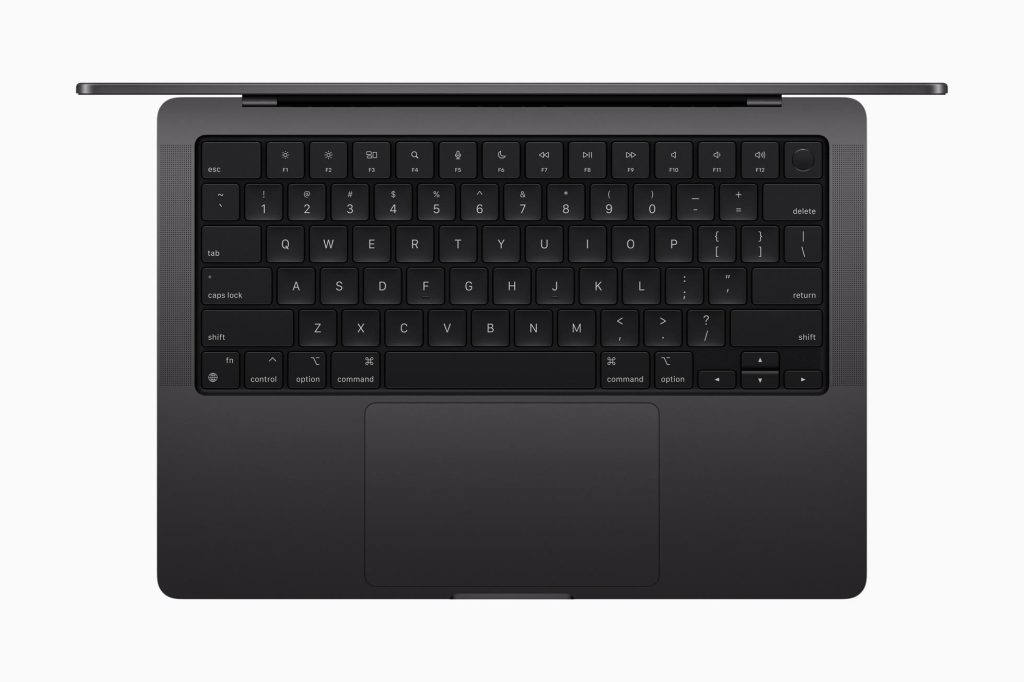
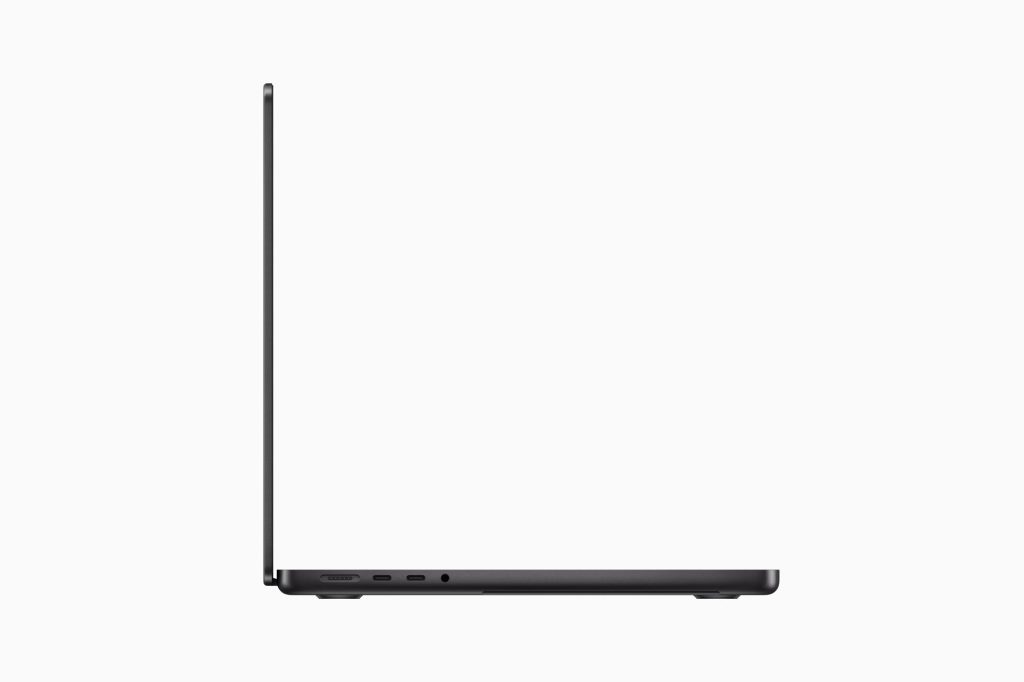
CUPERTINO, CALIFORNIA Apple today announced a new MacBook Pro lineup featuring the all-new family of M3 chips: M3, M3 Pro, and M3 Max. With a next-generation GPU architecture and a faster CPU, the M3 family brings even more performance and remarkable new capabilities to MacBook Pro. The new 14‑inch MacBook Pro with M3 is not only great for everyday tasks, but also delivers phenomenal sustained performance in pro apps and games. Perfect for aspiring creatives, students, and entrepreneurs, it now starts at $1,599. The 14- and 16‑inch MacBook Pro with M3 Pro provides even greater performance and additional unified memory support, enabling more demanding workflows for users like coders, creatives, and researchers. The 14- and 16‑inch MacBook Pro with M3 Max delivers performance and capabilities that push the limits of computing. With a monster GPU and a powerful CPU, along with support for up to 128GB of unified memory, MacBook Pro with M3 Max enables extreme workflows and multitasking across pro apps for users like machine learning programmers, 3D artists, and video editors. M3 Pro and M3 Max models also now come in space black, a gorgeous dark aluminum finish.
All MacBook Pro models feature a brilliant Liquid Retina XDR display with 20 percent brighter SDR content, a built-in 1080p camera, an immersive six-speaker sound system, and a wide array of connectivity options. With up to 22 hours of battery life,1 the lineup offers the ultimate in pro portability, delivering the same performance whether plugged in or on battery, so users can take their workflows anywhere. Customers can order the new MacBook Pro starting today, with availability beginning November 7.
“There is nothing quite like MacBook Pro. With the remarkable power-efficient performance of Apple silicon, up to 22 hours of battery life, a stunning Liquid Retina XDR display, and advanced connectivity, MacBook Pro empowers users to do their life’s best work,” said John Ternus, Apple’s senior vice president of Hardware Engineering. “With the next generation of M3 chips, we’re raising the bar yet again for what a pro laptop can do. We’re excited to bring MacBook Pro and its best-in-class capabilities to the broadest set of users yet, and for those upgrading from an Intel-based MacBook Pro, it’s a game-changing experience in every way.”
The new MacBook Pro lineup delivers incredible performance, a brilliant Liquid Retina XDR display, a wide array of connectivity, and up to 22 hours of battery life for the ultimate in pro portability.
The M3 Family Arrives
The M3 family of chips continues Apple silicon’s tremendous pace of innovation. M3, M3 Pro, and M3 Max are the first chips for a personal computer built using the industry-leading 3-nanometer technology. With a faster, more efficient next-generation GPU, these chips deliver the biggest leap forward in graphics architecture ever for Apple silicon. Featuring a breakthrough technology called Dynamic Caching, the GPU allocates the use of local memory in hardware in real time so only the exact amount of memory needed is used for each task. This dramatically increases GPU utilization and performance for the most demanding pro apps and games.
The GPU also brings new rendering features to Apple silicon, including hardware-accelerated mesh shading for greater capability and efficiency with geometry processing, enabling more visually complex scenes. And hardware-accelerated ray tracing comes to the Mac for the first time, enabling games to render more accurate shadows and reflections to create more realistic environments.
With the power-efficient performance of M3, M3 Pro, and M3 Max, there is a MacBook Pro for everyone
14-inch MacBook Pro with M3
For users pursuing their passions — from students and business owners to aspiring musicians and video editors — MacBook Pro with M3 is the ideal laptop. The 14‑inch MacBook Pro with M3 is up to 60 percent faster than the 13‑inch MacBook Pro with M1, and with its advanced thermal system, it unleashes the full potential of M3 for sustained performance.2 Starting at $1,599, it delivers more performance and capabilities than ever at a great value.
With MacBook Pro with M3:
Render performance in Final Cut Pro is up to 7.4x faster than the 13-inch MacBook Pro with Core i7,3 and up to 60 percent faster than the 13‑inch MacBook Pro with M1.2
Code compilation in Xcode is up to 3.7x faster than the 13-inch MacBook Pro with Core i7,3 and up to 40 percent faster than the 13‑inch MacBook Pro with M1.2
Spreadsheet performance in Microsoft Excel is up to 3.5x faster than the 13‑inch MacBook Pro with Core i7,3 and up to 40 percent faster than the 13‑inch MacBook Pro with M1.2
MacBook Pro with M3 enables users to compile and test millions of lines of code in Xcode with even greater speed.
14- and 16-inch MacBook Pro with M3 Pro
For users with more demanding workflows like coders, creatives, and researchers, MacBook Pro with M3 Pro provides even greater performance, supports more unified memory, and is now up to 40 percent faster than the 16‑inch model with M1 Pro.4
With MacBook Pro with M3 Pro:
Filter and function performance in Adobe Photoshop is up to 3x faster than the fastest Intel-based MacBook Pro,5 and up to 40 percent faster than the 16‑inch MacBook Pro with M1 Pro.4
Basecalling for DNA sequencing in Oxford Nanopore MinKNOW is up to 20x faster than the fastest Intel-based MacBook Pro,5 and up to 36 percent faster than the 16‑inch MacBook Pro with M1 Pro.4
Text-based editing in Adobe Premiere Pro is up to 1.7x faster than the 16-inch Intel-based MacBook Pro,5 and up to 30 percent faster than the 16‑inch MacBook Pro with M1 Pro.4
MacBook Pro with M3 Pro delivers faster filter and function performance in Adobe Photoshop.
14-inch and 16-inch MacBook Pro with M3 Max
MacBook Pro with M3 Max provides performance and capabilities for those with extreme workflows like machine learning programmers, 3D artists, and video editors. It is up to 2.5x faster than the 16-inch MacBook Pro with M1 Max,6 and up to 11x faster than the fastest Intel-based MacBook Pro model.5 It also supports up to 128GB of unified memory, enabling creators to easily work on large and complex projects spanning multiple pro apps and plugins, or compose huge film scores where entire orchestral libraries are instantly available from memory.
With MacBook Pro with M3 Max:
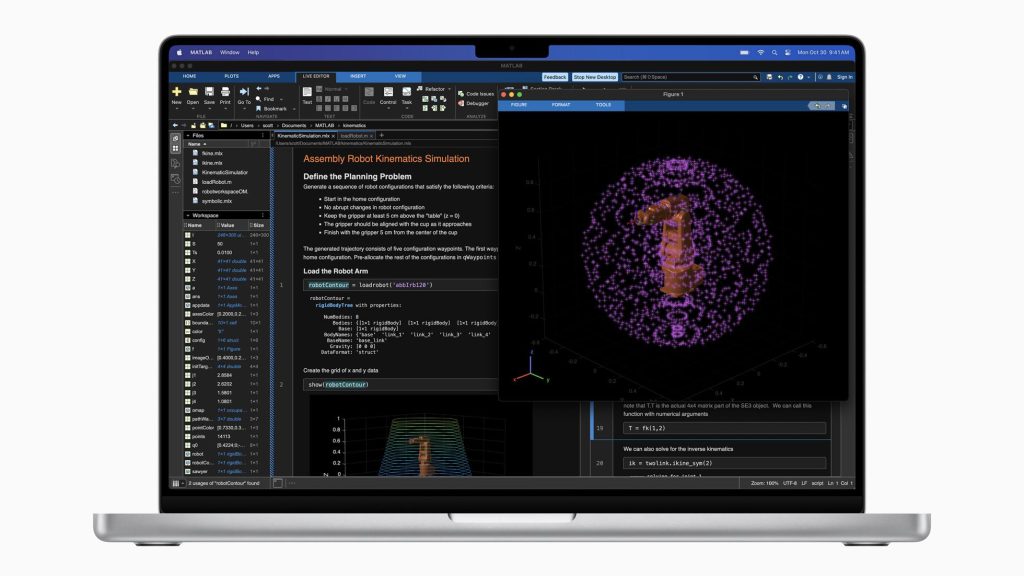
Simulation of dynamical systems in MathWorks MATLAB is up to 5.5x faster than the fastest Intel-based MacBook Pro,5 and up to 2x faster than the 16‑inch MacBook Pro with M1 Max.6
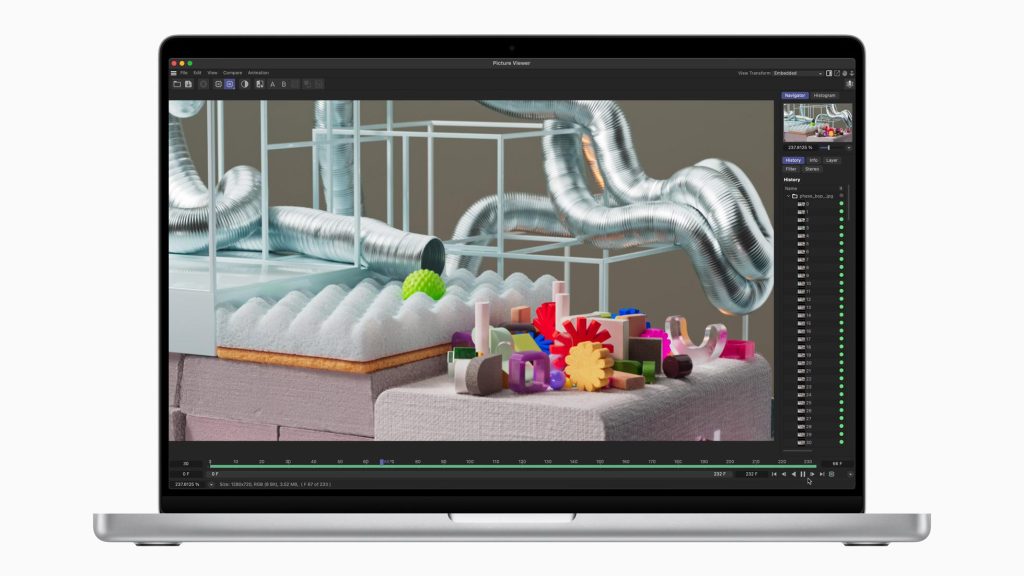
Render performance in Maxon Redshift is up to 5.3x faster than the fastest Intel-based MacBook Pro,5 and up to 2.5x faster than the 16‑inch MacBook Pro with M1 Max.6
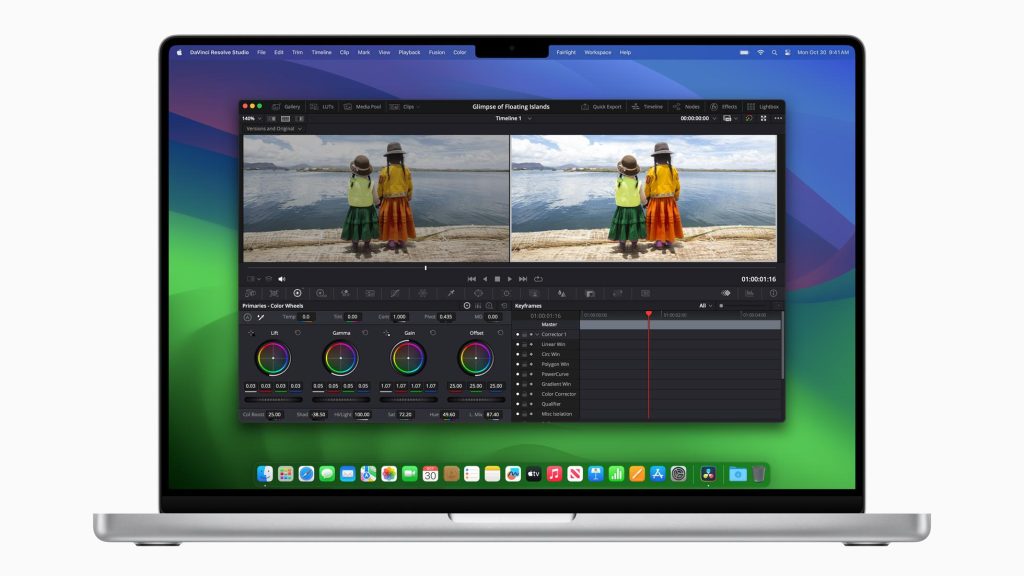
Noise reduction in Blackmagic DaVinci Resolve Studio is up to 2.7x faster than the fastest Intel-based MacBook Pro,5 and up to 65 percent faster than the 16‑inch MacBook Pro with M1 Max.6
MacBook Pro with M3 Max makes working on large and complex data models in MathWorks MATLAB even more fluid.MacBook Pro with M3 Max enables users to model and iterate remarkably complex 3D content in Cinema 4D with Maxon Redshift.With the new MacBook Pro with M3 Max, video post-production work on the highest-resolution content in apps like Blackmagic DaVinci Resolve Studio is a breeze, thanks to two ProRes engines.
Now Available in Space Black
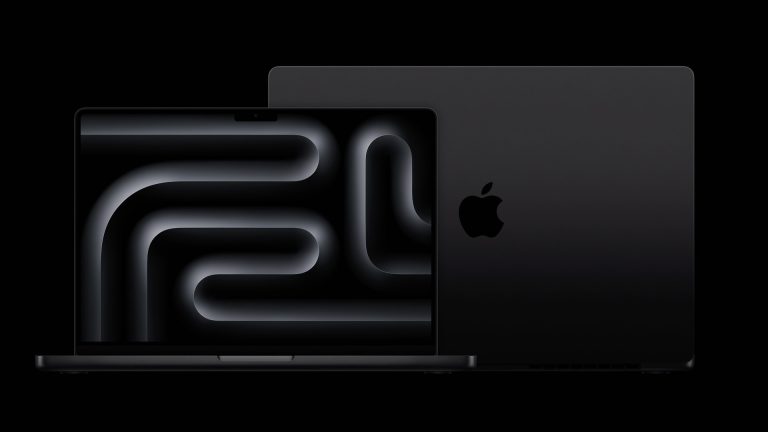
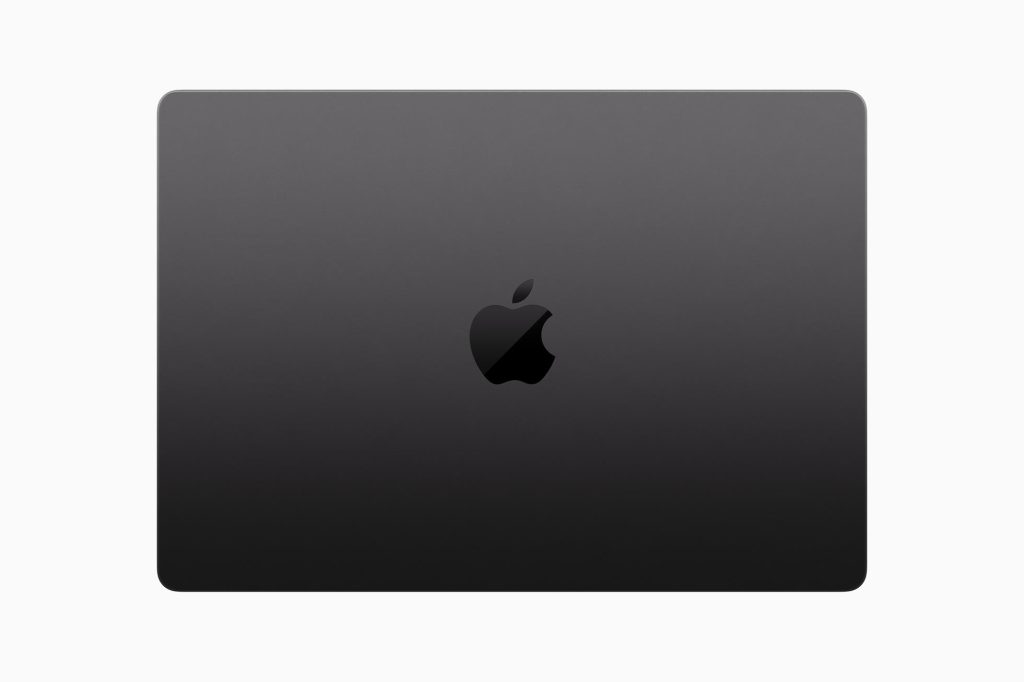
MacBook Pro models with M3 Pro and M3 Max are available in space black, a stunning new color that’s unmistakably pro. The finish features a breakthrough chemistry that forms an anodization seal to greatly reduce fingerprints. M3 Pro and M3 Max models are also available in silver, and the 14‑inch MacBook Pro with M3 is available in silver and space gray.
MacBook Pro with M3 Pro or M3 Max is available in a stunning new color, space black.MacBook Pro with M3 Pro or M3 Max is available in a stunning new color, space black.MacBook Pro with M3 Pro or M3 Max is available in a stunning new color, space black.
A Game Changer for Upgraders
The new MacBook Pro is a big upgrade for any user, especially those who have not upgraded from an Intel-based Mac. The M3 Max model is up to 11x faster than the fastest Intel-based MacBook Pro model.5 With the power efficiency of Apple silicon, for the vast majority of workloads, users will never hear the fans. Battery life also soars with up to 11 additional hours compared to the fastest Intel-based MacBook Pro model,5 and unlike many PC laptops, MacBook Pro delivers the same incredible performance whether plugged in or on battery. The Liquid Retina XDR display is the world’s best laptop display, with an exceptional 1000 nits sustained and 1600 nits of peak brightness for HDR content, impressive contrast ratio, vivid colors, and an outstanding viewing angle. SDR content is now displayed at up to 600 nits, which is 20 percent brighter than before.
All MacBook Pro models feature an industry-leading Liquid Retina XDR display, which is unrivaled for creating and enjoying content.
macOS Sonoma
macOS Sonoma brings a rich set of features to the Mac for work and play. Users can now place widgets right on the desktop, interact with them with just a click, and access the extensive ecosystem of iPhone widgets on their Mac through the magic of Continuity. Video conferencing is even more engaging with features to help users present remotely, including Presenter Overlay, which places the presenter on top of the content being shared; and Reactions, which enable fun gesture-triggered video effects in cinematic quality. In Safari, Profiles keeps browsing separate between multiple topics or projects, and web apps provide faster access to favorite sites. And a collection of stunning new screen savers features slow-motion videos of locations around the world.
macOS Sonoma also takes full advantage of the capabilities of Apple silicon, offering powerful new features for pros. The new high performance mode in Screen Sharing enables extremely responsive remote access to another Mac so pros can securely work on their highest-quality content from anywhere. Game Mode prioritizes graphics tasks to deliver consistently high frame rates and drastically reduce latency with wireless accessories for even more immersive gameplay with titles like Baldur’s Gate 3, Lies of P, and DEATH STRANDING DIRECTOR’S CUT.
Better for the Environment
MacBook Pro is built to last. The enclosure is created from a custom alloy that uses 100 percent recycled aluminum and is incredibly durable. MacBook Pro also uses 100 percent recycled rare earth elements in all magnets, and 100 percent recycled tin soldering and gold plating in multiple printed circuit boards. MacBook Pro is also free of numerous harmful substances such as beryllium, brominated flame retardants, and mercury, and 100 percent of the wood fiber in the packaging is recycled or comes from responsibly managed forests.
Today, Apple is carbon neutral for global corporate operations, and by 2030, plans to be carbon neutral across the entire manufacturing supply chain and all product life cycles. This means that every Apple device sold, from component manufacturing, assembly, transport, customer use, all the way to recycling and material recovery, will be carbon neutral.
Pricing and Availability
Customers can order the new MacBook Pro starting today, Monday, October 30, on apple.com/store and in the Apple Store app in 27 countries and regions, including the U.S. It will begin arriving to customers, and will be in Apple Store locations and Apple Authorized Resellers, starting Tuesday, November 7.
The 14-inch MacBook Pro with M3 starts at $1,599 (U.S.) and $1,499 (U.S.) for education; the 14‑inch MacBook Pro with M3 Pro starts at $1,999 (U.S.) and $1,849 (U.S.) for education; and the 16‑inch MacBook Pro starts at $2,499 (U.S.) and $2,299 (U.S.) for education.
Additional technical specifications, configure-to-order options, and accessories are available at apple.com/mac.
With Apple Trade In, customers can trade in their current computer and get credit toward a new Mac. Customers can visit apple.com/shop/trade-in to see what their device is worth.
Every customer who buys a Mac from Apple can enjoy a free Online Personal Session with an Apple Specialist, get their product set up in select stores — including help with data transfer — and receive guidance on how to make their new Mac work the way they want.
About Apple Apple revolutionized personal technology with the introduction of the Macintosh in 1984. Today, Apple leads the world in innovation with iPhone, iPad, Mac, Apple Watch, and Apple TV. Apple’s five software platforms — iOS, iPadOS, macOS, watchOS, and tvOS — provide seamless experiences across all Apple devices and empower people with breakthrough services including the App Store, Apple Music, Apple Pay, and iCloud. Apple’s more than 100,000 employees are dedicated to making the best products on earth, and to leaving the world better than we found it.
Testing was conducted by Apple in September and October 2023 using preproduction 16‑inch MacBook Pro systems with Apple M3 Pro, a 12-core CPU, an 18-core GPU, 36GB of RAM, and 512GB SSD. The wireless web test measures battery life by wirelessly browsing 25 popular websites with display brightness set to eight clicks from bottom. The Apple TV app movie playback test measures battery life by playing back HD 1080p content with display brightness set to eight clicks from bottom. Battery life varies by use and configuration. See apple.com/batteries for more information.
Results are compared to the previous-generation 13‑inch MacBook Pro with Apple M1, an 8-core CPU, an 8-core GPU, 16GB of RAM, and 2TB SSD.
Results are compared to previous-generation 1.7GHz quad-core Intel Core i7-based 13‑inch MacBook Pro systems with Intel Iris Plus Graphics 645, 16GB of RAM, and 2TB SSD.
Results are compared to the previous-generation 16‑inch MacBook Pro with Apple M1 Pro, a 10-core CPU, a 16-core GPU, 32GB of RAM, and 8TB SSD.
Results are compared to previous-generation 2.4GHz 8-core Intel Core i9-based 16‑inch MacBook Pro systems with Radeon Pro 5600M graphics with 8GB of HBM2, 64GB of RAM, and 8TB SSD.
Results are compared to the previous-generation 16‑inch MacBook Pro with Apple M1 Max, a 10-core CPU, a 32-core GPU, 64GB of RAM, and 8TB SSD.
Today, President Biden is issuing a landmark Executive Order to ensure that America leads the way in seizing the promise and managing the risks of artificial intelligence (AI). The Executive Order establishes new standards for AI safety and security, protects Americans’ privacy, advances equity and civil rights, stands up for consumers and workers, promotes innovation and competition, advances American leadership around the world, and more.
As part of the Biden-Harris Administration’s comprehensive strategy for responsible innovation, the Executive Order builds on previous actions the President has taken, including work that led to voluntary commitments from 15 leading companies to drive safe, secure, and trustworthy development of AI.
The Executive Order directs the following actions:
New Standards for AI Safety and Security
As AI’s capabilities grow, so do its implications for Americans’ safety and security. With this Executive Order, the President directs the most sweeping actions ever taken to protect Americans from the potential risks of AI systems:
Require that developers of the most powerful AI systems share their safety test results and other critical information with the U.S. government. In accordance with the Defense Production Act, the Order will require that companies developing any foundation model that poses a serious risk to national security, national economic security, or national public health and safety must notify the federal government when training the model, and must share the results of all red-team safety tests. These measures will ensure AI systems are safe, secure, and trustworthy before companies make them public.
Develop standards, tools, and tests to help ensure that AI systems are safe, secure, and trustworthy. The National Institute of Standards and Technology will set the rigorous standards for extensive red-team testing to ensure safety before public release. The Department of Homeland Security will apply those standards to critical infrastructure sectors and establish the AI Safety and Security Board. The Departments of Energy and Homeland Security will also address AI systems’ threats to critical infrastructure, as well as chemical, biological, radiological, nuclear, and cybersecurity risks. Together, these are the most significant actions ever taken by any government to advance the field of AI safety.
Protect against the risks of using AI to engineer dangerous biological materials by developing strong new standards for biological synthesis screening. Agencies that fund life-science projects will establish these standards as a condition of federal funding, creating powerful incentives to ensure appropriate screening and manage risks potentially made worse by AI.
Protect Americans from AI-enabled fraud and deception by establishing standards and best practices for detecting AI-generated content and authenticating official content. The Department of Commerce will develop guidance for content authentication and watermarking to clearly label AI-generated content. Federal agencies will use these tools to make it easy for Americans to know that the communications they receive from their government are authentic—and set an example for the private sector and governments around the world.
Establish an advanced cybersecurity program to develop AI tools to find and fix vulnerabilities in critical software, building on the Biden-Harris Administration’s ongoing AI Cyber Challenge. Together, these efforts will harness AI’s potentially game-changing cyber capabilities to make software and networks more secure.
Order the development of a National Security Memorandum that directs further actions on AI and security, to be developed by the National Security Council and White House Chief of Staff. This document will ensure that the United States military and intelligence community use AI safely, ethically, and effectively in their missions, and will direct actions to counter adversaries’ military use of AI.
Protecting Americans’ Privacy
Without safeguards, AI can put Americans’ privacy further at risk. AI not only makes it easier to extract, identify, and exploit personal data, but it also heightens incentives to do so because companies use data to train AI systems. To better protect Americans’ privacy, including from the risks posed by AI, the President calls on Congress to pass bipartisan data privacy legislation to protect all Americans, especially kids, and directs the following actions:
Protect Americans’ privacy by prioritizing federal support for accelerating the development and use of privacy-preserving techniques—including ones that use cutting-edge AI and that let AI systems be trained while preserving the privacy of the training data.
Strengthen privacy-preserving researchand technologies, such as cryptographic tools that preserve individuals’ privacy, by funding a Research Coordination Network to advance rapid breakthroughs and development. The National Science Foundation will also work with this network to promote the adoption of leading-edge privacy-preserving technologies by federal agencies.
Evaluate how agencies collect and use commercially available information—including information they procure from data brokers—and strengthen privacy guidance for federal agencies to account for AI risks. This work will focus in particular on commercially available information containing personally identifiable data.
Develop guidelines for federal agencies to evaluate the effectiveness of privacy-preserving techniques, including those used in AI systems. These guidelines will advance agency efforts to protect Americans’ data.
Advancing Equity and Civil Rights
Irresponsible uses of AI can lead to and deepen discrimination, bias, and other abuses in justice, healthcare, and housing. The Biden-Harris Administration has already taken action by publishing the Blueprint for an AI Bill of Rights and issuing an Executive Order directing agencies to combat algorithmic discrimination, while enforcing existing authorities to protect people’s rights and safety. To ensure that AI advances equity and civil rights, the President directs the following additional actions:
Provide clear guidance to landlords, Federal benefits programs, and federal contractors to keep AI algorithms from being used to exacerbate discrimination.
Address algorithmic discrimination through training, technical assistance, and coordination between the Department of Justice and Federal civil rights offices on best practices for investigating and prosecuting civil rights violations related to AI.
Ensure fairness throughout the criminal justice system by developing best practices on the use of AI in sentencing, parole and probation, pretrial release and detention, risk assessments, surveillance, crime forecasting and predictive policing, and forensic analysis.
Standing Up for Consumers, Patients, and Students
AI can bring real benefits to consumers—for example, by making products better, cheaper, and more widely available. But AI also raises the risk of injuring, misleading, or otherwise harming Americans. To protect consumers while ensuring that AI can make Americans better off, the President directs the following actions:
Advance the responsible use of AI in healthcare and the development of affordable and life-saving drugs. The Department of Health and Human Services will also establish a safety program to receive reports of—and act to remedy – harms or unsafe healthcare practices involving AI.
Shape AI’s potential to transform education by creating resources to support educators deploying AI-enabled educational tools, such as personalized tutoring in schools.
Supporting Workers
AI is changing America’s jobs and workplaces, offering both the promise of improved productivity but also the dangers of increased workplace surveillance, bias, and job displacement. To mitigate these risks, support workers’ ability to bargain collectively, and invest in workforce training and development that is accessible to all, the President directs the following actions:
Develop principles and best practices to mitigate the harms and maximize the benefits of AI for workers by addressing job displacement; labor standards; workplace equity, health, and safety; and data collection. These principles and best practices will benefit workers by providing guidance to prevent employers from undercompensating workers, evaluating job applications unfairly, or impinging on workers’ ability to organize.
Produce a report on AI’s potential labor-market impacts, and study and identify options for strengthening federal support for workers facing labor disruptions, including from AI.
Promoting Innovation and Competition
America already leads in AI innovation—more AI startups raised first-time capital in the United States last year than in the next seven countries combined. The Executive Order ensures that we continue to lead the way in innovation and competition through the following actions:
Catalyze AI research across the United States through a pilot of the National AI Research Resource—a tool that will provide AI researchers and students access to key AI resources and data—and expanded grants for AI research in vital areas like healthcare and climate change.
Promote a fair, open, and competitive AI ecosystem by providing small developers and entrepreneurs access to technical assistance and resources, helping small businesses commercialize AI breakthroughs, and encouraging the Federal Trade Commission to exercise its authorities.
Use existing authorities to expand the ability of highly skilled immigrants and nonimmigrants with expertise in critical areas to study, stay, and work in the United States by modernizing and streamlining visa criteria, interviews, and reviews.
Advancing American Leadership Abroad
AI’s challenges and opportunities are global. The Biden-Harris Administration will continue working with other nations to support safe, secure, and trustworthy deployment and use of AI worldwide. To that end, the President directs the following actions:
Expand bilateral, multilateral, and multistakeholder engagements to collaborate on AI. The State Department, in collaboration, with the Commerce Department will lead an effort to establish robust international frameworks for harnessing AI’s benefits and managing its risks and ensuring safety. In addition, this week, Vice President Harris will speak at the UK Summit on AI Safety, hosted by Prime Minister Rishi Sunak.
Accelerate development and implementation of vital AI standards with international partners and in standards organizations, ensuring that the technology is safe, secure, trustworthy, and interoperable.
Promote the safe, responsible, and rights-affirming development and deployment of AI abroad to solve global challenges, such as advancing sustainable development and mitigating dangers to critical infrastructure.
Ensuring Responsible and Effective Government Use of AI
AI can help government deliver better results for the American people. It can expand agencies’ capacity to regulate, govern, and disburse benefits, and it can cut costs and enhance the security of government systems. However, use of AI can pose risks, such as discrimination and unsafe decisions. To ensure the responsible government deployment of AI and modernize federal AI infrastructure, the President directs the following actions:
Issue guidance for agencies’ use of AI, including clear standards to protect rights and safety, improve AI procurement, and strengthen AI deployment.
Help agencies acquire specified AI products and services faster, more cheaply, and more effectively through more rapid and efficient contracting.
Accelerate the rapid hiring of AI professionals as part of a government-wide AI talent surge led by the Office of Personnel Management, U.S. Digital Service, U.S. Digital Corps, and Presidential Innovation Fellowship. Agencies will provide AI training for employees at all levels in relevant fields.
As we advance this agenda at home, the Administration will work with allies and partners abroad on a strong international framework to govern the development and use of AI. The Administration has already consulted widely on AI governance frameworks over the past several months—engaging with Australia, Brazil, Canada, Chile, the European Union, France, Germany, India, Israel, Italy, Japan, Kenya, Mexico, the Netherlands, New Zealand, Nigeria, the Philippines, Singapore, South Korea, the UAE, and the UK. The actions taken today support and complement Japan’s leadership of the G-7 Hiroshima Process, the UK Summit on AI Safety, India’s leadership as Chair of the Global Partnership on AI, and ongoing discussions at the United Nations.
The actions that President Biden directed today are vital steps forward in the U.S.’s approach on safe, secure, and trustworthy AI. More action will be required, and the Administration will continue to work with Congress to pursue bipartisan legislation to help America lead the way in responsible innovation.
For more on the Biden-Harris Administration’s work to advance AI, and for opportunities to join the Federal AI workforce, visit AI.gov.
Goddard’s GIANT optical navigation software helped guide the OSIRIS-REx mission to the Asteroid Bennu. Today its developers continue to add functionality and streamline useability for future missions.
As NASA scientists study the returned fragments of asteroid Bennu, the team that helped navigate the mission on its journey refines their technology for potential use in future robotic and crewed missions.
The optical navigation team at NASA’s Goddard Space Flight Center in Greenbelt, Maryland, served as a backup navigation resource for the OSIRIS-REx (Origins, Spectral Interpretation, Resource Identification, and Security – Regolith Explorer) mission to near-Earth asteroid Bennu. They double-checked the primary navigation team’s work and proved the viability of navigation by visual cues.
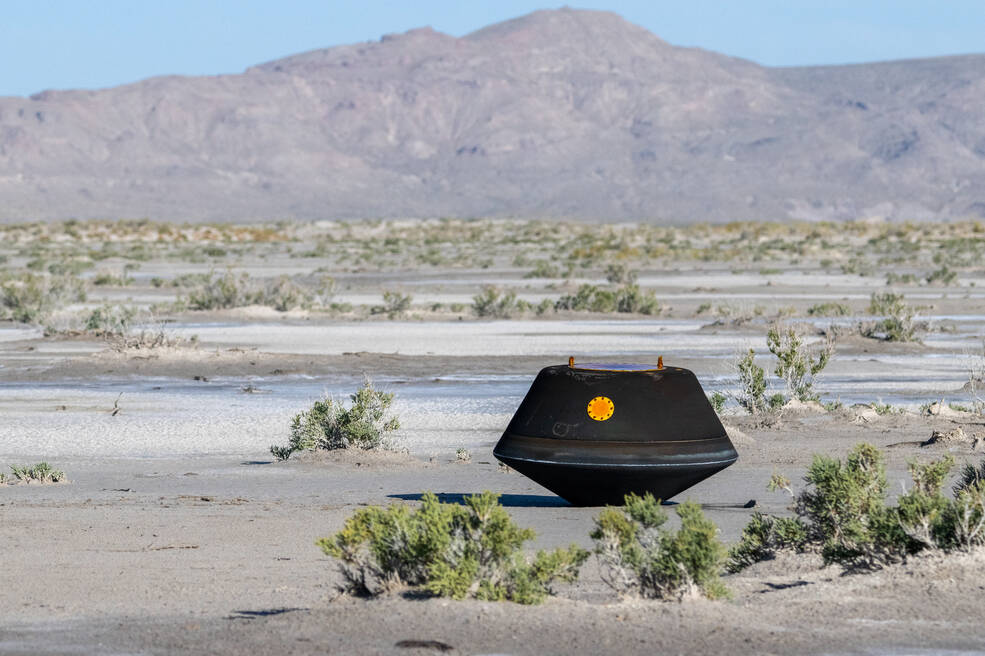
The sample return capsule from NASA’s OSIRIS-REx mission is seen shortly after touching down in the desert, Sunday, Sept. 24, 2023, at the Department of Defense’s Utah Test and Training Range. The sample was collected from the asteroid Bennu in October 2020 by NASA’s OSIRIS-REx spacecraft.
NASA/Keegan Barber
Optical navigation uses observations from cameras, lidar, or other sensors to navigate the way humans do. This cutting edge technology works by taking pictures of a target, such as Bennu, and identifying landmarks on the surface. GIANT software – that’s short for the Goddard Image Analysis and Navigation Tool – analyzes those images to provide information, such as precise distance to the target, and to develop three-dimensional maps of potential landing zones and hazards. It can also analyze a spinning object to help calculate the target’s mass and determine its center – critical details to know for a mission trying to enter an orbit.
“Onboard autonomous optical navigation is an enabling technology for current and future mission ideas and proposals,” said Andrew Liounis, lead developer for GIANT at Goddard. “It reduces the amount of data that needs to be downlinked to Earth, reducing the cost of communications for smaller missions, and allowing for more science data to be downlinked for larger missions. It also reduces the number of people required to perform orbit determination and navigation on the ground.”
Asteroid Bennu ejecting particles from its surface on Jan. 19, created by combining two images from NASA’s OSIRIS-REx spacecraft. GIANT optical navigation technology used to process images like these helped establish the size and velocity of the particles.
NASA / Goddard / University of Arizona
During OSIRIS-REx’s orbit of Bennu, GIANT identified particles flung from the asteroid’s surface. The optical navigation team used images to calculate the particles’ movement and mass, ultimately helping determine they did not pose a significant threat to the spacecraft.
Since then, lead developer Andrew Liounis said they have refined and expanded GIANT’s backbone collection of software utilities and scripts.
New GIANT developments include an open-source version of their software released to the public, and celestial navigation for deep space travel by observing stars, the Sun, and solar system objects. They are now working on a slimmed-down package to aid in autonomous operations throughout a mission’s life cycle.
“We’re also looking to use GIANT to process some Cassini data with partners at the University of Maryland in order to study Saturn’s interactions with its moons,” Liounis said.
Other innovators like Goddard engineer Alvin Yew are adapting the software to potentially aid rovers and human explorers on the surface of the Moon or other planets.
Adaptation, Improvement
Shortly after OSIRIS-REx left Bennu, Liounis’ team released a refined, open-source version for public use. “We considered a lot of changes to make it easier for the user and a few changes to make it run more efficiently,” he said.
An intern modified their code to make use of a graphics processor for ground-based operations, boosting the image processing at the heart of GIANT’s navigation.
A simplified version called cGIANT works with Goddard’s autonomous Navigation, Guidance, and Control software package, or autoNGC in ways that can be crucial to both small and large missions, Liounis said.
Liounis and colleague Chris Gnam developed a celestial navigation capability which uses GIANT to steer a spacecraft by processing images of stars, planets, asteroids, and even the Sun. Traditional deep space navigation uses the mission’s radio signals to determine location, velocity, and distance from Earth. Reducing a mission’s reliance on NASA’s Deep Space Network frees up a valuable resource shared by many ongoing missions, Gnam said.
Next on their agenda, the team hopes to develop planning capabilities so mission controllers can develop flight trajectories and orbits within GIANT – streamlining mission design.
“On OSIRIS-REx, it would take up to three months to plan our next trajectory or orbit,” Liounis said. “Now we can reduce that to a week or so of computer processing time.”
Their innovations have earned the team continuous support from Goddard’s Internal Research and Development program, individual missions, and NASA’s Space Communications and Navigation program.
“As mission concepts become more advanced,” Liounis said, “optical navigation will continue to become a necessary component of the navigation toolbox.”
By Karl B. Hille
NASA’s Goddard Space Flight Center in Greenbelt, Md.