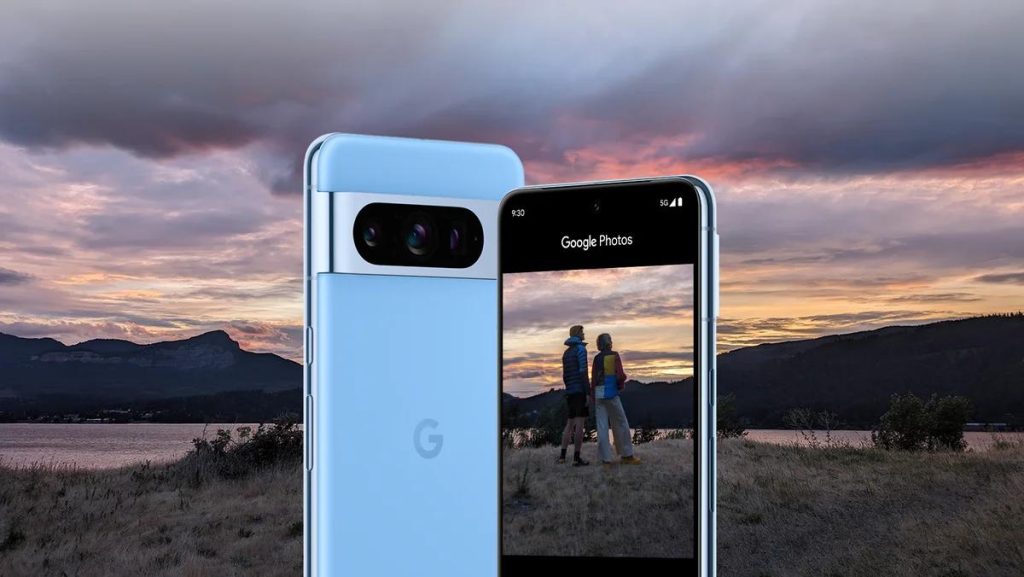
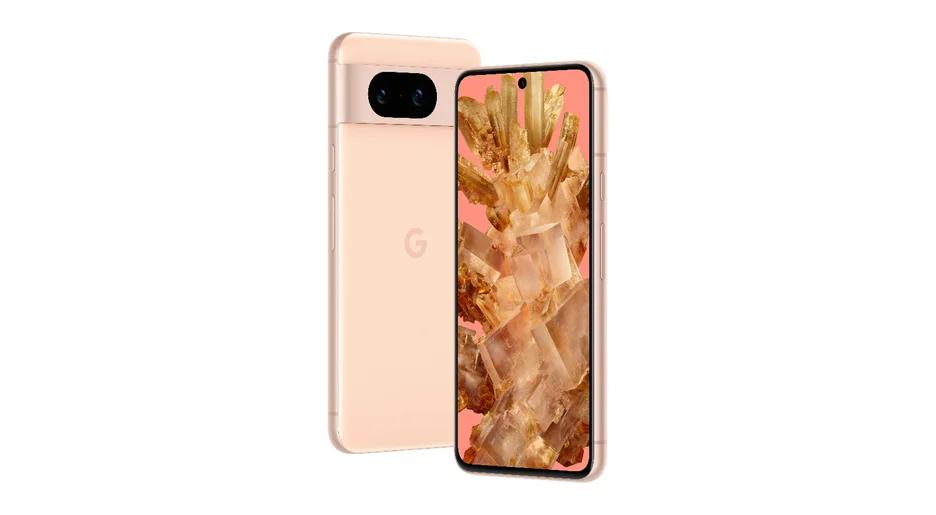
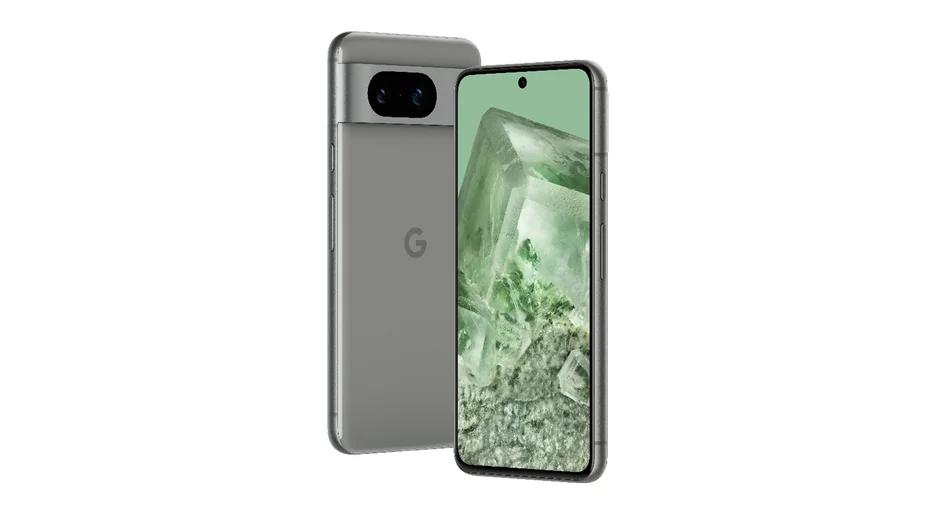
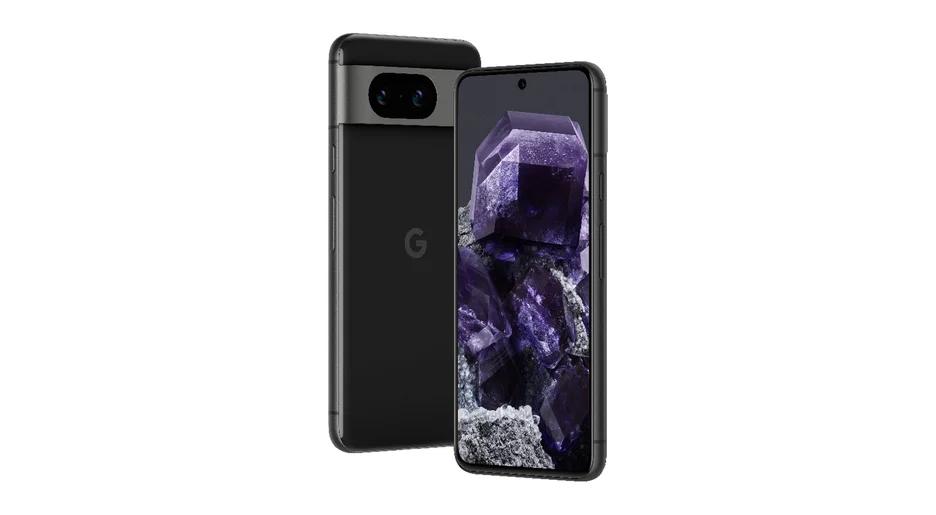
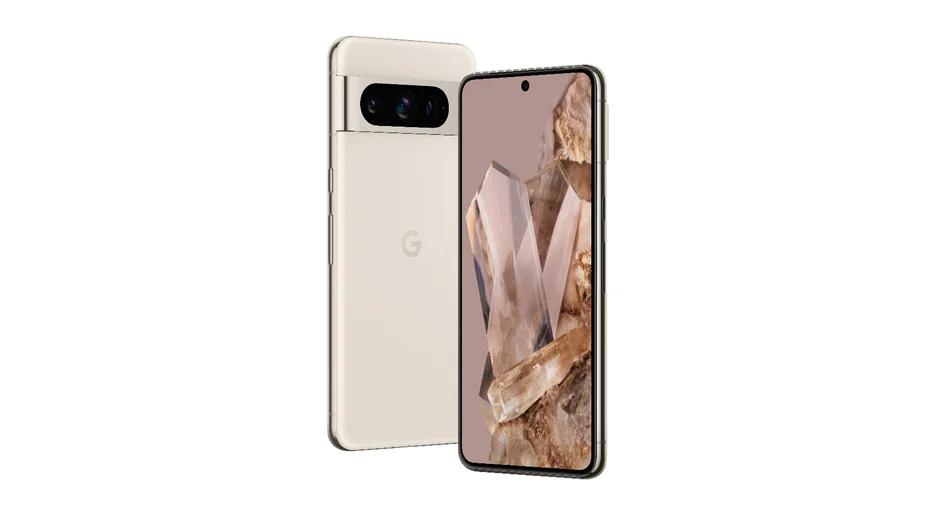
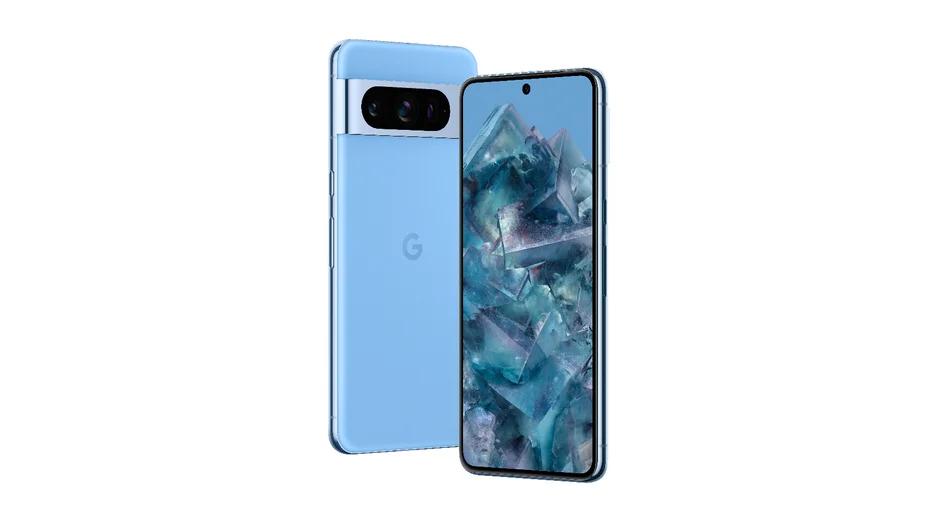
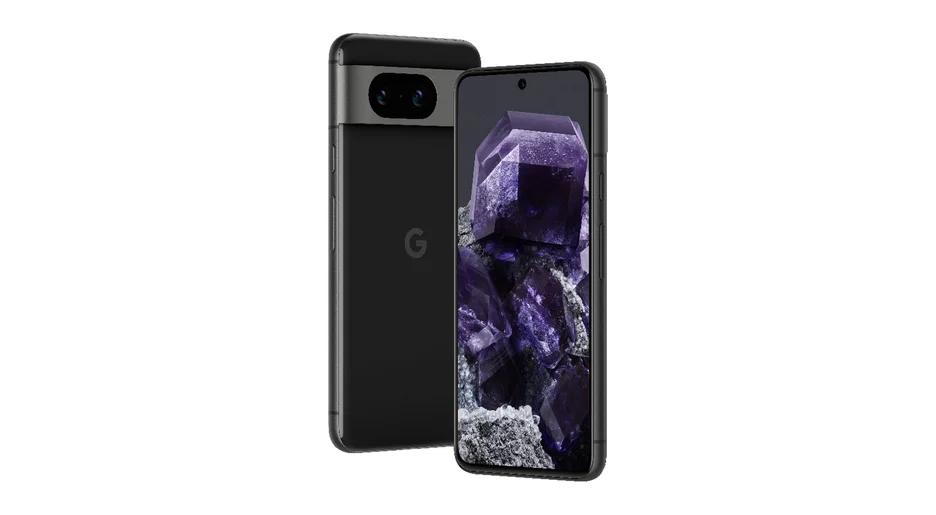
We’re committing to providing seven years of software support for the Pixel 8 and Pixel 8 Pro, including the latest Android operating system, security updates and ongoing Feature Drops.
Today we announced our commitment to providing seven years of software support for Pixel 8 and Pixel 8 Pro, including Android OS upgrades, security updates and regular Feature Drops.1 That means your Pixel 8 and Pixel 8 Pro will be supported all the way into 2030. No major smartphone brand offers this committed level of support and longevity. This makes these phones a more sustainable smartphone choice, because they’ll be secure and perform well for seven years.
The latest Android OS updates and Feature Drops
With Pixel, you’re treated to exclusive features, updates and fixes that keep your phone working harder for you. Think Pixel Feature Drops, security upgrades, Android software releases and AI technology from Google. We know your whole life is on your phone — from photos to passwords — so we’re providing consistent security fixes and improvements that help keep you and your data secure.
Extending our commitment with Pixel 8 and Pixel 8 Pro was a natural progression for us, especially as we’re seeing people use their Pixel phones longer and longer. To make this possible, we’ve been working to secure long-term commitments from partner teams, and put the necessary testing infrastructure in place.
We also dug into how we can deliver the highest quality, best tested updates to Pixel users on a consistent basis. As part of this effort, our security updates, bug fixes and feature updates won’t roll out on a specific day each month. Instead, we’ll deploy updates as soon as they’ve completed the necessary tests to ensure they improve the experience for all Pixel customers.
All-new features, all the time
A hallmark of Pixel devices, Feature Drops roll out multiple times a year — to all supported Pixel devices — and include feature enhancements and even new features across areas like safety, security, camera and more. For example, you might receive updates to all-time favorite features — like Night Sight, Call Assist, Magic Eraser and Recorder — automatically and without needing to get a new phone.
Pixel 8 and Pixel 8 Pro are the first phones to launch with the new Android 14. Google will also extend hardware support and make parts available for seven years to match the software commitment. The result? You can be confident that your Pixel gets even more helpful over time.
By: Seang Chau and Shenaz Zack Originally published at: Google Blog
The Pixel 8 and Pixel 8 Pro bring the biggest updates to our camera and Google Tensor G3 in years. Take a look at how they bring pro photo — and now computational video — capabilities into the palm of your hands.
Updated camera hardware
Both phones are packed with the same flagship 50-megapixel (MP) main camera, with 21% more light sensitivity than the Pixel 7 series for the best low-light photos and videos on a Pixel yet. You’ll notice much faster autofocus in those low-light settings, too. On Pixel 8, the ultrawide camera is updated to include autofocus, which brings Macro Focus outside our Pro series for the first time.
Every single camera has been upgraded on Pixel 8 Pro — which includes bringing autofocus to the selfie camera for the best selfies ever on a Pixel. Compared to Pixel 7 Pro, the 48 MP ultrawide lens gathers 105% more light and focuses 30% closer for improved Macro Focus shots with amazing aesthetic blur. To top it off, the 48 MP telephoto lens gives you even cleaner zoomed-in shots in low-light settings even at 10x with optical quality.
Dual Exposure on the main camera
Dual Exposure technology is available on the new main camera in Pixel 8 and Pixel 8 Pro. It makes videos sharper and less grainy in scenes with the toughest lighting, like a sunset backdrop. Dual Exposure effectively takes two images simultaneously — one optimized for low-light and the other for high dynamic range. The result is natural-looking videos with vivid color and low noise.
Image equity efforts with Real Tone
We’ve spent the last three years working closely with the global community of photographers and creators to make sure Real Tone accurately represents the wide range of human skin tones, especially darker ones, in photos and videos. This year we’ve expanded our efforts, bringing Pixel’s best-ever skin tone accuracy to video. And we’ve augmented flash to add Night Sight technology, so darker skin looks natural even in flash photos.
Video Boost with Night Sight
HDR+ already helps you capture stunning photos on a smartphone with computational photography, and now we’re using the same algorithms to enable an all-new approach to computational video. Making that happen presents a challenge because there’s so much more data in a video than a photo. In fact, processing a one-minute 4K video at 30 frames per second is the same as processing 1,800 photos — a task no mobile phone can solve alone. But by combining the efficiency of Tensor G3 and the power of our data centers we were able to make HDR+ video a reality.
When you use Video Boost on Pixel 8 Pro, you’ll still receive a high-quality video right away, but the video will also upload to the cloud where our computational photography models are applied to your entire video. This process also makes Night Sight Video possible for the first time on Pixel, so you can create memories in low-light situations where you couldn’t before. Both features are coming later this year.
Pro Controls on Pixel 8 Pro
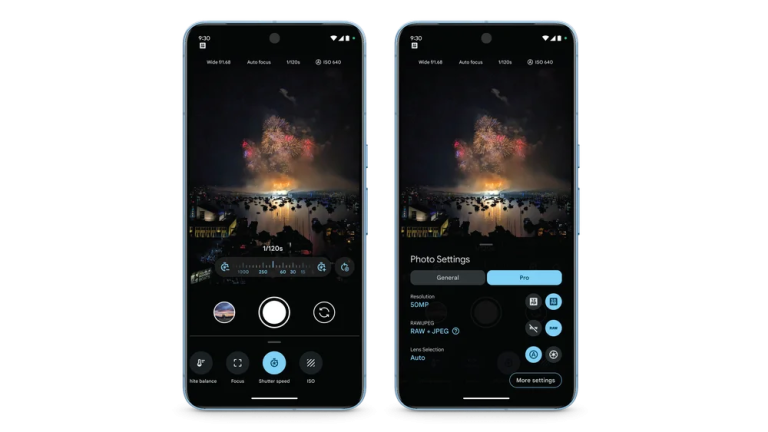
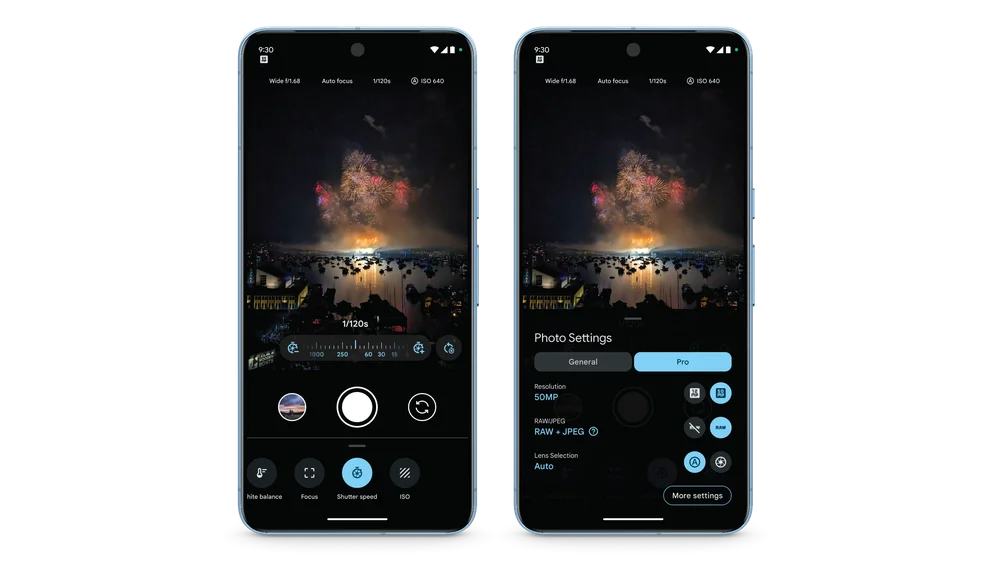
Pro Controls provide even more control of your camera settings on Pixel 8 Pro, opening up a world of creativity. In addition to white balance, exposure and shadows brightness controls, you’ll now be able to manually adjust focus, shutter speed and ISO on Pixel 8 Pro. And new Pro settings let you take 50MP photos throughout the zoom range. Even as you fine-tune Pro Controls, all of Pixel’s HDR+ computational photography is still enabled.
Guided Frame
Guided Frame uses a combination of audio cues, high-contrast animations and haptic (tactile) feedback to help people who are blind and low-vision take photos. This feature now works on both the front and rear cameras, and it recognizes more than just faces — so snap a picture with your dog or your dinner.
Make complex edits to your photos and videos
Create the perfect group photo with Best Take, reimagine your photos with Magic Editor, reduce distracting sounds in your videos with Audio Magic Eraser and, coming later, zoom in on what matters with Zoom Enhance.
By: Isaac Reynolds Originally published at: Google Blog
AI helps make complex editing intuitive so you can put the focus on what matters most in your photos and videos.
Making complex edits to your photos and videos from your phone just got easier thanks to four new AI-powered editing features in Google Photos on Pixel 8 and Pixel 8 Pro.
These updates build on the AI technology from Google Research behind tools like Magic Eraser and Photo Unblur, incorporating new technology and techniques — like generative AI — to open up more editing possibilities. These new features let you focus more on what matters most with your photos and videos — from getting the perfect group shot that captures everyone with their eyes open to reducing distracting sounds in your favorite videos.
Perfect your group photos with Best Take
If you’re trying to take a group photo, even if you take multiple shots, chances are someone is always looking away or blinking — we’ve all been there, especially if you’ve ever tried to take a photo with kids. To take the stress out of getting that perfect group shot, the new Best Take feature in Google Photos uses a series of similar photos taken close together to help you automatically create a blended image with everyone’s best expression. If you prefer another expression, you can manually select another look from the other photos you took to get the group photo you want.
Reimagine your photos with Magic Editor
Earlier this year, we announced Magic Editor, a new experimental editing experience coming to Google Photos that uses generative AI to help you easily make complex edits and bring your photos in line with how you remember a moment. Want to resize or reposition your subject? Just tap or circle the object you want to edit, then drag to reposition it or pinch to resize it. You can also use contextual suggestions to improve the lighting and background, like changing a gray sky to a golden-hour sunset. Plus, after you select an edit, Magic Editor will give you multiple result options to choose from so you can get the look you want.
Magic Editor is a new experience from Labs in its early stages, and we know there are going to be times when the result isn’t exactly what you imagined. Your feedback is going to be critical in helping us improve the product over time so you can get the best edits possible. This is just the beginning, and we plan to add more intuitive generative AI features to Magic Editor in the future to help you bring your photos to life in new ways.
Reduce distracting sounds in your videos with Audio Magic Eraser
Much like unwanted photobombers in your photos, distracting background noises in your videos pull focus from what you’re trying to capture. Using advanced machine learning models, Audio Magic Eraser can identify sounds — like people talking in the background, music or wind — and sort them into distinct layers that you can control. Then, in just a few taps, you can reduce distracting noises so your video sounds the way you want.
Zoom in on what matters after the fact with Zoom Enhance
With Zoom Enhance coming later to Pixel 8 Pro, you can zoom in on any photo after the fact and crop to what you want the focus of your photo to be. Using generative AI, Zoom Enhance intelligently fills in the gaps between pixels and predicts fine details, opening up more possibilities when it comes to framing and flexibility to focus on the most important part of your photo.
In addition to these new features, we’ve also improved Magic Eraser on Pixel 8 Pro. With generative AI, Magic Eraser can now help you to remove even larger distractions — including shadows and objects attached to those distractions — resulting in a high-quality photo.
Best Take, Magic Editor and Audio Magic Eraser will all be available on Pixel 8 and Pixel 8 Pro starting October 12.
By: Dina Berrada Originally published at: Google Blog
New colors go perfectly with your Pixel 8 phones, with shiny new features to match.
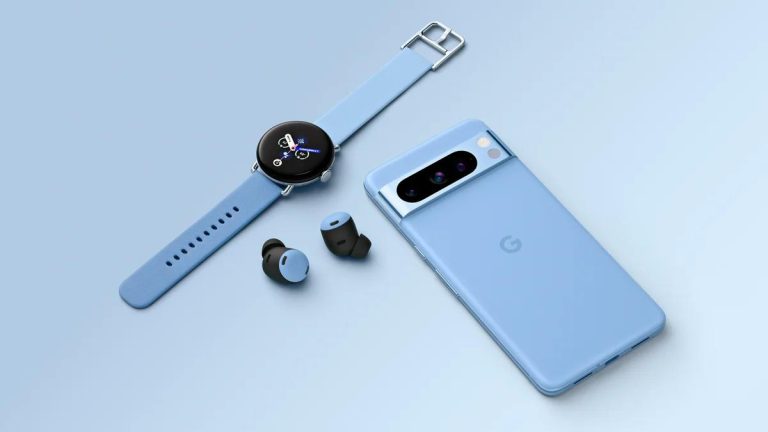
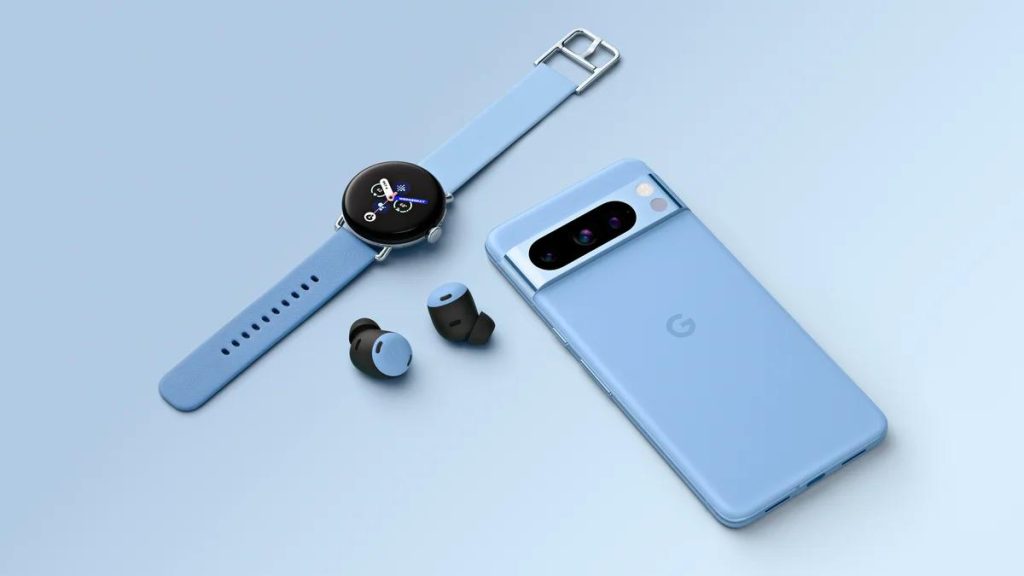
Pixel Buds Pro are getting even better. Since last year’s launch, we’ve continued to add new features and capabilities. Today we’re rolling out the biggest update yet, packing Pixel Buds Pro with even more Google AI-powered improvements, helpfulness and intelligence. Built to work seamlessly across our full Pixel portfolio, Pixel Buds Pro will also come in two new colors, Bay and Porcelain, perfectly complementing Pixel 8, Pixel 8 Pro and Pixel Watch 2.
Even clearer voice calling
Pixel Buds Pro incorporate AI smarts to give you a delightful audio experience. Building off of its already excellent call quality, Pixel Buds Pro now support Bluetooth Super Wideband on Pixel 8 and Pixel 8 Pro, which doubles the bandwidth for voices, making you sound fuller, clearer and more natural than ever before.
This wider bandwidth also extends to Clear Calling, which reduces the background noise around the person on the other side of the call, enhancing their voice so you can hear them even more clearly. We’ve also improved our Clear Calling models to better distinguish voices from background noise.
A hands-free conversation starter
With the help of AI, you no longer need to take out your earbuds for conversations. When you enable Conversation Detection, AI detects when you start speaking and responds by pausing your music and switching to Transparency Mode, allowing you to hear all that is being said. When you stop speaking, the feature automatically resumes your music and turns on Active Noise Cancellation. This way, you can interact with the world around you and go back to enjoying your music with no distractions without having to lift a finger.
Faster audio transmissions for gaming
Pixel Buds Pro offer a more immersive and dynamic gaming experience by minimizing the inherent latency with gaming on Bluetooth. Available with Pixel 8 and Pixel 8 Pro, Pixel Buds Pro reduce the delay in transmitting audio from phone to earbuds for compatible games on your Pixel phone.
Suggestions for hearing wellness
We all have times when we like to turn up the volume — while protecting our hearing over the long haul. Now you can understand and assess your listening behaviors and get suggestions on how to maintain hearing wellness over time. On the Pixel Buds Pro app, you can access a record of your listening habits and it will let you know when to lower the volume.
Pixel Buds app for your Chromebooks
Pixel Bud Pros are built to work great across our full Pixel portfolio and with other Android phones, and now the Pixel Buds app is rolling out to Chromebooks. Through the web app, you can change earbud settings, switch noise control modes, and install firmware updates, all from your Chromebook.
The software update will start rolling out today for new and existing Pixel Buds Pro users. You can also pre-order Pixel Buds Pro in the newest colors for $199.99.
By: Pol Peiffer Originally published at: Google Blog
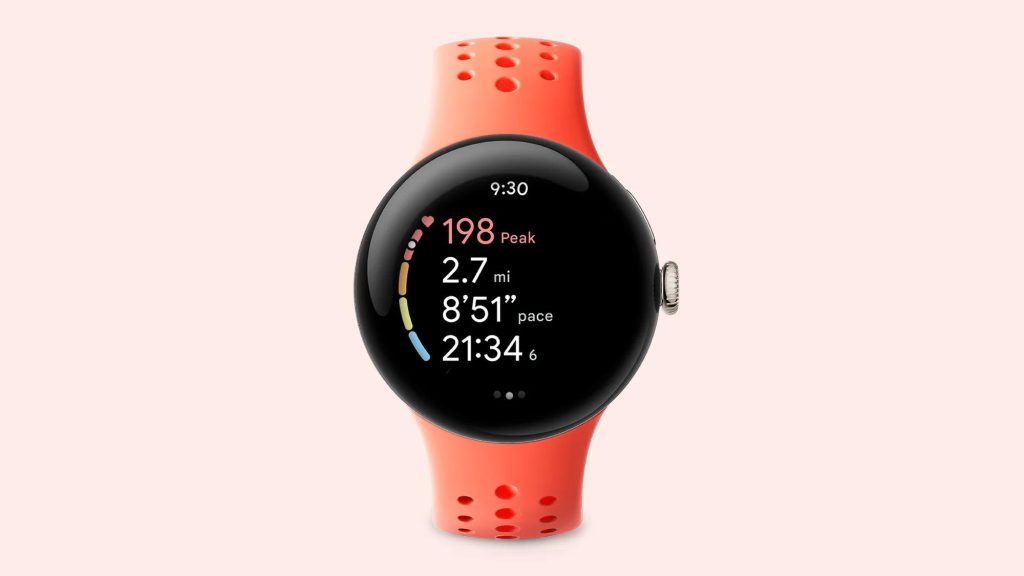
Google Pixel Watch 2 comes with faster performance and new health and safety features, including the best heart rate tracking on any of our wearable devices.
Meet Pixel 8 and Pixel 8 Pro, engineered by Google and built with AI at the center for a more helpful and personal experience. These phones are packed with first-of-their-kind features, all powered by Google Tensor G3. And they’ll get seven years of software updates, including Android OS upgrades, security updates and regular Feature Drops. Take a closer look at the new phones — everything from the beautiful design and new sensors to updated cameras.
A polished look made for your everyday
Pixel 8 and Pixel 8 Pro are elegantly designed with softer silhouettes, beautiful metal finishes and recycled materials.
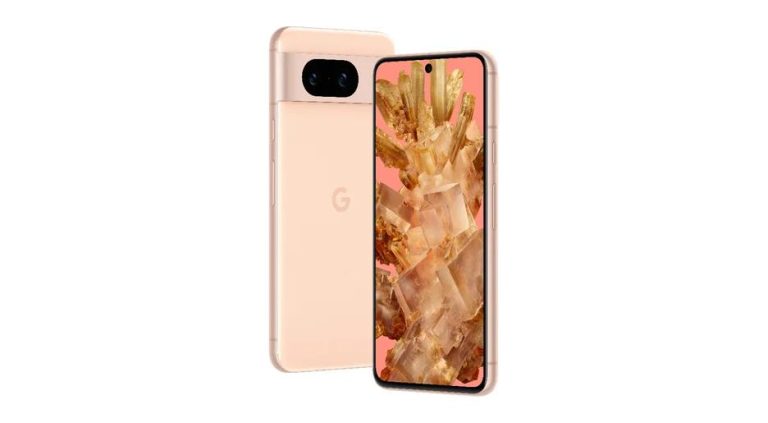
Pixel 8, with its contoured edges and smaller size than Pixel 7, feels great in your hand. It has a 6.2-inch Actua display, which gives you real-world clarity and is 42% brighter than Pixel 7’s display. Pixel 8 features satin metal finishes, a polished glass back and comes in Rose, Hazel and Obsidian.
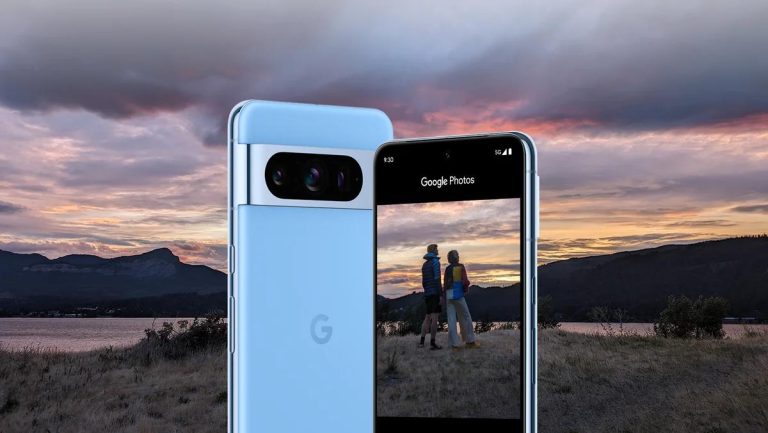
Pixel 8 Pro’s 6.7-inch Super Actua display features our brightest display yet. So even in direct sunlight, you’ll love how true-to-life your Ultra HDR images look. It also has a matte glass back with a polished aluminum frame and comes in three colors: Porcelain, Bay and Obsidian.
And on the back of the Pixel 8 Pro, a new temperature sensor lets you quickly scan an object to get its temperature. Use it to check if your pan is hot enough to start cooking or if the milk in your baby’s bottle is at the right temperature. We’ve also submitted an application to the FDA, to enable Pixel’s Thermometer App to take your temperature and save it to Fitbit.
More camera improvements
Pixel 8 and Pixel 8 Pro feature powerful, upgraded camera systems for stunning photo and video quality, plus game-changing editing tools.
Every camera on the Pixel 8 Pro has been upgraded, starting with the main camera that captures better photos and videos in low-light settings. The bigger ultrawide lens delivers even better Macro Focus, the telephoto lens captures 56% more light and takes 10x photos at optical quality, and the front-facing camera now has autofocus for the best selfies on a Pixel phone.
And Pixel 8 has the same updated main camera, plus a new ultrawide lens that enables Macro Focus.
The camera app has an intuitive, redesigned interface, letting you quickly find and capture content in your favorite photo and video modes. And for Pixel 8 Pro, you’ll have access to Pro Controls, giving you more creative control of the Pixel Camera with settings like shutter speed, ISO, 50 MP photos throughout the zoom range and more.
We’ve all been in that situation where you have the perfect group photo, but someone isn’t looking at the camera. Best Take1 uses the photos you did take to get the photo you thought you took. To make that happen, an on-device algorithm creates a blended image from a series of photos to get everyone’s best look.
Magic Editor in Google Photos is a new experimental editing experience that uses generative AI to help you bring your photos in line with the essence of the moment you were trying to capture. You can reposition and resize subjects or use presets to make the background pop — all with just a few taps.
Audio Magic Eraser1 lets you easily reduce distracting sounds in your video, like howling winds or noisy crowds. This first-of-its-kind computational audio capability uses advanced machine learning models to sort sounds into distinct layers so you can control their levels.
Later this year, Pixel 8 Pro will get Video Boost, which pairs Tensor G3 with our powerful data centers to apply cutting-edge processing to your videos. It adjusts color, lighting, stabilization and graininess, and the result is stunning videos that look true to life. Video Boost also enables Night Sight Video on Pixel for better low-light smartphone video quality.
Features to help you save time and get things done
Now you can quickly get more context and dive deeper into a webpage. With Summarize, Pixel can generate a summary of a webpage, so you can quickly understand the key points. And your Pixel can even read aloud and translate webpages for you so you can listen to articles on the go.2
Pixel is even better at understanding the nuances of human speech, so you can talk to it more naturally to get things done. If you take a pause or say “um,” it will wait until you’re done before responding. Use your voice to quickly type, edit and send messages, even if you speak multiple languages.2
And with improved AI, Call Screen now helps you receive 50% fewer spam calls on average.3 It will silently answer calls from unknown numbers with a more natural-sounding voice to engage the caller. It’s also smart enough to separate the calls you want from the calls you don’t. And soon, Call Screen will suggest contextual replies for you to tap to quickly respond to simple calls, like appointment confirmations, without having to answer the phone.
7 years of updates to keep you and your personal information secure
Google Tensor G3 works with the Titan M2 security chip to protect personal information and make your Pixel more resilient to sophisticated attacks. And now, Face Unlock on Pixel 8 meets the highest Android biometric class, allowing you to access compatible banking and payment apps like Google Wallet.
With Pixel, you receive exclusive features and updates that keep your phone getting better over time. For the first time, we’re providing seven years of software support for Pixel 8 and Pixel 8 Pro — including OS upgrades, security updates and regular Feature Drops.4
Pre-order your phone today or get it on shelf starting October 12
Pre-order Pixel 8 today starting at $699 and Pixel 8 Pro from $999. If you pre-order a Pixel 8 Pro, you’ll get a Pixel Watch 2 on us.5 You can also pre-order the new Pixel phones on Google Fi Wireless and get their best deals yet. Plus, enjoy flexible, secure phone plans that include full connectivity for the Pixel Watch 2 at no additional cost.
Both devices, plus cases from us and our partners, will be available at the Google Store and our retail partners beginning October 12.
By: Brian Rakowski Originally published at: Google Blog
Today we’re introducing our newest smartwatch, Google Pixel Watch 2.1 We’ve made some big improvements from the original Google Pixel Watch, both inside and out: Pixel Watch 2 comes with upgraded performance, all-day battery life (with always-on display), new safety features and sensors for deeper health insights — including our most accurate heart rate tracking on any tracker or smartwatch2 — to give you a much better pulse on your day.
Wear all day and night
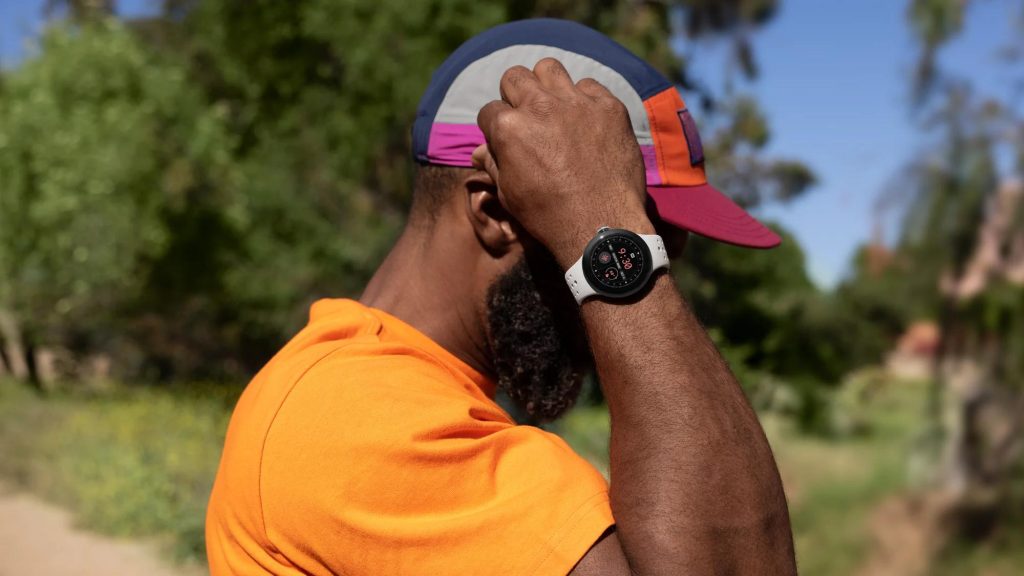
From the inside out, Pixel Watch 2 is designed for all-day (and night) wear. Its housing is made from 100% recycled aluminum which makes it 10% lighter than Pixel Watch3 — so it’s even more comfortable, especially when you’re sleeping. The crown is also larger and more flush with the circular silhouette for easier access and navigation.
Inside, Pixel Watch 2 has an all-new, quad-core CPU for smoother and stronger performance. Together with the low-power co-processor, the new CPU gives the watch 24 hours of battery life, even with always-on display.45 Combined with a faster charging rate that powers your watch to 50% in just 30 minutes,6 your Pixel Watch 2 can support your activities from day to night.
Uncover more accurate health insights
Pixel Watch 2 has three new sensors to give you deeper insights into your health. Working alongside our improved AI heart rate algorithm, an all-new heart rate sensor with numerous LEDs produces a more accurate heart rate reading than ever before.7 In fact, it’s up to 40% more accurate for vigorous activities like HIIT, spinning and rowing.8 This means you’ll also get more accurate readings for other important health metrics — from calories burned and Active Zone Minutes to Daily Readiness Score and sleep.
We’ve also brought Fitbit’s Body Response feature to Pixel Watch 2, powered by a new continuous electrodermal activity (cEDA) sensor. This new sensor can point to possible signs of stress using a machine learning algorithm that incorporates heart rate, heart rate variability and skin temperature. When the algorithm picks up on physical indicators of positive and negative stress, including excitement, the Body Response feature will send you a notification. It will then prompt you to either reflect on how you feel at that moment or take actions to reduce your stress, like guided breathing or a mindfulness session. Reflecting on these moments may help you identify patterns to anticipate potential stress and plan ahead.
And once you’re ready to turn in, our new skin temperature sensor tracks at night to reveal insights into your sleep and monitor for changes in your overall wellness.9
You can get other important health and fitness information using just your voice. Open the Google Assistant app and simply ask “How did I sleep last night?” to get your daily Sleep Score or weekly average, or ask to start a workout.10 With the new Google Assistant tile, you can even set up shortcuts for your most-used queries.
Train with improved fitness tools
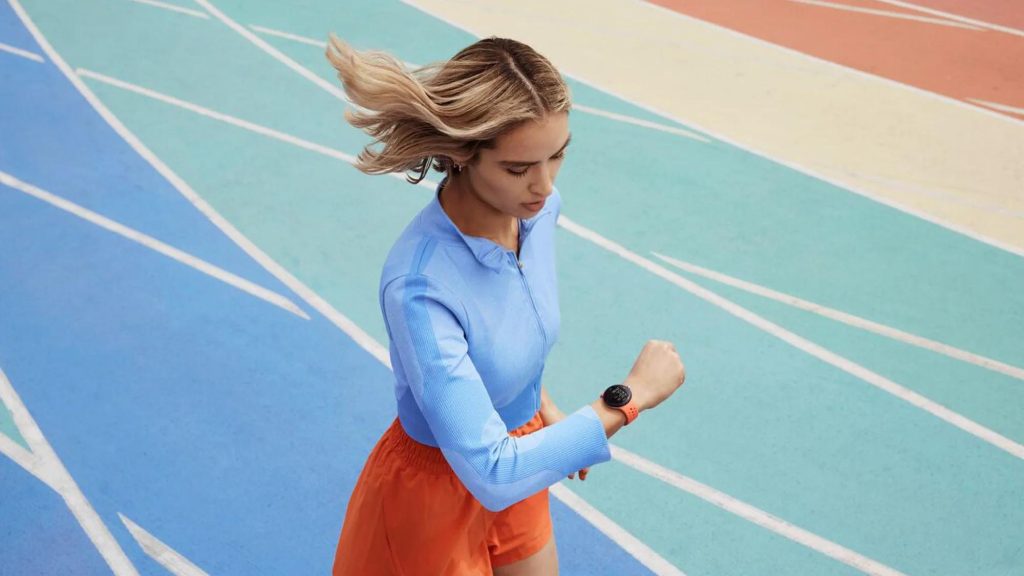
It’s easier to train with Pixel Watch 2, too. The new Heart Rate Zone Coaching and Pace Training features can help you stay on track with your workout goals — like alerting you to a heart rate zone change during a HIIT workout or offering real-time feedback on your pace goals while marathon training. Meanwhile, automatic workout start and stop reminders are available for seven exercises, including running and outdoor cycling, to help you stick to your schedule.
Not to mention, all the Fitbit features from the original Pixel Watch will still be on Pixel Watch 2 — like Daily Readiness Score, Sleep Profile, Sleep Score, Active Zone Minutes and 40 workout modes.
Set up new safety features
When it comes to personal safety, Pixel Watch 2 can help give you more peace of mind. In addition to fall detection and Emergency SOS,1112 first introduced on Pixel Watch, Pixel Watch 2 comes with Pixel’s proactive safety features like Medical ID, Emergency Sharing and Safety Check. These features can help you get assistance1314 even if you don’t have your phone with you.
Safety Check helps ensure your loved ones know what you’re up to, from a late-night walk to an early morning run. To start a Safety Check, open the Personal Safety app on your watch, choose an activity and set a timer for when you expect to arrive at your destination. Then, select up to 15 emergency contacts to send a text to, alerting them that you’ve started a Safety Check for a particular activity. If you can’t check in once the timer is up, your emergency contacts will get another text letting them know and sharing your current location on Google Maps. That way, your loved ones have the information they need to get in touch with you or emergency services.14
You can also display Medical Info on your watch when it’s locked, or share it with participating emergency responders during a call to indicate important medical information like allergies, blood type and pre-existing conditions. As an extra precaution, you can add the Medical ID Tag to your band so emergency services know there’s important information to check on your watch.
For LTE-enabled Pixel Watch 2 users (with Fitbit Premium), Safety Signal allows you to use features like Safety Check and Emergency Location Sharing even if you’re not connected to a carrier yet.1516
Get more done with Wear OS 4, plus new and improved apps
Pixel Watch 2 is the only smartwatch with all of Wear OS 4’s capabilities, which helps make your watch more customizable and easier to use. Wear OS 4’s smarter notifications show preview images and GIFs, and allow you to start a call or message or get directions in just one tap from your notifications screen. Wear OS 4 also brings improved accessibility and customization, with features like bold text and better text-to-speech for faster screen reading. And when it’s time to switch to a new phone or watch, you can use watch transfer to pair to a new phone, or backup and restore to easily transfer your data and settings from your previous Pixel Watch.
Pixel Watch 2 also has new apps to help you get more done. With the new Gmail and Calendar apps, you can accept or decline events, and catch up on your inbox right from your wrist. We’ve made improvements to existing apps, too: You’ll be able to listen to podcasts on YouTube Music and check nearby place information in Google Maps.17 And we’ve added more apps to download on Google Play for Wear OS, including AllTrails, Audible and WhatsApp.
Pair with your Fitbit app and other Pixel devices
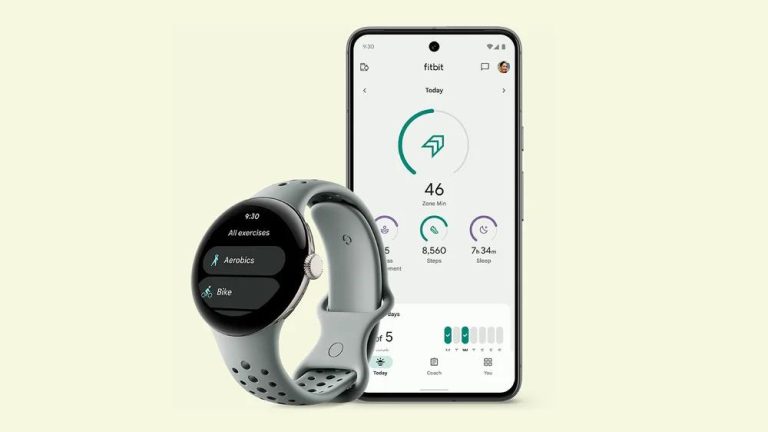
Syncing your Pixel Watch 2 to the newly redesigned Fitbit app on your phone will give you a more comprehensive view of your health and wellness, with a focus on metrics that matter most to you. You’ll even get six months of Fitbit Premium with Pixel Watch 2,18 with access to exclusive tools like Daily Readiness Score and Sleep Profile, a curated library of fitness and wellness content, and more detailed, personalized health insights.19
Pixel Watch 2 pairs easily with other Pixel devices, too.20 Switch your audio from your watch to your headphones, and find your phone when it’s gone missing with Find My Phone.2122 With Automatic Call Screener for Dialer on Wear OS, coming later this year to Pixel Watch 2, Google Assistant can also screen unknown calls from your Pixel phone and show you transcripts right on your wrist.23
Style it your way
There are plenty of ways to add some personal flair to your Pixel Watch 2. You can choose from a selection of six new watch face families, ranging from simple and subtle to expressive and colorful.
We’re also adding new accessories to the Google Store, including bands you can swap out for any occasion — whether that’s bright and breathable bands for a workout or fashionable metal bands for a night out.24
Pre-order today
Starting today, you can pre-order Pixel Watch 2 for $349 for Bluetooth/Wi-Fi, and $399 for 4G LTE at the Google Store, Fitbit.com and select retailers worldwide, including your preferred carriers. It will be available in 30 countries on October 12.
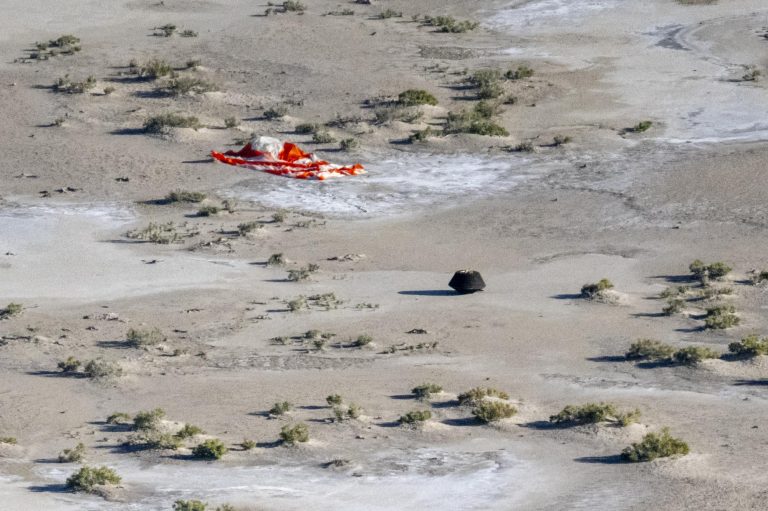
The sample return capsule from NASA’s OSIRIS-REx mission is seen shortly after touching down in the desert, Sunday, Sept. 24, 2023, at the Department of Defense’s Utah Test and Training Range. The sample was collected from the asteroid Bennu in October 2020 by NASA’s OSIRIS-REx spacecraft.
The Bennu sample – an estimated 8.8 ounces, or 250 grams – will be transported in its unopened canister by aircraft to NASA’s Johnson Space Center in Houston on Monday, Sept. 25. Curation scientists there will disassemble the canister, extract and weigh the sample, create an inventory of the rocks and dust, and, over time, distribute pieces of Bennu to scientists worldwide.
Rather than using AI to replace workers, companies can build teams that ethically integrate the technology.
Janet Vertesi, Princeton University
Since ChatGPT’s release in late 2022, many news outlets have reported on the ethical threats posed by artificial intelligence. Tech pundits have issued warnings of killer robots bent on human extinction, while the World Economic Forum predicted that machines will take away jobs.
The tech sector is slashing its workforce even as it invests in AI-enhanced productivity tools. Writers and actors in Hollywood are on strike to protect their jobs and their likenesses. And scholars continue to show how these systems heighten existing biases or create meaningless jobs – amid myriad other problems.
There is a better way to bring artificial intelligence into workplaces. I know, because I’ve seen it, as a sociologist who works with NASA’s robotic spacecraft teams.
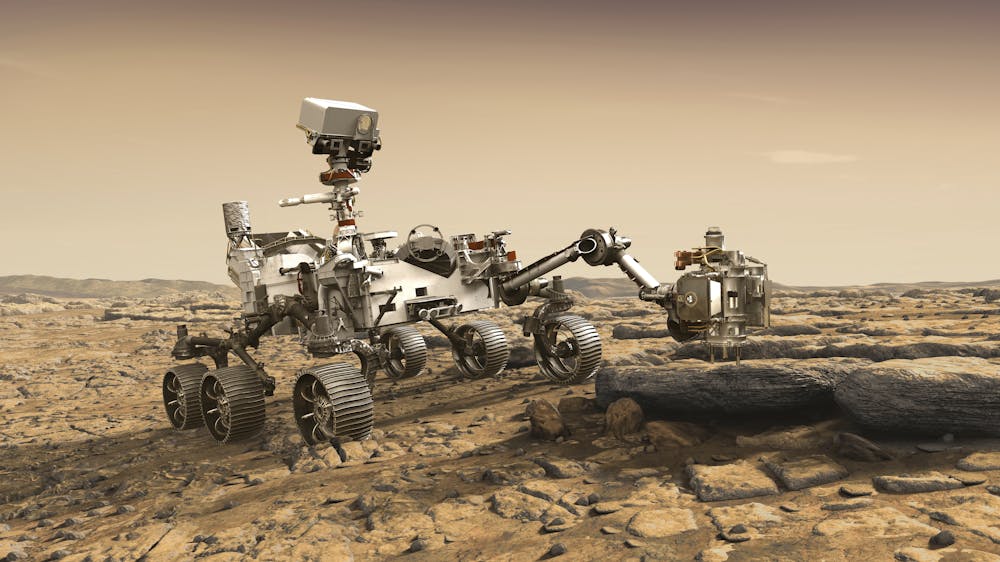
The scientists and engineers I study are busy exploring the surface of Mars with the help of AI-equipped rovers. But their job is no science fiction fantasy. It’s an example of the power of weaving machine and human intelligence together, in service of a common goal.
Mars rovers act as an important part of NASA’s team, even while operating millions of miles away from their scientist teammates. NASA/JPL-Caltech via AP
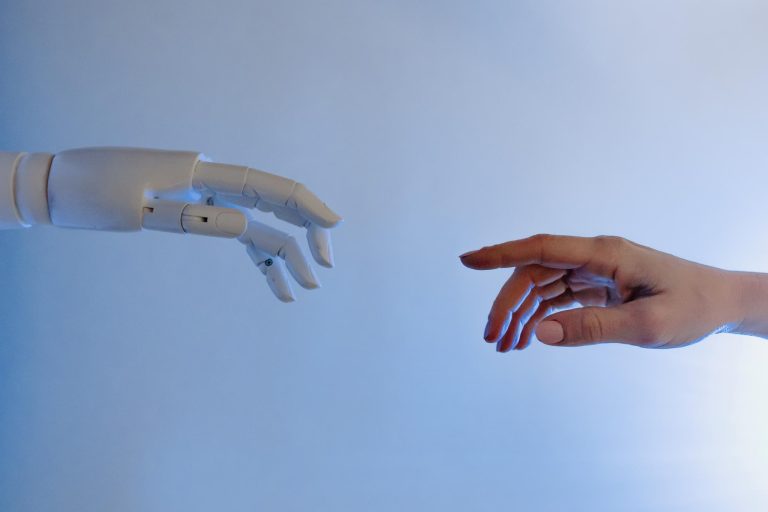
Instead of replacing humans, these robots partner with us to extend and complement human qualities. Along the way, they avoid common ethical pitfalls and chart a humane path for working with AI.
The replacement myth in AI
Stories of killer robots and job losses illustrate how a “replacement myth” dominates the way people think about AI. In this view, humans can and will be replaced by automated machines.
Amid the existential threat is the promise of business boons like greater efficiency, improved profit margins and more leisure time.
Empirical evidence shows that automation does not cut costs. Instead, it increases inequality by cutting out low-status workers and increasing the salary cost for high-status workers who remain. Meanwhile, today’s productivity tools inspire employees to work more for their employers, not less.
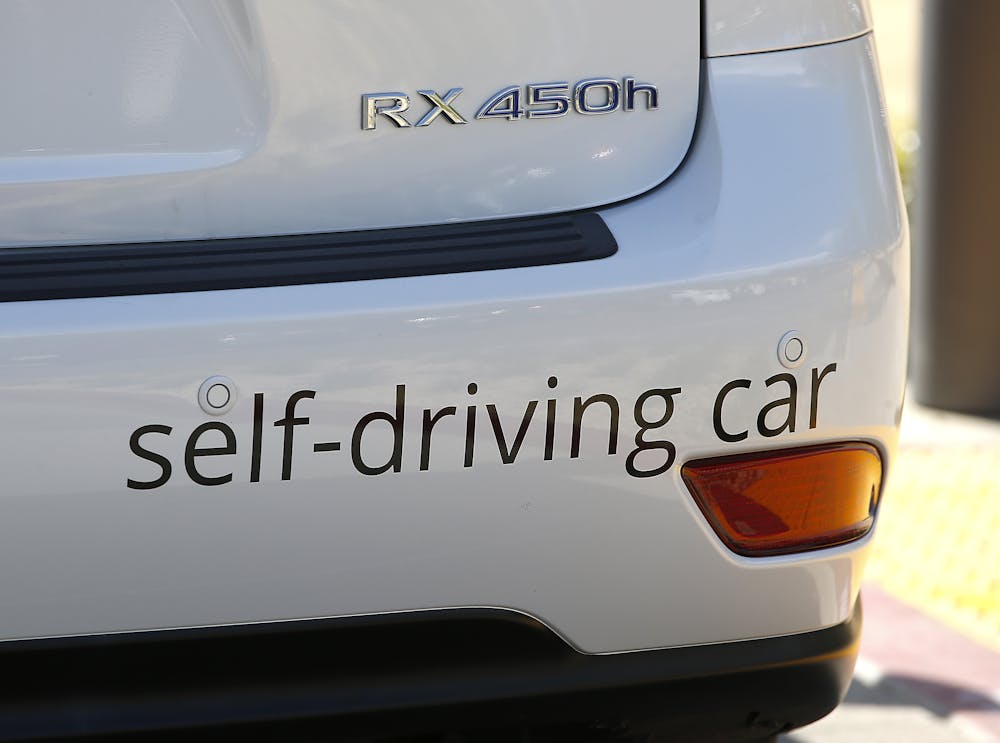
Alternatives to straight-out replacement are “mixed autonomy” systems, where people and robots work together. For example, self-driving cars must be programmed to operate in traffic alongside human drivers. Autonomy is “mixed” because both humans and robots operate in the same system, and their actions influence each other.
Self-driving cars, while operating without human intervention, still require training from human engineers and data collected by humans. AP Photo/Tony Avelar
However, mixed autonomy is often seen as a step along the way to replacement. And it can lead to systems where humans merely feed, curate or teach AI tools. This saddles humans with “ghost work” – mindless, piecemeal tasks that programmers hope machine learning will soon render obsolete.
Replacement raises red flags for AI ethics. Work like tagging content to train AI or scrubbing Facebook posts typically features traumatic tasks and a poorly paid workforce spread across the Global South. And legions of autonomous vehicle designers are obsessed with “the trolley problem” – determining when or whether it is ethical to run over pedestrians.
But my research with robotic spacecraft teams at NASA shows that when companies reject the replacement myth and opt for building human-robot teams instead, many of the ethical issues with AI vanish.
Extending rather than replacing
Strong human-robot teams work best when they extend and augment human capabilities instead of replacing them. Engineers craft machines that can do work that humans cannot. Then, they weave machine and human labor together intelligently, working toward a shared goal.
Often, this teamwork means sending robots to do jobs that are physically dangerous for humans. Minesweeping, search-and-rescue, spacewalks and deep-sea robots are all real-world examples.
Teamwork also means leveraging the combined strengths of both robotic and human senses or intelligences. After all, there are many capabilities that robots have that humans do not – and vice versa.
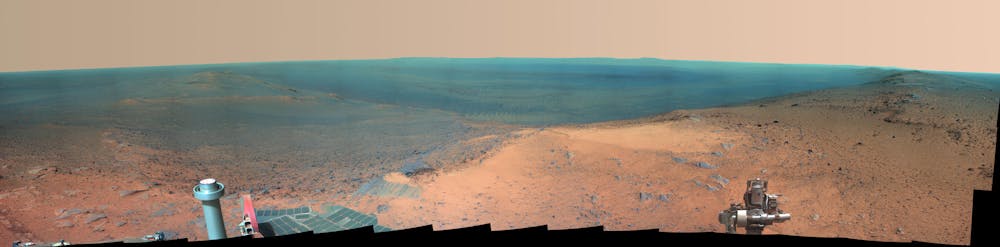
For instance, human eyes on Mars can only see dimly lit, dusty red terrain stretching to the horizon. So engineers outfit Mars rovers with camera filters to “see” wavelengths of light that humans can’t see in the infrared, returning pictures in brilliant false colors.
Mars rovers capture images in near infrared to show what Martian soil is made of. NASA/JPL-Caltech/Cornell Univ./Arizona State Univ
Meanwhile, the rovers’ onboard AI cannot generate scientific findings. It is only by combining colorful sensor results with expert discussion that scientists can use these robotic eyes to uncover new truths about Mars.
Respectful data
Another ethical challenge to AI is how data is harvested and used. Generative AI is trained on artists’ and writers’ work without their consent, commercial datasets are rife with bias, and ChatGPT “hallucinates” answers to questions.
The real-world consequences of this data use in AI range from lawsuits to racial profiling.
Robots on Mars also rely on data, processing power and machine learning techniques to do their jobs. But the data they need is visual and distance information to generate driveable pathways or suggest cool new images.
By focusing on the world around them instead of our social worlds, these robotic systems avoid the questions around surveillance, bias and exploitation that plague today’s AI.
The ethics of care
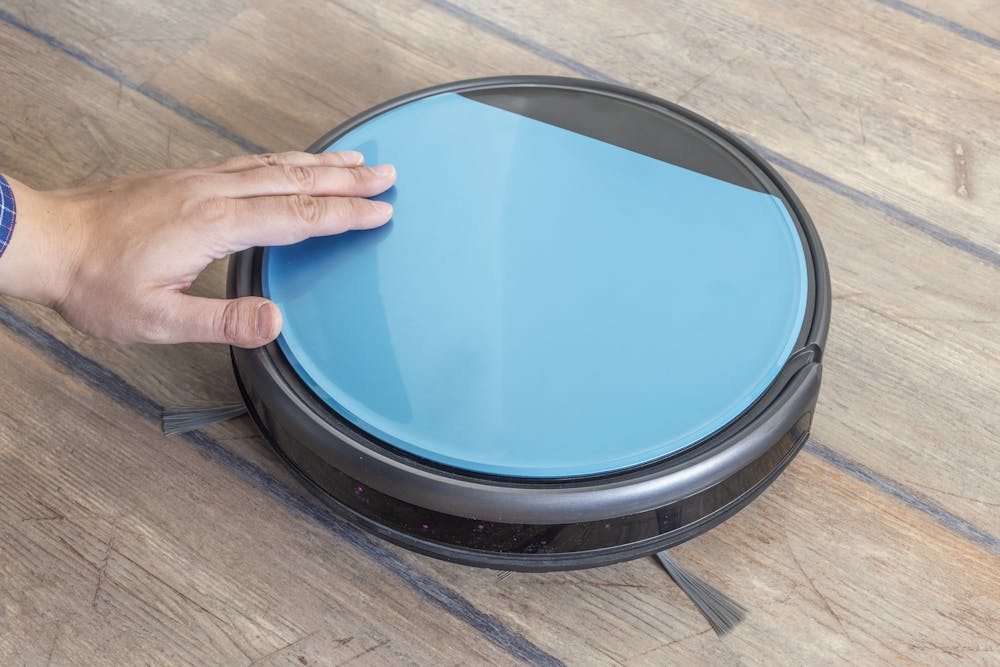
Robots can unite the groups that work with them by eliciting human emotions when integrated seamlessly. For example, seasoned soldiers mourn broken drones on the battlefield, and families give names and personalities to their Roombas.
I saw NASA engineers break down in anxious tears when the rovers Spirit and Opportunity were threatened by Martian dust storms.
Some people feel a connection to their robot vacuums, similar to the connection NASA engineers feel to Mars rovers. nikolay100/iStock / Getty Images Plus via Getty Images
Unlike anthropomorphism – projecting human characteristics onto a machine – this feeling is born from a sense of care for the machine. It is developed through daily interactions, mutual accomplishments and shared responsibility.
When machines inspire a sense of care, they can underline – not undermine – the qualities that make people human.
A better AI is possible
In industries where AI could be used to replace workers, technology experts might consider how clever human-machine partnerships could enhance human capabilities instead of detracting from them.
Script-writing teams may appreciate an artificial agent that can look up dialog or cross-reference on the fly. Artists could write or curate their own algorithms to fuel creativity and retain credit for their work. Bots to support software teams might improve meeting communication and find errors that emerge from compiling code.
Of course, rejecting replacement does not eliminate all ethical concerns with AI. But many problems associated with human livelihood, agency and bias shift when replacement is no longer the goal.
The replacement fantasy is just one of many possible futures for AI and society. After all, no one would watch “Star Wars” if the ‘droids replaced all the protagonists. For a more ethical vision of humans’ future with AI, you can look to the human-machine teams that are already alive and well, in space and on Earth.
Janet Vertesi, Associate Professor of Sociology, Princeton University
This article is republished from The Conversation (https://theconversation.com) under a Creative Commons license. Read the original article (https://theconversation.com/nasas-mars-rovers-could-inspire-a-more-ethical-future-for-ai-211162).
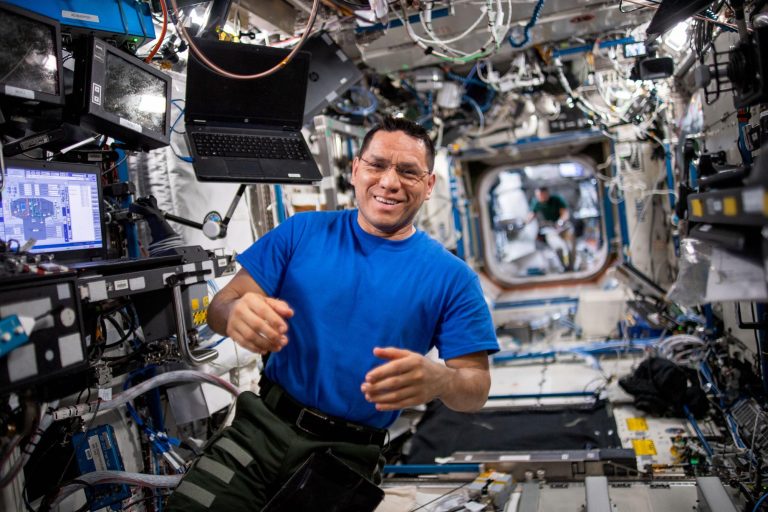
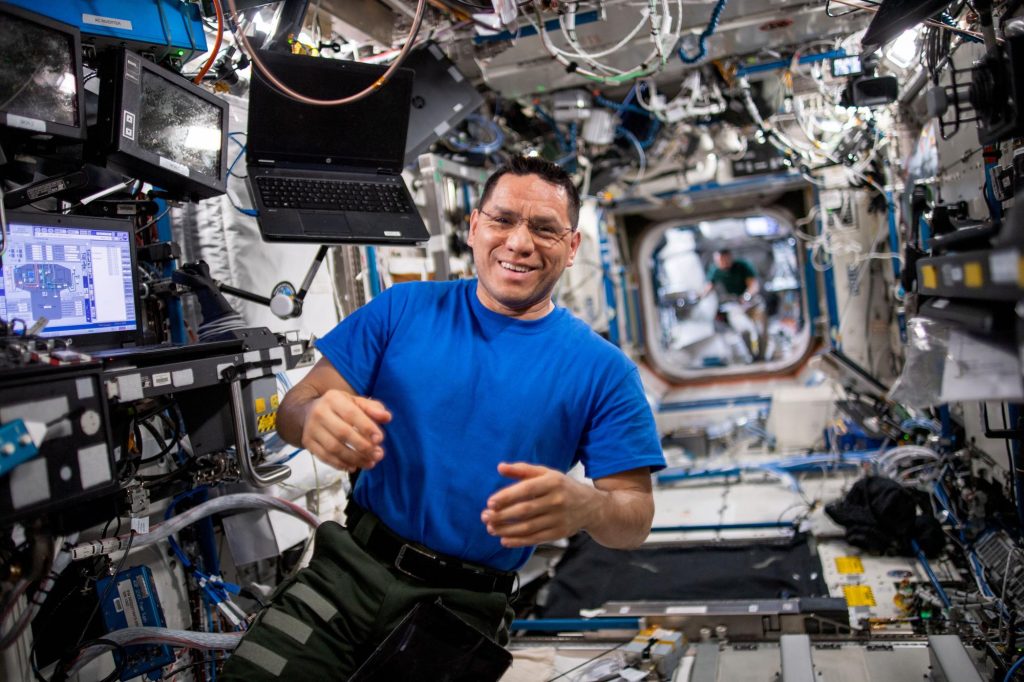
Now the record-holder for the longest single spaceflight by an American, NASA astronaut Frank Rubio is scheduled to depart the International Space Station and return to Earth Wednesday, Sept. 27. The agency will provide full coverage from hatch closing through landing.
NASA astronaut and Expedition 69 Flight Engineer Frank Rubio poses for a portrait while working inside the International Space Station’s Destiny laboratory module.
Credits: NASA
Coverage will begin at 12 a.m. EDT and will stream live on NASA Television, the NASA app, and the agency’s website. Watch online at:
https://www.nasa.gov/live
Rubio and Roscosmos cosmonauts Sergey Prokopyev and Dmitri Petelin will undock their Soyuz MS-23 spacecraft from the station’s Prichal module at 3:55 a.m. EDT. The trio will return after 371 days in space and a mission spanning 157.4 million miles and 5,963 orbits of the Earth. After undocking, the crew will head for a landing on the steppe of Kazakhstan, southeast of the town of Dzhezkazgan, at 7:17 a.m. (5:14 p.m. Kazakhstan time).
After landing, Rubio, Prokopyev and Petelin will be flown from the landing site to Karaganda, Kazakhstan. Rubio will then board a NASA plane back to Houston.
Rubio, who launched Sept. 21, 2022, became the new record holder for the longest single United States spaceflight on Sept. 11, after he surpassed the former record of 355 days held by NASA astronaut Mark Vande Hei.
The crewmates were originally scheduled to return to Earth in March, but the Soyuz MS-22 spacecraft they launched on experienced a coolant leak that resulted in an extension of their mission.
Mission coverage is as follows (all times Eastern):
12 a.m. – Farewells and hatch closing coverage begins (hatch closing scheduled at 12:20 a.m.)
NASA’s UAP study team and newly appointed director of UAP research represent growing efforts to study and declassify UFO-related data.
Chris Impey, University of Arizona
NASA’s independent study team released its highly anticipated report on UFOs on Sept. 14, 2023.
In part to move beyond the stigma often attached to UFOs, where military pilots fear ridicule or job sanctions if they report them, UFOs are now characterized by the U.S. government as UAPs, or unidentified anomalous phenomena.
Bottom line: The study team found no evidence that reported UAP observations are extraterrestrial.
I’m a professor of astronomy who has written extensively on astrobiology and the scientists who search for life in the universe. I have long been skeptical of the claim that UFOs represent visits by aliens to Earth.
From sensationalism to science
During a press briefing, NASA Administrator Bill Nelson noted that NASA has scientific programs to search for traces of life on Mars and the imprints of biology in the atmospheres of exoplanets. He said he wanted to shift the UAP conversation from sensationalism to one of science.
With this statement, Nelson was alluding to some of the more outlandish claims about UAPs and UFOs. At a congressional hearing in July, former Pentagon intelligence officer David Grusch testified that the American government has been hiding evidence of crashed UAPs and alien biological specimens. Sean Kirkpatrick, head of the Pentagon office charged with investigating UAPs, has denied these claims.
And the same week NASA’s report came out, Mexican lawmakers were shown by journalist Jaime Maussan two tiny, 1,000-year-old bodies that he claimed were the remains of “non-human” beings. Scientists have called this claim fraudulent and say the mummies may have been looted from gravesites in Peru.
A controversial journalist presented the Mexican government with 1,000-year-old bodies that he claimed were aliens.
Conclusions from the report
The NASA study team report sheds little light on whether some UAPs are extraterrestrial. In his comments, the chair of the study team, astronomer David Spergel stated that the team had seen “no evidence to suggest that UAPs are extraterrestrial in origin.”
Of the more than 800 unclassified sightings collected by the Department of Defense’s All-domain Anomaly Resolution Office and reported at the NASA panel’s first public meeting back in May 2023, only “a small handful cannot be immediately identified as known human-made or natural phenomena,” according to the report.
Many of the recent sightings can be attributed to weather balloons and airborne clutter. Historically, most UFOs are astronomical objects such as meteors, fireballs and the planet Venus.
Some sightings represent surveillance operations by foreign powers, which is why the U.S. military considers this a national security issue.
The report does offer recommendations to NASA on how to move these investigations forward.
Most of the UAP data considered by the study team comes from U.S. military aircraft. Analysis of this data is “hampered by poor sensor calibration, the lack of multiple measurements, the lack of sensor metadata, and the lack of baseline data.” The ideal set of measurements would include optical imaging, infrared imaging, and radar data, but very few reports have all these.
The NASA study team described in the report the types of data that can shed more light on UAPs. The authors note the importance of reducing the stigma that can cause both military and commercial pilots to feel that they cannot freely report sightings. The stigma stems from decades of conspiracy theories tied to UFOs.
The NASA study team suggests gathering sightings by commercial pilots using the Federal Aviation Administration and combining these with classified sightings not included in the report. Team members did not have security clearance, so they could look only at the subset of military sightings that were unclassified. At the moment, there is no anonymous nationwide UAP reporting mechanism for commercial pilots.
With access to these classified sightings and a structured mechanism for commercial pilots to report sightings, the All-domain Anomaly Resolution Office – the military office charged with leading the analysis effort – could have the most data.
NASA also announced the appointment of a new director of research on UAPs. This position will oversee the creation of a database with resources to evaluate UAP sightings.
Looking for a needle in a haystack
Parts of the briefing resembled a primer on the scientific method. Using analogies, officials described the analysis process as looking for a needle in a haystack, or separating the wheat from the chaff. The officials said they needed a consistent and rigorous methodology for characterizing sightings, as a way of homing in on something truly anomalous.
Spergel said the study team’s goal was to characterize the hay – or the mundane phenomena – and subtract it to find the needle, or the potentially exciting discovery. He noted that artificial intelligence can help researchers comb through massive datasets to find rare, anomalous phenomena. AI is already being used this way in many areas of astronomy research.
The speakers noted the importance of transparency. Transparency is important because UFOs have long been associated with conspiracy theories and government cover-ups. Similarly, much of the discussion during the congressional UAP hearing in July focused on a need for transparency. All scientific data that NASA gathers is made public on various websites, and officials said they intend to do the same with the nonclassified UAP data.
At the beginning of the briefing, Nelson gave his opinion that there were perhaps a trillion instances of life beyond Earth. So, it’s plausible that there is intelligent life out there. But the report says that when it comes to UAPs, extraterrestrial life must be the hypothesis of last resort. It quotes Thomas Jefferson: “Extraordinary claims require extraordinary evidence.” That evidence does not yet exist.
Chris Impey, University Distinguished Professor of Astronomy, University of Arizona
This article is republished from The Conversation under a Creative Commons license. Read the original article (https://theconversation.com/nasa-report-finds-no-evidence-that-ufos-are-extraterrestrial-213528).