

Home Blog Page 42

The Essential Skills Every Machine Learning Engineer Should Learn

0

Machine learning has exploded in popularity and applicability over the last decade. As more companies rush to integrate ML into their products and services, demand for skilled talent is skyrocketing. So what does it take to thrive as a machine learning engineer today? Specific foundational skills are crucial. Let’s review the top 10 abilities for succeeding in this dynamic field.

Strong Mathematical Chops

Machine learning is heavily interdisciplinary, combining advanced statistics, calculus, linear algebra and probability. Having a solid grasp of the underlying math allows ML engineers to understand model optimisation, regularisation, feature selection and more. Whether implementing neural networks, debugging models or developing novel architectures, mathematical maturity is a must-have.

Algorithms and Data Structures Know-How

Being fluent in fundamental algorithms and data structures provides a mental framework for handling machine learning tasks programmatically. For example, understanding how decision trees, search algorithms and graph theory works allows for clearer ML coding. Grasping algorithmic complexity also enables optimising systems to scale. Overall, algorithmic thinking nurtures stronger engineering instincts.

OOP Competence

Most ML workflows involve object-oriented programming (OOP). Fluency with OOP principles like inheritance, encapsulation and polymorphism enables cleaner system design and code reuse. In languages like Python and Java, OOP skills allow crafting more modular, maintainable programs. This makes development and collaboration more efficient at scale.

At Least One Programming Language

While Python has become a lingua franca, being versatile in languages like R, Java, C++ or Scala is invaluable. Each language has strengths for different goals. R excels at statistical analysis while Scala blends OOP and functional programming for big data. Having exposure to more languages provides flexibility and a bigger toolkit. Even basic SQL skills help with data tasks.

Big Data Familiarity

Real-world ML relies heavily on distributed big data systems and frameworks. Experience with tools like Apache Spark, Kafka and Hadoop allows pre-processing of large datasets for model training and deployment. Cloud platforms like AWS also enter the mix. Knowing how to handle data at scale, including querying, accessing and cleansing is pivotal.

ML Algorithms and Models

Of course, a deep understanding of supervised and unsupervised machine learning algorithms and models is mandatory. Key categories like regression, classification, clustering, reinforcement learning and deep neural networks each require dedicated expertise. Knowing how to select, train, tune and productize the right algorithms for a problem determines outcomes.

Data Mining and Modelling Savvy

Raw data rarely comes ready for training models. ML engineers must know techniques like feature engineering, selection, extraction and dimensionality reduction to shape datasets. Domain knowledge helps with creative feature crafting. Additionally, expertise in modelling methods like regression, time series and ensemble modelling is vital for shaping ML pipelines.

Clean Code and Habits

With complex systems, clean coding practices are critical. Using modularity, proper documentation, descriptive naming, right data structures and other habits optimize development and maintenance. Clean habits also aid collaboration, debugging and reproducibility. Plus, employing version control and testing minimises risks.

Communication Chops

Since ML engineering is team-driven, articulate communication is essential at every stage. Conveying complex ideas, providing progress updates, explaining technical details, resolving ambiguities and describing models/architectures to non-experts are all common needs. Strong writing and speaking skills make cooperation smoother.

Insatiable Curiosity

Finally, intellectual curiosity is a core driver. With machine learning advancing so rapidly, learning never stops. Eagerness to absorb emerging techniques and stay on top of new research is crucial. A lifelong appetite for knowledge empowers engaging with innovations confidently.

There we have it – a toolkit for mastering the multifaceted sphere of machine learning. While individual strengths vary, developing competence across these dimensions positions ML professionals to excel. With both creative and technical acumen required, it’s an intensely rewarding pursuit at the cutting edge of technology. For those with the right skills, it’s an exciting time to push ML frontiers.

Heat-Resistant Drones To Support Firefighters

0

A new heat-resistant drone could support firefighters and minimise the risk of dangerous operations by analysing the source of danger at close range during a fire.

Swiss fire brigades were called out more than 15,000 times last year to fight fires. Because temperatures in a burning building can reach a deadly 1,000 degrees Celsius, any unnecessary risk must be avoided. A new flying robot could help in such operations: experts from Empa and Imperial College London are currently developing a heat-resistant drone that can provide initial data from the source of danger.

Minimising risk during operations

In such situations, drones equipped with cameras and CO2 sensors could provide important information about the distribution of fire sources, as well as unexpected hazards or trapped people. With the information gained in this way, emergency teams could better adapt their strategy to the situation before entering a burning building, say the creators of the new drone in a press release.

Before entering the danger zone, the firefighters don’t know exactly what to expect and what difficulties they will encounter.

Mirko Kovac, head of Empa’s Sustainability Robotics Laboratory and the Aerial Robotics Lab at Imperial College London

Drones are already being used to fight fires, to take aerial photos of fires, to lift fire hoses onto skyscrapers or to drop extinguishing agents in remote areas, for example to contain the spread of forest fires. However, all this is currently only possible if the drone is far enough away from the source of the fire. Because if flames are too close, the frame melts and the electronics give up.

Inspiration for new isolation material from nature

The Swiss researchers therefore set out to find an insulation material that does not melt even at high temperatures. They found inspiration for this in nature, in animals such as the penguin and arctic fox, whose habitats are characterised by extreme temperatures. They all have corresponding layers of fat, fur or the body’s own protective layers of thermoregulating material, which the animals produce themselves and which enable them to survive under extreme conditions.

They found what they were looking for in an aerogel, an ultralight material that consists almost entirely of air-filled pores enclosed in a hint of polymer substance. As Empa writes in its press release, polyimide aerogels are also being researched by NASA, among other things as insulation for space suits.

First test flights show excellent results

The prototype of the FireDrone, which is around 50 centimetres tall, was convincing in initial tests in Empa’s flight arena in Dübendorf and succeeded in tests under real conditions. The flight characteristics and controllability are excellent, even with an aerogel insulation jacket and an additional built-in cooling system as well as an aluminium covering that reflects the heat, according to the press release.

According to Empa, the FireDrone can also be used in extremely cold environments, such as in polar regions and on glaciers. The team has already tested the drone in a glacier tunnel in Switzerland to find out how the system behaves at very low temperatures. Talks are under way with potential industrial partners to further develop the prototype.

Originally published from Swisstech

UK Space Agency adds three more stops to Space for Everyone tour

0

The UK Space Agency has extended its nationwide Space for Everyone tour with three extra locations following its success around the country so far.

Having engaged tens of thousands of people over the first six of its 10 original stops, the event is now set to visit Wrexham (14-18 September) and Glasgow (21-25 September) before ending its three-month, 13 location tour of the UK in Plymouth (28 September to 2 October). 

This exciting initiative aims to captivate and educate the next generation about space, showcasing the UK’s flourishing space industry and the diverse career opportunities available.

Key space organisations and STEAM partners, including Space Hub Yorkshire, North East Space Cluster, Space Wales, Orbex, Skyrora, and the World Wide Fund for Nature, have supported the tour across the regions, highlighting the thriving space industry in the UK and its impact on our daily lives. 

The Space for Everyone tour is serving as a beacon of inspiration, shedding light on the pivotal role that space plays in enhancing life on Earth. Visitors, including children, families, and teachers, will have the unique opportunity to witness first-hand how space technologies benefit our daily lives and gain insights into the continuous efforts to explore the great unknown.

Matt Archer, Launch Director at the UK Space Agency, said:

The Space for Everyone Tour has been an enormous success, with families, schools and young people having the opportunity not only to see a rocket up close but learn about the role space has in our daily lives.

The UK space sector is world-leading and we require people from all backgrounds and skill sets to work in it. By showcasing the sector and the variety of exciting career pathways available,we can help inspire  the next generation of homegrown space talent.

Space for Everyone promises an immersive experience, incorporating state-of-the-art virtual reality headsets to provide unparalleled insights into what a launch from the UK looks like and the job roles involved in making it happen. Visitors can also explore various interactive areas, learning about the crucial role of satellites and discovering the diverse career paths available within the UK space industry.

For further information about the Space for Everyone tour, please visit https://spaceperson.co.uk/rocket-tour/ or follow @spacegovuk on social media.

The Space for Everyone tour schedule includes the following locations.

  • Newcastle – Times Square: 10-14 August
  • Hull – Queen Victoria Square: 17-21 August
  • Great Yarmouth – Sea Life Gardens: 24-28 August
  • Hastings – Hastings Pier: 31 August – 4 September
  • Wrexham – Queens Square: 14-18 September
  • Glasgow – George Square: 21-25 September
  • Plymouth – Piazza: 28 September – 2 October

NASA Software Catalog Offers Free Programs for Earth Science, More

0

Autonomous systems need to be reliable, so NASA puts the code it develops through rigorous testing, like this Artemis I launch countdown training simulation, to avoid potential failures.
Credits: NASA

Each year, NASA scientists, engineers, and developers create software packages to manage space missions, test spacecraft, and analyze the petabytes of data produced by agency research satellites. As the agency innovates for the benefit of humanity, many of these programs are now downloadable and free of charge through NASA’s Software Catalog.

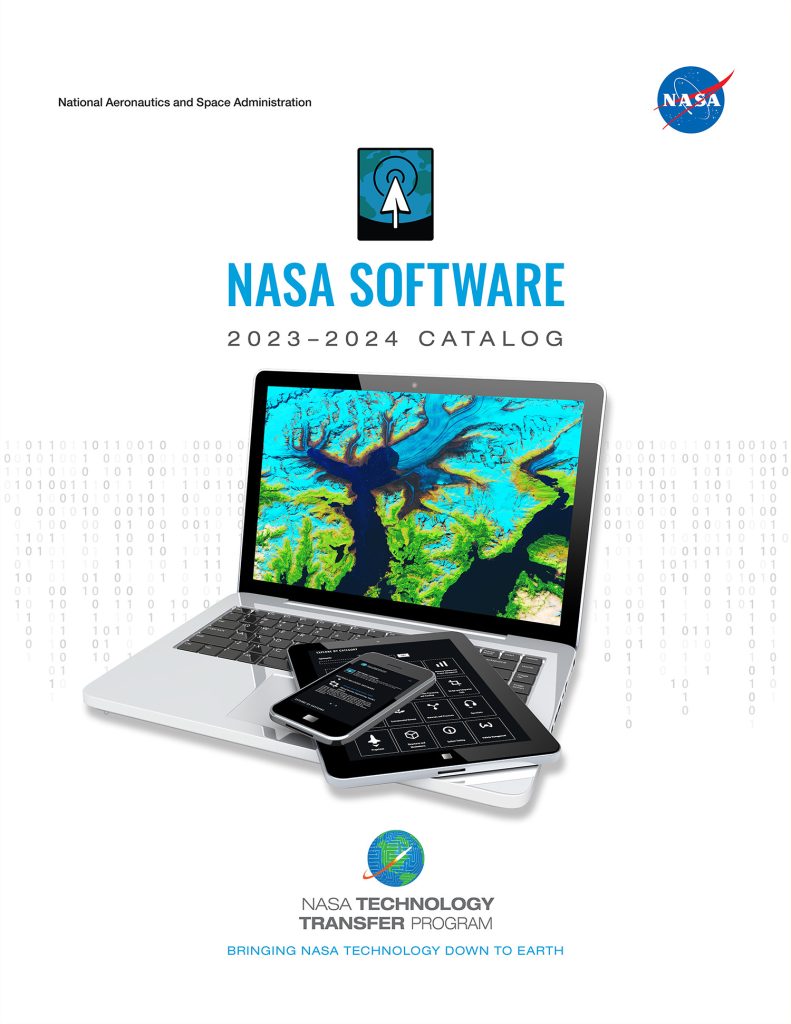
The 2023-2024 NASA Software Catalog makes a variety of NASA programs available for download.
The 2023-2024 NASA Software Catalog makes a variety of NASA programs available for download. Credits: NASA

The 2023-2024 Software Catalog contains more than 1,000 programs, including dozens of new packages added this year.

Among the 15 different categories of NASA software available through the catalog is environmental science. Whether it means helping farmers navigate crop-destroying droughts, tracking deadly storms such as hurricanes and tornadoes, or mapping floods, fires, and more, NASA’s fleet of Earth-observation satellites allows an “eye-in-the-sky” advantage to spot events, features, and long-term trends on our ever-changing planet.

“By making our innovations available to the public, we fulfill our goal of helping NASA’s research and technology development find new uses beyond space exploration,” said Daniel Lockney, program executive for the agency’s Technology Transfer program at NASA Headquarters in Washington. “We’re proud to make NASA software more accessible through our easy-to-use website, and we are dedicated to continuing this ‘customer-service’ approach to software release.”

Among the environmental science software included in the catalog are:

  • popular modeling software that provides values for atmospheric parameters, such as temperature and winds, for any month and location in Earth’s atmosphere
  • geospatial system for disaster response using low-cost hardware such as digital cameras or cellphones
  • A cloud-based toolkit that allows collaboration among researchers in Earth science
  • An algorithm to accurately forecast lighting strikes
  • A framework that combines maps with satellite-based rainfall estimates to identify potential landslide hazards
  • platform built for interactive browsing of near-real-time satellite imagery to help with time-critical scenarios such as wildfires or flooding

NASA scientists and software experts, who use satellite data and more to better understand Earth, will be available to answer questions about free agency resources at 12 p.m. EDT, Wednesday, Aug. 16, during a Reddit “Ask me Anything.” Join or follow the discussion online using the /r/AskScience subreddit.

To complement the Software Catalog, NASA’s Technology Transfer program has also built a Remote Sensing Toolkit. The web-based set of tools helps users find, analyze, and use the most relevant satellite data for research, business projects, or conservation efforts.

Beyond environmental science, the catalog also includes software packages for system testing, aeronautics, business systems and project management, data and image processing, crew and life support, and more.

The Software Catalog is a product of NASA’s Technology Transfer program, managed for the agency by STMD. NASA routinely makes improvements to the Software Catalog website, ensuring the process is fast and easy. The program ensures technologies developed by and for NASA are broadly available to the public, maximizing the benefit to American taxpayers.

Access restrictions apply to some software that may be limited to use by U.S. citizens or for U.S. government purposes only.

Review the catalog online at:

http://software.nasa.gov

-end-

Sarah Frazier
Headquarters, Washington
202-358-1112
[email protected]

Hubble Glimpses A Glitzy Galactic Cluster

0

The glittering, glitzy contents of the globular cluster NGC 6652 sparkle in this star-studded image from the NASA/ESA Hubble Space Telescope. The core of the cluster is suffused with the pale blue light of countless stars, and a handful of particularly bright foreground stars are adorned with crisscrossing diffraction spikes. NGC 6652 lies in our own Milky Way galaxy in the constellation Sagittarius, just under 30,000 light-years from Earth and only 6,500 light-years from the galactic center.

Globular clusters are stable, tightly gravitationally bound clusters containing anywhere from tens of thousands to millions of stars. The intense gravitational attraction between closely packed stars in globular clusters is what gives these star-studded objects their regular, spherical shape.

This image combines data from two of Hubble’s most powerful cameras: the Advanced Camera for Surveys and Wide Field Camera 3. It also uses data from two different observing programs conducted by two different teams of astronomers. The first team set out to survey globular clusters in the Milky Way galaxy in the hope of shedding light on topics ranging from the ages of these objects to the gravitational potential of the galaxy as a whole. The second team of astronomers used a trio of exquisitely sensitive filters in Hubble’s Wide Field Camera 3 to disentangle the proportions of carbon, nitrogen, and oxygen in globular clusters such as NGC 6652.

Text credit: European Space Agency (ESA)
Image credit: ESA/Hubble & NASA, A. Sarajedini, G. Piotto

Media Contact:

Claire Andreoli
NASA’s Goddard Space Flight CenterGreenbelt, MD
[email protected]

By: Andrea Gianopoulos
Originally published at NASA

Biden-⁠Harris Administration Launches Artificial Intelligence Cyber Challenge to Protect America’s Critical Software

0

Several leading AI companies – Anthropic, Google, Microsoft, and OpenAI – to partner with DARPA in major competition to make software more secure

The Biden-Harris Administration today launched a major two-year competition that will use artificial intelligence (AI) to protect the United States’ most important software, such as code that helps run the internet and our critical infrastructure.  The “AI Cyber Challenge” (AIxCC) will challenge competitors across the United States, to identify and fix software vulnerabilities using AI. Led by the Defense Advanced Research Projects Agency (DARPA), this competition will include collaboration with several top AI companies – Anthropic, Google, Microsoft, and OpenAI – who are lending their expertise and making their cutting-edge technology available for this challenge. This competition, which will feature almost $20 million in prizes, will drive the creation of new technologies to rapidly improve the security of computer code, one of cybersecurity’s most pressing challenges. It marks the latest step by the Biden-Harris Administration to ensure the responsible advancement of emerging technologies and protect Americans.

The Biden-Harris Administration announced AIxCC at the Black Hat USA Conference in Las Vegas, Nevada, the nation’s largest hacking conference, which for decades has produced many cybersecurity innovations. By finding and fixing vulnerabilities in an automated and scalable way, AIxCC fits into this tradition. It will demonstrate the potential benefits of AI to help secure software used across the internet and throughout society, from the electric grids that power America to the transportation systems that drive daily life.

DARPA will host an open competition in which the competitor that best secures vital software will win millions of dollars in prizes. AI companies will make their cutting-edge technology—some of the most powerful AI systems in the world—available for competitors to use in designing new cybersecurity solutions. To ensure broad participation and a level playing field for AIxCC, DARPA will also make available $7 million to small businesses who want to compete.

Teams will participate in a qualifying event in Spring 2024, where the top scoring teams (up to 20) will be invited to participate in the semifinal competition at DEF CON 2024, one of the world’s top cybersecurity conferences. Of these, the top scoring teams (up to five) will receive monetary prizes and continue to the final phase of the competition, to be held at DEF CON 2025. The top three scoring competitors in the final competition will receive additional monetary prizes.

The top competitors will make a meaningful difference in cybersecurity for America and the world. The Open Source Security Foundation (OpenSSF), a project of the Linux Foundation, will serve as a challenge advisor. It will also help ensure that the winning software code is put to use right away protecting America’s most vital software and keeping the American people safe.

Today’s announcement is part of a broader commitment by the Biden-Harris Administration to ensure that the power of AI is harnessed to address the nation’s great challenges, and that AI is developed safely and responsibly to protect Americans from harm and discrimination. Last month, the Biden-Harris Administration announced it had secured voluntary commitments from seven leading AI companies to manage the risks posed by the technology. Earlier this year, the Administration announced a commitment from several AI companies to participate in an independent, public evaluation of large language models (LLMs)—consistent with responsible disclosure principles—at DEF CON 2023. This exercise, which starts later this week and is the first-ever public assessment of multiple LLMs, will help advance safer, more secure and more transparent AI development.

In addition, the Biden-Harris Administration is currently developing an executive order and will pursue bipartisan legislation to help America lead the way in responsible AI innovation.

The 7 Best Choice For Water Bottles

0

Whether it’s winter, spring, summer or fall it’s still important to keep hydrated. Specially if you are trying to keep an active lifestyle. From light to intense physical activities, you’d want an easily accessible source of water. 

Below are different options to choose from. The designs and style might be different but at their core they are water bottles.

01. Insulated Blue Bottle from THERMOS

Bottle

Mainly for kids, due to the capacity of 12 ounces. These insulated water bottles keeps the cold or the warmth of beverage up to 12 hours. 

02. Insulated Pink Bottle from THERMOS

Bottle

A fun pink version of the previous water bottle in the list.

03. Water Bottle from Gatorade

Bottle

This is a squeeze bottle, perfect for workout or tournament where every second counts. It is also much lighter than the other bottles in the list. 

04. Food Jar from Stanley

Bottle

While this is not primarily a water bottle but a food jar. But it can still be used as one if you choose. It has double-wall vacuum insulation for excellent temperature retention.

05. Water Bottle from Amazon Basics

Bottle

Made from durable Tritan plastic, it can hold 24-ounce of liquid. Can be used for sports or as an office bottle. Add a lemon in the water and you’re good to go for both hydration and dose of vitamin C. 

06. Water Bottle from  Hydra Cup

Bottle

This is also a squeeze bottle, but these are sold in pack of 4. The nice thing about these are that they have a visible liquid meter on the side. Excellent for gifts or if you are buying for the whole family.

07. Water Bottle from Under Armour

Bottle

With a capacity of 64 ounces this is on a different class from the previous ones. It has a comfortable and secure grip. 


Student life is busy enough without hassles like paying for shipping. That’s why Amazon Prime Student is a must-have for you. For just $14.99 $7.49/month, Prime Student gets you free two-day shipping on over 100 million items, unlimited photo storage, exclusive deals, and more. Better still, it comes with a six-month free trial so you can make sure Prime Student fits your lifestyle. Join today to take advantage of membership benefits and perks tailored specifically for students! Click here to sign up now: https://amzn.to/47wkx6f

How Generative AI Provides Opportunities For Jobs And Creativity

The rapid rise of generative AI tools like ChatGPT has sparked excitement about their creative potential but also concerns about their impacts on jobs. With the right approach, humans can steer this technology for our benefit rather than be displaced by it.

Automating Repetitive Tasks

As generative AI enters mainstream use, some disruption of the job market is expected, just as with previous technological shifts like industrialisation. AI-based automation will likely take over repetitive and routine aspects of many jobs, referred to as the four D’s – dirty, dangerous, dull and difficult tasks. 

For example, AI could automate routine customer service interactions, analyse legal contracts for errors, write basic news reports, or take over dangerous warehouse work. This will free up human time and energy to focus on higher-value work requiring emotional intelligence, creativity, empathy and problem-solving.

Augmenting Human Skills

Rather than AI taking away jobs, it will augment uniquely human skills and talents. Workers of the future need to embrace continuous learning to complement AI tools. Individuals should invest in developing their creative abilities, interpersonal skills and emotional intelligence – things that make us human.

Technical skills will also remain relevant, especially to train and get the most out of AI systems. But human-centric capabilities like imaginative problem-solving, leadership, collaboration, and communication are harder to automate and will grow in demand.

paintbrush-rhondak-native-florida-folk-artist-_Yc7OtfFn-0-unsplash

Democratising Creativity 

The generative AI revolution can liberate the innate human capacity to create, make visions a reality, and cultivate our talents like never before. Creative work in arts, media, design and more could be profoundly democratised. 

For example, tools like DALL-E 2 and Stable Diffusion empower anyone to generate professional-grade visuals and art. Music composition apps like Jukebox allow amateur musicians to create original songs. With the right tools and mindset, we all have the potential to become empowered creators.

Transitioning to New Opportunities

No doubt, some jobs will undergo transitions, as happened during the industrial revolution. But it also brought more prosperity and progress to society as a whole. With care taken to support displaced workers through upskilling and new opportunities, we can ensure generative AI benefits all.

Government and industry must invest in training programs, especially digital literacy and technical skills so that the future workforce is prepared. A focus on fields like healthcare, education and human services where human skills remain critical will also help the labour market adjust.

Steering Our Destiny 

The future is what we choose to make it. Instead of AI taking over jobs, humans can take charge of their destinies. We must guide the technology responsibly and focus on our unique abilities like creativity, empathy and courage. 

The coming age of artificial intelligence does not have to mean the end of human work. Rather, it can liberate the human spirit and our collective genius. We have the power to shape an AI revolution that enhances lives, creates new possibilities and expands human potential.

With the right policies, continuous learning and an empowering vision, we can build an AI-powered future where technology serves humanity rather than replaces it.

Back-To-School 2023. Besties Choice for Kids Lunch Boxes.

0

There are a lot of decisions to make when it comes to the upcoming school year. From notebooks, bags, pencil, and other essential items. One of them is selecting a lunch box. It might look trivial, but this decision will last for a whole year (hopefully more). Durability, functionality and design are all equally important when choosing your kids lunch box.

1. Spider-Man Lunch Box from Simple Modern

Spiderman Lunch Box from Simple Modern

While there are many other design to choose from. Clearly, the Spider-man design provides a slick design for the kids. There are also other designs to choose from. The best part of this is that with removable compartments, its easy to clean.

2. Bento Lunch Box With Accesories from HappyRhino

Bento Lunch Box With Accesories from HappyRhino

This cute bento lunch box has 4 compartments. It then have adorable animal picks, which is perfect if you plant to include bite-size food without having to provide separate fork. The cake cups can be used to make fruits and vegetables to be more appealing to kids.

3. Minecraft Lunch Box from Bioworld

Minecraft Lunch Box from Bioworld

Minecraft game, almost every kid (and even now parents and guardian) knows of it. If you plan to include hot or cold food inside and retain it’s optimal temperature, then the insulated bag is for you.

4. Insulated Kids Lunch Box from FlowFly

Insulated Kids Lunch Box from FlowFly

If you still want some insulation for your kids food, then this is another option. It provides a plain design, but the material is of high quality. Made from Noeprene, which is used by wet suit to keep a surfers body temperature stable.

5. Insulated Kids Lunch Box from JOYHILL

Insulated Kids Lunch Box from JOYHILL

Another insulated lunch box bag, but this one is a backpack. It has a water bottle holder in the side. With lots of cute design to choose from you will surely find one that is right for your kid.

6. Jurassic World Lunch Box With Backpack Bag from Fast Word

Jurassic world lunch box with backpack bag from Fast Word

If you are looking for both a backpack bag and lunch box, then this is an option. The lunch box is partially insulated. It has a Jurassic World design which might appeal kids that loves dinosaur.

7. Bento-Style Kids Lunch Box from Bentgo®

Bento-Style Kids Lunch Box from Bentgo®

This lunch box has 5 compartments, practical for giving different portion of food of variety. The leak proof technology assures that the food won’t mix up. And the best thing is that it is dishwasher-safe. Less washing or cleaning is equal to more time for much important task like rest.


Student life is busy enough without hassles like paying for shipping. That’s why Amazon Prime Student is a must-have for you. For just $14.99 $7.49/month, Prime Student gets you free two-day shipping on over 100 million items, unlimited photo storage, exclusive deals, and more. Better still, it comes with a six-month free trial so you can make sure Prime Student fits your lifestyle. Join today to take advantage of membership benefits and perks tailored specifically for students! Click here to sign up now: https://amzn.to/47wkx6f

The Art Of Creative Problem Solving With Design Thinking

0

Design thinking is a human-centered approach to innovation and problem-solving that anyone can learn. By following the key stages of design thinking, you can create practical solutions that truly meet user needs.

What is Design Thinking?

Design thinking aims to understand users and create solutions tailored specifically for them. It typically involves these key stages: 

  • Empathize – Deeply understand user perspectives and pain points through observation and engagement. 
  • Define – Frame the core problem you want to solve based on user insights.
  • Ideate – Brainstorm wide range of innovative solutions. 
  • Prototype – Build rough solutions to investigate further.
  • Test – Gather user feedback to refine prototypes iteratively.

Design thinking brings together empathy, creativity, prototyping and testing in an iterative process. Collaboration in diverse teams enhances creativity. The focus is on learning quickly through action.

Getting Started

Here are some tips to get started with design thinking:

  • Observe and engage target users with curiosity to gain insights. 
  • Frame problems as “how might we” questions to spark solutions thinking.
  • Defer judgement when brainstorming to build on wild ideas.
  • Prototype scrappy mockups to learn and refine concepts. 
  • View failures as learnings to iterate rapidly.
  • Collaborate cross-functionally; diversity catalyzes innovation.
design-thinking-d2527302-3ad6-4955-9945-9e65d29f5280

Empathize with Your Users

Empathy is crucial in design thinking. Spend time in your users’ shoes observing their actions, emotions and environments. Ask open-ended questions, engage users and look for unmet needs. Set aside assumptions and build deeper understanding.

Define the Problem 

Analyze your observations to pinpoint your users’ biggest unmet needs. Frame these as problem statements like “How might we help busy moms plan family meals easily?” Defining the core problem areas focuses solution ideation.

Ideate: Challenge Assumptions and Create Ideas

Brainstorm wide ranges of solutions. Use techniques like worst possible idea to challenge assumptions. Build on others’ ideas in collaborative sessions. Defer judgement to open exploration spaces. Identify most promising solutions to prototype.

Prototype to Start Creating Solutions

Build rough prototypes to investigate solutions further. Use inexpensive materials to create simple mockups and simulations. Rapid prototyping lets you refine concepts and fail fast. Show prototypes to users early for feedback.

Test and Refine Solutions

Gather user feedback on prototypes through usability testing, surveys, etc. Analyze results to understand flaws and areas for improvement. Iterate prototypes based on insights before investing in detailed solutions. 

Discovering Customers’ Unmet Needs

Design thinking centers around discovering customers’ unmet needs even if they are not voiced. Observe customers and look for signs of frustration or difficulty. Engage them to share experiences and ideas. Their pain points often point to opportunities.

Co-Creating Solutions with Customers

Bring customers into the solution design process through co-creation workshops. Brainstorm solutions together and get feedback on prototypes. This builds solutions tailored for them and also buy-in.

Prioritization 

Assess proposed solutions against criteria like feasibility, viability, desirability and impact. Gauge solutions’ technical complexity, user value, business potential and social benefit. Prioritize solutions with the best overall potential for next steps.

Planning and Implementation

Develop project plans for taking solutions forward. Plan resources, technology needs, risks, timelines and milestones. Implement in stages by building MVPs, running pilots etc before full development. Measure progress with users frequently.  

Design thinking ignites impactful innovation by putting humans at the center. Immerse yourself in its iterative approach to unlock creative solutions focused on real user value.