Hamelin Pool Marine Nature Reserve, seen here in an image from the Advanced Spaceborne Thermal Emission and Reflection Radiometer (ASTER) on the Terra spacecraft on Dec. 30, 2010, is a special site. Located in the Shark Bay World Heritage Site in Western Australia, it is one of the very few places in the world where we can find living stromatolites—the first living examples of structures built by cyanobacteria. Photosynthetic cyanobacteria are thought to have changed the course of life’s evolution on Earth by playing an important role in the oxygenation of Earth’s atmosphere roughly 2.3 billion years ago. Also, NASA and other federal agencies monitor levels of cyanobacteria, as toxic levels of the blue-green algae can have negative effects on health.
ASTER is one of five Earth-observing instruments launched Dec. 18, 1999, on Terra. With its 14 spectral bands from the visible to the thermal infrared wavelength region and its high spatial resolution of 15 to 90 meters (about 50 to 300 feet), ASTER images Earth to map and monitor the changing surface of our planet. The instrument was built by Japan’s Ministry of Economy, Trade and Industry. A joint U.S./Japan science team handles validation and calibration of the instrument and data products.
Image Credit: NASA/GSFC/METI/ERSDAC/JAROS, and U.S./Japan ASTER Science Team
Students coming back to school will be faced with a lot of new experience. This comes down to activities that will require them to put in the effort. From homework, physical activities, and other tasks that needed energy.
With these in mind we should not forget to provide ourselves with the fuel needed. Snacks might not be as important as breakfast, lunch, and dinner. But they are there to provide you with ample sustenance in the short time. We still recommend eating a well balanced meal.
Student life is busy enough without hassles like paying for shipping. That’s why Amazon Prime Student is a must-have for you. For just $14.99 $7.49/month, Prime Student gets you free two-day shipping on over 100 million items, unlimited photo storage, exclusive deals, and more. Better still, it comes with a six-month free trial so you can make sure Prime Student fits your lifestyle. Join today to take advantage of membership benefits and perks tailored specifically for students! Click here to sign up now: https://amzn.to/47wkx6f
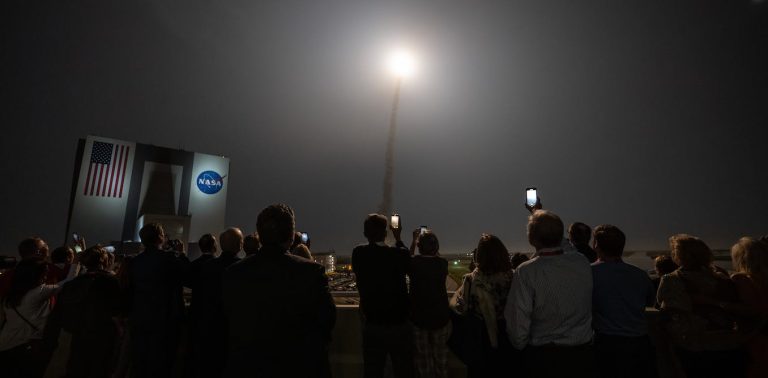
The Artemis I Launch in November 2022. NASA/Bill Ingalls, CC BY-NC
Mariel Borowitz, Georgia Institute of Technology and Teasel Muir-Harmony, Georgetown University
Most Americans (69%) believe it is essential that the United States continue to be a world leader in space. But only a subsection of that group believes NASA should prioritize sending people to the Moon, according to a new report released by the Pew Research Center. The study surveyed over 10,000 U.S. adults on their attitudes toward NASA and their expectations for the space industry over the next few decades.
As scholars who study international relations in space and the history of the space program, we are interested in understanding how Americans view space activities, and how their perspectives might affect the future of both U.S. and global space developments.
US dominance in space
The United States’ most visible effort to maintain world leadership in space is arguably its Artemis Program to land humans on the Moon by late 2024. The U.S. has emphasized international cooperation, bringing in Europe, Japan and Canada as partners in the program.
With China and Russia undertaking a parallel effort to land people on the Moon, many see a competitive element to these plans as well.
One of the most striking features of the recent poll is how similar it looks to earlier public opinion polling, especially one conducted in 2018. The popularity of NASA has remained consistently high for decades, frequently with a favorability rating between 60% and 70%, far higher than many other federal agencies. But the specific priorities of the U.S. space program have often been at odds with public opinion.
While 65% of Americans said in the new Pew survey it was essential that NASA continue to be involved in space exploration, only 12% said that sending human astronauts to the Moon should be NASA’s top priority. Although somewhat at odds with the national space agenda, this valuation is not new. Even during the 1960s, when NASA undertook Project Apollo, Americans ranked solving problems on Earth – such as pollution, poverty and national beautification – above landing humans on the Moon.
Most Americans for the majority of the 1960s responded in public opinion polls that the Apollo program was not worth its high budget. Over time, however, the Apollo program has grown in popularity.
Between 1989 and 1995, polling revealed that the public thought the U.S. space program should focus on robotic spacecraft as opposed to crewed missions. This position began to change in the mid-1990s with docking of the space shuttle with the Russian space station and several blockbuster space-themed films.
Despite moderate public support, human spaceflight consistently receives the majority share of U.S. civilian space funding, suggesting that public opinion and the national space agenda stand apart. The most recent poll results underscore how a combination of rationales – including advancing science, national stature, geopolitics, economic interests and national security – rather than public opinion alone have shaped national space priorities throughout time.
Planetary defense
Additionally, the recent poll explored people’s expectations for the space industry. It found 60% of people believed NASA’s top priority should be monitoring asteroids that could hit the Earth. NASA does have national responsibility for this job – referred to as planetary defense – but the office receives less than 1% of NASA’s budget, or US$138 million out of $25.4 billion in 2023.
Even with its relatively modest budget, the office has made significant progress. This included the Double Asteroid Redirect Test – the world’s first planetary defense experiment. DART intentionally crashed into an asteroid in September 2022 to understand how the impact would change the asteroid’s orbit. The results of the test could help scientists understand how to deflect asteroids that threaten the Earth.
Private enterprise in space
Private activity in space goes back to the 1960s, with the creation of commercial communication satellite companies and growth of large defense contractors. However, many experts view the wave of companies that started in the 2000s as marking an important change.
While earlier companies often relied heavily on the government to set requirements and fund projects, these “new space” companies set their own priorities and often see the government as only one of many customers.
These companies are bringing new capabilities to the market. For example, Planet collects daily images of the Earth, Umbra uses radar to take pictures at night and through clouds, Astroscale is demonstrating the ability to remove debris from space, and Astrobotic is developing a commercial Moon lander.
Many Americans view private activity in space positively, but a large portion have not yet formed an opinion. While 48% of Americans surveyed said private companies are doing a good job building rockets and spacecraft that are safe and reliable, another 39% were unsure. Similarly, 47% of Americans said private companies are making important contributions to space exploration, but another 40% were unsure.
Companies like SpaceX, Blue Origin and Virgin Galactic are beginning to take tourists into space. Doing so in a safe and sustainable way will be essential to the future perception of this industry. Priorities include carefully designing safety systems and procedures and carrying out careful analysis of any anomolies that occur during flight.
Overall, Americans are optimistic about the future of space activity. The poll found 55% of Americans expect people will routinely travel to space as tourists within the next 50 years.
Militarization of space
A significant portion of Americans (44%) see a more militaristic future for space. They believe the U.S. will definitely or probably fight against other nations in space sometime in the next 50 years. Warfare could include the destruction or disabling of U.S. or other nations’ strategic satellites.
By some definitions, conflict in space has already occurred. At the outset of the Ukraine War, Russia carried out a cyberattack against the ViaSat satellite network used by the Ukrainian military. Russia also regularly jams GPS signals in Ukraine. However, no nation has ever physically attacked another nation’s satellite in space.
There is no ban on anti-satellite weapons, but in December 2022, 155 nations passed a United Nations General Assembly resolution calling for a halt to one type of anti-satellite testing. In addition, the United Nations’ open-ended working group on reducing space threats has been meeting since 2022 to help avoid conflict in space.
Space debris
Americans are also concerned about space debris – 69% think there will definitely or probably be a major problem with debris in space by 2073. Space debris can include defunct satellites, discarded rocket bodies, or pieces of satellites resulting from accidental collisions or anti-satellite tests.
There is reason for concern. The number of objects in space has grown rapidly, from just over 1,000 in 2013 to 6,718 satellites today. Many countries have announced plans for new large constellations of satellites, with some experts predicting there could be 60,000 satellites in orbit by 2030.
Right now the United States maintains the most advanced system for monitoring space objects. It shares information and collision warnings with satellite operators all over the world, but there are no rules that require those operators to take action. As space traffic increases, this ad hoc system will need to change.
The United States is developing a new Traffic Coordination System for Space that will improve data sharing and coordination with commercial and international partners. Countries have been working within the United Nations to develop and implement guidelines for the long-term sustainability of outer space activities.
Still, the U.S. will need to coordinate with countries around the world to ensure satellite technology doesn’t outpace safety and give organizations like NASA the ability to continue leading activities in space.
Mariel Borowitz, Associate Professor of International Affairs, Georgia Institute of Technology and Teasel Muir-Harmony, Curator of the Apollo Collection, Smithsonian National Air and Space Museum and Affiliate Adjunct, Georgetown University
This article is republished from The Conversation under a Creative Commons license. Read the original article (https://theconversation.com/most-americans-support-nasa-but-dont-think-it-should-prioritize-sending-people-to-space-210218).
It is a standard laptop bag that can fit laptop with screens up to a 11.6 inches. With pouches and storage for power cords, business cards, and other relatively smaller essentials. Note that this is 24 pieces of laptop bag, there are options for 1-pack and 10-pack too. Be careful when you checkout the right quantity you need.
Scissors available in colors of purple, green and gray. The soft grip provides enought traction to avoid any loose or incorrect cuts. It is made from stainless steel, so you can be sure it will last a long time.
If you are looking to expand the memory card of your smart phone, tablet, camera, GoPro, Nintendo Switch or any other devices that used can hold microSDXC. It is a Class 10 and A2 in terms of its speed class. Available in 64GB, 128GB, 256GB, 512GB and 1TB.
This paper shredder available in different sizes that can cut multiple number paper at once. It also support cutting credit cards through a dedicated slot. A time savers for discarding confidential document and hopefully being recycled.
In order to stay focus you’d need to have one of these earphone. Block of the noise and/or provide focus to the task at hand. Compatible with any 3.5mm jack, including Android and iOS devices. The length of the cable is 3.9 foot or 118 cm.
No Back-to-School list is complete without a handy-dandy notebook. With 240 pages, line rules, 5 x 8.25 x.6 inch in dimensions and line ruled. It also has an integrated bookmark to keep track on where you stopped writing. The elastic enclosure is also a nice bonus as it will surely be kept organized in your bag.
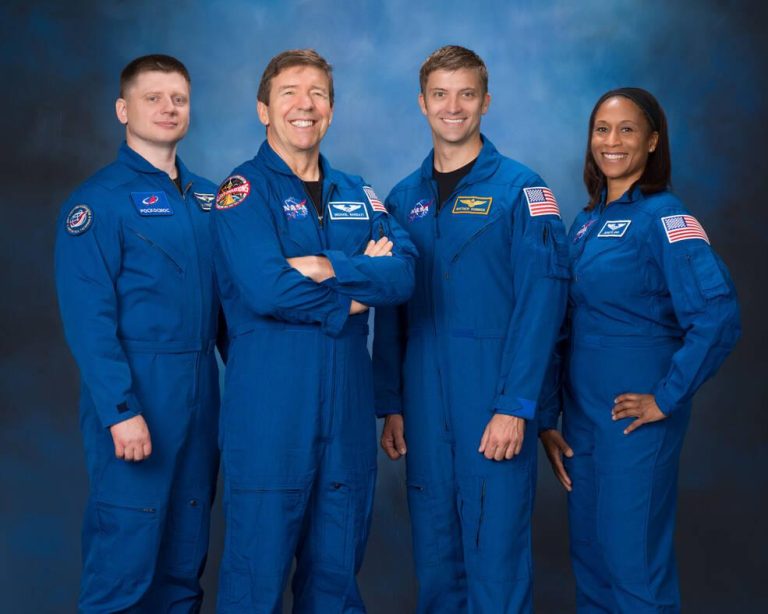
Four crew members now are assigned to launch on NASA’s SpaceX Crew-8 mission for a long-duration stay aboard the International Space Station.
NASA astronauts Commander Matthew Dominick, Pilot Michael Barratt, and Mission Specialist Jeanette Epps, along with Roscosmos cosmonaut Mission Specialist Alexander Grebenkin, will join Expedition 70 and 71 crew members aboard the station in early 2024 to conduct a wide-ranging set of operational and research activities.
This will be the first spaceflight for Dominick, who became a NASA astronaut in 2017. He is from Wheat Ridge, Colorado, and earned a bachelor’s degree in electrical engineering from the University of San Diego, California, and a master’s in systems engineering from the Naval Postgraduate School in Monterey, California. He is an active-duty U.S. Navy astronaut. He graduated from the U.S. Naval Test Pilot School in Patuxent River, Maryland, and then served as a test pilot specializing in testing landing on and catapult launches from U.S. Navy aircraft carriers.
This will be Barratt’s third trip to the space station. In 2009, Barratt served as a flight engineer for Expeditions 19 and 20 as the station transitioned its standard crew complement from three to six, and performed two spacewalks. He flew aboard the space shuttle Discovery in 2011 on STS-133, which delivered the Permanent Multipurpose Module and fourth Express Logistics Carrier. He has spent a total of 212 days in space. Born in Vancouver, Washington, he Considers Camas, Washington, to be his hometown. Barratt earned a bachelor’s in zoology from the University of Washington, Seattle, and a doctor of medicine from Northwestern University in Chicago, Illinois. He completed residencies in internal medicine at Northwestern and aerospace medicine along with a master’s degree at Wright State University in Dayton, Ohio. After nine years as a NASA flight surgeon and project physician, Barratt joined the astronaut corps in 2000.
This also will be Epps’ first trip to the space station. She is from Syracuse, New York, and earned a bachelor’s in physics from LeMoyne College in Syracuse, New York, and a master’s in science and a doctorate in aerospace engineering from the University of Maryland, College Park. Prior to joining NASA, she worked at Ford Motor Company and the Central Intelligence Agency. She was selected as an astronaut in July 2009, and has served on the Generic Joint Operation Panel working on space station crew efficiency, as a crew support astronaut for two expeditions, and as lead capsule communicator in the Mission Control Center at NASA’s Johnson Space Center in Houston. Epps previously was assigned to NASA’s Boeing Starliner-1 mission. NASA reassigned Epps to allow Boeing time to complete development of Starliner while also continuing plans for astronauts to gain spaceflight experience for future mission needs.
Grebenkin, who graduated from Irkutsk High Military Aviation School, Irkutsk, Russia, majoring in engineering, maintenance, and repair of aircraft radio navigation systems, also is flying on his first mission. He graduated from Moscow Technical University of Communications and Informatics with a degree in radio communications, broadcasting, and television.
This is the eighth rotational mission to the space station under NASA’s Commercial Crew Program, which works with the American aerospace industry to provide safe, reliable, and cost-effective transportation to and from the orbital outpost on American-made rockets and spacecraft launching from American soil.
For more than 22 years, humans have lived and worked continuously aboard the International Space Station, advancing scientific knowledge and demonstrating new technologies, making research breakthroughs not possible on Earth. As a global endeavor, 244 people from 19 countries have visited the unique microgravity laboratory that has hosted more than 3,000 research and educational investigations from researchers in 108 countries and areas.
The station is a critical testbed for NASA to understand and overcome the challenges of long-duration spaceflight and to expand commercial opportunities in low Earth orbit. As commercial companies focus on providing human space transportation services and destinations as part of a robust low Earth orbit economy, NASA is able to more fully focus its resources on deep space missions to the Moon and Mars.
Find more information on NASA’s Commercial Crew Program at:
https://www.nasa.gov/commercialcrew
-end-
Joshua Finch Headquarters, Washington 202-358-1100 [email protected]
Courtney Beasley Johnson Space Center, Houston 281-483-5111 [email protected]
This refillable notebook has guaranteed durability in its rings and cover. The patented Tech Lock rings will attest to it’s sturdiness. The size of the notebook it can hold is at 8-1/2 by 11 inches or simply called letter size. It can hold up to 200 sheets.
Perfect for projects, thesis and reports are these binders. Also at letter size, this binder can hold up from 1.5 to 3.0 inches in thickness of paper. It is also available in different colors such as Indigo blue, rose, and sage green.
Also called as the architect’s scale this scale can function as a ruler too. While you can opt to buy a plain ruler, this one ads the durability of being made from aluminum. But you can also choose the set where a plain ruler is included.
This college-ruled paper is comptable with our previous item, Refillable Notebook. Excelennt for note-taking, list making, assignments, and even hobbies such writing stories.
This pencil box, available in 3 colors, provide the optimal protection from damage. It also gives additional organization to your school supplies. While it’s called a pencil box, no one is stopping you from using it to group other things like crayons and brush.
This organizer is more versatile in categorizing your school supplies. From aesthetic supplies, emergency kits, cleaning kit and other relatively smaller items. Available in various colors and made from polyester.
Also at letter size, this divider can be used for additional grouping of your notes. Like dividing chapters from the book your are writing or grouping your financial records neatly.
This will provide you an organizer in style and versatility. It can be used as an attachment to a wall or the inside of your locker. But you can also position it a as tabletop piece. The gold color shows a touch of finesse when partnered with the environment.
In a world chock-full of diversions and ever-mounting demands, conquering laziness can be a right challenge. But you can gain motivation from Japanese cultural concepts. By putting these 7 techniques into practice, you can boost your productivity and defeat procrastination.
1. Kaizen (Continuous Improvement)
Make small, daily enhancements through continuous refinement. Break tasks into manageable steps and build momentum with steady progress. The Japanese philosophy of kaizen focuses on consistent improvement through small, incremental changes. Set mini goals, tackle bite-sized objectives, and steadily build your skills, knowledge and progress. You’ll gain confidence and develop positive habits with each step forward. Before you know it, you’ll look back with a sense of achievement at the progress you’ve made through your commitment to gradual daily development.
2. Pomodoro Technique
Alternate 25-minute intense work sprints with 5-minute breaks, fuelling focus and combating fatigue. The Pomodoro technique is a time management method that uses a timer to break down work into intervals. Set a timer for 25 minutes and focus intently on your task until the timer rings. When your pomodoro is complete, reward yourself with a 5-minute break. Then repeat this cycle a few times, followed by a longer break. This technique alternates bursts of productive attention with recovery breaks, keeping you refreshed, engaged and alert. The regular rhythm of work sprints and breaks helps maintain motivation and combat restlessness or distractions.
3. Seiri, Seiton, Seiso (Organisation and Cleanliness)
Declutter, tidy and clean your workspace to clear your mind, reduce diversions and promote efficiency. Seiri, Seiton and Seiso are Japanese principles of organisation and cleanliness. Seiri means removing clutter, keeping only essential items and discarding what you don’t need. Seiton is about arranging items neatly and logically for ease of use. Seiso involves cleaning your environment and maintaining tidiness. Decluttering your workspace, organising your materials efficiently and upholding cleanliness clear physical and mental space. You’ll remove visual clutter and find what you need more easily. A tidy desk also leads to a tidy mindset, creating calm and removing mental obstacles to focus.
4. Kaizen-Muse (Creativity)
Kaizen-Muse creativity combines the small steps of kaizen with playful creative techniques. Instead of intimidating creative endeavours, take an experimental, improvisational approach of small, gradual improvements. Doodle, brainstorm and explore ideas casually without judging yourself. By blending structured kaizen with free-flowing creativity, you release the inner critic and fear of failure. Imperfect progress is better than no progress at all. Maintain momentum with mini creative milestones, embracing light-hearted experimentation over perfectionism.
5. Ikigai (Purpose)
Ikigai is the Japanese concept of your purpose or reason for living. Reflect on what you love, what you’re skilled at, what the world needs and what you can get paid for. Find the sweet spot where your passion, talent, mission and profession overlap. Discovering this purpose and meaning provides powerful motivation to show up each day. When your work aligns with your ikigai, you’ll gain fulfilment and an antidote to laziness.
6. Wabi-Sabi (Embracing Imperfection)
Wabi-sabi is the Japanese appreciation of imperfection and impermanence. Recognise that flaws are inevitable and even add character. Don’t demand perfection of yourself or others. Progress, not perfection, should be your goal. It’s better to take imperfect action than procrastinate due to fear of mistakes. Let go of unattainable standards that breed frustration and paralysis. Embrace wabi-sabi to create with freedom, courage and flexibility. You don’t have to be flawless to make progress. Doing something imperfectly still brings you a step forward.
Kaizen-teian means actively seeking ways to enhance processes through continuous improvement suggestions. Look for small ways to streamline or optimise any repeatable aspect of life and work. Identify inefficient spots in routines and systems. Then devise and suggest concrete ideas to fix them. By proactively trying to improve processes, you cultivate initiative and momentum. Instead of sticking with suboptimal comfort zones, suggest and implement changes for the better. Kaizen-teian gives you a sense of agency over your daily systems. You can shape your environment for productivity rather than succumb to frustration.
By integrating these techniques from Japanese culture, you can conquer laziness, boost your productivity and achieve your goals. Now go tap into the wisdom of Japan to defeat procrastination and make real progress!
I just realised that the tables have really turned.
The machine(s) has/have won. ( There is a reason for that <=== ).
Once upon a time, in robotics and conversational systems or just regular HCI systems, we had to prove that it was a machine or a robot to other humans. That there were no human or Maxwell demon lurking behind the facade.
AND YEY! Breakthrough…
Now, as a former researcher and perennial enthusiast or practitioner, we now struggle to prove that this is authentically, just, me. Sure, some AI and ML apparent or abstracted, here and there. But. Ultimately. Human.
To prove it is purely human. Is now the breakthrough!
In life’s grand weave, where fate’s threads play, A dance of dreams, luck’s fleeting sway, Stars may guide, but do not bind, In our hearts, our paths we find.
Born to chance, yet not its slave, Bold we stand, steadfast and brave, Here and now, our canvas waits, A journey shaped by hands, not fates.
Luck may kiss, or turn away, Yet strength within holds true each day, No blame on stars, no unmarked way, In the present, our power lay.
Embrace the dance, the chaos, grace, Find your place in life’s embrace, For luck’s a guide, but not the key, In our souls, our destiny.
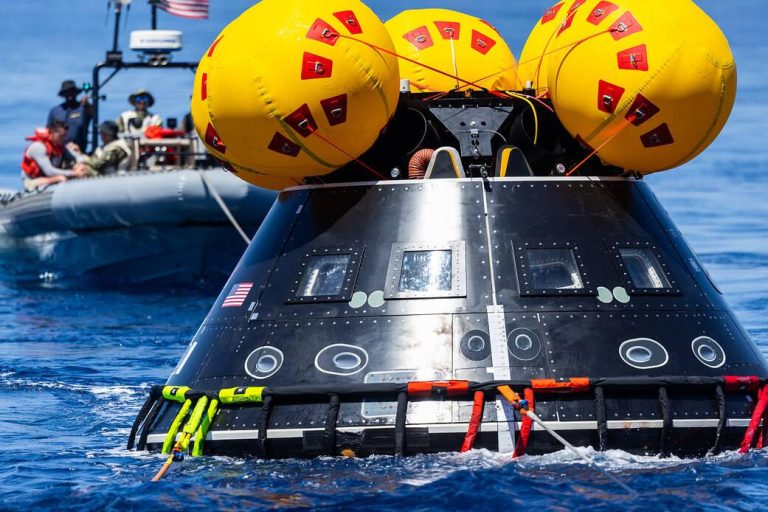
The Crew Module Test Article (CMTA), a full-scale mockup of NASA’s Orion spacecraft, is seen in the waters of the Pacific Ocean on July 26, 2023, during the first in a series of tests conducted by NASA and the Department of Defense to demonstrate and evaluate the processes, procedures, and hardware for recovery operations for crewed Artemis missions. This test is the first specifically in support of the Artemis II mission and allowed the team to practice what it will be like to recover astronauts and get them back to the recovery ship safely.