NASA has selected ASRC Federal Facilities Logistics, LLC, of Beltsville, Maryland for the Repairs, Operations, Maintenance and Engineering (ROME) contract.
This is an indefinite-delivery/indefinite-quantity contract with firm-fixed price and cost-plus, fixed-fee task orders. The minimum ordering value is $2.5 million and the maximum ordering value is $320 million over the five-year period of performance beginning on May 15. This is an 8(a) Small Business Set-Aside contract under Federal Acquisition Regulation (FAR) Part 19.
The contractor will provide services that include and are not limited to facilities operations and maintenance services, architect-engineering services, construction services, and facilities information resources services. Facilities include office buildings, technical facilities such as clean rooms, integration and test spaces, laboratories, launch facilities, an airfield, and warehouses. These facilities are supported by utilities that include electrical power, water, wastewater, storm water, steam, chilled water, gas, fire alarm, utility control system, and geothermal.
The work will include support services at NASA’s Goddard Space Flight Center in Greenbelt, Maryland, Wallops Flight Facility, including U.S. Naval operations, on Wallops Island, Virginia, and all Goddard associated facilities.
For information about NASA and agency programs, visit:
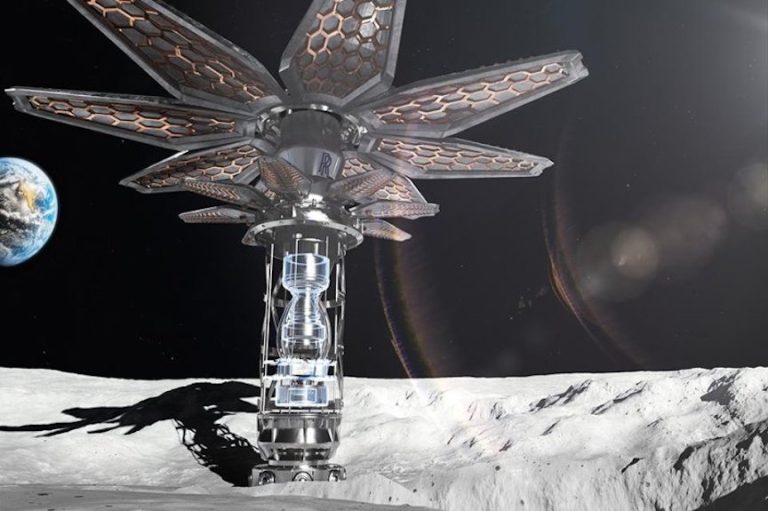
Rolls-Royce today announces it has secured funding from UK Space Agency, as it backs research by Rolls-Royce into how nuclear power could be used to support a future Moon base for astronauts.
Scientists and engineers at Rolls-Royce are working on the Micro-Reactor programme to develop technology that will provide power needed for humans to live and work on the Moon.
All space missions depend on a power source, to support systems for communications, life-support and science experiments. Nuclear power has the potential to dramatically increase the duration of future Lunar missions and their scientific value.
The UK Space Agency has announced £2.9 million of new funding for the project which will deliver an initial demonstration of a UK lunar modular nuclear reactor. This follows a £249,000 study funded by the UK Space Agency in 2022.
Minister of State at the Department of Science, Innovation and Technology, George Freeman, said: “Space exploration is the ultimate laboratory for so many of the transformational technologies we need on Earth: from materials to robotics, nutrition, cleantech and much more. “As we prepare to see humans return to the Moon for the first time in more than 50 years, we are backing exciting research like this lunar modular reactor with Rolls-Royce to pioneer new power sources for a lunar base. “Partnerships like this, between British industry, the UK Space Agency and government are helping to create jobs across our £16 billion Space Tech sector and help ensure the UK continues to be a major force in frontier science.”
Nuclear space power is anticipated to create new skilled jobs across the UK to support the burgeoning UK space economy. Rolls-Royce plan to have a reactor ready to send to the Moon by 2029.
Relatively small and lightweight compared to other power systems, a nuclear micro-reactor could enable continuous power regardless of location, available sunlight, and other environmental conditions.
Rolls-Royce will be working alongside a variety of collaborators including the University of Oxford, University of Bangor, University of Brighton, University of Sheffield’s Advanced Manufacturing Research Centre (AMRC) and Nuclear AMRC. The funding means Rolls-Royce can further strengthen its knowledge of these complex systems, with a focus on three key features of the Micro-Reactor; the fuel used to generate heat, the method of heat transfer and technology to convert that heat into electricity.
The potential applications of Rolls-Royce Micro-Reactor technology are wide-ranging and could support commercial and defence use cases in addition to those in space. The aim is to create a world-leading power and propulsion capability for multiple markets and operator needs, alongside a clean, green and long-term power source.
Abi Clayton, Director of Future Programmes for Rolls-Royce said: “The new tranche of funding from the UK Space Agency means so much for the Rolls-Royce Micro-Reactor Programme. We’re proud to work collaboratively with the UK Space Agency and the many UK academic institutions to showcase the best of UK innovation and knowledge in space. “This funding will bring us further down the road in making the Micro-Reactor a reality, with the technology bringing immense benefits for both space and Earth. The technology will deliver the capability to support commercial and defence use cases alongside providing a solution to decarbonise industry and provide clean, safe and reliable energy.”
Dr Paul Bate, Chief Executive of the UK Space Agency, said: “We are backing technology and capabilities to support ambitious space exploration missions and boost sector growth across the UK. Developing space nuclear power offers a unique chance to support innovative technologies and grow our nuclear, science and space engineering skills base. “This innovative research by Rolls-Royce could lay the groundwork for powering continuous human presence on the Moon, while enhancing the wider UK space sector, creating jobs and generating further investment.”
The partnership with Rolls-Royce comes after the UK Space Agency recently announced £51 million of funding available for UK companies to develop communication and navigation services for missions to the Moon, as part of the European Space Agency’s Moonlight programme, which aims to launch a constellation of satellites into orbit around the Moon.
This will allow future astronauts, rovers, science experiments and other equipment to communicate, share large amounts of data including high-definition video, and navigate safely across the lunar surface.
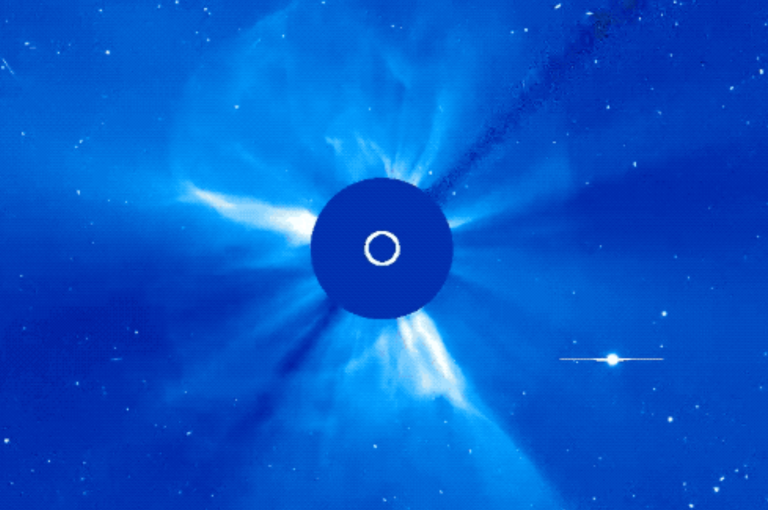
CME escaping from the Sun at 11:36 p.m. EDT on March 12, 2023. NASA
A massive eruption of solar material, known as a coronal mass ejection or CME, was detected escaping from the Sun at 11:36 p.m. EDT on March 12, 2023.
The CME erupted from the side of the Sun opposite Earth. While resarchers are still gathering data to determine the source of the eruption, it is currently believed that the CME came from former active region AR3234. This active region was on the Earth-facing side of the Sun from late February through early March, when it unleashed fifteen moderately intense M-class flares and one powerful X-class flare.
Based on an analysis by NASA’s Moon to Mars Space Weather Office, the CME was clocked in traveling at an unusually fast 2,127 kilometers (1,321 miles) per second, earning it a speed-based classification of a R (rare) type CME.
Even though the CME erupted from the opposite side of the Sun, its impacts were felt at Earth. As CMEs blast through space, they create a shockwave that can accelerate particles along the CME’s path to incredible speeds, much the way surfers are pushed along by an incoming ocean wave. Known as solar energetic particles, or SEPs, these speedy particles can make the 93-million-mile journey from the Sun to Earth in around 30 minutes.
Though SEPs are commonly observed after Earth-facing solar eruptions, they are less common for eruptions on the far side of the Sun. Nonetheless, spacecraft orbiting Earth detected SEPs from the eruption starting at midnight on March 12, meaning the CME was powerful enough to set off a broad cascade of collisions that managed to reach our side of the Sun. NASA’s space weather scientists are still analyzing the event to learn more about how it achieved this impressive and far-reaching effect.
The eruption is likely to have hit NASA’s Parker Solar Probe head-on. The spacecraft is currently nearing its 15th closest approach of the Sun (or perihelion), flying within 5.3 million miles (8.5 million kilometers) of the Sun on March 17. On March 13, the spacecraft sent a green beacon tone showing the spacecraft is in its nominal operational mode. The scientists and engineers are awaiting the next data download from the spacecraft, which will occur after the close approach, to learn more about this CME event and any potential impacts.
The eruption is known as a halo CME because it appears to spread out evenly from the Sun in a halo, or ring, around the Sun. Halo CMEs depend on the observer’s position, occurring when the solar eruption is aligned either directly towards Earth, or as in this case, directly away from Earth. This expanding ring is apparent in the view from NASA/ESA’s Solar and Heliospheric Observatory, or SOHO, spacecraft shown below. SOHO observes the Sun from a location about 1 million miles closer to the Sun along the Sun-Earth line. In SOHO’s view, the Sun’s bright surface is blocked to reveal the much fainter solar atmosphere and erupting solar material around it. The bright dot on the lower right side of the image is Mercury.
A simulation of the CME below shows the blast erupting from the Sun (located at the middle of the central white dot) and passing over Mercury (orange dot). Earth is a yellow circle located at the 3 o’clock position.
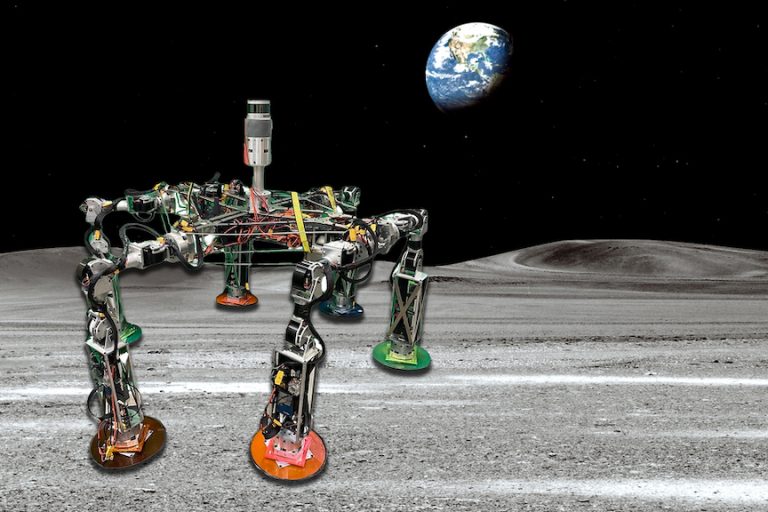
A team of MIT engineers is designing a kit of universal robotic parts that an astronaut could easily mix and match to build different robot “species” to fit various missions on the moon. Credits: Credit: hexapod image courtesy of the researchers, edited by MIT News
When astronauts begin to build a permanent base on the moon, as NASA plans to do in the coming years, they’ll need help.
Robots could potentially do the heavy lifting by laying cables, deploying solar panels, erecting communications towers, and building habitats. But if each robot is designed for a specific action or task, a moon base could become overrun by a zoo of machines, each with its own unique parts and protocols.
To avoid a bottleneck of bots, a team of MIT engineers is designing a kit of universal robotic parts that an astronaut could easily mix and match to rapidly configure different robot “species” to fit various missions on the moon. Once a mission is completed, a robot can be disassembled and its parts used to configure a new robot to meet a different task.
The team calls the system WORMS, for the Walking Oligomeric Robotic Mobility System. The system’s parts include worm-inspired robotic limbs that an astronaut can easily snap onto a base, and that work together as a walking robot. Depending on the mission, parts can be configured to build, for instance, large “pack” bots capable of carrying heavy solar panels up a hill. The same parts could be reconfigured into six-legged spider bots that can be lowered into a lava tube to drill for frozen water.
“You could imagine a shed on the moon with shelves of worms,” says team leader George Lordos, a PhD candidate and graduate instructor in MIT’s Department of Aeronautics and Astronautics (AeroAstro), in reference to the independent, articulated robots that carry their own motors, sensors, computer, and battery. “Astronauts could go into the shed, pick the worms they need, along with the right shoes, body, sensors and tools, and they could snap everything together, then disassemble it to make a new one. The design is flexible, sustainable, and cost-effective.”
Lordos’ team has built and demonstrated a six-legged WORMS robot. Last week, they presented their results at IEEE’s Aerospace Conference, where they also received the conference’s Best Paper Award.
MIT team members include Michael J. Brown, Kir Latyshev, Aileen Liao, Sharmi Shah, Cesar Meza, Brooke Bensche, Cynthia Cao, Yang Chen, Alex S. Miller, Aditya Mehrotra, Jacob Rodriguez, Anna Mokkapati, Tomas Cantu, Katherina Sapozhnikov, Jessica Rutledge, David Trumper, Sangbae Kim, Olivier de Weck, Jeffrey Hoffman, along with Aleks Siemenn, Cormac O’Neill, Diego Rivero, Fiona Lin, Hanfei Cui, Isabella Golemme, John Zhang, Jolie Bercow, Prajwal Mahesh, Stephanie Howe, and Zeyad Al Awwad, as well as Chiara Rissola of Carnegie Mellon University and Wendell Chun of the University of Denver.
Animal instincts
WORMS was conceived in 2022 as an answer to NASA’s Breakthrough, Innovative and Game-changing (BIG) Idea Challenge — an annual competition for university students to design, develop, and demonstrate a game-changing idea. In 2022, NASA challenged students to develop robotic systems that can move across extreme terrain, without the use of wheels.
A team from MIT’s Space Resources Workshop took up the challenge, aiming specifically for a lunar robot design that could navigate the extreme terrain of the moon’s South Pole — a landscape that is marked by thick, fluffy dust; steep, rocky slopes; and deep lava tubes. The environment also hosts “permanently shadowed” regions that could contain frozen water, which, if accessible, would be essential for sustaining astronauts.
As they mulled over ways to navigate the moon’s polar terrain, the students took inspiration from animals. In their initial brainstorming, they noted certain animals could conceptually be suited to certain missions: A spider could drop down and explore a lava tube, a line of elephants could carry heavy equipment while supporting each other down a steep slope, and a goat, tethered to an ox, could help lead the larger animal up the side of a hill as it transports an array of solar panels.
“As we were thinking of these animal inspirations, we realized that one of the simplest animals, the worm, makes similar movements as an arm, or a leg, or a backbone, or a tail,” says deputy team leader and AeroAstro graduate student Michael Brown. “And then the lightbulb went off: We could build all these animal-inspired robots using worm-like appendages.’”
Snap on, snap off
Lordos, who is of Greek descent, helped coin WORMS, and chose the letter “O” to stand for “oligomeric,” which in Greek signifies “a few parts.”
“Our idea was that, with just a few parts, combined in different ways, you could mix and match and get all these different robots,” says AeroAstro undergraduate Brooke Bensche.
The system’s main parts include the appendage, or worm, which can be attached to a body, or chassis, via a “universal interface block” that snaps the two parts together through a twist-and-lock mechanism. The parts can be disconnected with a small tool that releases the block’s spring-loaded pins.
Appendages and bodies can also snap into accessories such as a “shoe,” which the team engineered in the shape of a wok, and a LiDAR system that can map the surroundings to help a robot navigate.
“In future iterations we hope to add more snap-on sensors and tools, such as winches, balance sensors, and drills,” says AeroAstro undergraduate Jacob Rodriguez.
The team developed software that can be tailored to coordinate multiple appendages. As a proof of concept, the team built a six-legged robot about the size of a go-cart. In the lab, they showed that once assembled, the robot’s independent limbs worked to walk over level ground. The team also showed that they could quickly assemble and disassemble the robot in the field, on a desert site in California.
In its first generation, each WORMS appendage measures about 1 meter long and weighs about 20 pounds. In the moon’s gravity, which is about one-sixth that of Earth’s, each limb would weigh about 3 pounds, which an astronaut could easily handle to build or disassemble a robot in the field. The team has planned out the specs for a larger generation with longer and slightly heavier appendages. These bigger parts could be snapped together to build “pack” bots, capable of transporting heavy payloads.
“There are many buzz words that are used to describe effective systems for future space exploration: modular, reconfigurable, adaptable, flexible, cross-cutting, et cetera,” says Kevin Kempton, an engineer at NASA’s Langley Research Center, who served as a judge for the 2022 BIG Idea Challenge. “The MIT WORMS concept incorporates all these qualities and more.”
This research was supported, in part, by NASA, MIT, the Massachusetts Space Grant, the National Science Foundation, and the Fannie and John Hertz Foundation.
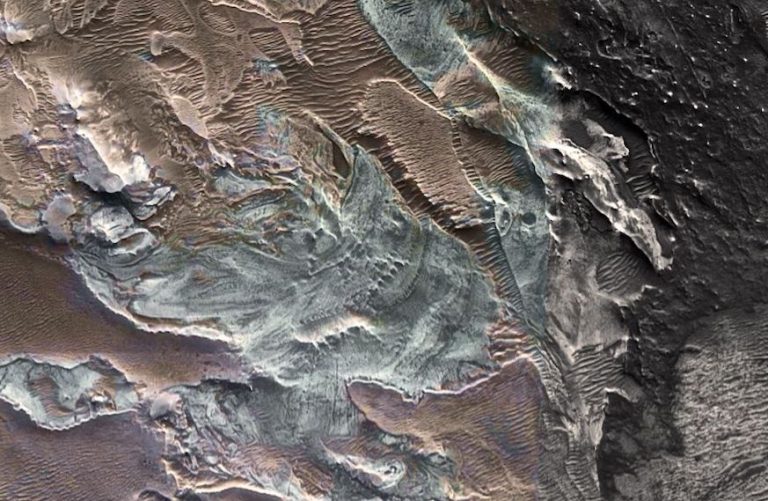
Figure 1: A Relict Glacier near Mars’ Equator. (NASA MRO HiRISE and CRISM false color composite. Lee et al. 2023).
If there is still water ice preserved at shallow depths at a low latitude on Mars, there would be implications for science and human exploration.
In a groundbreaking announcement at the 54th Lunar and Planetary Science Conference held in The Woodlands, Texas, scientists revealed the discovery of a relict glacier near Mars’ equator. Located in Eastern Noctis Labyrinthus at coordinates 7° 33′ S, 93° 14′ W, this finding is significant as it implies the presence of surface water ice on Mars in recent times, even near the equator. This discovery raises the possibility that ice may still exist at shallow depths in the area, which could have significant implications for future human exploration.
The surface feature identified as a “relict glacier” is one of many light-toned deposits (LTDs) found in the region. Typically, LTDs consist mainly of light-colored sulfate salts, but this deposit also shows many of the features of a glacier, including crevasse fields and moraine bands. The glacier is estimated to be 6 kilometers long and up to 4 kilometers wide, with a surface elevation ranging from +1.3 to +1.7 kilometers. This discovery suggests that Mars’ recent history may have been more watery than previously thought, which could have implications for understanding the planet’s habitability.
“What we’ve found is not ice, but a salt deposit with the detailed morphologic features of a glacier. What we think happened here is that salt formed on top of a glacier while preserving the shape of the ice below, down to details like crevasse fields and moraine bands,” said Dr. Pascal Lee, a planetary scientist with the SETI Institute and the Mars Institute, and the lead author of the study.
Figure 2: Interpretation of the “Relict Glacier” ‘s features. (Lee et al. 2023).
The presence of volcanic materials blanketing the region hints of how the sulfate salts might have formed and preserved a glacier’s imprint underneath. When freshly erupted pyroclastic materials (mixtures of volcanic ash, pumice, and hot lava blocks) come in contact with water ice, sulfate salts like the ones commonly making up Mars’ light-toned deposits may form and build up into a hardened, crusty salt layer.
“This region of Mars has a history of volcanic activity. And where some of the volcanic materials came in contact with glacier ice, chemical reactions would have taken place at the boundary between the two to form a hardened layer of sulfate salts,” explains Sourabh Shubham, a graduate student at the University of Maryland’s Department of Geology, and a co-author of the study. “This is the most likely explanation for the hydrated and hydroxylated sulfates we observe in this light-toned deposit.”
Over time, with erosion removing the blanketing volcanic materials, a crusty layer of sulfates mirroring the glacier ice underneath became exposed, which would explain how a salt deposit is now visible, presenting features unique to glaciers such as crevasses and moraine bands.
“Glaciers often present distinctive types of features, including marginal, splaying, and tic-tac-toe crevasse fields, and also thrust moraine bands and foliation. We are seeing analogous features in this light-toned deposit, in form, location, and scale. It’s very intriguing,” said John Schutt, a geologist at the Mars Institute, experienced icefield guide in the Arctic and Antarctica, and a co-author of this study.
The glacier’s fine-scale features, its associated sulfate salts deposit, and the overlying volcanic materials are all very sparsely cratered by impacts and must be geologically young, likely Amazonian in age, the latest geologic period which includes modern Mars. “We’ve known about glacial activity on Mars at many locations, including near the equator in the more distant past. And we’ve known about recent glacial activity on Mars, but so far, only at higher latitudes. A relatively young relict glacier in this location tells us that Mars experienced surface ice in recent times, even near the equator, which is new,” said Lee.
It remains to be seen whether water ice might still be preserved underneath the light-toned deposit or if it has disappeared entirely. “Water ice is, at present, not stable at the very surface of Mars near the equator at these elevations. So, it’s not surprising that we’re not detecting any water ice at the surface. It is possible that all the glacier’s water ice has sublimated away by now. But there’s also a chance that some of it might still be protected at shallow depth under the sulfate salts.”
The study draws an analogy with the ancient ice islands on salt lakebeds, or salars, of the Altiplano in South America. There, old glacier ice has remained protected from melting, evaporation, and sublimation underneath blankets of bright salts. Lee and his co-authors hypothesize a similar situation to explain how sulfate salts on Mars might be able to offer protection to otherwise sublimation-vulnerable ice at low latitudes on the planet.
If there is still water ice preserved at shallow depths at a low latitude on Mars, there would be implications for science and human exploration. “The desire to land humans at a location where they might be able to extract water ice from the ground has been pushing mission planners to consider higher latitude sites. But the latter environments are typically colder and more challenging for humans and robots. If there were equatorial locations where ice might be found at shallow depth, then we’d have the best of both environments: warmer conditions for human exploration and still access to ice,” said Lee.
But Lee cautions that more work still needs to be done: “We now have to determine if, and how much, water ice might actually be present in this relict glacier, and whether other light-toned deposits might also have, or have had, ice-rich substrates.”
About the SETI Institute
Founded in 1984, the SETI Institute is a non-profit, multidisciplinary research and education organization whose mission is to lead humanity’s quest to understand the origins and prevalence of life and intelligence in the universe and share that knowledge with the world. Research at the SETI Institute encompasses the physical and biological sciences and leverages expertise in data analytics, machine learning and advanced signal detection technologies. The SETI Institute is a distinguished research partner for industry, academia and government agencies, including NASA and NSF.
About Mars Institute
The Mars Institute is a non-profit research organization dedicated to the advancement of Mars science, exploration, and the public understanding of Mars. Research at the Mars Institute focuses Mars and other planetary destinations that may serve as stepping-stones to Mars, in particular Mars’ moons, our Moon, and near-Earth objects. The Mars Institute investigates the technologies and strategies that will enable and optimize the future human exploration of Mars. The Mars Institute operates the Haughton-Mars Project Research Station on Devon Island, High Arctic.
Rebecca McDonald Director of Communications SETI Institute 339 Bernardo Ave, Suite 200 Mountain View, CA 94043 USA E-mail: [email protected] Tel: 650-960-4526
Dr Pascal Lee Planetary Scientist SETI Institute & Mars Institute NASA Ames Research Center MS 245-3 Moffett Field, CA 94035-1000 USA E-mail: [email protected]
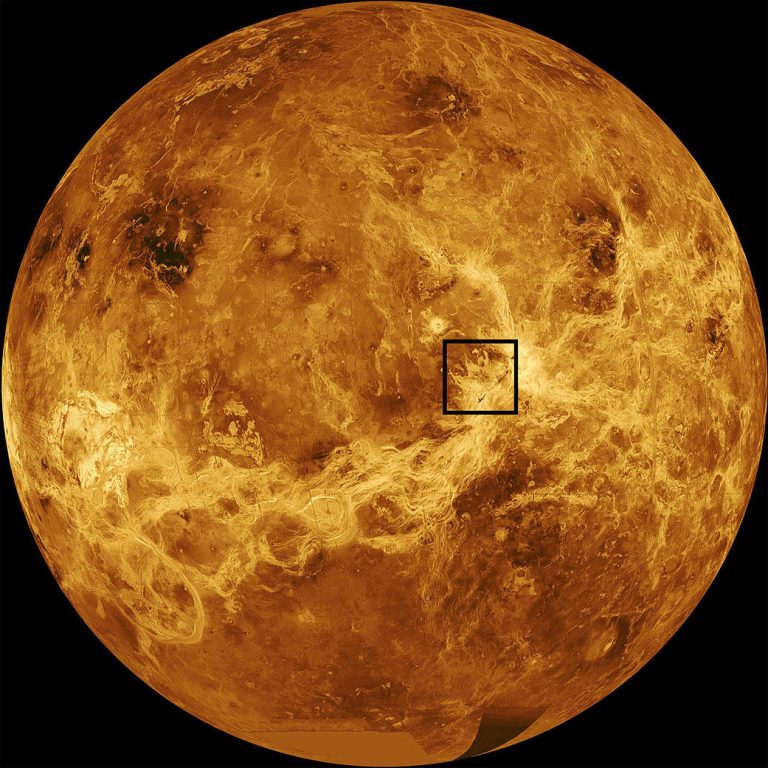
This image uses data from NASA’s Magellan spacecraft to show Maat Mons, the tallest volcano on Venus. Magellan imaged the surface of Venus from orbit in the early 1990s, collecting data that continue to yield new discoveries about the planet. Just this week, researchers studying Magellan images announced their discovery of the first-ever signs of possible active volcanism on Venus. Image credit: NASA/JPL. Learn more
You love space, now take action
This weekly newsletter is your toolkit to learn more about space, share information with your friends and family, and take direct action to support exploration. Anyone can subscribe at planetary.org/connect to receive it as a weekly email.
Fact Worth Sharing
Although volcanic activity used to be rampant in the Solar System, it’s now rare. Other worlds have active cryovolcanism (ice volcanoes), but Earth, Io, and now Venus are the only worlds known to currently have rocky, lava-spewing volcanoes.
Mission Briefings
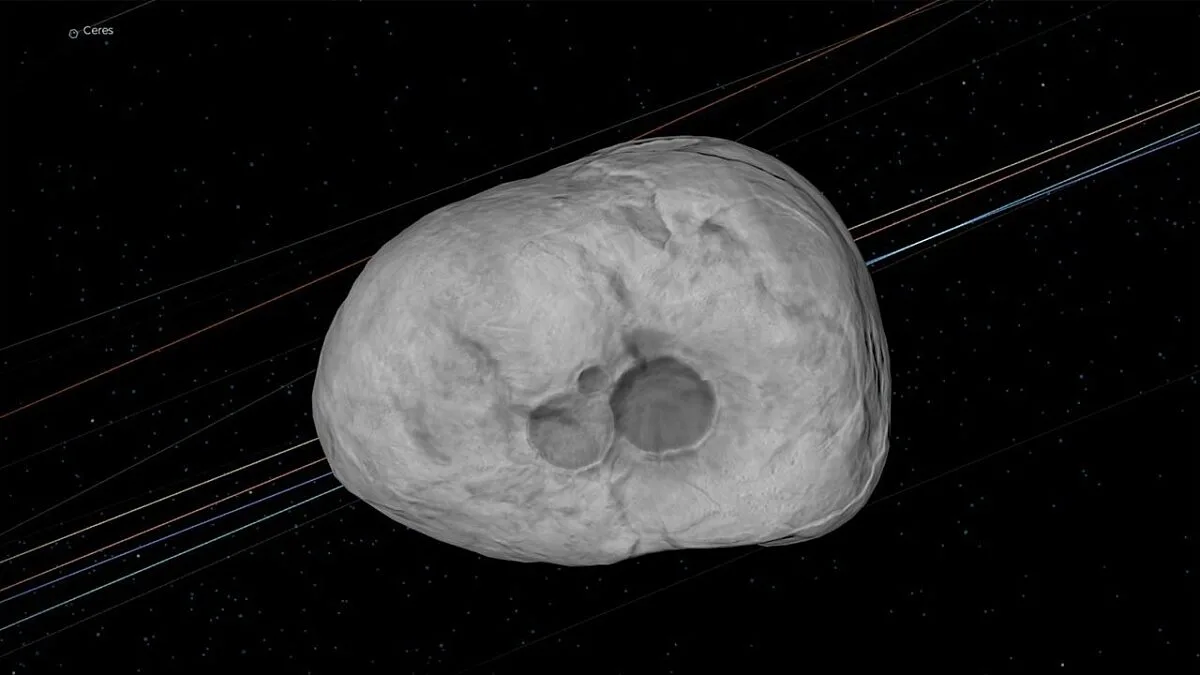
A newly discovered asteroid has a small chance of hitting Earth in 2046, but don’t panic. The asteroid, named 2023 DW and discovered on Feb. 2, is the only asteroid that currently ranks higher than zero on NASA’s Torino Impact Hazard Scale, which categorizes the projected risk of an object colliding with Earth. Still, 2023 DW’s ranking of one on the scale means that “the chance of collision is extremely unlikely with no cause for public attention or public concern.” As more observations better define the asteroid’s orbit, the probability of impact will drop and likely go to zero. Pictured: An illustration of the asteroid. Note that its physical characteristics have not actually been established yet. Image credit: NASA.
The Biden Administration’s proposed NASA budget is out. The $27.2 billion budget proposed for NASA’s 2024 fiscal year, if approved by Congress, would represent a 7% increase over 2023 levels. The Planetary Society is supportive of this budget request, but also calls on Congress to prevent delays to the VERITAS Venus mission and the Mars Sample Return program.
NASA is making plans for how it will deorbit the International Space Station. The agency’s latest budget request includes funding to develop a module that would tug the station to a lower orbit to ensure it reenters Earth’s atmosphere over the South Pacific, where large spacecraft can most safely crash. The station, which has been continuously occupied since 2000, is scheduled to come down in 2031.
Get ready to find out which astronauts will get to fly around the Moon. NASA and the Canadian Space Agency (CSA) are due to announce the crew of the Artemis II mission on April 3. This crew, which will include three NASA astronauts and one CSA astronaut, will conduct a 10-day mission beyond the Moon, testing the Orion spacecraft’s systems before it takes another crew to the lunar surface.
From The Planetary Society
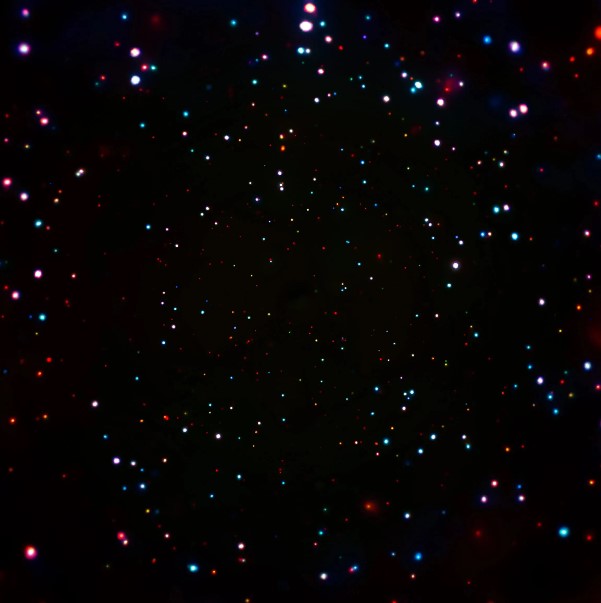
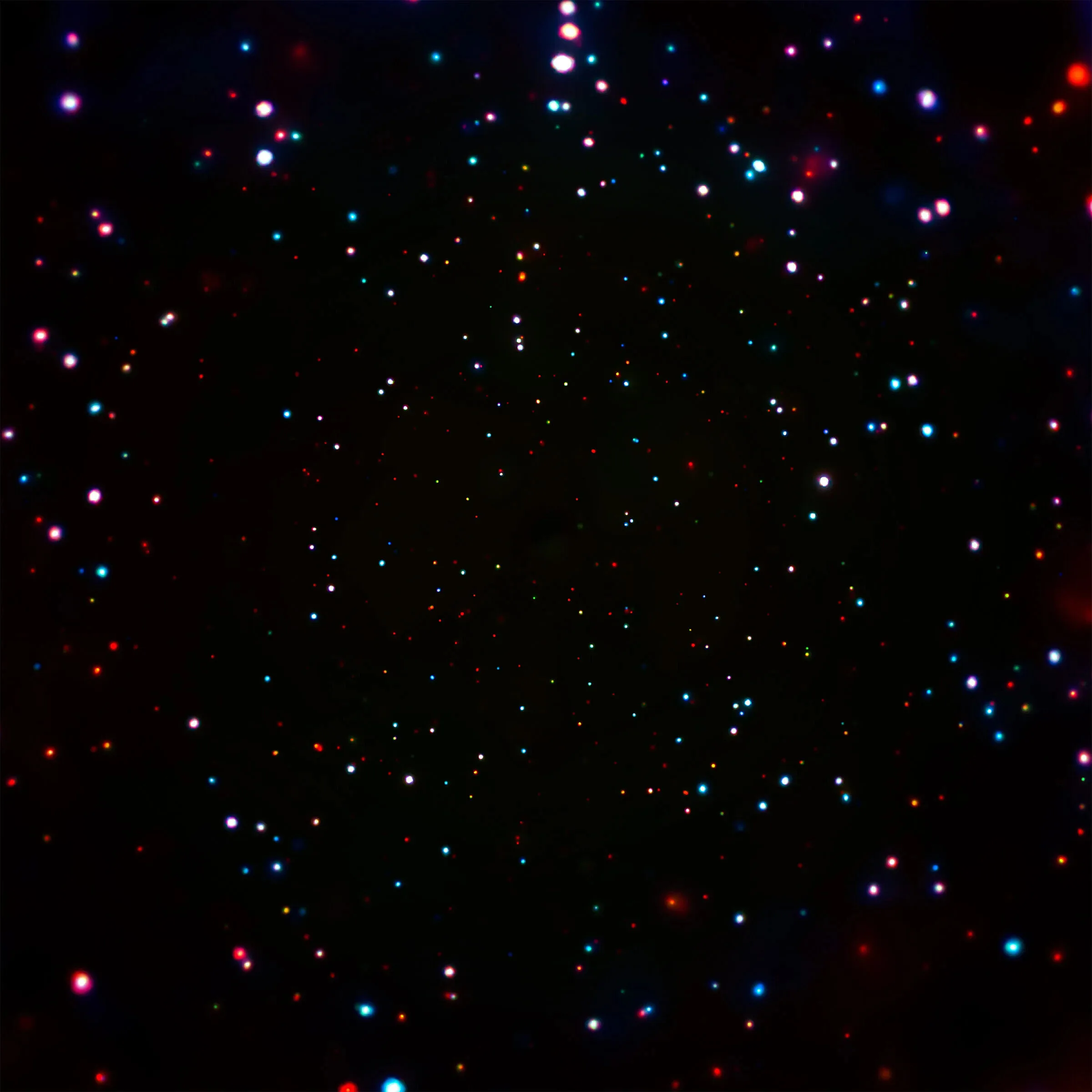
Space images sound as beautiful and intriguing as they look. This image taken by NASA’s Chandra X-Ray Observatory shows about 5,000 black holes over the area of the sky covered by the full Moon, the highest concentration of black holes ever seen. This is a stunning sight, but how might it sound? Kim Arcand, Chandra visualization scientist, joins this week’s Planetary Radio to share her team’s new album “Universal Harmonies,” a collection of sonified observations taken by the space telescope that aims to make space images more accessible to people with low or no vision. Pictured: The colors in this image represent different levels of X-ray energy detected by Chandra. Here the lowest-energy X-rays are red, the medium band is green, and the highest-energy X-rays are blue. Image credit: NASA/CXC/Penn State/B.Luo et al.
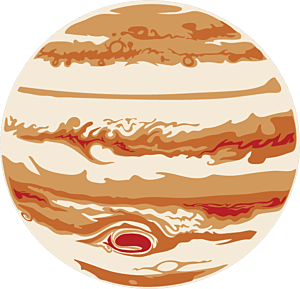
Meet Jupiter’s tiny new moons. With 12 moons added to its official count, Jupiter now has the largest number of natural satellites in the Solar System. This may well change, as new Saturnian candidate moons await confirmation. Read more about how we find these tiny moons, and what they can teach us about our corner of the Cosmos.
Bill Nye is excited about the year in space, and you should be too. The Planetary Society’s CEO joined the latest This Week in Space podcast to talk about exploration milestones to look forward to, achievements he’s proud of, and what it takes to engage the public in the adventure of science.
What’s Up
Super bright Venus shines in the evening western sky, with bright Jupiter below it. Mars is high overhead, looking reddish. Just before dawn, Saturn is starting to come up very low to the east. Learn more about what the rest of the month’s night skies have in store for you.
Wow of the Week
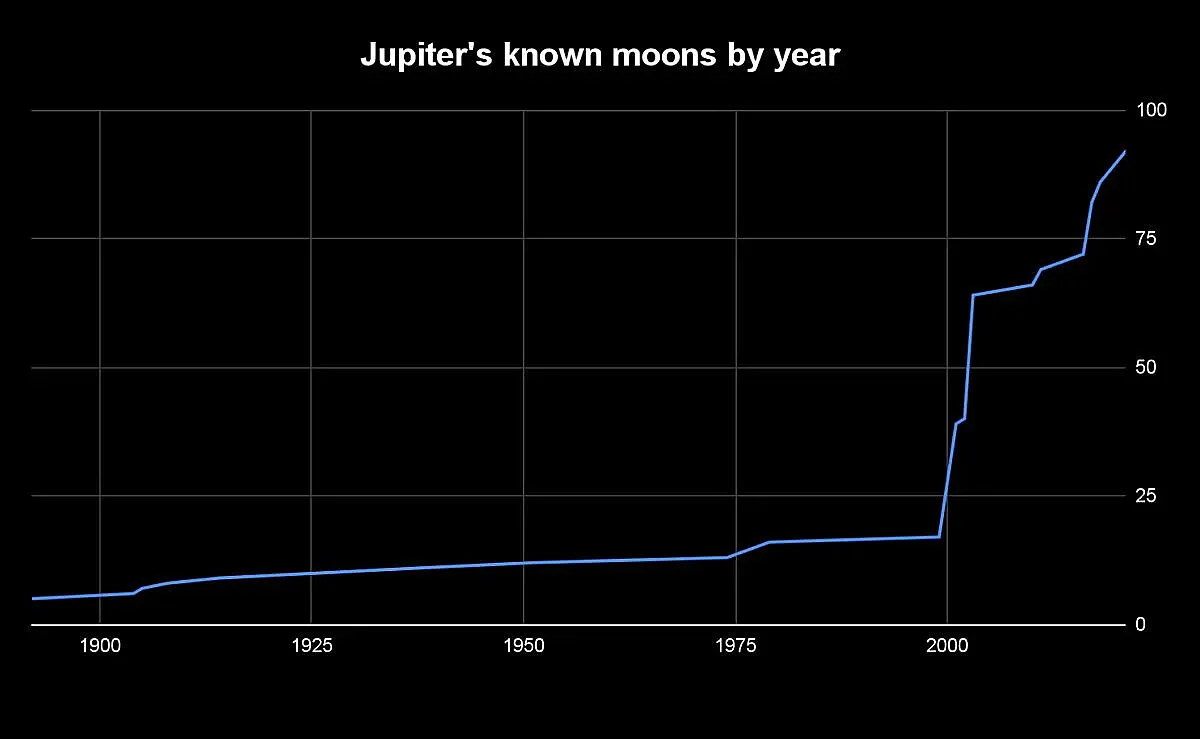
Space exploration technology is the key to all cosmic “wows.” This chart shows how the number of known Jovian moons skyrocketed around the year 2000, when digital imaging technology started being applied to large telescopes. What new technology will unlock the next leap forward in our understanding of the Cosmos? Image credit: Data by Scott Sheppard, visualization by Jason Davis.
Send us your artwork!
We love to feature space artwork in the Downlink. If you create any kind of space-related art, we invite you to send it to us by replying to any Downlink email or writing to [email protected]. Please let us know in your email if you’re a Planetary Society member!
Maat Mons, a volcano on Venus that has shown signs of a recent eruption, is in the black square near the planet’s equator in this annotated, computer-simulated global map of Venus’ surface.
Scientists discovered direct geological evidence of recent volcanic activity on Venus by poring over archival radar images taken over 30 years ago by NASA’s Magellan mission. The images revealed a volcanic vent changing shape and increasing significantly in size in less than a year.
The Planetary Society and the Planetary Defense Conference are proud to present a special screening of the IMAX original film “Asteroid Hunters” in Vienna, Austria on Wednesday, 5 April. The Planetary Society’s Senior Communications Adviser and Planetary Radio creator Mat Kaplan will host a Q&A with an international group of scientists and planetary defense experts after the screening.
About “Asteroid Hunters”
Meet asteroid scientists and discover the cutting-edge tools and techniques they use to detect and track asteroids, and the technology that may one day protect our planet. The effects of an asteroid impact could be catastrophic and while the current probability of an event in our lifetime is low, the potential consequences make the study of asteroids an incredibly important area of scientific research. Witness the latest in planetary defense and how science, ingenuity, and determination combine to explore the world’s most preventable natural disaster. Narrated by Daisy Ridley.
Speakers include
Bill Ailor, Aerospace Corporation technical fellow
Mark Boslough, research professor and airburst specialist at the University of New Mexico
Marina Brozovic, physicist at NASA’s Jet Propulsion Laboratory
Ian Carnelli, project manager of ESA’s Hera mission
Paul Chodas, manager of NASA’s Center for Near-Earth Object Studies (CNEOS)
Kelly Fast, program manager for NASA’s Near-Earth Object Observations Program
Event date: Wednesday, 5 April
Time: 20:15 until 22:30 CEST
Price: Free
Location: Cineplexx Donau Zentrum 13 IMAX
Wagramerstraße 79 Westfield Donau Zentrum, 1220 Wien, Austria
Seating is limited, and reservations are required.
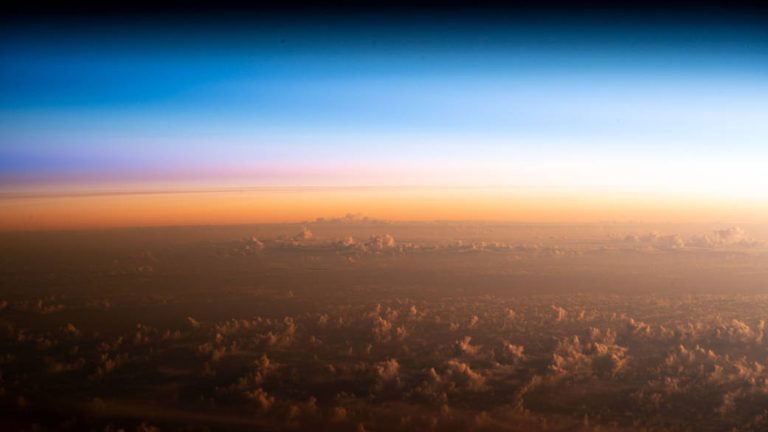
An orbital sunrise reveals cloud tops above the Pacific Ocean northeast of New Zealand as the International Space Station orbited 260 miles above on Feb. 10, 2023. Astronauts aboard the space station see 16 sunrises and sunsets per day due to their high orbital velocity—17,500 miles per hour. In the more than 20 years that people have been living aboard, the station has circumnavigated Earth tens of thousands of times.
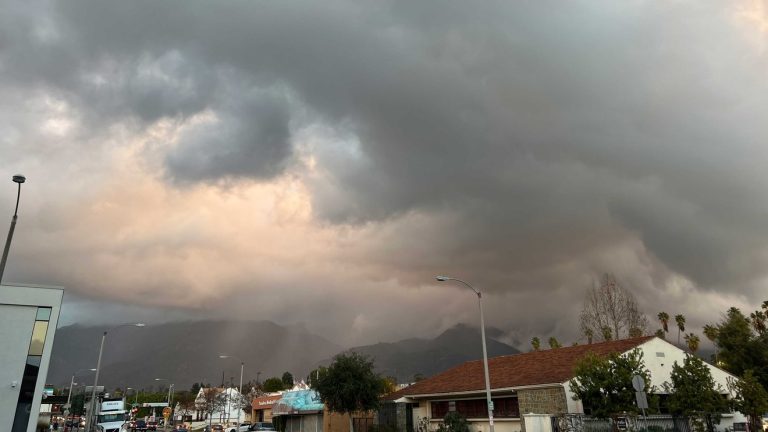
Dark clouds roil the sky above Pasadena, California, during an atmospheric river event. A series of nine such storms delivered record amounts of rain and snow to the state and caused multiple deaths between late 2022 and January 2023. Additional atmospheric rivers have inundated California since. Credit: NASA/JPL-Caltech
Like hurricane categories, a scale for atmospheric river storm severity could help communities around the globe compare and prepare.
Atmospheric rivers – vast airborne corridors of water vapor flowing from Earth’s tropics toward higher latitudes – can steer much-needed rain to parched lands. But in extreme form, they can also cause destruction and loss of life, as recently occurred in parts of California. Their effects, both hazardous and beneficial, are felt globally.
A new study using NASA data shows that a recently developed rating system can provide a consistent global benchmark for tracking these “rivers in the sky.” Research into atmospheric rivers has largely focused on the west coasts of North America and Europe. The new findings help expand our understanding of how these storms arise, evolve, and impact communities all over the world. In addition, the ratings could help meteorologists better warn people to plan for them.
NASA’s Atmospheric Infrared Sounder (AIRS) aboard the Aqua satellite captured a series of atmospheric rivers that impacted much of Western North America in early 2023, as seen in this animation showing cloud temperatures. Cooler clouds – shown in blue and purple – are associated with very heavy rainfall. Credit: NASA/JPL-Caltech
The findings also revealed an increasing number of atmospheric river events around the world and across all ranks, with peak activity in mid-latitude oceans (temperate belts roughly between 30 and 60 degrees north and south).
To help forecast the potential strength and impacts of the storms as they make landfall on the West Coast of North America, meteorologists from the Scripps Institution of Oceanography at the University of California, San Diego, along with the National Weather Service, introduced an atmospheric river (AR) scale in 2019. By ranking them from 1 to 5, or weakest to strongest, the scientists sought to differentiate between primarily beneficial storms versus primarily hazardous ones. By one estimate, insured losses due to flood damages increase by a factor of 10 with every step up in rank, with AR 5 events linked to a median damage amount of $260 million in the Western U.S.
Shaping the Water Cycle
Although the term “atmospheric river” was only coined in 1994, the storms’ impacts were felt well before then. Scientists have estimated some 300 million people worldwide are at risk for flooding due to atmospheric rivers which, on average, transport quantities of water vapor more than double the flow of the Amazon River. A growing body of research is exploring how these storms play a critical role in shaping the global water cycle from the Andes to the Arctic, where moisture from atmospheric rivers has recently been found to melt and slow the seasonal recovery of sea ice.
An atmospheric river system that traveled across the Pacific Ocean in 2017 is captured here in satellite imagery by NASA’s AIRS instrument. Scientists are working to understand how these powerful storms impact regions of the world beyond western North America and Europe. Credit: NASA/JPL-Caltech
In the new study, scientists built a database of global atmospheric river events from 1980 to 2020, using a computer algorithm to automatically identify tens of thousands of the events in the Modern-Era Retrospective analysis for Research and Applications, version 2 (MERRA-2), a NASA re-analysis of historical atmospheric observations. To rank the events, the study authors then applied the atmospheric river scale, which is based on a storm’s expected duration and maximum rate of water vapor transport.
Across the 40 years studied, higher-ranked storms lasted longer and traveled farther than lower-ranked storms. Mean travel distance was found to be about 400 miles (650 kilometers) with AR 1 and about 2,900 miles (4,700 kilometers) with AR 5, while mean lifetime was about 17 hours for AR 1 and 110 hours for AR 5. Higher-ranked storms (AR 4 and AR 5) were less common and tended to begin their life cycle closer to the tropics while ending in colder, higher-latitude regions.
Additionally, the scientists detected an increase in atmospheric river frequency during strong El Niño years.
Diagnosing a Storm
“The current study helps to highlight the global reach of atmospheric rivers, as well as their possible origins, including in less-explored regions where the environmental conditions and societal impacts could be different from where we currently live [in the United States],” said lead author Bin Guan, a scientist at the Joint Institute for Regional Earth System Science and Engineering (JIFRESSE). The institute is a collaboration between University of California, Los Angeles and NASA’s Jet Propulsion Laboratory in Southern California.
A uniform scale can be useful for diagnosing atmospheric rivers in an era of instant communications, the scientists said. A key advantage is that the ratings minimize possible confusion when comparing the same meteorological phenomenon across languages and cultures. They noted this has not been the case for some more familiar weather events, such as tropical cyclones, which have been categorized using different thresholds in different regions.
Guan and colleagues said that taking the next step and translating the scale into region-specific impacts will require more research that takes into consideration local characteristics. They noted that many factors, from geography to socioeconomics, can influence how a storm is perceived by those who weather it.