
Home Blog Page 99

Hydrogen Masers Reveal New Secrets Of Massive Star MWC 349A

0
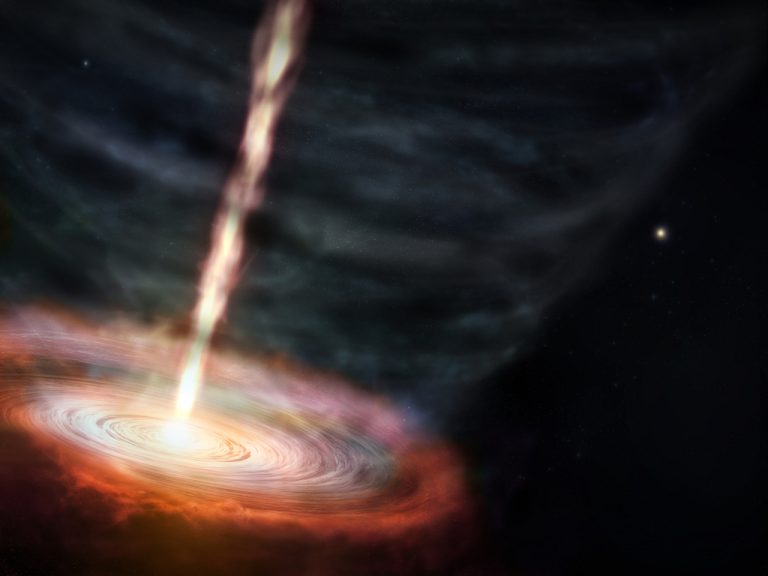
Like lasers in visible light, masers are amplified electromagnetic waves in the microwave wavelengths. We use masers generated by hydrogen to probe the physical and dynamic structures in the gas surrounding star MWC 349A, which is about 30 times the mass of the Sun. Analysis of observations with the Atacama Millimeter/submillimeter Array revealed a flattened gas disk with a diameter of 50 au, approximately the size of the solar system, and a wind moving away from the star at a speed of 500 km/s, possibly launched by the magnetic force. Credit: NRAO/Melissa Weiss

While using the Atacama Large Millimeter/submillimeter Array (ALMA) to study the masers around oddball star MWC 349A scientists discovered something unexpected: a previously unseen jet of material launching from the star’s gas disk at impossibly high speeds.

What’s more, they believe the jet is caused by strong magnetic forces surrounding the star. The discovery could help researchers to understand the nature and evolution of massive stars and how hydrogen masers are formed in space. The new observations were presented today in a press conference at the 241st meeting of the American Astronomical Society (AAS) in Seattle, Washington.

Located roughly 3,900 light-years away from Earth in the constellation Cygnus, MWC 349A’s unique features make it a hot spot for scientific research in optical, infrared, and radio wavelengths. The massive star— roughly 30 times the mass of the Sun— is one of the brightest radio sources in the sky, and one of only a handful of objects known to have hydrogen masers. These masers amplify microwave radio emissions, making it easier to study processes that are typically too small to see. It is this unique feature that allowed scientists to map MWC 349A’s disk in detail for the first time.

“A maser is like a naturally occurring laser,” said Sirina Prasad, an undergraduate research assistant at the Center for Astrophysics | Harvard & Smithsonian (CfA), and the primary author of the paper. “It’s an area in outer space that emits a really bright kind of light. We can see this light and trace it back to where it came from, bringing us one step closer to figuring out what’s really going on.”

Leveraging the resolving power of ALMA’s Band 6, developed by the US National Science Foundation’s National Radio Astronomy Observatory (NRAO), the team was able to use the masers to uncover the previously unseen structures in the star’s immediate environment. Qizhou Zhang, a senior astrophysicist at CfA, and the project’s principal investigator added, “We used masers generated by hydrogen to probe the physical and dynamic structures in the gas surrounding MWC 349A and revealed a flattened gas disk with a diameter of 50 au, approximately the size of the Solar System, confirming the near-horizontal disk structure of the star. We also found a fast-moving jet component hidden within the winds flowing away from the star.”

The observed jet is ejecting material away from the star at a blistering 500 km per second. That’s akin to traveling the distance between San Diego, California and Phoenix, Arizona in the literal blink of an eye. According to researchers, it is probable that a jet moving this fast is being launched by a magnetic force. In the case of MWC 349A, that force could be a magnetohydrodynamic wind— a type of wind whose movement is dictated by the interplay between the star’s magnetic field and gases present in its surrounding disk.

“Our previous understanding of MWC 349A was that the star was surrounded by a rotating disk and photo-evaporating wind. Strong evidence for an additional collimated jet had not yet been seen in this system. Although we don’t yet know for certain where it comes from or how it is made, it could be that a magnetohydrodynamic wind is producing the jet, in which case the magnetic field is responsible for launching rotating material from the system,” said Prasad. “This could help us to better understand the disk-wind dynamics of MWC 349A, and the interplay between circumstellar disks, winds, and jets in other star systems.”

About NRAO

The National Radio Astronomy Observatory (NRAO) is a facility of the National Science Foundation, operated under cooperative agreement by Associated Universities, Inc.

About ALMA

The Atacama Large Millimeter/submillimeter Array (ALMA), an international astronomy facility, is a partnership of the European Organisation for Astronomical Research in the Southern Hemisphere (ESO), the U.S. National Science Foundation (NSF) and the National Institutes of Natural Sciences (NINS) of Japan in cooperation with the Republic of Chile. ALMA is funded by ESO on behalf of its Member States, by NSF in cooperation with the National Research Council of Canada (NRC) and the Ministry of Science and Technology (MOST) and by NINS in cooperation with the Academia Sinica (AS) in Taiwan and the Korea Astronomy and Space Science Institute (KASI).

ALMA construction and operations are led by ESO on behalf of its Member States; by the National Radio Astronomy Observatory (NRAO), managed by Associated Universities, Inc. (AUI), on behalf of North America; and by the National Astronomical Observatory of Japan (NAOJ) on behalf of East Asia. The Joint ALMA Observatory (JAO) provides the unified leadership and management of the construction, commissioning and operation of ALMA.

By Keith Cowing
Source SpaceRef

Why Go Back To The Moon?

0

In a new book, Joseph Silk explores what the moon can offer humans over the next half century.

As our nearest celestial neighbor, the moon has forever captured the awe of human beings. Some ancient cultures worshipped it as a deity or believed its eclipses to be omens. It was Galileo peering through an early telescope in 1609 who discovered the moon’s rocky surface, and NASA’s Apollo 11 mission in 1969 that sent the first humans to walk upon it.

A half-century has now passed since humans last made direct contact with the moon, with Apollo 17 in 1972. But a new era of exploration has begun with zeal, as a number of space agencies and commercial ventures worldwide launch ambitious lunar projects.

Look forward another half-century or so, says Silk, a Johns Hopkins University astrophysicist, and the moon could be teeming with activity: hotels and villages, lunar mining, ports into deeper space, and giant telescopes that could make the James Webb technology look amateur.

“We will build on the moon. We will colonize the moon. We will exploit the moon. We will do science on the moon,” Silk writes in his new book, Back to the Moon: The Next Giant Leap for Humankind (Princeton University Press, 2022). “Lunar science will open up new vistas on the most profound questions we have ever posed.”

As Back to the Moon hits shelves, there is tangible progress on this front. The Japanese company ispace intends to become the first private venture to make a cargo delivery to the moon, aboard a SpaceX rocket. At the same time, NASA is commencing the first test phase of its $93 billion Artemis program, which will send four astronauts to the moon in 2025 and establish a permanent base there, with the grand ambition to use the moon as a launchpad for the first-ever crewed mission to Mars.

A professor of physics and astronomy, Silk has penned previous books on the big bang, infinity, and other weighty cosmological topics. In Back to the Moon, he posits that the moon in fact offers our only pathway to surpassing the current limits of astronomy. “We’re running out of resources on Earth for it,” he says, “but the moon provides a site for achieving much more.”

The low gravity on the moon, for instance, could allow for easier manufacturing of megatelescopes 10 times larger than what’s possible on Earth, and the lack of lunar atmosphere can allow those telescopes to peer farther afield with exquisite precision, Silk says. These features will be crucial for studying far larger samples of Earth-like planets beyond our own solar system—and in turn for tackling one of humanity’s most probing mysteries: Are we alone in this universe?

In searching for exoplanets that could feasibly host life, astronomers know what to look for, as Silk writes: “the reflected glints of oceans, the green glows of forests, the presence of oxygen in the atmospheres, and even more advanced but subtle signs of intelligent life such as… industrial pollution of planetary atmospheres.” The megatelescopes, Silk says, could also help us understand the very origins of the cosmos, the dark ages before the first stars appeared.

A quarter of a million miles and three days from Earth, the moon can also serve as an improved launch site for deeper travels into space—in part because of the prohibitive payload required for rocket fuel to achieve interplanetary transport from Earth. On the moon, we’ll be able to produce that fuel directly from liquefying oxygen and hydrogen found in abundant lunar ice in the depths of permanently shadowed polar craters.

To pursue these endeavors, human settlement on the moon is necessary, Silk says. NASA already intends to build its Artemis base camp on the lunar south pole, where China, too, has plans for an international research station.

Silk also envisions denser habitats, villages or even cities, constructed within the vast lava tubes beneath the moon’s surface, protected from meteorites and other harms. But within the next 15 or 20 years, he says, moon resorts may be the first civilian projects we’ll see—”a very sophisticated tourism that opens up the moon to many more people than astronauts and engineers.” He can imagine lunar golfing and rover rides over lunar terrain. “At first, this will be accessible only to the very wealthy,” Silk says, likening it to the early days of airplane travel. “But just wait a decade or two.”

Silk acknowledges that humans are likely to carry their earthly failings onto the moon, and that intense international competition could erupt over commercial, military, and mining interests. An Outer Space Treaty, signed by the United Nations in 1967, does prohibit any nation from claiming sovereignty over any part of outer space, but Silk says we need something more detailed and enforceable. “We have to get our act together in the next decade to sort out how different countries can collaborate when they do… anything that involves territorial claims,” he says.

The most pressing argument Silk raises for our investment in the moon is chillingly existential: Ultimately, it may present humankind its best chance of longer-term survival. Silk points to extinction-level threats—global warming, pandemics, and wars, among them—that could force us to seek shelter elsewhere. The moon’s barren landscape and extreme temperatures make it not ideal for large or permanent populations, but it can serve as a steppingstone toward distant planets that humans could potentially colonize. It’s the stuff of sci-fi.

“Whether through cryogenic preservation of humans or genetic rebirth, the centurylong travel times to the nearest stars will not deter future generations of astronauts,” he writes, adding that the limitless potential of robotics and artificial intelligence will also open more doors than we can possibly imagine.

“There’s so much to learn,” Silk says. “Humanity has always been interested in discovering distant realms, in solving difficult questions that haven’t been answered. The moon offers us that vista.”

Source: Katie Pearce for Johns Hopkins University

By Johns Hopkins University
Source Futurity

All of the World’s Spaceports on One Map

0

Mapped: The World’s Rocket Launch Sites

From Sputnik 1 to today’s massive satellite constellations, every object in space was launched from just a handful of locations.

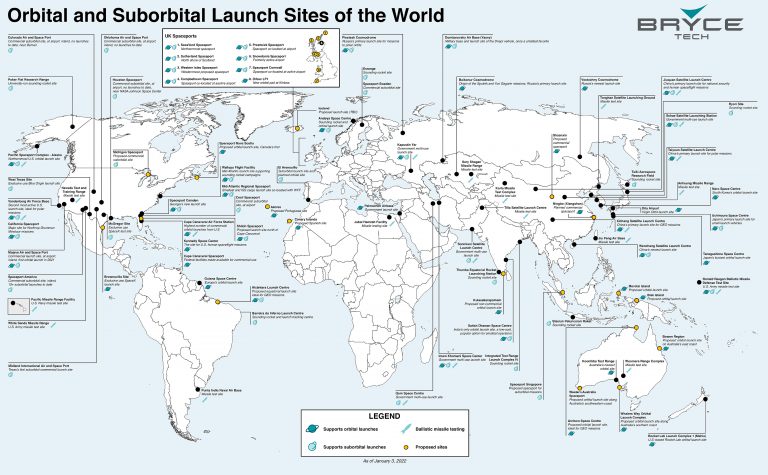
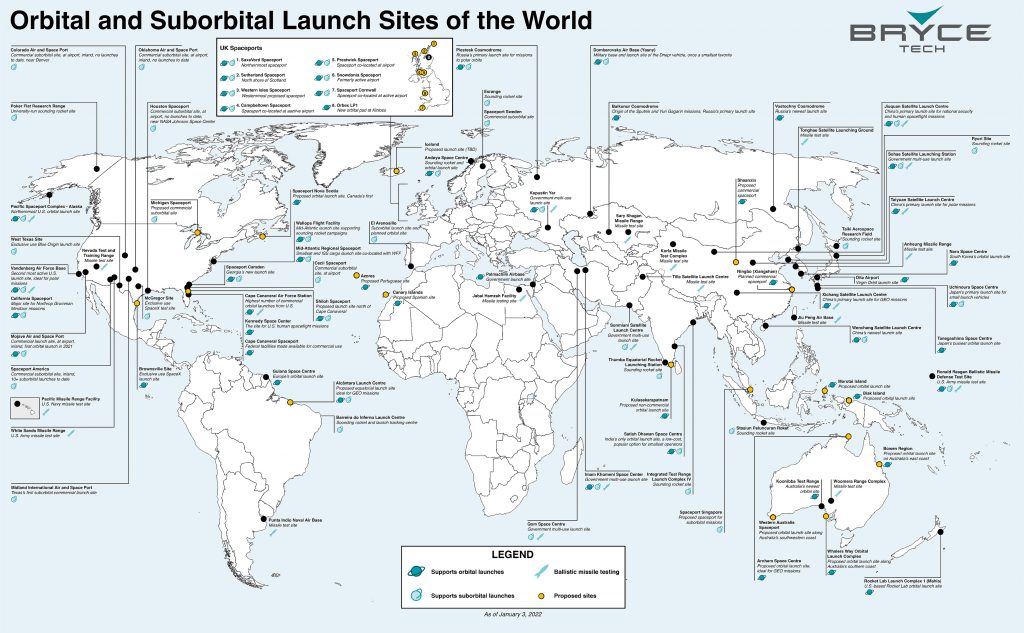
The map above, from BryceTech, is a comprehensive look at the world’s spaceports (both orbital and sub-orbital) as well as ballistic missile test sites.

View the high-resolution map

worlds-rocket-launch-sites-fullsize

In sub-orbital spaceflight, a spacecraft reaches outer space, but it doesn’t complete an orbital revolution or reach escape velocity. In orbital spaceflight, a spacecraft remains in space for at least one orbit.

The World’s Major Spaceports

Though the graphic above is a detailed list of many types of rocket launch sites, we’ll focus on major sites that are sending satellites and passengers into sub-orbit, orbit, and beyond.

Launch FacilityLocationCountry
Spaceport AmericaNew Mexico🇺🇸 U.S.
Launch Site One (Corn Ranch)Texas🇺🇸 U.S.
Houston SpaceportTexas🇺🇸 U.S.
Midland Air & Space PortTexas🇺🇸 U.S.
SpaceX Development and Test FacilityTexas🇺🇸 U.S.
SpaceX StarbaseTexas🇺🇸 U.S.
Spaceport CamdenGeorgia🇺🇸 U.S.
Mid-Atlantic Regional SpaceportVirginia🇺🇸 U.S.
Wallops Flight FacilityVirginia🇺🇸 U.S.
Reagan Test SiteKwajalein Atoll🇲🇭 Marshall Islands

The list above covers fixed locations, and does not include SpaceX’s autonomous spaceport drone ships. There are currently three active drone ships—one based near Los Angeles, and the other two based at Port Canaveral, Florida.

Two of the most famous launch sites on the list are the Baikonur Cosmodrome (Kazakhstan) and Cape Canaveral (United States). The former was constructed as the base of operations for the Soviet space program and was the launch point for Earth’s first artificial satellite, Sputnik 1. The latter was NASA’s primary base of operations and the first lunar-landing flight was launched from there in 1969.

The global roster of spaceports has grown immensely since Baikonur and Cape Canaveral were the only game in town. Now numerous countries have the ability to launch satellites, and many more are getting in on the action.

Wenchang Space Launch Site, on the island of Hainan, is China’s newest launch location. The site recorded its first successful launch in 2016.

Location, Location

One interesting quirk of the map above is the lack of spaceports in Europe. Europe’s ambitions for space are actually launched from the Guiana Space Centre in South America. Europe’s Spaceport has been operating in French Guiana since 1968.

Low altitude launch locations near the equator are the most desirable, as far less energy is required to take a spacecraft from surface level to an equatorial, geostationary orbit.

Islands and coastal areas are also common locations for launch sites. Since the open waters aren’t inhabited, there is minimal risk of harm from debris in the event of a launch failure.

As demand for satellites and space exploration grows, the number of launch locations will continue to grow as well.

Source: Visual Capitalist

NASA Selects Experimental Space Technology Concepts For Initial Study

0

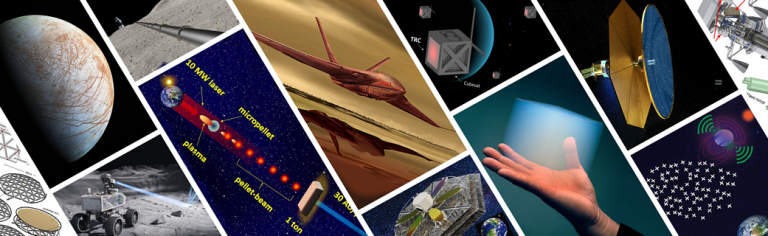
Imagine a future in space where pellet-beam propulsion systems speed up travel to other worlds, pipelines on the Moon transport oxygen between settlements, and Martian bricks grow on their own before being assembled into homes. Researchers will delve into these ideas and more using NASA grant funding.

The NASA Innovative Advanced Concepts (NIAC) program fosters innovation by funding early-stage studies to evaluate technologies that could support future missions. The latest round of awards will provide $175,000 grants to 14 visionaries from nine states. Ten of the selected researchers are first-time NIAC recipients.

“NASA dares to make the impossible possible. That’s only achievable because of the innovators, thinkers, and doers who are helping us imagine and prepare for the future of space exploration,” said NASA Administrator Bill Nelson. “The NIAC program helps give these forward-thinking scientists and engineers the tools and support they need to spur technology that will enable future NASA missions.”

From deep space human exploration to advanced propulsion and robotics, NASA Innovative Advanced Concepts aims to change the possible by supporting early stage space technology research that could radically change the future.
Credits: NASA

The new Phase I projects include innovative sensors and instruments, manufacturing techniques, power systems, and more.

A concept envisioned by Quinn Morley of Planet Enterprises in Gig Harbor, Washington, could investigate the chemistry of Saturn’s largest moon, Titan. Flying on Titan would be relatively easy thanks to its low gravity and thick atmosphere. Morley conceived a flying, heavily instrumented boat that would seamlessly transition between soaring through Titan’s atmosphere and sailing its lakes, much like a seaplane on Earth.

Mary Knapp from the Massachusetts Institute of Technology (MIT) in Cambridge proposed a new kind of space observatory comprised of thousands of identical small satellites. Precisely positioned in deep space, they could work together to detect radio emissions at low frequencies from the earliest epochs of the universe and measure magnetic fields of terrestrial exoplanets, helping identify planets outside the solar system that are rocky like Earth and Mars.

Since 2011, NIAC has nurtured ideas like these that sound like science fiction, but – if successful – just might be possible. The program sits within NASA’s Space Technology Mission Directorate (STMD) and explores technically credible, early-stage aerospace concepts. NIAC researchers, called fellows, form an advanced, collaborative research community. Under their NIAC awards, the fellows investigate the physics of their concepts, roadmap necessary technology development, identify potential limitations, and look for transition opportunities to bring these concepts to reality.

“These initial Phase I NIAC studies help NASA determine whether these futuristic ideas could set the stage for future space exploration capabilities and enable amazing new missions,” said Michael LaPointe, program executive for NIAC at NASA Headquarters.

All NIAC studies are in the very early stages of conceptual development and are not considered official NASA missions. 

The researchers selected to receive NIAC Phase I grants in 2023, their institutions, and the titles of their proposals are:

NIAC is funded by STMD, which is responsible for developing the new cross-cutting technologies and capabilities needed by the agency to achieve its current and future missions.

Learn more about the NIAC program at: https://www.nasa.gov/niac

Sarah Frazier
Headquarters, Washington
202-853-7191
[email protected]

By Gerelle Dodson
Source NASA

Northrop Grumman Assumes Full GMLRS Rocket Motor Production

0

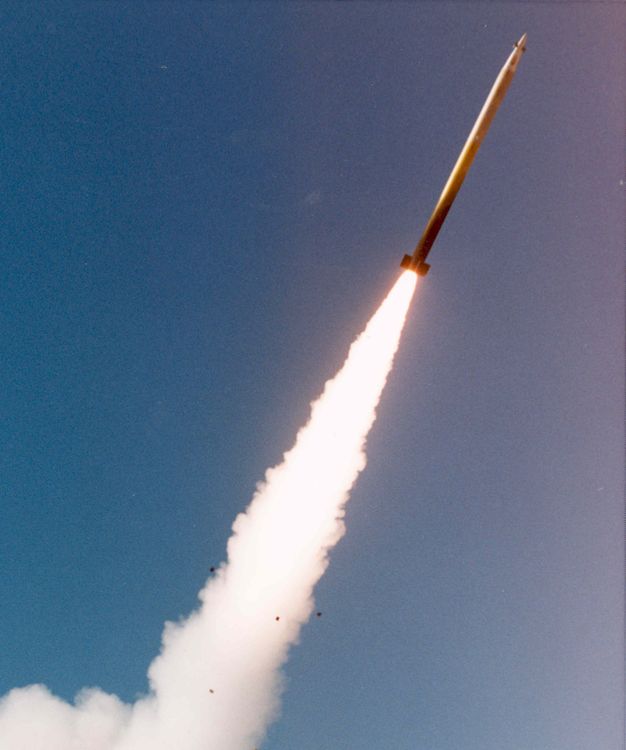
Northrop Grumman Corporation (NYSE: NOC) will assume production of rocket motors for the U.S. Army’s Guided Multiple Launch Rocket System (GMLRS), fulfilling the full contract production quantity. The company recently delivered its 15,000th rocket motor and 20,000th warhead to Lockheed Martin for final assembly.

Northrop Grumman Assumes Full GMLRS Rocket Motor Production

Northrop Grumman will assume production of rocket motors for the U.S. Army’s Guided Multiple Launch Rocket System (GMLRS). (Photo credit: Lockheed Martin)

“We are proactively investing in production facilities and technologies in support of producing even higher rates of rocket motors faster and more affordably to meet our customer’s anticipated demand,” said Jim Kalberer, vice president of missile products, Northrop Grumman. “We are leveraging our capacity and modern manufacturing facilities to deliver critical military needs.”

The propulsion system, once delivered to Lockheed Martin’s Camden, Arkansas, final assembly facility, will be integrated into GMLRS missiles – a ballistic rocket designed to engage targets from 15 to 70 kilometers. Northrop Grumman’s safety enhancing insensitive munition provides the system structural integrity under extreme conditions such as heat, shock and adjacent detonations. The ignition safety device further improves the weapon system’s safety characteristics by preventing unwanted combustion.

“Northrop Grumman is a trusted supplier of GMLRS rocket motors with robust manufacturing capacity to meet the demands of our customer,” said Jay Price, vice president of Precision Fires for Lockheed Martin.

Northrop Grumman designed and constructed a purpose-built manufacturing facility at the Allegany Ballistics Laboratory in Rocket Center, W. Va., using lean manufacturing and digital engineering techniques which enables a robust and resilient Defense Industrial Base. The facility provides for the efficient design, development and production of this critical weapon system component.

Northrop Grumman is a technology company, focused on global security and human discovery. Our pioneering solutions equip our customers with capabilities they need to connect, advance and protect the U.S. and its allies. Driven by a shared purpose to solve our customers’ toughest problems, our 90,000 employees define possible every day.

Northrop Grumman Awarded 2023 Robert H. Goddard Memorial Trophy For NASA’s James Webb Space Telescope

0

 NASA’s James Webb Space Telescope, built in partnership with Northrop Grumman Corporation (NYSE: NOC), has been selected to receive the 2023 Robert H. Goddard Memorial Trophy, the highest honor from the National Space Club and Foundation.

The award recognizes NASA and the industry team led by Northrop Grumman for their extraordinary contributions to U.S. leadership in the field of astronautics. The Goddard Trophy will be presented at the National Space Club and Foundation’s annual Dr. Robert H. Goddard Memorial Dinner in Washington on March 10.

“The Webb team embodies a pioneering spirit that pushed engineering to new levels and is now defining a new era of astronomical discovery,” said Scott Willoughby, vice president, program excellence for space systems, Northrop Grumman.

To enable the observatory’s ambitious scientific mission, Northop Grumman and partners invented 10 technologies, including revolutionary optics, detectors, thermal control systems, a deployable sunshield, cryocooler technologies and the manufacturing of a lightweight composite backplane to carry the weight of Webb’s mirror, telescope optics and scientific instruments.

In 2022, over the course of two weeks after its historic launch, Webb flawlessly deployed its sunshield and mirrors during a series of complex deployments and maneuvers, the first of its kind ever attempted in space. After achieving its final configuration, the team made a series of fine adjustments to the telescope’s optics to bring the telescope’s optical train into precise alignment. The team then tested Webb’s state-of-the-art scientific instruments and brought them to operational temperature, all necessary to begin Webb’s historic mission.

Northrop Grumman leads the industry team for NASA’s James Webb Space Telescope, the largest, most complex and powerful space telescope ever built. The company was recently awarded a sustainment contract by NASA to continue support through June 24, 2027. Northrop Grumman will provide the products and services required to monitor and maintain Webb spacecraft systems including the spacecraft bus, optics/telescope, and sunshield; maintain and update the spacecraft flight software; and trend spacecraft performance and recommend corrections and updates required for spacecraft health and safety.

NASA heads an international partnership that includes the European Space Agency and Canadian Space Agency. The Goddard Space Flight Center manages the Webb Telescope project, and the Space Telescope Science Institute is responsible for science and mission operations, as well as ground station development.     

Northrop Grumman is a technology company, focused on global security and human discovery. Our pioneering solutions equip our customers with capabilities they need to connect, advance and protect the U.S. and its allies. Driven by a shared purpose to solve our customers’ toughest problems, our 90,000 employees define possible every day.

The Sun Has Released Another Strong Solar Flare

0
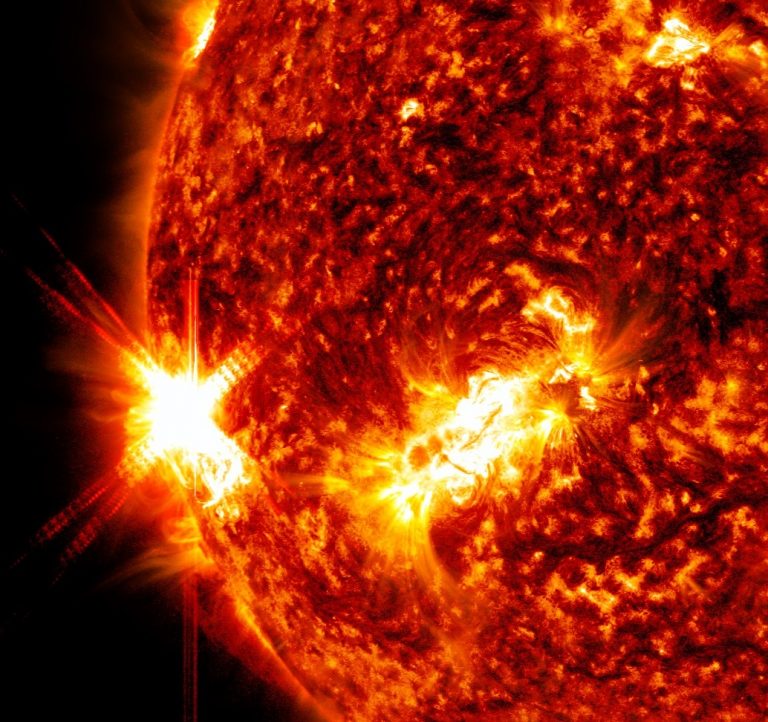
NASA’s Solar Dynamics Observatory captured this image of a solar flare – as seen in the bright flash on the left side of the image – on Jan. 9, 2023. The image shows a subset of extreme ultraviolet light that highlights the extremely hot material in flares and is colorized in red and gold. Credit: NASA/SDO

The Sun emitted a strong solar flare, peaking at 1:50 p.m. EST on Jan. 9, 2023. NASA’s Solar Dynamics Observatory, which watches the Sun constantly, captured imagery of the event.

Solar flares are powerful bursts of energy. Flares and solar eruptions can impact radio communications, electric power grids, navigation signals, and pose risks to spacecraft and astronauts.

This flare is classified as an X1.9 flare. X-class denotes the most intense flares, while the number provides more information about its strength.

To see how such space weather may affect Earth, please visit NOAA’s Space Weather Prediction Center https://spaceweather.gov/, the U.S. government’s official source for space weather forecasts, watches, warnings, and alerts. NASA works as a research arm of the nation’s space weather effort. NASA observes the Sun and our space environment constantly with a fleet of spacecraft that study everything from the Sun’s activity to the solar atmosphere, and to the particles and magnetic fields in the space surrounding Earth.

Space weather


By Keith Cowing
Source SpaceRef

Hubble Gazes At Colorful Cluster Of Scattered Stars

0

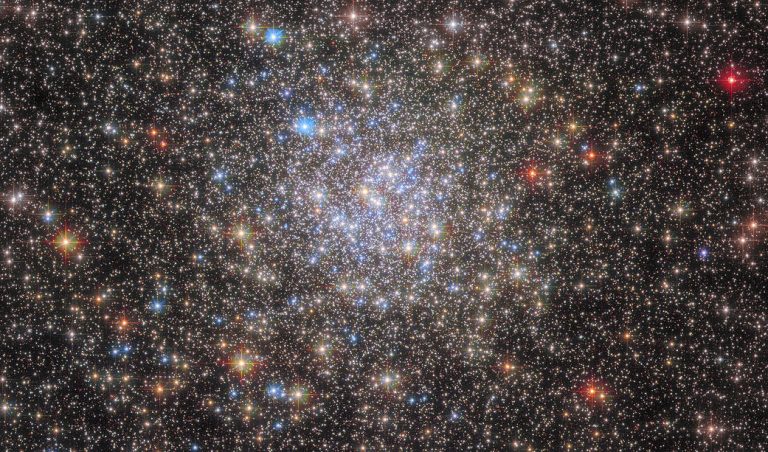
The scattered stars of the globular cluster NGC 6355 are strewn across this image from the NASA/ESA Hubble Space Telescope. NGC 6355 is a galactic globular cluster that resides in our Milky Way galaxy’s inner regions. It is less than 50,000 light-years from Earth in the constellation Ophiuchus.

Globular clusters are stable, tightly bound groups of tens of thousands to millions of stars that are associated with all types of galaxies. Their dense populations of stars and mutual gravitational attraction give these clusters a roughly spherical shape that holds a bright, central concentration of stars surrounded by an increasingly sparse sprinkling of stars. The dense, bright core of NGC 6355 shines in crystal-clear detail as Hubble is able to resolve individual stars in the crowded area toward the center of this image.

Hubble has revolutionized the study of globular clusters. It is almost impossible to distinguish individual stars in globular clusters with ground-based telescopes. Hubble’s unique capabilities and vantage point above Earth’s light-distorting atmosphere allow it to capture a globular cluster’s constituent stars in detail. This image contains data from Hubble’s Advanced Camera for Surveys and Wide Field Camera 3.

Text credit: European Space Agency (ESA)
Image credit: ESA/Hubble & NASA, E. Noyola, R. Cohen

Media Contact:

Claire Andreoli
NASA’s Goddard Space Flight CenterGreenbelt, MD
301-286-1940

By Andrea Gianopoulos
Source NASA

Historic UK Mission Reaches Space, Falls Short Of Orbit

0

NEWQUAY, UNITED KINGDOM — 10 JANUARY 2023 — The historic first attempt to launch satellites from British soil reached space late last night, but ultimately fell short of reaching its target orbit.

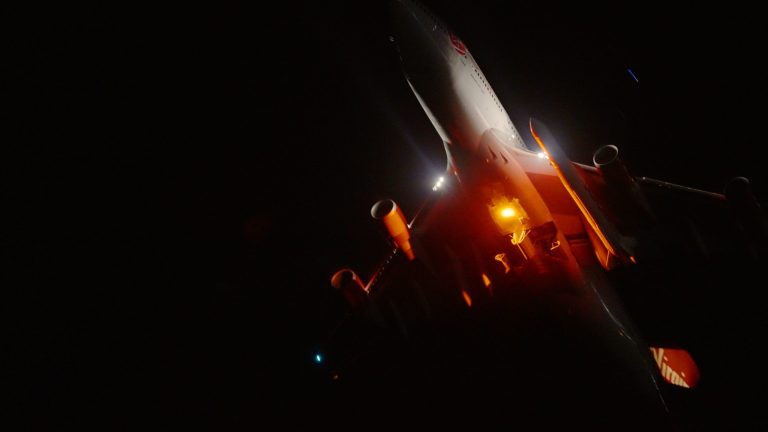
After successfully taking off from the runway at Spaceport Cornwall – which just a few weeks ago was transformed from a mere slab of empty cement at a commercial airport to the world’s newest space launch operations center – and travelling to the designated drop zone, Cosmic Girl, the customized 747 that serves as the LauncherOne system’s carrier aircraft, successfully released the rocket. 

The rocket then ignited its engines, quickly going hypersonic and successfully reaching space. The flight then continued through successful stage separation and ignition of the second stage. However, at some point during the firing of the rocket’s second stage engine and with the rocket travelling at a speed of more than 11,000 miles per hour, the system experienced an anomaly, ending the mission prematurely.

Though the mission did not achieve its final orbit, by reaching space and achieving numerous significant first-time achievements, it represents an important step forward. The effort behind the flight brought together new partnerships and integrated collaboration from a wide range of partners, including the UK Space Agency, the Royal Air Force, the Civil Aviation Authority, the US Federal Aviation Administration, the National Reconnaissance Office, and more, and demonstrated that space launch is achievable from UK soil.

Out of five LauncherOne missions carrying payloads for private companies and governmental agencies, this is the first to fall short of delivering its payloads to their precise target orbit.

Dan Hart, Virgin Orbit CEO, said: “While we are very proud of the many things that we successfully achieved as part of this mission, we are mindful that we failed to provide our customers with the launch service they deserve. The first-time nature of this mission added layers of complexity that our team professionally managed through; however, in the end a technical failure appears to have prevented us from delivering the final orbit. We will work tirelessly to understand the nature of the failure, make corrective actions, and return to orbit as soon as we have completed a full investigation and mission assurance process.”

Matt Archer, Director of Commercial Spaceflight at the UK Space Agency, said: “Last night, Virgin Orbit attempted the first orbital launch from Spaceport Cornwall. We have shown the UK is capable of launching into orbit, but the launch was not successful in reaching the required orbit. We will work closely with Virgin Orbit as they investigate what caused the anomaly in the coming days and weeks. While this result is disappointing, launching a spacecraft always carries significant risks. Despite this, the project has succeeded in creating a horizontal launch capability at Spaceport Cornwall, and we remain committed to becoming the leading provider of commercial small satellite launch in Europe by 2030, with vertical launches planned from Scotland.”

Melissa Thorpe, Head of Spaceport Cornwall, added: “We are so incredibly proud of everything we have achieved with our partners and friends across the space industry here in the UK and in the US – we made it to space – a UK first. Unfortunately we learned that Virgin Orbit experienced an anomaly which means we didn’t achieve a successful mission. Today we inspired millions, and we will continue to look to inspire millions more. Not just with our ambition but also with our fortitude. Yes, space is hard, but we are only just getting started.”

NASA To Provide Live Coverage Of SpaceX Cargo Craft Station Departure

0
(Nov. 27, 2022) — The SpaceX Dragon cargo craft, loaded with over 7,700 pounds of science, supplies, and cargo, approaches the International Space Station while orbiting 259 miles above the African continent. Credits: NASA

A SpaceX Dragon cargo resupply spacecraft is set to depart the International Space Station on Monday, Jan. 9, returning scientific research samples and hardware to Earth for NASA.

The agency will provide live coverage of Dragon’s undocking and departure on NASA Television, the NASA app, and online at 4:45 p.m. EST. Watch here:

https://www.nasa.gov/live

Ground controllers at SpaceX in Hawthorne, California, will send commands at 5 p.m. for Dragon to undock from the zenith port of the station’s Harmony module and fire its thrusters to move a safe distance away from the station.

After re-entering Earth’s atmosphere, the spacecraft will make a parachute-assisted splashdown off the coast of Florida on Wednesday, Jan. 11. NASA will not broadcast the splashdown, but updates will be posted on the agency’s space station blog.

Dragon will carry back to Earth approximately 4,400 pounds of supplies and scientific experiments designed to take advantage of the space station’s microgravity environment. Splashing down off the coast of Florida enables quick transportation of the experiments to NASA’s Space Station Processing Facility at the agency’s Kennedy Space Center in Florida, allowing researchers to collect data with minimal sample exposure to Earth’s gravity.

Some of the scientific investigations that Dragon is carrying include:

  • Deep space radiation protection: A vest designed to protect astronauts from high doses of radiation caused by unpredictable solar particle events is returning to Earth after months of testing. Crew members wore the Astrorad vest while performing daily tasks and provided feedback about how easy it is to put on, how it fits and feels, and the range of motion possible while wearing it. The vest’s developers plan to use that feedback to improve design of the garment, which could provide radiation protection for astronauts on Artemis missions to the Moon.
     
  • Air, water, plants: XROOTS used hydroponic (water-based) and aeroponic (air-based) techniques to grow plants without soil or other growth media. Researchers collected video and still images to evaluate growth chambers through the plant life cycle from seed germination through maturity. The plant chambers are returning to Earth for additional analysis. Similar techniques could be used to produce crops for future space missions and to enhance cultivation and food security for the benefit of people on Earth.
     
  • Bioprospecting in space: Bioprospecting is the process of identifying plants and animals that may contain substances with potential for use as drugs, biochemicals, and more. Previous studies found that space can cause genetic and physiological changes that could result in microbes yielding such materials. Rhodium Microgravity Bioprospecting-1 studied a way to search for these microbes. The science chambers and temperature logger from the investigation are returning to Earth for further examination.

Dragon arrived at the station Nov. 27, 2022, as SpaceX’s 26th Commercial Resupply Services mission for NASA, delivering more than 7,700 pounds of research investigations, crew supplies, and station hardware. It was launched Nov. 26 on a SpaceX Falcon 9 rocket from Launch Complex 39A at Kennedy.

-end-

Lora Bleacher
Headquarters, Washington
202-358-1100
[email protected]

Leah Cheshier
Johnson Space Center, Houston
281-483-5111
[email protected]

By Roxana Bardan
Source NASA