
Home Blog Page 100

A New Way Of Fabricating High-efficiency Diffraction Gratings For Astronomical Spectroscopy

0
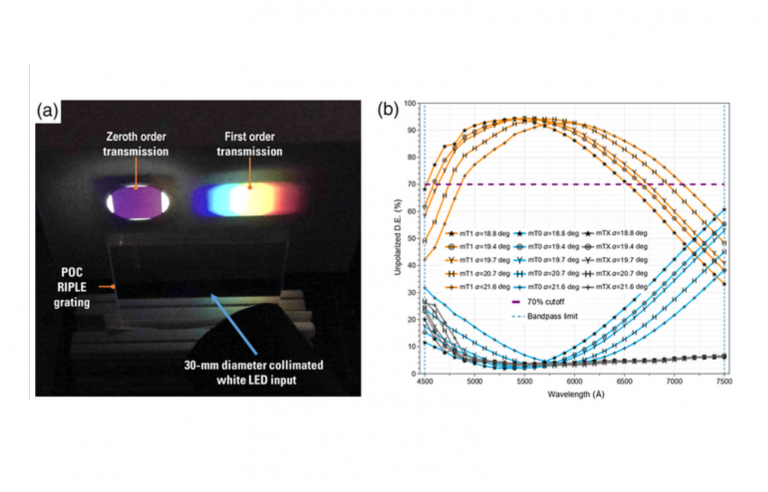
Visual demonstration of the performance of the diffraction grating. The zeroth order transmission refers to light that goes straight through the grating without undergoing diffraction (which should be minimized), whereas the first order transmission refers to the first diffraction peak for each frequency of light. (b) Diffraction efficiency of the gratings for first order transmission (orange) and zeroth order transmission (cyan). Worth noting, the first order diffraction efficiency of the grating was over 70% for a wide wavelength range spanning more than 200 nm. CREDIT The Authors, doi 10.1117/1.JATIS.8.4.045002

Today, astronomers seek to observe the faintest and most distant objects possible. Extremely Large Telescopes (ELTs), with apertures in the order of several dozen meters, are the next generation facilities to do so.

However, building larger telescopes is only one part of the equation. The other part is the capability of detecting the gathered photons in the most efficient way possible. This is where making all other optical components in astronomical instruments more efficient becomes crucial. One essential component used in modern astronomical science is the diffraction grating. Its role is to spatially spread incoming light into its constituent frequencies, similar to how a glass prism does. Thanks to a precisely engineered structure that leverages the wave-like nature of photons, diffraction gratings can separate light of different wavelengths with very high resolution. When coupled with a telescope and a spectrometer, gratings allow scientists to analyze the spectral properties of celestial bodies.

Motivated by the somewhat stagnant progress made in grating technology over the past decade, researchers Hanshin Lee of the University of Texas at Austin and Menelaos K. Poutous of the University of North Carolina at Charlotte, USA, focused on a completely different way of fabricating diffraction gratings. In their paper recently published in the Journal of Astronomical Telescopes, Instruments, and Systems, they report their success on manufacturing proof-of-concept high-efficiency diffraction gratings using reactive ion-plasma etching (RIPLE), a plasma-based manufacturing technology normally used for semiconductors.

Put simply, the RIPLE process used in this study involves “drawing” (using a high-precision electron beam) the desired grating pattern onto a chrome masking layer placed atop a quartz substrate. The grating pattern is then carved directly onto the quartz substrate using chemically reactive plasma; the chrome mask acts as a shield and the plasma only eats away at the exposed regions.

After fine tuning various parameters of the process through theoretical calculations, simulations, and experimental trial and error, the researchers managed to produce first-order diffraction gratings with very precise nano-scale structures. This translated to a near-theoretical unpolarized diffraction efficiency, reaching 94.3% at its peak and staying over 70% across a wavelength range broader than 200 nm. “This type of performance has been only rarely achieved in diffraction gratings used for astronomy, where every bit of efficiency gain really matters due to photon starvation,” said Lee.

Another advantage of using the RIPLE process to produce diffraction gratings is that the grating structure is embedded directly into the glass substrate, which means that they share the same material characteristics. “Our gratings can be very robust optically, thermally, and mechanically, which makes them ideal for harsh environments, such as those found in space observatories and cryogenic systems,” said Poutous, “This allows for their application in a broad range of scientific and engineering spectroscopic measurements.”

Overall, the results of this study showcase the potential of the RIPLE process to revolutionize the way in which diffraction gratings are fabricated. The researchers are optimistic about the future use of such high-efficiency gratings in the upcoming era of ground-based ELTs with apertures over of 30 meters. With any luck, these gratings will be instrumental for astronomers to observe extremely faint objects far out in space in upcoming years.

Read the Gold Open Access paper by Hanshin and Poutous, “Reactive ion plasma etched surface relief gratings for low/medium/high resolution spectroscopy in astronomy,” J. Astron. Telesc. Instrum. Syst. 8(4) 045002 2022, doi 10.1117/1.JATIS.8.4.045002.


By Keith Cowing
Source SpaceRef
The Messy Death Of A Star Viewed Webb Space Telescope

0
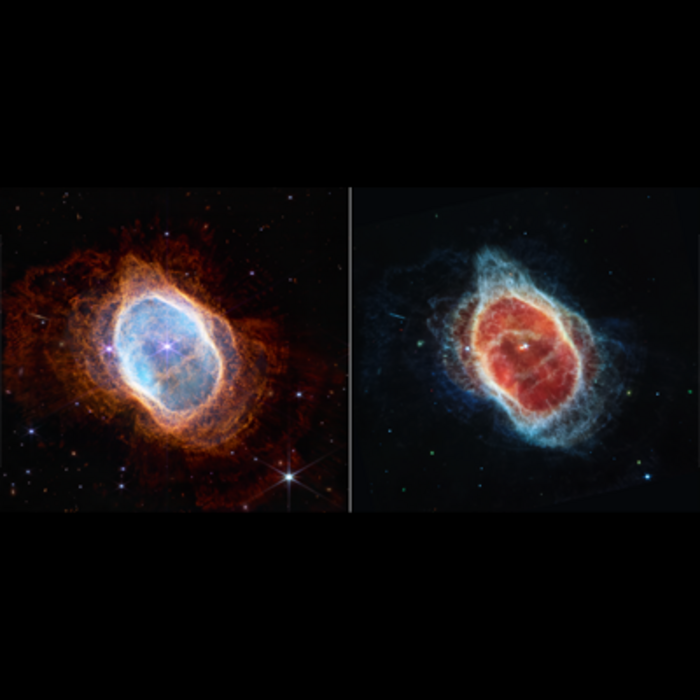
Southern Ring Nebula (NIRCam and MIRI images side by side). NASA’s James Webb Space Telescope offers dramatically different views of the Southern Ring Nebula. Each image combines near- and mid-infrared light from three filters. At left, Webb’s image of the Southern Ring Nebula highlights the very hot gas that surrounds the two central stars. At right, Webb’s image traces the star’s scattered molecular outflows that have reached farther into the cosmos. In the image at left, blue and green were assigned to Webb’s near-infrared data taken in 1.87 and 4.05 microns (F187N and F405N), and red was assigned to Webb’s mid-infrared data taken in 18 microns (F1800W). In the image at right, blue and green were assigned to Webb’s near-infrared data taken in 2.12 and 4.7 microns (F212N and F470N), and red was assigned to Webb’s mid-infrared data taken in 7.7 microns (F770W). CREDIT NASA, ESA, CSA, and O. De Marco (Macquarie University). Image processing: J. DePasquale (STScI)

Around 2500 years ago, a star ejected most of its gas, forming the beautiful Southern Ring Nebula, NGC 3132, chosen as one of the first five image packages from the James Webb Space Telescope (JWST).

A team of nearly 70 astronomers from 66 organisations across Europe, North, South and Central America, and Asia have used the JWST images to piece together the messy death of this star.

“It was nearly three times the size of our Sun, but much younger, about 500 million years old. It created shrouds of gas that have expanded out from the ejection site, and left a remnant dense white dwarf star, with about half the mass of the Sun, but approximately the size of the Earth,” says Professor Orsola De Marco, lead author on the paper, from Macquarie University’s Research Centre for Astronomy, Astrophysics and Astrophotonics.

“We were surprised to find evidence of two or three companion stars that probably hastened its death as well as one more ‘innocent bystander’ star that got caught up in the interaction,” she says.

The study was based on the JWST images supplemented by data from the ESO Very Large Telescope in Chile, the San Pedro de Mártir Telescope in Mexico, the Gaia Space Telescope, and the Hubble Space Telescope.

It paves the way for future JWST observations of nebulae, providing insight into fundamental astrophysical processes including colliding winds, and binary star interactions, with implications for supernovae and gravitational wave systems.

The paper is published today in Nature Astronomy “When we first saw the images, we knew we had to do something, we must investigate! The community came together and from this one image of a randomly chosen nebula we were able to discern much more precise structures than ever before. The promise of the James Webb Space Telescope is incredible,” says De Marco, who is also president of the International Astronomical Union Commission on Planetary Nebulae.

Astronomers gathered online and developed theories and models around the mid-infrared image to reconstruct just how the star had died.

Shining at the centre of the nebula is an ultra-hot central star, a white dwarf that has burned up its hydrogen. “This star is now small and hot, but is surrounded by cool dust,” said Joel Kastner, another team member, from the Rochester Institute of Technology USA. “We think all that gas and dust we see thrown all over the place must have come from that one star, but it was tossed in very specific directions by the companion stars.”

There are also a series of spiral structures moving out from the centre. These concentric arches would be created when a companion orbits the central star while it is losing mass. Another companion is further out and is also visible in the picture.

Looking at a three-dimensional reconstruction of the data, the team also saw pairs of protuberances that may occur when astronomical objects eject matter in jet form. These are irregular and shoot out in different directions, possibly implying a triple star interaction at the centre.

De Marco says: “We first inferred the presence of a close companion because of the dusty disk around the central star, the further partner that created the arches and the super far companion that you can see in the image. Once we saw the jets, we knew there had to be another star or even two involved at the centre, so we believe there are one or two very close companions, an additional one at middle distance and one very far away. If this is the case, there are four or even five objects involved in this messy death.”

NASA image and caption

Catalogued as NGC 3132 the Southern Ring Nebula is the death shroud of a dying sun-like star some 2,500 light-years from Earth. Composed of gas and dust the stunning cosmic landscape is nearly half a light-year in diameter, explored in unprecedented detail by the James Webb Space Telescope.

In this NIRCam image the bright star near centre is a companion of the dying star. In mutual orbit, the star whose transformation has ejected the nebula’s gas and dust shells over thousands of years is the fainter stellar partner. Evolving to become a white dwarf, the faint star appears along the diffraction spike extending toward the 8 o’clock position.

The messy death of a multiple star system and the resulting planetary nebula as observed by JWST, Nature Astronomy

By Keith Cowing
Source SpaceRef
Physicists Confirm Effective Wave Growth Theory In Space

0
Effective Wave Growth Theory

A team from Nagoya University in Japan has observed, for the first time, the energy transferring from resonant electrons to whistler-mode waves in space.

Their findings offer direct evidence of previously theorized efficient growth, as predicted by the non-linear growth theory of waves. This should improve our understanding of not only space plasma physics but also space weather, a phenomenon that affects satellites.

When people imagine outer space, they often envision it as a perfect vacuum. In fact, this impression is wrong because the vacuum is filled with charged particles. In the depths of space, the density of charged particles becomes so low that they rarely collide with each other. Instead of collisions, the forces related to the electric and magnetic fields filling space, control the motion of charged particles. This lack of collisions occurs throughout space, except for very near to celestial objects, such as stars, moons, or planets. In these cases, the charged particles are no longer traveling through the vacuum of space but instead through a medium where they can strike other particles.

Around the Earth, these charged-particle interactions generate waves, including electromagnetic whistler-mode waves, which scatter and accelerate some of the charged particles. When diffuse auroras appear around the poles of planets, observers are seeing the results of an interaction between waves and electrons. Since electromagnetic fields are so important in space weather, studying these interactions should help scientists predict variations in the intensity of highly energetic particles. This might help protect astronauts and satellites from the most severe effects of space weather.

A team comprising Designated Assistant Professor Naritoshi Kitamura and Professor Yoshizumi Miyoshi of the Institute for Space and Earth Science (ISEE) at Nagoya University, together with researchers from the University of Tokyo, Kyoto University, Tohoku University, Osaka University, and Japan Aerospace Exploration Agency (JAXA), and several international collaborators, mainly used data obtained using low-energy electron spectrometers, called Fast Plasma Investigation-Dual Electron Spectrometers, on board NASA’s Magnetospheric Multiscale spacecraft. They analyzed interactions between electrons and whistler-mode waves, which were also measured by the spacecraft. By applying a method of using a wave particle interaction analyzer, they succeeded in directly detecting the ongoing energy transfer from resonant electrons to whistler-mode waves at the location of the spacecraft in space. From this, they derived the growth rate of the wave. The researchers published their results in Nature Communications.

The most important finding was that the observed results were consistent with the hypothesis that non-linear growth occurs in this interaction. “This is the first time anybody has directly observed the efficient growth of waves in space for the wave-particle interaction between electrons and whistler-mode waves,” explains Kitamura. “We expect that the results will contribute to research on various wave-particle interactions and to also improve our understanding of the progress of plasma physics research. As more specific phenomena, the results will contribute to our understanding of the acceleration of electrons to high energies in the radiation belt, which are sometimes called ‘killer electrons’ because they inflict damage on satellites, as well as the loss of high-energy electrons in the atmosphere, which form diffuse auroras.”

Direct observations of energy transfer from resonant electrons to whistler-mode waves in magnetosheath of Earth, Nature Communications


By Keith Cowing
Source SpaceRef
Virgin Orbit Completes Final Successful End-To-End Rehearsal – All Systems Currently ‘Green’ Proceeding Toward Historic U.K. Launch

0

UK’s first mission partners announce the official opening of the Start Me Up launch window for January 9, 2023.

Partners for the United Kingdom’s first orbital launch announced today that the initial window for the historic Start Me Up mission will officially open on Monday, 9 January at 22:16 UTC with additional back-up dates continuing into mid and late January. Start Me Up is a collaborative effort between the United Kingdom Space Agency (UKSA), Cornwall Council, the Royal Air Force, and Virgin Orbit.

The Start Me Up mission will carry satellites from seven customers to space, including commercial and government payloads from several nations and a collaborative US-UK mission.

The LauncherOne system that will conduct the mission is now mated to its carrier aircraft, a Boeing 747 dubbed Cosmic Girl, at Spaceport Cornwall. Yesterday morning, Virgin Orbit’s LauncherOne system successfully completed an end-to-end launch rehearsal, taking the integrated system through to the loading of propellants and proceeding through terminal count, resulting in the verification of the health of the system and readiness of the team. 

Given the number of “firsts” being executed for this launch – the first orbital launch from UK soil or from anywhere in western Europe – Virgin Orbit and its partners will maintain a conservative posture with regard to system health, weather, and all other elements of scheduling.

Spaceport Cornwall received the United Kingdom’s first-ever spaceport license from the UK Civil Aviation Authority (CAA) in November. In late December, Virgin Orbit was issued first-of-their-kind launch and range control licenses, which ensured all regulatory, safety, and environmental requirements have been met. And this week, the CAA announced that all of the satellites flying on this mission have received their licenses as well.

The forthcoming mission from Cornwall, titled Start Me Up in honor of the Rolling Stones’ 1981 hit, will contain many firsts: the first orbital launch from the United Kingdom, the first international launch for Virgin Orbit, and the first commercial launch from western Europe. 

Ian Annett, Deputy CEO at the UK Space Agency, said: “We are entering a new era for space in the UK with the first ever satellite launch from UK soil and from Europe. This is a significant landmark for the nation, the UK Space Agency and for all those who have worked so hard over many years to make our ambitions to create a commercial space launch capability a reality.  

“The development of new orbital launch capabilities is already generating growth, catalysing investment and creating jobs in Cornwall and other communities across the United Kingdom. This will lead to new careers, improved productivity and inspire the next generation of space professionals, and this is just the beginning. I look forward to seeing more launches from other UK spaceports over the next year, putting us firmly on the map as Europe’s leading destination for commercial small satellite launch.”  

Dan Hart, Virgin Orbit CEO, said: “After ensuring that every technical aspect is sound and every regulation and code has been satisfied, it is gratifying to see this historic endeavor on the verge of coming to fruition. This launch represents the opening of a new era in the British space industry and new partnerships across industry, government, and allies. Space is already responsible for tens of thousands of jobs across the UK, the global industry is growing quickly, and so is the potential. And this launch is demonstrating that with the Virgin Orbit LauncherOne system an airport can become a spaceport that sends humankind’s innovations on their journey.”

Melissa Thorpe, Head of Spaceport Cornwall, said: “This is a phenomenal moment with incredible international collaboration. Virgin Orbit, the UK Space Agency and all of our partners are breaking new ground to transform access to space across the world from right here in Cornwall. My team at Spaceport Cornwall have worked so hard to get this far and we wish everyone the best of luck as the launch window opens, we are ready.”

Tim Johnson, Director for Space Regulation at the UK Civil Aviation Authority said: “Effective licensing forms an integral part of UK space activity, and with public safety at the heart of our decision making, we’ve worked with Virgin Orbit and Spaceport Cornwall to assess their applications and issue licences within our expected timeframe, putting the UK framework on a competitive footing with international space regulators. With all licences in place, Virgin Orbit and Spaceport Cornwall are now in a position to deliver a historic first orbital launch from UK shores. We’re proud to be playing our part in facilitating the UK’s space ambitions and enable this country to become a leading launch nation.”

Start Me Up will be the fifth consecutive Virgin Orbit launch to carry payloads for both private companies and government agencies. All of the prior 33 satellites were carried by LauncherOne to their precise desired orbit, while demonstrating the ability to fly through and above inclement weather, integrate rapid-call up payloads, and reach a broader range of orbits than would be possible from a traditional ground-launch system.

The launch was acquired by the National Reconnaissance Office (NRO) from Virgin Orbit National Systems, a Virgin Orbit U.S. subsidiary serving classified customers, as the first task order on NRO’s Streamlined Launch Indefinite Delivery, Indefinite Quantity Contract, or “SLIC.” 

The missions of the satellites span a wide range of activities aimed at improving life on Earth, including reducing the environmental impact of production; preventing illegal trafficking, smuggling, and terrorism; and a host of national security functions. The full Start Me Up manifest is available here.

Virgin Orbit’s LauncherOne rockets are designed and manufactured in Long Beach, California, and are air-launched from the wing of a converted Boeing 747-400 aircraft named “Cosmic Girl.” Virgin Orbit’s unique air-launch platform can take off from any runway long enough to handle a Boeing 747. Not reliant on traditional spaceports that support vertical launches, this capability creates a new level of mobility for satellite launch, thereby enabling sovereign launch capability in new markets.

Prepping To Study The World’s Water

0

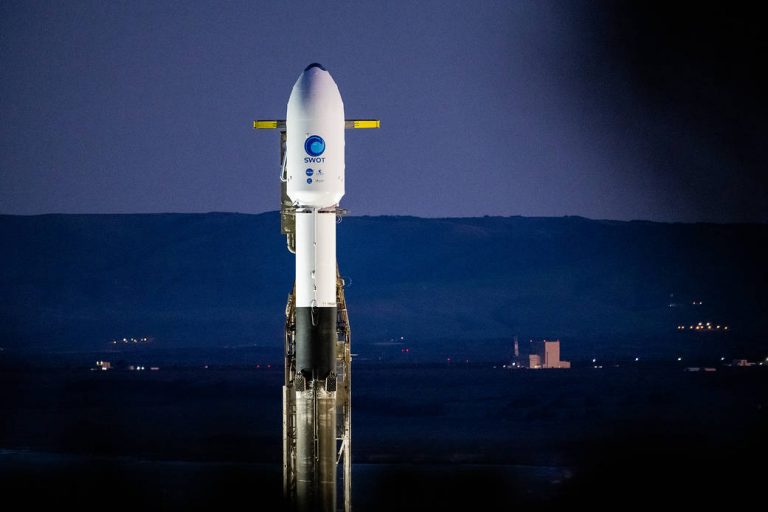
The Surface Water and Ocean Topography (SWOT) spacecraft is seen in this early morning photo from Dec. 14, 2022, as preparations for launch continued. SWOT, the first satellite mission that will observe nearly all water on Earth’s surface, launched on Dec. 16. Jointly developed by NASA and Centre National D’Études Spatiales, with contributions from the Canadian Space Agency and United Kingdom Space Agency, the satellite will measure the height of water in the planet’s lakes, rivers, reservoirs, and oceans.

This photo was chosen by the NASA Headquarters photographers as one of the best images from 2022. See the rest on Flickr.

Image Credit: NASA/Keegan Barber

By Monika Luabeya
Source NASA

Europe‘s First Solar Sail Mission ‘Alpha’ Launched

0
Alpha Solar Sail

Kongsberg NanoAvionics (NanoAvionics) has announced the successful launch of Europe‘s first solar sail mission aboard SpaceX Transporter-6.

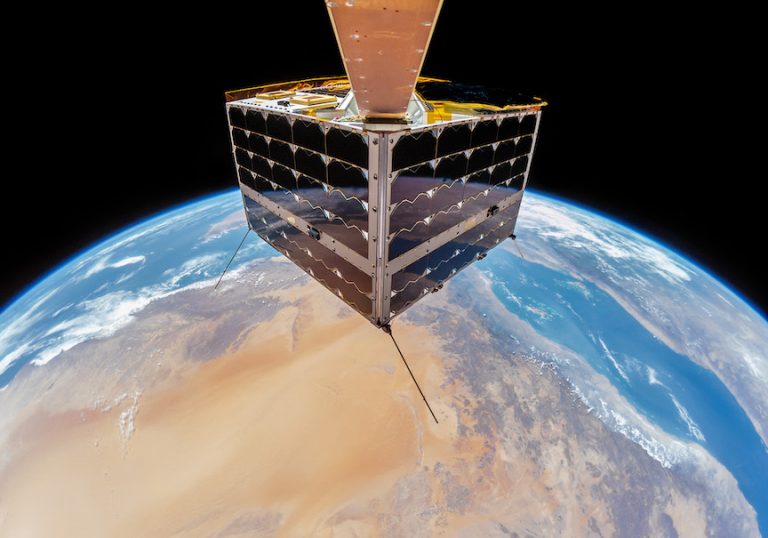
The 6U nanosatellite nicknamed ‘Alpha’ was manufactured for France’s Gama. It is one of four satellites, built by the Lithuanian smallsat mission integrator for multiple customers, that got sent into low Earth Orbit.

It is the first time for NanoAvionics that one of its nanosatellite buses has carried a solar sail payload into space. A second solar sail mission, using a 12U nanosatellite bus by the company, will be NASA’s composite solar sail system (ACS3).

Vytenis J. Buzas, co-founder and CEO of NanoAvionics, said: “Solar sails are one of the future propulsion methods for small satellites exploring deep space. Being the first European company to integrate solar sails into satellite buses and test them while in orbit puts us in a unique position within the space industry.”

Also on board were two other 6U nanosatellites (‘Birkeland’ and ‘Huygens’) built by NanoAvionics for a consortium of Norwegian and Dutch research centres. The MilSpace2 mission is the first known two-satellite system to detect, classify, and accurately geolocate radio frequency signals. The two satellites will fly in formation at a close proximity of 20 kilometres.

The MilSpace2 mission is not the only application that can benefit from NanoAvionics bus capabilities to fly in swarms and operate as a single entity. This is an important feature for swarm missions ranging from remote sensing, to orbital reconnaissance for debris mitigation and other space infrastructure needs.

The fourth satellite carries an Earth observation payload for an undisclosed customer.

Confirming successful communications with all four satellites, NanoAvionics’s mission control centre continues executing the early operations phase (LEOP) to configure and validate the satellites for their primary mission objectives.

“With this first successful launch in 2023, NanoAvionics is off to a great start. We plan to deliver and launch more than 20 satellites to customers this year, up from 15 in 2022. This plan includes our first 100+ kg satellite based on our MP42 microsatellite bus,” Buzas said. “And for the third consecutive year, we nearly doubled both our revenue and our team size.”

Mission details for all Transporter-6 satellites built by NanoAvionics:

A 6U nanosatellite dubbed “Alpha” for French space startup Gama to demonstrate their commercial solar sail with a diameter of 73.3 square meters (789 square feet) – roughly the size of a racquetball court. Gama’s range of solar sails are aimed at commercial companies and research organisations alike, looking for a cost-effective and less complex setup and propulsion system to explore deep space through small satellites. Using nano- or microsatellites propelled through space by solar sails would allow them to travel greater distances without storing large amount of fuel.

Two 6U satellites named “Birkeland” and “Huygens”. Flying in close formation, the two satellites are part of the “Strategic Mutual Assistance in Research and Technology” (SMART) Military Use of Space (MilSpace) Science & Technology cooperation is a bilateral agreement between the MoD of the Kingdom of The Netherlands and the MoD of the Kingdom of Norway. The project team, acting on behalf of the MoDs, consists of FFI from Norway and NLR and TNO from The Netherlands. It is the first known two-satellite system to detect, classify, and accurately geolocate Radio Frequency signals, including navigation radars used on ships, by combining the measurement angle of arrival (AoA) and time difference of arrival (TDOA). Simultaneous detection of pulsed radio signals by both satellites flying in tandem enables accurate geolocation during all weather conditions.

The “Strategic Mutual Assistance in Research and Technology” (SMART) Military Use of Space (MilSpace) Science & Technology cooperation is a bilateral agreement between the MoD of the Kingdom of The Netherlands and the MoD of the Kingdom of Norway. The project team, acting on behalf of the MoDs, consists of the Norwegian Defence Research Establishment (FFI), the Royal Netherlands Aerospace Centre (NLR) and the Netherlands Organisation for Applied Scientific Research (TNO).

The fourth satellite carries an Earth observation payload for an undisclosed customer.
For more information, please contact Harry Pirrwitz via email [email protected] or call +49 (0)176 4599 6687.

About Kongsberg NanoAvionics (NanoAvionics)

Kongsberg NanoAvionics is a smallsat bus manufacturer and mission integrator currently based in four locations across the USA, UK and Lithuania. The company’s efforts are focused on enabling critical satellite functions and optimizing their hardware, launch and satellite operation costs by providing end-to-end small satellite solutions – ranging from single missions to constellations. Its core engineering team has implemented over 120 successful satellite missions and commercial projects during the past several years. With modularity as the fundamental principle of NanoAvionics system architecture, the company provides economic viability to a wide range of small satellite constellation-based missions, businesses and organisations worldwide.

http://www.nanoavionics.com


By Keith Cowing
Source SpaceRef
Indonesia Deploys First Student Satellite Through KiboCUBE Program

0
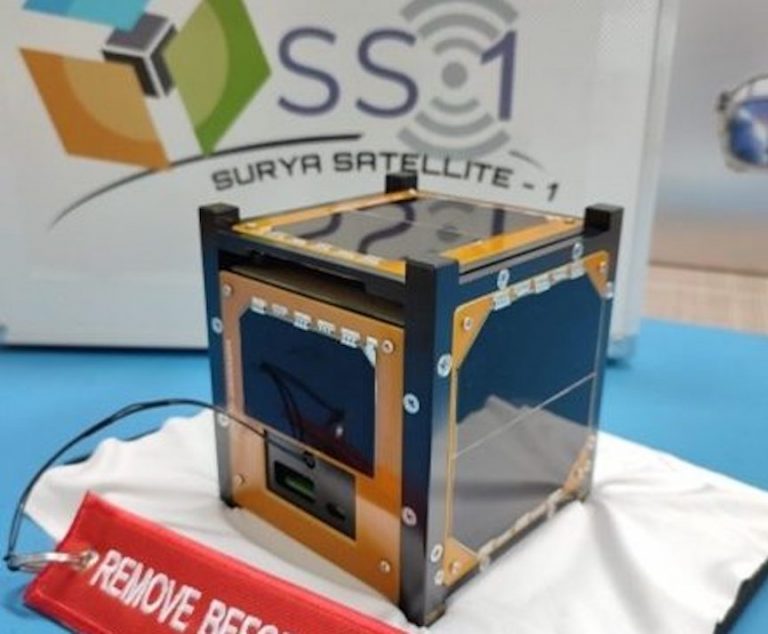
Surya Satellite-1. Surya University.

Indonesia has successfully deployed its first student satellite from the International Space Station (ISS) today. Students from Surya University constructed the SS-1 satellite as the awardee of the 3rd round of the KiboCUBE programme.

The KiboCUBE programme is a joint initiative by the United Nations Office for Outer Space Affairs (UNOOSA) and the Japan Aerospace Exploration Agency (JAXA) under the Access to Space for All initiative. The Satellite Development Track is part of the initiative and under this track, KiboCUBE enables teams from developing nations and economies in transition to develop and deploy 1U cube satellites (CubeSat) from the ISS.

This SS-1 CubeSat mission is a technology demonstration that will test communication between an Automatic Package Reporting System (APRS) payload and the ground using amateur radio frequency. Through the development and operation of SS-1, Surya University and the supporting organizations aim to disseminate nanosatellite technology in Indonesia, especially to students and universities. Given the full involvement of academia in this capacity-building process, the country hopes that the gained knowledge and experience will benefit future generations.

Surya Satellite-1 is the fifth CubeSat deployed into space under KiboCUBE in six years following satellites from Kenya, Guatemala, Mauritius, and Moldova. With this deployment, KiboCUBE has benefitted countries in Africa, Asia-Pacific, Eastern Europe, and Latin American and Caribbean States. Three more awardees of the programme are currently developing their CubeSats to follow this success. UNOOSA and JAXA are preparing to extend the Memorandum of Agreement allowing more countries to apply for the KiboCUBE opportunity in the future.

Acting Director of UNOOSA Niklas Hedman said: “Congratulations to Surya University and the supporting team for this tremendous accomplishment. It is impressive how the team prevailed despite the challenges posed by COVID-19. We look forward to SS-1 realizing its mission and pushing forward the momentum. We are proud to work with JAXA on KiboCUBE as it continues bridging the space divide and shedding light on many countries that are working so hard to develop space capacities. We look forward to deepening our cooperation and providing more opportunities in the coming years.”

Director General of Human Spaceflight Technology Directorate at JAXA Hiroshi Sasaki said: “It is our pleasure that JAXA has successfully deployed Surya Satellite-1 from the Kibo module of the ISS. We would like to extend our respect to UNOOSA and Surya University for their efforts. Surya Satellite-1 has significant missions ahead including communication technology demonstration, to which I wish great success. We also wish the experience gained through the development and operation of Surya Satellite-1 will lead to the next steps of space activity in Indonesia, and we truly hope that we could collaborate with Indonesia again in the near future. Congratulations.”

Rector of Surya University Ms. Lindawati said: “We are pleased with the successful deployment of Surya Satellite 1 (SS-1) from the International Space Station. We hope for a smooth operation of SS-1 during its mission, so that it can be beneficial for many people, especially in Indonesia. Surya University also expresses our sincere gratitude to UNOOSA, JAXA, and other stakeholders and sponsors for this collaboration since we got awarded the KiboCUBE deployment opportunity in 2018. This is an important milestone for Surya University, as well as for Indonesia since this is the first nanosatellite program, which is technically designed and manufactured by undergraduate students from Surya University- Indonesia. We hope that this achievement can further trigger the development of a similar program by students, to benefit our communication and informatics field.”

For more information, please contact:

Access to Space for All initiative Team
United Nations Office for Outer Space Affairs (UNOOSA)
Email: [email protected]


By Keith Cowing
Source SpaceRef

Space Station Swings By Kennedy

0

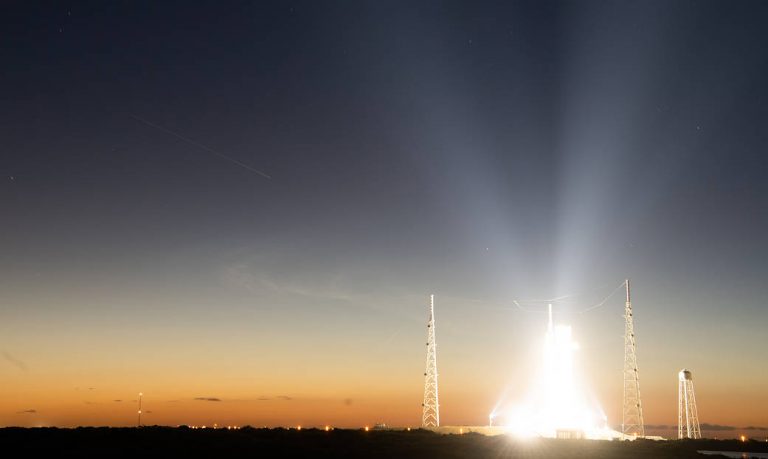
On April 8, 2022, this 30-second exposure captured the International Space Station as it passed over the Space Launch System rocket and the Orion spacecraft at NASA’s Kennedy Space Center in Florida. This photo was chosen by the NASA Headquarters photographers as one of the best images from 2022. See the rest on Flickr.

Image Credit: NASA/Joel Kowsky

By Monika Luabeya
Source NASA

Webb Telescope Reveals Super Early Milky Way-Like Galaxies

0

New images from NASA’s James Webb Space Telescope reveal for the first time galaxies with stellar bars at a time when the universe was a mere 25% of its present age.

“I TOOK ONE LOOK AT THESE DATA, AND I SAID, ‘WE ARE DROPPING EVERYTHING ELSE!’”

Stellar bars are elongated features of stars stretching from the centers of galaxies into their outer disks.

The finding of so-called barred galaxies, similar to our Milky Way, this early in the universe will require astrophysicists to refine their theories of galaxy evolution.

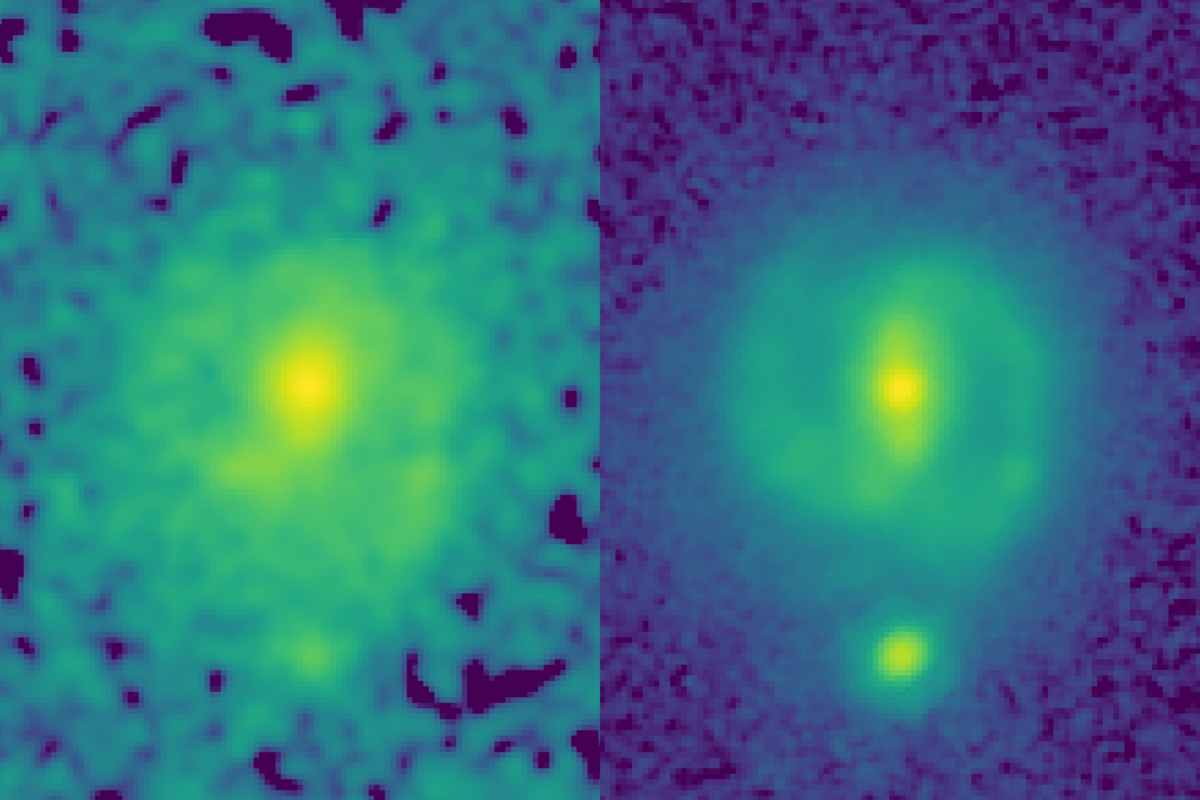
Prior to the James Webb Space Telescope (JWST), images from the Hubble Space Telescope had never detected bars at such young epochs. In a Hubble image, one galaxy, EGS-23205, is little more than a disk-shaped smudge, but in the corresponding JWST image taken this past summer, it’s a beautiful spiral galaxy with a clear stellar bar.

A side-by-side image of an image of a galaxy taken by the Hubble and James Webb telescopes.
The power of JWST to map galaxies at high resolution and at longer infrared wavelengths than Hubble allows it look through dust and unveil the underlying structure and mass of distant galaxies. This can be seen in these two images of the galaxy EGS23205, seen as it was about 11 billion years ago. In the HST image (left, taken in the near-infrared filter), the galaxy is little more than a disk-shaped smudge obscured by dust and impacted by the glare of young stars, but in the corresponding JWST mid-infrared image (taken this past summer), it’s a beautiful spiral galaxy with a clear stellar bar. (Credit: NASA/CEERS/UT Austin)

“I took one look at these data, and I said, ‘We are dropping everything else!’” says Shardha Jogee, professor of astronomy at the University of Texas at Austin.

“The bars hardly visible in Hubble data just popped out in the JWST image, showing the tremendous power of JWST to see the underlying structure in galaxies,” she says, describing data from the Cosmic Evolution Early Release Science Survey (CEERS), led by UT Austin professor, Steven Finkelstein.

“IT’S LIKE GOING INTO A FOREST THAT NOBODY HAS EVER GONE INTO.”

The team identified another barred galaxy, EGS-24268, also from about 11 billion years ago, which makes two barred galaxies existing farther back in time than any previously discovered.

In an article accepted for publication in The Astrophysical Journal Letters, they highlight these two galaxies and show examples of four other barred galaxies from more than 8 billion years ago.

“For this study, we are looking at a new regime where no one had used this kind of data or done this kind of quantitative analysis before,” says Yuchen “Kay” Guo, a graduate student who led the analysis, “so everything is new. It’s like going into a forest that nobody has ever gone into.”

Bars play an important role in galaxy evolution by funneling gas into the central regions, boosting star formation.

“Bars solve the supply chain problem in galaxies,” Jogee says. “Just like we need to bring raw material from the harbor to inland factories that make new products, a bar powerfully transports gas into the central region where the gas is rapidly converted into new stars at a rate typically 10 to 100 times faster than in the rest of the galaxy.”

Bars also help to grow supermassive black holes in the centers of galaxies by channeling the gas part of the way.

The discovery of bars during such early epochs shakes up galaxy evolution scenarios in several ways.

“This discovery of early bars means galaxy evolution models now have a new pathway via bars to accelerate the production of new stars at early epochs,” Jogee says.

And the very existence of these early bars challenges theoretical models as they need to get the galaxy physics right in order to predict the correct abundance of bars. The team will be testing different models in their next papers.

JWST can unveil structures in distant galaxies better than Hubble for two reasons: First, its larger mirror gives it more light-gathering ability, allowing it to see farther and with higher resolution. Second, it can see through dust better as it observes at longer infrared wavelengths than Hubble.

Undergraduate students Eden Wise and Zilei Chen played a key role in the research by visually reviewing hundreds of galaxies, searching for those that appeared to have bars, which helped narrow the list to a few dozen for the other researchers to analyze with a more intensive mathematical approach.

Additional coauthors are from UT Austin and other institutions in the US, the UK, Japan, Spain, France, Italy, Australia, and Israel.

Funding for this research came from, in part, the Roland K. Blumberg Endowment in Astronomy, the Heising-Simons Foundation, and NASA. This work relied on resources at the Texas Advanced Computing Center.

Original Study

By UT Austin
Source Futurity

Intuitive Machines Adds Commercial Lunar Rover To Its Second Mission To The Moon

0
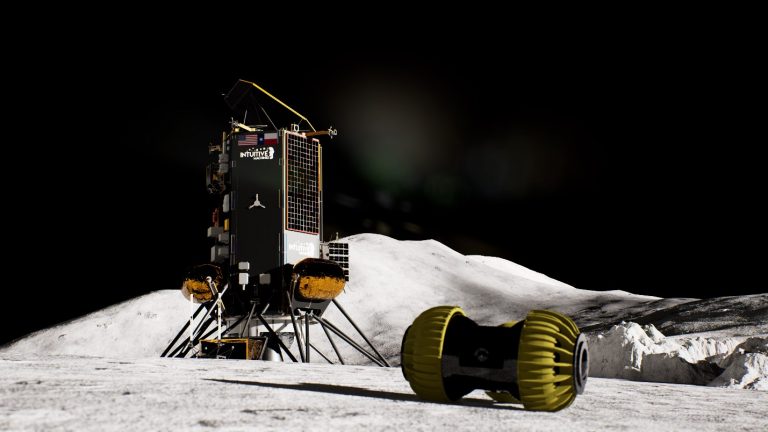
Dymon’s Yaoki rover. Intuitive Machines.

Intuitive Machines, LLC (“Intuitive Machines” or the “Company”), a leading space exploration, infrastructure, and services company, and Japan-based robotics company, Dymon Co., Ltd. (“Dymon”), have signed an agreement to fly Dymon’s Yaoki rover on Intuitive Machines’ second mission to the Moon.

Yaoki is expected to be flown to the lunar south pole on board Intuitive Machines’ Nova-C lunar lander in the second half of 2023. After landing, Yaoki is expected to deploy from Nova-C to demonstrate Dymon’s lunar mobility technology designed by its Founder and Chief Executive Officer, Shin-ichiro Nakajima.

The agreement with Dymon leverages Intuitive Machines’ Lunar Access Services and Lunar Data Services business segments to land the Yaoki rover on the Moon and control it via secure lunar communications.

“The commercial demand for lunar access is growing with each of Intuitive Machines’ four planned missions,” said Steve Altemus, Co-Founder, President, and Chief Executive Officer of Intuitive Machines. “The addition of Dymon’s Yaoki rover is another critical step towards Intuitive Machines participating in the creation and definition of the lunar economy.”

As previously announced on September 16, 2022, Intuitive Machines signed a definitive business combination agreement with Inflection Point Acquisition Corp. (Nasdaq: IPAX, IPAXU, IPAXW) (“Inflection Point”), a publicly traded special purpose acquisition company, that is expected to result in Intuitive Machines becoming publicly listed. Completion of the transaction is subject to approval by Inflection Point’s shareholders, the registration statement on Form S-4 (the “Registration Statement”) being declared effective by the Securities and Exchange Commission (the “SEC”), and other customary closing conditions.

About Intuitive Machines

Intuitive Machines is a diversified space company focused on space exploration. Intuitive Machines supplies space products and services to support sustained robotic and human exploration to the Moon, Mars, and beyond. Intuitive Machines’ products and services are offered through our four business units: Lunar Access Services, Orbital Services, Lunar Data Services, and Space Products and Infrastructure. For more information, please visit intuitivemachines.com.

About Inflection Point

Inflection Point is a blank check company formed for the purpose of identifying and partnering with North American and European businesses in the consumer and technology sectors. Inflection Point’s financial sponsor is an affiliate of Kingstown Capital Management, LP, an investment firm. For more information, please visit inflectionpointacquisition.com.

Contacts
For investor inquiries:
[email protected]

For media inquiries:
[email protected]


By Keith Cowing
Source SpaceRef