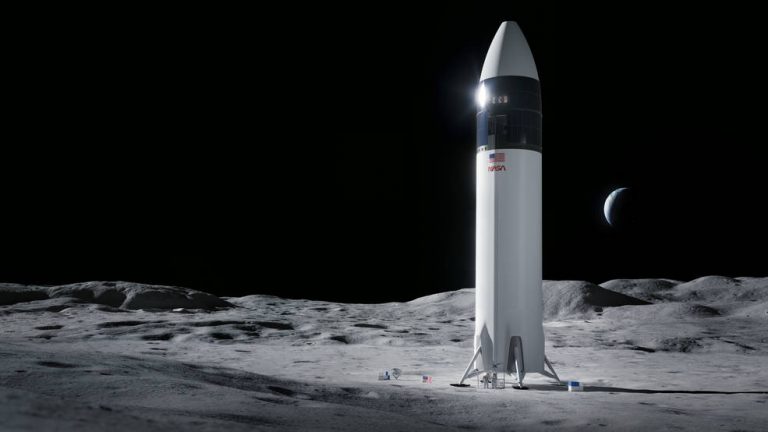
NASA has awarded a contract modification to SpaceX to further develop its Starship human landing system to meet agency requirements for long-term human exploration of the Moon under Artemis.
With this addition, SpaceX will provide a second crewed landing demonstration mission in 2027 as part of NASA’s Artemis IV mission.
“Returning astronauts to the Moon to learn, live, and work is a bold endeavor. With multiple planned landers, from SpaceX and future partners, NASA will be better positioned to accomplish the missions of tomorrow: conducting more science on the surface of the Moon than ever before and preparing for crewed missions to Mars,” said NASA Administrator Bill Nelson.
Known as Option B, the modification follows an award to SpaceX in July 2021 under the Next Space Technologies for Exploration Partnerships-2 (NextSTEP-2) Appendix H Option A contract. NASA previously announced plans to pursue this Option B with SpaceX. The contract modification has a value of about $1.15 billion.
“Continuing our collaborative efforts with SpaceX through Option B furthers our resilient plans for regular crewed transportation to the lunar surface and establishing a long-term human presence under Artemis,” said Lisa Watson-Morgan, manager for the Human Landing System program at NASA’s Marshall Space Flight Center in Huntsville, Alabama. “This critical work will help us focus on the development of sustainable, service-based lunar landers anchored to NASA’s requirements for regularly recurring missions to the lunar surface.”
The aim of this new work under Option B is to develop and demonstrate a Starship lunar lander that meets NASA’s sustaining requirements for missions beyond Artemis III, including docking with Gateway, accommodating four crew members, and delivering more mass to the surface.
NASA initially selected SpaceX to develop a human landing system variant of Starship to land the next American astronauts on the Moon under Artemis III, which will mark humanity’s first return to the lunar surface in more than 50 years. As part of that contract, SpaceX will also conduct an uncrewed demonstration mission to the Moon prior to Artemis III.
The agency is pursuing two parallel paths for human lunar landers developed according to NASA’s sustained requirements to increase the competitive pool of capable industry providers – the existing contract with SpaceX and another solicitation released earlier this year. The other solicitation, NextSTEP-2 Appendix P, is open to all other U.S. companies to develop additional human landing system capabilities and includes uncrewed and crewed demonstration missions from lunar orbit to the surface of the Moon.
Astronaut Moon landers are a vital part of NASA’s deep space exploration plans, along with the Space Launch System rocket, Orion spacecraft, ground systems, spacesuits and rovers, and Gateway.
Under Artemis, NASA will send a suite of new lunar science instruments and technology demonstrations to study the Moon, land the first woman and first person of color on the lunar surface, establish a long term lunar presence, and more. The agency will leverage its Artemis experiences and technologies to prepare for the next giant leap – sending astronauts to Mars.
A new research centre at ETH Zurich wants to trace the origins of life. Nobel Prize winner Didier Queloz will lead the new Centre for Origin and Prevalence of Life with more than 40 different research groups.
A new interdisciplinary research centre on the origin of life has started work at ETH Zurich. Bringing together 40 different research groups from five departments, working with their counterparts from around the world, it aims to get to the bottom of major questions facing humanity, such as the origin of life on Earth. How did life on Earth begin? How did it develop and proliferate? Is there life on other planets? The founder and director of the Centre for the Origin and Prevalence of Life is astronomer and Swiss Nobel Prize winner Didier Queloz.
Much more far-reaching insights into the origin and spread of life are hoped to be gained in Zurich with the help of the new centre and an innovative collaboration between different disciplines. The conditions for this have significantly improved in recent years: in various fields of research relevant to this topic there has been rapid progress – in molecular biology, biochemistry and other life sciences – as stated in a press release from ETH Zurich. In astronomy, the findings are also progressing tremendously: currently, the James Webb space telescope is providing an unprecedented view of the structures of the universe, and has already delivered previously unseen discoveries, such as the first evidence of carbon dioxide in the atmosphere of a planet outside our solar system.
When I visited various ETH Zurich departments after taking up my post four years ago, I realised that many research groups have one thing in common: the great desire to get to the bottom of the origin of life. I am really pleased that our new centre will now make this possible.
ETH Zurich President Joël Mesot
To achieve its scientific ambition, the centre has developed an extensive programme including cutting-edge interdisciplinary research projects, the recruitment of outstanding talent, the development of an active scientific networking programme and an interdisciplinary life sciences curriculum. For this purpose, up to six new professorships at ETH Zurich will be established.
NASA is targeting Monday, Nov. 14, for the launch of the Artemis I Moon mission during a 69-minute launch window that opens at 12:07 a.m. EST. The launch countdown will begin Saturday, Nov. 12, at 12:27 a.m.
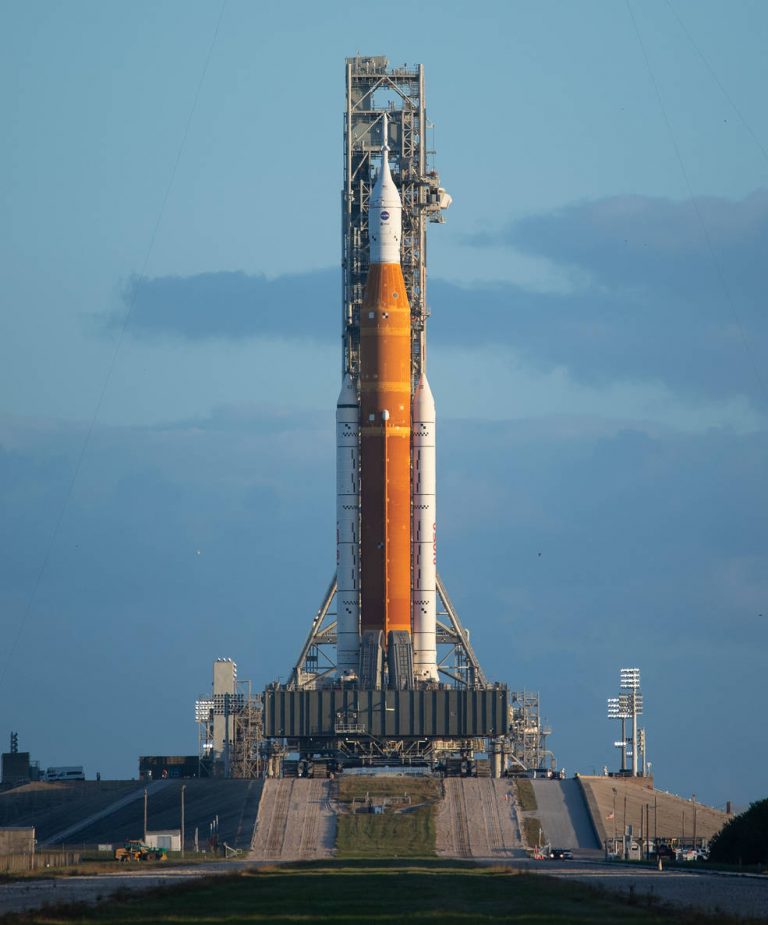
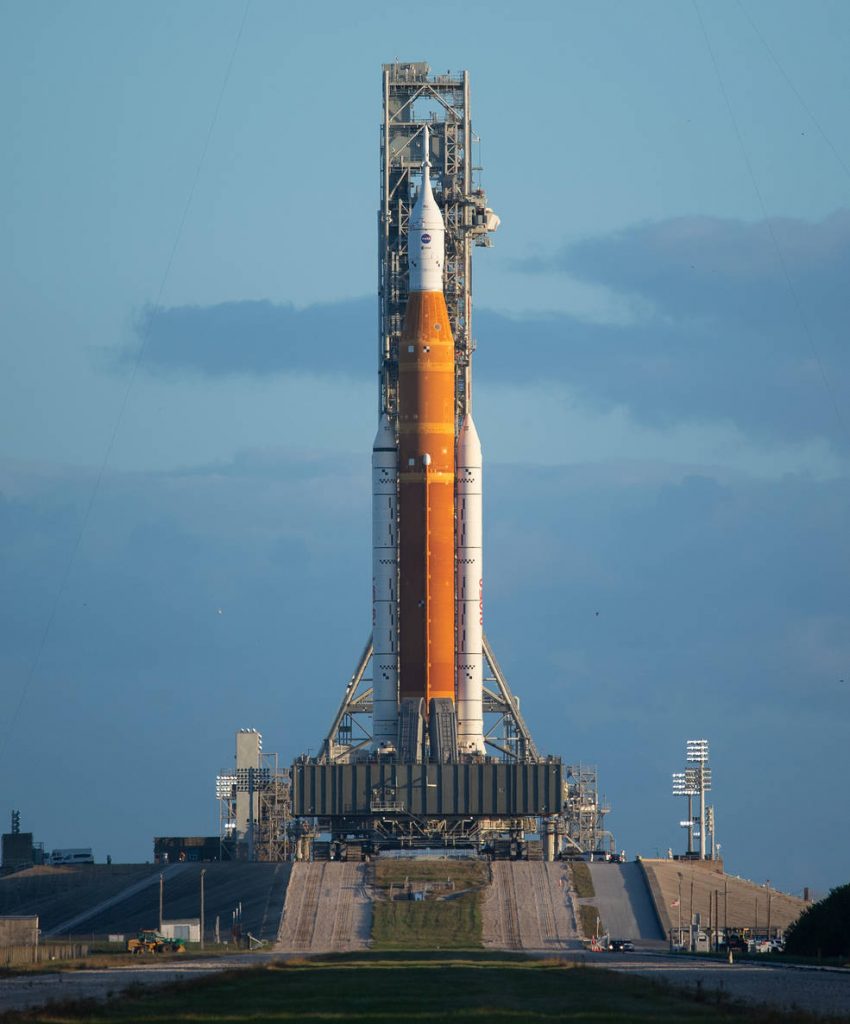
NASA’s Space Launch System rocket with the Orion spacecraft for Artemis I arrived to Launch Pad 39B at Kennedy Space Center in Florida Nov. 4. Launch of the uncrewed Artemis I flight test is targeted for Nov. 14.
Credits: NASA/Joel Kowsky
Artemis I is the first integrated flight test of NASA’s Space Launch System (SLS) rocket, an uncrewed Orion spacecraft, and the ground systems at the agency’s Kennedy Space Center in Florida that will pave the way for a crewed test flight and future human lunar exploration as part of Artemis.
The SLS rocket and Orion spacecraft arrived Friday, Nov. 4 at about 8:30 a.m.
Live coverage of briefings and events will air on NASA Television, the NASA app, and the agency’s website at:
Engineers previously rolled the rocket back to the Vehicle Assembly Building (VAB) Sept. 26 ahead of Hurricane Ian and after waving off two previous launch attempts Aug. 29 due to a faulty temperature sensor, and Sept. 4 due to a liquid hydrogen leak at an interface between the rocket and mobile launcher. Prior to rolling back to the VAB, teams successfully repaired the leak and demonstrated updated tanking procedures. While in the VAB, teams performed standard maintenance to repair minor damage to the foam and cork on the thermal protection system and recharge or replace batteries throughout the system.
A limited number of seats inside the auditorium will be available during briefings to previously credentialed on-site journalists on a first-come, first-served basis. The deadline has passed for media accreditation for in-person coverage of this launch.
To participate by telephone, media must RSVP no later than two hours before the start of each briefing to: [email protected].
Media and members of the public may also ask questions on social media using #Artemis. Audio only of the briefings will be carried on the NASA “V” circuits, which may be accessed by dialing 321-867-1220, -1240 or -7135.
NASA’s media accreditation policy for virtual and on-site activities is available online. More information about media accreditation at Kennedy is available by emailing: [email protected].
Full launch coverage is as follows. All times are Eastern, all events will air live on NASA TV, and the information is subject to change. Follow NASA’s Artemis blog for updates.
Friday, Nov. 11
7 p.m.: NASA will hold a prelaunch media briefing following a mission management team meeting with the following participants:
Mike Sarafin, Artemis mission manager, NASA Headquarters
Charlie Blackwell-Thompson, Artemis launch director, Exploration Ground Systems Program, Kennedy
Emily Nelson, chief flight director, NASA Johnson
Melody Lovin, weather officer, U.S. Space Launch Delta 45
Saturday, Nov. 12
12 p.m.: NASA will hold a prelaunch media briefing on the status of the countdown with the following participants:
Jeremy Parsons, Exploration Ground Systems Program deputy manager, NASA Kennedy
Melody Lovin, weather officer, U.S. Space Launch Delta 45
Sunday, Nov. 13
2:30 p.m.: Coverage of tanking operations to load propellant into the SLS rocket begins, including views of the rocket and Launch Control Center and audio from a commentator.
9:30 p.m.: Coverage of launch begins in English. Coverage will continue through translunar injection and spacecraft separation, setting Orion on its path to the Moon.
11 p.m.: Coverage of launch begins in Spanish on NASA’s Spanish-language YouTube account and will continue approximately 15 minutes after liftoff. Mission coverage updates will be posted on the NASA en español social media channels.
3 a.m.: Coverage of the postlaunch news conference will follow approximately one hour after the live launch broadcast ends. Coverage start time is subject to change, based on the exact liftoff time. The postlaunch news conference will include the following participants:
Bill Nelson, NASA administrator
Mike Sarafin, Artemis mission manager, NASA Headquarters
Mike Bolger, Exploration Ground Systems Program manager, Kennedy
John Honeycutt, Space Launch System Program manager, Marshall
Howard Hu, Orion Program manager, NASA’s Johnson Space Center
Emily Nelson, chief flight director, Johnson
7:30 a.m.: Coverage of Orion’s first outbound trajectory burn on the way to the Moon. Coverage start time is subject to change, based on the exact liftoff time.
8:50 a.m.: Coverage of first Earth views from Orion during outbound coast to the Moon.
NASA Television coverage of additional events throughout the mission is available online.
NASA Launch Coverage in English
Briefings and launch coverage will be available on the NASA website. Coverage will include live streaming and blog updates. On-demand video recordings and photos of the launch will be available shortly after liftoff. Follow countdown coverage on NASA’s Artemis blog at:
Live NASA TV coverage leading to launch will begin with commentary of tanking operations at 2:30 p.m. Sunday, Nov. 13, followed by launch coverage beginning at 9:30 p.m. Launch coverage will stream on the NASA website, as well as Facebook, Twitch, NASA YouTube, and in 4k on NASA’s UHD channel. For NASA TV downlink information, schedules, and links to streaming video, visit:
On launch day, a “tech feed” will be carried on the NASA TV media channel featuring views of the rocket and audio from a commentator in the Launch Control Center throughout and a single channel of mission audio beginning 15 minutes before launch.
Countdown activities with audio of the launch control commentator will be available starting at 2:30 p.m. by dialing 321-867-1220, -1240 or –7135; listeners will hear a single channel of mission audio beginning 15 minutes before launch. Full audio from the launch broadcast will begin at 9:30 p.m. and will be available by dialing 256-715-9946 with passcode 913 471 506#.
Launch also will be available on local amateur VHF radio frequency 146.940 MHz and UHF radio frequency 444.925 MHz, FM mode, heard within Brevard County on the Space Coast.
NASA Launch Coverage in Spanish
NASA’s broadcast of the launch in Spanish will include interviews with Hispanic members of the mission and live commentary.
The show, which will begin at 11 p.m. Sunday, Nov. 13, will be available on NASA en español’s YouTube account, and will continue approximately 15 minutes after liftoff. Mission coverage will then follow on the NASA en español social media channels.
Media and educational institutions interested in sharing the stream of the show can contact María José Viñas at: [email protected].
Attend Launch Virtually
Members of the public can register to attend the launch virtually. NASA’s virtual guest program for the mission includes curated launch resources, notifications about related opportunities or changes, and a stamp for the NASA virtual guest passport following a successful launch.
Watch and Engage on Social Media
Stay connected with the mission and let people know you are following the launch on Twitter, Facebook, and Instagram with #Artemis. Follow and tag these accounts:
The public can track the Artemis I mission as it happens using to Artemis Real-time Orbit Website, which will provide information about where Orion is in relation to the Earth and the Moon. Individuals also can also download a virtual boarding pass to commemorate the historic flight.
Through Artemis missions, NASA will land the first woman and the first person of color on the Moon, paving the way for a long-term lunar exploration and serving as a steppingstone to send astronauts to Mars.
For more information about the Artemis I mission, visit:
Para obtenerinformaciónsobrecoberturaenespañolenel Centro Espacial Kennedy o sideseasolicitarentrevistasenespañol, comuníquese con Antonia Jaramillo at: [email protected] or 321-501-8425.
As expert map readers will know, when you’re out and about navigating with a compass, there is a difference between magnetic north (where the compass points) and grid north (the vertical blue grid lines shown on OS maps).
The difference between magnetic north and grid north is often referred to as ‘grid magnetic angle’ and it not only varies from place to place, but changes with time. This needs to be taken into account when navigating with a map and compass.
In 2014, for the first time in Great Britain since the 1660s, magnetic north moved from being to the west of grid north to the east. The change started in the very south-west corner of Britain and will slowly progress across the whole country over the next 12 to 13 years. We wrote a blog on the progress of alignment between magnetic and grid north in Britain back in 2019, which you can read here.
Now, there is a third line about to come into alignment – true north. This is the direction of lines of longitude that all converge at the north pole.
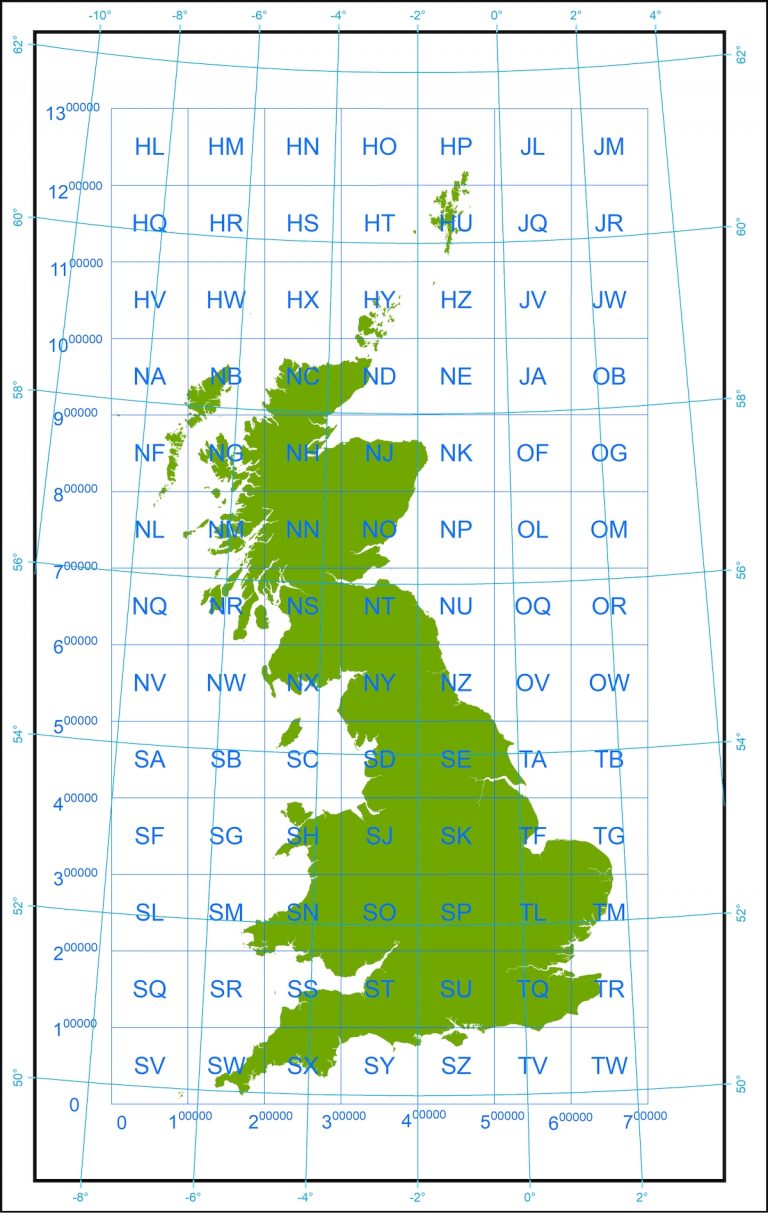
On a map projection like the transverse Mercator projection used for the British National Grid, the longitude lines curve away from the straight grid lines. This is called ‘convergence’. The amount of curvature varies across the grid area, except at one line. A transverse Mercator projection has a “central meridian” line where a chosen longitude aligns with a vertical eastings grid line. For the National Grid this central meridian line is 2°W or 400000m E.
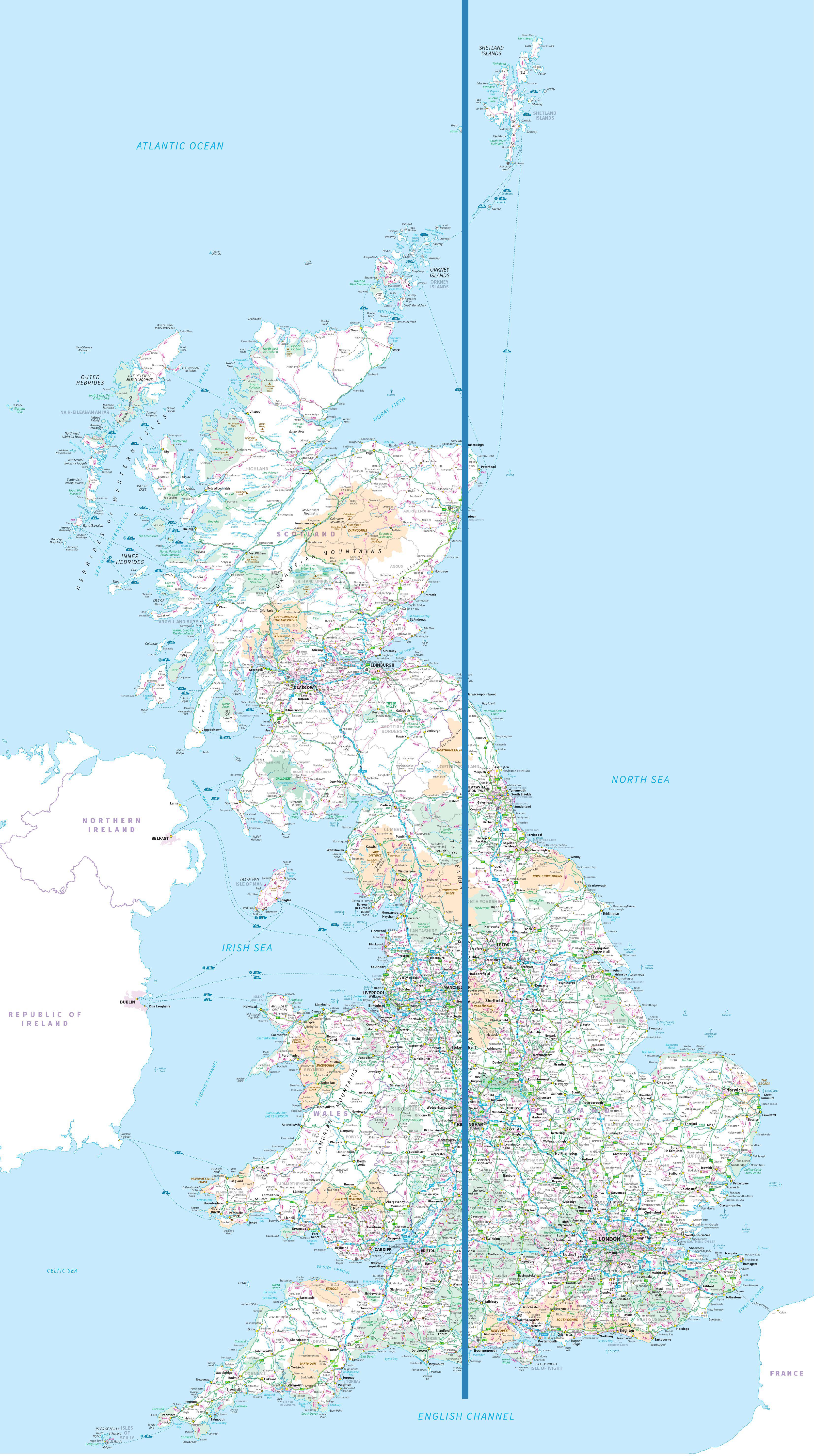
The ‘magic line’ as it passes through Great Britain
The changing direction of magnetic north is now approaching this ’magic line‘ so all three will briefly be in alignment. Due to the magnetic north direction being skewed relative to the central meridian and the fact that it is moving, the triple alignment point will move up the central meridian.
We used the excellent British Geological Survey blog, this magnetic north blog on the changing direction, as well as this grid magnetic angle calculator to estimate the dates of the triple alignment.
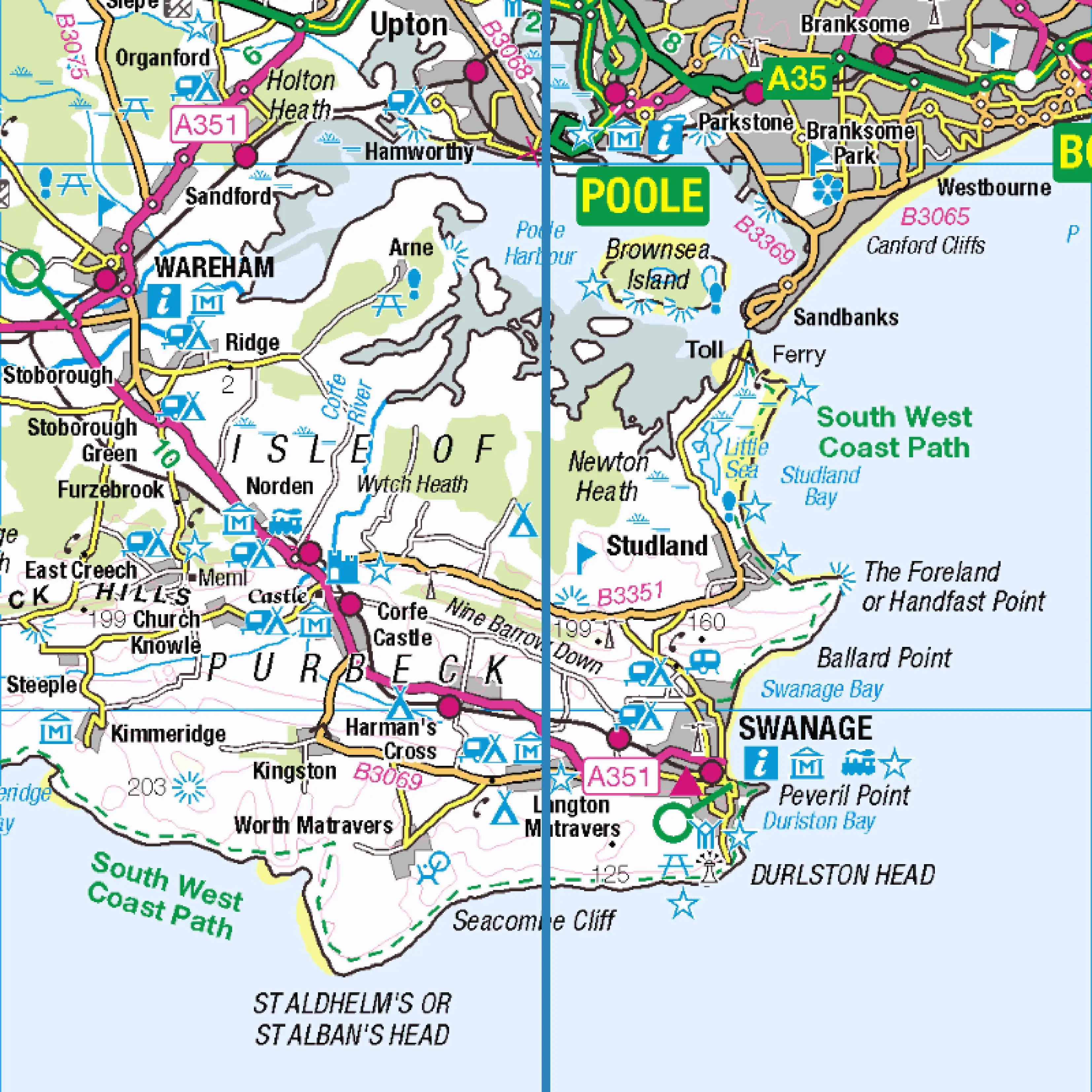
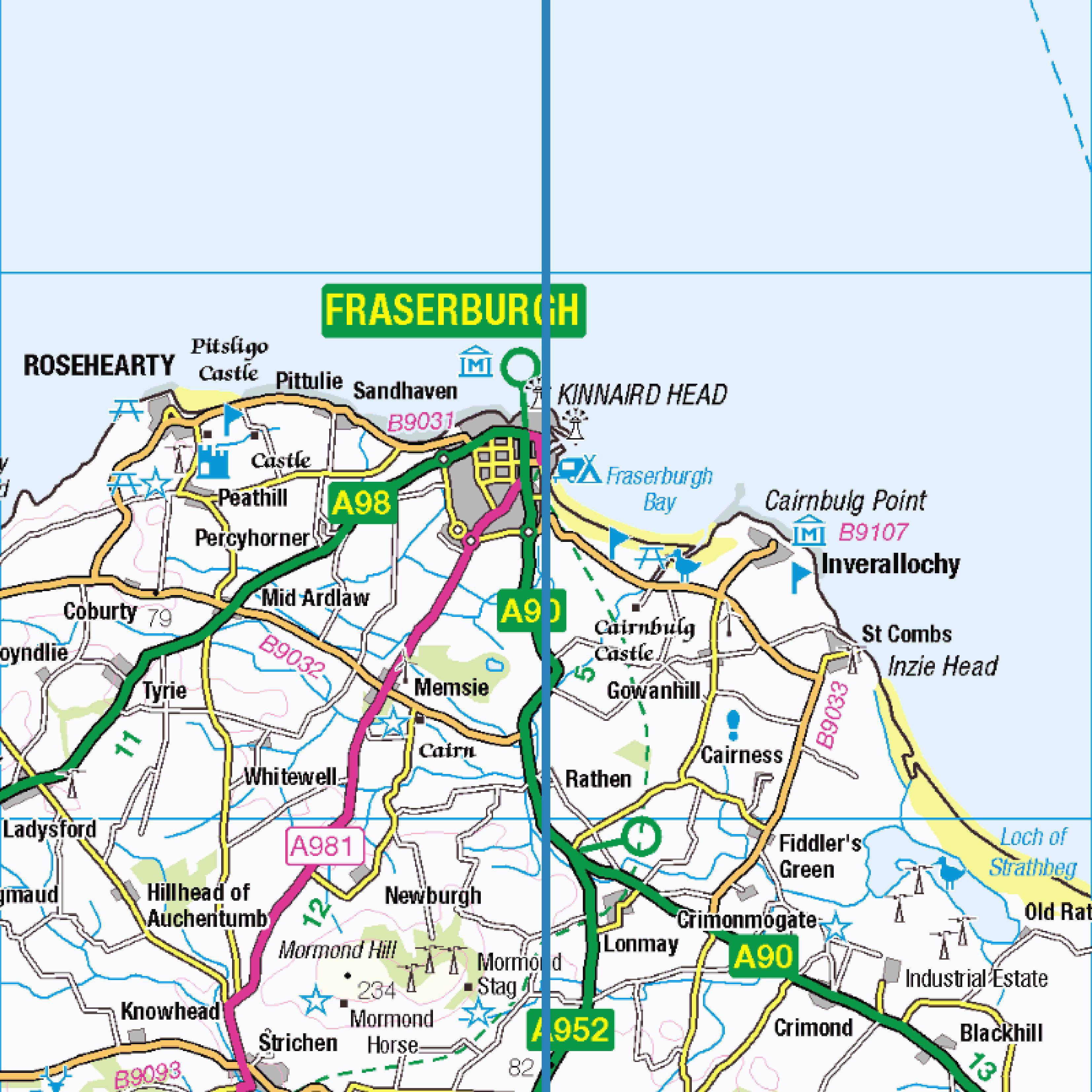
The triple alignment makes landfall at Langton Matravers, just west of Swanage, in November and will arrive in Poole by Christmas.
The historic triple alignment makes landfall in Great Britain in Langton Matravers, Dorset.
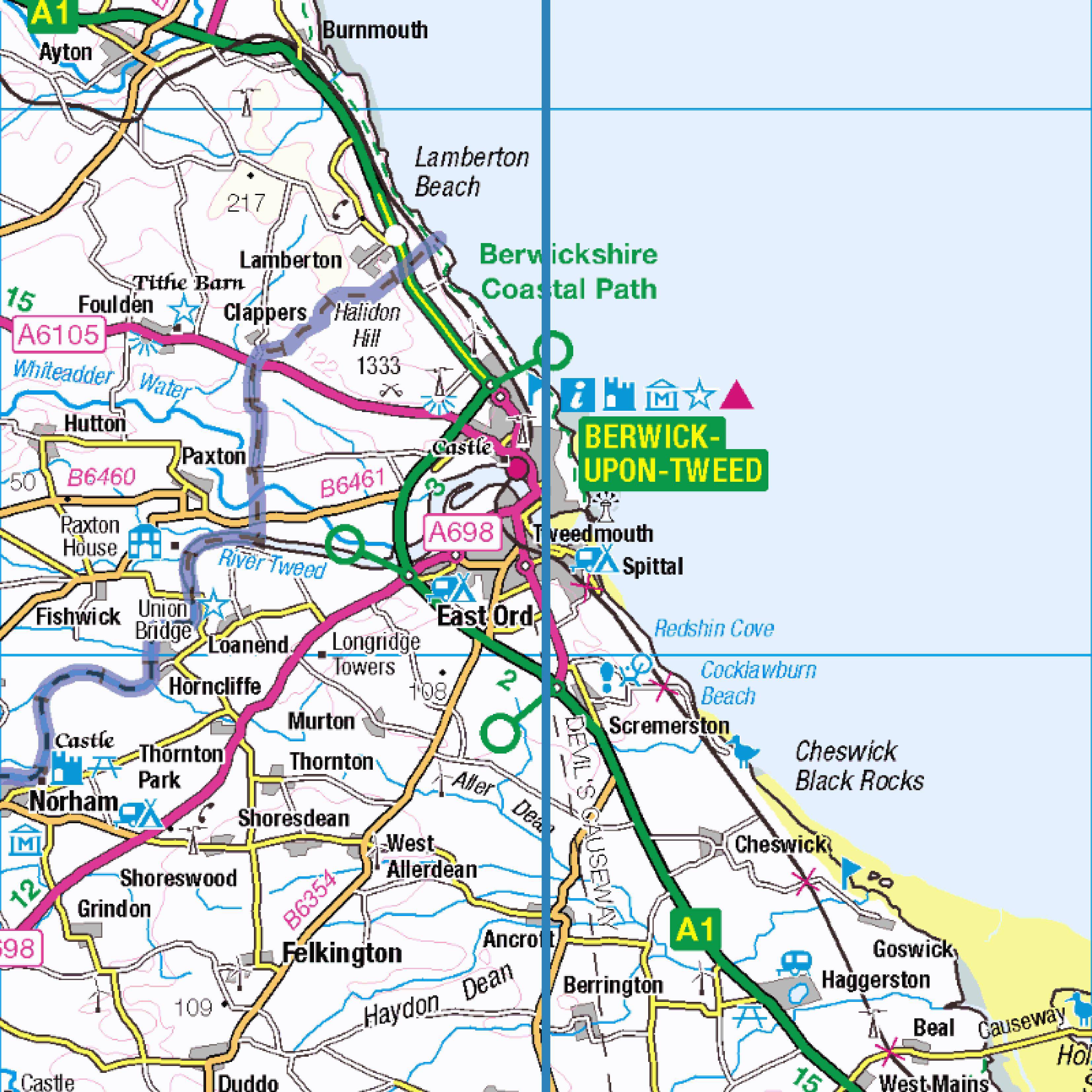
It will be just over halfway up England, passing through Hebden Bridge by August 2024 and leaving the English coast at Berwick-Upon-Tweed a year later in August 2025.
The triple alignment leaves England at Berwick-upon-Tweed in August 2025.
It does not hit land again until around May 2026 at Drums, just south of Newburgh in Scotland. Its last stop in Scotland (and the UK landmass) is Fraserburgh around July 2026.
July 2026 will see the historic triple alignment leave the landmass of Great Britain.
These predictions are likely to change (by a few months only) with the assimilation of new magnetic field observations into the model. This new data will capture the latest magnetic field signals from the geodynamo operating in the Earth’s liquid outer core. Interactions between the flow of the molten iron-rich material in this region and the magnetic field generate electrical currents that, in turn, creates new magnetic flux which sustains the field.
Energy sources for the fluid motions are primarily convection – as the Earth slowly cools down, warmer fluid rises and cooler fluid falls and solidifies onto the solid inner core. This changes the chemical composition of the fluid making it less dense, from which buoyancy forces result. The rotation of the planet also contributes to sustaining the geodynamo.
And that will be that, for a few hundred years at least. Due to the unpredictability of the magnetic field on long timescales it’s not possible to say when the alignment of the three norths will happen again.
If map reading and using a compass is new to you, you can refer to these helpful guides to get you started.
NASA released the results of its second agencywide economic impact report on Thursday, demonstrating how its Moon to Mars activities, investments in climate change research and technology, as well as other work generated more than $71.2 billion in total economic output during fiscal year 2021.
Combined, NASA’s impact supported more than 339,600 jobs nationwide, and generated nearly $7.7 billion in federal, state, and local taxes throughout the United States.
“Investment in NASA’s missions is an investment in American workers, American innovation, and American competitiveness for the 21st century. NASA is positioning our partners in commercial space and the national economy to win the future of spaceflight in 21st century as we prepare to return astronauts to the Moon, and then go on to Mars,” said NASA Administrator Bill Nelson. “While our work will always push the limits throughout the cosmos, it also strengthens the planet beneath our feet. NASA partners with small businesses, industry, academia, and other government agencies to address engineering challenges, and to transfer out our technologies, capabilities, and data all for public benefit here on Earth. NASA may be a small federal agency, but we punch above our weight, fueling growth in American industry with good-paying, quality jobs in all 50 states and maintaining our leadership in space and science.”
The study found NASA’s Moon to Mars exploration approach generated more than $20.1 billion in total economic output and supported more than 93,700 jobs nationwide. For investments in climate research and technology, the agency’s activities generated more than $7.4 billion in total economic output and supported more than 37,000 jobs nationwide.
Additional key findings of the study include:
Every state in the country benefits economically through NASA activities. Forty-six states have an economic impact of more than $10 million. Of those 46 states, nine have an economic impact of $1 billion or more.
NASA’s agencywide fiscal year 2021 economic output increased by 10.7% from fiscal year 2019, the year the agency conducted its first report.
The agency’s Moon to Mars campaign, which includes the Artemis program, generated nearly $2.2 billion in tax revenue, and saw an economic output increase of 42.6% from fiscal year 2019. These activities provided about 28% of NASA’s economic impact.
The agency’s investments in climate change research and technology generated nearly $810 million in tax revenue and provided 11% of NASA’s economic impact.
NASA has more than 2,655 active domestic and international agreements for various scientific research and technology development activities in fiscal year 2021. The International Space Station is a significant representative of international partnerships – representing 15 nations and five space agencies and has been operating for more than 20 years.
NASA has 700 different active partnerships with non-federal U.S. partners and partnerships in 44 of 50 states. For example, flight technology like NASA’s all-electric X-57 Maxwell.
NASA spinoffs, which are public products and processes that are developed with NASA technology, funding, or expertise, provide a benefit to American lives beyond dollars and jobs. The agency has recorded more than 2,000 spinoff technologies since 1976. For example, NASA’s indoor agricultural techniques in vertical farm structures are being adopted by private companies to build indoor farms.
Scientific research and development, which fuels advancements in science and technology that can help improve daily life on Earth and for humanity, enjoys the largest single-sector impact, accounting for 20% of NASA’s overall economic output.
The study was conducted by the Nathalie P. Voorhees Center for Neighborhood and Community Improvement at the University of Illinois at Chicago.
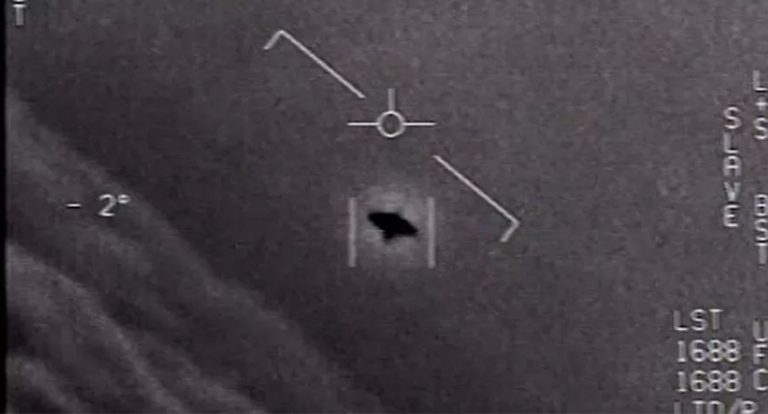
NASA has selected 16 individuals to participate in its independent study team on unidentified aerial phenomena (UAP). Observations of events in the sky that cannot be identified as aircraft or as known natural phenomena are categorized as UAPs.
The independent study will begin on Monday, Oct. 24. Over the course of nine months, the independent study team will lay the groundwork for future study on the nature of UAPs for NASA and other organizations. To do this, the team will identify how data gathered by civilian government entities, commercial data, and data from other sources can potentially be analyzed to shed light on UAPs. It will then recommend a roadmap for potential UAP data analysis by the agency going forward.
The study will focus solely on unclassified data. A full report containing the team’s findings will be released to the public in mid-2023.
“Exploring the unknown in space and the atmosphere is at the heart of who we are at NASA,” said Thomas Zurbuchen, associate administrator of the Science Mission Directorate at NASA Headquarters in Washington. “Understanding the data we have surrounding unidentified aerial phenomena is critical to helping us draw scientific conclusions about what is happening in our skies. Data is the language of scientists and makes the unexplainable, explainable.”
Unidentified aerial phenomena are of interest for both national security and air safety and the study aligns with one of NASA’s goals to ensure the safety of aircraft. Without access to an extensive set of data, it is nearly impossible to verify or explain any observation, thus the focus of the study is to inform NASA what possible data could be collected in the future to scientifically discern the nature of UAP.
The NASA official responsible for orchestrating the study is Daniel Evans, the assistant deputy associate administrator for research at NASA’s Science Mission Directorate. As previously announced, the independent study team is chaired by David Spergel, president of the Simons Foundation.
“NASA has brought together some of the world’s leading scientists, data and artificial intelligence practitioners, aerospace safety experts, all with a specific charge, which is to tell us how to apply the full focus of science and data to UAP,” said Evans. “The findings will be released to the public in conjunction with NASA’s principles of transparency, openness, and scientific integrity.”
The members of NASA’s independent study team on unidentified aerial phenomena are:
David Spergel was selected to chair NASA’s independent study on unidentified aerial phenomena. He is the president of the Simons Foundation where he was the founding director of its Flatiron Institute for Computational Astrophysics. His interests range from the search for planets and nearby stars to the shape of the universe. He has measured the age, shape and composition of the universe and played a key role in establishing the standard model of cosmology. A MacArthur “Genius” Fellow, Spergel has been cited in publications more than 100,000 times.
Anamaria Berea is an associate professor of Computational and Data Science at George Mason University in Fairfax, Virginia. She is a research affiliate with the SETI Institute in Mountain View, California, and a research investigator with Blue Marble Space Institute of Science in Seattle. Her research is focused on the emergence of communication in complex living systems and on data science applications in astrobiology, for the science of both biosignatures and technosignatures. She uses a wide range of computational methods to uncover fundamental patterns in the data.
Federica Bianco is a joint professor at the University of Delaware in the Department of Physics and Astrophysics, the Biden School of Public Policy and Administration and a Senior Scientist at the Multi-city Urban Observatory. She is a cross-disciplinary scientist with a focus on using data-science to study the universe and find solutions to urban-based problems on earth. She is Deputy Project Scientist for the Vera C. Rubin Observatory which in 2023 will start the Legacy Survey of Space and Time to study the night sky in the southern hemisphere and discover new galaxies and stars. She has been published in more than 100 peer-reviewed papers and received that Department of Energy’s “Innovative Development in Energy-Related Applied Science” grant.
Paula Bontempi has been a biological oceanographer for more than 25 years. She is the sixth dean and the second woman to lead the Graduate School of Oceanography at the University of Rhode Island (URI). She is also a professor of oceanography at URI. She spent eighteen years at NASA and was appointed acting deputy director of NASA’s Earth Science Division for the Science Mission Directorate. She also led NASA’s research on ocean biology, biogeochemistry, the carbon cycle and ecosystems, as well as many NASA Earth observing satellite missions in marine science. She is a fellow of The Oceanography Society.
Reggie Brothers is the operating partner at AE Industrial Partners in Boca Raton, Florida. He previously served as CEO and board member of BigBear.ai in Columbia, Maryland. Brothers also was the executive vice president and chief technology officer of Peraton, as well as a principal with the Chertoff Group. Prior to his time in the private sector, he served as the undersecretary for Science and Technology at the U.S. Department of Homeland Security and as Deputy Assistant Secretary of Defense for Research at the Department of Defense. Brothers is also a Distinguished Fellow at Georgetown’s Center for Security and Emerging Technology and he is a member of the Visiting Committee for Sponsored Research at the Massachusetts Institute of Technology (MIT) in Cambridge, Massachusetts.
Jen Buss is the CEO of the Potomac Institute of Policy Studies in Arlington, Virginia. Before she became CEO, Buss worked extensively with NASA to explore policy issues and strategic planning processes for astronaut medical care and cancer diagnostics and therapeutics. She is nationally recognized as an authority in her field for science and technology trends analysis and policy solutions.
Nadia Drake is a freelance science journalist and contributing writer at National Geographic. She also regularly writes for Scientific American, and specializes in covering astronomy, astrophysics, planetary sciences, and jungles. She has won journalism awards for her work in National Geographic including the David N. Schramm Award from the High Energy Astrophysics Division of the American Astronomical Society and the Jonathan Eberhart award from the AAS Division of Planetary Sciences. Drake holds a doctorate in genetics from Cornell University.
Mike Gold is the executive vice president of Civil Space and External Affairs at Redwire in Jacksonville, Florida. Prior to Redwire, Gold held multiple leadership roles at NASA, including associate administrator for Space Policy and Partnerships, acting associate administrator for the Office of International and Interagency Relations and senior advisor to the Administrator for International and Legal Affairs. He led for NASA, jointly with the Department of State, the creation and execution of the Artemis Accords, which established the norms of behavior in space. He also led the negotiation and adoption of binding international agreements for the lunar Gateway, the creation of new planetary protocols and the first purchase by NASA of a lunar resource. Gold was awarded NASA’s Outstanding Leadership Medal for his work in 2020.Additionally, Gold was appointed by the U.S. Secretary of Transportation to serve as Chair of the Commercial Space Transportation Advisory Committee from 2012 until he joined NASA in 2019.
David Grinspoon is a senior scientist at the Planetary Science Institute in Tuscon, Arizona, and serves as a frequent advisor to NASA on space exploration. He is on science teams for several interplanetary spacecraft missions including the DAVINCI mission to Venus. He is the former inaugural Baruch S. Blumberg NASA/Library of Congress Chair in Astrobiology. His research focuses on comparative planetology especially regarding climate evolution and the implications of habitability on earth-like planets. He was awarded the Carl Sagan Medal by the American Astronomical Society and he is an elected Fellow of the American Association for the Advancement of Science. He is also an adjunct professor of Astrophysical and Planetary Science at the University of Colorado in Boulder, Colorado, as well as Georgetown University in Washington.
Scott Kelly is a former NASA astronaut, test pilot, fighter pilot, and retired U.S. Navy captain. He commanded the International Space Station Expeditions 26, 45, and 46. He was also the pilot of Space Shuttle Discovery for the third Hubble Servicing Mission. He was selected for a year-long mission to the space station where he set the record at the time for the total accumulated number of days spent in space. Prior to NASA, Kelly was the first pilot to fly the F-14 with a new digital flight control system. He flew the F-14 Tomcat in fighter squadron VF-143 aboard the USS Dwight D. Eisenhower. He is a two-time New York Times bestselling author and was recognized by Time magazine in 2015 as one of the most influential people in the world.
Matt Mountain is the president of The Association of Universities for Research and Astronomy, known as AURA. At AURA, Mountain oversees a consortium of 44 universities nationwide and four international affiliates who help NASA and the National Science Foundation build and operate observatories including NASA’s Hubble Telescope and James Webb Space Telescope. He also serves as a telescope scientist for Webb and is a member of its Science Working Group. He is the former director of The Space Telescope Science Institute in Baltimore, and the International Gemini Observatory in Hilo, Hawaii.
Warren Randolph is the deputy executive director of the Federal Aviation Administration’s Accident Investigation and Prevention for Aviation Safety department. He has an extensive background in aviation safety at the Federal Aviation Administration (FAA) and is currently responsible for setting and implementing safety management system principles and using data to inform the assessment of future hazards and emerging safety risks. Prior to the FAA, Randolph served as an aerodynamicist for the U.S. Coast Guard and the U.S. Air Force for multiple flight simulations.
Walter Scott is the executive vice president and chief technology officer of Maxar in Westminster, Colorado, a space technology company that specializes in earth intelligence and space infrastructure. In 1992, he founded DigitalGlobe which became part of Maxar in 2017. He has held leadership positions at the Lawrence Livermore National Laboratory in Livermore, California and was the president of Scott Consulting. In 2021, he was inducted into the David W. Thompson Lecture in Space Commerce by the American Institute of Aeronautics and Astronautics.
Joshua Semeter is a professor of electrical and computer engineering as well as the director of the Center for Space Physics at Boston University. At Boston University, he researches interactions between Earth’s ionosphere and the space environment. Activities in Semeter’s lab include the development of optical and magnetic sensor technologies, radar experiment design and signal processing, and the application of tomographic and other inversion techniques to the analysis of distributed, multi-mode measurements of the space environment.
Karlin Toner is the acting executive director of the FAA’s Office of Aviation Policy and Plans. Previously, she served as the director of the FAA’s global strategy where she led the FAA’s international strategy and managed threats to international civil aviation. Prior to the FAA, Toner served at NASA in multiple leadership positions including director of the Airspace Systems Program at NASA Headquarters. She is a NASA Exceptional Achievement Medal recipient and is an associate fellow for the American Institute of Aeronautics and Astronautics.
Shelley Wright is an associate professor of physics at the University of California, San Diego’s Center for Astrophysics and Space Studies. She specializes in galaxies, supermassive black holes and building optical and infrared instruments for telescopes using adaptive optics such as integral field spectrographs. She is a Search for Extraterrestrial Intelligence (SETI) researcher and instrumentalist. She is also the principal investigator for the UC San Diego Optical Infrared Laboratory. Previously, she was an assistant professor at the University of Toronto’s Dunlap Institute.
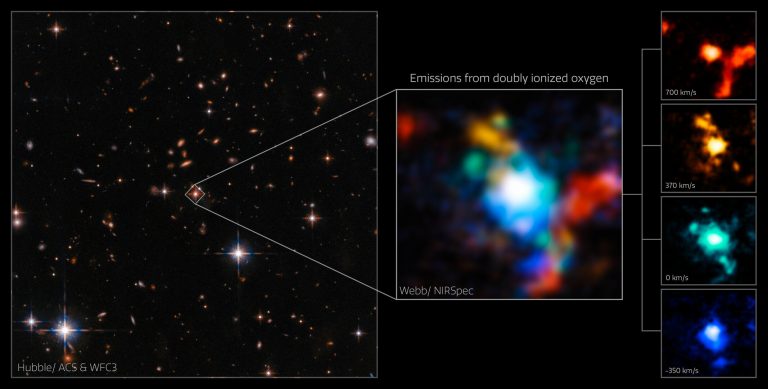
Astronomers looking into the early universe have made a surprising discovery using NASA’s James Webb Space Telescope: a cluster of massive galaxies in the process of forming around an extremely red quasar. The result will expand our understanding of how galaxy clusters in the early universe came together and formed the cosmic web we see today.
A quasar, a special type of active galactic nucleus (AGN), is a compact region with a supermassive black hole at the center of a galaxy. Gas falling into a supermassive black hole makes the quasar bright enough to outshine all the galaxy’s stars.
The quasar Webb explored, called SDSS J165202.64+172852.3, existed 11.5 billion years ago. It is unusually red not just because of its intrinsic red color, but also because the galaxy’s light has been redshifted by its vast distance. That made Webb, having unparalleled sensitivity in infrared wavelengths, perfectly suited to examine the galaxy in detail.
At left, the quasar SDSS J165202.64+172852.3 is highlighted in a Hubble Space Telescope image taken in visible and near-infrared light. The images on the right and at bottom present new observations from the James Webb Space Telescope in multiple wavelengths. They demonstrate the distribution and motions of gas within a newly observed galaxy cluster around the central quasar.
Credits: NASA, ESA, CSA, STScI, D. Wylezalek (Heidelberg Univ.), A. Vayner and N. Zakamska (Johns Hopkins Univ.) and the Q-3D Team
This quasar is one of the most powerful known galactic nuclei that’s been seen at such an extreme distance. Astronomers had speculated that the quasar’s extreme emission could cause a “galactic wind,” pushing free gas out of its host galaxy and possibly greatly influencing future star formation there.
To investigate the movement of the gas, dust and stellar material in the galaxy, the team used the telescope’s Near Infrared Spectrograph (NIRSpec). This powerful instrument uses a technique called spectroscopy to look at the movement of various outflows and winds surrounding the quasar. NIRSpec can simultaneously gather spectra across the telescope’s whole field of view, instead of just from one point at a time, enabling Webb to simultaneously examine the quasar, its galaxy and the wider surroundings.
Previous studies by NASA’s Hubble Space Telescope and other observatories called attention to the quasar’s powerful outflows, and astronomers had speculated that its host galaxy could be merging with some unseen partner. But the team was not expecting Webb’s NIRSpec data to clearly indicate it was not just one galaxy, but at least three more swirling around it. Thanks to spectra over a broad area, the motions of all this surrounding material could be mapped, resulting in the conclusion that the red quasar was in fact part of a dense knot of galaxy formation.
“There are few galaxy protoclusters known at this early time. It’s hard to find them, and very few have had time to form since the big bang,” said astronomer Dominika Wylezalek of Heidelberg University in Germany, who led the study with Webb. “This may eventually help us understand how galaxies in dense environments evolve. It’s an exciting result.”
Using the observations from NIRSpec, the team was able to confirm three galactic companions to this quasar and show how they are connected. Archival data from Hubble hint that there may be even more. Images from Hubble’s Wide Field Camera 3 had shown extended material surrounding the quasar and its galaxy, prompting its selection for this study into its outflow and the effects on its host galaxy. Now, the team suspects they could have been looking at the core of a whole cluster of galaxies – only now revealed by Webb’s crisp imaging.
“Our first look at the data quickly revealed clear signs of major interactions between the neighboring galaxies,” shared team member Andrey Vayner of Johns Hopkins University in Baltimore, Maryland. “The sensitivity of the NIRSpec instrument was immediately apparent, and it was clear to me that we are in a new era of infrared spectroscopy.”
The three confirmed galaxies are orbiting each other at incredibly high speeds, an indication that a great deal of mass is present. When combined with how closely they are packed into the region around this quasar, the team believes this marks one of the densest known areas of galaxy formation in the early universe. “Even a dense knot of dark matter isn’t sufficient to explain it,” Wylezalek says. “We think we could be seeing a region where two massive halos of dark matter are merging together.” Dark matter is an invisible component of the universe that holds galaxies and galaxy clusters together, and is thought to form a “halo” that extends beyond the stars in these structures.
The study conducted by Wylezalek’s team is part of Webb’s investigations into the early universe. With its unprecedented ability to look back in time, the telescope is already being used to investigate how the first galaxies were formed and evolved, and how black holes formed and influenced the structure of the universe. The team is planning follow-up observations into this unexpected galaxy proto-cluster, and hope to use it to understand how dense, chaotic galaxy clusters like this one form, and how it’s affected by the active, supermassive black hole at its heart.
These results will be published in the The Astrophysical Journal Letters. This research was completed as part of Webb’s Early Release Science program #1335.The James Webb Space Telescope is the world’s premier space science observatory. Webb will solve mysteries in our solar system, look beyond to distant worlds around other stars, and probe the mysterious structures and origins of our universe and our place in it. Webb is an international program led by NASA with its partners, ESA (European Space Agency) and CSA (Canadian Space Agency).
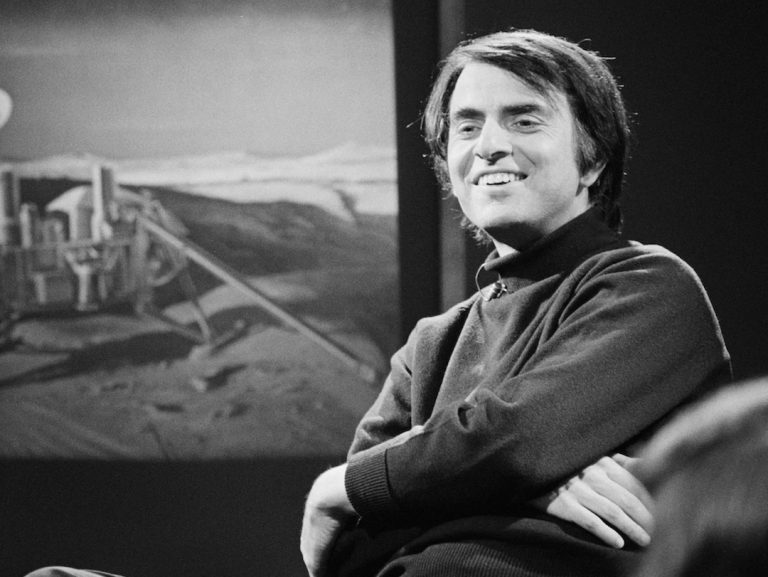
Is there a foolproof way to announce our existence to other intelligent life-forms? It’s a brainteaser with vast potential consequences, and one that scientists seem to love puzzling over – even if some, such as Stephen Hawking, have questioned the wisdom of alerting advanced beings to our humble corner of the Universe. In this short video excerpt from a 1977 lecture at the Royal Institution in London, Carl Sagan – more optimistic about the prospect of alien benevolence than Hawking – offers one possible method. First, he establishes his belief that a common language among dissimilar beings in a shared universe should, in theory, be possible. He then presents a document coded in ones and zeroes, containing a message that he hopes could be decoded by an intelligent being anywhere in the Universe. Finally, Sagan recounts an experiment in which he presented the document to what he considers a ‘reasonably clever’ life-form – some of his graduate students at Cornell University – to see if they could decipher it.
The Honourable François-Philippe Champagne, Minister of Innovation, Science and Industry, announced today that Canada will contribute to the Atmosphere Observing System (AOS) mission led by NASA. Canada’s contribution is estimated at more than $200 million. Currently slated to launch in 2028 and 2031, this major multi-satellite mission will improve extreme weather prediction, climate modelling, and monitoring of disasters.
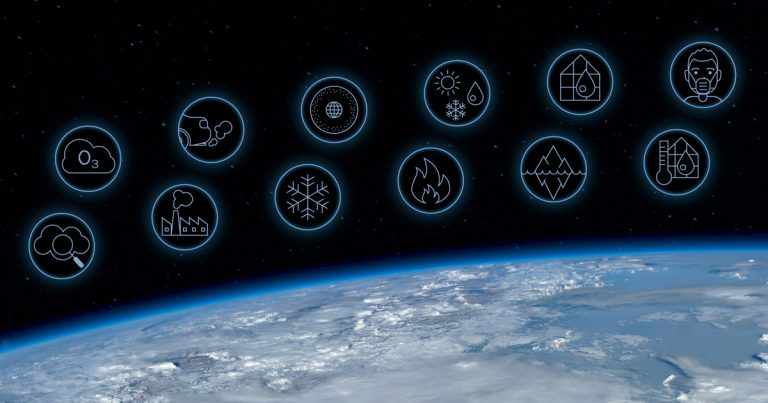
Extreme weather events are increasing in frequency and intensity. The dynamics of our planet’s atmosphere are changing. We need better environmental prediction to support adaptation and climate resilience. The AOS, including its Canadian contribution, will measure aerosols and clouds, and how they interact to impact Earth’s weather and climate.
Canada’s contribution to the AOS is the High-altitude Aerosols, Water vapour and Clouds (HAWC) mission. It consists of two Canadian instruments on a Canadian satellite and a third instrument on a NASA satellite, all planned for launch in 2031. These innovative instruments will provide critical data, enabling Canadian climate scientists and weather forecasters to better understand and predict extreme events, like severe storms, floods, droughts and poor air quality conditions. HAWC and AOS data will be fully accessible.
Thanks to early investments from the Canadian Space Agency in concept studies and technology development for these instruments, Canada was well positioned to take part in this important climate science mission. Canadian collaborators in the HAWC mission include a coast-to-coast consortium of universities, Environment and Climate Change Canada, Natural Resources Canada and the National Research Council of Canada.
“Canada has always played a key role in international space programs, helping to find solutions to global challenges. Today’s more than $200 million announcement builds on those successes with our participation in NASA’s AOS program. It also speaks to our commitment to harnessing science and research to address climate change, natural disasters, and other issues that are important to Canadians.”
– The Honourable François Philippe-Champagne, Minister of Innovation, Science and Industry
“Satellites give us a valuable view of earth; from space we can observe and monitor the weather and our changing climate. The instruments Canada are providing toward this mission will take measurements that are important to understanding weather and climate change, while providing data that will be used by our meteorologists and scientists to enhance predictions and improve our weather, air quality, and climate models.”
– The Honourable Steven Guilbeault, Minister of Environment and Climate Change
Quick facts
Global Satellite Earth Observation revenues are expected to grow from just over US$3 billion to over US$7 billion over the next decade. For the industry and non-profits, the use of satellite EO and geospatial information has been estimated to contribute $20.7 billion in productivity improvements to the Canadian economy annually.
The Intergovernmental Panel on Climate Change reports that uncertainties in the representation of aerosol-cloud processes and their interactions with radiation in Earth System Models are the main source of uncertainty in climate change projections.
The AOS mission will optimize how we examine links among aerosols, clouds, atmospheric convection, and precipitation. It will provide unique insight into the vertical structure and movement of aerosols, clouds and precipitation in our atmosphere.
Led by NASA, the AOS team includes the Canadian Space Agency, JAXA (Japan), CNES (France) and DLR (Germany).
The Canadian university consortium includes 13 universities across the country: University of Saskatchewan, University of Toronto, Université du Québec à Montréal, McGill University, University of New Brunswick, Université de Sherbrooke, University of Waterloo, Wilfrid Laurier University, St. Francis Xavier University, Saint Mary’s University, University of Victoria, Western University and Dalhousie University.
A massive collision, or something stranger? An epic exploration of lunar origin theories
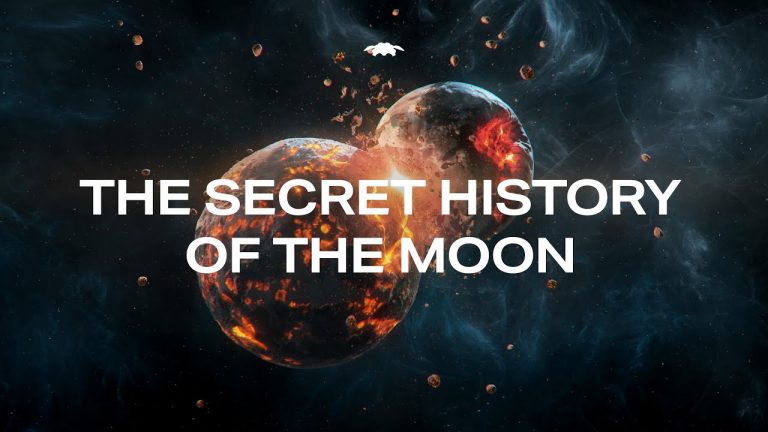
The tidiest theory of the Moon’s origin is known as the Giant Impact Hypothesis – the idea that, amid the volatile early era of the solar system’s formation, a Mars-sized protoplanet collided with the primordial Earth. From the massive ensuing explosion, much of the planetary debris coalesced into a new, Earth-orbiting body. But while the theory accounts for much of what we understand about the Moon, it leaves some critical question unanswered. Namely, if it was formed mostly from a foreign body, why do lunar samples show the chemical makeup of the Moon and Earth to be nearly identical? In this video, the US filmmaker John D Boswell synthesises animations and original music with the voice of the planetary scientist Sarah T Stewart to explore several theories for the Moon’s birth, as well as for how it might have helped to yield life on Earth. The result is a stylish, speculative lunar history that might inspire a renewed sense of awe for our closest celestial companion.