
Home Blog Page 54

NASA Awards Millions In STEM Research Grants

0

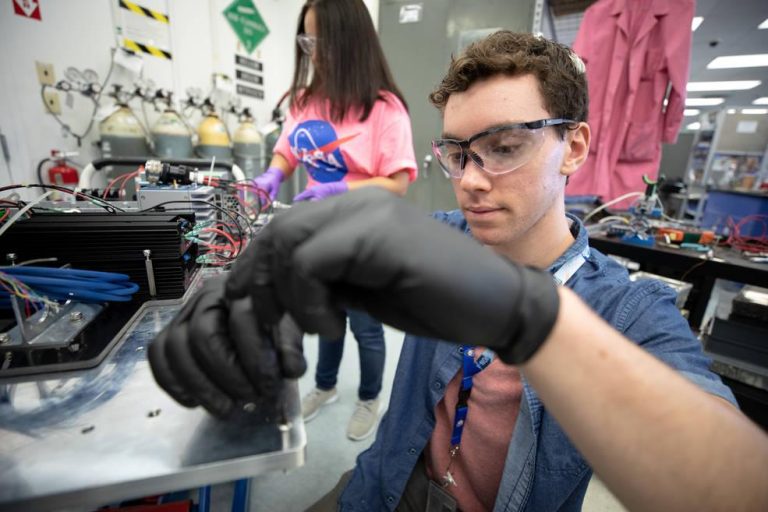
NASA announced the recipients of its annual STEM grants, providing nearly $4 million in total funding, to support scientific and technical research that aligns with the agency’s strategic research and technology development priorities. By providing resources to STEM research, NASA helps create a stronger and more vibrant scientific community to drive innovation and push the boundaries of what is possible in space exploration.

“We’re excited to announce the awardees of this year’s grants that will help the agency answer some difficult questions regarding research capabilities,” said Kathy Loftin, manager for NASA’s Established Program to Stimulate Competitive Research (EPSCoR) project. “These grants are a vital component of NASA’s science, technology, engineering, and math strategy to foster collaboration and stimulate growth in research and development in underserved areas across the country.”

NASA STEM provides a unique opportunity for researchers to solve science and exploration issues impacting its programs and missions. Forty research projects from 21 universities and organizations were selected based on their merit and alignment with agency missions. Each grantee will focus on a range of agency research needs, including repair, manufacturing, and fabrication technology for deep space missions; methods for detecting and eliminating bacteria in spacecraft; and studies on lunar and Martian regolith, including potential toxicity, suitability as soil for crops, and its ability to be used as construction material.

The grantees include Wichita State University in Kansas, which will receive funding to develop a compact, more efficient thermal management system for electric motors for vertical takeoff and landing vehicles. With the growth of electric, turbo-electric, and hybrid electric propulsion systems, development of smaller, more efficient, and easily manufactured cooling systems for electric motors could have significant applications for the automotive, aviation, and space industries.

With NASA returning to the Moon through Artemis, new technologies are necessary to help achieve the goal of a long-term lunar exploration. With efforts like NASA’s Lunar Surface Innovation Initiative, focusing on in-situ resource utilization of lunar materials, research from Louisiana State University will build upon in-space manufacturing advancements by studying the physical, chemical, and structural properties of alloys created from simulated regolith, including melting range, heat capacity, viscosity, and density.

To help NASA achieve its mission of unlocking the mysteries of the universe for the benefit of all, a research team from West Virginia University will develop a new concept in localization and guidance, navigation, and control algorithms for exploring Earth-like planets such as Venus. The team’s orbiter-assisted balloon navigation will use a variable-altitude balloon and orbiter to provide accurate geotagging and enable autonomous exploration of Venus, generating critical data to help understand Earth’s own formation and habitability change over time.

The remaining grantees are:

  • Brown University, Providence, Rhode Island
  • College of Charleston, Charleston, South Carolina
  • Iowa State University, Ames, Iowa
  • Montana State University, Bozeman, Montana
  • Nevada System of Higher Education, Reno, Nevada
  • New Mexico State University, Las Cruces, New Mexico
  • Oklahoma State University, Stillwater, Oklahoma
  • South Dakota School of Mines & Technology, Rapid City, South Dakota
  • University of Alaska, Fairbanks, Alaska
  • University of Alabama, Huntsville, Alabama
  • University of Arkansas, Little Rock, Arkansas
  • University of Delaware, Newark, Delaware
  • University of Idaho, Moscow, Idaho
  • University of Kentucky, Lexington, Kentucky
  • University of Mississippi, University, Mississippi
  • University of Nebraska, Omaha, Nebraska
  • University of Puerto Rico, San Juan, Puerto Rico
  • University of Wyoming, Laramie, Wyoming

The grants are funded through NASA’s EPSCoR’s R3 (Rapid Response Research) project. The EPSCoR project is directed at jurisdictions that have not participated evenly in competitive aerospace and aerospace-related research activities. For the EPSCoR R3 grants, universities and schools across the country submitted proposals, with each jurisdiction eligible to submit a total of six proposals for competitive agreement awards of up to $100,000 each. Twenty-five states, the Commonwealth of Puerto Rico, the U.S. Virgin Islands, and Guam currently participate in the program.

NASA’s Office of STEM Engagement, in collaboration with several of the agency’s mission directorate programs and offices, established these grants to support research and development in areas critical to NASA’s mission and to contribute to the overall research infrastructure, science, and technology capabilities of higher education and economic development in the jurisdictions receiving funding.

For more information on the program and the recipients of this year’s awards, please visit:

www.nasa.gov/stem/epscor/home/index.html

-end-

Image Credits: NASA/Frank Michaux

Human Intelligence. Artificial Intelligence. What Is Intelligence?

0

Intelligence is a complex and multifaceted concept that can be difficult to define precisely. Broadly speaking, intelligence refers to the ability to learn , reason , solve problems , and adapt to new situations . It involves a range of cognitive abilities , including:

Memory | Photos
Image credits: Unsplash – Jon Tyson

1. Memory:

The ability to store and recall information.

2. Reasoning:

The ability to think logically and make inferences.

The Great Thinker
Image credits: Unsplash – Kenny Eliason

3. Problem-solving:

The ability to analyse a situation and come up with a solution.

4. Perception:

The ability to interpret and understand sensory information.

5. Attention:

The ability to focus and concentrate.

6. Language:

The ability to use and understand language.

Bicycle Art
Image credits: Pixabay – Engin_Akyurt

7. Creativity:

The ability to generate novel and innovative ideas.

Intelligence is often measured using IQ tests, which are designed to assess a person’s cognitive abilities. However, some researchers argue that IQ tests do not capture the full range of human intelligence, and that there are other forms of intelligence that are not captured by traditional tests.

Intelligence is a complex and multifaceted concept that is still not fully understood. It is likely that our understanding of intelligence will continue to evolve as we learn more about the brain and how it works.

The Traits And Qualities That Humans Have. And How AI Would And Should Learn From It.

0

Humanity refers to the collective qualities , characteristics , and behaviours that are associated with being human . It encompasses a wide range of traits and qualities, including:

1. Empathy:

The ability to understand and share the feelings of others.

Children | Empathy
Image credits: Unsplash – Annie Spratt

2. Compassion:

The ability to show concern and kindness for others.

Help | Care | Cat | People | Compassion
Image credits: Unsplash – Zac Durant

3. Creativity:

The ability to generate new and innovative ideas.

Eye | Art
Image credits: Pixabay – maryannandco

4. Curiosity:

The desire to learn and explore.

Child Looking Up | Curious
Image credits: Pexels – Pixabay

5. Rationality:

The ability to think critically and logically.

Thinking Person
Image credits: Pixabay – RobinHiggins

6. Collaboration:

The ability to work together towards a common goal.

Hands | People
Image credits: Pexels – Dio Hasbi Saniskoro

7. Diversity:

The recognition and acceptance of differences between individuals and groups.

People | Diversity | Blackboard
Image credits: Pexels – fauxels

Humanity is often associated with positive qualities and behaviours , such as compassion, kindness, and empathy. However, it is important to recognize that not all humans exhibit these qualities all of the time, and that humans are capable of both positive and negative behaviours.

Humanity is a complex and multifaceted concept that is closely tied to our identity as human beings. It is shaped by a range of factors, including culture , environment , and individual experiences , and it continues to evolve over time.

In the search for life, might alien ocean worlds be a better bet than Earth-like planets?

0

The quest to identify potentially life-harbouring exoplanets has, thus far, been dominated by a search for Earth-like worlds. However, some scientists believe that so-called ‘Hycean’ planets – up to 10 times larger than Earth, 90 per cent water by mass, and with oceans perhaps thousands of kilometres deep – could potentially host life deep below their surface. And while, at the moment, Hycean worlds are still just hypothetical, researchers predict they could be far more numerous in our galaxy than Earth-like planets. In this short animation, the US filmmaker John D Boswell (also known as Melodysheep) deploys his trademark melding of riveting CGI, dreamy electronica, hard science and pure speculation to explore the contours and composition of these potential worlds, and ponder what life forms might exist inside their waters.

Video by Melodysheep

Source: Aeon

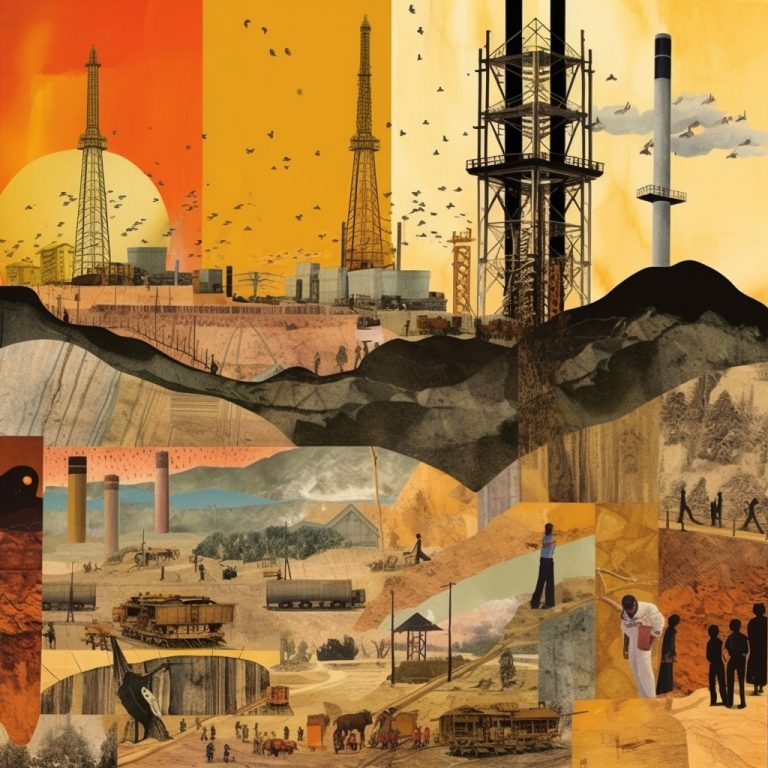
Power and Profit: The Global Oil Industry’s Imperial Domination and Environmental Impact

0

Few industries can match the oil industry’s vertical integration and central role in power politics. Over time, imperial powers and multinational corporations (MNCs) have emerged as dominant players in global energy production. Different factors contribute to their domination such as the challenges posed by nationalisations and the Organisation of the Petroleum Exporting Countries (OPEC), and the broader impact of fossil fuels on the history of capitalism and the current ecological crisis.

The Ascendancy of Imperial Powers and MNCs in the Oil Industry

Imperial powers gained a distinct advantage in the oil industry due to their geographical positioning. During the 19th and early 20th centuries, European powers such as Britain and France controlled vast territories abundant in oil reserves. Notably, the Middle East, particularly the region known as the “Persian Gulf,” became a focal point for imperial powers due to its vast oil resources.

For instance, the discovery of oil in Persia (now Iran) in the early 20th century led to the establishment of the Anglo-Persian Oil Company (later renamed British Petroleum), which emerged as a major player in the global oil industry. Similarly, the exploitation of oil resources in Iraq by British companies solidified the influence of imperial powers in the region.

Technological advancements also played a pivotal role in the dominance of imperial powers and MNCs. Companies such as Standard Oil, led by John D. Rockefeller, spearheaded the development of advanced extraction and refining technologies. These innovations enabled more efficient extraction of oil reserves, leading to increased profitability for oil ventures.

Moreover, the political and economic influence wielded by imperial powers significantly bolstered their oil interests. Through diplomatic negotiations, they secured agreements with oil-producing nations, granting them exclusive access to resources and favourable trade conditions. These agreements often disadvantaged the host countries and further reinforced the dominance of imperial powers and MNCs in the global oil industry.

Nationalisations and the Challenge of OPEC

In the mid-20th century, a significant shift occurred as many oil-producing nations embarked on nationalisation initiatives to reclaim control over their resources. An emblematic event was the nationalisation of the Iranian oil industry in 1951, led by Prime Minister Mohammad Mossadegh. Mossadegh’s decision to nationalise the Anglo-Iranian Oil Company (later British Petroleum) was a response to decades of perceived exploitation by foreign powers.

Similar nationalisation movements took place in other oil-rich countries such as Iraq, Venezuela, and Libya. These actions aimed to challenge the dominance of MNCs and regain control over natural resources. Consequently, state-owned oil companies, including Petróleos de Venezuela (PDVSA) and Iraq National Oil Company (INOC), emerged.

In 1960, oil-producing nations further consolidated their influence by forming the Organisation of the Petroleum Exporting Countries (OPEC). OPEC provided member countries with a collective platform to exert control over oil prices and production levels. A notable challenge posed by OPEC to the dominance of imperial powers and MNCs was the oil embargo of 1973. This embargo, led by OPEC member countries, aimed to protest Western support for Israel during the Yom Kippur War. The embargo triggered a global oil crisis, underscoring OPEC’s influence and power over the oil market.

Fossil Fuels in the History of Capitalism

The history of capitalism is intricately intertwined with the widespread use of fossil fuels. The Industrial Revolution, which originated in the late 18th century, was fuelled by the abundant energy provided by coal. Coal-powered steam engines revolutionised transportation, manufacturing, and agriculture, resulting in unparalleled economic growth and the dawn of modern capitalism.

However, it was the discovery and utilisation of oil in the late 19th century that propelled capitalism to new heights. The invention of the internal combustion engine enabled the widespread adoption of oil as a versatile and efficient energy source. The rise of the automobile industry, led by companies such as Ford and General Motors, symbolised the integration of oil into capitalist societies, transforming transportation systems and facilitating economic expansion.

Fossil Fuels and the Current Ecological Crisis

While fossil fuels have played a pivotal role in driving economic growth and industrialisation, their continued usage has resulted in severe ecological consequences. The combustion of fossil fuels releases greenhouse gases, primarily carbon dioxide, into the atmosphere. This has significantly contributed to global warming and climate change, resulting in rising temperatures, melting polar ice caps, and an escalation in extreme weather events.

Furthermore, the extraction, transportation, and refining of fossil fuels have caused considerable environmental damage. Catastrophic oil spills, such as the Exxon Valdez spill in 1989 and the Deepwater Horizon disaster in 2010, have wreaked havoc on marine ecosystems and local communities.

The current ecological crisis necessitates a swift transition away from fossil fuels and an embrace of renewable energy sources. Governments, businesses, and individuals worldwide are increasingly investing in solar, wind, and geothermal energy, recognising the imperative to reduce greenhouse gas emissions and mitigate the impacts of climate change.

The dominance of imperial powers and multinational corporations in the global oil industry can be attributed to geographical advantages, technological advancements, and political influence. However, nationalisations and the formation of OPEC have presented challenges to this dominance, leading to shifts in global power dynamics. Fossil fuels have played a vital role in the history of capitalism, driving economic growth and globalisation. Nonetheless, their extensive usage has contributed to the ongoing ecological crisis, including climate change and environmental degradation.

Addressing this crisis necessitates a transition to sustainable energy sources and the adoption of environmentally friendly practices. The promotion of renewable energy technologies, energy efficiency measures, and international cooperation in reducing carbon emissions are crucial steps towards forging a greener and more resilient future. By acknowledging the historical role of fossil fuels and actively working to mitigate their impact, societies can strive for a sustainable and environmentally conscious global energy system.

A Field Guide To AI for Business, Institutions, Society, Political Economy: Unveiling the Transformative Power of Artificial Intelligence

0

Discover the profound impact of Artificial Intelligence (AI) on every aspect of our lives with “A Field Guide To AI for Business, Institutions, Society, Political Economy.” This comprehensive guidebook offers a compelling exploration of AI’s significance, its influence on diverse sectors, and the critical considerations for a future shaped by this transformative technology.

Contents Highlights

The book is designed to be accessible and readable for everyone. You don’t have to be an expert or a technical person in order to understand its contents. Here are some highlights:

Unravelling the AI Landscape

Delve into the essentials with an overview of AI’s significance and its implications for business, institutions, society, and political economy. Gain insights into the dynamic relationship between AI and these domains.

Building AI Foundations

Navigate the intellectual, academic, and research roots of AI, while familiarizing yourself with key concepts, terminologies, and cutting-edge technologies. Explore the vast landscape of learning, encompassing both human and machine capabilities.

AI in Business

Uncover the adoption and transformation of AI in businesses, exploring its profound impact across industries through specific use cases. Engage with the challenges, opportunities, and future of work in the AI era.

AI in Institutions

Examine how institutions embrace AI, from education and healthcare to public services and beyond. Explore the intersection of research, development, innovations, and governance within institutions, while considering the unique implications they face.

AI and Society

Witness the impact of AI on everyday life, social interactions, the digital divide, personalization, privacy, security, bias, fairness, and accountability. Explore the profound societal implications of AI’s advancements.

AI in Political Economy

Uncover AI’s role in shaping the global economy, influencing international trade, labor markets, income distribution, and national policies. Discover how AI intertwines with key aspects of political economy on a global scale.

AI: Ethics, Regulation, Governance, Safety

Engage with crucial pillars of AI, including ethics, safety, alignment, and the challenges of governance and regulatory frameworks. Explore the governance of AI within organizations, institutions, and the importance of international collaboration.

The Future of AI

Embrace emerging trends, technologies, and the potential impact of AI on society, economy, geopolitics, and global challenges. Prepare for the future with insights on skills, education, policy, and the imperative for responsible AI development and deployment.

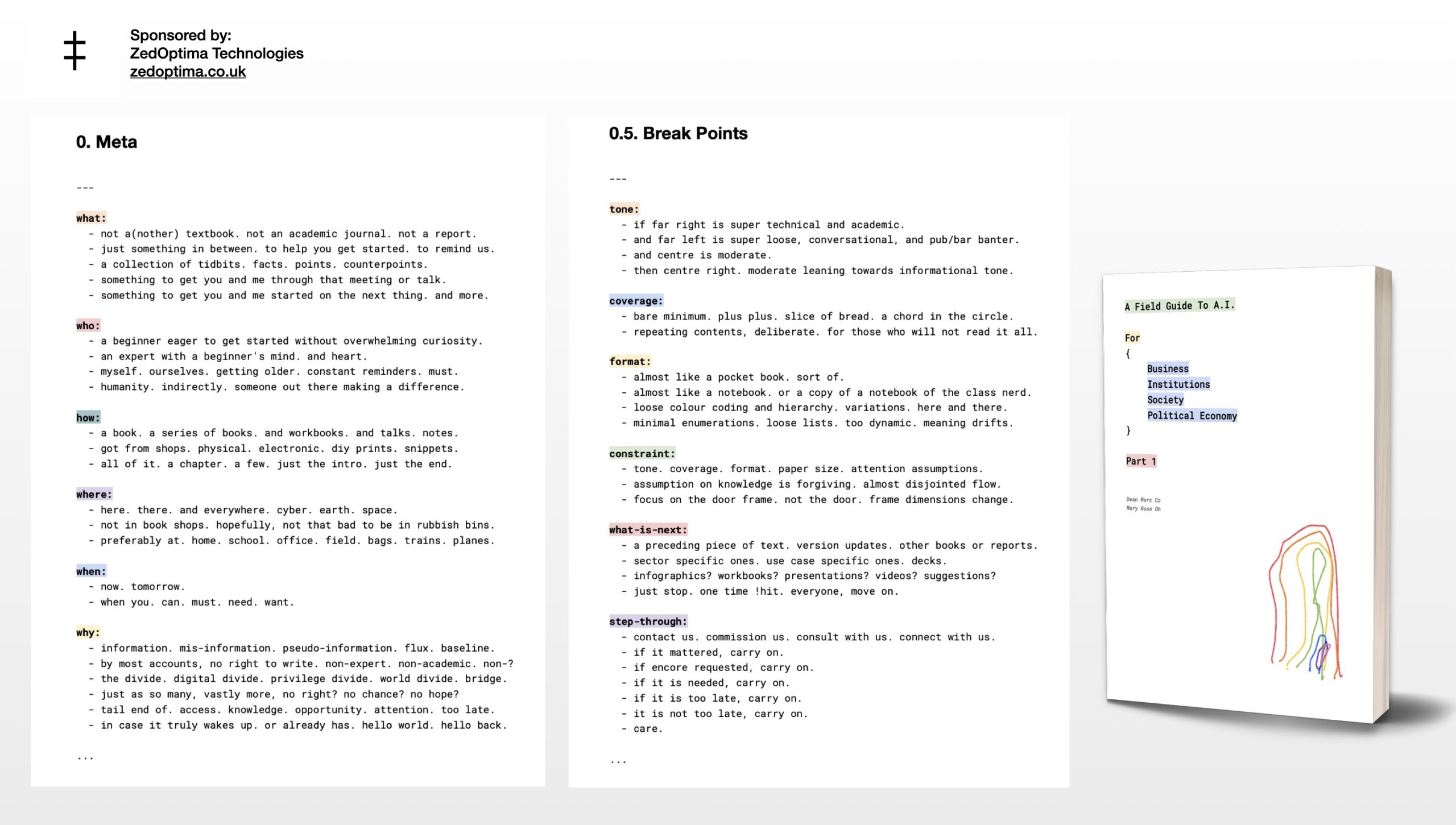
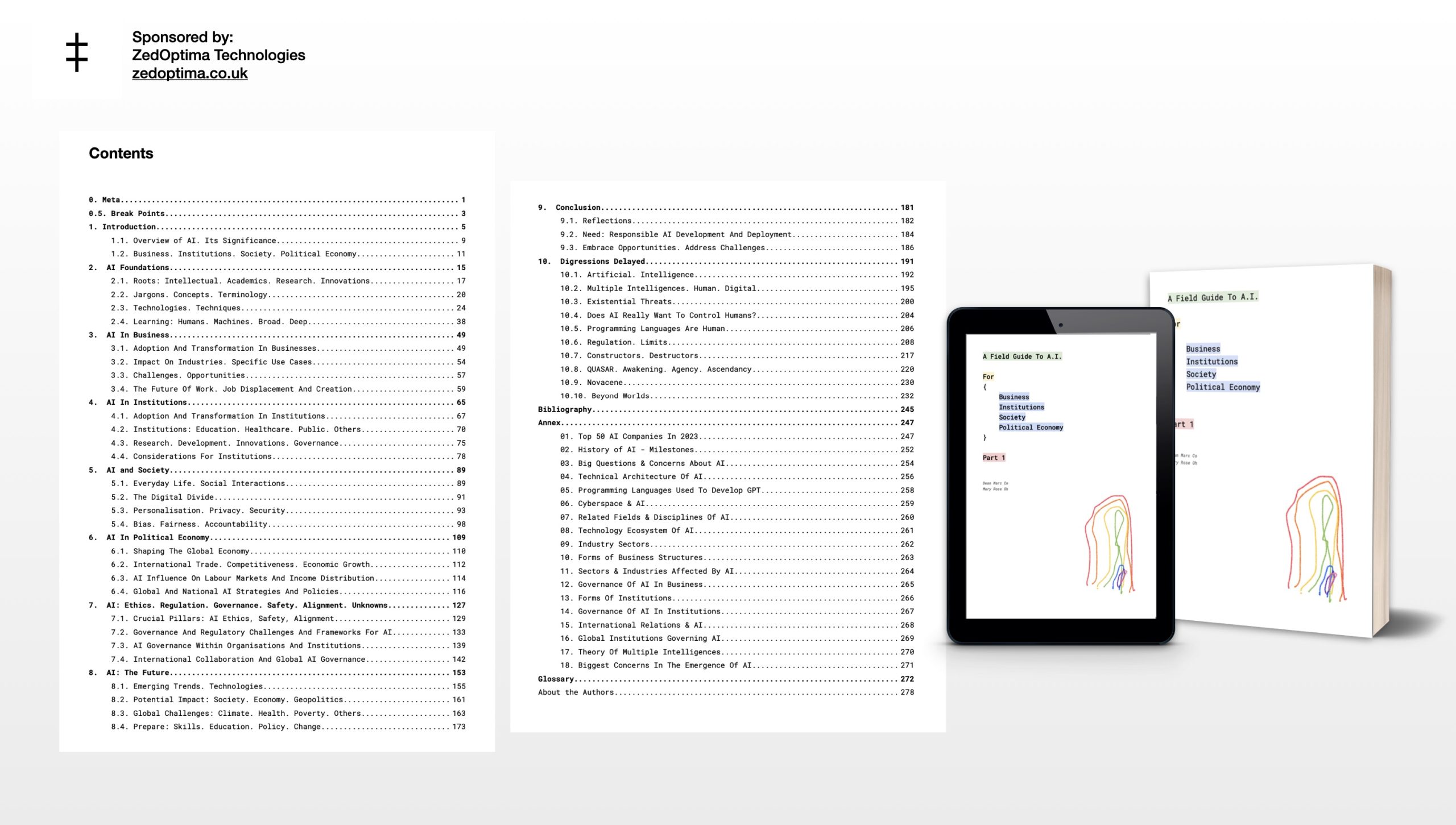
Here is an exclusive preview of the book’s contents (click to enlarge):

A Field Guide to A.I. | Meta and Break Points
A Field Guide to A.I. | Table of Contents

Reflect on the transformative journey and the need for responsible AI development and deployment. Embrace the opportunities and address the challenges that lie ahead in this AI-powered world.

Get ready to navigate the AI landscape with confidence and gain a deep understanding of AI’s implications for business, institutions, society, and political economy. “A Field Guide To AI for Business, Institutions, Society, Political Economy” is your essential companion on this transformative journey.

Order your copy today and unlock the possibilities of AI!

Amazon: https://amzn.to/3qXHeQ8

Lulu: https://www.lulu.com/shop/mary-rose-oh-and-dean-marc-co/a-field-guide-to-ai/ebook/product-ymn2qj.html?page=1&pageSize=4

Binding Pages To Legacy. The Timeless Craft of Bookbinding.

0

Bookbinding is a time-honoured craft that combines artistry, meticulous attention to detail, and a respect for materials and tradition. It involves assembling written or printed pages and securing them within a protective cover, resulting in a well-bound, beautiful book.

Book

Materials Used in Bookbinding.

1. Paper. The pages of the book, also known as the “text block,” are made from paper. This could range from inexpensive, machine-made paper to high-quality, handcrafted paper.

2. Bookbinding Cloth/Leather. The cover of the book (or the book “case”) can be made from various materials, including bookbinding cloth, paper, or leather.

3. Glue. Adhesive is used to secure the pages together and to attach the text block to the book cover.

4. Thread. Strong thread or cord is often used to sew the pages together, adding strength and durability to the binding.

5. Board. This forms the rigid part of the cover and can be made from different types of cardboard or other stiff material.

Bookbinding Processes.

There are several different methods of bookbinding, each with its own set of steps and requirements. Here are the general steps for traditional case binding.

1. Page Preparation. The pages of the book are first printed and then folded into sections called “signatures.” Each signature typically contains multiple pages.

2. Sewing. The signatures are then sewn together using a bookbinding stitch, such as the saddle stitch or the Coptic stitch. This forms the text block.

3. Gluing. The spine of the text block is coated with glue to add extra strength and durability.

4. Endpapers. Sheets of paper, often thicker than the text block pages, are glued to the first and last pages of the text block. These serve as a connection between the text block and the cover.

5. Cover Creation. The book’s cover is made by cutting a piece of board to the size of the book and then covering it with bookbinding cloth, paper, or leather. The cover should be slightly larger than the text block.

6. Attaching the Text Block to the Cover. The text block is then glued into the cover. The endpapers are usually used to secure the text block to the cover.

7. Finishing Touches. The final steps can include adding a ribbon marker, headbands, or other decorative elements.

Types of Bookbinding.

1. Case Binding. This is the traditional method used for hardcover books, involving sewing the pages together and then gluing them into a hard cover.

2. Saddle Stitching. This method involves folding the pages in half and then stapling through the fold. This is typically used for smaller booklets or magazines.

3. Perfect Binding. In this method, the pages are glued together at the spine without any sewing. This is often used for paperback books.

4. Coptic Binding. A type of binding that involves sewing the pages and cover together, resulting in a book that can lay flat when open.

5. Japanese Bookbinding (Stab Binding). This method involves sewing the pages together along one edge. It is often used for decorative purposes or for binding single sheets.

6. Screw Post Binding. In this method, holes are punched through the entire book and metal posts are used to hold it together.

Bookbinding is a craft that requires skill, patience, and a deep appreciation for tradition. Despite the rise of digital technology, the art of bookbinding continues to flourish, appreciated by book lovers for the tactile pleasure and aesthetic appeal of a well-crafted book. Whether you’re a bibliophile, a craft lover, or simply someone who appreciates fine craftsmanship, the world of bookbinding has plenty to offer.

At guzz, our mission is the celebration of human creativity, ingenuity, and expression in arts, crafts, and products. Our inspiration is the human spirit.

For partnerships, product placements, sponsorships, investments, and collaborations, you may reach us at [email protected] for further communications.

Luxury Watches. From Telling Time To Being Timeless.

0

Watchmaking is a fascinating blend of art and science, requiring both technical precision and artistic creativity. This complex craft has a rich history, having evolved from the rudimentary timekeeping devices of antiquity to today’s intricate mechanical timepieces and cutting-edge smartwatches.

Wrist Watch
Wrist Watch

At its core, watchmaking involves the design and assembly of watches, often by hand. Watchmakers must understand the intricate workings of a watch’s movement (the mechanism that measures and displays time), the casing that houses it, the dial and hands that display the time, and the strap or bracelet that allows the watch to be worn.

In a world where time can be checked on every smartphone, luxury watches stand as a testament to the enduring value of craftsmanship and the art of watchmaking.


Materials. A wide range of materials are used in watchmaking.

1. Metals. Common metals used in watchmaking include stainless steel, gold, and platinum for the watch case and bracelet. Titanium is also used for its strength and light weight. Brass and copper can be used inside the watch due to their anti-magnetic properties.

2. Crystals. Sapphire crystal is often used for the watch face because of its high resistance to scratching. Acrylic or mineral glass are also used in lower-cost watches.

3. Gems. Diamonds and other precious gems can be used for decoration, particularly in luxury watches.

4. Rubber and Leather. These are commonly used for watch straps. Leather offers a classic look, while rubber provides a sporty, durable option.


The Watchmaking Process. Watchmaking requires precise craftsmanship and attention to detail.

1. Design. The process begins with design, where the aesthetic and technical aspects of the watch are decided.

2. Creation of Parts. Each individual component of the watch is created. This can involve machining, stamping, or even hand-carving for high-end watches.

3. Assembly. The watch’s movement is assembled first. This involves putting together many tiny, delicate parts in a precise order. Then, the dial and hands are added, the movement is placed in the case, and finally, the strap or bracelet is attached.

4. Testing. Watches undergo thorough testing for accuracy, water resistance, and other quality measures.

5. Finishing. This can involve polishing the case and bracelet, setting any gemstones, and any other final touches to enhance the watch’s appearance.


Luxury Watchmaking. In luxury watchmaking, the process is often more intensive. High-end watchmakers pride themselves on their craftsmanship, with many components made and finished by hand. Luxury watches often feature complex additional functions, known as complications, such as chronographs (stopwatches), calendars, and moon phase displays. These require additional components and even more precision and skill in assembly.

Luxury watches also often use premium materials, such as 18k gold, platinum, and high-quality leather. Some luxury watches even feature high-quality mechanical movements, which are powered by a mainspring and gear train, rather than a battery. These mechanical movements are appreciated for their intricate craftsmanship and are a testament to the skill of the watchmaker.

The pursuit of luxury in watchmaking is not merely about expensive materials and complex functions. It’s also about the time, effort, and skill that goes into each timepiece. In a world where time can be checked on every smartphone, luxury watches stand as a testament to the enduring value of craftsmanship and the art of watchmaking.

The world of watchmaking is as vast as it is fascinating, with a blend of history, science, artistry, and luxury. Whether you’re interested in the intricate workings of mechanical movements, the artistry of design, or the allure of luxury timepieces, there’s something in this field to captivate your interest.


At guzz, our mission is the celebration of human creativity, ingenuity, and expression in arts, crafts, and products. Our inspiration is the human spirit.


For partnerships, product placements, sponsorships, investments, and collaborations, you may reach us at [email protected] for further communications.

The Dual Nature of Globalisation: Strengthening and Weakening the State in the Age of Artificial Intelligence

0

Globalisation has undeniably transformed the world, reshaping the role of the state in both positive and negative ways. While it has provided new opportunities for economic growth and interconnectivity, globalisation has also presented challenges that have both strengthened and weakened the state. Moreover, the emergence of transformative technologies like Artificial Intelligence (AI) has further influenced this dynamic relationship between globalisation and the state. The multifaceted impact of globalisation on the state, with a specific focus on the role of AI, both strengthened and weakened under these conditions:

Strengthening the State

Economic Development

Globalisation, driven by advancements in technology and trade liberalization, has enabled states to leverage international markets and attract foreign investment. This has led to increased economic growth and raised living standards for many countries.

Technological Advancement

The globalised world has facilitated the transfer of knowledge, expertise, and technology across borders. This has empowered states to adopt and develop cutting-edge technologies like AI, enhancing their capabilities in areas such as national security, healthcare, and public administration.

International Cooperation

Globalisation has fostered closer international collaboration, enabling states to address common challenges such as climate change, terrorism, and transnational crime. Through platforms like the United Nations, states have forged partnerships and implemented global initiatives to tackle these issues collectively.

Weakening the State

Erosion of Sovereignty

Globalization has posed challenges to state sovereignty, as supranational organizations and global agreements often require states to cede a degree of autonomy in decision-making. Transnational corporations and global financial institutions exert influence on national policies, limiting the state’s ability to act independently.

Unequal Distribution of Benefits

While globalization has created winners, it has also exacerbated inequality within and between countries. Economic disparities can weaken the state’s ability to provide social safety nets, exacerbate social unrest, and erode public trust in government institutions.

Security Concerns

As global networks expand, states face new security threats, including cyberattacks, terrorism, and transnational crime. The state’s traditional territorial focus is challenged by borderless threats that require collaboration and information sharing beyond national boundaries.

The Role of Artificial Intelligence

AI has emerged as a transformative force within the context of globalisation, influencing both the strengthening and weakening of the state.

Strengthening Governance

AI applications enable states to improve governance and public service delivery. Automated processes, data analytics, and predictive modelling enhance policy-making, resource allocation, and administrative efficiency, empowering the state to respond effectively to societal challenges.

Security and Surveillance

AI-driven technologies support states in addressing security concerns. Facial recognition, data analysis, and pattern recognition tools aid in crime prevention, border control, and counterterrorism efforts. However, there are concerns surrounding privacy and potential abuse of these technologies.

Economic Disruption and Inequality

The rapid deployment of AI and automation technologies in industries can disrupt labour markets and exacerbate income inequality. The state faces the challenge of ensuring equitable access to opportunities and implementing policies to mitigate adverse effects on vulnerable populations.

Under conditions of globalisation, the state experiences a complex interplay of strengthening and weakening forces. Globalisation, alongside the rise of AI, has bolstered the state’s capacity to address societal challenges, foster economic growth, and promote international cooperation. Simultaneously, the erosion of sovereignty, unequal distribution of benefits, and security concerns have tested the state’s resilience and effectiveness. As societies navigate the evolving landscape of globalization and technology, policymakers must strike a delicate balance, harnessing the benefits of globalization and AI while addressing the challenges to ensure the state remains an effective and accountable institution in the 21st century.

Scent Symphony. The Art, Science, And Magic Of Perfumery.

0

Welcome to the world of perfumery, a realm where artistry meets science, where the ethereal melds with the tangible, and where olfaction takes center stage. Perfumery, the art and science of creating perfume, is an ancient craft that requires a deep understanding of chemistry, a finely tuned sense of smell, and a flair for creativity.

At the core of perfumery lies the fundamental understanding of olfactory materials. These could be natural ingredients, derived from flowers, woods, resins, and fruits, or they could be synthetic molecules that mimic natural scents, create entirely novel olfactive experiences, or both. Perfumers, often known as ‘noses‘, must learn to identify hundreds, sometimes even thousands, of distinct scents and understand how they interact with each other.

Creating a perfume is akin to composing music. A ‘perfume pyramid‘ constitutes the fundamental structure of a fragrance, broken down into top notes, heart (or middle) notes, and base notes.

Top notes are the scents experienced immediately upon application of a perfume, forming a person’s initial impression.

The heart notes emerge after the top notes evaporate, forming the core of the perfume’s identity.

Lastly, the base notes, often rich and deep, emerge slowly and linger the longest, providing the fragrance’s lasting impression.

A good perfume is well-balanced, with the notes blending seamlessly into one another, evolving over time, and maintaining an appealing scent from the first spritz to the final whiff. This intricate balancing act requires not only a thorough understanding of the individual ingredients and how they interact but also how those interactions change over time, with wear, and even with body chemistry.

Modern perfumery also involves a deep understanding of safety regulations and restrictions on certain ingredients, both for health reasons and sustainability considerations. Thus, a good perfumer is not just an artist, but a skilled chemist and an informed environmental steward.

The world of perfumery is one of endless fascination, offering a unique blend of science, art, and craft. It is a world of exploration, where one can journey through sensory experiences that evoke memories, stir emotions, and transport you to different places and times.


At guzz, our mission is the celebration of human creativity, ingenuity, and expression in arts, crafts, and products. Our inspiration is the human spirit.


For partnerships, product placements, sponsorships, investments, and collaborations, you may reach us at [email protected] for further communications.