

Home Blog Page 55

Essence Of Elegance. A Guide To The Top Ingredients In Perfumery.

0


Perfumes and colognes can have hundreds of possible ingredients, with each formulation having its own unique combination. However, certain ingredients are more commonly used due to their appealing scents, their ability to enhance other fragrances, or their staying power.

Bergamot. This citrus fruit imparts a bright, zesty scent that is often used in top notes.

Rose. Known as the ‘Queen of Flowers’, rose gives off a romantic, feminine scent and is a staple in many perfumes. Rose absolute, an essential oil extracted from rose petals, is a particularly prized ingredient.

Jasmine. Jasmine has a rich, floral scent that is both delicate and intense. Like rose, it is often used in feminine perfumes. With a heady, sweet, and floral scent, jasmine is a highly prized ingredient in perfumery. Jasmine absolute, extracted from the flower, is particularly cherished.

Vanilla. Vanilla provides a warm, sweet, and slightly exotic scent. It’s often used in base notes for its comforting and familiar aroma.

Sandalwood. Sandalwood has a warm, woody scent that is used in many different types of fragrances. Its lingering scent makes it a popular choice for base notes.

Cedarwood. This provides a dry, clean, woody scent often used in masculine fragrances. It’s also used in the base notes of feminine perfumes to provide depth and longevity.

Musk. Often synthetically created due to animal welfare regulations, musk has a deep, sensual scent that is often used in the base notes to provide depth and warmth.

Patchouli. It has a strong, earthy scent that can add depth to a fragrance. It is often used in oriental and chypre fragrances.

Lavender. A key ingredient in the traditional eau de cologne and fougere (fern-like) fragrances, lavender has a sweet, floral, herbaceous scent.

Oud (Agarwood). This is one of the most expensive perfume ingredients in the world. Oud has a warm, woody, and slightly sweet scent that adds a luxurious touch to any fragrance.

Ambergris. While synthetic versions are now predominantly used, ambergris is known for its sweet, earthy scent that’s often described as marine-like. It’s used as a fixative to help prolong the life of other scents.

Neroli. Extracted from the blossom of the bitter orange tree, neroli has a sweet, honeyed scent with slightly metallic and green facets. It is commonly used in eau de colognes and floral compositions.

Vetiver. Extracted from a tropical grass, vetiver has a complex, woody, earthy, and smoky aroma that is often used in the base notes for its fixative properties.

Pepper. Both black and pink pepper oils are used in perfumery for their warm, spicy notes.

Ylang-Ylang. This tropical flower has a sweet, slightly fruity scent that’s often described as narcotic. It’s used in both floral and oriental compositions.

Iris. Iris is valued for its earthy, powdery, and woody-violet facets. It is one of the most expensive ingredients in perfumery, due to the lengthy and complex process of extracting the scent from the iris root, also known as orris.

Frankincense. Also known as olibanum, frankincense has a woody, spicy, and slightly fruity aroma with a warm, deep, and resinous undertone. It is used in a variety of perfume genres, particularly oriental and woody compositions.

Lemon. Lemon essential oil is widely used in perfumery for its fresh, citrusy scent, particularly in top notes.

Oakmoss. Derived from a type of lichen, oakmoss has a rich, earthy and woody scent. It’s often used in chypre perfumes as part of the ‘chypre’ accord, together with bergamot and labdanum.

Tuberose. Tuberose is a white flower with a powerful and intoxicating floral scent, somewhat similar to jasmine and gardenia. It’s often used in floral and oriental perfumes.

Geranium. Geranium has a green, slightly fruity, rose-like scent. It’s often used in rose compositions and to provide fresh top notes.

Keep in mind that the list of potential perfume ingredients is almost endless, and it also includes various synthetic compounds that can recreate specific scents or introduce completely new ones.

At guzz, our mission is the celebration of human creativity, ingenuity, and expression in arts, crafts, and products. Our inspiration is the human spirit.

For partnerships, product placements, sponsorships, investments, and collaborations, you may reach us at [email protected] for further communications.

Alchemy Of Aroma. Decoding The Art And Science Of Perfumery.

0

A look into the ingredients used in perfumery and the process of its alchemy!

Ingredients. The ingredients used in perfumery can be divided into two main categories: naturals and synthetics.

Naturals. These are substances obtained from plants, animals, and sometimes minerals. This category includes essential oils (like rose or lavender oil), absolutes (like jasmine absolute), resins (like frankincense), animal extracts (like musk or ambergris), and others. These materials are typically obtained through processes such as steam distillation, solvent extraction, or enfleurage.

Synthetics. These are man-made ingredients, created in a lab. Some synthetics mimic natural scents (like synthetic vanilla, or vanillin), while others represent novel olfactive experiences that don’t exist in nature (like Calone, a synthetic compound that imparts a ‘marine’ scent). Synthetics have greatly expanded the perfumer’s palette, allowing for a wider range of scents that also have greater stability and longevity.

In addition to these, perfumes often contain water and alcohol, which serve as carriers for the scent molecules.

The Process.

1. Concept/Design. The creation of a perfume begins with a concept. This could be an emotion, a place, a person, an abstract idea—anything that the perfumer or the brand wishes to evoke through the scent.

2. Formulation. The perfumer then begins the process of translating this concept into a perfume. They will select various ingredients from their palette that they believe will work together to evoke the desired concept. Perfumers usually work with a ‘perfume pyramid’, which includes the top notes (scents that are perceived immediately), heart notes (forming the main body of the perfume), and base notes (scents that linger the longest).

3. Blending. The ingredients are then carefully weighed and blended together. This blend, or ‘compound’, is usually mixed with alcohol, which serves as a carrier and helps diffuse the scent.

4. Maturation. The perfume is then left to mature for several weeks or even months. During this time, the different ingredients meld together, and any harsh notes soften.

5. Filtration. After maturation, the perfume is filtered to remove any solid particles.

6. Quality Control. Samples from each batch are tested to ensure they match the original formulation.

7. Bottling. Finally, the perfume is bottled and packaged, ready for distribution.

Creating a perfume requires not only a thorough understanding of the ingredients and their interactions, but also an ability to connect this understanding with the emotional, subjective experience of scent. It’s a complex process that blends science and art in equal measure.

At guzz, our mission is the celebration of human creativity, ingenuity, and expression in arts, crafts, and products. Our inspiration is the human spirit.

For partnerships, product placements, sponsorships, investments, and collaborations, you may reach us at [email protected] for further communications.

Tools Of The Trade: Essential Tools For Crafts, Arts, And Trades.

0

Crafts, arts, and trades encompass a vast range of skills and techniques, each with their unique set of tools and materials. Here are some examples of popular crafts and the key tools utilised by the artisans in each field:

1. Drawing and Painting. Brushes, pencils, charcoal, pastels, palette knives are some tools used to apply colour to a surface. Easels and palettes provide support and a mixing surface.

2. Sculpture. Chisels, spatulas, carving tools, and rasps are used by sculptors in wood carving, stone carving, or clay sculpting.

3. Pottery. Potters utilise pottery wheels, kilns, clay tools, and glazes to shape, bake, and finish their pieces.

4. Bookbinding. This involves tools like bone folders, awls, needles, thread, knives, and various types of paper and glue.

5. Calligraphy and Lettering. Special pens, brushes, and inks are needed to design and execute lettering. Various types of paper are also used.

6. Fresco Painting. Pigments, brushes, and plaster are essential tools for this ancient painting technique.

7. Luthierie. Specific types of wood, strings, and hand tools like planes, chisels, knives, and scrapers are used in the making of string instruments.

8. Enamelling. This involves powdered glass, metal or ceramic objects, and a kiln to fuse the glass to the surface.

9. Clock and Watchmaking. This precise craft requires small hand tools, tweezers, magnifying equipment, and specific parts like gears and springs.

10. Shoemaking (Cobbling). Shoemakers utilise a variety of tools, including knives, hammers, awls, lasts (forms shaped like feet), and various types of leather and thread.

11. Culinary Arts. Chefs and bakers use a vast array of tools, including knives, pans, baking sheets, mixers, and various types of ovens, along with a wide range of ingredients.

12. Perfumery. Perfumers use a range of tools such as scent strips, pipettes, beakers, and droppers, along with a vast palette of natural and synthetic scent ingredients.

13. Leatherworks. Leatherworking requires a variety of specialized tools. These might include various types of knives (for cutting leather), punches (for making holes), mallets (for striking other tools), needles (for sewing), awls (for marking and piercing leather), rivets and snaps (for fastening), and edge bevelers (for finishing edges). In addition, items like leather, thread, dye, and finish are all materials a leatherworker might use.

14. Metalworks. Metalworkers use an array of tools depending on the specific type of work they’re doing. Blacksmiths, for example, use hammers, tongs, and anvils, as well as a forge to heat the metal they’re working. Other types of metalwork might require saws, files, pliers, torches (for welding or soldering), and various types of safety equipment.

15. Glassworks. Like metalwork, glasswork encompasses a range of techniques, each with its own set of tools. Stained glass artists, for example, use glass cutters, pliers, soldering irons, and grinders, as well as the glass itself and other materials like copper foil and solder. Glassblowers, on the other hand, use a blowpipe, a furnace, and various types of shears and tweezers, as well as the molten glass they’re shaping.

While each craft requires its own set of specific tools and techniques, there’s also a shared spirit of creativity, craftsmanship, and a love for the chosen material or medium. Remember that each of these crafts requires not only the right tools, but also a good deal of skill, knowledge, and experience. Each one is a world in itself, with its own techniques, traditions, and secrets to discover. The world of crafts is an embodiment of the human drive to create, to express, and to make our mark on the world.

At guzz, our mission is the celebration of human creativity, ingenuity, and expression in arts, crafts, and products. Our inspiration is the human spirit.

For partnerships, product placements, sponsorships, investments, and collaborations, you may reach us at [email protected] for further communications.

NEOM and Volocopter: First Electric Air Taxi Flight in Saudi Arabia

0
  • Successful testing of Volocopter aircraft and first eVTOL flight in the Kingdom of Saudi Arabia marking another step towards adoption and commercial eVTOL operation in NEOM and beyond
  • NEOM, Volocopter, and Saudi Arabia’s General Authority of Civil Aviation (GACA) target readiness and growth of eVTOL operations in KSA through ongoing collaboration and NEOM-based air taxi testbed

NEOM, Kingdom of Saudi Arabia, 21 June 2023 – NEOM, the smart and sustainable regional development in northwest Saudi Arabia, and Volocopter, the pioneer of urban air mobility (UAM), announced today the successful completion of a series of air taxi test flights. This marks the first time an eVTOL (electric Vertical Take-Off and Landing) aircraft has received a special flight authorization and performed test flights in the Kingdom of Saudi Arabia.

The flight test campaign lasted over a week and built on 18 months of collaboration between NEOM, the General Authority of Civil Aviation (GACA), and Volocopter, with the aim of implementing and scaling an electric UAM ecosystem and testbed in NEOM. The parties worked closely to ensure full regulatory compliance and safety ahead of the test campaign.

Nadhmi Al-Nasr, CEO of NEOM, said: “The successful test flight of a Volocopter eVTOL is not just another milestone towards the creation of NEOM’s innovative, sustainable, multimodal transportation system – it is a tangible example of NEOM as a global accelerator and incubator of solutions to the world’s most pressing challenges. Driving the development of smart, sustainable, and safe mobility systems will improve livability and connectivity in cities around the world and reduce carbon emissions, creating a cleaner future for all.”

His Excellency, Abdulaziz A. Al-Duailej, President of the General Authority of Civil Aviation (GACA) of the Kingdom of Saudi Arabia: “This safe and successful test flight represents an important milestone of the Saudi aviation sector and another steady step towards achieving the aviation sector’s strategy, through innovation and employing emerging technologies to create new industries that contribute to the output GDP and create more jobs. It also confirms GACA’s commitment to enabling the safe integration of innovative air transport patterns that improve the mobility experience of individuals in urban areas and the quality of life in the Kingdom of Saudi Arabia.”

NEOM and Volocopter share a joint vision of creating a better future through innovative, clean technology. As part of a multimodal transport system, electric air mobility reflects NEOM’s ambition to revolutionize mobility and transform people’s lives. In 2021, NEOM and Volocopter founded a joint venture to scale advanced air mobility, positioning NEOM as a collaborative, global living lab for the future of transportation.

Christian Bauer, Chief Commercial Officer of Volocopter: “It is beyond exciting to see our work from the past 18 months come to fruition. As the first eVTOL aircraft to ever test in Saudi Arabia, we are proud to have lain the groundworks for our future collaboration here in NEOM.”

The test campaign focused on the flight performance of the Volocopter aircraft in local climate and environmental conditions, as well as testing its integration into the local unmanned aircraft system traffic management (UTM) system.

Volocopter eVTOLs will be key to NEOM’s smart and sustainable multimodal mobility system, which will be powered by 100% renewable energy, generated by solar and wind energy sources. They will be used in a variety of roles, including as air taxis and emergency response vehicles, and are quieter, more easily adaptable, and cheaper to operate than the helicopters often employed today. They have smaller on-ground infrastructure footprint, fewer operating restrictions, and employ smart and autonomous capabilities that ensure both safety and sustained relevance in future contexts.

The test flight announcement builds on NEOM’s EUR 175 million investment and joint venture with Volocopter and positions NEOM as a leader in future mobility solutions. Volocopter expects to obtain type certification of its VoloCity air taxi in 2024, enabling future commercial operations. Volocopter recently announced the commencement of VoloCity serial production at its facilities in Bruchsal, Germany, with a capacity to deliver more than 50 aircraft a year under one shift conditions.

The Soul Of Craftsmanship. Ten Timeless Virtues for Artists and Artisans.

0

Craftspersons and artists bring to their work a variety of skills, values, and virtues, and while these can vary greatly depending on the specific craft or art form, there are some that are universally important. Here are a few:

1. Creativity. This is a cornerstone for any craftsperson or artist. It’s the ability to see things differently, to imagine new possibilities, and to create work that is original and expressive.

2. Technical Skill. Craftsmanship requires a high level of technical skill, and the same is true for many forms of art. This skill is typically developed through years of practice and study.

3. Patience. Whether it’s waiting for paint to dry, or painstakingly perfecting a detail, patience is a virtue that every artist or craftsperson needs.

4. Passion. True artists and craftspeople are passionate about their work. This passion drives them to invest the time and effort necessary to create something truly exceptional.

5. Perseverance. There will be many obstacles and challenges on the road to mastering any craft or art form. The ability to persevere through setbacks and keep striving for improvement is crucial.

6. Attention to Detail. Both artists and craftspeople need to have a keen eye for detail. Whether it’s ensuring the symmetry of a piece of pottery or noticing the subtle interplay of colors in a painting, this attention to detail makes all the difference.

7. Open-mindedness. The ability to see things from different perspectives, to experiment with new techniques, and to be open to criticism and feedback is vital in any creative endeavor.

8. Integrity. This means staying true to one’s creative vision, maintaining ethical practices in the creation and selling of one’s work, and respecting the traditions of the craft or art form.

9. Resilience. The ability to bounce back from rejection or criticism and keep going is important for anyone in a creative field.

10. Discipline. Creating art or practicing a craft requires discipline, as it often involves repetitive tasks and the need to maintain focus over long periods of time.

These skills, values, and virtues not only support the creation of beautiful and meaningful work, they also contribute to personal growth and fulfillment. As such, they are worthy of cultivation by anyone pursuing a craft or artistic practice.

The best way to support these crafts is to buy directly from artisans whenever possible, whether that’s at a local market, through an online platform like guzz, or by visiting workshops or studios.

At guzz, our mission mirrors this belief. We envision a future where humans and AI coexist symbiotically. AI, in our view, can support and enhance human capabilities, freeing us to delve deeper into our creativity, to explore and express our human spirit.

Originally published at Guzz

From Hands To Hearts. The Universal Language Of Handcrafted Goods.

0

Journey with us as we traverse the globe, not in miles, but through the intricate dance of hands and materials, forming objects that are as meaningful as they are beautiful. This is the world of handcrafted goods – a testament to the diversity and creativity inherent in human cultures. Regardless of geography, people have found ways to manipulate the materials at their disposal, forming functional items that double as works of art.

These crafts, which span pottery, textiles, jewelry, woodworking, and more, are not only central to the identities of their creators but also provide a tangible connection between the maker and the user. Each object is a story, a history, a piece of cultural context you can hold in your hands. They’re globally created, sold, and traded, and while their popularity may vary by region, their value and charm are universally recognised.

From the spinning wheel to the potter’s wheel, from the jeweller’s bench to the woodworker’s lathe, we’ll explore the top categories of handcrafted goods found worldwide. These are objects that captivate the senses and connect us to age-old traditions, carrying the maker’s mark and resonating with authenticity and dedication.

Read on, and get ready to delve into the world of handcrafted goods – your global tour of human creativity, ingenuity, and craftsmanship starts here.

Here is a list of some of the most popular handcrafted goods created, sold, and traded worldwide. While these items can be found globally, their popularity might vary by region:

Pots
Pots

1. Pottery and Ceramics. This includes a wide range of items, from functional dinnerware to decorative pieces. Techniques vary greatly, but some of the most popular styles include thrown pottery, slab-built pieces, and intricate hand-painted designs.

Cloths | Fabric
Cloths | Fabric

2. Textiles. This category encompasses everything from woven rugs and tapestries to embroidered clothing and handmade quilts. Techniques such as dyeing, weaving, knitting, and embroidery are all used in textile crafts.

Earrings
Earrings

3. Jewellery. Handcrafted jewelry is highly sought after. Materials used can range from precious metals and gemstones to handmade beads, glass, leather, and even paper. Techniques include beadwork, metal smithing, wire wrapping, and more.

Notebook | Tools
Notebook | Tools

4. Woodworking. Handcrafted wooden items can include furniture, decorative carvings, bowls, toys, and more. Techniques used in woodworking include carving, joinery, turning, marquetry, and more.

Glassware
Glassware

5. Glassware. This includes blown glass, stained glass, and etched glass items. Glassware can range from functional items like dishes and vases to decorative items like ornaments and sun catchers.

Tools
Tools

6. Metalwork. This can range from decorative ironwork (like gates and grills) to handcrafted tools and knives. Blacksmithing and silversmithing are popular techniques in this category.

Bags
Bags

7. Leatherwork. Handcrafted leather goods can include bags, belts, shoes, and wallets, among other items. Techniques used can include stitching, embossing, and tooling.

Paper
Paper

8. Paper Goods. This can include handmade greeting cards, origami, hand-bound books, and paper mache crafts. Techniques like embossing, marbling, and paper-cutting can also fall into this category.

Candle Soap
Candle Soap

9. Candles and Soaps. Handmade candles and soaps have become increasingly popular, with a wide variety of styles, scents, and shapes available.

Basket
Basket

10. Basketry. This craft involves weaving together materials like straw, bamboo, or twine to create baskets and other objects. Baskets are both functional and can be highly decorative.

Remember that what makes these items special is not only their handmade nature, but also the skills, traditions, and history behind each one. The best way to support these crafts is to buy directly from artisans whenever possible, whether that’s at a local market, through an online platform like guzz, or by visiting workshops or studios.

At guzz, our mission mirrors this belief. We envision a future where humans and AI coexist symbiotically. AI, in our view, can support and enhance human capabilities, freeing us to delve deeper into our creativity, to explore and express our human spirit.

Originally published at Guzz

Quenching Thirst. Real Thirst.

0

In a world increasingly characterized by abundance and technological advancement, it is a harsh reality that many of our fellow humans are struggling for the most basic of necessities: clean water. A significant portion of this struggle takes place in Africa and elsewhere, where millions of people lack consistent access to this vital resource.

While we navigate our daily lives, wrapped in layers of convenience and comfort, it’s easy to overlook the fact that our petty struggles pale in comparison to the plight faced by countless individuals on the African continent and elsewhere. It’s time we take a moment to shift our gaze, to understand, and to act.

Being aware of this disparity does not make you idealistic or useless, quite the contrary. It makes you empathetic and informed. It equips you with the potential to make a difference.

Our mission is simple yet profound: to ensure that every person in Africa and elsewhere has access to clean, safe water. Water is not a luxury; it is a fundamental human right. And yet, it remains out of reach for far too many people in Africa and other harsh locations.

The hurdles may be significant, but they are not insurmountable. If each one of us contributes, no matter how small, we can help quench the thirst of a continent.

We need your help. Your donation, whether big or small, can make an enormous difference. Just a few dollars can provide a person with access to clean water for an entire year. Imagine the impact your contribution can have on a family, a community, or even a region.

But we’re not only asking for donations. We’re asking for your voice. Share this message with your network. Spread the word about the water crisis in Africa and the straightforward solutions that exist. Advocate for policies and initiatives that support water infrastructure in Africa and across the globe.

It’s time we move beyond fleeting sentiments of sympathy and translate our collective compassion into action. Together, we can turn the tide on the water crisis across the world and ensure that clean water, this basic human right, is accessible to all.

Remember, every drop of water, just like every act of kindness, ripples far and wide. Please join us in making these ripples of change.

Donate now and help quench the world’s and humanity’s real thirst. Please click here for more details: https://www.charitywater.org/raindrop-cradle

Water Crisis | Solution | Charity Water | Raindrop Cradle

Embracing The Human Spirit In The Age Of AI. A Broader Perspective On Opportunities, Challenges, And Safety.

0

In the rapidly evolving landscape of artificial intelligence (AI), it is essential to question and critically evaluate the prevailing approaches adopted by individuals, society, businesses, governments, and institutions. While there is no denying the potential disruptions and changes that AI brings, it is worth examining whether the current definitions and approaches to AI opportunities, challenges, and safety are narrow and limited. This article aims to challenge the conventional mindset and advocate for a broader perspective—one that celebrates and encourages the work of the human hand and human ingenuity alongside technological advancements.

01. Rethinking the Narrative.

Often, the discussions surrounding AI focus on the potential threats and risks, which can overshadow the immense opportunities it presents. While it is important to address ethical and safety concerns, we should also recognize the power of AI as a tool that can augment human capabilities, creativity, and innovation. By reframing the narrative, we can foster a mindset that appreciates the collaborative potential between humans and AI, rather than perceiving them as competing forces.

02. Lessons from History.

Throughout history, new technologies, policies, and leadership approaches have brought about both destructive and costly consequences, but they have also propelled us forward. It is crucial to remember that the transformative power of innovation lies not only in its potential negative outcomes but also in the positive impact it can have on society. AI should be viewed as an opportunity to leverage human ingenuity and create a better future, rather than a force that solely threatens our existence.

03. Beyond Automation. Nurturing Human Expression.

While automation and efficiency are often touted as the primary benefits of AI, it is equally important to nurture and celebrate the human spirit and imagination. The arts, handcrafted goods, and other forms of human expression add richness and depth to our lives, creating a tapestry of creativity that cannot be replicated by machines. Embracing AI should not overshadow the value of human creativity, but rather enhance and complement it, enabling us to explore new frontiers of innovation and expression.

04. The Role of Education and Empowerment.

To ensure a balanced approach to AI, education and empowerment play a pivotal role. Promoting AI literacy among individuals, fostering interdisciplinary learning, and encouraging a diverse range of perspectives will equip society with the necessary tools to navigate the AI-driven world. By cultivating a deep understanding of AI’s capabilities and limitations, we can make informed decisions that prioritize human values and aspirations.

05. Collaborative Governance and Ethical Frameworks.

As AI continues to advance, establishing collaborative governance frameworks becomes crucial. By bringing together stakeholders from academia, industry, government, and civil society, we can collectively shape policies, regulations, and ethical guidelines that prioritize the well-being of individuals and society. This inclusive approach ensures that AI aligns with our shared values and aspirations, avoiding the pitfalls of narrow-minded decision-making.

In the era of AI, it is imperative to transcend the prevailing limited perspectives and embrace a broader outlook that celebrates the human spirit and imagination. While acknowledging the challenges and safety concerns, we should not lose sight of the opportunities that AI offers to enhance human creativity and innovation. By fostering collaboration, nurturing human expression, and empowering individuals through education, we can shape a future where AI and human ingenuity harmoniously coexist, enriching society and propelling us toward a more inclusive and prosperous world.

The mission of companies like guzz, which promote the human spirit and imagination, becomes a guiding light in this transformative journey.

Unlocking the Power of Cyberspace. Exploring Cutting-Edge Cybersecurity Practices.

0

In today’s hyper-connected world, the stakes have never been higher when it comes to securing our cyberspace. To navigate this treacherous terrain, it is essential to embrace provocative and technical approaches that push the boundaries of traditional cybersecurity practices. Let’s delve into some mind-expanding possibilities and explore the key areas that demand our attention.

01. Artificial Intelligence-Powered Defense.

Harnessing the transformative potential of artificial intelligence (AI) can revolutionize cybersecurity. Advanced machine learning algorithms can autonomously detect and thwart cyber threats in real-time, augmenting human capabilities and effectively countering sophisticated attacks. From anomaly detection to behavioural analysis, AI empowers us to stay one step ahead of cyber adversaries.

02. Quantum-Resistant Cryptography.

As quantum computing inches closer to reality, traditional encryption methods may crumble under its immense computational power. Embracing quantum-resistant cryptography ensures that our sensitive data remains impervious to the threats of tomorrow. Exploring post-quantum cryptographic algorithms and protocols is imperative to safeguarding our digital assets against quantum-enabled adversaries.

03. Cyber Threat Hunting.

Proactive cyber threat hunting enables us to take the fight to our adversaries. By employing advanced analytics, threat intelligence feeds, and machine learning algorithms, organizations can actively seek out hidden threats lurking within their networks. This offensive approach allows for the early detection and neutralization of potential breaches, minimizing damage and recovery costs.

04. Secure DevOps.

Traditional cybersecurity practices often lag behind the rapid pace of software development. Integrating security into the heart of the development process through Secure DevOps (DevSecOps) methodologies ensures that vulnerabilities are identified and mitigated at the earliest stages. By automating security testing and incorporating continuous monitoring, organizations can strike a harmonious balance between innovation and protection.

05. Zero Trust Architecture.

In an era where perimeter defences are increasingly porous, adopting a Zero Trust Architecture becomes imperative. This paradigm assumes that no user or device should be inherently trusted and enforces strict identity verification and access controls at every level. By continuously authenticating and authorizing access, organizations can thwart lateral movement by potential intruders and minimize the impact of breaches.

06. Cyber Resilience and Active Defense.

Cyberattacks are inevitable, but organizations can prepare themselves by building cyber resilience. This entails developing robust incident response plans, conducting regular simulations and tabletop exercises, and actively collaborating with industry peers to share threat intelligence. Coupled with active defence strategies, which involve actively disrupting and thwarting cyber adversaries, organizations can fight back with an offensive mindset.

07. Ethical Hacking and Red Teaming.

To truly understand the vulnerabilities and weaknesses in our defences, organisations can embrace the power of ethical hacking and red teaming. By emulating the tactics of real-world adversaries, ethical hackers can expose flaws and provide valuable insights to fortify cybersecurity postures. This proactive approach challenges the status quo and fosters continuous improvement.

08. Cloud Security and Containerization.

The widespread adoption of cloud computing demands innovative security solutions. Embracing cloud-native security architectures and containerization techniques enables organizations to isolate and secure applications and data effectively. Leveraging micro-segmentation, threat detection in the cloud, and secure container orchestration, organizations can embrace the scalability and agility of the cloud while mitigating associated risks.

09. Supply Chain Security.

Recognizing the criticality of the digital supply chain, organizations must scrutinize and secure every link in their interconnected ecosystem. Verifying the integrity of software and hardware components, implementing robust access controls for suppliers and vendors, and conducting thorough security assessments are vital steps in safeguarding against supply chain attacks that can have far-reaching consequences.

10. Cybersecurity Culture and Training.

Building a cybersecurity-conscious culture is paramount. Organisations must instil a sense of responsibility and awareness among employees through comprehensive training programs. Engaging employees in simulated phishing exercises, promoting good cyber hygiene, and nurturing a culture of reporting and transparency empowers the human element as the first line of defence.

Embracing these provocative and technical cybersecurity practices unlocks the true power of our interconnected world. As threats evolve and adversaries grow more sophisticated, it is our ability to push boundaries, adapt rapidly, and think outside the box that will ensure the safety and resilience of our cyberspace. Let us rise to the challenge and embark on this transformative journey together.

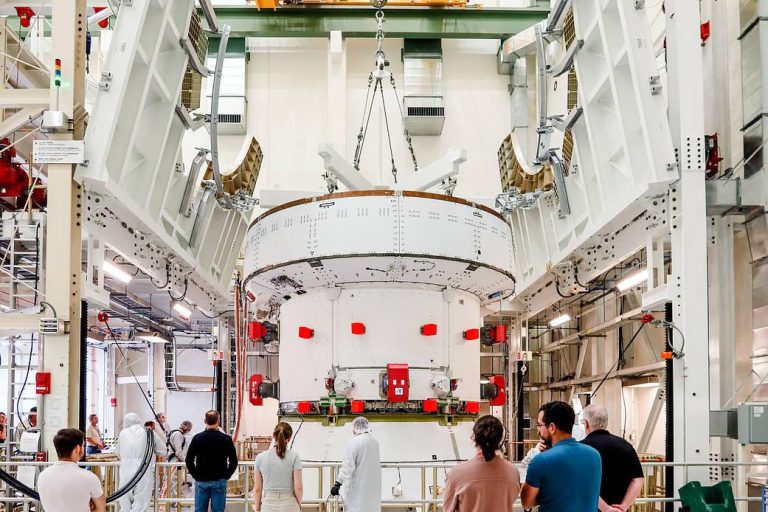
Artemis II Module Makes A Move

0

The European Service Module for the Artemis II Orion spacecraft moves into the Final Assembly and System Testing Cell at NASA’s Kennedy Space Center in this image from May 22, 2023. Here, teams are performing final checkouts on the service module, which will fuel and propel Orion in space, before integrating it with the crew module. After, the crew and service modules will be handed over to NASA’s Exploration Ground Systems for fueling.

See progress on Artemis II, the first Artemis mission with crew (https://blogs.nasa.gov/artemis/).

Image Credit: NASA/Amanda Stevenson

By: Monika Luabeya
Originally published at NASA