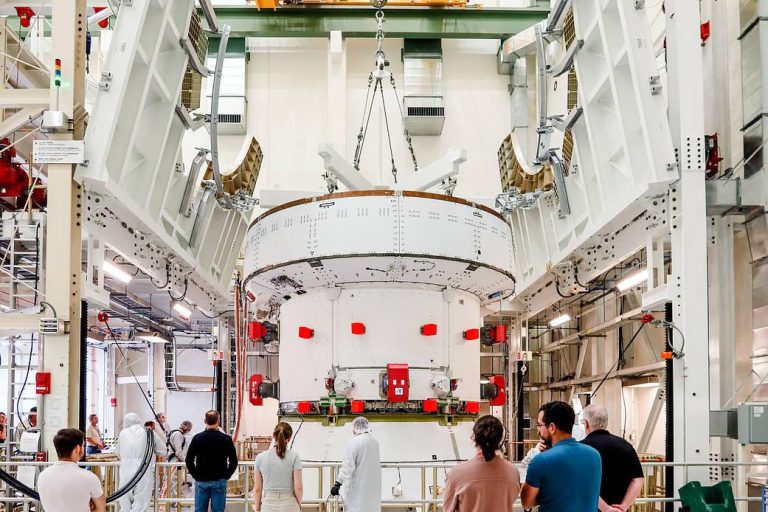
The European Service Module for the Artemis II Orion spacecraft moves into the Final Assembly and System Testing Cell at NASA’s Kennedy Space Center in this image from May 22, 2023. Here, teams are performing final checkouts on the service module, which will fuel and propel Orion in space, before integrating it with the crew module. After, the crew and service modules will be handed over to NASA’s Exploration Ground Systems for fueling.
See progress on Artemis II, the first Artemis mission with crew (https://blogs.nasa.gov/artemis/).
Not a Boron or a Pro-Boris. Not a Tory Freak. Not a Labour Fencesitter. Not Lib-Dem. Not a Democrat. Not a Republican. It is all the same. Values. Virtues. Veneers.
The UK is stuck in a death spiral believing the world waits for it. Hegemons – past, declining, and present – are all delusional that the once-all-roads leading to them are forever. It is quite simply, not.
You must and are welcomed and obligated almost, to force the political leadership of failing governments to call for a national general election! AND! The most important AND!
DO NOT VOTE!
NO WINNING LANDSLIDE! JUST AN OBLIVION OF SILENCE!
SOUND THE RESOUNDING COLLECTIVE VOICE!
WE! DO! NOT! BELIEVE! IN! ANY! OF! YOU!
We refuse to believe! That countries with millions of citizens are boiled down to choosing the same old, same old.
~ ~ ~ ~ ~
Politicians are quick to accuse their opponents of being dishonest and spreading misinformation. Yet ironically, politicians themselves are often guilty of the very same sins. There is a perception among many that politicians routinely lie, mislead, and spin the truth for their own political gain.
But why the struggle?
The incentive to win. Politicians are heavily incentivized to do whatever it takes to win elections and advance their careers. If being dishonest or manipulative achieves that goal, the temptation is great. It is easy to justify small lies and misleading statements if they help you win.
Pandering. Politicians frequently pander to voters and interest groups. They tell audiences what they want to hear in order to gain support, rather than what the politician really believes or intends to do. This is a form of dishonesty and misdirection.
“Spinning” and selective truth-telling. Politicians often “spin” information and events to portray themselves or their parties in the best light. They selectively share information and omit key details that would make them look bad. While not outright lying, this is a form of deception.
“Lying by proxy.” Politicians frequently repeat and spread misinformation initially shared by others in their party or ideological camp. Even if they don’t create the deception themselves, by spreading it further they make themselves complicit in the dishonesty.
Conflict avoidance. It is rare for politicians to directly contradict or call out the dishonesty of others in their own party. They don’t want to invite conflict or appear disloyal. But by failing to address deception within their ranks, politicians enable further dishonesty.
~ ~ ~ ~ ~
In the end, while politicians condemn dishonest opponents, the truth is that political dishonesty is widespread. Politicians are either actively lying and misleading or at least complicit in the dishonest system they are a part of. Of course, there are exceptions, but in general, politicians struggle to live up to the honesty and integrity that voters expect.
There is a lot of talk in the last few months to perhaps a few years about regulating the A.I. industry by institutions and governments. A lot of talk is made in public but typically ends with vague one liners or keywords such as ‘safety’, ‘guardrails’, ‘controls’, ‘time’, ‘hallucinations’, and others. I truly wonder, as a long time practitioner and scholar in the field, if A.I. is the one hallucinating or if the leaders of countries and companies are the ones having it. They will not admit that most are just taken by surprise, or has been neglecting it for quite a while (e.g. the UK AI Strategy did not start with your highly famed and esteemed and super genius R!shi! but has been sitting there for years as part of the Global Britain initiative) and are just taking the topic opportunistically to tag their names on it or to divert attention. We, as peoples of the world (yes, not citizens, just peoples, barely above animals; let us stop pretending that we respect the concept of the ‘global citizen’ when only the ‘elite’ and the ‘developed’ and the ‘rich’ and the ‘global north’ and the lucky few are truly free to roam).
When considering AIfrom the perspective of business, institutions, political economy, and society, there are several key factors to consider. Understanding these aspects can help people, leaders, and society make informed decisions and shape policies that promote responsible AI development and use.
Economic impact
AI has the potential to transform industries, increase productivity, and contribute to economic growth. It’s crucial to assess the economic benefits of AI adoption while considering potential job displacement and the need for reskilling and upskilling workers. Policymakers and business leaders should invest in education and training programs to prepare the workforce for AI-driven industries.
AI ethics and fairness
As AI systems are increasingly used in decision-making processes, it’s essential to address issues of bias, fairness, and transparency. Businesses, institutions, and governments should prioritize the development of AI systems that minimize bias and ensure equitable outcomes. Guidelines, regulations, and best practices for AI ethics should be developed and widely adopted.
Privacy and data protection
AI relies on large volumes of data, raising concerns about privacy and data protection. It’s crucial for businesses, institutions, and governments to establish robust data protection policies and respect user privacy. This may involve implementing data anonymization techniques, ensuring data security, and adhering to relevant data protection regulations.
Regulation and policy
Policymakers should develop clear, flexible, and adaptable regulations for AI that promote innovation while addressing potential risks. Collaboration between governments, businesses, and civil society can help create effective policies that balance the interests of various stakeholders and ensure the responsible development and deployment of AI.
Security and safety
AI systems should be designed with security in mind to minimize the risk of malicious use or unintended consequences. Businesses, institutions, and governments should invest in AI safety research and develop guidelines to prevent the misuse of AI technologies, such as autonomous weapons or cyberattacks.
Global cooperation
AI development and its impact on society are not limited by national borders. International collaboration is essential to address global challenges, share knowledge, and develop common standards for AI. Policymakers should foster partnerships and engage in dialogue with other countries and international organizations to promote responsible AI development and use worldwide.
Public awareness and education
Raising public awareness and understanding of AI is crucial to ensure informed decision-making and responsible use. Educational initiatives should focus on improving AI literacy and fostering critical thinking about AI technologies and their impact on society.
By addressing these aspects, people, leaders, and society can better understand the implications of AI and work towards creating a future where AI technologies are used responsibly and for the benefit of all.
The contemporary narrative surrounding Artificial Intelligence (AI) rings with the echoes of an ancient symphony, a tune that swings between apprehension and anticipation. This oscillation, though seemingly novel, mirrors our historical responses to profound transformations. We find ourselves caught up in the crescendo of the ‘Rise of the AI,’ reminiscent of other technological milestones that have spurred similar reactions.
Much of our collective understanding around AI is centered on its potential to disrupt society and labor markets. These concerns undeniably warrant attention, yet they may also be narrowing our perspective. Isn’t disruption – whether spawned by technology, policy changes, or even misguided leadership – an enduring theme in our shared human story?
To consider the re-emergence of AI as a novel disruption is to overlook the cyclicality of innovation and the human capacity to adapt and progress. What if we shifted our view of AI from that of a challenger to a partner in our continuing dance of evolution and progress?
As we forge ahead into an AI-integrated future, we have the opportunity to champion and encourage the distinctly human qualities that no technology can replicate – our innate creativity, the power of human touch, the depth of our empathy, and the richness of our imaginations.
In the arts, handcrafted goods, and other expressions of human endeavor, the human touch – the stroke of a painter’s brush, the press of a potter’s thumb, the strum of a musician’s fingers – bestows a soul into the creation. AI can simulate these activities, but it cannot emulate the passion, the individual quirks, and the inherent human-ness that breathe life into such creations.
As we write this new chapter in our shared history, let’s reshape the narrative on AI. Let’s move beyond a discourse dominated by disruptions and focus on how AI can augment our uniquely human abilities and pursuits. It’s time to celebrate the work of human hands and minds, leveraging AI to eliminate the mundane and repetitive, and thus providing more space for creativity and innovation.
AI is not the end of our story, but a new chapter – one that can amplify the best of human ingenuity. The narrative is ours to write, and the dance continues. In this grand choreography of progress, the rhythm of history is vast and varied, and the ‘Rise of the AI’ is but the latest step in our collective dance – a testament to the enduring resilience and dynamism of our global civilisation.
At guzz, our mission mirrors this belief. We envision a future where humans and AI coexist symbiotically. AI, in our view, can support and enhance human capabilities, freeing us to delve deeper into our creativity, to explore and express our human spirit.
The narrative of a world order undergoing seismic shifts is echoing loudly across the globe. Headlines are dominated by the “Rise of the East” and the “Decline of the West.” But if we listen carefully to the underlying harmonies of history, we realize this narrative, though seemingly novel, is but a reprisal of an age-old symphony.
In the grand chronicle of civilizations, it’s crucial to remember that the regions we now categorize as ‘East’ and ‘West’ have been participants in an intricate dance of ascendancy and decline, not spectators. The current crescendo of Eastern powers and the perceived diminuendo of the West are not new movements but part of a long-established choreography.
Centuries before the rise of Western empires, the East was home to civilizations that had already scaled the heights of progress. From the sprawling Han and Tang dynasties of China, which pioneered innovations in science, art, and culture, to the majestic empires of Africa, such as Mali and Songhai, whose wealth and scholarly pursuits were legendary, these Eastern powerhouses were once the epicentres of human civilization.
What we’re witnessing today is not a new birth but a resurgence, a re-awakening of dormant powers.
Japan, during the Heian period, produced brilliant literary works like “The Tale of Genji,” often considered the world’s first novel, while the Islamic Golden Age gave rise to advancements in medicine, mathematics, and astronomy that still form the bedrock of modern science. Even in the archipelagos of Oceania, ancient seafarers navigated vast ocean expanses, creating intricate networks of trade and cultural exchange long before the age of European exploration.
So, to frame the re-emergence of these nations and regions as something unprecedented is to overlook the historical tapestry that weaves together our shared human story. What we’re witnessing today is not a new birth but a resurgence, a re-awakening of dormant powers.
While this historical perspective does not trivialize the global transformations underway, it provides much-needed context. It’s a reminder that the course of human progress is not a straight line but a complex weave of ebbs and flows, crests and troughs.
As the spotlight now shines brightly on the East, it’s essential not to lapse into a simplistic narrative of role reversal, pitting East against West. Instead, we should embrace this as an opportunity for a more balanced, multipolar world.
In a global society that is increasingly interconnected, we must draw from the lessons of history, respect the cyclical nature of power and progress, and strive for a world where East and West, along with North and South, can contribute to a harmonious global symphony, each with its unique melody and shared refrain.
Let’s remember: the rhythm of history is vast and varied, and the dance continues. Today’s ‘Rise of the East’ and ‘Decline of the West’ are but the latest steps in a dance as old as time, a testament to the enduring resilience and dynamism of our global civilization.
In the seemingly infinite universe of cinematic storytelling, there is a titan, a behemoth, an entity so large and impactful that it cannot be ignored – IMAX. This colossus of visual storytelling was not born overnight but is the culmination of a journey, one that began in the fertile minds of its four Canadian founders, who dared to challenge the status quo of the cinematic experience.
In the grand tapestry of time, Graeme Ferguson, Roman Kroitor, Robert Kerr, and William C. Shaw emerged as pioneers, fueled by an audacious vision to revolutionize cinema. These were not the typical men seeking a mirror for self-adulation but visionaries propelled by the audacious dream of a more immersive, more encompassing, and more compelling cinematic experience. A quest that, in its pursuit, resulted in the creation of IMAX, an acronym for ‘Image Maximum,’ a name that in itself challenges the boundaries of imagination.
The birth of IMAX was not merely an event; it was an epoch in cinematic history. From the early days of showcasing ‘Tiger Child’ at Expo ’70 in Osaka, Japan, the world has sat up and taken notice. The spectacle of an IMAX film, with its monumental screen and enveloping sound, was not merely a movie; it was a whole new reality unfolding before the audience’s eyes, blurring the lines between observer and participant.
An IMAX theatre was a cathedral of dreams, built with the bricks of technology and innovation, and consecrated by the passion of filmmakers who dared to dream in larger-than-life dimensions. Audiences worldwide were pilgrims flocking to these cathedrals, drawn by the promise of an experience that transcended the confines of ordinary cinema.
Inside an IMAX theatre
In narrating the story of IMAX, we are tracing the cartography of imagination, the journey of a vision that dared to soar beyond the familiar horizon. It is a journey that took us from the panoramic screens of Osaka to the space vistas of ‘Interstellar,’ seen through the lenses of Christopher Nolan’s IMAX camera. It is the story of how a single idea, nurtured by passion and fueled by technology, forever transformed the way we witness the world.
This is the story of IMAX – the story of a vision that reshaped the cinematic landscape, etching its name in the annals of technological and artistic evolution. The journey of IMAX is not just an adventure but a call to action, a reminder that, like IMAX, we too can dream larger than life and shape the world according to those dreams.
The discourse around Artificial Intelligence (AI) has turned into a cacophonous echo chamber, dominated by political posturing and media buzz. This narrative, often marked by sensationalism or undue scepticism, drowns out the voices of those most intimately engaged with AI’s development: scientists, researchers, and practitioners. It’s high time we hit the ‘mute’ button on the noise and attune ourselves to the subtle symphony of scientific insights and pragmatic common sense that is integral to our understanding of AI.
AI is not merely a political weapon or a buzzword for the headlines. It is a complex, transformative science, continually refined by dedicated researchers. To appreciate the intricacies of AI, we must go beyond the cacophony. We need to delve into the works of AI pioneers like Yoshua Bengio, who is revolutionizing our understanding of deep learning, or Cynthia Breazeal, who is pushing the boundaries of what AI can achieve in social robotics. These experts’ voices can provide nuanced, factual insights into AI’s true capabilities and ethical challenges.
But the conversation should not be restricted to the laboratory walls. The discourse needs the flavor of common-sense perspectives that stem from the real-world application of AI. AI is more than a tool to cover human sloth; it can open avenues for creativity, problem-solving, and progress. Consider AI’s use in healthcare, where it’s not just streamlining administrative tasks but also enabling early detection of diseases, or in environmental research, where it’s helping predict climate change impacts with greater accuracy. These examples highlight AI as an amplifier of human potential rather than a replacement for human effort.
As citizens, it is our duty to foster informed opinions about AI. We must proactively sift through the noise, seek out reliable, fact-based sources, and pay heed to scientists, practitioners, and experienced users of AI. Demystifying AI should not be the exclusive domain of the tech-savvy. Each of us has a stake in the AI-augmented future, and we all need to engage with it critically, responsibly, and with an open mind.
Achieving this shift in the AI dialogue demands collective effort. We need media platforms that do more than parrot politicians – they must amplify the voices of AI practitioners and researchers. Schools and universities should weave AI literacy into their curricula, empowering future generations to contribute thoughtfully to the AI discourse. Businesses, too, have a role to play, making AI understandable and accessible to their customers and stakeholders.
The pendulum of AI understanding needs a push away from political rhetoric and media hype, and towards evidence-based, scientific insights. Only through this concerted effort can we ensure that our perceptions, decisions, and regulations concerning AI are rooted in reality. More than that, we can help steer the course of AI so that it serves our collective interests and opens up a future teeming with possibilities.
With Father’s Day just around the corner, it’s time to celebrate the incredible dads in our lives and show our appreciation with thoughtful gifts. This Father’s Day, look no further than Guzz, your trusted online destination for exceptional British products. From stylish accessories to unique timepieces, we have curated a selection of handpicked treasures that will make your dad’s day truly special. Let’s explore these remarkable Father’s Day gift ideas together.
For the dad with a taste for timeless elegance, The Traveller Colour Oxblood bag is a perfect choice. Handcrafted with meticulous attention to detail, this stylish and spacious travel companion effortlessly combines functionality with British sophistication.
Pamper your dad with the Original Soap Set from SCRUBD, a collection of exquisite British-made soaps. Infused with captivating scents and crafted from the finest ingredients, this set offers a luxurious bathing experience that will leave him feeling refreshed and rejuvenated.
Give your dad the gift of classic style with The 13-Inch Satchel Colour Vintage. This meticulously crafted leather satchel exudes timeless charm and provides the perfect blend of practicality and sophistication for the discerning gentleman.
Toast your dad’s greatness with the Crowns King 1/2 Pint Mug. Hand-decorated with regal motifs, this British-made mug celebrates his royal status in a playful yet elegant manner.
For the dad on the move, The Messenger Backpack Colour Navy/Tan Bridle is an ideal companion. Combining durability and style, this versatile backpack ensures your dad’s essentials are secure and easily accessible while adding a touch of British craftsmanship to his everyday adventures.
Help your dad stay organized with the Mantidy Herringbone Wallet in Navy Blue. Meticulously handwoven and crafted from premium materials, this wallet blends practicality and sophistication, making it a perfect accessory for the modern gentleman.
Make your dad feel like a true gentleman with the Royal Observatory Greenwich Moondial Half Hunter Pocket Watch. This exquisite timepiece, inspired by celestial wonders, showcases British horological expertise and adds a touch of elegance to any ensemble.
For the dad who values his grooming routine, the Mantidy Gaucho Grooming Roll Natural is a must-have accessory. With its premium leather craftsmanship and thoughtfully designed compartments, this roll keeps grooming essentials organized in style.
This Father’s Day, celebrate your dad’s extraordinary presence with exceptional British-made gifts from Guzz. Our handpicked selection of products embodies the essence of British craftsmanship and style. Explore our curated collection, support British artisans, and make this Father’s Day a memorable occasion for your dad. Show your dad how much he means to you with a gift that speaks volumes of your love and appreciation.
NASA will partner with seven U.S. companies to meet future commercial and government needs, ultimately benefitting human spaceflight and the U.S. commercial low Earth orbit economy.
Through unfunded Space Act Agreements, the second Collaborations for Commercial Space Capabilities-2 initiative (CCSC-2) is designed to advance commercial space-related efforts through NASA contributions of technical expertise, assessments, lessons learned, technologies, and data. Structured sharing of NASA expertise demands minimal government resources but fosters development of capabilities that can be crucial to development of a robust low Earth orbit economy.
The companies selected for the Collaborations for Commercial Space Capabilities-2 are:
Blue Origin, Kent, Washington
Northrop Grumman Systems Corporation, Dulles, Virginia
Sierra Space Corporation, Broomfield, Colorado
Space Exploration Technologies Corporation, Hawthorne, California
Special Aerospace Services, Boulder, Colorado
ThinkOrbital Inc., Lafayette, Colorado
Vast Space LLC, Long Beach, California
“It is great to see companies invest their own capital toward innovative commercial space capabilities, and we’ve seen how these types of partnerships benefit both the private sector and NASA,” said Phil McAlister, director of commercial spaceflight at NASA Headquarters in Washington, D.C. “The companies can leverage NASA’s vast knowledge and experience, and the agency can be a customer for the capabilities included in the agreements in the future. Ultimately, these agreements will foster more competition for services and more providers for innovative space capabilities.”
NASA selected these proposals based on an evaluation of their relevance to achieving the agency’s goals and its ability to provide the requested resources, as well as the feasibility of the company’s business and technical approach. Each party bears the cost of its participation through the agreements.
Projects
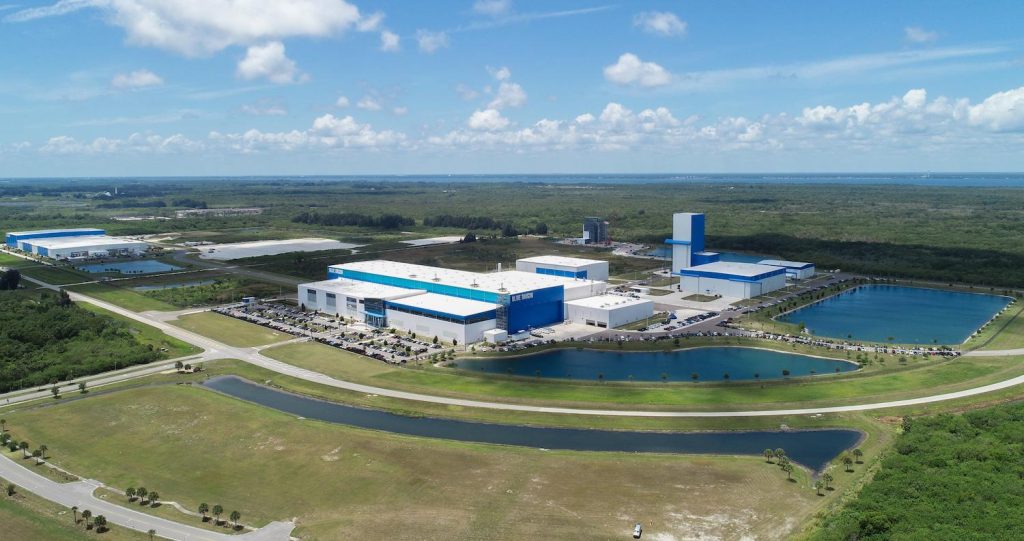
Blue Origin is collaborating with NASA to develop integrated commercial space transportation capability that ensures safe, affordable, and high-frequency US access to orbit for crew and other missions.
Northrop Grumman is collaborating with NASA on the company’s Persistent Platform to provide autonomous and robotic capabilities for commercial science research and manufacturing capabilities in low Earth orbit
Sierra Space is collaborating with NASA for the development of the company’s commercial low Earth orbit ecosystem, including next-generation space transportation, in-space infrastructure, and expandable and tailorable space facilities providing a human presence in low Earth orbit.
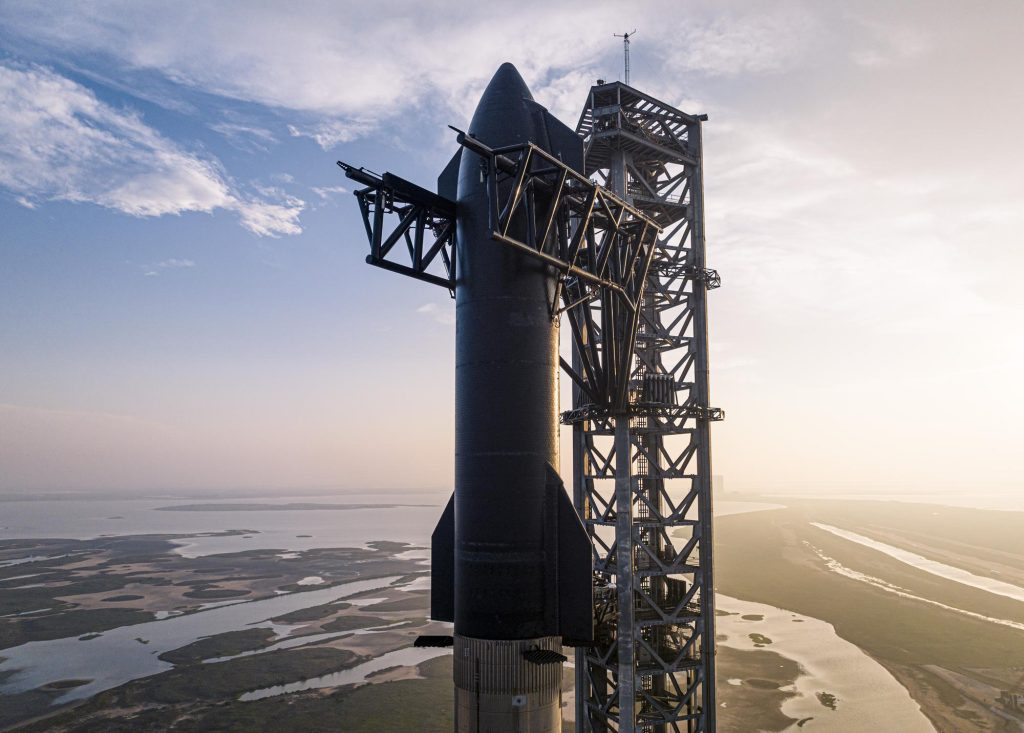
SpaceX is collaborating with NASA on an integrated low Earth orbit architecture to provide a growing portfolio of technology with near-term Dragon evolution and concurrent Starship development. This architecture includes Starship as a transportation and in-space low-Earth orbit destination element supported by Super Heavy, Dragon, and Starlink, and constituent capabilities including crew and cargo transportation, communications, and operational and ground support.
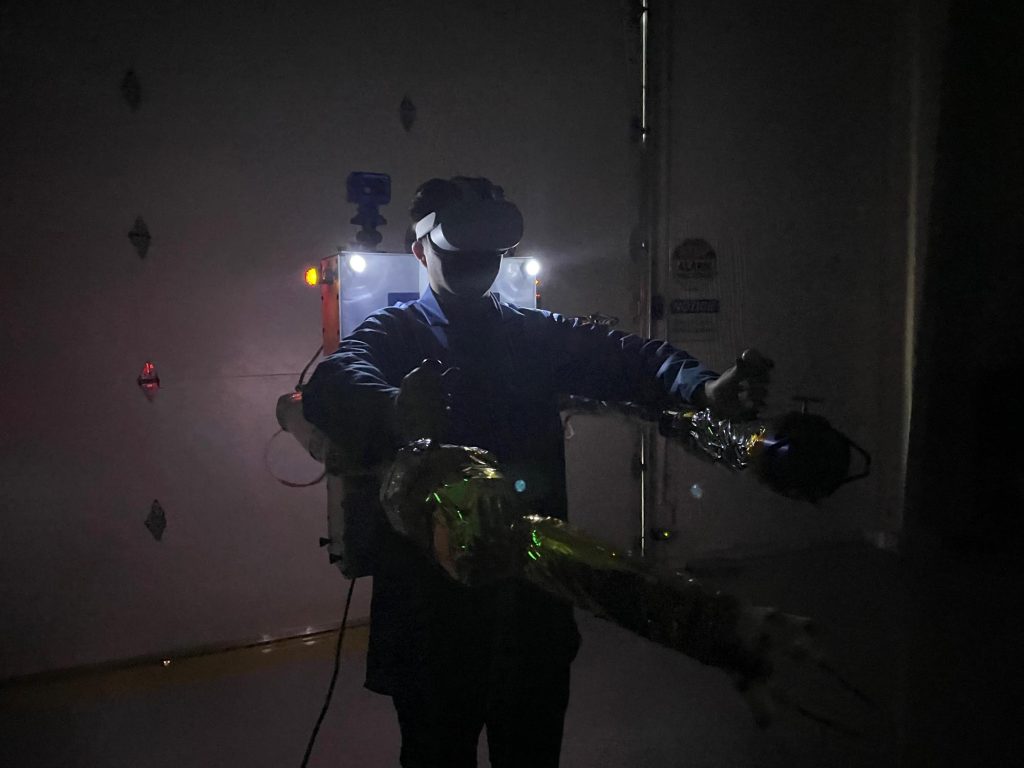
Special Aerospace Services is collaborating with NASA on an in-space servicing technology, propulsion, and robotic technology called the Autonomous Maneuvering Unit (AMU) and the Astronaut Assist-AMU for commercial in-space servicing and mobility applications intended for safer assembly of commercial low Earth orbit destinations, servicing, retrieval, and inspection of in-space systems.
ThinkOrbital is collaborating with NASA on the development of ThinkPlatforms and CONTESA (Construction Technologies for Space Applications). ThinkPlatforms are self-assembling, single-launch, large-scale orbital platforms that facilitate a wide array of applications in low Earth orbit, including in-space research, manufacturing, and astronaut missions. CONTESA features welding, cutting, inspection, and additive manufacturing technologies, and aids in large-scale in-space fabrication.
Vast is collaborating with NASA on technologies and operations required for its microgravity and artificial gravity stations. This includes the Haven-1 commercial destination, which will provide a microgravity environment for crew, research, and in-space manufacturing, and the first crewed mission, called Vast-1, to the platform. Development activities for larger space station modules will also take place under the Space Act Agreement.
NASA’s support for a robust low Earth orbit economy is intended to boost education and job growth in science and engineering, and to spur economic growth through the creation of new space markets. The first Collaborations for Commercial Space Capabilities selections in 2014 supported development of four collaborations associated commercial rockets, spacecraft, and spacesuits.
For decades, NASA has supported a continuous U.S. human presence in low Earth orbit with astronauts living and working aboard the International Space Station. In 2019, NASA adopted a strategy to help achieve the agency’s goal of a low Earth orbit marketplace where NASA is one of many customers and the private sector leads the way. This strategy will enable NASA to continue using low Earth orbit to foster scientific discovery and technology development that both improves life on Earth and advances human exploration into deep space.
Blue Origin’s launch and manufacturing complex in Cape Canaveral, Florida.
Credits: Blue OriginArtist’s concept of Northrop Grumman’s Persistent Platform concept in low Earth orbit.
Credits: Northrop GrummanArtist’s concept of Sierra Space’s crewed Dream Chaser spaceplane docking to the company’s LIFE habitat.
Credits: Sierra SpaceSpaceX’s Starship rocket sits on a launch pad at the company’s Starbase in Texas.
Credits: SpaceXA Special Aerospace Services engineer tests the company’s Autonomous Maneuvering Unit.
Credits: Special Aerospace ServicesArtist’s concept of ThinkOrbital’s ThinkPlatform in low Earth orbit.
Credits: ThinkOrbitalArtist’s concept of Vast’s Haven-1 commercial space station in low Earth orbit.
Credits: Vast
For more information about NASA initiatives and commercial space, visit:
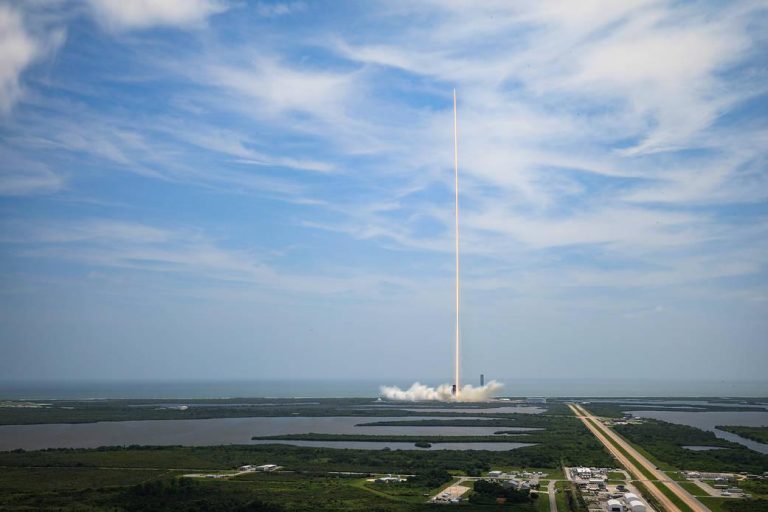
In this long exposure photo from June 5, 2023, a SpaceX Falcon 9 rocket creates a beam of light as it launches from Kennedy Space Center in Florida. The 28th commercial resupply mission of the Cargo Dragon spacecraft brought new science investigations, food, supplies, and equipment to the International Space Station, including IROSAs (International Space Station Roll Out Solar Arrays) that will help provide a 30% increase in power for space station research and operations once installed.