Home Blog Page 59

NASA To Provide Briefing, Coverage Of Spacewalks For Station Upgrades

0

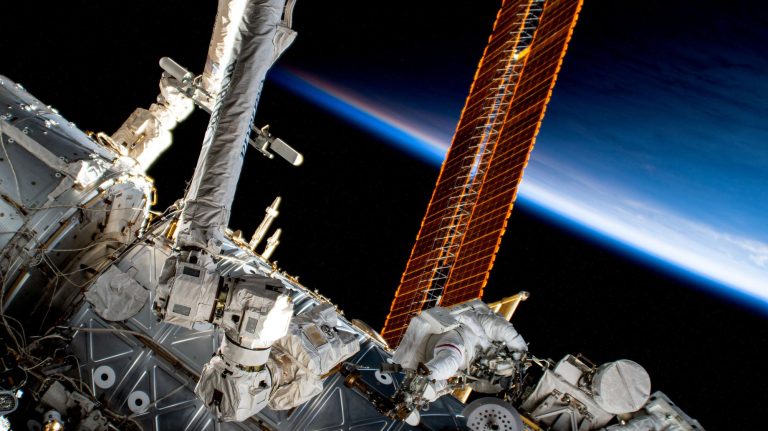
NASA astronaut and Expedition 69 Flight Engineer Steve Bowen is pictured outside the International Space Station during his eighth career spacewalk, during which he routed cables and installed insulation to ready the orbital outpost for its next set of roll-out solar arrays.
Credits: NASA

Editor’s Note: This media advisory was updated May 30, 2023 to correct the spelling of Megan Shutika’s last name and to clarify the information on roll-out solar array installation and benefits.

Two NASA astronauts aboard the International Space Station will conduct a pair of spacewalks Friday, June 9, and Thursday, June 15, to install two new solar arrays.

NASA will discuss the upcoming spacewalks during a news conference at 12 p.m. EDT Thursday, June 1. Live coverage of the news conference and spacewalks will air on NASA Television, the NASA app, and the agency’s website.

News conference participants are:

  • Dina Contella, operations integration manager, International Space Station Program, NASA’s Johnson Space Center in Houston
  • Diane Dailey, spacewalk flight director, NASA Johnson
  • Megan Shutika, spacewalk officer, NASA Johnson

U.S. media interested in participating in person must contact the Johnson newsroom no later than 11 a.m., Wednesday, May 31, by calling 281-483-5111 or emailing [email protected]. To ask questions, reporters must dial into the news conference no later than 11:45 a.m., June 1. Questions also may be submitted on social media using #AskNASA.

Each spacewalk is scheduled to begin at 9:15 a.m. and last about six-and-a-half hours with NASA coverage beginning at 7:45 a.m.

On June 9, NASA astronauts Steve Bowen and Woody Hoburg will exit the station’s Quest airlock to install an upgraded IROSA (International Space Station Roll-Out Solar Array) on the 1A power channel on the starboard truss of the station.

Bowen will serve as extravehicular activity (EVA) crew member 1 and will wear a suit with red stripes. Hoburg will serve as extravehicular crew member 2 and will wear an unmarked suit. U.S. EVA 87 will be the ninth spacewalk for Bowen and the first for Hoburg.

On June 15, the same pair of astronauts will install an IROSA on the 1B power channel on the starboard truss. Assignments for U.S. EVA 88 will be determined at a later date.

The spacewalks will see the fifth and sixth IROSAs mounted to the existing station solar arrays. The new arrays are 60 feet long by 20 feet wide (18.2 meters by 6 meters) and will shade a little more than half of the original arrays, which are 112 feet long by 39 feet wide. Each new IROSA will produce more than 20 kilowatts of electricity, and once all are installed, will enable a 30% increase in power production over the station’s current arrays.

Get breaking news, images and features from the space station on the station blog, Instagram, Facebook, and Twitter.

Learn more about International Space Station research and operations at:

https://www.nasa.gov/station

-end-

Lora Bleacher
Headquarters, Washington
202-358-1100
[email protected]

Sandra Jones
Johnson Space Center, Houston
281-483-5111
[email protected]

Boeing, NASA Complete First Starliner Space Station Flight Test

0

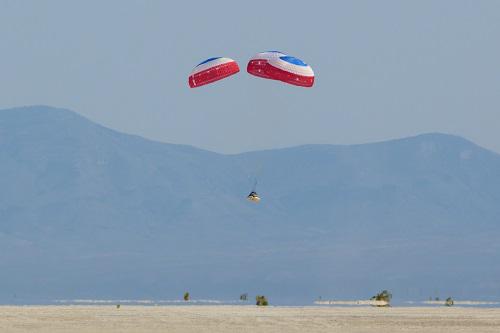
WHITE SANDS, NEW MEXICO, May 25, 2022 — Boeing’s [NYSE: BA] CST-100 Starliner spacecraft landed at the U.S. Army’s White Sands Missile Range in New Mexico at 5:49 p.m. Central Time. The safe return to Earth brings a close to the successful end-to-end uncrewed orbital flight test that was flown to demonstrate the quality and performance of the transportation system prior to crewed flights.

“We have had an excellent flight test of a complex system that we expected to learn from along the way and we have,” said Mark Nappi, vice president and program manager, Boeing Commercial Crew Program. “Thank you to the NASA and Boeing teammates who have put so much of themselves into Starliner.”

The flight test completed today began May 19 with a launch from Florida’s Cape Canaveral Space Force Station atop a United Launch Alliance Atlas V rocket. Capabilities the Starliner demonstrated included:

  • End-to-end performance of the Atlas V rocket and Starliner spacecraft through launch, ascent, on-orbit, re-entry and landing;
  • Starliner’s autonomous software and the on-orbit operation of its avionics system, docking system, communications/telemetry systems, environmental control systems, solar arrays, electrical power systems, and propulsion systems; 
  • Ability to hold docking attitude, receive commands from the space station crew, and command holds and retreats during final station approach;
  • Battery charging, hatch open and close, establishing joint ventilation with the station, file transfer and cargo transfer.


When Starliner completes its next flight, Boeing will have fulfilled NASA’s goal of having two commercial vehicles to transport astronauts safely, reliably and sustainably to the station from American soil.

“With the completion of OFT-2, we will incorporate lessons learned and continue working to prepare for the crewed flight test and NASA certification,” Nappi added.

As a leading global aerospace company, Boeing develops, manufactures and services commercial airplanes, defense products and space systems for customers in more than 150 countries. As a top U.S. exporter, the company leverages the talents of a global supplier base to advance economic opportunity, sustainability and community impact. Boeing’s diverse team is committed to innovating for the future, leading with sustainability, and cultivating a culture based on the company’s core values of safety, quality and integrity. Join our team and find your purpose at boeing.com/careers.

For more about Starliner, visit www.boeing.com/starliner. Follow along with the mission on Twitter @BoeingSpace and www.starlinerupdates.com.

Hubble Peers Into A Glistening Star Cluster

0

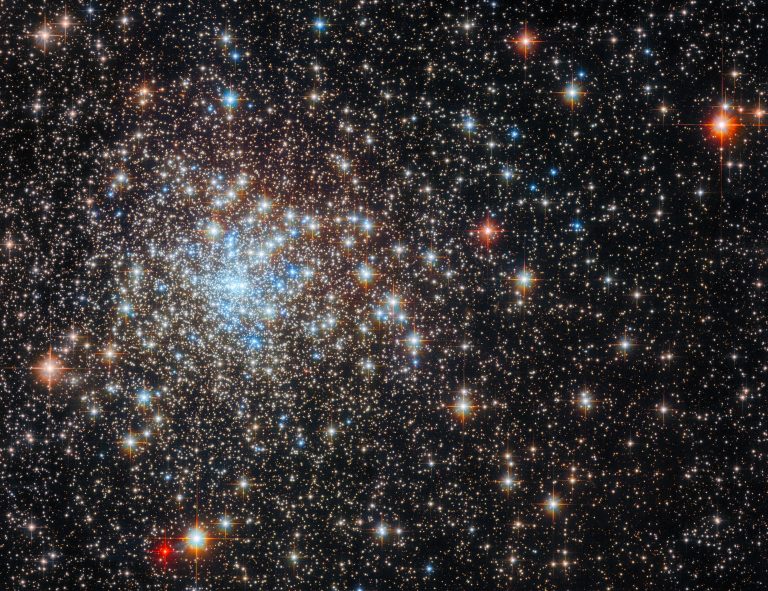
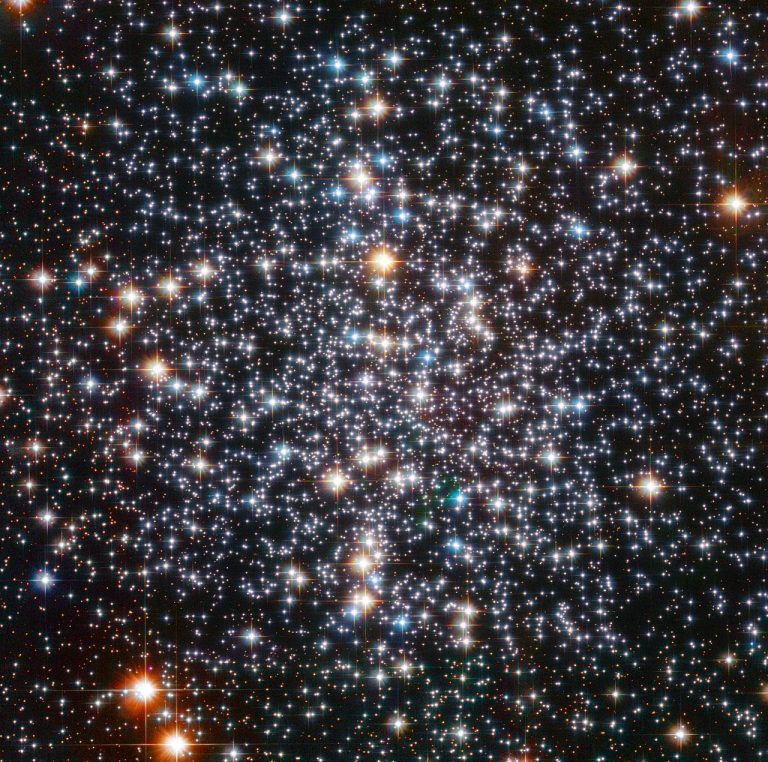
The densely packed globular cluster NGC 6325 glistens in this image from the NASA/ESA Hubble Space Telescope. This concentrated group of stars lies around 26,000 light-years from Earth in the constellation Ophiuchus.

Globular clusters like NGC 6325 are tightly bound collections of stars with anywhere from tens of thousands to millions of members. They can be found in all types of galaxies and act as natural laboratories for astronomers studying star formation. This is because the constituent stars of globular clusters tend to form at roughly the same time and with similar initial composition, meaning astronomers can use them to fine-tune their theories of how stars evolve.

Astronomers inspected this particular cluster not to understand star formation, but to search for a hidden monster. Though it might look peaceful, astronomers suspect this cluster could contain an intermediate-mass black hole that is subtly affecting the motion of surrounding stars. Previous research found that the distribution of stars in some highly concentrated globular clusters – those with stars packed relatively tightly together – was slightly different from what astronomers expected.

This discrepancy suggests that at least some of these densely packed globular clusters – including perhaps NGC 6325 – could have a black hole lurking at the center. To explore this hypothesis further, astronomers turned to Hubble’s Wide Field Camera 3 to observe a larger sample of densely populated globular clusters, which included this star-studded image of NGC 6325. Additional data from Hubble’s Advanced Camera for Surveys was also incorporated into this image.

Text credit: European Space Agency (ESA)
Image credit: ESA/Hubble & NASA, E. Noyola, R. Cohen

Media Contact:

Claire Andreoli
NASA’s Goddard Space Flight CenterGreenbelt, MD
[email protected]

By: Andrea Gianopoulos
Originally published at NASA

U.S. Senate Members Meet The Crew Of Artemis II

0

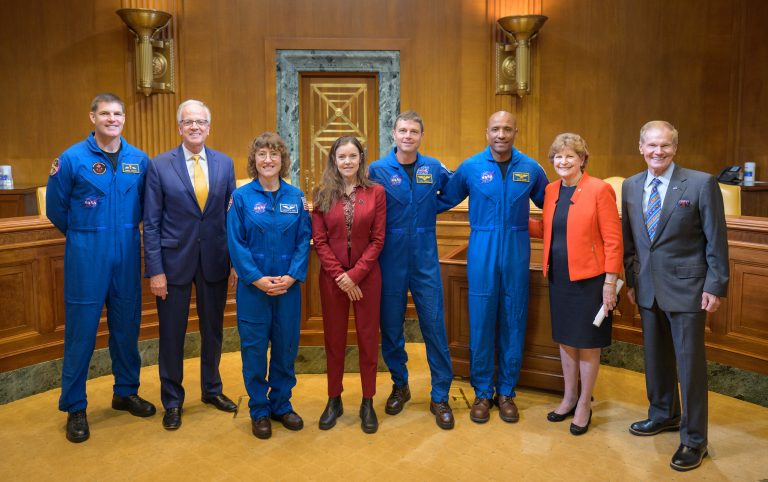
The four astronauts who will fly around the Moon on NASA’s Artemis II visited Washington on Wednesday, May 17, to discuss their upcoming mission with members of Congress and others.

NASA astronauts Reid Wiseman, Victor Glover, and Christina Hammock Koch, and Canadian Space Agency (CSA) astronaut Jeremy Hansen were announced Monday, April 3, as the four astronauts who will venture around the Moon on Artemis II, the first crewed mission on NASA’s path to establishing a long-term presence at the Moon for science and exploration through Artemis. The crew assignments are as follows: Commander Reid Wiseman, Pilot Victor Glover, Mission Specialist 1 Christina Koch, Mission Specialist 2 Jeremy Hansen.

From left: CSA astronaut Jeremy Hansen; Sen. Jerry Moran, Kansas; NASA astronaut Christina Hammock Koch; CSA President Lisa Campbell; NASA astronauts Reid Wiseman and Victor Glover; Sen. Jeanne Shaheen, New Hampshire; and NASA Administrator Bill Nelson after a meet and greet, Wednesday, May 17, 2023, at the Dirksen Senate Office Building in Washington.

Image Credit: NASA/Bill Ingalls

By: Dacia Massengill
Originally published at NASA

NASA Mission To Study Ice Clouds, Help Observe Our Dynamic Atmosphere

0

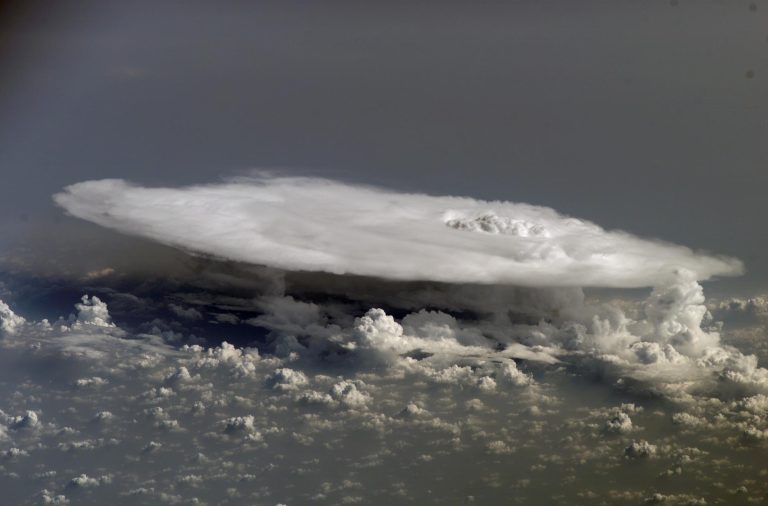
A new NASA mission, PolSIR, short for Polarized Submillimeter Ice-cloud Radiometer, will study high-altitude ice clouds, such as this cloud as seen from the International Space Station in 2008. Understanding how such clouds change throughout the day is crucial for improving global climate models.
Credits: NASA

NASA has selected a new mission to help humanity better understand Earth’s dynamic atmosphere – specifically, ice clouds that form at high altitudes throughout tropical and sub-tropical regions. The PolSIR instrument – short for Polarized Submillimeter Ice-cloud Radiometer – will study such ice clouds to determine how and why they change throughout the day. This will provide crucial information about how to accurately simulate these high-altitude clouds in global climate models.

The investigation consists of two identical CubeSats – each small satellite is just a little over a foot tall – flying in orbits separated by three to nine hours. Over time, these two instruments will observe the clouds’ daily cycle of ice content.

“Studying ice clouds is crucial for improving climate forecasts – and this will be the first time we can study ice clouds in this level of detail,” said Nicola Fox, associate administrator for the Science Mission Directorate at NASA Headquarters in Washington. “Every NASA mission is carefully chosen to better understand our home planet.”

The award is for for lifecycle costs no more than $37 million, which does not include launch costs. The radiometer is an Earth Venture instrument – lower-cost instruments with a targeted research goal, which typically catch a ride along with another mission or commercial satellite in order to minimize launch costs. The Earth Venture class also focuses on providing frequent flight opportunities, so innovative science investigations can be flown relatively quickly, generally within five years or less. Missions like this provide key targeted research opportunities, which help us improve our understanding of what’s driving change in the entire Earth system.

“Understanding how these ice clouds respond to a changing climate – and then, in turn, contribute to further changes – remains one of the great challenges to predicting what the atmosphere will do in the future,” said Karen St. Germain, who leads NASA’s Earth Sciences Division. “The radiometers, which measure the radiant energy emitted by clouds, will significantly improve our understanding of how ice clouds change and respond throughout the day.”

The mission is led by Ralf Bennartz, principal investigator at Vanderbilt University in Nashville, Tennessee, and by Dong Wu, deputy principal investigator at NASA’s Goddard Space Flight Center in Greenbelt, Maryland.

NASA Goddard will provide the project management team that builds the two instruments, while science operations will be conducted by the Space Science and Engineering Center at the University of Wisconsin – Madison. The two spacecraft will be built by Blue Canyon Technologies in Lafayette, Colorado.

For more information about NASA’s Earth science missions, visit:

https://www.nasa.gov/Earth

Hubble Hunts For Intermediate-Sized Black Hole Close To Home

0

Astronomers using the NASA/ESA Hubble Space Telescope have come up with what they say is some of their best evidence yet for the presence of a rare class of intermediate-sized black holes, having found a strong candidate lurking at the heart of the closest globular star cluster to Earth, located 6000 light-years away.

Like intense gravitational potholes in the fabric of space, virtually all black holes seem to come in two sizes: small and humongous. It’s estimated that our galaxy is littered with 100 million small black holes (several times the mass of our Sun) created from exploded stars. The universe at large is flooded with supermassive black holes, weighing millions or billions of times our Sun’s mass and found in the centres of galaxies.

A long-sought missing link is an intermediate-mass black hole, weighing roughly 100 to 100,000 times our Sun’s mass. How would they form, where would they hang out, and why do they seem to be so rare?

Astronomers have identified other possible intermediate-mass black holes using a variety of observational techniques. Two of the best candidates — 3XMM J215022.4-055108, which Hubble helped discover in 2020, and HLX-1, identified in 2009 — reside in the outskirts of other galaxies. Each of these possible black holes has the mass of tens of thousands of suns, and may have once been at the centres of dwarf galaxies.

Looking much closer to home, there have been a number of suspected intermediate-mass black holes detected in dense globular star clusters orbiting our Milky Way galaxy. For example, in 2008, Hubble astronomers announced the suspected presence of an intermediate-mass black hole in the globular cluster Omega Centauri. For a number of reasons, including the need for more data, these and other intermediate-mass black hole findings still remain inconclusive and do not rule out alternative theories.

Hubble’s unique capabilities have now been used to zero-in on the core of the globular star cluster Messier 4 (M4) to go black-hole hunting with higher precision than in previous searches. “You can’t do this kind of science without Hubble,” said Eduardo Vitral of the Space Telescope Science Institute in Baltimore, Maryland, and formerly of the Institut d’Astrophysique de Paris (IAP, Sorbonne University) in Paris, France, lead author on a paper to be published in the Monthly Notices of the Royal Astronomical Society.

Vitral’s team has detected a possible intermediate-mass black hole of roughly 800 solar masses. The suspected object can’t be seen, but its mass is calculated by studying the motion of stars caught in its gravitational field, like bees swarming around a hive. Measuring their motion takes time, and a lot of precision. This is where Hubble accomplishes what no other present-day telescope can do. Astronomers looked at 12 years’ worth of M4 observations from Hubble, and resolved pinpoint stars.

ESA’s Gaia spacecraft also contributed to this result with scans of over 6000 stars that constrained the global shape of the cluster and its mass. Hubble’s data tend to rule out alternative theories for this object, such as a compact central cluster of unresolved stellar remnants like neutron stars, or smaller black holes swirling around each other.

“Using the latest Gaia and Hubble data, it was not possible to distinguish between a dark population of stellar remnants and a single larger point-like source,” says Vitral. “So one of the possible theories is that rather than being lots of separate small dark objects, this dark mass could be one medium-sized black hole.”

“We have good confidence that we have a very tiny region with a lot of concentrated mass. It’s about three times smaller than the densest dark mass that we had found before in other globular clusters,” he continued. “The region is more compact than what we can reproduce with numerical simulations when we take into account a collection of black holes, neutron stars, and white dwarfs segregated at the cluster’s centre. They are not able to form such a compact concentration of mass.”

A grouping of close-knit objects would be dynamically unstable. If the object isn’t a single intermediate-mass black hole, it would require an estimated 40 smaller black holes crammed into a space only one-tenth of a light-year across to produce the observed stellar motions. The consequences are that they would merge and/or be ejected in a game of interstellar pinball.

“We measure the motions of stars and their positions, and we apply physical models that try to reproduce these motions. We end up with a measurement of a dark mass extension in the cluster’s centre,” said Vitral. “The closer to the central mass, the more randomly the stars are moving. And, the greater the central mass, the faster these stellar velocities.”

Because intermediate-mass black holes in globular clusters have been so elusive, Vitral cautions, “While we cannot completely affirm that it is a central point of gravity, we can show that it is very small. It’s too tiny for us to be able to explain other than it being a single black hole. Alternatively, there might be a stellar mechanism we simply don’t know about, at least within current physics.”

“Science is rarely about discovering something new in a single moment. It’s about becoming more certain of a conclusion step by step, and this could be one step towards being sure that intermediate-mass black holes exist,” explains Gaia mission scientist Timo Prusti. “Data from Gaia Data Release 3 on the proper motion of stars in the Milky Way were essential in this study. Future Gaia Data Releases, as well as follow-up studies from the Hubble and James Webb Space Telescopes could shed further light.”

More information

The Hubble Space Telescope is a project of international cooperation between ESA and NASA.

The international team of astronomers in this study consists of Eduardo Vitral (Space Telescope Science Institute, USA; Sorbonne University, France), Mattia Libralato (AURA for the European Space Agency, ESA Office, Space Telescope Science Institute), Kyle Kremer (California Institute of Technology, USA; The Observatories of the Carnegie Institution for Science, USA), Gary A. Mamon (Sorbonne University, France), Andrea Bellini (Space Telescope Science Institute, USA), Luigi R. Bedin (National Institute for Astrophysics, Italy) and Jay Anderson (Space Telescope Science Institute, USA).

Image Credit: ESA/Hubble & NASA

Axiom Space Private Astronauts Headed To International Space Station

0

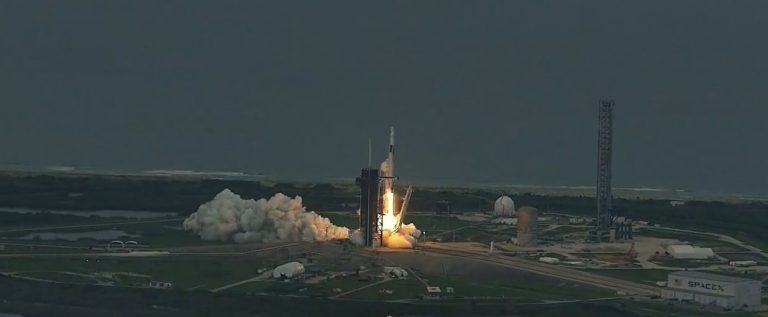
Axiom Mission 2 (Ax-2), the second all private astronaut mission to the International Space Station, lifts off at 5:37 p.m. EDT on Sunday, May 21, from Launch Complex 39A at NASA’s Kennedy Space Center in Florida.
Credits: Courtesy SpaceX

Four private astronauts are in orbit following the successful launch of Axiom Mission 2 (Ax-2), the second all private astronaut mission to the International Space Station. Axiom Space astronauts lifted off at 5:37 p.m. EDT on Sunday, May 21, from Launch Complex 39A at NASA’s Kennedy Space Center in Florida.

A SpaceX Falcon 9 rocket propelled the company’s Dragon spacecraft carrying Ax-2 crew members Commander Peggy Whitson, Pilot John Shoffner, and Mission Specialists Ali Alqarni and Rayyanah Barnawi into orbit on a mission to conduct scientific research, outreach, and commercial activities on the space station.

“Congratulations to Axiom, SpaceX, and the Axiom Mission 2 crew on a successful launch! During their time aboard the International Space Station, the Ax-2 astronauts will carry out more than 20 scientific experiments, helping us better understand space radiation, weather in low-gravity conditions, and more,” said NASA Administrator Bill Nelson. “This mission is more proof of NASA’s commitment to help our industry partners develop the next generation of space technology and a support a growing commercial space economy.”

Beginning at 7:30 a.m. Monday, May 22, NASA will provide live coverage of SpaceX Dragon docking, hatch opening, and a ceremony to welcome the crew on NASA Television, the NASA app, and the agency’s website.

The SpaceX Dragon will autonomously dock to the space-facing port of the station’s Harmony module around 9:16 a.m. Monday with hatch opening about 11:13 a.m. Live mission coverage will conclude following the welcome ceremony expected to start about 11:45 a.m. The mission also will be covered by Axiom Space on its website.

Once aboard the station, the Ax-2 crew will be welcomed by Expedition 69 crew members, including NASA astronauts Frank Rubio, Stephen Bowen, and Woody Hoburg, UAE (United Arab Emirates) astronaut Sultan Alneyadi, and Roscosmos cosmonauts Dmitri Petelin, Sergey Prokopyev and Andrey Fedyaev.

Axiom Space astronauts are expected to depart the space station May 30, pending weather, for a return to Earth and splashdown at a landing site off the coast of Florida.

Learn more about how NASA is supporting a space economy in low Earth orbit:

https://go.nasa.gov/3MMmrHu

-end-

NASA Selects Winners, Announces Final Phase Of Space Food Challenge

0

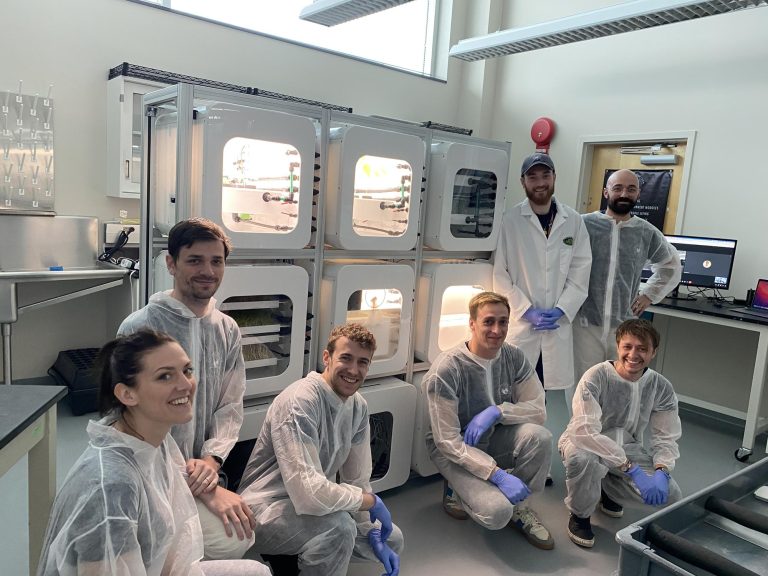
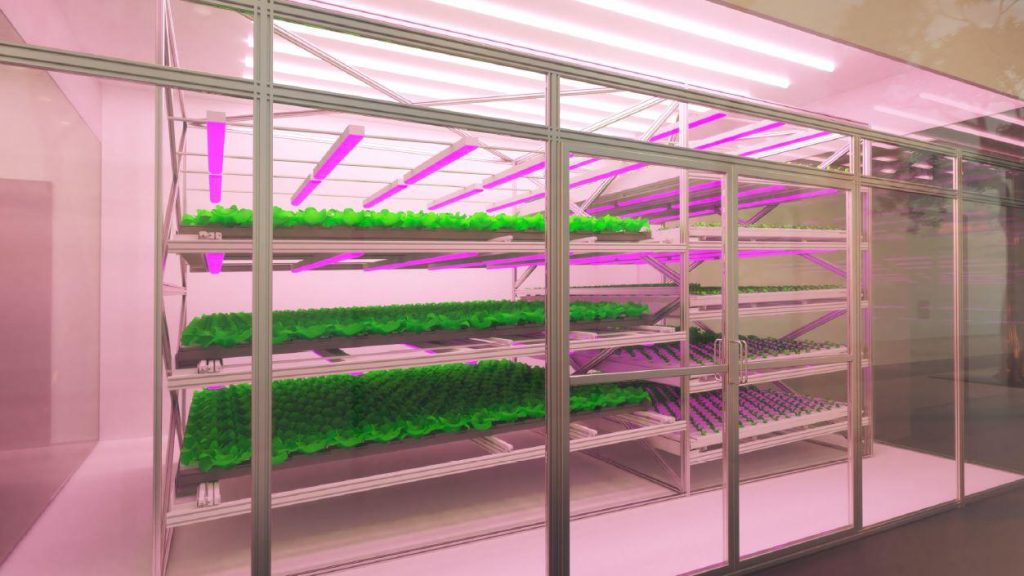
Nutritional Closed-Loop Eco-Unit System, or NUCLEUS, developed by Interstellar Lab of Merritt Island, Florida, is a self-sustaining food production system yielding fresh greens, vegetables, mushrooms, and insects, which could provide nutrients for long-term space missions.
Credits: NASA/Methuselah Foundation

NASA has announced eight winning teams and awarded $750,000 in prizes in the second phase of the agency’s Deep Space Food Challenge. The winning teams will move on to compete in the third and final phase of the challenge.

As NASA prepares to send astronauts farther into the solar system than ever before, the agency needs food systems that can fortify future crews in deep space for years at a time. The Deep Space Food Challenge calls on solvers from around the world to create technologies to help feed astronauts on future long-term space missions.

The microgreen food production system developed by Enigma of the Cosmos of Melbourne, Australia, is an adaptive growing system to support plants’ natural growth cycle and increase efficiency.
Credits: NASA/Methuselah Foundation

“These creative winning solutions come from teams made up of business, universities, and individual solvers, showcasing how NASA can benefit from everyone’s expertise to solve crucial challenges,” said Amy Kaminski, program executive for Prizes, Challenges, and Crowdsourcing in NASA’s Space Technology Mission Directorate (STMD) at NASA Headquarters in Washington. “We’re excited to announce Phase 3 of the challenge to see where these teams can take their technologies next.”

Phase 2 tasked dozens of teams with building and demonstrating small-scale prototypes of technologies that use minimal resources and create little waste while producing safe, healthy, and appetizing foods for astronauts. A panel of judges selected eight winners to build and demonstrate full-scale food technologies over the next year in Phase 3.

The following U.S. teams will each receive $150,000 in prizes from NASA and advance to compete for up to $1.5 million in total prizes from NASA in Phase 3:

  • Air Company of Brooklyn, New York, developed a system and processes for turning air, water, electricity, and yeast into food.
  • Interstellar Lab of Merritt Island, Florida, created a modular bioregenerative system for producing fresh microgreens, vegetables, mushrooms, and insects.
  • Kernel Deltech USA of Cape Canaveral, Florida, developed a system for cultivating mushroom-based ingredients.
  • Nolux of Riverside, California, created a solution that mimics the photosynthesis that happens in nature to produce plant- and mushroom-based ingredients.
  • SATED (Safe Appliance, Tidy, Efficient, and Delicious) of Boulder, Colorado, developed a space cooking appliance that would allow astronauts to prepare a variety of meals from ingredients with long shelf lives.

NASA and CSA (Canadian Space Agency) also jointly selected three international teams as Phase 2 winners. These three teams are invited to advance their technologies in Phase 3:

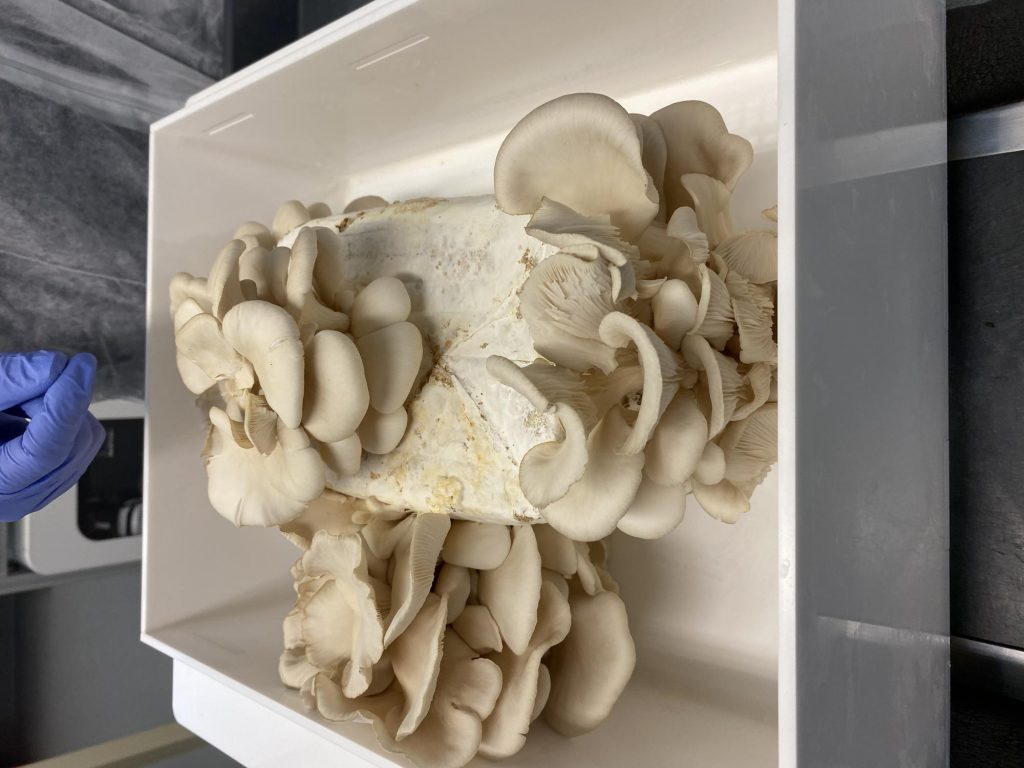
Edible fungi prepared by Interstellar Lab’s NUCLEUS food production system.
Credits: NASA/Methuselah Foundation
  • Enigma of the Cosmos of Melbourne, Australia, created an adaptive growing system to increase the efficiency of plants’ natural growth cycles.
  • Mycorena of Gothenburg, Sweden, developed a system that uses a combination of microalgae and fungi to produce a microprotein.
  • Solar Foods of Lappeenranta, Finland, created a system that uses gas fermentation to produce single-cell proteins.

“Astronauts will tell you that tasty and nutritious food is a critical part of any successful human space exploration mission,” said Denise Morris, program manager of NASA Centennial Challenges at NASA’s Marshall Space Flight Center in Huntsville, Alabama. “The possibilities presented in this challenge could help sustain our explorers on future missions, and even have the potential to help out right here on Earth in areas where food is scarce or hard to produce.”

The competition is a first-of-its-kind collaboration between NASA and CSA. On April 27, CSA awarded prizes to the teams advancing to the final stage of the Canadian challenge, which runs in parallel with NASA’s.

The Deep Space Food Challenge is one of NASA’s Centennial Challenges, which are part of the Prizes, Challenges, and Crowdsourcing program within STMD. NASA Marshall manages Centennial Challenges. Subject matter experts at NASA’s Johnson Space Center in Houston and NASA’s Kennedy Space Center in Florida support the competition. NASA, in partnership with the Methuselah Foundation, manages the U.S. and international competitors.

For more information on NASA’s Deep Space Food Challenge, visit:

https://www.nasa.gov/spacefoodchallenge

NASA Extends Nancy Grace Roman Space Telescope Science Operations

0

NASA has awarded a contract extension to the Association of Universities for Research in Astronomy Space Telescope Science Institute in Baltimore for the support services required for the agency’s Nancy Grace Roman Space Telescope Science Operations.

The support will include the development, integration and testing, launch and commissioning, and entry into the primary mission operations phases for the Nancy Grace Roman Space Telescope Science Operations Center.

This is a cost-plus-fixed-fee extension and will increase the contract value by an additional $166,248,618 for a total contract value of $200,840,220. The period of performance is extended through Sept. 30, 2027.

The contractor will continue to perform efficient science observation planning and scheduling, low-level and high-level wide field instrument data processing, science data calibration, and mission science data archiving of the multi-petabyte astrophysics science data set to enable the world-wide scientific community to access and further analyze the data to achieve the Roman science mission goals.

In addition, AURA/STScI shall be specifically responsible for the wide field instrument’s direct imaging science data pipeline processing (except for high-level Microlensing Survey processing), low-level grism and prism processing, calibration, and execution of Science Operations Center requirements through the launch, commissioning, and first year of primary operations. Support includes science community engagement and public outreach support services to the project-led outreach program.

Roman is the agency’s next flagship space telescope, designed to settle essential questions in the areas of dark energy and dark matter, search for exoplanets, and explore many topics in infrared astrophysics.

The association and institute are part of the team led by NASA’s Goddard Space Flight Center in Greenbelt, Maryland, which manages the Roman telescope mission for the agency.

For more information about Roman, visit:

https://www.nasa.gov/Roman

Hearing And Seeing The Music Of The Spheres

0
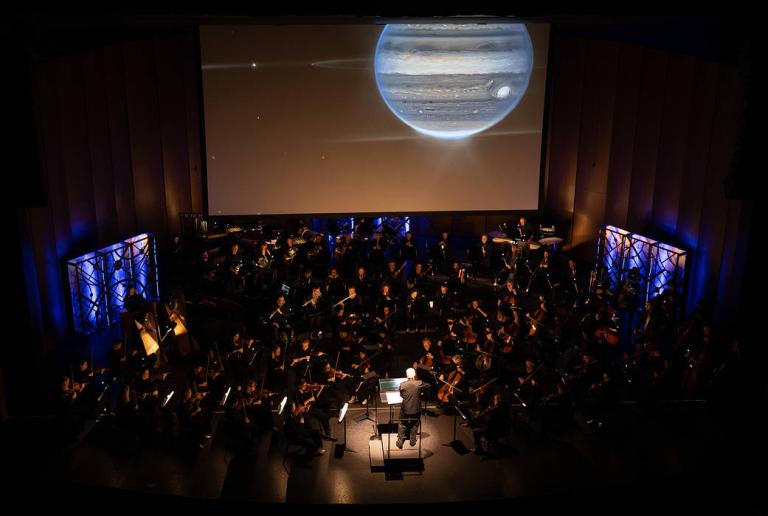
Maestro Piotr Gajewski conducts the National Philharmonic in the world premiere performance of Henry Dehlinger’s “Cosmic Cycles,” in this photo from Thursday, May 11, 2023, as an enhanced color image of Jupiter is displayed above. “Cosmic Cycles: A Space Symphony” is a collaboration between composer Henry Dehlinger, NASA’s Goddard Space Flight Center, and the National Philharmonic that features a fusion of music and video in seven multimedia works on the Sun, Earth, Moon, Planets, and Cosmos.
Image Credit: NASA/Joel Kowsky

Experience our universe in a new way.

By Monika Luabeya
Source NASA