
Home Blog Page 60

Axiom Space Private Astronauts Headed To International Space Station

0

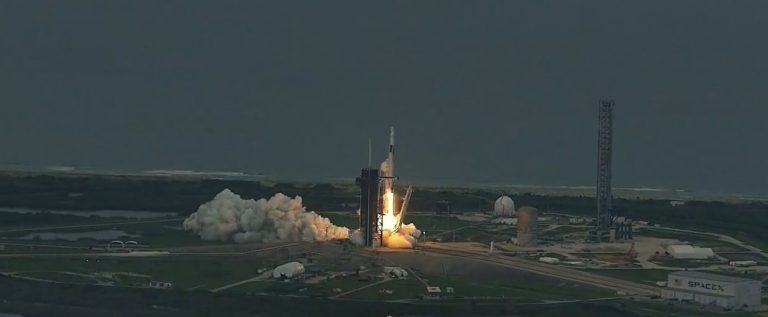
Axiom Mission 2 (Ax-2), the second all private astronaut mission to the International Space Station, lifts off at 5:37 p.m. EDT on Sunday, May 21, from Launch Complex 39A at NASA’s Kennedy Space Center in Florida.
Credits: Courtesy SpaceX

Four private astronauts are in orbit following the successful launch of Axiom Mission 2 (Ax-2), the second all private astronaut mission to the International Space Station. Axiom Space astronauts lifted off at 5:37 p.m. EDT on Sunday, May 21, from Launch Complex 39A at NASA’s Kennedy Space Center in Florida.

A SpaceX Falcon 9 rocket propelled the company’s Dragon spacecraft carrying Ax-2 crew members Commander Peggy Whitson, Pilot John Shoffner, and Mission Specialists Ali Alqarni and Rayyanah Barnawi into orbit on a mission to conduct scientific research, outreach, and commercial activities on the space station.

“Congratulations to Axiom, SpaceX, and the Axiom Mission 2 crew on a successful launch! During their time aboard the International Space Station, the Ax-2 astronauts will carry out more than 20 scientific experiments, helping us better understand space radiation, weather in low-gravity conditions, and more,” said NASA Administrator Bill Nelson. “This mission is more proof of NASA’s commitment to help our industry partners develop the next generation of space technology and a support a growing commercial space economy.”

Beginning at 7:30 a.m. Monday, May 22, NASA will provide live coverage of SpaceX Dragon docking, hatch opening, and a ceremony to welcome the crew on NASA Television, the NASA app, and the agency’s website.

The SpaceX Dragon will autonomously dock to the space-facing port of the station’s Harmony module around 9:16 a.m. Monday with hatch opening about 11:13 a.m. Live mission coverage will conclude following the welcome ceremony expected to start about 11:45 a.m. The mission also will be covered by Axiom Space on its website.

Once aboard the station, the Ax-2 crew will be welcomed by Expedition 69 crew members, including NASA astronauts Frank Rubio, Stephen Bowen, and Woody Hoburg, UAE (United Arab Emirates) astronaut Sultan Alneyadi, and Roscosmos cosmonauts Dmitri Petelin, Sergey Prokopyev and Andrey Fedyaev.

Axiom Space astronauts are expected to depart the space station May 30, pending weather, for a return to Earth and splashdown at a landing site off the coast of Florida.

Learn more about how NASA is supporting a space economy in low Earth orbit:

https://go.nasa.gov/3MMmrHu

-end-

NASA Selects Winners, Announces Final Phase Of Space Food Challenge

0

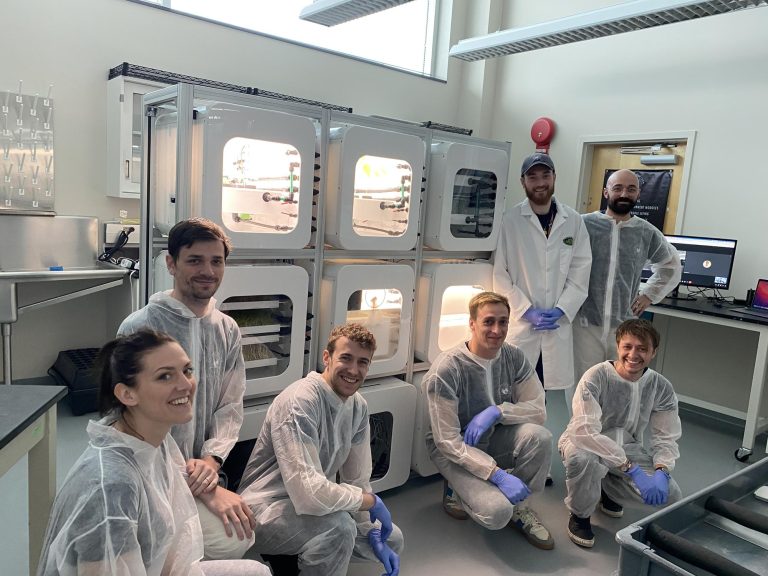
Nutritional Closed-Loop Eco-Unit System, or NUCLEUS, developed by Interstellar Lab of Merritt Island, Florida, is a self-sustaining food production system yielding fresh greens, vegetables, mushrooms, and insects, which could provide nutrients for long-term space missions.
Credits: NASA/Methuselah Foundation

NASA has announced eight winning teams and awarded $750,000 in prizes in the second phase of the agency’s Deep Space Food Challenge. The winning teams will move on to compete in the third and final phase of the challenge.

As NASA prepares to send astronauts farther into the solar system than ever before, the agency needs food systems that can fortify future crews in deep space for years at a time. The Deep Space Food Challenge calls on solvers from around the world to create technologies to help feed astronauts on future long-term space missions.

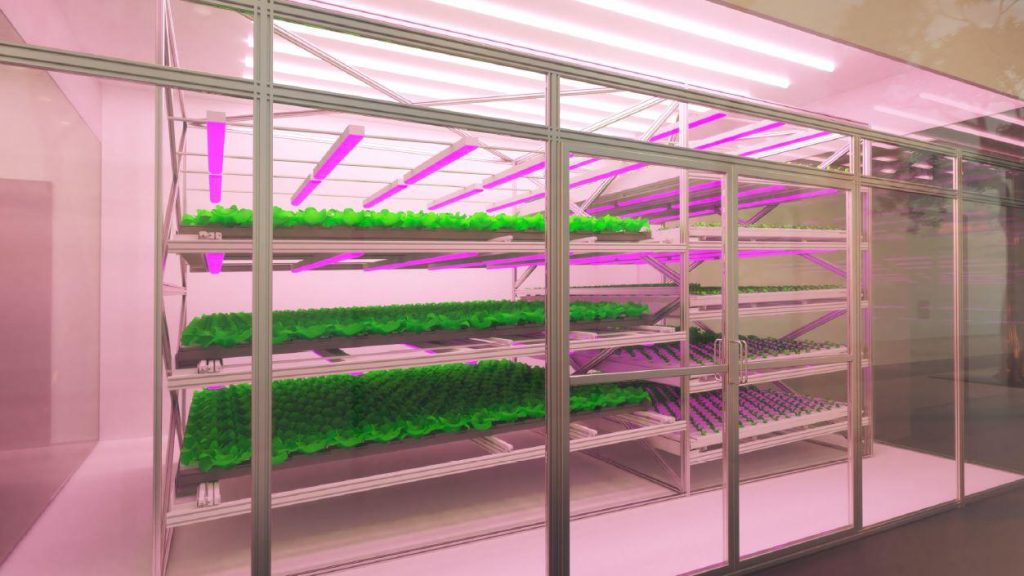
The microgreen food production system developed by Enigma of the Cosmos of Melbourne, Australia, is an adaptive growing system to support plants’ natural growth cycle and increase efficiency.
Credits: NASA/Methuselah Foundation

“These creative winning solutions come from teams made up of business, universities, and individual solvers, showcasing how NASA can benefit from everyone’s expertise to solve crucial challenges,” said Amy Kaminski, program executive for Prizes, Challenges, and Crowdsourcing in NASA’s Space Technology Mission Directorate (STMD) at NASA Headquarters in Washington. “We’re excited to announce Phase 3 of the challenge to see where these teams can take their technologies next.”

Phase 2 tasked dozens of teams with building and demonstrating small-scale prototypes of technologies that use minimal resources and create little waste while producing safe, healthy, and appetizing foods for astronauts. A panel of judges selected eight winners to build and demonstrate full-scale food technologies over the next year in Phase 3.

The following U.S. teams will each receive $150,000 in prizes from NASA and advance to compete for up to $1.5 million in total prizes from NASA in Phase 3:

  • Air Company of Brooklyn, New York, developed a system and processes for turning air, water, electricity, and yeast into food.
  • Interstellar Lab of Merritt Island, Florida, created a modular bioregenerative system for producing fresh microgreens, vegetables, mushrooms, and insects.
  • Kernel Deltech USA of Cape Canaveral, Florida, developed a system for cultivating mushroom-based ingredients.
  • Nolux of Riverside, California, created a solution that mimics the photosynthesis that happens in nature to produce plant- and mushroom-based ingredients.
  • SATED (Safe Appliance, Tidy, Efficient, and Delicious) of Boulder, Colorado, developed a space cooking appliance that would allow astronauts to prepare a variety of meals from ingredients with long shelf lives.

NASA and CSA (Canadian Space Agency) also jointly selected three international teams as Phase 2 winners. These three teams are invited to advance their technologies in Phase 3:

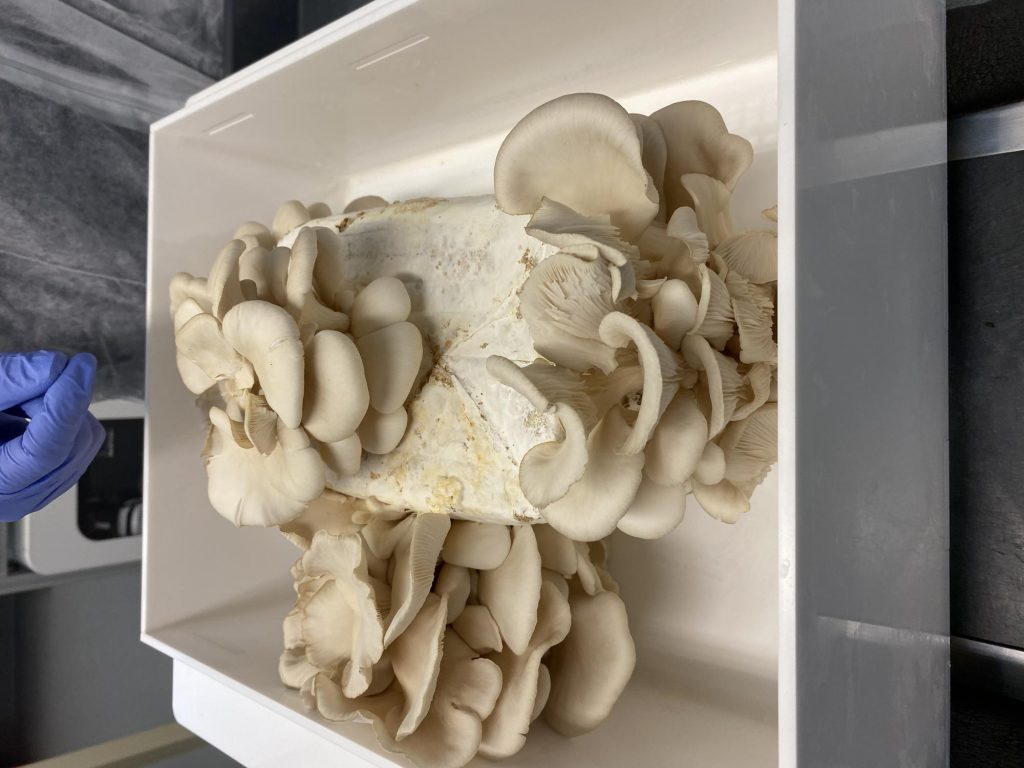
Edible fungi prepared by Interstellar Lab’s NUCLEUS food production system.
Credits: NASA/Methuselah Foundation
  • Enigma of the Cosmos of Melbourne, Australia, created an adaptive growing system to increase the efficiency of plants’ natural growth cycles.
  • Mycorena of Gothenburg, Sweden, developed a system that uses a combination of microalgae and fungi to produce a microprotein.
  • Solar Foods of Lappeenranta, Finland, created a system that uses gas fermentation to produce single-cell proteins.

“Astronauts will tell you that tasty and nutritious food is a critical part of any successful human space exploration mission,” said Denise Morris, program manager of NASA Centennial Challenges at NASA’s Marshall Space Flight Center in Huntsville, Alabama. “The possibilities presented in this challenge could help sustain our explorers on future missions, and even have the potential to help out right here on Earth in areas where food is scarce or hard to produce.”

The competition is a first-of-its-kind collaboration between NASA and CSA. On April 27, CSA awarded prizes to the teams advancing to the final stage of the Canadian challenge, which runs in parallel with NASA’s.

The Deep Space Food Challenge is one of NASA’s Centennial Challenges, which are part of the Prizes, Challenges, and Crowdsourcing program within STMD. NASA Marshall manages Centennial Challenges. Subject matter experts at NASA’s Johnson Space Center in Houston and NASA’s Kennedy Space Center in Florida support the competition. NASA, in partnership with the Methuselah Foundation, manages the U.S. and international competitors.

For more information on NASA’s Deep Space Food Challenge, visit:

https://www.nasa.gov/spacefoodchallenge

NASA Extends Nancy Grace Roman Space Telescope Science Operations

0

NASA has awarded a contract extension to the Association of Universities for Research in Astronomy Space Telescope Science Institute in Baltimore for the support services required for the agency’s Nancy Grace Roman Space Telescope Science Operations.

The support will include the development, integration and testing, launch and commissioning, and entry into the primary mission operations phases for the Nancy Grace Roman Space Telescope Science Operations Center.

This is a cost-plus-fixed-fee extension and will increase the contract value by an additional $166,248,618 for a total contract value of $200,840,220. The period of performance is extended through Sept. 30, 2027.

The contractor will continue to perform efficient science observation planning and scheduling, low-level and high-level wide field instrument data processing, science data calibration, and mission science data archiving of the multi-petabyte astrophysics science data set to enable the world-wide scientific community to access and further analyze the data to achieve the Roman science mission goals.

In addition, AURA/STScI shall be specifically responsible for the wide field instrument’s direct imaging science data pipeline processing (except for high-level Microlensing Survey processing), low-level grism and prism processing, calibration, and execution of Science Operations Center requirements through the launch, commissioning, and first year of primary operations. Support includes science community engagement and public outreach support services to the project-led outreach program.

Roman is the agency’s next flagship space telescope, designed to settle essential questions in the areas of dark energy and dark matter, search for exoplanets, and explore many topics in infrared astrophysics.

The association and institute are part of the team led by NASA’s Goddard Space Flight Center in Greenbelt, Maryland, which manages the Roman telescope mission for the agency.

For more information about Roman, visit:

https://www.nasa.gov/Roman

Hearing And Seeing The Music Of The Spheres

0
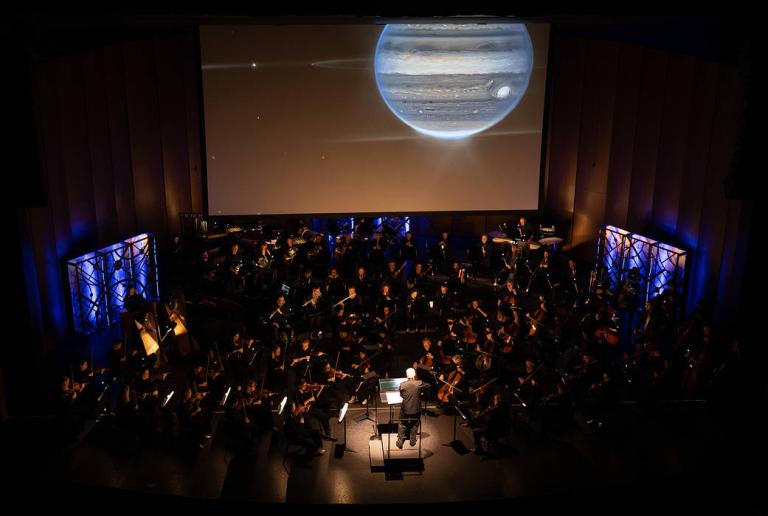
Maestro Piotr Gajewski conducts the National Philharmonic in the world premiere performance of Henry Dehlinger’s “Cosmic Cycles,” in this photo from Thursday, May 11, 2023, as an enhanced color image of Jupiter is displayed above. “Cosmic Cycles: A Space Symphony” is a collaboration between composer Henry Dehlinger, NASA’s Goddard Space Flight Center, and the National Philharmonic that features a fusion of music and video in seven multimedia works on the Sun, Earth, Moon, Planets, and Cosmos.
Image Credit: NASA/Joel Kowsky

Experience our universe in a new way.

By Monika Luabeya
Source NASA

UK Leads Europe In Race For Space Investment, New Report Finds

0

New analysis from investment experts offers insight on the wealth of opportunities found within the UK’s £17.5 billion space sector.

The ‘Expanding frontiers – The down to earth guide to investing in space’ report, produced by PwC in association with the UK Space Agency, highlights expected global space sector growth of up to 11% per year over the next decade and a near doubling of venture capital investments in revenue-generating space companies in the UK between 2015 and 2022, with 63% of investors new to the sector in 2021.

The report details trends for new and established investors who are interested in growing their space portfolio, including opportunities with companies seeking to improve access to healthcare and tackle global climate change challenges, from decarbonising economies to increasing food security.

Craig Brown, Director of Investment at the UK Space Agency, said:

This report shines a light on the breadth and depth of space investment opportunities. From today’s satellite communications to the future of orbital assembly, space has taken on an increased significance as a deeply embedded part of the global economy that is poised to grow at up to 11% per annum to 2030.

As the number of satellites above us increases dramatically, there are even greater opportunities to capitalise on the wealth of data they collect and on the international efforts spearheaded by the UK to keep the space environment safe and sustainable for generations to come.

According to the report, the UK has been the leading destination for space investment in Europe – and second internationally behind the US – since 2015, receiving 17% of global investment.

Matt Alabaster, Partner at PwC Strategy&, said:

This report shines a light on the substantial contribution that the space industry can make to solving some of our biggest global challenges, from decarbonising our economies to increasing food security and improving access to healthcare.

Our analysis shows that there are opportunities for investors of all stripes; the industry contains asset-light and technology-driven businesses, as well as infrastructure assets and supporting services businesses, all of which stand to benefit from the significant growth of the global space industry.

The Expanding frontiers report calculates a median 400% increase in deal size for early-stage investments and highlights a number of fast-growing UK space organisations, from satellite communications firm, OneWeb, to Wales-based aerospace manufacturer, Space Forge, which raised Europe’s largest ever seed round for a space tech company in December 2021.

Joshua Western, CEO and Co-founder of Space Forge, said:

We’ve spear-headed new investment into the UK space sector from homegrown and valued international partners. The growth in our company and this sector is testament to the untapped potential of the UK space ecosystem.

We are excited to be part of a dynamic and rapidly expanding industry that makes a significant contribution to the UK economy.

Research shows that the UK has become a particularly attractive market for venture capital firms, being home to the HQ of leading space fund Seraphim Capital – which was the top investor in UK space organisations in 2022 – and offices of US space and deep tech fund, TypeOne VC.

UK space organisations have received investments from at least seven of the most active global investors, and nine of the largest UK-based venture capital firms, including University of Cambridge Enterprise, Octopus Ventures and Molten.

Taking into account government, non-commercial (universities and research institutes) and commercial organisations, it describes the UK space sector as a “hidden utility” that underpins our daily lives and supports an estimated £370 billion of the country’s economy, mostly through satellite-based services.

The data follows figures in the recent Size and Health of the UK Space Sector Report showing that £635 million was invested in UK-headquartered space companies through 34 identified deals last year, with acquisitions accounting for three quarters of the total investment value.

Space sector income increased by more than 5% into 2021, outpacing both the growth of the global space industry in the same period (1.6%) and the general UK economy, which contracted by 7.6%.

The full version of the PwC Expanding frontiers report is available on request.

Why Is Venus Called Earth’s Twin?

0

If you were asked which two planets were the twins of our Solar System, you’d probably pick Uranus and Neptune — two mysterious, blue ice giants in neighboring orbits around the Sun. But there’s another contending pair: Venus and Earth.

These two rocky worlds may at first glance appear very different, but Venus is often called Earth’s twin sister. With such apparent differences, what makes these planets twins?

Comparing Earth and Venus

Venus is shrouded in a thick carbon dioxide atmosphere with swirling clouds of sulfuric acid, making the planet look fuzzy and yellow from the outside, unlike our serene planet of blue, green, and white. The Venusian atmosphere also creates extremely different conditions from those we see on our planet. Whereas Earth is a watery oasis, Venus is too hot for liquid water to exist, with surface temperatures as high as 460 degrees Celsius (860 degrees Fahrenheit). That heat comes from the greenhouse effect caused by the atmosphere of Venus, which is so thick that it creates crushing pressure at the planet’s surface.

On a deeper level, Venus and Earth really are very similar. Venus is only slightly smaller than our planet, with a diameter that is about 95% that of Earth’s. Venus also has a similar mass and density to Earth due to their comparable composition; both planets have a layered structure, with cores composed primarily of iron and nickel surrounded by rocky mantles rich in silicates and other minerals, with thin crusts on their exteriors.

Because of these similarities, planetary scientists also think that Venus and Earth formed at around the same time and from similar building blocks. In fact, for much of their early history Venus and Earth were likely much more similar than they are today.

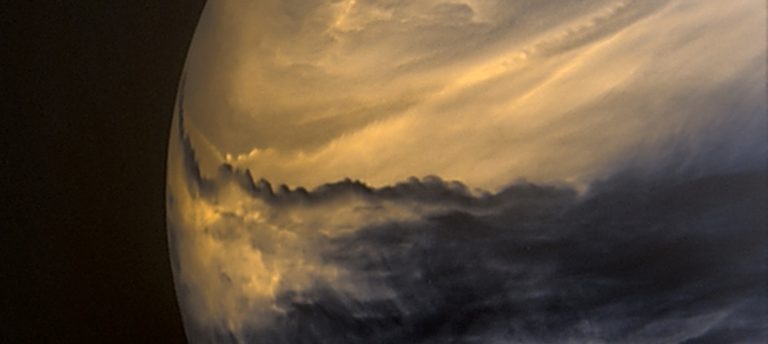
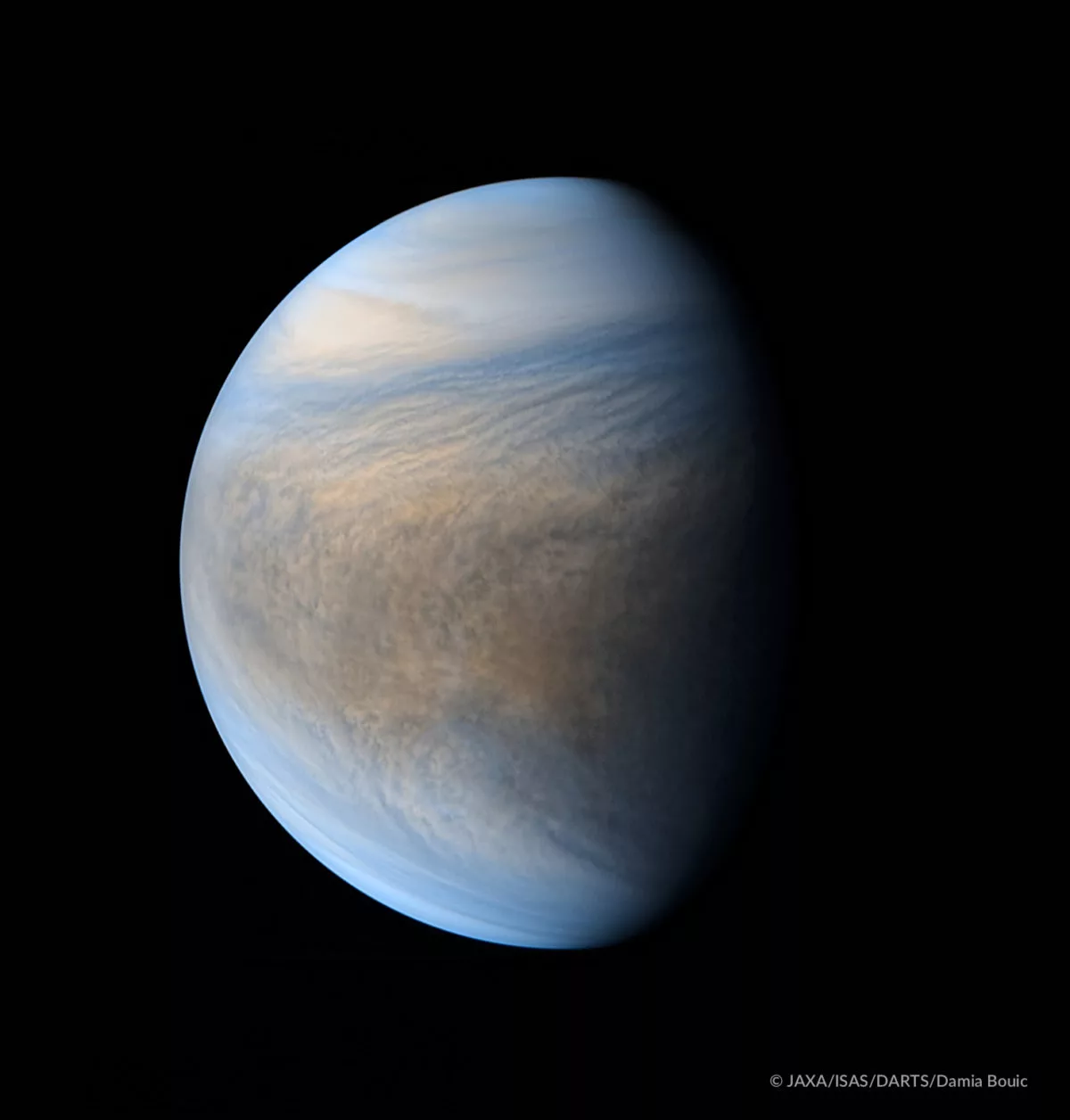
Composite view of Venus from Akatsuki
COMPOSITE VIEW OF VENUS FROM AKATSUKI A composite view of Venus using data from JAXA’s Akatsuki orbiter.Image: JAXA / ISAS / DARTS / Damia Bouic

Two volcanic worlds?

Planetary scientists are confident that Venus used to be volcanically active; there are now-dormant volcanoes across the planet’s surface. Until recently, there was no evidence that Venus remained volcanically active today. But recent findings based on data from NASA’s Magellan spacecraft suggest that there might be present-day volcanic activity on Venus. Follow-up observations of the planet’s surface will be needed to confirm it, but if Venus is indeed a geologically active world that would make it even more similar to present-day Earth.

Peering into Venus’ past

In its early history Venus is thought to have had a much thinner atmosphere than it does today. This allowed for cooler surface temperatures and lower atmospheric pressure, potentially allowing liquid water to exist on the planet’s surface.

Some models suggest that early Venus may have had a global ocean of liquid water that covered much of its surface. This ocean would have been similar in size to the Earth’s oceans and may have persisted for hundreds of millions or even billions of years. During this time, Earth and Venus would have been much more obvious twins.

Venus if it had oceans
VENUS IF IT HAD OCEANS Data scientist Alexis Huet created this map showing what Venus would look like if it had the same amount of surface water as Earth.Image: Alexis Huet

Over time, the temperature on Venus began to rise. Carbon dioxide built up in its atmosphere, creating a runaway greenhouse effect; the atmosphere trapped heat, which sped up the production of more heat-trapping gasses, and on and on. The Venusian oceans evaporated, the planet became an inhospitable wasteland. Today, it wouldn’t be unreasonable to call Venus Earth’s evil twin.

Robotic investigators to solve planetary mysteries

The exact causes for Venus’ dramatic evolution still aren’t known. To find out what happened, we need to send more missions to study the planet. Several missions to Venus are in development right now. ESA’s EnVision orbiter, which will launch as early as 2031, will study Venus’ surface, subsurface, and atmosphere; how they interact; and what drove the changes the planet has experienced throughout its history. NASA’s DAVINCI mission aims to launch an orbiter in 2029 to study the Venusian atmosphere, answering questions about how it has changed over time. And NASA’s VERITAS mission, which is currently facing an indefinite delay due to budget cuts, would map the planet’s surface in more detail than ever before, answering questions about whether Venus is volcanically active, among others.

With the support of space advocates, these missions could make the 2030s a decade of discovery about our planet’s mysterious twin.

By Kate Howells 
Source The Planetary Society

Laguna San Rafael National Park Viewed From The Space Station

0

Known for its many rivers and one of Northern Patagonia’s largest glaciers, Laguna San Rafael National Park was photographed on May 9, 2023 as the space station orbited 268 miles above Chile.

Image credit: NASA/Warren “Woody” Hoburg

By Dacia Massengill
Source NASA

Boeing Starliner En Route to International Space Station

0

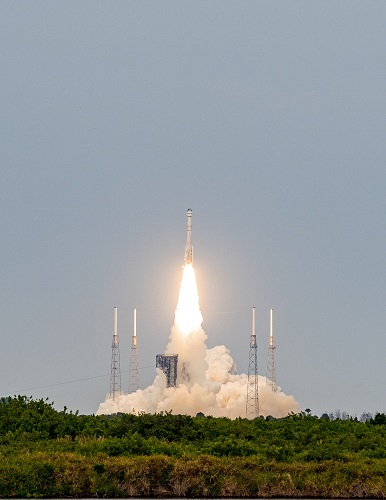
Boeing’s CST-100 Starliner launches on Orbital Flight Test-2 at 6:54 p.m. EDT on Thursday, May 19, 2022, from Cape Canaveral Space Force Station in Florida (Boeing/Joey Jetton)

CAPE CANAVERAL, Fla., May 19, 2022 —The Boeing [NYSE: BA] CST-100 Starliner spacecraft is on its way to the International Space Station after successfully performing the planned orbital insertion burn 31 minutes into flight. The spacecraft is expected to dock with the space station after a nearly 24-hour journey in low Earth orbit, bringing together the Boeing-built Starliner with a Boeing-built space station module.

“Boeing’s Starliner is a symbol of perseverance and pride – designed, built, tested and flown by a team of people who are committed to their mission of safely and reliably transporting astronauts,” said Boeing Defense, Space & Security President and CEO Ted Colbert. “They will remain laser-focused on the spacecraft and its performance throughout this flight test.”

The reusable Starliner spacecraft lifted off atop a human-rated United Launch Alliance Atlas V rocket at 6:54 p.m. Eastern time from Space Launch Complex 41 at Cape Canaveral Space Force Station in Florida. Another previously flown spacecraft is undergoing preparations to carry astronauts to and from the space station for NASA’s Commercial Crew Program. 

“We’ve learned a lot about the capability of our spacecraft and the resilience of our team since the first Starliner launch,” said Mark Nappi, vice president and program manager, Boeing Commercial Crew Program. “We still have a lot of operational testing ahead as we prepare to rendezvous with the space station, but we’re ready to demonstrate the system we’ve worked so hard on is capable of carrying astronauts to space.”

While this Starliner mission has no crew, it does have a passenger. It’s carrying an anthropomorphic test device named “Rosie the Rocketeer” representing people who have shown grit and determination while blazing a trail in human spaceflight history.

Starliner is carrying more than 800 pounds (362 kilograms) of cargo on the Orbital Flight Test-2 (OFT-2) mission, including about 500 pounds (226 kilograms) for NASA, such as food and crew preference items for the current Expedition crew members as well as a commemorative U.S. flag that will remain aboard the space station until it returns to Earth on Starliner’s Crew Flight Test (CFT).

Along with a host of American flags and mission patches, several unique items are also on the trip into orbit and will return, including items from 14 historically Black colleges and universities.

As a leading global aerospace company, Boeing develops, manufactures and services commercial airplanes, defense products and space systems for customers in more than 150 countries. As a top U.S. exporter, the company leverages the talents of a global supplier base to advance economic opportunity, sustainability and community impact. Boeing’s diverse team is committed to innovating for the future, leading with sustainability, and cultivating a culture based on the company’s core values of safety, quality and integrity. Join our team and find your purpose at boeing.com/careers.

For more about Starliner, visit www.boeing.com/starliner. Follow along with the mission on Twitter @BoeingSpace and www.starlinerupdates.com.

# # #

Contact
Starliner Communications
+1 (321) 360-3602
[email protected]

Lockheed Martin On Blue Origin’s National Team Selected To Develop Human Lunar Lander

0

DENVER, May 19, 2023 – Lockheed Martin [NYSE: LMT] is on the team that has won a contract from NASA to develop and demonstrate a human landing system for the Artemis program under the agency’s Human Landing System program. The goal of the program is to rapidly develop a sustainable human lunar lander and perform a crewed demonstration flight to the lunar surface for Artemis V.

Led by Blue Origin, the National Team that will develop and build the lander also includes Draper, Boeing, Astrobotic and Honeybee Robotics.

“Congratulations to Blue Origin on this achievement. Lockheed Martin is excited to be part of Blue Origin’s National Team and we are looking forward to building humanity’s first Cislunar Transporter,” said Kirk Shireman, vice president of Lunar Exploration Campaigns at Lockheed Martin Space. “We value Blue Origin’s thoughtful approach to developing human-rated flight systems and are thrilled to be part of a diverse team that combines innovation, deep experience and a strong industrial base.”

NASA’s Artemis program is redefining how we explore deep space, and a sustainable human landing system program is key to extending our human presence away from Earth in a long-term way, which will greatly add to our scientific knowledge of the solar system.

As a principal partner on Blue Origin’s National Team, Lockheed Martin brings to the lunar lander effort more than 50 years of experience in space exploration – from developing the Orion spacecraft, to supporting numerous planetary robotic missions, to developing the space shuttle’s external fuel tank. Additionally, Lockheed Martin and National Team partners are drawing on their extensive supplier base, engaging strategic small and mid-sized businesses across the country in the development of the landing system.

About Lockheed Martin

Headquartered in Bethesda, Maryland, Lockheed Martin Corporation is a global security and aerospace company that employs approximately 116,000 people worldwide and is principally engaged in the research, design, development, manufacture, integration and sustainment of advanced technology systems, products and services.

Please follow @LMNews on Twitter for the latest announcements and news across the corporation, and @LMSpace to learn more about the latest technologies, missions and people driving the future of space.

SOURCE Lockheed Martin

NASA Selects Blue Origin As Second Artemis Lunar Lander Provider

0

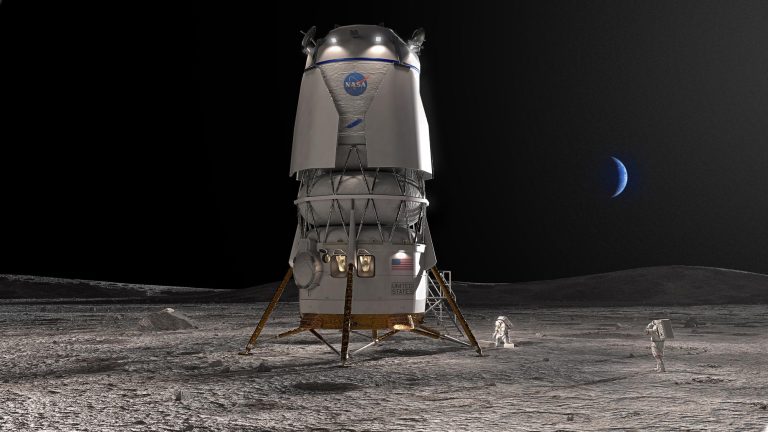
Artist’s concept of the Blue Moon lander.
Credits: Blue Origin

To develop a human landing system for the agency’s Artemis V mission to the Moon, NASA has selected Blue Origin of Kent, Washington. Through Artemis, NASA will explore more of the Moon than ever before, uncovering more scientific discoveries, and preparing for future astronaut missions to Mars.

Blue Origin will design, develop, test, and verify its Blue Moon lander to meet NASA’s human landing system requirements for recurring astronaut expeditions to the lunar surface, including docking with Gateway, a space station where crew transfer in lunar orbit. In addition to design and development work, the contract includes one uncrewed demonstration mission to the lunar surface before a crewed demo on the Artemis V mission in 2029. The total award value of the firm-fixed price contract is $3.4 billion.

“Today we are excited to announce Blue Origin will build a human landing system as NASA’s second provider to deliver Artemis astronauts to the lunar surface,” said NASA Administrator Bill Nelson. “We are in a golden age of human spaceflight, which is made possible by NASA’s commercial and international partnerships. Together, we are making an investment in the infrastructure that will pave the way to land the first astronauts on Mars.”

For the Artemis V mission, NASA’s SLS (Space Launch System) rocket will launch four astronauts to lunar orbit aboard the Orion spacecraft. Once Orion docks with Gateway, two astronauts will transfer to Blue Origin’s human landing system for about a weeklong trip to the Moon’s South Pole region where they will conduct science and exploration activities. Artemis V is at the intersection of demonstrating NASA’s initial lunar exploration capabilities and establishing the foundational systems to support recurring complex missions in lunar orbit and on the surface as part of the agency’s Moon to Mars exploration approach.

Adding another human landing system partner to NASA’s Artemis program will increase competition, reduce costs to taxpayers, support a regular cadence of lunar landings, further invest in the lunar economy, and help NASA achieve its goals on and around the Moon in preparation for future astronaut missions to Mars. 

The agency previously contracted SpaceX to demonstrate an initial human landing system for the Artemis III mission. Under that contract, the agency also directed SpaceX to evolve its design to meet the agency’s requirements for sustainable exploration and to demonstrate the lander on Artemis IV. As a result of the contract with Blue Origin to demonstrate on Artemis V a lander that meets these same sustainable lander requirements, including capabilities for increased crew size, longer mission duration, and delivery of more mass to the Moon, multiple providers will be available to compete for future opportunities to fulfill NASA’s lunar surface access needs for Artemis missions.

By supporting industry’s development of innovative human landing system concepts and designs, NASA will help increase access to space for the benefit of all. 

“Having two distinct lunar lander designs, with different approaches to how they meet NASA’s mission needs, provides more robustness and ensures a regular cadence of Moon landings,” said Lisa Watson-Morgan, manager, Human Landing System Program at NASA’s Marshall Space Flight Center in Huntsville, Alabama. “This competitive approach drives innovation, brings down costs, and invests in commercial capabilities to grow the business opportunities that can serve other customers and foster a lunar economy.”

NASA issued the solicitation, known as Appendix P (https://www.nasa.gov/nextstep/humanlander4), of its second Next Space Technologies for Exploration Partnerships Broad Agency Announcement (Next-STEP2 BAA), in September 2022 as part of the ongoing development of advanced space exploration technologies, capabilities, and concepts.

Through Artemis, NASA will send astronauts – including the first woman and first person of color – to explore the Moon for scientific discovery, economic benefits, and to build the foundation for crewed missions to Mars. Together, the SLS rocket, Orion, Gateway, advanced spacesuits, and human landing systems are NASA’s foundation for deep space exploration.

For more information about the human landing system, visit:

https://go.nasa.gov/45fK6qY

-end-