
Home Blog Page 62

Rocket Lab Completes Custom-Built Photon Spacecraft For Varda Space Industries

0
Custom-Built Photon Spacecraft for Varda Space Industries

Rocket Lab USA, Inc. (Nasdaq: RKLB) (“Rocket Lab” or “the Company”), a global leader in launch services and space systems, today announced it has completed and shipped a custom Photon spacecraft developed for Varda Space Industries (“Varda”), a leading in-space manufacturing and hypersonic re-entry logistics company.

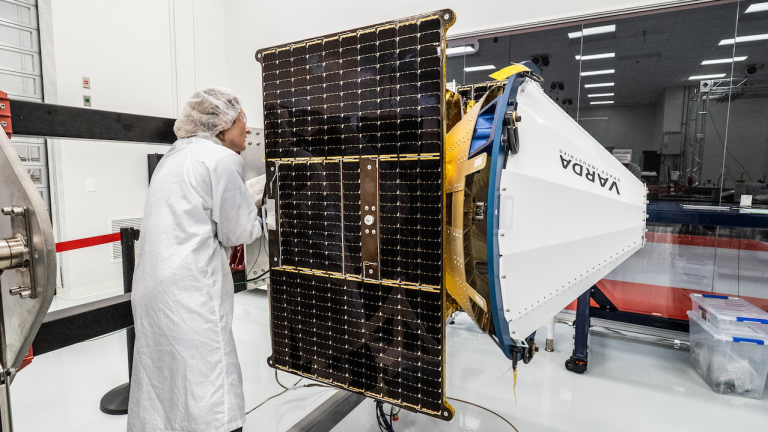
The Rocket Lab-designed and built Photon spacecraft will provide power, communications, propulsion, and attitude control to Varda’s 120kg capsule that will produce pharmaceutical products in microgravity and return them to Earth. In addition to providing support during the in-space manufacturing phase of Varda’s mission, the Photon will place Varda’s hypersonic re-entry capsule (carrying finished pharmaceuticals on board) on a return trajectory to Earth. Varda’s space-manufactured products are targeting small molecule therapeutics, and over time larger molecules and biologics — all of which can have higher efficacy when produced in microgravity, while the re-entry capsule provides opportunities to advance hypersonic systems. This first mission will focus on small molecule formulation to provide insight into retrieved microgravity-grown pharmaceutical crystals, particularly the antiretroviral Ritonavir, an active ingredient in the COVID medication Paxlovid also used in the treatment of Human Immunodeficiency Virus (HIV).

The Photon spacecraft was developed, manufactured, and tested at Rocket Lab’s Spacecraft Production Facility in Long Beach, California. With final assembly, integration, and test of the spacecraft complete, the fully integrated Varda spacecraft has been shipped to Vandenberg Space Force Base for launch on a commercial rideshare mission scheduled for no earlier than June 8.

This Photon spacecraft is the first of four ordered by Varda to support in-space pharmaceutical manufacturing. Leveraging Rocket Lab’s deep vertical integration, all Photon spacecraft incorporate Rocket Lab-designed and manufactured components and software including star trackers, propulsion, reaction wheels, solar panels, flight software, radios, composite structures and tanks, and separation systems.

“Opening access to space is about much more than launch for Rocket Lab. It’s about making it easier to put the ideas of tomorrow in orbit today, enabling innovation, rapid iteration, and new capabilities that will improve lives back on Earth. This is exactly what the team at Varda is doing by producing novel pharmaceuticals in orbit and we’re immensely proud to make that possible with our Photon spacecraft,” said Rocket Lab founder and CEO, Peter Beck. “Space Systems is a rapidly growing part of Rocket Lab’s business, and we’re delighted to deliver another spacecraft that leverages our vertical integration strategy for high-quality and cost-effective satellite solutions on rapid timelines.”

“Rocket Lab has been an asset in developing and delivering this spacecraft on our schedule and budget,” said Varda Space Industries Chief Executive Officer, Will Bruey. “Our engineers at Varda and the Rocket Lab team have worked together seamlessly and are excited by the benefits this spacecraft will bring to Earth and healthcare.”

Rocket Lab’s Photon spacecraft is a configurable spacecraft bus platform that can support a range of missions – from low Earth orbit to interplanetary destinations. A high energy variant of Photon was developed and launched by Rocket Lab in 2022, successfully deploying the CAPSTONE spacecraft to lunar orbit for NASA.

About Rocket Lab

Founded in 2006, Rocket Lab is an end-to-end space company with an established track record of mission success. We deliver reliable launch services, satellite manufacture, spacecraft components, and on-orbit management solutions that make it faster, easier, and more affordable to access space. Headquartered in Long Beach, California, Rocket Lab designs and manufactures the Electron small orbital launch vehicle, the Photon satellite platform, and the Company is developing the large Neutron launch vehicle for constellation deployment. Since its first orbital launch in January 2018, Rocket Lab’s Electron launch vehicle has become the second most frequently launched U.S. rocket annually and has delivered 161 satellites to orbit for private and public sector organizations, enabling operations in national security, scientific research, space debris mitigation, Earth observation, climate monitoring, and communications. Rocket Lab’s Photon spacecraft platform has been selected to support NASA missions to the Moon and Mars, as well as the first private commercial mission to Venus. Rocket Lab has three launch pads at two launch sites, including two launch pads at a private orbital launch site located in New Zealand and a third launch pad in Virginia. To learn more, visit www.rocketlabusa.com.

By Keith Cowing
Source SpaceRef

Hubble Captures A Light-Bending Galaxy Cluster eMACS J1823.1+7822

0
Cosmic leviathan eMACS J1823.1+7822
NASA

A vast galaxy cluster lurks in the center of this image from the NASA/ESA Hubble Space Telescope. Like a submerged sea monster causing waves on the surface, this cosmic leviathan can be identified by the distortions in spacetime around it.

The cluster’s enormous mass curves spacetime, creating a gravitational lens that bends the light from distant galaxies beyond the cluster. The contorted streaks and arcs of light we see in this image are the result. A host of other galaxies surrounds the cluster, and a handful of foreground stars with tell-tale diffraction spikes are scattered throughout the image.

This particular galaxy cluster, called eMACS J1823.1+7822, lies almost nine billion light-years away in the constellation Draco. It is one of five exceptionally massive galaxy clusters Hubble explored with the aim of measuring the strengths of these gravitational lenses, which would provide insights into the distribution of dark matter in galaxy clusters. Strong gravitational lenses like eMACS J1823.1+7822 can help astronomers study distant galaxies by acting as vast natural telescopes which magnify objects that would otherwise be too faint or distant to resolve.

This multiwavelength image layers data from eight different filters and two different instruments: Hubble’s Advanced Camera for Surveys and Wide Field Camera 3. Both instruments can view astronomical objects in just a small slice of the electromagnetic spectrum using filters, which allow astronomers to image objects at precisely selected wavelengths. The combination of observations at different wavelengths lets astronomers develop a more complete picture of the structure, composition, and behavior of an object than visible light alone would reveal.

Text credit: European Space Agency (ESA)
Image credit: ESA/Hubble & NASA, H. Ebeling

By Keith Cowing
Source SpaceRef
Artemis II Orion Service Module Completes Acoustic Testing

0
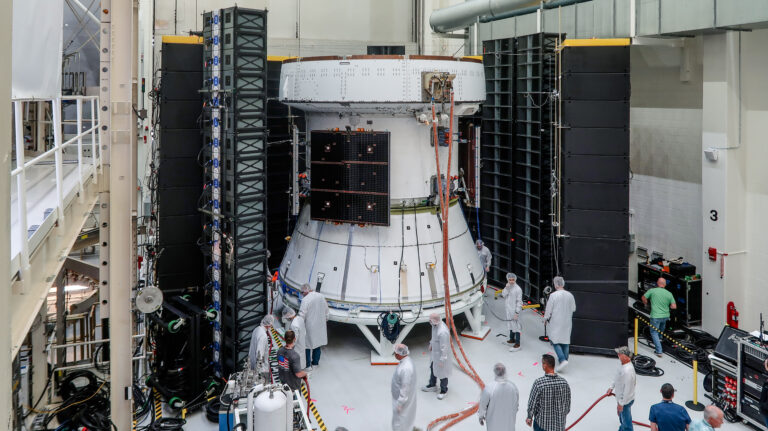
The European Service Module for the Artemis II mission is photographed inside the Neil Armstrong Operations and Checkout Building at NASA’s Kennedy Space Center in Florida while it was configured for acoustic testing. Photo credit: NASA/Amanda Stevenson

Engineers recently completed a series of acoustic tests on the European Service Module for NASA’s Artemis II mission while inside the Neil Armstrong Operations and Checkout Building at NASA’s Kennedy Space Center in Florida.

During the testing, engineers surrounded the service module with large speakers and attached microphones, accelerometers, and other equipment to measure the effects of different acoustic levels. Engineers and technicians will analyze the data collected during the tests to ensure the service module can withstand the speed and vibration it will experience during launch and throughout the mission.

With this test complete, the team is on track to integrate Orion’s crew and service modules together later this year.

By Madison Tuttle
Source NASA

50th Anniversary Of The Skylab 1 Launch

0

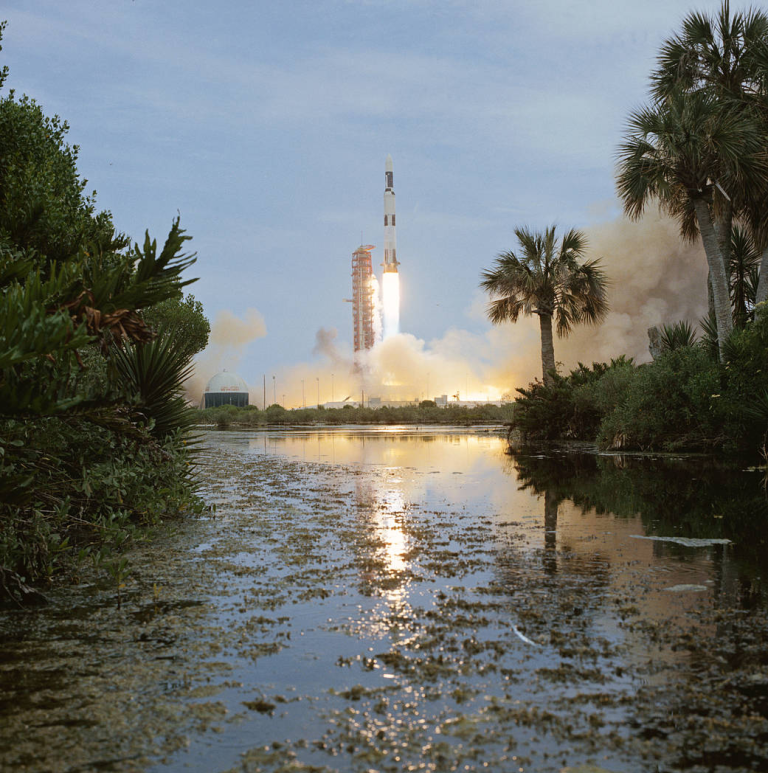
Clouds of smoke billow out over the surrounding area as the uncrewed Skylab 1/Saturn V space vehicle launches from NASA’s Kennedy Space Center on May 14, 1973. The Skylab 1 payload included the major components of the space station: the orbital workshop, Apollo Telescope Mount, multiple docking adapter, and airlock module. The Skylab 2 crew was scheduled to launch to the space station the following day aboard the Apollo Command and Service Module.

Skylab helped pave the way for permanent operations in low-Earth orbit. Over the course of its human occupation from May 25, 1973, to Feb. 8, 1974, three crews visited Skylab, carrying out 270 scientific and technical investigations in the fields of physics, astronomy, and biological sciences. These activities were forerunners of what we do now aboard the International Space Station.

Image Credit: NASA

By Monika Luabeya
Source NASA

International Sea Level Satellite Spots Early Signs Of El Niño

0
International Sea Level Satellite Spots Early Signs Of El Niño

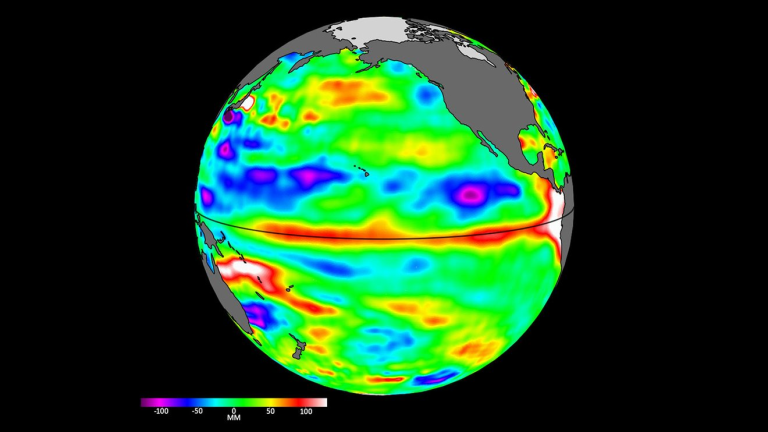
Kelvin waves, a potential precursor of El Niño conditions in the ocean, are rolling across the equatorial Pacific toward the coast of South America.

The most recent sea level data from the U.S.-European satellite Sentinel-6 Michael Freilich indicates early signs of a developing El Niño across the equatorial Pacific Ocean. The data shows Kelvin waves – which are roughly 2 to 4 inches (5 to 10 centimeters) high at the ocean surface and hundreds of miles wide – moving from west to east along the equator toward the west coast of South America.

When they form at the equator, Kelvin waves bring warm water, which is associated with higher sea levels, from the western Pacific to the eastern Pacific. A series of Kelvin waves starting in spring is a well-known precursor to an El Niño, a periodic climate phenomenon that can affect weather patterns around the world. It is characterized by higher sea levels and warmer-than-average ocean temperatures along the western coasts of the Americas.

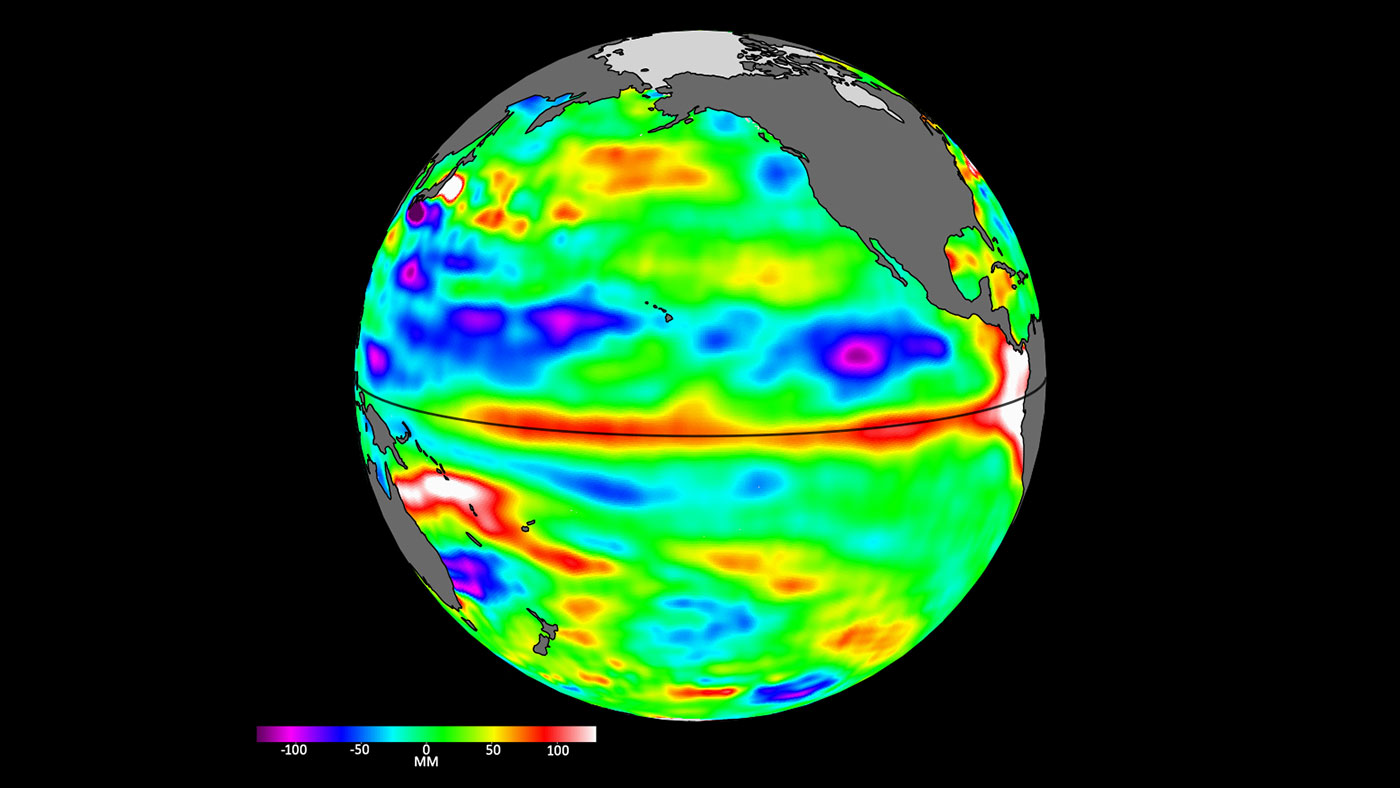
Sea level data from the Sentinel-6 Michael Freilich satellite
Sea level data from the Sentinel-6 Michael Freilich satellite on April 24 shows relatively higher (shown in red and white) and warmer ocean water at the equator and the west coast of South America. Water expands as it warms, so sea levels tend to be higher in places with warmer water.
Credit: NASA/JPL-Caltech

Water expands as it warms, so sea levels tend to be higher in places with warmer water. El Niño is also associated with a weakening of the trade winds. The condition can bring cooler, wetter conditions to the U.S. Southwest and drought to countries in the western Pacific, such as Indonesia and Australia.

The Sentinel-6 Michael Freilich satellite data shown here covers the period between the beginning of March and the end of April 2023. By April 24, Kelvin waves had piled up warmer water and higher sea levels (shown in red and white) off the coasts of Peru, Ecuador, and Colombia. Satellites like Sentinel-6 Michael Freilich can detect Kelvin waves with a radar altimeter, which uses microwave signals to measure the height of the ocean’s surface. When an altimeter passes over areas that are warmer than others, the data will show higher sea levels.

“We’ll be watching this El Niño like a hawk,” said Josh Willis, Sentinel-6 Michael Freilich project scientist at NASA’s Jet Propulsion Laboratory in Southern California. “If it’s a big one, the globe will see record warming, but here in the Southwest U.S. we could be looking at another wet winter, right on the heels of the soaking we got last winter.”

Both the U.S. National Oceanic and Atmospheric Administration (NOAA) and the World Meteorological Organization have recently reported increased chances that El Niño will develop by the end of the summer. Continued monitoring of ocean conditions in the Pacific by instruments and satellites such as Sentinel-6 Michael Freilich should help to clarify in the coming months how strong it could become.

“When we measure sea level from space using satellite altimeters, we know not only the shape and height of water, but also its movement, like Kelvin and other waves,” said Nadya Vinogradova Shiffer, NASA program scientist and manager for Sentinel-6 Michael Freilich in Washington. “Ocean waves slosh heat around the planet, bringing heat and moisture to our coasts and changing our weather.”

More About the Mission

Sentinel-6 Michael Freilich, named after former NASA Earth Science Division Director Michael Freilich, is one of two satellites that compose the Copernicus Sentinel-6/Jason-CS (Continuity of Service) mission.

Sentinel-6/Jason-CS was jointly developed by ESA (European Space Agency), the European Organisation for the Exploitation of Meteorological Satellites (EUMETSAT), NASA, and NOAA, with funding support from the European Commission and technical support on performance from the French space agency CNES (Centre National d’Études Spatiales). Spacecraft monitoring and control, as well as the processing of all the altimeter science data, is carried out by EUMETSAT on behalf of the European Union’s Copernicus programme, with the support of all partner agencies.

JPL, a division of Caltech in Pasadena, contributed three science instruments for each Sentinel-6 satellite: the Advanced Microwave Radiometer, the Global Navigation Satellite System – Radio Occultation, and the Laser Retroreflector Array. NASA also contributed launch services, ground systems supporting operation of the NASA science instruments, the science data processors for two of these instruments, and support for the U.S. members of the international Ocean Surface Topography Science Team.

To learn more about Sentinel-6 Michael Freilich, visit: https://www.nasa.gov/sentinel-6

News Media Contact

Jane J. Lee / Andrew Wang
Jet Propulsion Laboratory, Pasadena, Calif.
818-354-0307 / 626-379-6874
[email protected] / [email protected]

NASA Calls End To Lunar Flashlight After Some Tech Successes

0
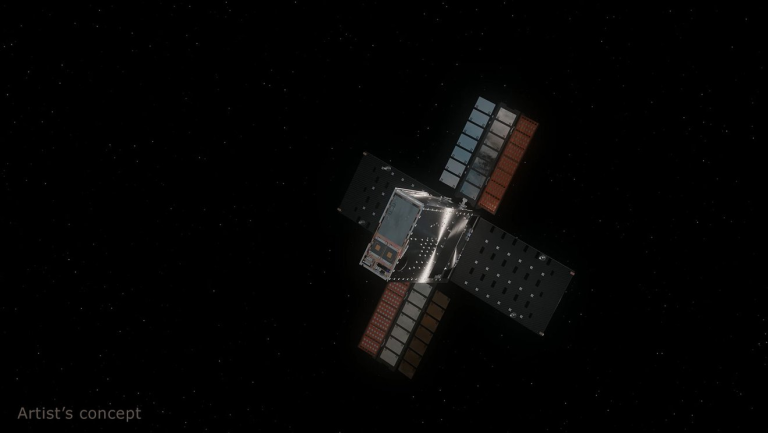
This illustration depicts NASA’s Lunar Flashlight, with its four solar arrays deployed, shortly after launch in December. Soon after, the briefcase-size CubeSat experienced thruster issues that prompted months of troubleshooting efforts by the mission’s operations team. 
Credit: NASA/JPL-Caltech

While the CubeSat couldn’t reach the lunar South Pole to help seek ice, it fulfilled several technology goals that will empower future missions for the benefit of humanity.

NASA’s Lunar Flashlight launched on Dec. 11, 2022, to demonstrate several new technologies, with an ultimate goal to seek out surface ice in the permanently shadowed craters of the Moon’s South Pole. Since then, the briefcase-size satellite’s miniaturized propulsion system – the first of its kind ever flown – proved unable to generate enough thrust to get into lunar orbit, despite months of effort by the operations team. Because the CubeSat cannot complete maneuvers to stay in the Earth-Moon system, NASA has called an end to the mission.

NASA relies on technology demonstrations to fill specific knowledge gaps and to test new technologies. Used for the first time beyond Earth’s orbit, Lunar Flashlight’s propulsion system and green fuel were such demonstrations. Although the propulsion system was unable to produce the desired thrust – likely because of debris buildup in the thruster fuel lines – newly developed propulsion system components exceeded performance expectations.

Also surpassing expectations were Lunar Flashlight’s never-before-flown Sphinx flight computer – a low-power computer developed by NASA’s Jet Propulsion Laboratory in Southern California to withstand the radiation of deep space – and the spacecraft’s upgraded Iris radio. Featuring a new precision navigation capability, the radio can be used by future small spacecraft to rendezvous and land on solar system bodies.

“Technology demonstrations are, by their nature, higher risk and high reward, and they’re essential for NASA to test and learn,” said Christopher Baker, program executive for Small Spacecraft Technology in the Space Technology Mission Directorate at NASA Headquarters in Washington. “Lunar Flashlight was highly successful from the standpoint of being a testbed for new systems that had never flown in space before. Those systems, and the lessons Lunar Flashlight taught us, will be used for future missions.”

The mission’s miniaturized four-laser reflectometer, a science instrument that had never flown before, either, also tested successfully, giving the mission’s science team confidence that the laser would have been able to detect ice if it were present at the lunar surface.

“It’s disappointing for the science team, and for the whole Lunar Flashlight team, that we won’t be able to use our laser reflectometer to make measurements at the Moon,” said Barbara Cohen, the mission’s principal investigator at NASA’s Goddard Space Flight Center in Greenbelt, Maryland. “But like all the other systems, we collected a lot of in-flight performance data on the instrument that will be incredibly valuable to future iterations of this technique.”

Propulsion System Performance Challenges

Despite the mission’s technological wins, Lunar Flashlight’s miniaturized propulsion system struggled to provide sufficient thrust to put the CubeSat on course for the planned near-rectilinear halo orbit that would have given the spacecraft weekly flybys of the Moon’s South Pole.

The team suspects that debris obstructed the fuel lines, causing the diminished and inconsistent thrust. The miniaturized propulsion system included an additively manufactured fuel feed system that likely developed the debris – such as metal powder or shavings – and obstructed fuel flow to the thrusters, limiting their performance. Although the team devised a creative method for using just one thruster to maneuver the spacecraft, Lunar Flashlight needed more consistent thrust to reach its planned orbit.

The operations team calculated a new orbit that could be reached using the spacecraft’s small amount of potential remaining thrust. The plan called for putting the CubeSat on a path that would place it in orbit around Earth rather than the Moon, with monthly flybys of the lunar South Pole. While this would have meant fewer flybys, the spacecraft would have flown closer to the surface.

With the mission running out of time to arrive at the needed orbit, the operations team tried to dislodge any debris from the fuel lines by increasing the fuel pressure well beyond the propulsion system’s designed capacity. Despite limited success, the required trajectory correction maneuvers couldn’t be completed in time.

“The student operations team at Georgia Tech, with assistance from JPL and NASA’s Marshall Space Flight Center, rose to the challenge and came up with an incredible array of inventive techniques to utilize what tiny amount of thrust Lunar Flashlight’s propulsion system could deliver,” said John Baker, Lunar Flashlight project manager at JPL. “We learned a lot and honed new methods and strategies for working with tiny spacecraft.”

After having traveled out past the Moon, Lunar Flashlight is now moving back toward Earth and will fly past our planet with a close approach of about 40,000 miles (65,000 kilometers) on May 17. The CubeSat will then continue into deep space and orbit the Sun. It continues to communicate with mission operators, and NASA is weighing options for the future of the spacecraft.

More About the Mission

Lunar Flashlight is managed for NASA by JPL, a division of Caltech in Pasadena, California. The CubeSat is operated by Georgia Tech, including graduate and undergraduate students. The Lunar Flashlight science team is led by NASA Goddard and includes team members from the University of California, Los Angeles; Johns Hopkins University Applied Physics Laboratory; and the University of Colorado.

The CubeSat’s propulsion system was developed by NASA Marshall in Huntsville, Alabama, with development and integration support from Georgia Tech. NASA’s Small Business Innovation Research program funded component development from small businesses including Plasma Processes Inc. (Rubicon) for thruster development, Flight Works for pump development, and Beehive Industries (formerly Volunteer Aerospace) for specific 3D-printed components. The Air Force Research Laboratory also contributed financially to the development of Lunar Flashlight’s propulsion system. Lunar Flashlight is funded by the Small Spacecraft Technology program based at NASA’s Ames Research Center in Silicon Valley and within NASA’s Space Technology Mission Directorate.

Read more about the Lunar Flashlight mission here: https://www.jpl.nasa.gov/missions/lunar-flashlight

News Media Contact

Sarah Frazier
NASA Headquarters, Washington
202-358-1600
[email protected]

Ian J. O’Neill
Jet Propulsion Laboratory, Pasadena, Calif.
818-354-2649
[email protected]

NASA’s Webb Takes Closest Look Yet At Mysterious Planet

0
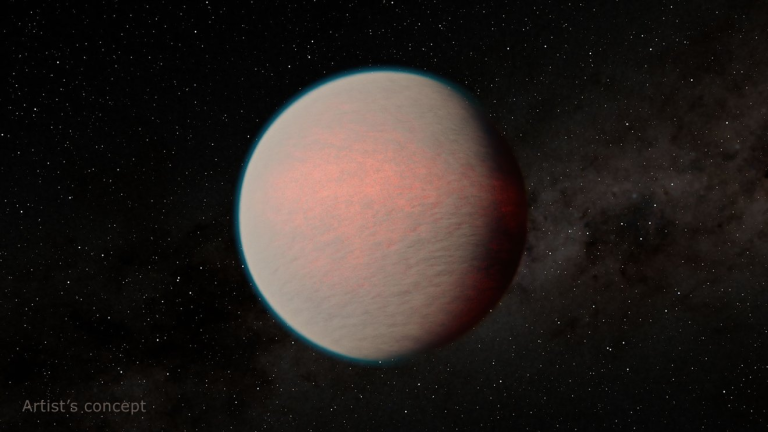
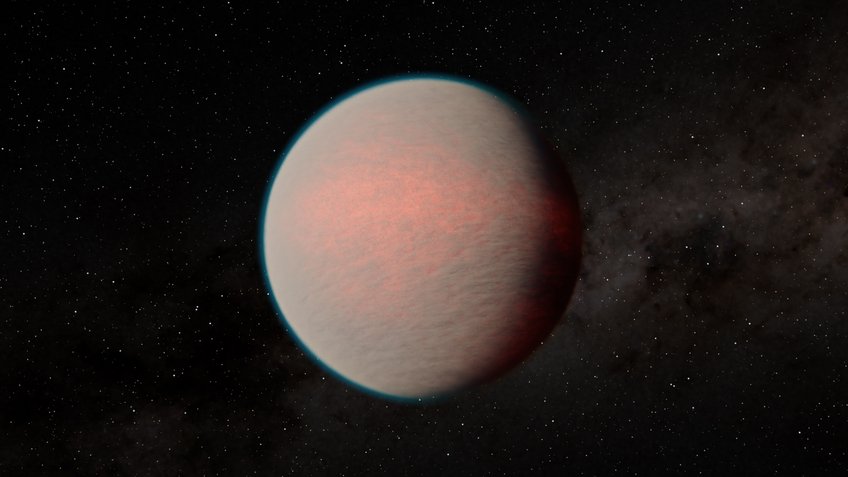
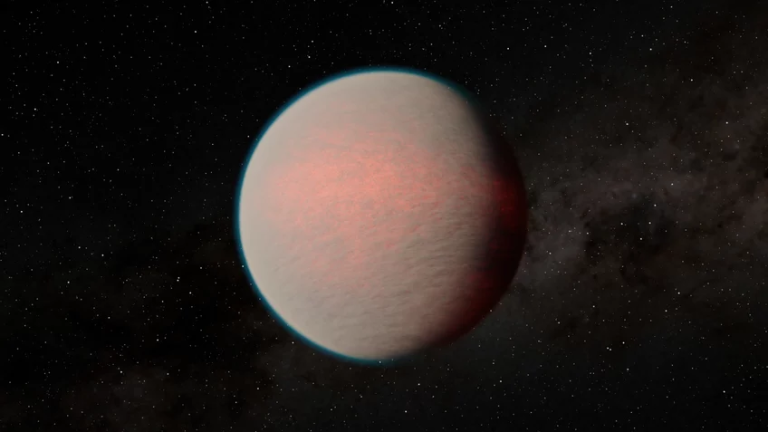
This artist’s concept depicts the planet GJ 1214 b, a “mini-Neptune” with what is likely a steamy, hazy atmosphere. A new study based on observations by NASA’s Webb telescope provides insight into this type of planet, the most common in the galaxy.
Credit: NASA/JPL-Caltech/R. Hurt (IPAC)

A science team gains new insight into the atmosphere of a “mini-Neptune,” a class of planet common in the galaxy but about which little is known.

NASA’s James Webb Space Telescope has observed a distant planet outside our solar system – and unlike anything in it – to reveal what is likely a highly reflective world with a steamy atmosphere. It’s the closest look yet at the mysterious world, a “mini-Neptune” that was largely impenetrable to previous observations.

And while the planet, called GJ 1214 b, is too hot to harbor liquid-water oceans, water in vaporized form still could be a major part of its atmosphere.

“The planet is totally blanketed by some sort of haze or cloud layer,” said Eliza Kempton, a researcher at the University of Maryland and lead author of a new paper, published in Nature, on the planet. “The atmosphere just remained totally hidden from us until this observation.” She noted that, if indeed water-rich, the planet could have been a “water world,” with large amounts of watery and icy material at the time of its formation.

To penetrate such a thick barrier, the research team took a chance on a novel approach: In addition to making the standard observation – capturing the host star’s light that has filtered through the planet’s atmosphere – they tracked GJ 1214 b through nearly its entire orbit around the star.

The observation demonstrates the power of Webb’s Mid-Infrared Instrument (MIRI), which views wavelengths of light outside the part of the electromagnetic spectrum that human eyes can see. Using MIRI, the research team was able to create a kind of “heat map” of the planet as it orbited the star. The heat map revealed – just before the planet’s orbit carried it behind the star, and as it emerged on the other side – both its day and night sides, unveiling details of the atmosphere’s composition.

“The ability to get a full orbit was really critical to understand how the planet distributes heat from the day side to the night side,” Kempton said. “There’s a lot of contrast between day and night. The night side is colder than the day side.” In fact, the temperatures shifted from 535 to 326 degrees Fahrenheit (from 279 to 165 degrees Celsius).

Such a big shift is only possible in an atmosphere made up of heavier molecules, such as water or methane, which appear similar when observed by MIRI. That means the atmosphere of GJ 1214 b is not composed mainly of lighter hydrogen molecules, Kempton said, which is a potentially important clue to the planet’s history and formation – and perhaps its watery start.

“This is not a primordial atmosphere,” she said. “It does not reflect the composition of the host star it formed around. Instead, it either lost a lot of hydrogen, if it started with a hydrogen-rich atmosphere, or it was formed from heavier elements to begin with – more icy, water-rich material.”

Cooler Than Expected

And while the planet is hot by human standards, it is much cooler than expected, Kempton noted. That’s because its unusually shiny atmosphere, which came as a surprise to the researchers, reflects a large fraction of the light from its parent star rather than absorbing it and growing hotter.

The new observations could open the door to deeper knowledge of a planet type shrouded in uncertainty. Mini-Neptunes – or sub-Neptunes as they’re called in the paper – are the most common type of planet in the galaxy, but mysterious to us because they don’t occur in our solar system. Measurements so far show they are broadly similar to, say, a downsized version of our own Neptune. Beyond that, little is known.

“For the last almost decade, the only thing we really knew about this planet was that the atmosphere was cloudy or hazy,” said Rob Zellem, an exoplanet researcher who works with co-author and fellow exoplanet researcher Tiffany Kataria at NASA’s Jet Propulsion Laboratory in Southern California. “This paper has really cool implications for additional detailed climate interpretations – to look at the detailed physics happening inside this planet’s atmosphere.”

The new work suggests the planet might have formed farther from its star, a type known as a red dwarf, then spiraled gradually inward to its present, close orbit. The planet’s year – one orbit around the star – takes only 1.6 Earth days.

“The simplest explanation, if you find a very water-rich planet, is that it formed farther away from the host star,” Kempton said.

Further observations will be needed to pin down more details about GJ 1214 b as well as the formation histories of other planets in the mini-Neptune class. While a watery atmosphere seems likely for this planet, a significant methane component also is possible. And drawing broader conclusions about how mini-Neptunes form will require more of them to be observed in depth.

“By observing a whole population of objects like this, hopefully we can build up a consistent story,” Kempton said.

More About the Mission

The James Webb Space Telescope is the world’s premier space science observatory. Webb will solve mysteries in our solar system, look beyond to distant worlds around other stars, and probe the mysterious structures and origins of our universe and our place in it. Webb is an international program led by NASA with its partners, ESA (European Space Agency), and CSA (Canadian Space Agency).

MIRI was developed through a 50-50 partnership between NASA and ESA. NASA’s Jet Propulsion Laboratory led the U.S. efforts for MIRI, and a multinational consortium of European astronomical institutes contributes for ESA. George Rieke with the University of Arizona is the MIRI science team lead. Gillian Wright is the MIRI European principal investigator. Alistair Glasse with UK ATC is the MIRI instrument scientist, and Michael Ressler is the U.S. project scientist at JPL. Laszlo Tamas with UK ATC manages the European Consortium. The MIRI cryocooler development was led and managed by JPL, in collaboration with Northrop Grumman in Redondo Beach, California, and NASA’s Goddard Space Flight Center in Greenbelt, Maryland. Caltech manages JPL for NASA.

For more information about the Webb mission, visit: https://www.nasa.gov/webb

Calla Cofield
Jet Propulsion Laboratory, Pasadena, Calif.
626-808-2469
[email protected]

By Pat Brennan

A Reluctant Exoplanet Lifts Its Veil – A Bit

0

After almost 15 years of futile efforts, an international team of researchers involving the Max Planck Institute for Astronomy has determined some of the atmosphere’s properties of the exoplanet GJ 1214 b. To this end, astronomers have now measured the infrared radiation of the planet classified as a Mini-Neptune with the MIRI spectrograph of the James Webb Space Telescope (JWST) and evaluated it with the help of model calculations. The results indicate an unusually highly reflective, dense haze in the upper atmosphere and show evidence of water vapour and methane.

Artist’s impression of the exoplanet GJ 1214 b, based on the current results. GJ 1214 b is a warm Mini-Neptune with a perpetual day on one side and eternal night on the other. An unusually reflective haze layer in the upper atmosphere makes it difficult to determine the composition of the sheets below. The planet probably has large amounts of water.
Artist’s impression of the exoplanet GJ 1214 b, based on the current results. GJ 1214 b is a warm Mini-Neptune with a… [more]© NASA/JPL-Caltech/R. Hurt (IPAC)

Our results show that the haze layer of GJ 1214 b must have a composition different from known celestial bodies,” says Maria Steinrueck from the Max Planck Institute for Astronomy (MPIA) in Heidelberg, Germany. She is a co-author of the paper, which appears in the journal Nature, and performed the model calculations essential for evaluating the observations.

A dense, highly reflective veil

The data can only be explained by the researchers’ assumption of a layer in the planet’s upper atmosphere that reflects the radiation from the central star, which GJ 1214 b orbits once in 38 hours, unusually well. Exactly what this layer consists of, however, remains a mystery, as none of the compositions suspected so far provides a satisfactory explanation. At least, the usual candidates have been ruled out.

Neither soot particles nor so-called tholins reflect the star’s radiation sufficiently strongly,” Steinrueck states. The term “tholin”, coined by Carl Sagan, describes a variable mixture of hydrocarbons found on Saturn’s moon Titan and other bodies in the Solar System. Presumably, the atmosphere of the primordial Earth also consisted partly of tholins.

Similar to how the ozone layer on Earth reacts with the Sun’s UV radiation, analogous processes could also be responsible for the production of the chemical compounds of the haze found in the upper atmosphere of GJ 1214 b and perhaps many Mini-Neptunes. Intensive research is being carried out in various laboratories to determine which substances these could be. Organic compounds are currently the hottest candidates.

Evidence of water

The new observations with MIRI (Mid-Infrared Instrument) on board JWST for the first time also prove that the atmosphere beyond hydrogen and helium must have a high fraction of heavy elements. This follows from the model calculations that reproduce the measured variation in brightness of the starlight reprocessed by the planet.

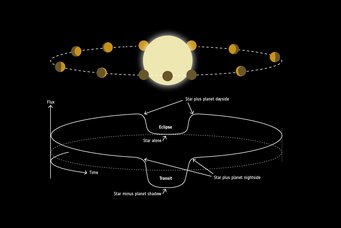
This image illustrates how a star illuminates and heats the day side of a tidally locked planet orbiting in bound rotation. Similar to how we see Venus in the solar system, such a planet shows different fractions of its day and night sides, the phases, during an orbit. In observing GJ 1214 b, astronomers tracked the planet’s signal as a function of the degree of illumination, obtaining data of the entire planet.
This image illustrates how a star illuminates and heats the day side of a tidally locked planet orbiting in bound… [more]© ESA

With their observations, the astronomers have captured a complete orbit of GJ 1214 b and thus measured its surface from all sides – a first for a Mini-Neptune. The light GJ 1214 b receives from its central star serves as a probe. Any interactions of the planet with the starlight will then show up in fluctuating proportions of the planet’s radiation.

The measurement data also indicate the concrete composition of the atmosphere. As already suspected, this planet probably has water, which appears as gaseous vapour. “GJ 1214 b could therefore be a water world,” says Eliza Kempton, professor at the University of Maryland, USA and lead author of the research article. However, the features could also indicate methane gas. A mixture of both is also conceivable. Further observations are therefore needed to clarify the matter.

A planet with eternal day and night

In 2009, astronomers discovered GJ 1214 b, just under 50 light years away, using the transit method. In this method, the planet’s orbit is oriented in such a way that it regularly crosses its central star, and the occultation slightly reduces the star’s brightness. This measurement made it possible to calculate its size of 2.5 to 3 Earth diameters. Its mass is about seven Earth masses, classifying GJ 1214 b as a Mini-Neptune.

This type of exoplanet is the most common one that astronomers find. However, there are no such planets in the Solar System. That is one reason why their nature is poorly known.

GJ 1214 b orbits its central star, GJ 1214, at a distance of about one-seventieth of the distance between the Earth and the Sun. This means that the planet is in a so-called tidally locked rotation. In other words, it takes the same time to orbit the host star as the planet needs to rotate around its axis. Consequently, the host star always illuminates and heats the same side of the planet. Winds carry the air to the opposite hemisphere, where it cools in eternal night.

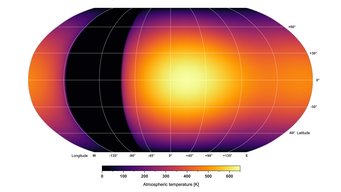
Heat map of the exoplanet GJ 1214 b obtained by analysing the infrared radiation collected by the MIRI spectrograph on the JWST. Like a world map, it shows a projection of the entire surface. The planet always faces the star on the same side. Thus, the star is vertically above the point corresponding to zero longitude and latitude. The temperature is given in Kelvin (0 degrees Celsius = 273.15 Kelvin). It results from the assumption that the measured radiation originates from a completely black body without atmosphere. The actual temperature is modified from the additional atmospheric influence. The black sector -120 degrees longitude indicates a range of low temperature in which the data are too unreliable for a meaningful temperature to be assigned to them.
Heat map of the exoplanet GJ 1214 b obtained by analysing the infrared radiation collected by the MIRI spectrograph on… [more]© Eliza M.-R. Kempton et al. / MPIA

As with Earth’s global climate, the temperature on GJ 1214 b depends on various influences: the luminosity and temperature of the star, the distance of the planet from the star and the properties of the atmosphere. This results in a characteristic thermal radiation of the planet, which the researchers recorded with the MIRI observations. These consist of spectra that split the different parts of the infrared radiation according to their wavelength.

As a result, the astronomers conclude that the haze reflects half of the radiation from the central star without contributing to the heating of the atmosphere. The calculations thus show that GJ 1214 b has an average global temperature of about 230 degrees Celsius (500 Kelvin), which varies by about 115 degrees between day and night.

Breakthrough in planetary research

Scientists have tried several times to determine the composition of GJ 1214 b’s atmosphere by analysing the starlight penetrating its air layers at each transit. This process usually imprints distinct features of the gases on the light. However, previous observations showed nothing. The JWST has now opened a new chapter.

GJ 1214b has been the white whale of exoplanet atmosphere characterisation – the whole community has been chasing it for a long time. It’s great to finally see some of its secrets revealed,” says a delighted Laura Kreidberg. She is a Director at MPIA and heads the Atmospheric Physics of Exoplanets (APEx) department, where Maria Steinrueck conducts research. Kreidberg was among the first to target GJ 1214 b to determine its composition.

These results represent a breakthrough in planetary research. They boost hopes that astronomers have found a tool to systematically study the most common class of exoplanets.

Background information

The MPIA researchers involved in the study are Maria Steinrueck and Sebastian Zieba.

The astronomers observed GJ 1214 b as part of the JWST General Observer (GO) Program 1803, “Unlocking the Mysteries of the Archetype Sub-Neptune GJ 1214b with a Full-Orbit Phase Curve” (PI: Jacob Bean).

The James Webb Space Telescope (JWST) is the world’s leading observatory for space exploration. JWST is an international programme led by NASA with its partners, ESA (European Space Agency) and CSA (Canadian Space Agency).

JWST’s Mid-InfraRed Instrument (MIRI), built by a European consortium of research institutions, is a multi-purpose scientific instrument for infrared wavelengths between 5 and 28 microns. It combines an imaging camera with a spectrograph. With the support of industrial partners, MPIA provided the mechanisms of all wavelength range steering elements, such as filter and grating wheels, and led the electrical design of MIRI.

The following research institutes are involved in this study:

University of Maryland, College Park, USA; University of Chicago, USA; Max Planck Institute for Astronomy, Heidelberg, Germany; Earth and Planets Laboratory, Carnegie Institution for Science, Washington, DC, USA; University of Oxford, UK; University of Michigan, USA; University of Leicester, UK; BAER Institute, NASA Ames Research Center, Moffet Field, USA; Institut Trottier de Recherche sur les Exoplanètes and Département de Physique, Université de Montréal, Canada; Center for Computational Astrophysics, Flatiron Institute, New York, USA; Johns Hopkins Applied Physics Laboratory, Laurel, USA; Steward Observatory, University of Arizona, Tucson, USA; European Space Agency, Space Telescope Science Institute, Baltimore, USA; Leiden Observatory, The Netherlands; AIM, CEA, CNRS, Université Paris-Saclay, Université de Paris, Gif-surYvette, France; Vanderbilt University, Nashville, USA; Center of Excellence in Information Systems, Tennessee State University, Nashville, USA; Lunar and Planetary Laboratory, University of Arizona, Tucson, USA; Eureka Scientific, Inc. , Oakland, USA; NASA Jet Propulsion Laboratory, California Institute of Technology, Pasadena, USA; Johns Hopkins University, Baltimore, USA; School of Earth & Space Exploration, Arizona State University, Tempe, USA; University of California, Santa Cruz, USA

Dr. Markus Nielbock
Press and outreach officer +49 6221 528-134
MPIA press department
Max Planck Institute for Astronomy, Heidelberg, Germany

Dr. Maria E. Steinrueck
+49 6221 528-322
Maria Steinrueck / MPIA
Max Planck Institute for Astronomy, Heidelberg, Germany

Media, Public Invited To Meet Solvers In NASA Space Food Challenge

0
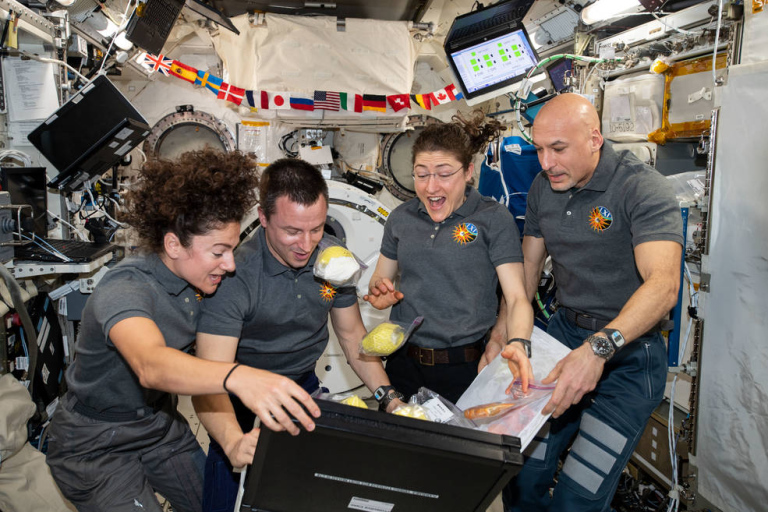
Crew members aboard the International Space Station unpack newly delivered fresh fruit and other goodies in October 2019. From left are NASA flight engineers Jessica Meir, Andrew Morgan, and Christina Koch with ESA Commander Luca Parmitano.
Credits: NASA

NASA will announce the second phase winners of its Deep Space Food Challenge, a global competition to help develop innovative food systems for future spacefarers on long-term exploration missions, on Friday, May 19.

Teams will showcase their ideas during the NYCxDESIGN Festival in New York, a citywide celebration of design. Media and the public are invited to join the teams to learn more about their technologies during multiple events.

Friday, May 19

NASA will reveal the winning Phase 2 teams. The awards event will stream live online beginning at 12 p.m. EDT from the Smart Design studio, Building 127, at the Brooklyn Navy Yard.

Media are invited to attend the awards event from 10 a.m. to 1 p.m. NASA speakers available for interviews in-person and virtually are:

  • Ralph Fritsche, senior project manager for space crop production at NASA’s Kennedy Space Center in Florida
  • Angela Herblet, project manager for the Deep Space Food Challenge at NASA’s Marshall Space Flight Center in Huntsville, Alabama
  • Denise Morris, program manager for Centennial Challenges at NASA Marshall

Reporters interested in covering the event in person must RSVP by 10 a.m., Thursday, May 18, to Molly Porter at [email protected] This event is not open to the public for in-person attendance.

Saturday, May 20

Teams taking part in the challenge will showcase some of their food production technologies beginning at 12 p.m. The event is free and open to the public through 4 p.m. Members of the media and public interested in attending must reserve a spot.

From 5 p.m. to 6:30 p.m., NASA speakers will take part in a panel discussion hosted by Smart Design and focused on design, innovation, and the future of food. Space is limited, and registration is available online until May 16.

Members of the media may also register for both events by emailing Molly Porter at [email protected].

More About NASA’s Challenge

The Deep Space Food Challenge calls solvers around the world to invent new ways of producing food for future astronauts traveling farther from Earth than ever before. Since January 2021, teams have been designing and building new food tech solutions that would help keep astronauts safe, healthy, and productive for missions lasting years at a time.

The competition is a first-of-its-kind collaboration between NASA and CSA (Canadian Space Agency). On April 27, CSA awarded prizes to the teams advancing to the final stage of the Canadian challenge, which runs in parallel with NASA’s.

The not-for-profit Methuselah Foundation administers the competition for U.S. and international teams through a Space Act Agreement with NASA. The Deep Space Food Challenge is part of NASA’s Prizes, Challenges, and Crowdsourcing program in the agency’s Space Technology Mission Directorate.

For more information on the challenge, visit: https://www.nasa.gov/spacefoodchallenge

Sarah Frazier
Headquarters, Washington
202-358-1112
[email protected]

Molly Porter
Marshall Space Flight Center, Huntsville, Ala.
256-424-5158
[email protected]

By Roxana Bardan

Webb Looks For Fomalhaut’s Asteroid Belt And Finds Much More

0
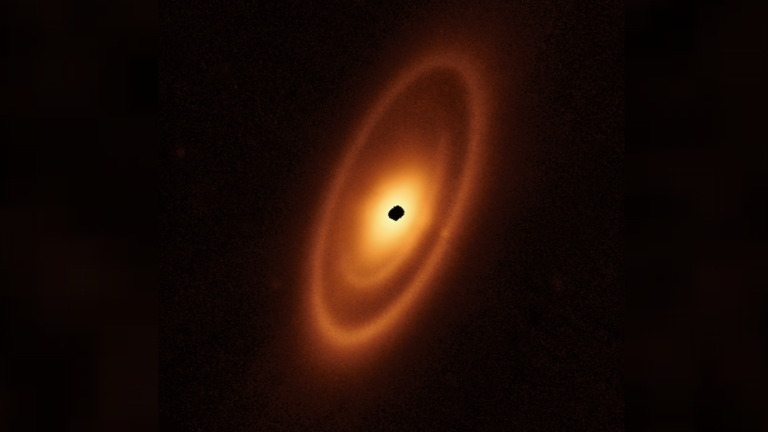
This image of the dusty debris disk surrounding the young star Fomalhaut is from Webb’s Mid-Infrared Instrument (MIRI). It reveals three nested belts extending out to 14 billion miles (23 billion kilometers) from the star. The inner belts were revealed by Webb for the first time. Credit: NASA, ESA, CSA, A. Gáspár (University of Arizona). Image processing: A. Pagan (STScI)

Astronomers used the NASA/ESA/CSA James Webb Space Telescope to image the warm dust around a nearby young star, Fomalhaut, in order to study the first asteroid belt ever seen outside of our Solar System in infrared light. But to their surprise, they found that the dusty structures are much more complex than the asteroid and Kuiper dust belts of our Solar System.

Overall, there are three nested belts extending out to 23 billion kilometres from the star – that’s 150 times the distance of Earth from the Sun. The scale of the outermost belt is roughly twice the scale of our Solar System’s Kuiper Belt of small bodies and cold dust beyond Neptune. The inner belts – which had never been seen before – were revealed by Webb for the first time.

The belts encircle the young hot star, which can be seen with the naked eye as the brightest star in the southern constellation Piscis Austrinus. The dusty belts are the debris from collisions of larger bodies, analogous to asteroids and comets, and are frequently described as ‘debris discs’.

“I would describe Fomalhaut as the archetype of debris discs found elsewhere in our galaxy, because it has components similar to those we have in our own planetary system,” said András Gáspár of the University of Arizona in Tucson and lead author of a new paper describing these results. “By looking at the patterns in these rings, we can actually start to make a little sketch of what a planetary system ought to look like – if we could actually take a deep enough picture to see the suspected planets.”

The NASA/ESA Hubble Space Telescope and ESA’s Herschel Space Observatory, as well as the Atacama Large Millimeter/submillimeter Array (ALMA), have previously taken sharp images of the outermost belt. However, none of them found any structure interior to it. The inner belts have been resolved for the first time by Webb in infrared light.

“Where Webb really excels is that we’re able to physically resolve the thermal glow from dust in those inner regions. So you can see inner belts that we could never see before,” said Schuyler Wolff, another member of the team at the University of Arizona.

Hubble, ALMA, and Webb are tag-teaming to assemble a holistic view of the debris discs around a number of stars. “With Hubble and ALMA, we were able to image a bunch of Kuiper Belt analogues, and we’ve learned loads about how outer discs form and evolve,” said Wolff. “But we need Webb to allow us to image a dozen or so asteroid belts elsewhere. We can learn just as much about the inner warm regions of these discs as Hubble and ALMA taught us about the colder outer regions.”

These belts are most likely shaped by the gravitational forces produced by unseen planets. Similarly, inside our Solar System Jupiter corrals the asteroid belt, the inner edge of the Kuiper Belt is sculpted by Neptune, and the outer edge could be shepherded by as-yet-unseen bodies beyond it. As Webb images more systems, we will learn about the configurations of their planets.

Fomalhaut’s dust ring was discovered in 1983 in observations made by NASA’s Infrared Astronomical Satellite (IRAS). The existence of the ring has also been inferred from previous and longer-wavelength observations using submillimetre telescopes on Maunakea, Hawai‘i, NASA’s Spitzer Space Telescope, and Caltech’s Submillimeter Observatory.

“The belts around Fomalhaut are kind of a mystery novel: Where are the planets?” said George Rieke, another team member and US science lead for Webb’s innovative Mid-Infrared Instrument (MIRI), which made these observations. “I think it’s not a very big leap to say there’s probably a really interesting planetary system around the star.”

“We definitely didn’t expect the more complex structure with the second intermediate belt and then the broader asteroid belt,” added Wolff. “That structure is very exciting because any time an astronomer sees a gap and rings in a disc, they say, ‘There could be an embedded planet shaping the rings!’”

This image of the Fomalhaut system, captured by Webb’s Mid-Infrared Instrument (MIRI), shows compass arrows, scale bar, and color key for reference. Labels indicate the various structures. At right, a great dust cloud is highlighted and pullouts show it in two infrared wavelengths: 23 and 25.5 microns. The north and east compass arrows show the orientation of the image on the sky. Note that the relationship between north and east on the sky (as seen from below) is flipped relative to direction arrows on a map of the ground (as seen from above). The scale bar is labeled in astronomical units, which is the average distance between the Earth and the Sun, or 93 million miles. The outer ring is about 240 astronomical units in diameter. This image shows invisible mid-infrared wavelengths of light that have been translated into visible-light colors. The color key and labels show which MIRI filters were used when collecting the light. Credit: NASA, ESA, CSA, A. Gáspár (University of Arizona). Image processing: A. Pagan (STScI)

Webb also imaged what Gáspár dubs ‘the great dust cloud’, which may be evidence for a collision occurring in the outer ring between two protoplanetary bodies. This is a different feature from the suspected planet first seen inside the outer ring by Hubble in 2008. Subsequent Hubble observations showed that by 2014 the object had vanished. A plausible interpretation is that this newly discovered feature, like the earlier one, is an expanding cloud of very fine dust particles from two icy bodies that smashed into each other.

The idea of a protoplanetary disc around a star goes back to the late 1700s when astronomers Immanuel Kant and Pierre-Simon Laplace independently developed the theory that the Sun and planets formed from a rotating gas cloud that collapsed and flattened under gravity. Debris discs develop later, following the formation of planets and dispersal of the primordial gas in the systems. They show that small bodies like asteroids are colliding catastrophically and pulverising their surfaces into huge clouds of dust and other debris. Observations of dust provide unique clues to the structure of an exoplanetary system, reaching down to Earth-sized planets and even asteroids, which are much too small to see individually.

“This very exciting result highlights the unique power of MIRI to study the structures carved by planets in the innermost regions of circumstellar discs,” adds Gillian Wright, European principal investigator for MIRI and Director of the UK Astronomy Technology Centre (UKATC).

The team’s results are being published in the journal Nature Astronomy.

Spatially resolved imaging of the inner Fomalhaut disk using JWST/MIRI, Nature Astronomy (open access)

More information
Webb is the largest, most powerful telescope ever launched into space. Under an international collaboration agreement, ESA provided the telescope’s launch service, using the Ariane 5 launch vehicle. Working with partners, ESA was responsible for the development and qualification of Ariane 5 adaptations for the Webb mission and for the procurement of the launch service by Arianespace. ESA also provided the workhorse spectrograph NIRSpec and 50% of the mid-infrared instrument MIRI, which was designed and built by a consortium of nationally funded European Institutes (The MIRI European Consortium) in partnership with JPL and the University of Arizona.

Webb is an international partnership between NASA, ESA and the Canadian Space Agency (CSA).

Contact:
ESA Media relations
[email protected]

By Keith Cowing
Source SpaceRef