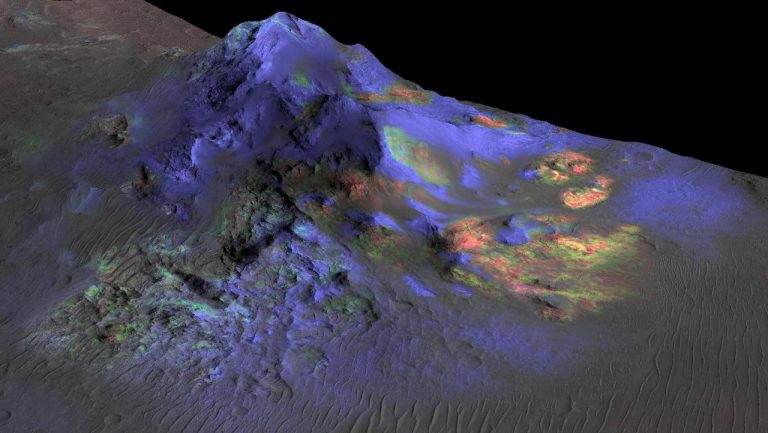
Researchers have found deposits of impact glass preserved in Martian craters, including Alga Crater, shown here. The detection is based on data from the Compact Reconnaissance Imaging Spectrometer for Mars CRISM on NASA Mars Reconnaissance Orbiter. Credit: NASA/JPL-Caltech/JHUAPL/Univ. of Arizona
One of six instruments aboard the agency’s Mars Reconnaissance Orbiter, CRISM produced global maps of minerals on the Red Planet’s surface.
NASA switched off one of its oldest instruments studying Mars on April 3, a step that’s been planned since last year. Riding aboard NASA’s Mars Reconnaissance Orbiter, CRISM, or the Compact Reconnaissance Imaging Spectrometer for Mars, revealed minerals such as clays, hematite (otherwise known as iron oxide), and sulfates across the Red Planet’s surface for 17 years.
Led by Johns Hopkins University’s Applied Physics Laboratory (APL) in Laurel, Maryland, CRISM produced high-resolution mineral maps crucial in helping scientists understand how lakes, streams, and groundwater shaped the planet billions of years ago. The instrument’s two detectors saw in visible and infrared light, spotting the chemical fingerprints, or spectra, of minerals that form in the presence of water.
“Shutting down CRISM marks the end of an era for us,” said Rich Zurek, MRO’s project scientist at NASA’s Jet Propulsion Laboratory, which manages the mission. “It’s revealed where and how water transformed ancient Mars. The CRISM data products will be mined by scientists for years to come.”
NASA has also relied on CRISM maps to figure out where the most scientifically interesting landing sites are, as with Gale Crater, which Curiosity has been exploring since 2012, and Jezero Crater, where NASA’s Perseverance rover recently collected its 19th sample.
In order to study infrared light, which is radiated by warm objects and is invisible to the human eye, CRISM relied on cryocoolers to isolate one of its spectrometers from the warmth of the spacecraft. Three cryocoolers were used in succession, and the last completed its lifecycle in 2017.
The CRISM team then looked for ways to continue producing data without the use of cryocoolers, deciding to create two new, nearly global maps. The first of these relied on data previously collected by the infrared spectrometer and by the second spectrometer on the instrument, which viewed a more limited range of minerals in visible and near-infrared light. This first map of water-related minerals, containing 5.6 gigapixels, has a spatial resolution of 600 feet (180 meters) per pixel and covers 86% of Mars. Scientists began releasing it in sections last year.
For the second map, CRISM’s remaining spectrometer gathered data at an even higher spatial resolution (300 feet, or 90 meters per pixel). This map is slated for release in September.
“With these new maps, researchers can easily tie mineral deposits observed in high-resolution images to regional scale trends, landscape features, and geology,” said Kim Seelos, CRISM’s deputy principal investigator at APL. “Even though the CRISM investigation is formally coming to a close, I hope and expect to see many future scientists taking advantage of CRISM data for their research.”
NASA’s JPL, a division of Caltech in Pasadena, California, manages MRO for NASA’s Science Mission Directorate in Washington.
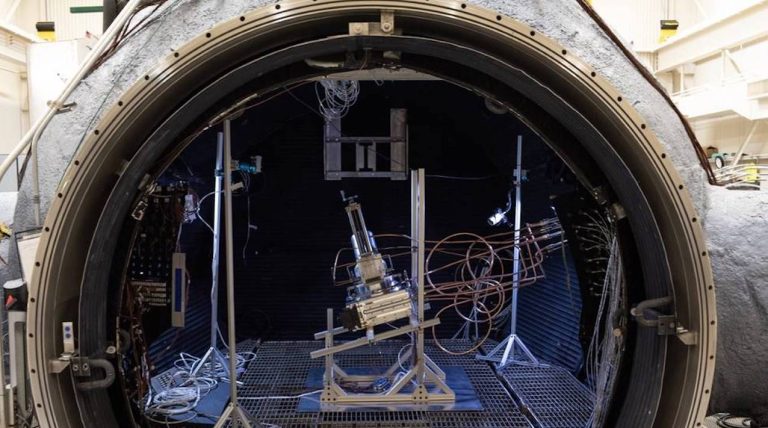
A high-powered laser and carbothermal reactor located inside the testing chamber of NASA’s Carbothermal Reduction Demonstration (CaRD) at NASA’s Johnson Space Center. Credits: NASA/Brian Sacco
As NASA works toward sending astronauts to the Moon through Artemis missions, one of the agency’s primary goals is to establish a long-term presence on the lunar surface. Resources like oxygen are crucial building blocks for making that vision a reality. In addition to using oxygen for breathing, it can also be used as a propellant for transportation, helping lunar visitors stay longer and venture farther.
During a recent test, scientists at NASA’s Johnson Space Center in Houston successfully extracted oxygen from simulated lunar soil. Lunar soil refers to the fine-grained material covering the Moon’s surface. This was the first time that this extraction has been done in a vacuum environment, paving the way for astronauts to one day extract and use resources in a lunar environment, called in-situ resource utilization.
NASA’s Carbothermal Reduction Demonstration (CaRD) team conducted the test in conditions similar to those found on the Moon by using a special spherical chamber with a 15-foot diameter called the Dirty Thermal Vacuum Chamber. The chamber is considered “dirty” because unclean samples can be tested inside.
The team used a high-powered laser to simulate heat from a solar energy concentrator and melted the lunar soil simulant within a carbothermal reactor developed for NASA by Sierra Space Corp., of Broomfield, Colorado. A carbothermal reactor is where the process of heating and extracting the oxygen takes place. Carbothermal reduction has been used for decades on Earth to produce items like solar panels and steel by producing carbon monoxide or dioxide using high temperatures.
After the soil was heated, the team was able to detect carbon monoxide using a device called the Mass Spectrometer Observing Lunar Operations (MSolo). A similar device will fly on two upcoming exploration missions to the Moon’s South Pole – the Polar Resources Ice Mining Experiment-1 in 2023 that will help scientists search for water, and NASA’s Volatiles Investigating Polar Exploration Rover (VIPER) in November 2024 that will explore Mons Mouton, a large flat-topped mountain, to get a close-up view of the location and concentration of water ice and other potential resources.
“This technology has the potential to produce several times its own weight in oxygen per year on the lunar surface, which will enable a sustained human presence and lunar economy,” said Aaron Paz, NASA senior engineer and CaRD project manager at Johnson.
To apply this process to oxygen production on the Moon, a carbothermal reactor needs to be able to hold pressure to keep gases from escaping to space, while still allowing lunar material to travel in and out of the reaction zone. Operating the reactor in a vacuum environment for the CaRD test simulated the conditions at the lunar surface and increased the technical readiness level of the reactor to a six, which means the technology has a fully functional prototype or representational model and is ready to be tested in space.
“Our team proved the CaRD reactor would survive the lunar surface and successfully extract oxygen,” said Anastasia Ford, NASA engineer and CaRD test director at Johnson. “This is a big step for developing the architecture to build sustainable human bases on other planets.”
The Game Changing Development (GCD) program within the Science Technology Mission Directorate (STMD) sponsored the test in order to build the technology needed to extract oxygen from lunar soil, which was identified as a critical technology gap.
CaRD is part of STMD’s Lunar Surface Innovation Initiative (LSII). Through LSII, NASA is developing the essential capabilities required for humans and systems to successfully live and operate in multiple environments on the lunar and other planetary body surfaces.
The same technology that was proved by the CaRD test could be applied to Artemis missions, and one day to journeys deeper into our solar system. With the successful completion of this demonstration test, NASA has established that oxygen can be extracted from existing lunar material to provide humans with resources critical for survival and transportation on extraterrestrial worlds.
Through Artemis missions, NASA will land the first woman and the first person of color on the surface of the Moon, paving the way for a long-term lunar presence and serving as a steppingstone for astronauts on the way to Mars.
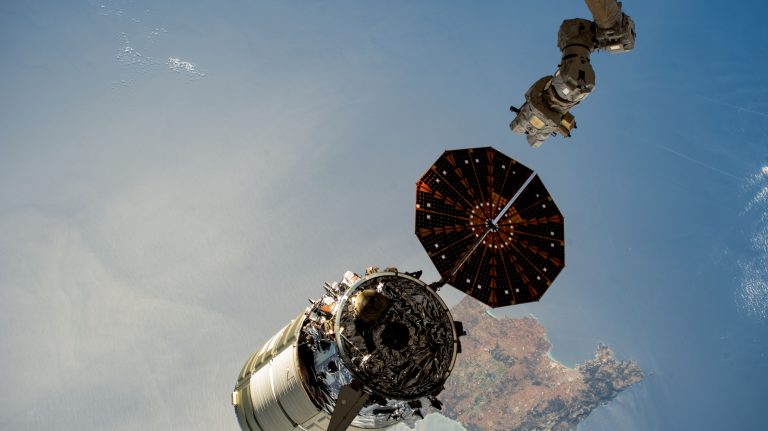
iss069e004822 (April 21, 2023) — The Cygnus space freighter from Northrop Grumman is pictured moments after its release from the Canadarm2 robotic arm as the International Space Station orbited 262 miles above the Mediterranean Sea near the Spanish island of Mallorca.
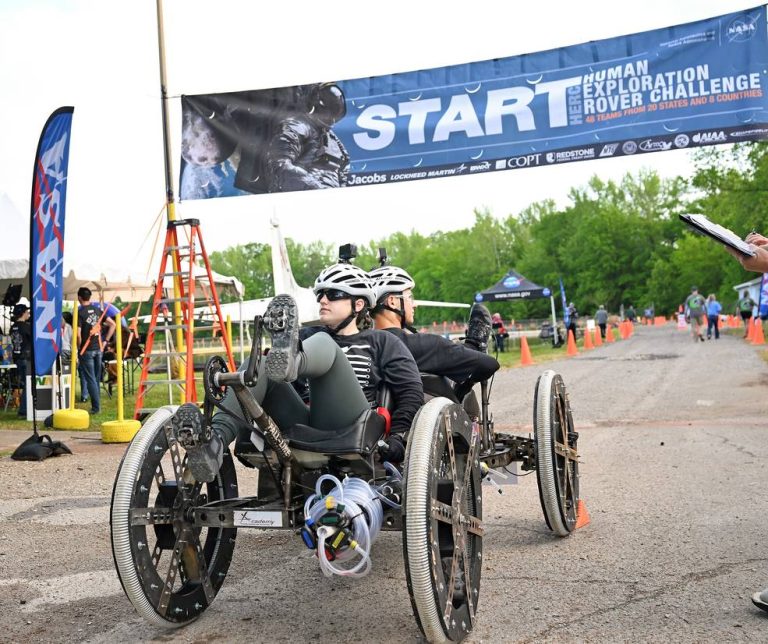
Students from the Academy of Arts, Careers, and Technology in Reno, Nevada, compete during NASA’s 2023 Human Exploration Rover Challenge April 21-22, near NASA’s Marshall Space Flight Center, in Huntsville, Alabama. Credits: NASA/Charles Beason
NASA has announced the winners of the 2023 Human Exploration Rover Challenge (HERC) with Escambia High School in Pensacola, Florida, winning first place in the high school division, and the University of Alabama in Huntsville, capturing the college and university title. The complete list of award winners are as follows:
High School Division
First Place: Escambia High School, Pensacola, Florida
Second Place: Parish Episcopal School, Dallas
Third Place: Escola Estadual de Ensino Médio Frei Plácido, Bagé, Rio Grande do Sul, Brazil
College/University Division
First Place: University of Alabama in Huntsville
Second Place: Owensboro Community and Technical College, Owensboro, Kentucky
Third Place: Ohio Northern University, Ada, Ohio
Ingenuity Award
Tecnológico de Monterrey – Cuernavaca, Xochitepec, Morelos, Mexico
Phoenix Award
High School Division: East Central High School, Moss Point, Mississippi
College/University Division: University of South Alabama, Mobile
Task Challenge Award
High School Division: Academy of Arts, Careers, and Technology, Reno, Nevada
College/University Division: Owensboro Community and Technical College, Owensboro, Kentucky
Project Review Award
High School Division: Academy of Arts, Careers, and Technology, Reno, Nevada
College/University Division: Birla Institute of Technology and Science, Pilani, Rajasthan, India
Featherweight Award
Rhode Island School of Design, Providence
Safety Award
High School Division: McKinley Technology High School, Washington, D.C.
Tecnológico de Monterrey – Cuernavaca, Xochitepec, Morelos, Mexico
Jeff Norris and Joe Sexton Memorial Pit Crew Award
High School Division: Liceo Científico Dr. Miguel Canela Lázaro, Salcedo, Hermanas Mirabal Province, Dominican Republic
College/University Division: Instituto Especializado de Estudios Superiores Loyola. San Cristobal, Dominican Republic
Team Spirit Award
Instituto Tecnológico de Santo Domingo, Dominican Republic
Most Improved Performance Award
High School Division: Escambia High School, Pensacola, Florida
College/University Division: Instituto Tecnológico de Santo Domingo, Dominican Republic
Social Media Award
High School Division: Young Tinker Educational Foundation, Bhubaneswar, Odisha, India
College/University Division: KIET Group of Institutions, Ghaziabad, Uttar Pradesh, India
STEM Engagement Award
High School Division: Parish Episcopal School, Dallas
College/University Division: Universidad Nacional de Ingeniería, Rimac, Peru
Students from Alabama A&M University in Huntsville, compete during NASA’s 2023 Human Exploration Rover Challenge April 21-22, near NASA’s Marshall Space Flight Center, in Huntsville, Alabama. Credits: NASA/Charles Beason
The annual engineering competition – one of NASA’s longest standing challenges – held its concluding event Friday, April 21 to Saturday, April 22, at the U.S. Space & Rocket Center in Huntsville, Alabama, near NASA’s Marshall Space Flight Center.
More than 500 students from around the world participated during HERC’s 29th anniversary competition. Student teams represented 16 states, the District of Columbia, and Puerto Rico, as well as the countries of Bolivia, Brazil, Colombia, Dominican Republic, India, Mexico, Peru, and Singapore. Teams were awarded points based on navigating a half-mile obstacle course, conducting mission-specific task challenges, and completing multiple safety and design reviews with NASA engineers.
“Throughout this eight-month-long competition, students learn NASA’s engineering design cycle by submitting detailed reports and passing critical reviews by NASA engineers,” said Kevin McGhaw, director, NASA’s Office of STEM Engagement Southeast Region. “By operating within real-world constraints, students gain authentic knowledge to better imagine and develop innovative technologies which could be used in future NASA missions.”
HERC is one of NASA’s eight Artemis Student Challenges reflecting the goals of the Artemis program, which seeks to land the first woman and first person of color on the Moon while establishing establish a long-term presence for science and exploration.
NASA uses such challenges to encourage students to pursue degrees and careers in the STEM fields of science, technology, engineering, and mathematics.
“NASA has a vested interest in providing students access to complex engineering challenges,” said Vemitra Alexander, HERC activity lead for NASA’s Office of STEM Engagement. “Developing a skilled and diverse workforce in STEM is critical to maintaining our nation’s success in scientific research and space exploration.”
HERC is managed by NASA’s Southeast Regional Office of STEM Engagement at NASA Marshall. Since its inception in 1994, more than 15,000 students have participated in HERC – with many former students now working at NASA, or within the aerospace industry.
Replays of the competition are available on NASA Marshall YouTube and NASA’s HERC Facebook page.
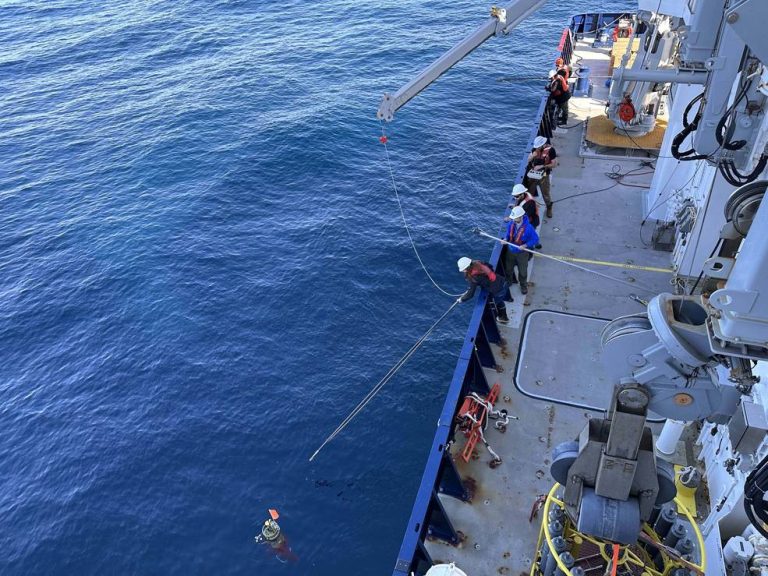
The Sally Ride, shown here, is part of NASA’s S-MODE (Sub-Mesoscale Ocean Dynamics Experiment) — a plane, ship, and ocean glider campaign to better understand the ocean’s impact on Earth’s climate. Credits: NASA
This spring, NASA’s S-MODE (Sub-Mesoscale Ocean Dynamics Experiment) began conducting its final plane, ship, and ocean glider campaign to better understand the ocean’s impact on Earth’s climate.
NASA’s Ames Research Center in California’s Silicon Valley invites media to interview S-MODE experts Erin Czech, Dr. J. Thomas Farrar, and Dr. Dragana Perkovic-Martin on Thursday, April 27, to talk about their contributions to this suborbital investigation.
In April, the research vessel Sally Ride set sail from San Diego to a science operations area about 150 miles off the coast of San Francisco, accompanied by a fleet of autonomous marine research vehicles. Since then, three research aircraft have flown repeatedly overhead to map surface currents and winds, sea surface temperature, and ocean color, while the vessel and the autonomous vehicles collect in situ data from the ocean below.
Data from the air and sea vehicles will help improve Earth system models, and complement another NASA program: SWOT (Surface Water and Ocean Topography), which is a satellite mission to make the first global survey of Earth’s surface water.
Media requesting an interview with Czech, Dr. Farrar, or Dr. Perkovic-Martin should email the Ames Office of Communications at [email protected] or call the newsroom at 650-604-4789.
Czech is a project manager for the Earth Science Project Office at Ames and manages the S-MODE mission.
Dr. Farrar is the S-MODE principal investigator, responsible for establishing the scientific priorities of the investigation and for the overall planning and execution of the program. Farrar is a senior scientist in the Department of Physical Oceanography at Woods Hole Oceanographic Institution.
Dr. Perkovic-Martin is the team lead of the DopplerScatt instrument at NASA’s Jet Propulsion Laboratory in Southern California. DopplerScatt provides simultaneous measurements of ocean vector winds and surface currents estimates.
A media resource reel is available upon request.
Learn more about the investigation at: https://espo.nasa.gov/s-mode/
The Artemis Accords describe a shared vision for principles, grounded in the Outer Space Treaty of 1967, to create a safe and transparent environment which facilitates exploration, science, and commercial activities for all of humanity to enjoy. Credits: NASA
The Czech Republic is expected to sign the Artemis Accords during a ceremony at NASA Headquarters in Washington Wednesday, May 3.
The agency will provide live coverage of the signing ceremony starting 10 a.m. EDT on NASA Television, the NASA app, and on the agency’s website at: https://www.nasa.gov/live
NASA Administrator Bill Nelson will participate in the signing ceremony for the agency and Foreign Minister Jan Lipavský will sign on behalf of the Czech Republic. Acting Assistant Secretary Jennifer R. Littlejohn and Czech Ambassador to the United States Miloslav Stašek will also take part in the ceremony.
Media interested in attending in person must RSVP no later than 8 a.m. Wednesday, May 3, to Abbey Donaldson at: [email protected].
The Artemis Accords establish a practical set of principles to guide space exploration cooperation among nations, including those participating in NASA’s Artemis program.
NASA, in coordination with the U.S. Department of State, announced the establishment of the Artemis Accords in 2020 along with the original signatories. The Artemis Accords reinforce and implement the 1967 Outer Space Treaty. They also reinforce the commitment by the United States and partner nations to the Registration Convention, the Rescue and Return Agreement, as well as best practices and norms of responsible behavior that NASA and its partners have supported, including the public release of scientific data.
Learn more about the Artemis Accords at: https://www.nasa.gov/artemisaccords
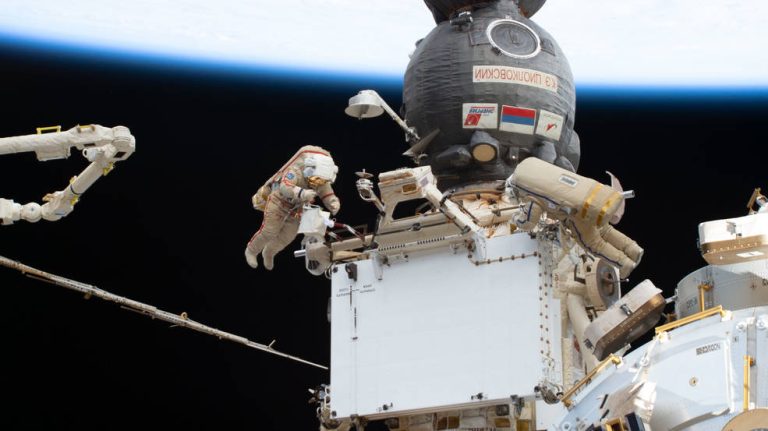
Roscosmos cosmonauts Sergey Prokopyev and Dmitri Petelin conduct a six-hour and 25-minute spacewalk in their Orlan spacesuits to transfer a radiator from the Rassvet module to the Nauka multipurpose laboratory module for future installation. The duo is pictured tethered to the Rassvet module with the Soyuz MS-22 crew ship docked at top. Credits: NASA
NASA will provide live coverage as two Roscosmos cosmonauts conduct two spacewalks in May outside the International Space Station to relocate hardware from the Rassvet module to the new Nauka multipurpose laboratory module.
Follow each spacewalk on NASA Television, the NASA app, and the agency’s website at: https://www.nasa.gov/live
During the spacewalks, Expedition 69 cosmonauts Sergey Prokopyev and Dmitri Petelin will venture outside the Poisk airlock Wednesday, May 3 and Friday, May 12, to help in transfer and install of an experiment airlock to Nauka and deploy a radiator to provide module cooling. The airlock and the radiator attached to Rassvet were launched on the space shuttle Atlantis STS-132 mission in May 2010. The radiator and the airlock will be robotically transferred by ESA’s (European Space Agency) robotic arm on Nauka with those movements operated by cosmonaut Andrey Fedyaev inside the orbital complex.
The content and coverage times of the spacewalks are (all times EDT):
Wednesday, May 3
3:30 p.m. – NASA TV coverage begins for a spacewalk to move an experiment airlock from Rassvet to Nauka.
Friday, May 12
11:30 a.m. – NASA TV coverage begins for a spacewalk to deploy a radiator on Nauka and connect mechanical, electrical, and hydraulic lines.
The spacewalks will be the fifth and sixth for Prokopyev, who will wear the Orlan spacesuit with the red stripes for all of the spacewalks and the third and fourth for Petelin, who will wear the spacesuit with the blue stripes.
Learn more about the International Space Station and its crew at: https://www.nasa.gov/station
Joshua Finch Headquarters, Washington 202-358-1100 [email protected]
Sandra Jones Johnson Space Center, Houston 281-483-5111 [email protected]
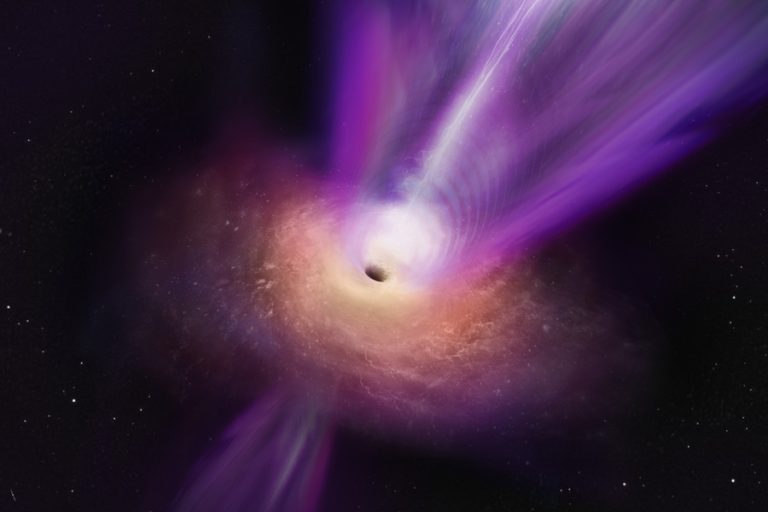
In this artist’s conception, a massive jet is seen rising up from the center of the black hole at the core of the M87 galaxy. The observations on which this illustration is based represent the first time that the jet and the black hole shadow have been imaged together, giving scientists new insights into how black holes can launch these powerful jets. Credits: Image: S. Dagnello (NRAO/AUI/NSF)
In 2017, astronomers captured the first image of a black hole by coordinating radio dishes around the world to act as a single, planet-sized telescope. The synchronized network, known collectively as the Event Horizon Telescope (EHT), focused in on M87*, the black hole at the center of the nearby Messier 87 galaxy. The telescope’s laser-focused resolution revealed a very thin glowing ring around a dark center, representing the first visual of a black hole’s shadow.
Astronomers have now refocused their view to capture a new layer of M87*. The team, including scientists at MIT’s Haystack Observatory, has harnessed another global web of observatories — the Global Millimeter VLBI Array (GMVA) — to capture a more zoomed-out view of the black hole.
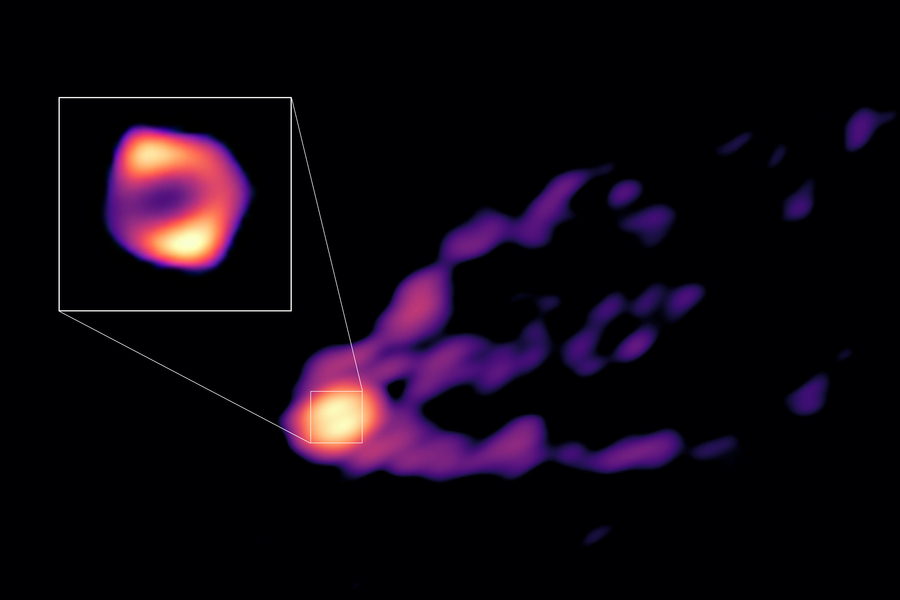
The new images, taken one year after the EHT’s initial observations, reveal a thicker, fluffier ring that is 50 percent larger than the ring that was first reported. This larger ring is a reflection of the telescope array’s resolution, which was tuned to pick up more of the super-hot, glowing plasma surrounding the black hole.
For the first time, scientists could see that part of the black hole’s ring consists of plasma from a surrounding accretion disk — a swirling pancake of white-hot electrons that the team estimates is being heated to billions of degrees Celsius as the plasma streams into the black hole at close to the speed of light.
The images also reveal plasma trailing out from the central ring, which scientists believe to be part of a relativistic jet blasting out from the black hole. The scientists tracked these emissions back toward the black hole and observed for the first time that the base of the jet appears to connect to the central ring.
“This is the first image where we are able to pin down where the ring is, relative to the powerful jet escaping out of the central black hole,” says Kazunori Akiyama, a research scientist at MIT’s Haystack Observatory, who developed the imaging software used to visualize the black hole. “Now we can start to address questions such as how matter is captured by a black hole, and how it sometimes manages to escape.”
Akiyama is part of an international team of astronomers who present the new images, along with their analysis, in a paper today in Nature.
This image shows the jet and shadow of the black hole at the center of the M87 galaxy together for the first time. The observations were obtained with telescopes from the Global Millimetre VLBI Array (GMVA), the Atacama Large Millimeter/submillimeter Array (ALMA), and the Greenland Telescope. Credits:Image: R.-S. Lu (SHAO), E. Ros (MPIfR), S. Dagnello (NRAO/AUI/NSF)
An expanded eye
To capture images of M87*, astronomers used a technique in radio astronomy known as very-long-baseline interferometry, or VLBI. When a radio signal passes by Earth, such as from a black hole’s plasma emissions, radio dishes around the world can pick up the signal. Scientists can then determine the time at which each dish registers the signal, and the distance between dishes, and combine this information in a way that is analogous to the signal being seen by one very large, planet-scale telescope.
When each radio telescope is dialed to a specific frequency, the array as a whole can focus in on a particular feature of the radio signal. The EHT’s network was tuned to 1.3 millimeters — a resolution equivalent to seeing a grain of rice in California, from Massachusetts. At this resolution, astronomers could see past most of the plasma surrounding M87* and image the thinnest ring, thereby accentuating the black hole’s shadow.
In contrast, the GMVA network works at a slightly longer wavelength of 3 millimeters, giving it a slightly lower angular resolution. With this focus, the array could resolve a pumpkin seed, rather than a grain of rice. The network itself consists of about a dozen radio telescopes scattered around the United States and Europe, mostly located along the east-west axis of the Earth. To make a truly planet-sized telescope able to capture a far-off radio signal from M87*, astronomers had to expand the array’s “eye” to the north and south.
To do so, the team involved two additional radio observatories: the Greenland Telescope to the north, and the Atacama Large Millimeter/submillimeter Array (ALMA) to the south. ALMA is an array of 66 radio dishes located in Chile’s Atacama Desert. MIT Haystack scientists, including Principal Research Scientist Lynn Matthews, worked to phase, or synchronize, ALMA’s dishes to work as one powerful and essential part of the GMVA network.
“Having these two telescopes [as part of] the global array resulted in a boost in angular resolution by a factor of four in the north-south direction,” Matthews says. “This greatly improves the level of detail we can see. And in this case, a consequence was a dramatic leap in our understanding of the physics operating near the black hole at the center of the M87 galaxy.”
Tuning in
On April 14 and 15 of 2018, astronomers coordinated the telescopes of the GMVA, along with the Greenland and ALMA observatories, to record radio emissions at a wavelength of 3 millimeters, arriving from the direction of the M87 galaxy. Scientists then used several imaging-processing algorithms, including one developed by Akiyama, to process the GMVA’s observations into visual images.
The resulting pictures reveal more plasma surrounding the black hole, in the form of a larger, fluffier ring. The astronomers could also spot plasma trailing up and out from the central glowing ring.
“The exciting thing is, we still see a central dark area enclosing the black hole, but we also start to see a more extended jet, stemming from this central ring,” Akiyama says.
The astronomers hope to pin down more properties of the black hole’s plasma, such as its temperature profile and composition. For this, they plan to tune the EHT and GMVA to new resolutions. By observing M87* at multiple wavelengths, they can then construct a layered picture, and a more detailed understanding of black holes and the jets they generate.
“If something major happens in the world, you might tune in to both AM and FM to assemble a ‘complete picture’ of the event,” says Geoffrey Crew, a Haystack research scientist who works to support ALMA and the EHT. “This is no different. You might think of the EHT M87* image being made in FM, and this result coming from AM. Both tell a story, and together it is a better story.”
There are several existential threats to humanity that are of great concern, but here are some of the most significant ones:
1. Nuclear War: The use of nuclear weapons in a conflict could lead to catastrophic consequences, not only killing millions of people but also causing a nuclear winter that could cause widespread famine and environmental devastation.
CONTENT LICENSE FREE TO USE UNDER THE CONTENT LICENSE
2. Climate Change: The rise in global temperatures due to human activities, such as burning fossil fuels, deforestation, and industrial activities, is causing severe environmental and social impacts. These include more frequent and intense natural disasters, sea-level rise, crop failures, water scarcity, and the displacement of millions of people.
3. Pandemics: The outbreak of a highly contagious and deadly disease could cause a global pandemic, leading to millions of deaths and disrupting global economies and social structures.
4. Artificial Intelligence: The development of advanced artificial intelligence (AI) could lead to unintended consequences, such as the emergence of superintelligent machines that could outsmart humans, potentially leading to the extinction of the human race.
5. Biotechnology: The development of biotechnology has the potential to create new forms of life or modify existing ones. However, it also poses risks such as the accidental or intentional release of a deadly pathogen, which could lead to a catastrophic pandemic.
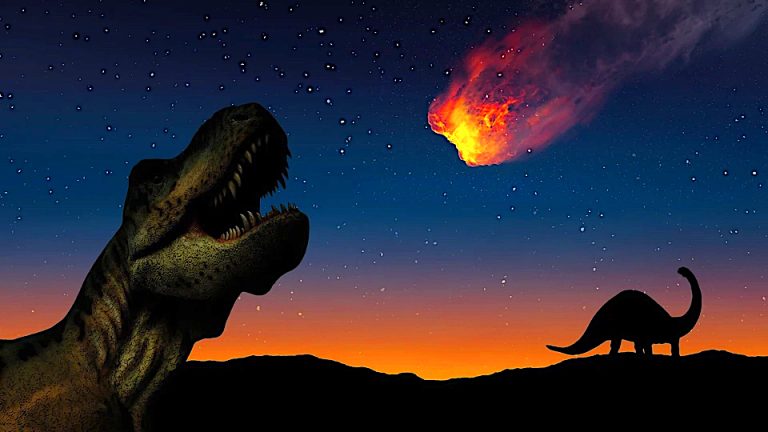
6. Asteroid Impact: An asteroid or comet impact could cause massive destruction and potentially lead to the extinction of the human race, as it did for the dinosaurs.
7. Global Economic Collapse: A global economic collapse could lead to widespread social and political unrest, potentially leading to war and other forms of conflict.
These are just a few of the many existential threats that humanity faces, and it is crucial that we take them seriously and work to mitigate their risks.
Here are some leading ideas for solutions for these:
1. Climate change: One of the primary solutions to address climate change is to reduce greenhouse gas emissions by transitioning to renewable energy sources, such as solar and wind power. This can be done through policies such as carbon taxes or cap-and-trade systems, which incentivize the reduction of emissions. Additionally, efforts to improve energy efficiency, increase public transportation, and shift toward more sustainable land use practices can also help mitigate the effects of climate change.
2. Nuclear war: One of the main solutions to prevent nuclear war is to reduce the number of nuclear weapons and increase transparency and trust between countries. This can be done through diplomatic efforts and international agreements such as the Nuclear Non-Proliferation Treaty (NPT) and arms control negotiations. Additionally, investing in missile defense systems and early warning systems can help prevent accidental launches or misunderstandings.
3. Pandemics:One solution to prevent pandemics is to improve global disease surveillance and response capabilities. This can be done through investments in public health infrastructure, research and development of vaccines and treatments, and international cooperation to detect and respond to outbreaks. Additionally, efforts to reduce the risk of zoonotic diseases, which are transmitted from animals to humans, through measures such as improved animal husbandry practices, can also help prevent pandemics.
4. Artificial intelligence: One solution to address the potential risks of artificial intelligence is to develop ethical guidelines and standards for its development and deployment. This can involve collaboration between policymakers, industry leaders, and experts in ethics, law, and technology to ensure that AI is developed and used in a way that aligns with human values and priorities. Additionally, efforts to increase transparency and accountability for AI systems can help mitigate the risks of unintended consequences or malicious use.
It is important to note that these are complex issues with no easy solutions, and addressing them will require sustained efforts and cooperation on a global scale.
College students in NASA’s Minority University Research and Education Project (MUREP) Innovation and Technology Tech Transfer Idea Competition (MITTIC) will pitch their projects during a “Space Tank” at Space Center Houston on Friday, April 28. The competition will begin at 9:30 a.m. EDT, and the winning team will be announced at 1 p.m.
Interested media must contact Jonas Dino by calling 650-203-3061 or e-mailing [email protected] no later than 5 p.m., Thursday, April 26.
The competition will be streamed live at: http://exploresch.org/SpaceTankCompetition
The Minority University Education Research Project (MUREP) innovation and technology transfer idea competition (MITTIC) invites students, enrolled at minority serving universities and colleges across the country, to develop a product or service based on a NASA technology. Teams selected for the competition are invited to NASA’s Johnson Space Center in Houston for an immersion experience that includes tours of NASA facilities, sessions with subject matter experts to refine their business pitch, and networking opportunities with NASA and industry experts.
Teams selected for the competition are from the following schools:
Lone Star College System in Texas
Fayetteville State University in North Carolina
University of Houston-Clear Lake in Texas
Santa Monica College in California
University of Massachusetts-Boston
Hartnell College in California
University of Texas at Austin
Each of the seven teams will have 20 minutes to pitch and defend its business concept to a panel of NASA and industry subject matter experts. The winning team will be invited to join Team Piezo Pace from the University of St. Thomas, Houston, in a visit to NASA’s Ames Research Center in Silicon Valley, California, for additional look in the innovation and entrepreneurial space.
Products such as cell phone cameras, cordless tools, and memory foam have NASA histories and a NASA student tech transfer competition aims to continue the evolution from a NASA technology to a product to benefit humanity.
According to NASA’s recent economic impact study, the agency generated more than $72 billion in economic activity. Competitions like MITTIC help stimulate future economic activity by engaging the entrepreneurial spirit of the Artemis Generation.
Learn more information about the MITTIC program at: https://microgravityuniversity.jsc.nasa.gov/nasamittic
Katherine Brown Headquarters, Washington 202-358-1288 [email protected]
Sandra Jones Johnson Space Center, Houston 281-483-5111 [email protected]
Illiana Luna Space Center Houston, Houston 281-244-2190 [email protected]