Home Blog Page 70

Hubble Spots A Galaxy With Tendrils

0

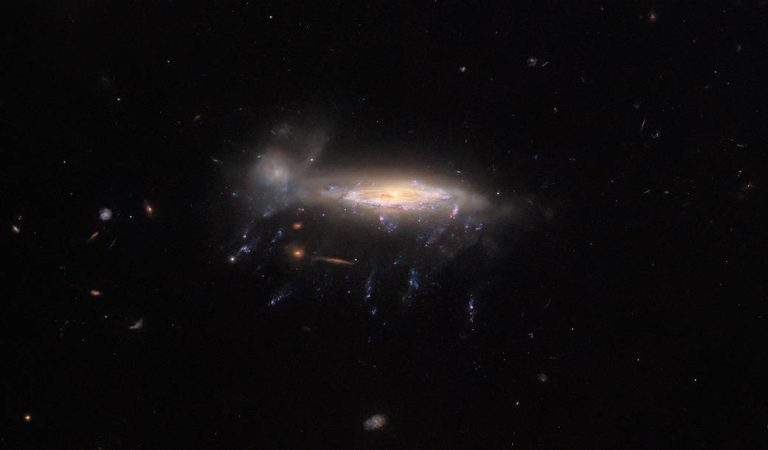
This image taken with the NASA/ESA Hubble Space Telescope shows JO204, a ‘jellyfish galaxy’ so named for the bright tendrils of gas that appear in this image as drifting lazily below JO204’s bright central bulk. The galaxy lies almost 600 million light-years away in the constellation Sextans. Hubble observed JO204 as part of a survey performed with the intention of better understanding star formation under extreme conditions.

While the delicate ribbons of gas beneath JO204 may look like floating jellyfish tentacles, they are in fact the outcome of an intense astronomical process known as ram pressure stripping. Ram pressure is a particular type of pressure exerted on a body when it moves relative to a fluid. An intuitive example is the sensation of pressure you experience when you are standing in an intense gust of wind – the wind is a moving fluid, and your body feels pressure from it. An extension of this analogy is that your body will remain whole and coherent, but the more loosely bound things – like your hair and your clothes – will flap in the wind. The same is true for jellyfish galaxies. They experience ram pressure because of their movement against the intergalactic medium that fills the spaces between galaxies in a galaxy cluster. The galaxies experience intense pressure from that movement, and as a result their more loosely bound gas is stripped away. This gas is mostly the colder and denser gas in the galaxy – gas which, when stirred and compressed by the ram pressure, collapses and forms new stars in the jellyfish’s beautiful tendrils.

Text credit: European Space Agency (ESA)
Image credit: ESA/Hubble & NASA; M. Gullieuszik and the GASP team

Media Contact:

Claire Andreoli
NASA’s Goddard Space Flight CenterGreenbelt, MD
[email protected]

By Andrea Gianopoulos
Source NASA

How Different Were Galaxies In The Early Universe?

0
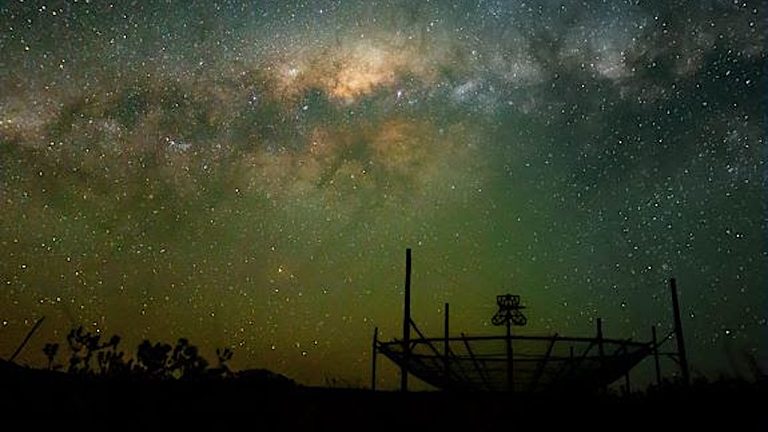
The HERA radio telescope, located in Karoo in South Africa, consists of 350 dishes pointed upward to detect radio waves from the early universe. Credit: Dara Storer

An array of 350 radio telescopes in the Karoo desert of South Africa is getting closer to detecting the “cosmic dawn” — the era after the Big Bang when stars first ignited and galaxies began to bloom.

A team of scientists from across North America, Europe, and South Africa has doubled the sensitivity of a radio telescope called the Hydrogen Epoch of Reionization Array (HERA). With this breakthrough, they hope to peer into the secrets of the early universe.

“Over the last couple of decades, teams from around the world have worked towards a first detection of radio waves from the cosmic dawn. While such a detection remains elusive, HERA’s results represent the most precise pursuit to date,” says Adrian Liu, an Assistant Professor at the Department of Physics and the Trottier Space Institute at McGill University.

The array was already the most sensitive radio telescope in the world dedicated to exploring the cosmic dawn. Now the HERA team has improved its sensitivity by a factor of 2.1 for radio waves emitted about 650 million years after the Big Bang and 2.6 for radio waves emitted about 450 million years after the Big Bang. Their work is described in a paper published in The Astrophysical Journal.

Although the scientists have yet to detect radio emissions from the end of the cosmic dark ages, their results provide clues about the composition of stars and galaxies in the early universe. So far, their data suggest that early galaxies contained very few elements besides hydrogen and helium, unlike our galaxies today. Today’s stars, have a variety of elements, ranging from lithium to uranium, that are heavier than helium.

Ruling out some theories

When the radio dishes are fully online and calibrated, the team hopes to construct a 3D map of the bubbles of ionized and neutral hydrogen – markers for early galaxies – as they evolved from about 200 million years to around 1 billion years after the Big Bang. The map could tell us how early stars and galaxies differed from those we see around us today, and how the universe looked in its adolescence, say the researchers.

According to the researchers, the fact that the HERA team has not yet detected these signals rules out some theories of how stars evolved in the early universe. “Our data suggest that early galaxies were about 100 times more luminous in X-rays than today’s galaxies. The lore was that this would be the case, but now we have actual data that bolsters this hypothesis,” says Liu.

Waiting for a signal

The HERA team continues to improve the telescope’s calibration and data analysis in hopes of seeing those bubbles in the early universe. However, filtering out the local radio noise to see the signals from the early universe has not been easy. “If it’s Swiss cheese, the galaxies make the holes, and we’re looking for the cheese,” says David DeBoer, a research astronomer in University of California Berkeley’s Radio Astronomy Laboratory.

“HERA is continuing to improve and set better and better limits,” says Aaron Parsons, principal investigator for HERA and a University of California Berkeley Associate Professor of astronomy. “The fact that we’re able to keep pushing through, and we have new techniques that are continuing to bear fruit for our telescope, is great.”

The HERA collaboration is led by University of California Berkeley and includes scientists from across North America, Europe, and South Africa, with support in Canada from Natural Sciences and Engineering Research Council of Canada, Canadian Institute for Advanced Research, Fonds de recherche du Québec – Nature et technologies, and from the Trottier Space Institute at McGill University. The construction of the array is funded by the National Science Foundation, the Alfred P. Sloan Foundation, and the Gordon and Betty Moore Foundation, with key support from the government of South Africa and the South African Radio Astronomy Observatory (SARAO).

About the study

Improved Constraints on the 21 cm EoR Power Spectrum and the X-Ray Heating of the IGM with HERA Phase I Observations” by the HERA Collaboration was published in The Astrophysical Journal.

With files from UC Berkeley / Robert Sanders

About McGill University

Founded in Montreal, Quebec, in 1821, McGill University is Canada’s top ranked medical doctoral university. McGill is consistently ranked as one of the top universities, both nationally and internationally. It is a world-renowned institution of higher learning with research activities spanning three campuses, 11 faculties, 13 professional schools, 300 programs of study and over 39,000 students, including more than 10,400 graduate students. McGill attracts students from over 150 countries around the world, its 12,000 international students making up 30% of the student body. Over half of McGill students claim a first language other than English, including approximately 20% of our students who say French is their mother tongue.

Media Contact:

Shirley Cardenas
Media Relations, McGill University
Office Phone: (514) 398-6751
Mobile Phone: (514) 594-6877
[email protected]

By Keith Cowing
Source SpaceRef

Millennium Space Systems’ Tetra-1 Is Mission Ready

0
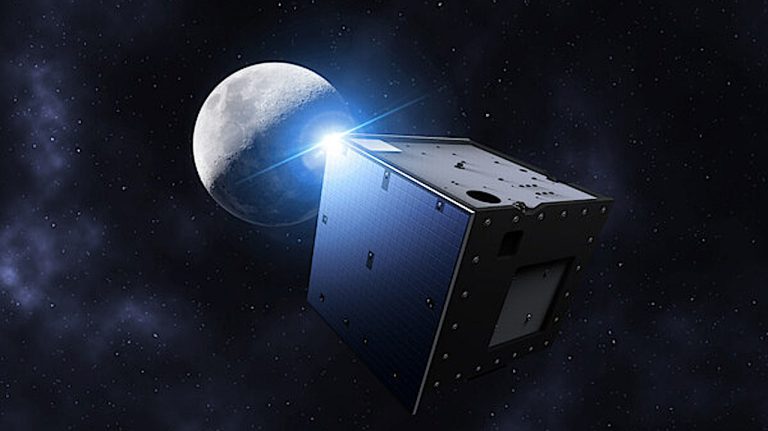
Tetra-1. Millennium Space Systems.

Since launching Tetra-1 November 1, 2022, Millennium Space Systems, a Boeing (NYSE: BA) company partnered with the U.S. Space Force’s Space Systems Command successfully deployed the vehicle from its host, initialized all components and subsystems and performed systems check out. Tetra-1 is healthy and ready for mission operations.

“Tetra-1 has helped us learn about small satellites’ potential to operate in super GEO,” said Capt JeanCarlo Vasquez, Tetra-1 deputy program manager at SSC. “Due to Tetra-1’s maneuverability, it has enabled us to experiment and train with various tactics, techniques, and procedures. Thus, allowing our program office and operators to identify what roles small satellites can potentially play in future USSF Missions. Furthermore, Tetra-1’s robustness permitted SSC to work with Space Delta 11 in Space Training and Readiness Command and perform maneuvers dedicated solely to a live on orbit training campaign, known as ‘Scarlet Star.’”

SSC is now assuming full spacecraft operations, using the procedures developed jointly with Millennium Space Systems.

“We developed new operations tools to ease the planning for actions like station changes and planning and executing on-orbit maneuvering,” said Mike Todaro, vice president of Mission Operations & Integration at Millennium Space Systems. “This is particularly important for super GEO, where if you’re not mission capable, you’re considered in the graveyard.”

Super GEO is new ground for small satellites, with known and unknown challenges operating so far away – about 38,000 km from Earth.

“When Guardians work on Tetra-1, they’ll learn new ways of doing things that were previously done on much larger satellites,” said Todaro. “Because Tetra-1 is smaller, more agile and maneuverable, you have different options. It’s like the difference between maneuvering a speed boat versus a cruise ship.”

The experience Tetra-1 provides is critical to space operators understanding how to manage a small satellite. An example is operating during eclipse season.

“Actions for what you want the satellite to do are taken more deliberately because it has a smaller power system,” said Todaro. “And operators must manage consumables differently compared to a larger satellite, all of which requires training beyond just having classroom knowledge – it takes hands-on experience.”

Millennium Space Systems delivered the spacecraft and ground software to SSC to operate independently, and provided a different type of training, simulation and confidence-building for operators to understand the nuances of a small satellite. This training experience, new tools and space-qualified spacecraft components support Millennium Space Systems’ ability to deliver small satellites for high-stakes critical missions for National Security Space.

Media Contact:
Dana Carroll, vice president, Marketing
Millennium Space Systems
[email protected]

About Millennium Space Systems

Millennium Space Systems, a Boeing Company, delivers high-performance prototype and constellation solutions across advanced national security and environmental observation missions. Founded in 2001, the company’s small satellite missions support government, civil and commercial space customers’ needs across orbits.

By Keith Cowing
Source SpaceRef

A Sharper Look At The First Image Of A Black Hole

0
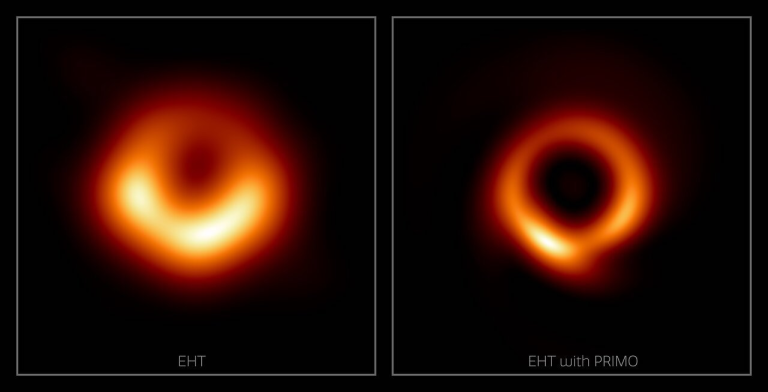
A team of researchers, including an astronomer with NSF’s NOIRLab, has developed a new machine-learning technique to enhance the fidelity and sharpness of radio interferometry images. To demonstrate the power of their new approach, which is called PRIMO, the team created a new, high-fidelity version of the iconic Event Horizon Telescope’s image of the supermassive black hole at the center of Messier 87, a giant elliptical galaxy located 55 million light-years from Earth. The image of the M87 supermassive black hole originally published by the EHT collaboration in 2019 (left); and a new image generated by the PRIMO algorithm using the same data set (right). Credit: L. Medeiros (Institute for Advanced Study), D. Psaltis (Georgia Tech), T. Lauer (NSF’s NOIRLab), and F. Ozel (Georgia Tech)

The iconic image of the supermassive black hole at the center of Messier 87 has received its first official makeover, thanks to a new machine-learning technique known as PRIMO. This new image better illustrates the full extent of the object’s dark central region and the surprisingly narrow outer ring. To achieve this result, a team of researchers used the original 2017 data obtained by the Event Horizon Telescope (EHT) collaboration and created a new image that, for the first time, represents the full resolution of the EHT. [1]

PRIMO, which stands for principal-component interferometric modeling, was developed by EHT members Lia Medeiros (Institute for Advanced Study), Dimitrios Psaltis (Georgia Tech), Tod Lauer (NSF’s NOIRLab), and Feryal Ozel (Georgia Tech). A paper describing their work is published in The Astrophysical Journal Letters.

In 2017 the EHT collaboration used a network of seven radio telescopes at different locations around the world to form an Earth-sized virtual telescope with the power and resolution capable of observing the “shadow” of a black hole’s event horizon. [2] Though this technique allowed astronomers to see remarkably fine details, it lacked the collecting power of an actual Earth-sized telescope, leaving gaps in the data. The researchers’ new machine-learning technique helped fill in those gaps.

“With our new machine-learning technique, PRIMO, we were able to achieve the maximum resolution of the current array,” says lead author Lia Medeiros. “Since we cannot study black holes up close, the detail in an image plays a critical role in our ability to understand its behavior. The width of the ring in the image is now smaller by about a factor of two, which will be a powerful constraint for our theoretical models and tests of gravity.”

PRIMO relies on a branch of machine learning known as dictionary learning, which teaches computers certain rules by exposing them to thousands of examples. The power of this type of machine learning has been demonstrated in numerous ways, from creating Renaissance-style works of art to completing the unfinished work of Beethoven.

Applying PRIMO to the EHT image of Messier 87, computers analyzed over 30,000 high-fidelity simulated images of gas accreting onto a black hole to look for common patterns in the images. The results were then blended to provide a highly accurate representation of the EHT observations, simultaneously providing a high-fidelity estimate of the missing structure of the image. A paper pertaining to the algorithm itself was published previously in The Astrophysical Journal on 3 February 2023.

“PRIMO is a new approach to the difficult task of constructing images from EHT observations,” said Lauer. “It provides a way to compensate for the missing information about the object being observed, which is required to generate the image that would have been seen using a single gigantic radio telescope the size of the Earth.”

The team confirmed that the newly rendered image is consistent with the EHT data and with theoretical expectations, including the bright ring of emission expected to be produced by hot gas falling into the black hole.

The new image should lead to more accurate determinations of the mass of the Messier 87 black hole and the physical parameters that determine its present appearance. The data also provide an opportunity for researchers to place greater constraints on alternatives to the event horizon (based on the darker central brightness depression) and perform more robust tests of gravity (based on the narrower ring size). PRIMO can also be applied to additional EHT observations, including those of Sagittarius A*, the central black hole in our own Milky Way Galaxy.

“The 2019 image was just the beginning,” said Medeiros. “If a picture is worth a thousand words, the data underlying that image have many more stories to tell. PRIMO will continue to be a critical tool in extracting such insights.”

More information

[1] One of the telescopes comprising the EHT, the South Pole Telescope, was not part of the Messier 87 observation. Since that time, the EHT has added additional telescopes to the array.

[2] The shadow of a black hole is the closest we can come to an image of the black hole itself, a completely dark object from which light cannot escape. In the case of Messier 87, the black hole’s boundary — the event horizon from which the EHT takes its name — is around 2.5 times smaller than the shadow it casts and measures just under 40 billion kilometers across.

Development of the PRIMO algorithm was enabled through the support of a National Science Foundation Astronomy and Astrophysics Postdoctoral Fellowship.

NSF’s NOIRLab, the US center for ground-based optical-infrared astronomy, operates the International Gemini Observatory (a facility of NSF, NRC–Canada, ANID–Chile, MCTIC–Brazil, MINCyT–Argentina, and KASI–Republic of Korea), Kitt Peak National Observatory (KPNO), Cerro Tololo Inter-American Observatory (CTIO), the Community Science and Data Center (CSDC), and Vera C. Rubin Observatory (operated in cooperation with the Department of Energy’s SLAC National Accelerator Laboratory). It is managed by the Association of Universities for Research in Astronomy (AURA) under a cooperative agreement with NSF and is headquartered in Tucson, Arizona. The astronomical community is honored to have the opportunity to conduct astronomical research on Iolkam Du’ag (Kitt Peak) in Arizona, on Maunakea in Hawai‘i, and on Cerro Tololo and Cerro Pachón in Chile. We recognize and acknowledge the very significant cultural role and reverence that these sites have to the Tohono O’odham Nation, to the Native Hawaiian community, and to the local communities in Chile, respectively.

The Image of the M87 Black Hole Reconstructed with PRIMO, The Astrophysical Journal Letters (open access)

By Keith Cowing
Source SpaceRef

NASA’s Curiosity Mars Rover Gets a Major Software Upgrade

0
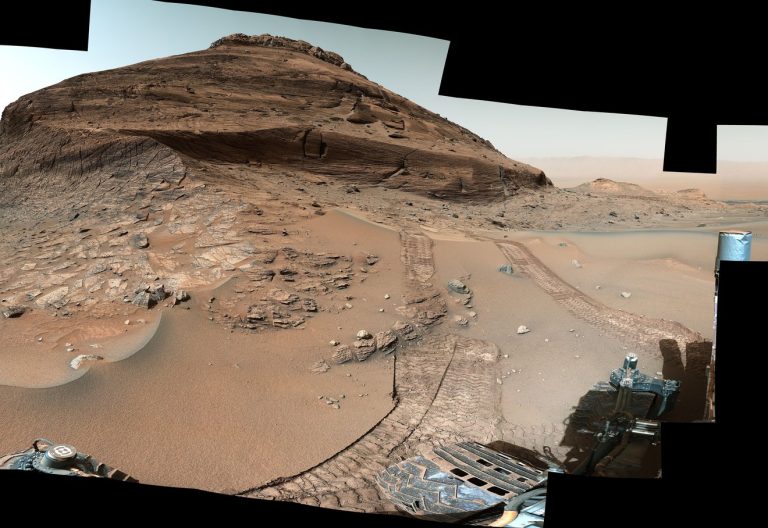
NASA’s Curiosity Mars rover will drive faster and reduce wear on its wheels thanks to two of the new capabilities included with a major software update that was completed on April 7. Seen here is the rover’s view of a hill nicknamed “Bolívar,” with Gale Crater’s vast floor in the upper right. Credit: NASA/JPL-Caltech/MSSS

The update brings loads of improvements, the most significant being new driving capabilities.

Years in the making, a major software update that has been installed on NASA’s Curiosity rover will enable the Mars robot to drive faster and reduce wear and tear on its wheels. Those are just two of about 180 changes implemented during the update, which required the team to put Curiosity’s science and imaging operations on hold between April 3 and April 7.

“The flight software is essential to our mission, so this is a big deal for our team,” said Curiosity Project Manager Kathya Zamora-Garcia of NASA’s Jet Propulsion Laboratory in Southern California. “This is a major software update, and we had to make sure we did it right.”

Planning for this update goes back to 2016, when Curiosity last received a software overhaul. Some changes this time around are as small as making corrections to the messages the rover sends back to mission controllers on Earth. Others simplify computer code that has been altered by multiple patches since Curiosity touched down in 2012. The biggest changes will help keep Curiosity rolling more efficiently for years to come.

The rover can now do more of what the team calls “thinking while driving” – something NASA’s newest Mars rover, Perseverance, can perform in a more advanced way to navigate around rocks and sand traps. When Perseverance drives, it constantly snaps pictures of the terrain ahead, processing them with a dedicated computer so it can autonomously navigate during one continuous drive.

Curiosity doesn’t have a dedicated computer for this purpose. Instead, it drives in segments, halting to process imagery of the terrain after each segment. That means it needs to start and stop repeatedly over the course of a long drive. The new software will help the venerable rover process images faster, allowing it to spend more time on the move.

“This won’t let Curiosity drive as quickly as Perseverance, but instead of stopping for a full minute after a drive segment, we’re stopping for just a moment or two,” said Jonathan Denison of JPL, Curiosity’s engineering operations team chief. “Spending less time idling between drive segments also means we use less energy each day. And even though we’re almost 11 years old, we’re still implementing new ideas to use more of our available energy for science activities.”

Wheel Wear

The team also wants to maintain the health of Curiosity’s aluminum wheels, which began showing signs of broken treads in 2013. When engineers realized that sharp rocks were chipping away at the treads, they came up with an algorithm to improve traction and reduce wheel wear by adjusting the rover’s speed depending on the rocks it’s rolling over.

The new software goes further by introducing two new mobility commands that reduce the amount of steering Curiosity needs to do while driving in an arc toward a specific waypoint. With less steering required, the team can reach the drive target quicker and decrease the wear that inherently comes with steering.

“That ability was actually dreamed up during the Spirit and Opportunity days,” Denison said. “It was a ‘nice to have’ they decided not to implement.”

Overall, the new software will streamline the task of Curiosity’s human drivers, who have to write complex plans containing hundreds of commands. The software update will also enable them to upload software patches more easily than in past. And it will help engineers plan the motions of Curiosity’s robotic arm more efficiently and point its “head” atop the mast more accurately.

As with any major software update, there’s a sense of relief to see it working as designed, Denison said.

“The idea of hitting the install button was a little scary,” he added. “Despite all our testing, we never know exactly what will happen until the software is up there.”

More About the Mission

Curiosity was built by NASA’s Jet Propulsion Laboratory, which is managed by Caltech in Pasadena, California. JPL leads the mission on behalf of NASA’s Science Mission Directorate in Washington.

For more about Curiosity, visit: http://mars.nasa.gov/msl

News Media Contact

Andrew Good
Jet Propulsion Laboratory, Pasadena, Calif.
818-393-2433
[email protected]

Karen Fox / Alana Johnson
NASA Headquarters, Washington
301-286-6284 / 202-358-1501
[email protected] / [email protected]

Humans Need An Earth-like Ecosystem For Deep-Space Living

0
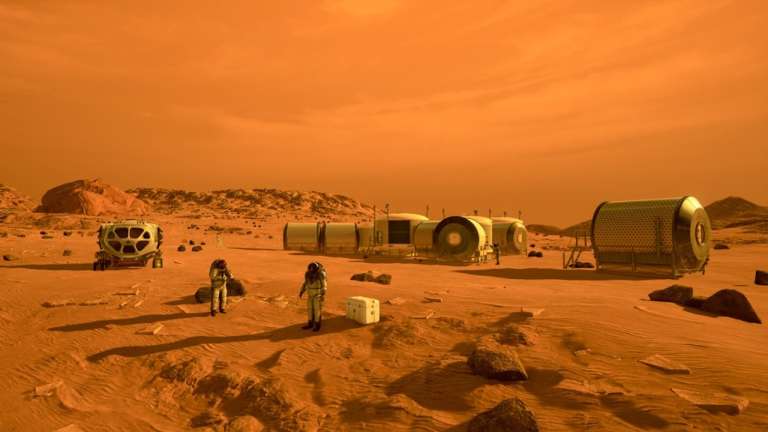
Even on future cosmic outposts like Mars, depicted in this artistic rendering, humans must consider closely replicating natural conditions found on Earth, according to a new theory called Pancosmorio. NASA/JPL

Can humans endure long-term living in deep space? The answer is a lukewarm maybe, according to a new theory describing the complexity of maintaining gravity and oxygen, obtaining water, developing agriculture and handling waste far from Earth.

Dubbed the Pancosmorio theory – a word coined to mean “all world limit” – it was described in a paper published in Frontiers in Astronomy and Space Sciences.

“For humans to sustain themselves and all of their technology, infrastructure and society in space, they need a self-restoring, Earth-like, natural ecosystem to back them up,” said co-author Morgan Irons, a doctoral student conducting research with Johannes Lehmann, professor in the School of Integrative Plant Science at Cornell University. Her work focuses on soil organic carbon persistence under Earth’s gravity and varying gravity conditions. “Without these kinds of systems, the mission fails.”

The first key is gravity, which Earth life needs to function properly, said co-author Lee Irons, Morgan Irons’ father and executive director of the Norfolk Institute, a group that aims to solve problems of human resilience on Earth and in space.

“Gravity induces a gradient in the fluid pressure within the body of the living thing to which the autonomic functions of the life form are attuned,” he said. “An example of gravity imbalance would be the negative affect on the eyesight of humans in Earth orbit, where they don’t experience the weight necessary to induce the pressure gradient.”

Morgan Irons said that it would be unwise to spend billions of dollars to set up a space settlement only to see it fail, because even with all other systems in place, you need gravity.

Humans and all Earth life have evolved within the context of 1G of gravity. “Our bodies, our natural ecosystems, all the energy movement and the way we utilize energy is all fundamentally based upon 1G of gravity being present,” she said. “There is just no other place in space where there is 1G of gravity; that just doesn’t exist anywhere else in our solar system. That’s one of the first problems we must solve.”

Oxygen is another key factor. Earth’s ecosystem generates oxygen for humans and other life forms. If a technologically advanced primary and a back-up system failed to provide oxygen for the moon base, for example, it would mean instant doom for the astronauts. “A reserve exists everywhere in Earth’s nature,” Lee Irons said. “Think of the hundreds of thousands of species of plants that generate oxygen. That’s the kind of system reserve we need to replicate to be truly sustainable.”

Such an ecological system of an outpost would need an enormous amount energy from the sun. The more distant planets and moons from the sun in our own solar system get decreased amounts of energy.

“You’ll need a lot of energy,” Lee Irons said. “Otherwise powering the ecological system of an outpost will be like trying to run your car on a cell phone battery or probably even worse, trying to run your entire house and household on a cell phone battery.”

Pancosmorio (world limit) theory of the sustainability of human migration and settlement in space, Frontiers in Astronomy and Space Sciences (open access)

By Keith Cowing
Source SpaceRef

Webb Shows Areas Of New Star Formation And Galactic Evolution

0
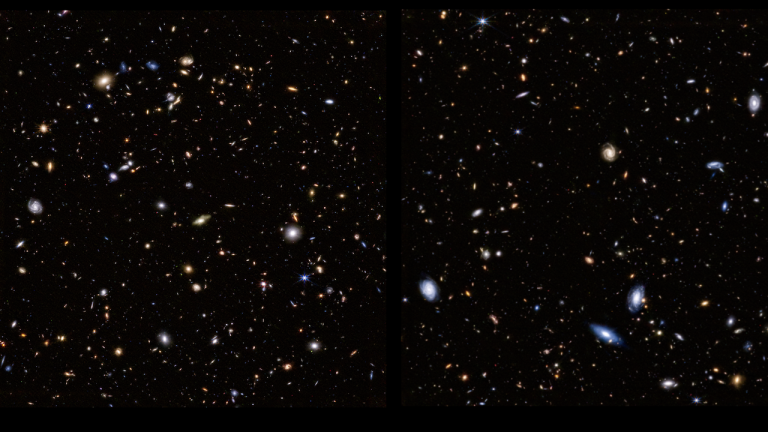
This image of the Hubble Ultra Deep Field was taken by the Near-Infrared Camera on NASA’s James Webb Space Telescope. The Webb image observes the field at depths comparable to Hubble – revealing galaxies of similar faintness – in just one-tenth as much observing time. It includes 1.8-micron light shown in blue, 2.1-micron light shown in green, 4.3-micron light shown in yellow, 4.6-micron light shown in orange, and 4.8-micron light shown in red (filters F182M, F210M, F430M, F460M, and F480M). Download the full resolution from the Space Telescope Science Institute. https://webbtelescope.org/contents/media/images/01GXE4A07MB2RG6GHDGF3CHHJ4 Credit: NASA, ESA, CSA, Joseph DePasquale (STScI), Christina Williams (U. of Arizona).

On Oct. 11, 2022, NASA’s James Webb Space Telescope spent over 20 hours observing the long-studied Hubble Ultra Deep Field for the first time. The general observer program (GO 1963) focused on analyzing the field in wavelengths between approximately 2 and 4 microns.

We spoke with Christina Williams (NOIRLab), Sandro Tacchella (University of Cambridge), and Michael Maseda (University of Wisconsin-Madison) to learn more about the first observation of the Hubble Ultra Deep Field through Webb’s eyes.

What is important for people to know about these Webb observations?

Michael Maseda: The fact that we see hot, ionized gas is telling us exactly where stars are being born in these galaxies. Now we can separate those areas from where stars already existed. That piece of information is very important because, billions of years later, we don’t exactly know how galaxies became how they are today. It’s important to note that we still haven’t seen everything there is to see. Our whole program was ~24 hours, which isn’t that much time in the grand scheme of how much time other observatories have looked at it. But, even in this relatively short amount of time, we’re starting to put together a new picture of how galaxies are growing at this really interesting point in the history of the Universe.

What are you interested in learning by exploring the Hubble Ultra Deep Field with Webb?

Christina Williams: We proposed to image the Ultra Deep Field using some of Webb’s NIRCam’s medium-band image filters, which allowed us to take images of spectral features more accurately than we could with broadband filters because medium-band filters span a shorter wavelength range. This gives us more sensitivity in measuring colors, which helps us understand the history of star formation and ionization properties of galaxies during the first billion years of the universe, like in the Reionization Era. Measuring the energy that galaxies produced in that time will help us understand how galaxies reionized the universe, reverting it from being neutral gas to once again being an ionized plasma like it was after the big bang.

Sandro Tacchella: One of the key outstanding questions in extragalactic astrophysics is how the first galaxies form. Since the medium bands cover a range of different wavelengths, we can either directly find the some of the first galaxies in the early universe, or we can age-date the stars in galaxies when the universe was about one billion years old to understand when the galaxy actually formed their stars in the past. This survey helps to pin down the formation of the first galaxies.

Michael: The capabilities that we have with Webb’s medium-band filters are actually quite new. We’re getting a sort of hybrid between imaging and spectroscopy, so we’re getting detailed information for basically all of the galaxies in the field, as opposed to traditional spectroscopy where you could only select a few galaxies in the field of view for study. It’s really a complete picture in the sense that this information complements a lot of existing data, not only from Hubble, but ground-based instrumentation like MUSE (the Multi Unit Spectroscopic Explorer) on the Very Large Telescope, where we have spectroscopy at different wavelengths for a number of these objects. MUSE is very good at finding galaxies that have Lyman-alpha emission, or light from ionized hydrogen in these galaxies, which are the type of galaxies that existed when reionization was ending. This new data is a missing piece that we did not have before in terms of understanding the full population of galaxies in this field.

Was there anything unexpected in these data that surprised you?

Michael: I don’t know if I was surprised exactly, but the images were even better than I was expecting. In these images, you can actually see by eye that this is ionized gas over a fairly large area. I was expecting everything to be unresolved, but we have a high-enough resolution to actually see it. And I’m pleased to see it because it could have been a lot harder to understand what was happening.

Christina: I think that seeing how beautiful the images are and how high quality they ended up being was definitely a high point. We calculated that we would be able to do things like this, but it was different to see it and have the real data in practice.

Why did you elect to make the data immediately public?

Sandro: Galaxies are very complex systems in which a wide range of different processes work on different spatial and temporal scales, so there are many approaches that can be used to better understand the physics of galaxies. So, making it available to many different groups will facilitate the search for more insight.

Christina: Webb is still very new, and people are still learning the best practices of how to analyze data sets. So, it benefits everyone to have a few data sets that are available immediately to help people understand the best way to make use of Webb data moving forward, and to better plan programs in future cycles that are based on real experience with data.

The James Webb Space Telescope is the world’s largest, most powerful, and most complex space science telescope ever built. Webb will solve mysteries in our solar system, look beyond to distant worlds around other stars, and probe the mysterious structures and origins of our universe and our place in it. Webb is an international program led by NASA with its partners, ESA (European Space Agency) and the Canadian Space Agency.

By Keith Cowing
Source SpaceRef
X-59 Gets Its Tail

0

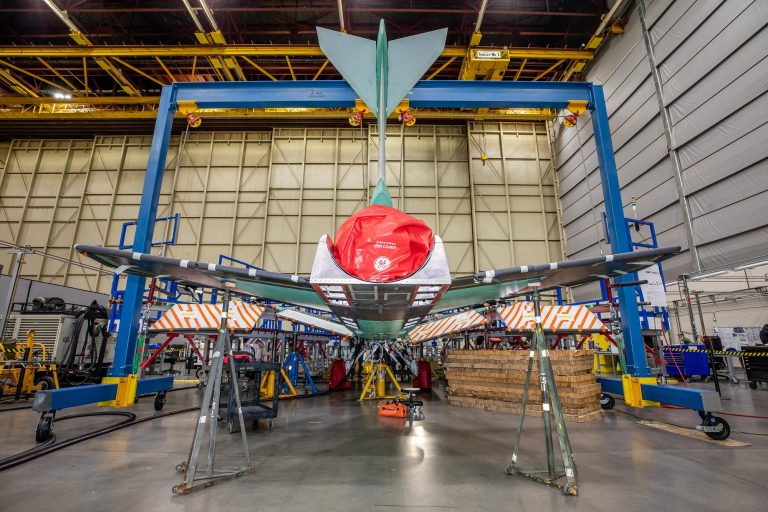
NASA’s X-59 sits in support framing while undergoing the installation of its lower empennage, or tail section, at Lockheed Martin Skunk Works in Palmdale, California, in this image from late March 2023.

Once complete, the X-59 aircraft—the centerpiece of NASA’s Quesst mission—is designed to demonstrate the ability to fly supersonic while reducing the loud sonic boom to a quiet sonic thump. The Quesst mission will then fly the X-59 over several U.S. communities to gather data on human responses to the sound generated during supersonic flight and deliver that data set to U.S. and international regulators.  

Image Credit: Lockheed Martin

By: Monika Luabeya
Source: NASA

Celebrating Science At The White House Easter Egg Roll

0

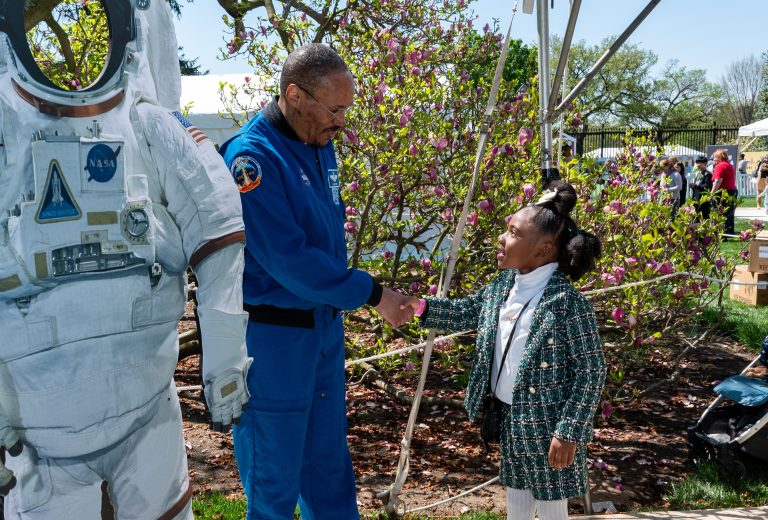
Former NASA astronaut Alvin Drew shakes hands with a guest during the White House Easter Egg Roll in this photo from Monday, April 10, 2023. The agency also brought spacewalk suits for children to see and try on, shared images of space, and conducted an egg drop experiment.

Embracing the event’s “EGGucation” theme, NASA’s STEM activities even took place in space: Astronaut Woody Hoburg used a souvenir White House egg to teach children about gravity; the video was shared during the event.

See more photos from the Easter Egg Roll.

Image Credit: NASA/Keegan Barber

By Monika Luabeya
Source NASA

NASA To Provide Live Coverage Of Spacex Cargo Craft Station Departure

0
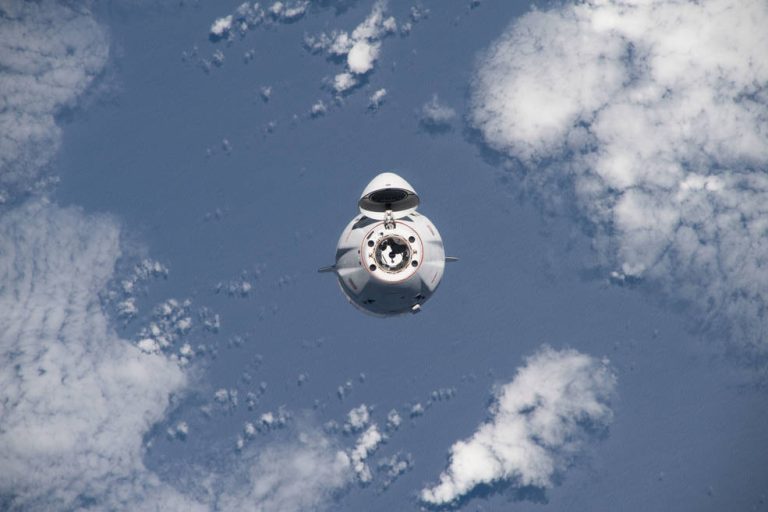
The SpaceX Dragon cargo craft, loaded with over 7,700 pounds of science, supplies, and cargo, approaches the International Space Station for a docking 264 miles above the Atlantic ocean in between South America and Africa. Credits: NASA

A SpaceX Dragon cargo resupply spacecraft is set to depart the International Space Station on Saturday, April 15, returning scientific research samples and hardware to Earth for NASA.

The agency will provide live coverage of Dragon’s undocking and departure starting at 10:45 a.m. EDT on NASA Television, the NASA app, and online at:

https://www.nasa.gov/live

Following commands from ground controllers at SpaceX in Hawthorne, California, Dragon will undock at 11:05 a.m. from the forward port of the station’s Harmony module and fire its thrusters to move a safe distance away from the station.

After re-entering Earth’s atmosphere, the spacecraft will make a parachute-assisted splashdown off the coast of Florida on Saturday, April 15. NASA will not broadcast the splashdown, but updates will be posted on the agency’s space station blog.

Dragon will carry back to Earth approximately 4,300 pounds of supplies and scientific experiments designed to take advantage of the space station’s microgravity environment. Splashing down off the coast of Florida enables quick transportation of the experiments to NASA’s Space Station Processing Facility at the agency’s Kennedy Space Center in Florida, allowing researchers to collect data with minimal sample exposure to Earth’s gravity.

Some of the scientific investigations that Dragon is carrying include:

  • Space tomato harvest: Samples from the Pick-and-Eat Salad-Crop Productivity, Nutritional Value, and Acceptability to Supplement the International Space Station Food System (Veg-05) experiment will be returning to Earth for analysis. Astronauts grew dwarf tomatoes in the station’s Veggie miniature greenhouse and performed three harvests at 90, 97, and 104 days. They froze tomatoes, water samples, and swabs of the growth hardware to examine the effects of light quality and fertilizer on fruit production, microbial safety, and nutritional value. The ability to grow plants in space for fresh food and an improved crew living experience is important for future long-duration missions. The hardware could be adapted for use on Earth to provide fresh produce for those without access to gardens and as horticultural therapy for older people and people with disabilities.
  • Growing higher quality crystals: Hicari, an investigation from JAXA (Japan Aerospace Exploration Agency), tested a growth method and produced crystals of a silicon-germanium (SiGe) semiconductor using the Japanese Experiment Module-Gradient Heating Furnace (JEM-GHF). This crystal growth method could support development of more efficient solar cells and semiconductor-based electronics. The space-produced crystals are returning to Earth for analysis.
  • Analyzing aging arteries: Astronauts can experience accelerated arterial wall stiffening and thickening after six months in space, and a daily session of aerobic exercise alone may not be sufficient to counteract these effects. Vascular Aging, an investigation from CSA (Canadian Space Agency), monitors these changes using artery ultrasounds, blood samples, glucose tolerance tests, and wearable sensors. Results could help identify and assess risk to astronaut cardiovascular health and point to mechanisms for reducing that risk. For the aging population on Earth, understanding the mechanisms behind arterial stiffness could provide insight to guide prevention and treatment. Blood samples collected for the investigation are returning to Earth for analysis.
  • Fire safety: Solid Fuel Ignition and Extinction – Growth and Extinction Limit (SoFIE-Gel) studies burning in microgravity, including how fuel temperature affects material flammability. The investigation could improve safety of crew members on future missions by increasing understanding of early fire growth behavior, informing selection of fire-resistant spacecraft cabin materials, validating flammability models, and helping to determine optimal fire suppression techniques. Studying flames in space without the complications of buoyancy also helps improve computer models of combustion for terrestrial applications. Gel samples from the investigation are returning to Earth for further analysis.

Dragon arrived at the space station March 16 as SpaceX’s 27th Commercial Resupply Services mission for NASA, delivering more than 6,000 pounds of research investigations, crew supplies, and station hardware. It was launched March 14 on a SpaceX Falcon 9 rocket from Launch Complex 39A at Kennedy.

Lora Bleacher
Headquarters, Washington
202-358-1100
[email protected]

Sandra Jones
Johnson Space Center, Houston
281-483-5111
[email protected]

By Claire O’Shea
Source NASA