
Home Blog Page 73

A Mission To Pull Back The Shroud

0
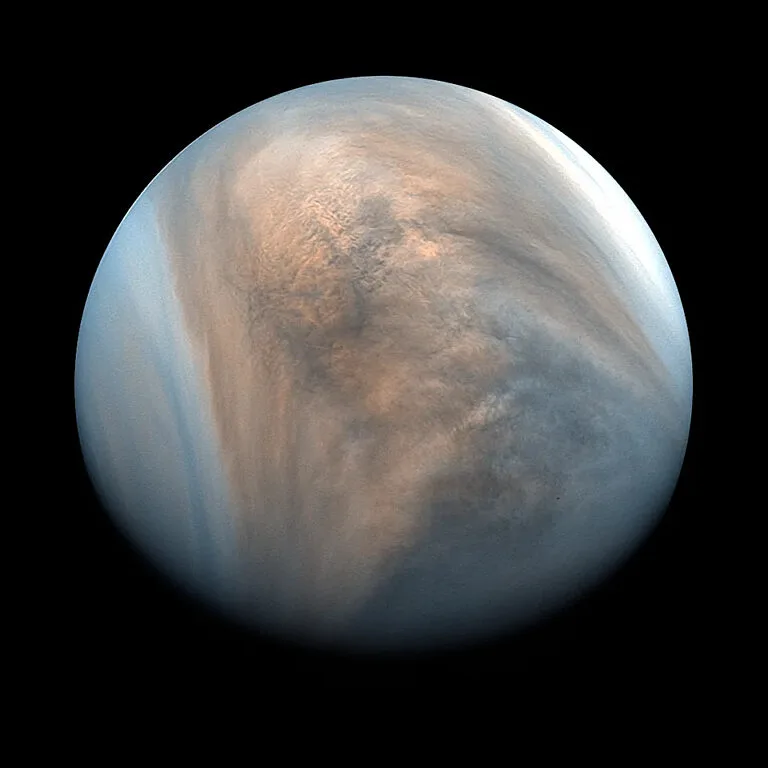
Venus, seen here in ultraviolet wavelengths by JAXA’s Akatsuki orbiter in 2016, is not only shrouded in a thick atmosphere; it’s also shrouded in mystery. This is because very few missions have studied it up close, particularly when it comes to its surface. NASA’s VERITAS mission would dramatically expand our understanding of our sister planet, but is facing devastating budget cuts. Read on to learn more about why this mission matters and what you can do to save it. Image credit: JAXA/ISAS/DARTS/Damia Bouic. Learn more

You love space, now take action

This weekly newsletter is your toolkit to learn more about space, share information with your friends and family, and take direct action to support exploration. Anyone can subscribe at planetary.org/connect to receive it as a weekly email.

Fact Worth Sharing

Venus illustration

In the Solar System’s early days when the Sun was cooler, scientists think Venus may have had liquid water on its surface for two billion years — far longer than Mars, which likely had liquid water for a relatively shorter 300 million years.

Mission Briefings

Artemis 2 crew

Meet the Artemis II crew. This week NASA and the Canadian Space Agency (CSA) announced the astronauts who will fly on the Artemis II mission, which will take them around the Moon in the first crewed lunar mission since the Apollo program. The crew includes (from left to right) NASA astronauts Christina Hammock Koch, Reid Wiseman (seated), Victor Glover, and CSA astronaut Jeremy Hansen. Image credit: NASA.

Perseverance is sampling a new area on Mars. The rover, which has been collecting samples from the Martian surface since 2020, has moved on to a new area atop the Jezero Crater delta. The first sample was taken from a rock the science team calls “Berea,” which they believe formed from rock deposits that were carried downstream to this location by an ancient river. If so, this rock could differ from those originating in the delta. Meanwhile, the Ingenuity Mars helicopter that has been accompanying Perseverance broke records this week by flying faster and higher than ever before.

NASA is moving away from naming spacecraft after people. new policy says that missions should be named after people only when their contributions are “so extraordinary that any other form of recognition by the Agency would be considered inadequate.” This decision comes in the wake of critiques about the naming of the James Webb Space Telescope.

Several JAXA missions may be facing delays due to rocket issues. The Japanese H3 rocket failed in its first launch, possibly because of issues with its upper-stage engine. Because that engine is very similar to the one used on the H2-A rocket, launches of that vehicle are also on hold. This could delay the launches of the XRISM X-ray telescope, the SLIM lunar lander, and possibly MMX, a mission to return samples from the Martian moon Phobos.

More News

From The Planetary Society

VERITAS vs Magellan example

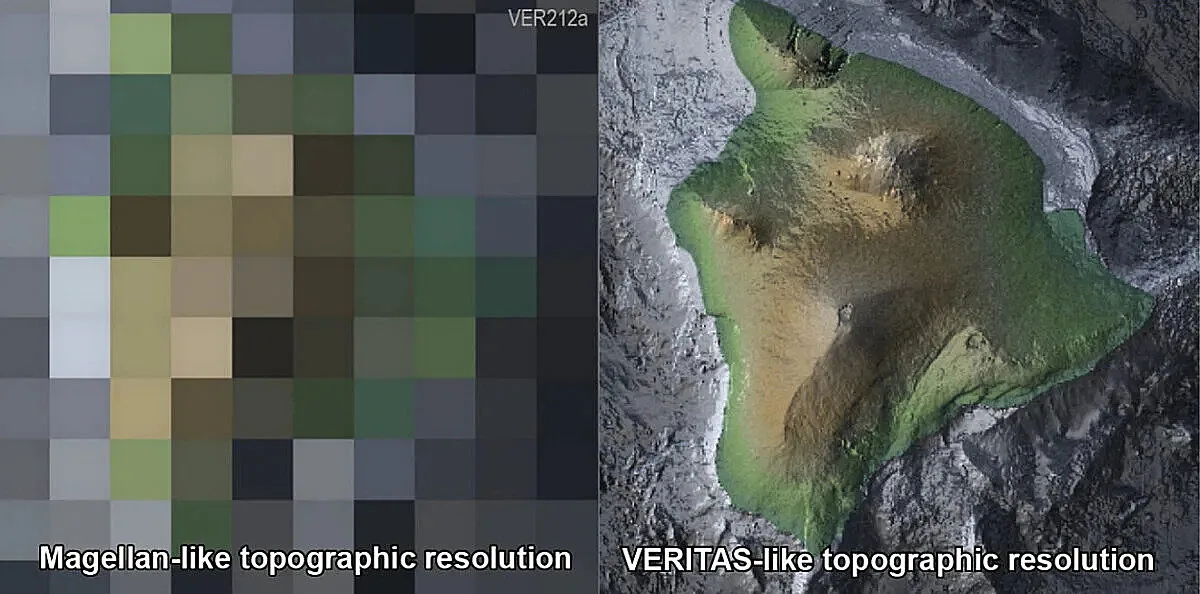
The VERITAS mission to Venus is worth saving. NASA’s proposed VERITAS mission is crucial to our understanding of Venus, and has the potential to yield insights into Earth’s planetary future. Yet the mission to study Venus from orbit is facing budget cuts that would indefinitely delay it, despite being a top priority of the planetary science community. You can help save this mission by sharing information about why it’s important and, if you live in the United States, by sending a petition to CongressPictured: An example of the kind of high-resolution mapping that VERITAS could provide, compared to the surface data we have from NASA’s early 1990s Magellan mission. Image credit: Sue Smrekar.

Get ready for the Juice launch. The European Space Agency’s mission to Jupiter’s icy moons is scheduled to launch on Thursday, April 13. We’ve got your complete guide to what to expect from the launch and the mission as a whole. Plus, Planetary Society members can join our Juice launch watch party in the new rocket launch channel in our online member community.

The Hope mission has exceeded expectations, and it’s not done yet. The United Arab Emirates’ Mars orbiter has been operating for two years now, studying the Martian atmosphere and how the planet’s climate changes over time. Mohsen Al Awadhi, Director of the Space Missions Department at the UAE Space Agency, joins this week’s Planetary Radio to share insights into the mission’s journey and tease the next exciting chapter: observing Mars’ mysterious moon, Deimos.

What’s Up

Venus illustration

Look for Venus shining very bright in the western evening sky. On April 10 and 11, Venus will be right near the Pleiades star cluster. Mercury is low in the west below Venus. Mercury reaches its highest point on April 11 and then begins to drop towards the horizon again. Higher up in the evening sky look for reddish Mars, which is growing dimmer as it moves farther away from Earth. In the pre-dawn, look for yellowish Saturn in the east. Find out what else to look for in April’s night skies.

Celebrate space on Yuri’s Night!
Buzz yuris night

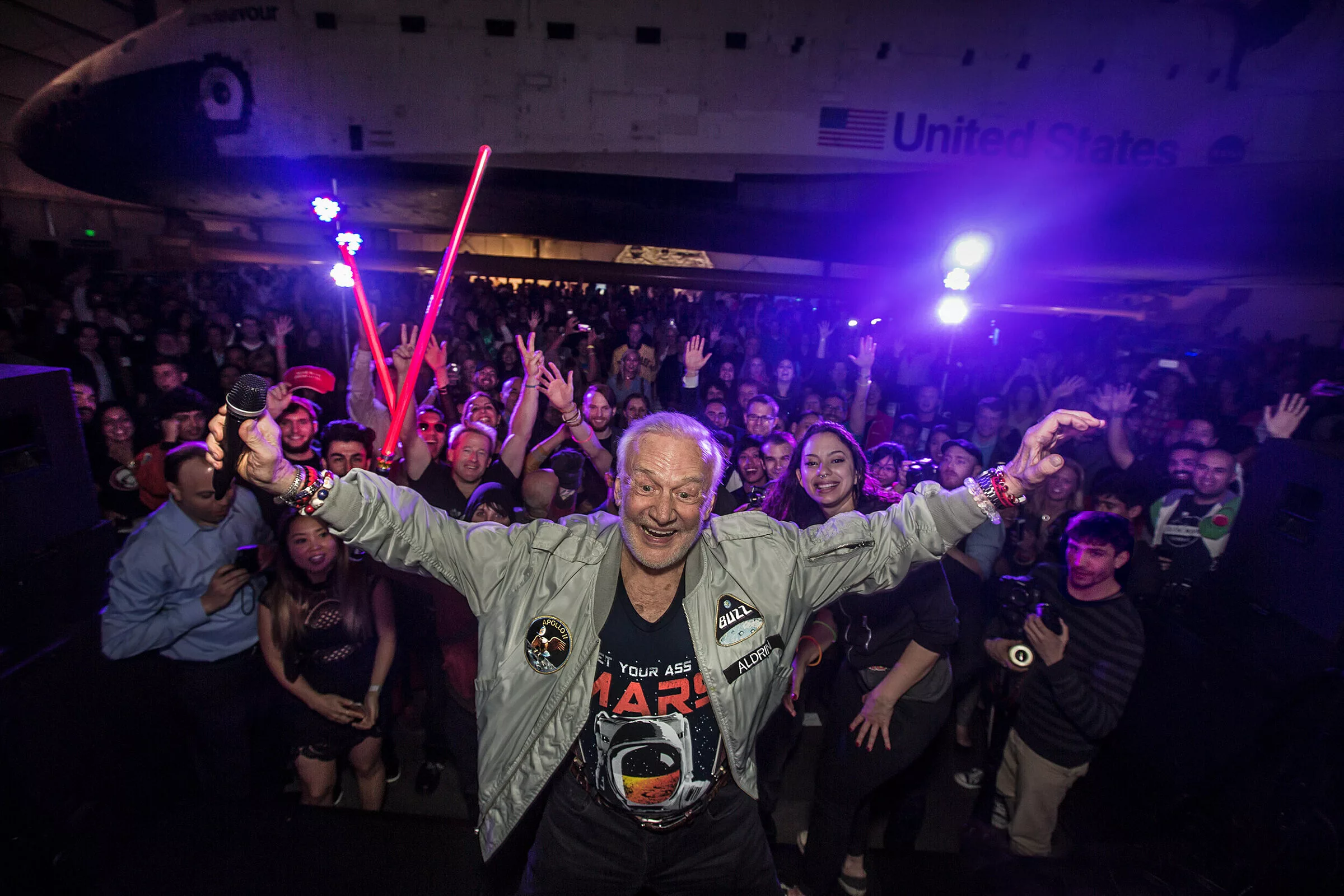
Taking place every year on April 12, Yuri’s Night marks the anniversary of Yuri Gagarin’s monumental 1961 mission that made him the first human in space. This is the world’s biggest space party, with events online and in person around the world. Find the event nearest you! Pictured: Apollo astronaut Buzz Aldrin at a Yuri’s Night event. Image credit: Hector Sandoval.

Battling Bots

0

Industrial-size robots built by high school teams compete against each other in a game at Rocket City Regional, Alabama’s annual FIRST Robotics Competition, in this March 16, 2018, image. At this year’s competition, more than 1,000 high school students on 50 teams from 15 states, Mexico, and Brazil will compete.

NASA and its Robotics Alliance Project provide grants for high school teams and support for FIRST Robotics Competition to address the critical national shortage of students pursuing STEM careers. This FIRST Robotics Competition is supported by NASA’s Marshall Space Flight Center and NASA’s Office of STEM Engagement.

Credit: NASA/Fred Deaton

By: Monika Luabeya
Source: NASA

New Webb Telescope Image Of Uranus

0
Uranus

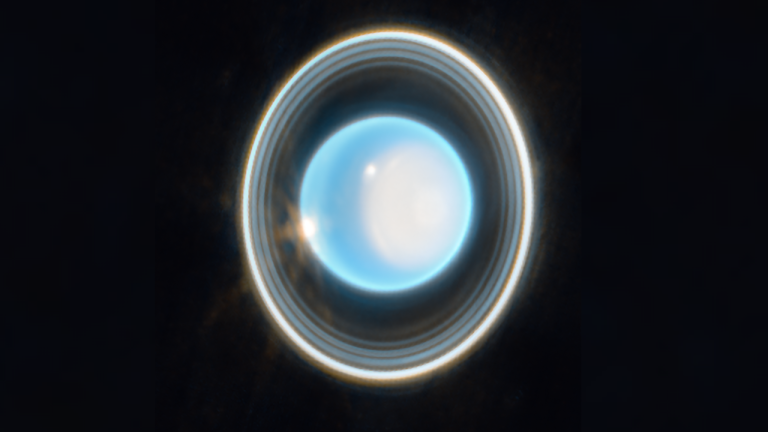
Following in the footsteps of the Neptune image released in 2022, NASA’s James Webb Space Telescope has taken a stunning image of the solar system’s other ice giant, the planet Uranus.

The new image features dramatic rings as well as bright features in the planet’s atmosphere. The Webb data demonstrates the observatory’s unprecedented sensitivity for the faintest dusty rings, which have only ever been imaged by two other facilities: the Voyager 2 spacecraft as it flew past the planet in 1986, and the Keck Observatory with advanced adaptive optics.

The seventh planet from the Sun, Uranus is unique: It rotates on its side, at roughly a 90-degree angle from the plane of its orbit. This causes extreme seasons since the planet’s poles experience many years of constant sunlight followed by an equal number of years of complete darkness. (Uranus takes 84 years to orbit the Sun.) Currently, it is late spring for the northern pole, which is visible here; Uranus’ northern summer will be in 2028. In contrast, when Voyager 2 visited Uranus it was summer at the south pole. The south pole is now on the ‘dark side’ of the planet, out of view and facing the darkness of space.

This infrared image from Webb’s Near-Infrared Camera (NIRCam) combines data from two filters at 1.4 and 3.0 microns, which are shown here in blue and orange, respectively. The planet displays a blue hue in the resulting representative-color image.

When Voyager 2 looked at Uranus, its camera showed an almost featureless blue-green ball in visible wavelengths. With the infrared wavelengths and extra sensitivity of Webb we see more detail, showing how dynamic the atmosphere of Uranus really is.

On the right side of the planet there’s an area of brightening at the pole facing the Sun, known as a polar cap. This polar cap is unique to Uranus – it seems to appear when the pole enters direct sunlight in the summer and vanish in the fall; these Webb data will help scientists understand the currently mysterious mechanism. Webb revealed a surprising aspect of the polar cap: a subtle enhanced brightening at the center of the cap. The sensitivity and longer wavelengths of Webb’s NIRCam may be why we can see this enhanced Uranus polar feature when it has not been seen as clearly with other powerful telescopes like the Hubble Space Telescope and Keck Observatory.

At the edge of the polar cap lies a bright cloud as well as a few fainter extended features just beyond the cap’s edge, and a second very bright cloud is seen at the planet’s left limb. Such clouds are typical for Uranus in infrared wavelengths, and likely are connected to storm activity.

This wider view of the Uranian system with Webb’s NIRCam instrument features the planet Uranus as well as six of its 27 known moons (most of which are too small and faint to be seen in this short exposure). A handful of background objects, including many galaxies, are also seen.
Credits: NASA, ESA, CSA, STScI. Image processing: J. DePasquale (STScI)

This planet is characterized as an ice giant due to the chemical make-up of its interior. Most of its mass is thought to be a hot, dense fluid of “icy” materials – water, methane, and ammonia – above a small rocky core.

Uranus has 13 known rings and 11 of them are visible in this Webb image. Some of these rings are so bright with Webb that when they are close together, they appear to merge into a larger ring. Nine are classed as the main rings of the planet, and two are the fainter dusty rings (such as the diffuse zeta ring closest to the planet) that weren’t discovered until the 1986 flyby by Voyager 2. Scientists expect that future Webb images of Uranus will reveal the two faint outer rings that were discovered with Hubble during the 2007 ring-plane crossing.

Webb also captured many of Uranus’ 27 known moons (most of which are too small and faint to be seen here); the six brightest are identified in the wide-view image. This was only a short, 12-minute exposure image of Uranus with just two filters. It is just the tip of the iceberg of what Webb can do when observing this mysterious planet. In 2022, the National Academies of Sciences, Engineering, and Medicine identified Uranus science as a priority in its 2023-2033 Planetary Science and Astrobiology decadal survey. Additional studies of Uranus are happening now, and more are planned in Webb’s first year of science operations.

The James Webb Space Telescope is the world’s premier space science observatory. Webb will solve mysteries in our solar system, look beyond to distant worlds around other stars, and probe the mysterious structures and origins of our universe and our place in it. Webb is an international program led by NASA with its partners, ESA (European Space Agency) and the Canadian Space Agency.

Larger imagery

By Keith Cowing
Source SpaceRef

Possible Runaway Black Hole Detected

0

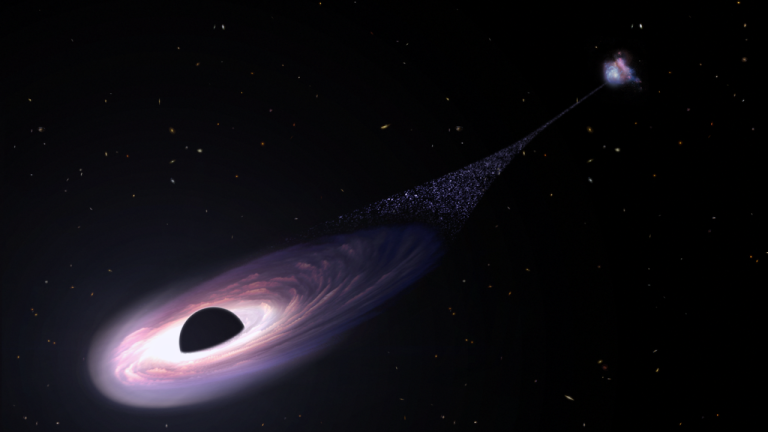
Astronomers have spotted a candidate supermassive black hole running away from its home galaxy, hurtling through space at a velocity of about 4 million miles per hour for the past 39 million years.

A Yale University-led team using NASA’s Hubble Space Telescope and W. M. Keck Observatory on Maunakea in Hawaiʻi discovered an unusual, very thin, almost straight streak of young stars and shocked gas – possibly the trail the black hole left behind as it escaped.

The findings are outlined in a study published in today’s issue of The Astrophysical Journal Letters.

“Something like this has never been seen anywhere in the universe,” said Pieter van Dokkum, professor of astronomy and physics at Yale University and lead author of the study. “We’ve known for a long time that supermassive black holes exist and it had been predicted for about 50 years that they could sometimes be ejected from galaxies. If confirmed, this would be the first evidence of a runaway supermassive black hole, proving this prediction.”

Van Dokkum’s team first detected the long feature with NASA’s Hubble Space Telescope. To get a closer look, they conducted follow-up observations using Keck Observatory’s Low Resolution Imaging Spectrometer (LRIS) and Near Infrared Echellette Spectrograph (NIRES).

The Keck Observatory data revealed the streak of stars measured a remarkable 200,000 light-years in length and extended from a compact, active star-forming galaxy whose light took about 7.6 billion years to reach Earth. The trail is almost half as bright as the host galaxy it is linked to, indicating it contains an abundance of new stars.

A panel showing sections of spectra captured with W. M. Keck Observatory’s LRIS instrument, revealing the unusual linear feature extended from a galaxy whose light took about 7.6 billion years to reach Earth. Credit: V. Dokkum (Yale)/W. M. Keck Observatory

“We think we’re seeing a wake behind the black hole where the gas cools and is able to form stars. So, we’re looking at star formation trailing the black hole,” said van Dokkum. “What we’re seeing is the aftermath. Like the wake behind a ship, we’re seeing the wake behind the black hole.”

Keck Observatory also showed a bright knot of ionized gas at the top of the wake – likely the site of the black hole itself. Also, the linear feature’s home galaxy appears to be missing a black hole at its center, or at least does not have one that is actively feasting on material and generating powerful jets of energy that telescopes can detect.

If the narrow wake of stars and gas was indeed created by a black hole dislodged from its home galaxy, astronomers have a likely explanation for its origin story. First, two galaxies, both containing a supermassive black hole inside their cores, merge. Next, as the black holes whiz around each other in a binary dance at the center of the newly- merged galaxy, a third supermassive black hole inside another galaxy intrudes on the couple. The trio’s interaction with one another then creates an unstable situation that generates enough velocity to torpedo one of the three black holes out.

As a next step, van Dokkum and his team are now seeking to confirm whether their discovery is in fact a runaway black hole; they’ve applied for time on NASA’s James Webb Space Telescope and Chandra X-ray Observatory to conduct follow-up observations.

Because the linear streak of newborn stars and shocked gas is so striking, van Dokkum says it should be straightforward to find other objects like it in current and future data, such as with NASA’s upcoming Nancy Grace Roman Space Telescope.

“Much of what we do is hypothesis testing, or refining previous measurements, but sometimes there is this bolt out of the blue of a completely unanticipated discovery. That is rare, but it is the best!” said van Dokkum.

“Going from noticing the streak and thinking ʻhey that’s weird’ to this paper was so incredibly fun and satisfying as we were all learning every step of the way,” said co-author Imad Pasha, a Yale University graduate student on van Dokkum’s research team.

By Keith Cowing
Source SpaceRef

Scientists Unveil A 5.7 Terapixel Global Image Of Mars

0
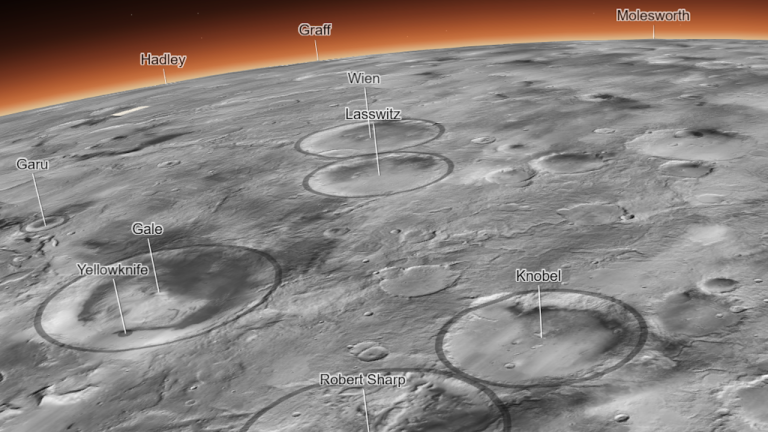
5.7 Terapixel Global Image of Mars. Caltech

A planet-spanning online image of Mars created at a scale of 5 meters per pixel was unveiled today. The image is freely available to the public and can be accessed online through Caltech’s Bruce Murray Laboratory for Planetary Visualization. It will also be delivered to the NASA Planetary Data System for posting.

The mosaicked image—comprising more than 5.7 trillion pixels (5.7 terapixels)—was generated at the Murray Lab by merging 110,000 individual images taken by the Context Camera (CTX) aboard NASA’s Mars Reconnaissance Orbiter (MRO). It covers 99.5 percent of the surface of Mars between 88° South and 88° North. (The remaining 0.5 percent either was not imaged at all or was not imaged at a high enough quality by the time the mosaic was created.)

The image took six years and tens of thousands of hours of labor to build. If it were printed out at 300 dpi (the standard printing resolution), the resulting image could be used as a sunshade for the Rose Bowl and a significant chunk of the Rose Bowl’s parking lot.

“The scale of this is really unprecedented,” says Jay Dickson, Murray Lab manager and research scientist in image processing. Dickson conceived and spearheaded the project soon after he was hired to establish the Murray Lab in 2016.

Individuals who access the image can view it on an interactive interface called SceneView developed by Esri, a geographic information system company. This interface allows for seamless exploration of the entire Red Planet at “outcrop resolution.” Outcrops are individual small cliffs and buttes that may be of interest to scientists.

“Mission data are a gift that keeps on giving. NASA’s research and analysis program allowed us complete this huge mosaic and make it universally available,” says Bethany Ehlmann, professor of planetary science and associate director of the Keck Institute for Space Studies. “I can’t wait to see everything people do with it and the science it enables.” Ehlmann and Dickson were principal investigators of the NASA Planetary Data Archiving, Restoration, and Tools grant that funded much of the work.

While scientists have higher-resolution individual images of locations on Mars, the highest resolution available at a global scale before this was 100 meters per pixel compared to 5 meters per pixel for the new mosaic. This represents a 20-fold increase in resolution in both dimensions of the Martian surface, providing 400 times more information for a given area.

To construct the image, Dickson and his colleagues used a feature-matching algorithm that aligned all of the images and blended overlapping images together by calculating the path of least contrast between those two and joining them together like jigsaw puzzle pieces. “This is nondestructive processing,” Dickson says. “We’re not blurring lines to smooth out boundaries; we’re finding the best possible line to join two images.” Importantly, a map of this jigsaw puzzle of individual images has been released along with the image, allowing complete traceability of each pixel to its parent image.

The new global mosaic, shown in a detail example at left, is stitched together with images taken by MRO’s Context Camera, which captures the Martian surface in long strips.
Credit: NASA/JPL-Caltech/MSSS

The process worked well for the vast majority of the 110,000 CTX images Dickson pulled from MRO’s mission archive. The remainder, some 13,000 images, had to be stitched together by hand—a labor-intensive process conducted over three years. Mars’s thin atmosphere creates clouds and dust storms that affect image quality of the surface and prevent computers from automatically aligning some images, necessitating this manual effort.

Dickson came up with the idea for the mosaic while working on a project to map ice-related features on Mars, and he grew frustrated with existing interfaces for MRO images.

“I wanted something that would be accessible to everyone and without seams,” Dickson says. “Schoolchildren can use this now. My mother who just turned 78 can use this now. The goal is to lower the barriers for people who are interested in exploring Mars.”

A beta version of the image—which included seams between the 3,960 individual mosaics that comprised it—was rolled out in 2018 to get feedback from the planetary science community. It has already been cited more than 100 times in other work. NASA funded the project in 2019, and much of the updated work was done during the early days of the pandemic. Dickson used his time at home to refine the code for automation and painstakingly stitch remaining recalcitrant images together.

Though impressive, the image is really a testament to the value of data gathered by MRO, Dickson says. The Context Camera was built 20 years ago by Malin Space Science Systems in San Diego. It was installed on the MRO satellite, which was launched in 2005, and has been gathering images and other data from Mars for the past 17 years.

“I worked on this for six years, but the MRO team has spent the past couple decades making this possible in the first place,” Dickson says. “And the spacecraft is still out there doing great science.”

The new Mars CTX mosaic image viewer can be accessed at https://murray-lab.caltech.edu/CTX/V01/SceneView/3dViewer.html and more information and downloadable data are available at https://murray-lab.caltech.edu/CTX/.

By Keith Cowing
Source SpaceRef

Hubble Unexpectedly Finds A Double Quasar In The Distant Universe

0
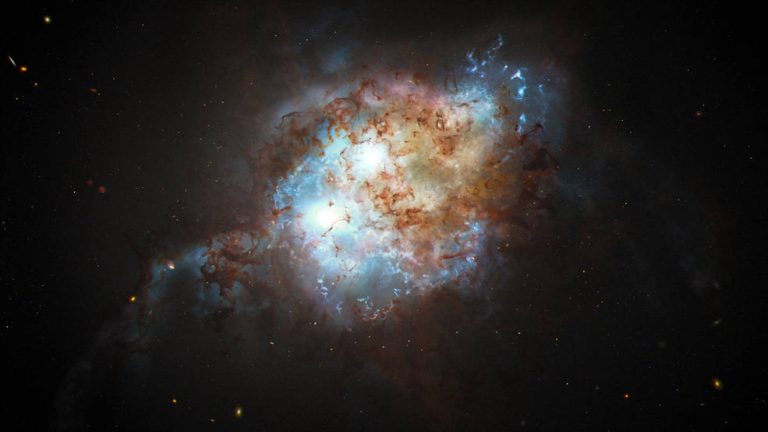
This artist’s concept shows the brilliant glare of two quasars residing in the cores of two galaxies that are in the chaotic process of merging. The gravitational tug-of-war between the two galaxies ignites a firestorm of star birth. Quasars are brilliant beacons of intense light from the centers of distant galaxies. They are powered by supermassive black holes voraciously feeding on infalling matter. This feeding frenzy unleashes a torrent of radiation that can outshine the collective light of billions of stars in the host galaxy. In a few tens of millions of years, the black holes and their galaxies will merge, and so will the quasar pair, forming an even more massive black hole. Credits: NASA, ESA, Joseph Olmsted (STScI)

The early universe was a rambunctious place where galaxies often bumped into each other and even merged together. Using NASA’s Hubble Space Telescope and other space and ground-based observatories, astronomers investigating these developments have made an unexpected and rare discovery: a pair of gravitationally bound quasars, both blazing away inside two merging galaxies. They existed when the universe was just 3 billion years old.

Quasars are bright objects powered by voracious, supermassive black holes blasting out ferocious fountains of energy as they engorge themselves on gas, dust, and anything else within their gravitational grasp.

“We don’t see a lot of double quasars at this early time in the universe. And that’s why this discovery is so exciting,” said graduate student Yu-Ching Chen of the University of Illinois at Urbana-Champaign, lead author of this study.

Finding close binary quasars is a relatively new area of research that has just developed in the past 10 to 15 years. Today’s powerful new observatories have allowed astronomers to identify instances where two quasars are active at the same time and are close enough that they will eventually merge.

There is increasing evidence that large galaxies are built up through mergers. Smaller systems come together to form bigger systems and ever larger structures. During that process there should be pairs of supermassive black holes formed within the merging galaxies. “Knowing about the progenitor population of black holes will eventually tell us about the emergence of supermassive black holes in the early universe, and how frequent those mergers could be,” said Chen.

“We’re starting to unveil this tip of the iceberg of the early binary quasar population,” said Xin Liu of the University of Illinois at Urbana-Champaign. “This is the uniqueness of this study. It is actually telling us that this population exists, and now we have a method to identify double quasars that are separated by less than the size of a single galaxy.”

This was a needle-in-haystack search that required the combined power of NASA’s Hubble Space Telescope and the W.M. Keck Observatories in Hawaii. Multi-wavelength observations from the International Gemini Observatory in Hawaii, NSF’s Karl G. Jansky Very Large Array in New Mexico, and NASA’s Chandra X-ray Observatory also contributed to understanding the dynamic duo. And, ESA (European Space Agency)’s Gaia space observatory helped identify this double quasar in the first place.

“Hubble’s sensitivity and resolution provided pictures that allow us to rule out other possibilities for what we are seeing,” said Chen. Hubble shows, unequivocally, that this is indeed a genuine pair of supermassive black holes, rather than two images of the same quasar created by a foreground gravitational lens. And, Hubble shows a tidal feature from the merging of two galaxies, where gravity distorts the shape of the galaxies forming two tails of stars.

However, Hubble’s sharp resolution alone isn’t good enough to go looking for these dual light beacons. The researchers enlisted Gaia, which launched in 2013, to pinpoint potential double-quasar candidates. Gaia measures the positions, distances, and motions of nearby celestial objects very precisely. But in a novel technique, it can be used to explore the distant universe. Gaia’s huge database can be used to search for quasars that mimic the apparent motion of nearby stars. The quasars appear as single objects in the Gaia data because they are so close together. However, Gaia can pick up a subtle, unexpected “jiggle” that mimics an apparent change in position of some of the quasars it observes.

In reality, the quasars aren’t moving through space in any measurable way. Instead, their jiggle could be evidence of random fluctuations of light as each member of the quasar pair varies in brightness on timescales of days to months, depending on their black hole’s feeding schedule. This alternating brightness between the quasar pair is similar to seeing a railroad crossing signal from a distance. As the lights on both sides of the stationary signal alternately flash, the sign gives the illusion of “jiggling.”

Another challenge is that because gravity warps space like a funhouse mirror, a foreground galaxy could split the image of a distant quasar into two, creating the illusion it was really a binary pair. The Keck telescope was used to make sure there’s no lensing galaxy in between us and the suspected double quasar.

Because Hubble peers into the distant past, this double quasar no longer exists. Over the intervening 10 billion years, their host galaxies have likely settled into a giant elliptical galaxy, like the ones seen in the local universe today. And, the quasars have merged to become a gargantuan, supermassive black hole at its center. The nearby giant elliptical galaxy, M87, has a monstrous black hole weighing 6.5 billion times the mass of our Sun. Perhaps this black hole was grown from one or more galaxy mergers over the past billions of years.

The upcoming NASA Nancy Grace Roman Space Telescope, having the same visual acuity as Hubble, is ideal for binary quasar hunting. Hubble has been used to painstakingly take data for individual targets. But Roman’s very wide-angle infrared view of the universe is 200 times larger than Hubble’s. “A lot of quasars out there could be binary systems. The Roman telescope can do huge improvements in this research area,” said Liu.

The results will be published in the April 5 journal Nature.

The Hubble Space Telescope is a project of international cooperation between NASA and ESA. NASA’s Goddard Space Flight Center in Greenbelt, Maryland, manages the telescope. The Space Telescope Science Institute (STScI) in Baltimore, Maryland, conducts Hubble and Webb science operations. STScI is operated for NASA by the Association of Universities for Research in Astronomy, in Washington, D.C.

By Keith Cowing
Source SpaceRef

SISTEM – The Inflatable Fuel Tank For Space

0
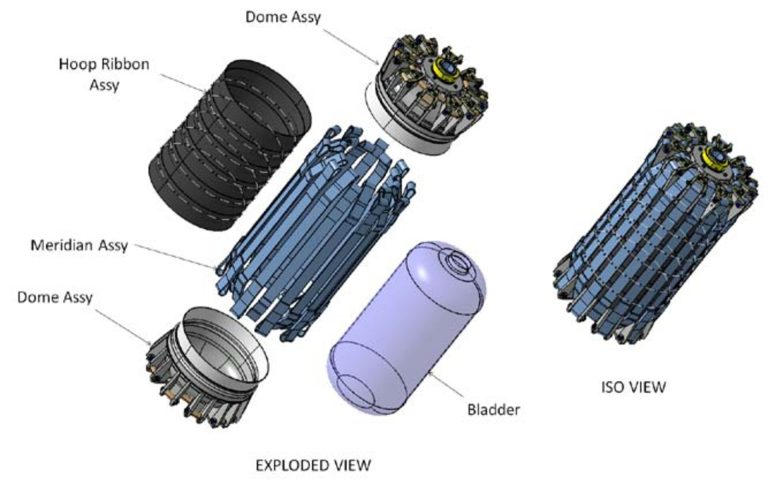
The SISTEM tank design uses a 13-liter cylindrical barrel with two elliptical domes on the top and bottom. The volume of the tank is increased by inflating the structure, thereby increasing its length. Several different functional layers are required to provide fluid containment, pressure containment and insulation for specific applications. Requirements were defined for both conventional fluids as well as cryogenic fluids. The prototype design focused on laboratory demonstration of the pressure storage with conventional fluids. — ESA

This inflatable fuel tank has been designed for future human landings on the Moon, where mass and volume will be in short supply. Intended to store cryogenic liquids or gases, these tanks could be delivered in compacted form then only inflated when needed – including through the processing of in-situ resources from the lunar surface.

Made of multiple Fluorinated Ethylene Propylene (FEP) monolith sheets, surrounded by high strength ribbons and bounded by two metallic domes, the 13 litre tank can be compacted by around 60%. It can subsequently be inflated to full size, sustaining a pressure of 60 bar, or 60 times normal sea level pressure.

This Small Inflatable Space Tank Engineering Model, SISTEM, project was supported through ESA’s Technology Demonstration Element for promising new space technologies, and led by Thales Alenia Space in Italy.

Detailed information

By Keith Cowing
Source SpaceRef

NASA Names Astronauts To Next Moon Mission, First Crew Under Artemis

0
The crew of NASA’s Artemis II mission (left to right): NASA astronauts Christina Hammock Koch, Reid Wiseman (seated), Victor Glover, and Canadian Space Agency astronaut Jeremy Hansen. Credits: NASA

NASA and the Canadian Space Agency (CSA) announced the four astronauts who will venture around the Moon on Artemis II, the first crewed mission on NASA’s path to establishing a long-term presence at the Moon for science and exploration through Artemis. The agencies revealed the crew members Monday during an event at Ellington Field near NASA’s Johnson Space Center in Houston.

“The Artemis II crew represents thousands of people working tirelessly to bring us to the stars. This is their crew, this is our crew, this is humanity’s crew,” said NASA Administrator Bill Nelson. “NASA astronauts Reid Wiseman, Victor Glover, and Christina Hammock Koch, and CSA astronaut Jeremy Hansen, each has their own story, but, together, they represent our creed: E pluribus unum – out of many, one. Together, we are ushering in a new era of exploration for a new generation of star sailors and dreamers – the Artemis Generation.” 

The crew assignments are as follows: Commander Reid WisemanPilot Victor GloverMission Specialist 1 Christina Hammock Koch, and Mission Specialist 2 Jeremy Hansen. They will work as a team to execute an ambitious set of demonstrations during the flight test.

The approximately 10-day Artemis II flight test will launch on the agency’s powerful Space Launch System rocket, prove the Orion spacecraft’s life-support systems, and validate the capabilities and techniques needed for humans to live and work in deep space.  

“We are going back to the Moon and Canada is at the center of this exciting journey,” said the Honorable François-Philippe Champagne, the minister responsible for the Canadian Space Agency. “Thanks to our longstanding collaboration with NASA, a Canadian astronaut will fly on this historic mission. On behalf of all Canadians, I want to congratulate Jeremy for being at the forefront of one of the most ambitious human endeavors ever undertaken. Canada’s participation in the Artemis program is not only a defining chapter of our history in space, but also a testament to the friendship and close partnership between our two nations.”  

The flight, set to build upon the successful uncrewed Artemis I mission completed in December, will set the stage for the first woman and first person of color on the Moon through the Artemis program, paving the way for future for long-term human exploration missions to the Moon, and eventually Mars. This is the agency’s Moon to Mars exploration approach.

“For the first time in more than 50 years, these individuals – the Artemis II crew – will be the first humans to fly to the vicinity of the Moon. Among the crew are the first woman, first person of color, and first Canadian on a lunar mission, and all four astronauts will represent the best of humanity as they explore for the benefit of all,” said Director Vanessa Wyche, NASA Johnson. “This mission paves the way for the expansion of human deep space exploration and presents new opportunities for scientific discoveries, commercial, industry and academic partnerships and the Artemis Generation.” 

Meet Artemis II Astronauts 

This will be Wiseman’s second trip into space, serving previously as a flight engineer aboard the International Station for Expedition 41 from May through November 2014. Wiseman has logged more than 165 days in space, including almost 13 hours as lead spacewalker during two trips outside the orbital complex. Prior to his assignment, Wiseman served as chief of the Astronaut Office from December 2020 until November 2022.

The mission will be Glover’s second spaceflight, serving previously as pilot on NASA’s SpaceX Crew-1, which landed May 2, 2021, after 168 days in space. As a flight engineer aboard the space station for Expedition 64, he contributed to scientific investigations, technology demonstrations, and participated in four spacewalks.

Koch also will be making her second flight into space on the Artemis II mission. She served as flight engineer aboard the space station for Expedition 59, 60, and 61. Koch set a record for the longest single spaceflight by a woman with a total of 328 days in space and participated in the first all-female spacewalks.

Representing Canada, Hansen is making his first flight to space. A colonel in the Canadian Armed Forces and former fighter pilot, Hansen holds a Bachelor of Science in space science from Royal Military College of Canada in Kingston, Ontario, and a Master of Science in physics from the same institution in 2000, with a research focus on Wide Field of View Satellite Tracking. He was one of two recruits selected by CSA in May 2009 through the third Canadian Astronaut Recruitment Campaign and has served as Capcom in NASA’s Mission Control Center at Johnson and, in 2017, became the first Canadian to be entrusted with leading a NASA astronaut class, leading the training of astronaut candidates from the United States and Canada.

“I could not be prouder that these brave four will kickstart our journeys to the Moon and beyond,” said Director of Flight Operations Norm Knight, NASA Johnson. “They represent exactly what an astronaut corps should be: a mix of highly capable and accomplished individuals with the skills and determination to take on any trial as a team. The Artemis II mission will be challenging, and we’ll test our limits as we prepare to put future astronauts on the Moon. With Reid, Victor, Christina, and Jeremy at the controls, I have no doubt we’re ready to face every challenge that comes our way.”

Through Artemis missions, NASA will use innovative technologies to explore more of the lunar surface than ever before. We will collaborate with commercial and international partners and establish the first long-term presence on the Moon. Then, we will use what we learn on and around the Moon to take the next giant leap: sending the first astronauts to Mars. 

For more information about the crew, visit:  https://www.nasa.gov/specials/artemis-ii

Lee este comunicado de prensa en español aquí.

-end-

Rachel Kraft
Headquarters, Washington
202-358-1100
[email protected] 

Dan Huot
Johnson Space Center, Houston
281-483-5111
[email protected] 

Last Updated: Apr 6, 2023

Editor: Claire O’Shea

Scientists Observe Flattest Explosion Ever Seen In Space

0
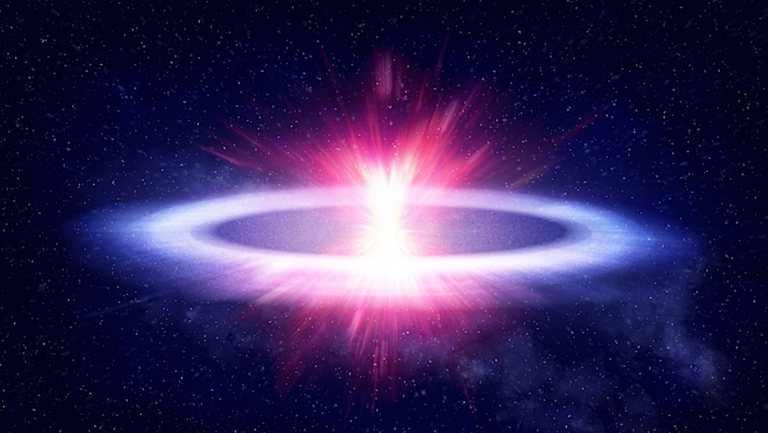
Slim Boom CREDIT Phil Drury, University of Sheffield. University of Sheffield

An explosion the size of our solar system has baffled scientists, as part of its shape – similar to that of an extremely flat disc – challenges everything we know about explosions in space.

The explosion observed was a bright Fast Blue Optical Transient (FBOT) – an extremely rare class of explosion which is much less common than other explosions, such as supernovas. The first bright FBOT was discovered in 2018 and given the nickname “the cow”.

Explosions of stars in the universe are almost always spherical in shape, as the stars themselves are spherical. However, this explosion, which occurred 180 million light years away, is the most aspherical ever seen in space, with a shape like a disc emerging a few days after it was discovered. This section of the explosion may have come from material shed by the star just before it exploded.

It’s still unclear how bright FBOT explosions occur, but it’s hoped that this observation, published in Monthly Notices of the Royal Astronomical Society, will bring us closer to understanding them.

Dr Justyn Maund, Lead Author of the study from the University of Sheffield’s Department of Physics and Astronomy, said: “Very little is known about FBOT explosions – they just don’t behave like exploding stars should, they are too bright and they evolve too quickly. Put simply, they are weird, and this new observation makes them even weirder.

“Hopefully this new finding will help us shed a bit more light on them – we never thought that explosions could be this aspherical. There are a few potential explanations for it: the stars involved may have created a disc just before they died or these could be failed supernovas, where the core of the star collapses to a blackhole or neutron star which then eats the rest of the star.

“What we now know for sure is that the levels of asymmetry recorded are a key part of understanding these mysterious explosions, and it challenges our preconceptions of how stars might explode in the Universe.”

Scientists made the discovery after spotting a flash of polarised light completely by chance. They were able to measure the polarisation of the blast – using the astronomical equivalent of polaroid sunglasses – with the Liverpool Telescope (owned by Liverpool John Moores University) located on La Palma.

By measuring the polarisation, it allowed them to measure the shape of the explosion, effectively seeing something the size of our Solar System but in a galaxy 180 million light years away. They were then able to use the data to reconstruct the 3D shape of the explosion, and were able to map the edges of the blast – allowing them to see just how flat it was.

The mirror of the Liverpool Telescope is only 2.0m in diameter, but by studying the polarisation the astronomers were able to reconstruct the shape of the explosion as if the telescope had a diameter of about 750km.

Researchers will now undertake a new survey with the international Vera Rubin Observatory in Chile, which is expected to help discover more FBOTs and further understand them.

A flash of polarized optical light points to an aspherical “cow”, Monthly Notices of the Royal Astronomical Society

By Keith Cowing
Source SpaceRef

Jeremy Hansen: First Canadian Astronaut To Fly To The Moon

0
Queen’s University

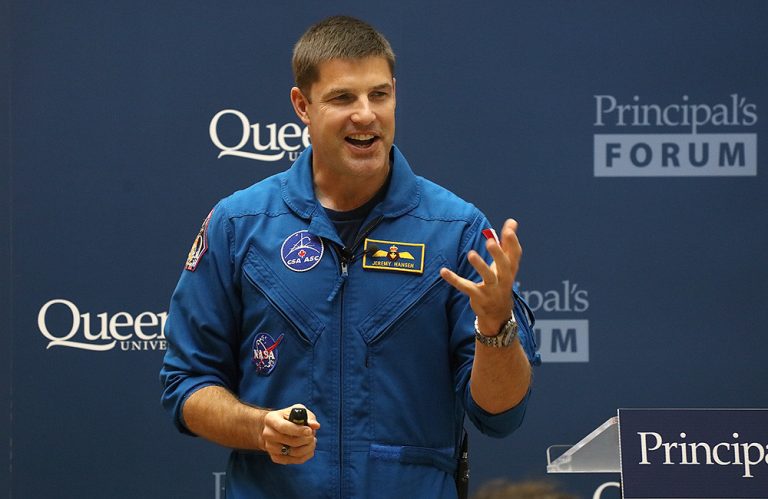
The Honourable François-Philippe Champagne, Minister responsible for the Canadian Space Agency (CSA), today announced that Jeremy Hansen will be the first CSA astronaut to fly around the Moon as part of NASA’s Artemis II mission. This historic crewed mission to the Moon will be the first since the end of the Apollo program 50 years ago.

Over the last four decades, Canada’s astronauts have earned a world-class reputation as modern-day explorers while being a source of inspiration to countless Canadians. Building on this legacy, Jeremy Hansen will be an important asset to the Artemis II crew thanks to his leadership, integrity and outstanding operational skills.

The launch of Artemis II, expected to take place next year, will make Canada the second country to ever send an astronaut around the Moon. Artemis II will pave the way for humanity’s sustainable presence on the lunar surface and inspire a new generation of Canadians to join the thrill and excitement of space exploration and discovery.

Quotes

“We are going back to the Moon, and Canada is at the centre of this exciting journey. Thanks to our reputation as a trusted partner and our longstanding collaboration with NASA, a Canadian astronaut will fly on this historic mission. On behalf of all Canadians, I want to congratulate Jeremy for being at the forefront of one of the most ambitious human endeavours ever undertaken. Canada’s participation in the Artemis program will spur the creation of thousands of highly skilled jobs, boost innovation and be a source of national pride for years to come.”

– The Honourable François-Philippe Champagne, Minister of Innovation, Science and Industry

“Being part of the Artemis II crew is both exciting and humbling. I’m excited to leverage my experience, training, and knowledge to take on this challenging mission on behalf of Canada. I’m humbled by the incredible contributions and hard work of so many Canadians that have made this opportunity a reality. I am proud and honoured to represent my country on this historic mission.”

– Jeremy Hansen, Canadian Space Agency astronaut

Quick facts

  • Since the early 1980s, Canada’s astronauts have advanced science and technology and inspired Canadians. Nine extraordinary CSA astronauts have flown to space 17 times.
  • On February 28, 2019, the Prime Minister announced historic investments in Canada’s space program and Canada’s commitment to lunar exploration.
  • Jeremy Hansen’s Artemis II flight is a direct result of Canada’s contribution of Canadarm3 to the Lunar Gateway. Through this contribution, Canada will also receive a range of opportunities for lunar science, technology demonstration and commercial activities, as well as another flight to the Lunar Gateway.
  • Budget 2023 confirmed funding of $1.43 billion to assist missions related to lunar exploration, including the development of a lunar utility vehicle.
  • Artemis II is the first crewed mission to the lunar vicinity since 1972. The approximately 10-day mission is designed to test the Orion spacecraft’s systems, adapted to meet the needs of a crew on board.

Associated links

Contacts

Canadian Space Agency
Media Relations Office
Telephone: 450-926-4370
Website: www.asc-csa.gc.ca
Email: [email protected]
Follow us on social media

Laurie Bouchard
Communications Director
Office of the Minister of Innovation, Science and Industry
[email protected]
343-574-8014

Media Relations
Innovation, Science and Economic Development Canada
[email protected]

Stay connected
Find more services and information at Canada.ca/ISED.

Follow Innovation, Science and Economic Development Canada on social media. Twitter: @ISED_CA, Facebook: Canadian Innovation, Instagram: @cdninnovation and LinkedIn