
Home Blog Page 75

Deep Ocean Currents Around Antarctica Are Headed For Collapse

0
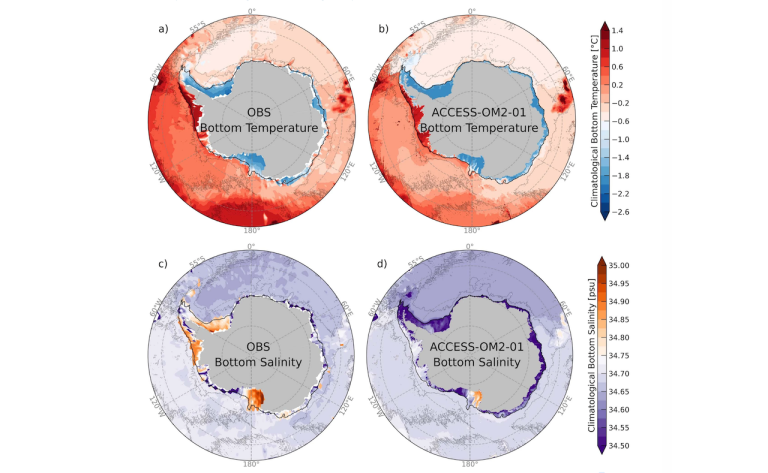
Bottom a) temperature (°C) and c) salinity (psu) from the observational climatological mean on the continental shelf over 1975–2012 based on ref. 72 and in the abyss over 1955–2017 based on the World Ocean Atlas 201873) and the equivalent b) temperature (°C) and d) salinity (psu) values in the ACCESS-OM2-01 control run after a 200 year spin-up. All temperatures and salinities shown correspond to the bottom-most value in both observations and the model. Grey contours represent the 4000 m isobath, and the black line denotes the 1000 m isobath around the Antarctic margin.– UNSW Sydney

The deep ocean circulation that forms around Antarctica could be headed for collapse, say scientists.

Such decline of this ocean circulation will stagnate the bottom of the oceans and generate further impacts affecting climate and marine ecosystems for centuries to come.

The results are detailed in a new study coordinated by Scientia Professor Matthew England, Deputy Director of the ARC Centre for Excellence in Antarctic Science (ACEAS) at UNSW Sydney. The work, published today in Nature, includes lead author Dr. Qian Li—formerly from UNSW and now at the Massachusetts Institute of Technology (MIT)—as well as co-authors from the Australian National University (ANU) and CSIRO.

Cold water that sinks near Antarctica drives the deepest flow of the overturning circulation—a network of currents that spans the world’s oceans. The overturning carries heat, carbon, oxygen and nutrients around the globe. This influences climate, sea level and the productivity of marine ecosystems.

“Our modelling shows that if global carbon emissions continue at the current rate, then the Antarctic overturning will slow by more than 40 per cent in the next 30 years – and on a trajectory that looks headed towards collapse,” says Prof England.

Modelling the deep ocean

About 250 trillion tonnes of cold, salty, oxygen-rich water sinks near Antarctica each year. This water then spreads northwards and carries oxygen into the deep Indian, Pacific and Atlantic Oceans.

“If the oceans had lungs, this would be one of them,” Prof England says.

The international team of scientists modelled the amount of Antarctic deep water produced under the IPCC ‘high emissions scenario’, until 2050.

The model captures detail of the ocean processes that previous models haven’t been able to, including how predictions for meltwater from ice might influence the circulation.

This deep ocean current has remained in a relatively stable state for thousands of years, but with increasing greenhouse gas emissions, Antarctic overturning is predicted to slow down significantly over the next few decades.

Impacts of reduced Antarctic overturning

With a collapse of this deep ocean current, the oceans below 4000 metres would stagnate.

“This would trap nutrients in the deep ocean, reducing the nutrients available to support marine life near the ocean surface,” says Prof England.

Co-author Dr Steve Rintoul of CSIRO and the Australian Antarctic Program Partnership says the model simulations show a slowing of the overturning, which then leads to rapid warming of the deep ocean.

“Direct measurements confirm that warming of the deep ocean is indeed already underway,” says Dr Rintoul.

The study found melting ice around Antarctica makes the nearby ocean waters less dense, which slows the Antarctic overturning circulation. The melt of the Antarctic and Greenland ice sheets is expected to continue to accelerate as the planet warms.

“Our study shows that the melting of the ice sheets has a dramatic impact on the overturning circulation that regulates Earth’s climate,” says Dr Adele Morrison, also from ACEAS and the ANU Research School of Earth Sciences.

“We are talking about the possible long-term extinction of an iconic water mass,” says Prof England.

“Such profound changes to the ocean’s overturning of heat, freshwater, oxygen, carbon and nutrients will have a significant adverse impact on the oceans for centuries to come.”

Abyssal ocean overturning slowdown and warming driven by Antarctic meltwater, Nature

By Keith Cowing
Source SpaceRef
A 1-In-10,000-Year Gamma-ray Burst Recently Hit Our Planet

0
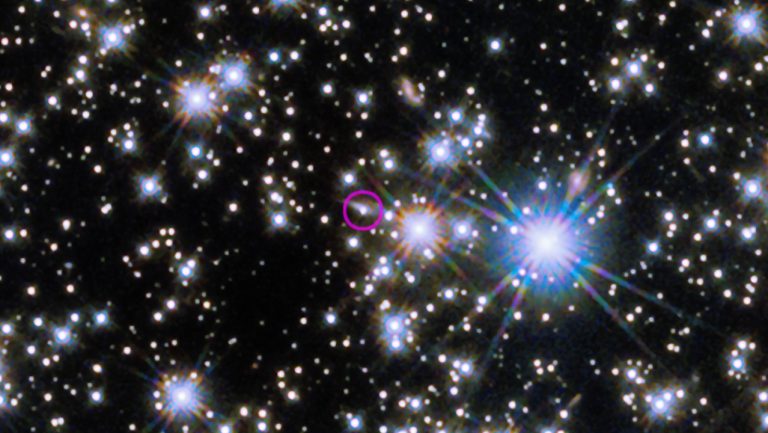
The Hubble Space Telescope’s Wide Field Camera 3 revealed the infrared afterglow (circled) of the BOAT GRB and its host galaxy, seen nearly edge-on as a sliver of light extending to the burst’s upper right. This composite incorporates images taken on Nov. 8 and Dec. 4, 2022, one and two months after the eruption. Given its brightness, the burst’s afterglow may remain detectable by telescopes for several years. The picture combines three near-infrared images taken each day at wavelengths from 1 to 1.5 microns. Credit: NASA, ESA, CSA, STScI, A. Levan (Radboud University); Image Processing: Gladys Kober

On Sunday, Oct. 9, 2022, a pulse of intense radiation swept through the solar system so exceptional that astronomers quickly dubbed it the BOAT – the brightest of all time.

The source was a gamma-ray burst (GRB), the most powerful class of explosions in the universe.

The burst triggered detectors on numerous spacecraft, and observatories around the globe followed up. After combing through all of this data, astronomers can now characterize just how bright it was and better understand its scientific impact.

“GRB 221009A was likely the brightest burst at X-ray and gamma-ray energies to occur since human civilization began,” said Eric Burns, an assistant professor of physics and astronomy at Louisiana State University in Baton Rouge. He led an analysis of some 7,000 GRBs – mostly detected by NASA’s Fermi Gamma-ray Space Telescope and the Russian Konus instrument on NASA’s Wind spacecraft – to establish how frequently events this bright may occur. Their answer: once in every 10,000 years.

Gamma-ray bursts are the most luminous explosions in the cosmos. Astronomers think most occur when the core of a massive star runs out of nuclear fuel, collapses under its own weight, and forms a black hole, as illustrated in this animation. The black hole then drives jets of particles that drill all the way through the collapsing star at nearly the speed of light. These jets pierce through the star, emitting X-rays and gamma rays (magenta) as they stream into space. They then plow into material surrounding the doomed star and produce a multiwavelength afterglow that gradually fades away. The closer to head-on we view one of these jets, the brighter it appears. Credit: NASA’s Goddard Space Flight Center

The burst was so bright it effectively blinded most gamma-ray instruments in space, which means they could not directly record the real intensity of the emission. U.S. scientists were able to reconstruct this information from the Fermi data. They then compared the results with those from the Russian team working on Konus data and Chinese teams analyzing observations from the GECAM-C detector on their SATech-01 satellite and instruments on their Insight-HXMT observatory. Together, they prove the burst was 70 times brighter than any yet seen.

Burns and other scientists presented new findings about the BOAT at the High Energy Astrophysics Division meeting of the American Astronomical Society in Waikoloa, Hawaii. Observations of the burst span the spectrum, from radio waves to gamma rays, and include data from many NASA and partner missions, including the NICER X-ray telescope on the International Space Station, NASA’s NuSTAR observatory, and even Voyager 1 in interstellar space. Papers describing the results presented appear in a focus issue of The Astrophysical Journal Letters.

This chart compares the BOAT’s prompt emission to that of five previous record-holding long gamma-ray bursts. The BOAT was so bright it effectively blinded most gamma-ray instruments in space, but U.S. scientists were able to reconstruct its true brightness from Fermi data. Credits: NASA’s Goddard Space Flight Center and Adam Goldstein (USRA)

The signal from GRB 221009A had been traveling for about 1.9 billion years before it reached Earth, making it among the closest-known “long” GRBs, whose initial, or prompt, emission lasts more than two seconds. Astronomers think these bursts represent the birth cries of black holes formed when the cores of massive stars collapse under their own weight. As it quickly ingests the surrounding matter, the black hole blasts out jets in opposite directions containing particles accelerated to near the speed of light. These jets pierce through the star, emitting X-rays and gamma rays as they stream into space.

With this type of GRB, astronomers expect to find a brightening supernova a few weeks later, but so far it has proven elusive. One reason is that the GRB appeared in a part of the sky that’s just a few degrees above the plane of our own galaxy, where thick dust clouds can greatly dim incoming light.

“We cannot say conclusively that there is a supernova, which is surprising given the burst’s brightness,” said Andrew Levan, a professor of astrophysics at Radboud University in Nijmegen, Netherlands. Since dust clouds become more transparent at infrared wavelengths, Levan led near- and mid-infrared observations using NASA’s James Webb Space Telescope – its first use for this kind of study – as well as the Hubble Space Telescope to spot the supernova. “If it’s there, it’s very faint. We plan to keep looking,” he added, “but it’s possible the entire star collapsed straight into the black hole instead of exploding.” Additional Webb and Hubble observations are planned over the next few months.

As the jets continue to expand into material surrounding the doomed star, they produce a multiwavelength afterglow that gradually fades away.

This illustration shows the ingredients of a long gamma-ray burst, the most common type. The core of a massive star (left) has collapsed, forming a black hole that sends a jet of particles moving through the collapsing star and out into space at nearly the speed of light. Radiation across the spectrum arises from hot ionized gas (plasma) in the vicinity of the newborn black hole, collisions among shells of fast-moving gas within the jet (internal shock waves), and from the leading edge of the jet as it sweeps up and interacts with its surroundings (external shock). Credit: NASA’s Goddard Space Flight Center

“Being so close and so bright, this burst offered us an unprecedented opportunity to gather observations of the afterglow across the electromagnetic spectrum and to test how well our models reflect what’s really happening in GRB jets,” said Kate Alexander, an assistant professor in the department of astronomy at the University of Arizona in Tucson. “Twenty-five years of afterglow models that have worked very well cannot completely explain this jet,” she said. “In particular, we found a new radio component we don’t fully understand. This may indicate additional structure within the jet or suggest the need to revise our models of how GRB jets interact with their surroundings.”

The jets themselves were not unusually powerful, but they were exceptionally narrow – much like the jet setting of a garden hose – and one was pointed directly at us, Alexander explained. The closer to head-on we view a jet, the brighter it appears. Although the afterglow was unexpectedly dim at radio energies, it’s likely that GRB 221009A will remain detectable for years, providing a novel opportunity to track the full life cycle of a powerful jet.

XMM-Newton images recorded 20 dust rings, 19 of which are shown here in arbitrary colors. This composite merges observations made two and five days after GRB 221009A erupted. Dark stripes indicate gaps between the detectors. A detailed analysis shows that the widest ring visible here, comparable to the apparent size of a full moon, came from dust clouds located about 1,300 light-years away. The innermost ring arose from dust at a distance of 61,000 light-years – on the other side of our galaxy. GRB221009A is only the seventh gamma-ray burst to display X-ray rings, and it triples the number previously seen around one. Credit: ESA/XMM-Newton/M. Rigoselli (INAF)

The burst also enabled astronomers to probe distant dust clouds in our own galaxy. As the prompt X-rays traveled toward us, some of them reflected off of dust layers, creating extended “light echoes” of the initial blast in the form of X-ray rings expanding from the burst’s location. The X-ray Telescope on NASA’s Neil Gehrels Swift Observatory discovered the presence of a series of echoes. Detailed follow-up by ESA’s (the European Space Agency’s) XMM-Newton telescope, together with Swift data, revealed these extraordinary rings were produced by 21 distinct dust clouds.

“How dust clouds scatter X-rays depends on their distances, the sizes of the dust grains, and the X-ray energies,” explained Sergio Campana, research director at Brera Observatory and the National Institute for Astrophysics in Merate, Italy. “We were able to use the rings to reconstruct part of the burst’s prompt X-ray emission and to determine where in our galaxy the dust clouds are located.”

GRB 221009A is only the seventh gamma-ray burst to display X-ray rings, and it triples the number previously seen around one. The echoes came from dust located between 700 and 61,000 light-years away. The most distant echoes – clear on the other side of our Milky Way galaxy – were also 4,600 light-years above the galaxy’s central plane, where the solar system resides.

Lastly, the burst offers an opportunity to explore a big cosmic question. “We think of black holes as all-consuming things, but do they also return power back to the universe?” asked Michela Negro, an astrophysicist at the University of Maryland, Baltimore County, and NASA’s Goddard Space Flight Center in Greenbelt.

Her team was able to probe the dust rings with NASA’s Imaging X-ray Polarimetry Explorer to glimpse how the prompt emission was organized, which can give insights into how the jets form. In addition, a small degree of polarization observed in the afterglow phase confirms that we viewed the jet almost directly head-on.

Together with similar measurements now being studied by a team using data from ESA’s INTEGRAL observatory, scientists say it may be possible to prove that the BOAT’s jets were powered by tapping into the energy of a magnetic field amplified by the black hole’s spin. Predictions based on such models have already successfully explained other aspects of this burst.

By Keith Cowing
Source SpaceRef
JWST Confirms Giant Planet Atmospheres Vary Widely

0
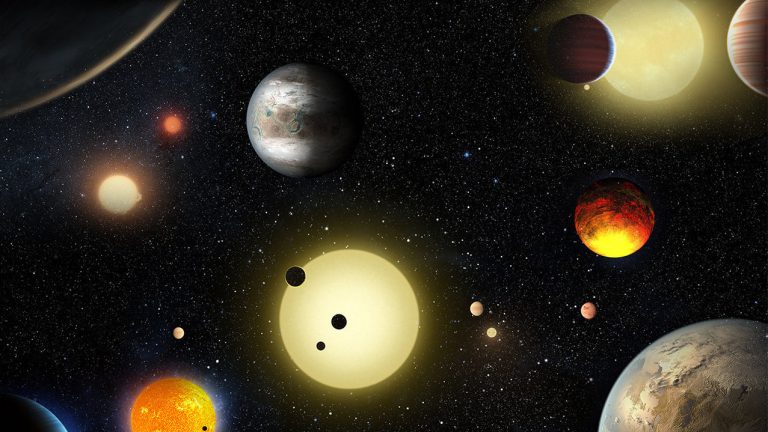
Exoplanets NASA/W. Stenzel

An international team of astronomers has found the atmospheric compositions of giant planets out in the galaxy do not fit our own solar system trend.

Using NASA’s James Webb Space Telescope (JWST), the researchers discovered that the atmosphere of exoplanet HD149026b, a ‘hot Jupiter’ orbiting a star comparable to our sun, is super-abundant in the heavier elements carbon and oxygen – far above what scientists would expect for a planet of its mass.

These findings, published in “High atmospheric metal enrichment for a Saturn-mass planet” in Nature on March 27, provide insight into planet formation.

“It appears that every giant planet is different, and we’re starting to see those differences thanks to JWST,” said Jonathan Lunine, professor in the physical sciences at Cornell University and co-author of the study.

The giant planets of our solar system exhibit a nearly perfect correlation between both overall composition and atmospheric composition and mass, said Jacob Bean, professor of astronomy and astrophysics at the University of Chicago and lead author of the paper. Extrasolar planets show a much greater diversity of overall compositions, but scientists didn’t know how varied their atmospheric compositions are, until this analysis of HD149026b – also known as Smertrios.

Smertrios is super-enriched compared to its mass, Lunine said: “It’s the mass of Saturn, but its atmosphere seems to have as much as 27 times the amount of heavy elements relative to its hydrogen and helium that we find in Saturn.”

This ratio, called metallicity – even though it includes many elements that are not metals – is useful for comparing a planet to its home star, or other planets in its system, Lunine said. Smertrios is the only planet known in this particular planetary system.

Another key measurement is the ratio of carbon to oxygen in a planet’s atmosphere, which reveals the “recipe” of original solids in a planetary system, Lunine said. For Smertrios, it’s about 0.84 – higher than in our solar system. In our sun, it’s a bit more than one carbon for every two oxygen atoms (0.55).

While an abundance of carbon might seem favorable for chances of life, a high carbon to oxygen ratio actually means less water on a planet or in a planetary system – a problem for life as we know it.

Smertrios is an interesting first case of atmospheric composition for this particular study, said Lunine, who has plans in place to observe five more giant exoplanets in the coming year using JWST. Many more observations are needed before astronomers can discover any patterns among giant planets or in systems with multiple giant planets or terrestrial planets to the compositional diversity astronomers are beginning to document.

“The origin of this diversity is a fundamental mystery in our understanding of planet formation,” Bean said. “Our hope is that further atmospheric observations of extrasolar planets with JWST will quantify this diversity better and yield constraints on more complex trends that might exist.”

The study was supported by NASA and the University of Chicago.

By Keith Cowing
Source SpaceRef
A New Water Reservoir On The Moon

0
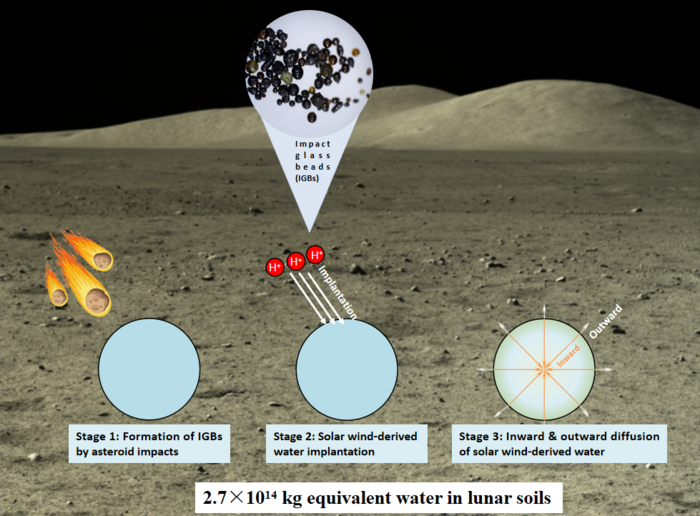
A schematic diagram of the lunar surface water cycle associated with impact glass beads CREDIT Prof. HU Sen’s group

Lunar surface water has attracted much attention due to its potential for in-situ resource utilization by future lunar exploration missions and other space missions

Now, a research group led by Prof. HU Sen from the Institute of Geology and Geophysics (IGG) of the Chinese Academy of Sciences (CAS) has found that impact glass beads in Chang’e-5 (CE5) lunar soils contain some water.

Detailed studies show that these glass beads are likely a new water reservoir on the Moon, recording the dynamic ingress and egress of solar wind-derived water and acting as a buffer for the lunar surface water cycle.

This work was published in Nature Geoscience on March 27.

Many lunar missions have confirmed the presence of structural water or water ice on the Moon. There is little doubt that most of the Moon’s surface harbors water, though the amount is much less than on Earth.

Surface water on the Moon displays diurnal cycles and loss to space, indicating that there should be a hydrated layer or reservoir at depth in lunar soils to sustain the retention, release, and replenishment of water on the surface of the Moon. However, previous studies of water inventory of fine mineral grains in lunar soils, impact-produced agglutinates, volcanic rocks, and pyroclastic glass beads have been unable to explain the retention, release, and replenishment of water on the surface of the Moon (i.e., the lunar surface water cycle). Therefore, there must be a yet-unidentified water reservoir in lunar soils that has the capacity to buffer the lunar surface water cycle.

Doctoral student HE Huicun, under the guidance of Prof. HU Sen, proposed that impact glass beads, a ubiquitous component in lunar soils with an amorphous nature, were a potential candidate for investigation of the unidentified hydrated layer or reservoir in lunar soils.

She systematically characterized the petrography, major element composition, water abundance, and hydrogen isotope composition of the impact glass beads returned by the CE5 mission, aiming to identify and characterize the missing water reservoir on the Moon’s surface.

The CE5 impact glass beads have homogeneous chemical compositions and smooth exposed surfaces. They are characterized by water abundance up to about 2,000 μg.g-1, with extreme deuterium-depleted characteristics. The negative correlation between water abundance and hydrogen isotope composition reflects the fact that water in the CE5 impact glass beads comes from solar winds.

The researchers also analyzed water abundance along six transects in five glass beads, which showed the hydration profiles of solar wind-derived water. Some glass beads were overlapped by a later degassing event. The impact glass beads acted as a sponge for buffering the lunar surface water cycle. The researchers estimate that the amount of water contributed by impact glass beads to lunar soils varies from 3.0 × 10¹¹ kg to 2.7 × 10¹⁴ kg.

“These findings indicate that the impact glasses on the surface of the Moon and other airless bodies in the solar system are capable of storing solar wind-derived water and releasing it into space,” said Prof HU.

The study was a collaboration with Nanjing University, The Open University, The Natural History Museum, The University of Manchester, and the University of Science and Technology of China.

A solar wind-derived water reservoir on the Moon hosted by impact glass beads, Nature (open access)

By Keith Cowing
Source SpaceRef

The Search For The Missing Gravitational Signal

0
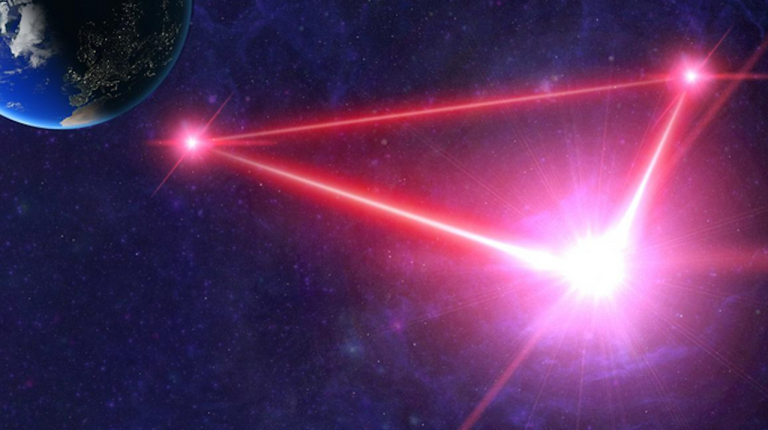
LISA – Laser Interferometer Space Antenna CREDIT Simon Barke – University of Florida

Every year, hundreds of thousands of pairs of black holes merge in a cosmic dance that emits gravitational waves in every direction.

Since 2015, the large ground-based LIGO, Virgo and KAGRA interferometers have made it possible to detect these signals, although only about a hundred such events, an infinitesimal fraction of the total, have been observed. Most of the waves remain ‘indistinguishable’, superimposed and added together, creating a flat, diffuse background signal that scientists call the ‘stochastic gravitational wave background’ (SGWB). New SISSA research, published in The Astrophysical Journal, proposes using a constellation of three or four space interferometers to map the flat and almost perfectly homogeneous background in a search for ripples. These small fluctuations, known to scientists as anisotropies, hold the information needed to understand the distribution of gravitational wave sources on the largest cosmological scale.

Researchers are convinced that next-generation detectors, such as the Einstein Telescope and the Laser Interferometer Space Antenna (LISA), will make direct measurement of the gravitational wave background possible in the foreseeable future. “Measuring these background fluctuations, known more correctly as anisotropies, will however continue to be extremely difficult, as identifying them requires a very high level of angular resolution not possessed by current and next generation survey instruments”, explains Giulia Capurri, a SISSA PhD student and first author of the study.

Capurri, supervised by Carlo Baccigalupi and Andrea Lapi, has suggested that this problem could be overcome by means of a ‘constellation’ of three or four space interferometers in solar orbit and covering a distance approximating that between Earth and the Sun. With increasing separation, interferometers achieve better angular resolution, improving their ability to distinguish sources of gravitational waves. “A constellation of space interferometers orbiting the Sun could enable us to see subtle fluctuations in the gravitational background signal, thus allowing us to extract valuable information about the distribution of black holes, neutron stars and all other sources of gravitational waves in the universe” states Capurri.

Following the success of the LISA project’s space mission test, there are currently two proposals for the creation of space-based interferometer constellations: one European – the Big Bang Observatory (BBO), and one Japanese – the Deci-hertz Interferometer Gravitational-wave Observatory (DECIGO). “This represents one of the earliest work to provide specific predictions of the size of the stochastic background of gravitational waves by a constellation of instruments orbiting the Sun. Together with further similar projects whose details will be published in due course, they will be crucial for developing an optimal design for future observational instruments that we hope will be built and commissioned in the coming decades” concludes Carlo Baccigalupi, professor of theoretical cosmology at SISSA.

In the era of multimessenger astronomy, which began with ground-based interferometers such as LIGO and Virgo, the gravitational-wave background could pave the way to a new understanding of the universe on the large scale, as has already happened with the cosmic microwave background.

Searching for Anisotropic Stochastic Gravitational-wave Backgrounds with Constellations of Space-based Interferometers, The Astrophysical Journal (open access)

By Keith Cowing
Source SpaceRef

N° 14–2023: Celebrate The Artemis I Mission With Shaun The Sheep

0

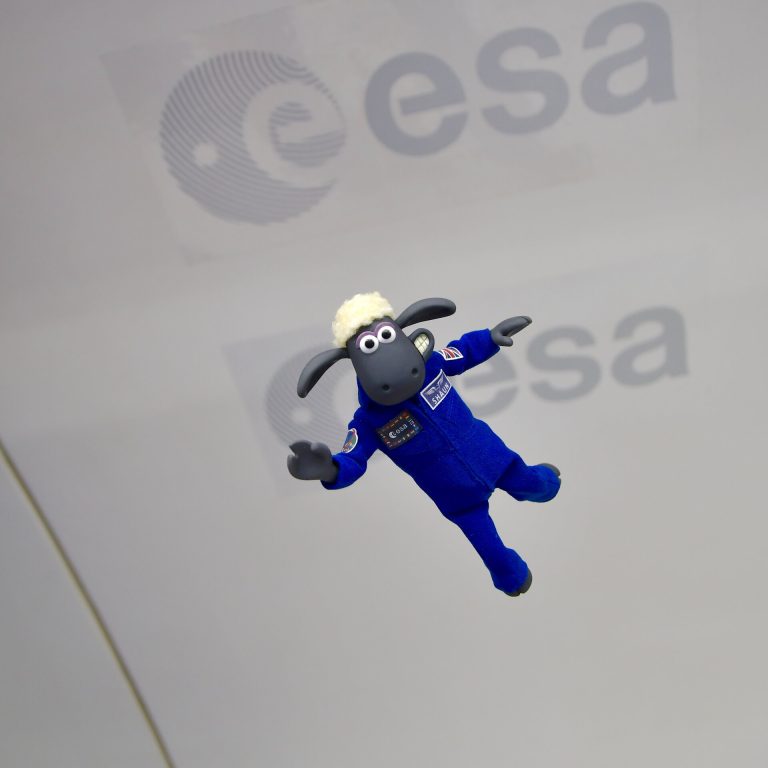
ESA and Aardman are celebrating the return of specially trained ESA astronaut, and first European to go around the Moon, Shaun the Sheep, as he arrives in Bristol, UK, following the Artemis I lunar mission.

Shaun represented ESA on the first flight of NASA’s Orion spacecraft to be powered by a European Service Module. The woolly astronaut splashed down safely in Orion’s crew capsule on 11 December 2022, after a 25-day mission to the Moon and back.

Artemis I was the first flight of the next generation of human spacecraft to return humankind to the Moon. Orion and its European Service Module were launched from the Kennedy Space Center in Florida, USA, on 16 November 2022. The spacecraft performed a flyby of the Moon, used lunar gravity and its main engine to gain speed and propel itself 70 000 km beyond the Moon, over 430 000 km from Earth– farther than any human, or sheep, has ever travelled.

Flying just 130 km from the Moon’s surface, the spacecraft returned to Earth for a safe splashdown with Shaun entering our atmosphere at a speed of 39 590 km/h, faster than a return from the International Space Station, and 24 times faster than a speeding bullet.

After a much-needed rest, Shaun has returned home to the Aardman studio in Bristol before continuing his astronaut duties on a post-flight tour. ESA’s Director of Human and Robotic Exploration, David Parker and ESA astronaut candidate Rosemary Coogan will formally congratulate Shaun before he visits space centres across Europe to continue learning about programmes ESA offers in space exploration.

ESA’s Director of Human and Robotic Exploration David Parker said, “It is always a special pleasure to greet European astronauts when they return from space, and today I am delighted to welcome Shaun the Sheep, alive and wool after a well-deserved rest on the farm.

“As the first sheep to fly to the Moon and back, he’s got a lot to teach us about the ambition, talent and diversity needed for Europe’s exploration of space. I am sure everyone will flock to meet him during his post-flight tour.”

Peter Lord, Co-founder and Creative Director at Aardman said, “I can hardly believe I’m writing this, but Shaun the Sheep has just returned from a trip around the Moon! Everyone at the Aardman studio is bursting with pride as we celebrate his historic journey from Mossy Bottom Farm to the vast emptiness of space. And we’re equally delighted and proud of our partnership with ESA, who trained him for the flight and made the whole adventure possible. No sheep has ever seen so much or travelled so far.”

This exceptional moment will also be marked with the unveiling of a new piece of Aardman history, as Shaun’s astronaut portrait and a commemorative plaque will be placed on permanent display at the Aardman studio. The same portrait photo is hanging proudly at the European Service Module control centre at ESA’s technical heart in the Netherlands.

The Artemis II mission is in preparation and the astronauts that will fly around the Moon in 2024 will be announced in April. The European Service Module for this second Artemis mission is almost complete and undergoing standard pre-launch tests at NASA’s operations and checkout building six kilometres from the Artemis launchpad.

About Aardman

Aardman, an employee-owned company, is based in Bristol (UK) and co-founded in 1976 by Peter Lord and David Sproxton, is an independent and multi-Academy Award® and BAFTA® award winning studio. It produces feature films, series, advertising, games and interactive entertainment – current animated productions include; 2021 holiday specials Robin Robin and Shaun the Sheep: The Flight Before Christmas, CGI series Lloyd of the Flies, a new stop motion series for pre-schoolers The Very Small Creatures, feature length sequel Chicken Run: Dawn of the Nugget and a brand new Wallace & Gromit film for 2024.

Its productions are global in appeal, novel, entertaining, brilliantly characterised and full of charm reflecting the unique talent, energy and personal commitment of the Aardman team. The studio’s work – which includes the creation of much-loved characters including Wallace & Gromit, Shaun the Sheep, Timmy Time and Morph – is often imitated, and yet the company continues to lead the field producing a rare brand of visually stunning content for cinema, broadcasters, digital platforms and live experiences around the world. Recent celebrated projects include the ‘visually astonishing’ (Guardian), BAFTA® nominated console game, 11-11: Memories Retold, the four-times Gold Cannes Lions-winning StorySign app, AR experience Wallace & Gromit: The Big Fix up – and innovative attractions for both the domestic and international market, including a 4D theatre attraction at Efteling in the Netherlands.

The studio runs the Aardman Academy which has a commitment to nurturing talent by delivering excellence in film and animation training and mentoring. The Aardman Academy offers a variety of courses from intensive one-day workshops teaching production skills and storyboarding, to comprehensive twelve-week courses for professionals in craft based subjects from model making to animation.

In November 2018 it became an Employee Owned Organisation, to ensure Aardman remains independent and to secure the creative legacy and culture of the company for many decades to come. www.aardman.com

About Shaun the Sheep

Shaun the Sheep, Aardman’s family favourite TV series, is recognised the world over for its slapstick humour, distinctive look and strong, quirky characters and enjoyed across multiple media platforms. First appearing in Nick Park’s 1995 Academy Award® winning Wallace & Gromit ‘A Close Shave’, Shaun then went on to star in his own series, created by Richard Starzak which launched on BBC One in 2007. Shaun the Sheep is currently broadcast in 170 territories around the world and is an internationally celebrated icon with over 5.6 million fans on Facebook. In 2015 the first Shaun the Sheep Movie with feature film partner Studiocanal was released around the world to critical acclaim and the first half hour TV special aired as part of many broadcaster’s festive season., The feature film sequel Shaun the Sheep Movie: Farmageddon was released in October 2019 and nominated for an Academy Award® and was closely followed by a sixth season of the series in 2020. A new festive special Shaun the Sheep: The Flight Before Christmas was released in December 2021.

About the European Space Agency

The European Space Agency (ESA) provides Europe’s gateway to space.

ESA is an intergovernmental organisation, created in 1975, with the mission to shape the development of Europe’s space capability and ensure that investment in space delivers benefits to the citizens of Europe and the world.

ESA has 22 Member States: Austria, Belgium, the Czech Republic, Denmark, Estonia, Finland, France, Germany, Greece, Hungary, Ireland, Italy, Luxembourg, the Netherlands, Norway, Poland, Portugal, Romania, Spain, Sweden, Switzerland and the United Kingdom. Slovenia, Slovakia, Latvia and Lithuania are Associate Members.

ESA has established formal cooperation with four Member States of the EU. Canada takes part in some ESA programmes under a Cooperation Agreement.

By coordinating the financial and intellectual resources of its members, ESA can undertake programmes and activities far beyond the scope of any single European country. It is working in particular with the EU on implementing the Galileo and Copernicus programmes as well as with Eumetsat for the development of meteorological missions.

Learn more at https://www.esa.int/

Hubble Finds Saturn’s Rings Heating Its Atmosphere

0

SUMMARY

A RAIN OF ICY PARTICLES IS AFFECTING THE GIANT PLANET’S WEATHER

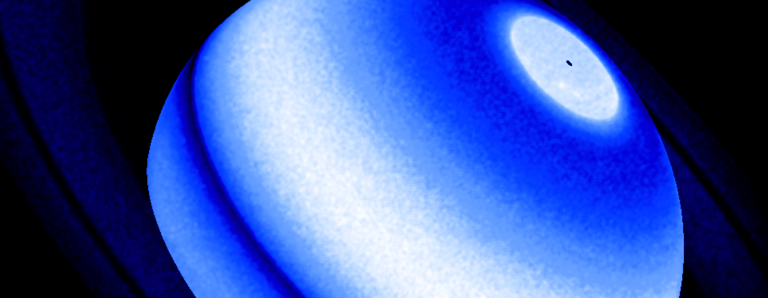
The planet Saturn is easily recognizable for its opulent ring system that can easily be seen through a small telescope. Astronomers have now found that the rings are not as placid as they look. The icy rings particles are raining down onto Saturn’s atmosphere. This is heating the upper atmosphere. It took a collection of 40 years’ worth of Saturn observations, gleaned from four NASA planetary missions to come to this conclusion. Hubble Space Telescope observations were used to tie together all the evidence, collected in ultraviolet light. These results may be applied to determine if similar ring systems encircle planets orbiting other stars. Their rings would be too far away to be seen, but ultraviolet light spectroscopy of the planets could yield clues.

FULL ARTICLE

The secret has been hiding in plain view for 40 years. But it took the insight of a veteran astronomer to pull it all together within a year, using observations of Saturn from NASA’s Hubble Space Telescope and retired Cassini probe, in addition to the Voyager 1 and 2 spacecraft and the retired International Ultraviolet Explorer mission.

The discovery: Saturn’s vast ring system is heating the giant planet’s upper atmosphere. The phenomenon has never before been seen in the solar system. It’s an unexpected interaction between Saturn and its rings that potentially could provide a tool for predicting if planets around other stars have glorious Saturn-like ring systems, too.

The telltale evidence is an excess of ultraviolet radiation, seen as a spectral line of hot hydrogen in Saturn’s atmosphere. The bump in radiation means that something is contaminating and heating the upper atmosphere from the outside.

The most feasible explanation is that icy ring particles raining down onto Saturn’s atmosphere cause this heating. This could be due to the impact of micrometeorites, solar wind particle bombardment, solar ultraviolet radiation, or electromagnetic forces picking up electrically charged dust. All this happens under the influence of Saturn’s gravitational field pulling particles into the planet. When NASA’s Cassini probe plunged into Saturn’s atmosphere at the end of its mission in 2017, it measured the atmospheric constituents and confirmed that many particles are falling in from the rings.

“Though the slow disintegration of the rings is well known, its influence on the atomic hydrogen of the planet is a surprise. From the Cassini probe, we already knew about the rings’ influence. However, we knew nothing about the atomic hydrogen content,” said Lotfi Ben-Jaffel of the Institute of Astrophysics in Paris and the Lunar & Planetary Laboratory, University of Arizona, author of a paper published on March 30 in the Planetary Science Journal.

“Everything is driven by ring particles cascading into the atmosphere at specific latitudes. They modify the upper atmosphere, changing the composition,” said Ben-Jaffel. “And then you also have collisional processes with atmospheric gasses that are probably heating the atmosphere at a specific altitude.”

Ben-Jaffel’s conclusion required pulling together archival ultraviolet-light (UV) observations from four space missions that studied Saturn. This includes observations from the two NASA Voyager probes that flew by Saturn in the 1980s and measured the UV excess. At the time, astronomers dismissed the measurements as noise in the detectors. The Cassini mission, which arrived at Saturn in 2004, also collected UV data on the atmosphere (over several years). Additional data came from Hubble and the International Ultraviolet Explorer, which launched in 1978, and was an international collaboration between NASA, ESA (European Space Agency), and the United Kingdom’s Science and Engineering Research Council.

But the lingering question was whether all the data could be illusory, or instead reflected a true phenomenon on Saturn.

The key to assembling the jigsaw puzzle came in Ben-Jaffel’s decision to use measurements from Hubble’s Space Telescope Imaging Spectrograph (STIS). Its precision observations of Saturn were used to calibrate the archival UV data from all four other space missions that have observed Saturn. He compared the STIS UV observations of Saturn to the distribution of light from multiple space missions and instruments.

“When everything was calibrated, we saw clearly that the spectra are consistent across all the missions. This was possible because we have the same reference point, from Hubble, on the rate of transfer of energy from the atmosphere as measured over decades,” Ben-Jaffel said. “It was really a surprise for me. I just plotted the different light distribution data together, and then I realized, wow— it’s the same.”

Four decades of UV data cover multiple solar cycles and help astronomers study the Sun’s seasonal effects on Saturn. By bringing all the diverse data together and calibrating it, Ben-Jaffel found that there is no difference to the level of UV radiation. “At any time, at any position on the planet, we can follow the UV level of radiation,” he said. This points to the steady “ice rain” from Saturn’s rings as the best explanation.

“We are just at the beginning of this ring characterization effect on the upper atmosphere of a planet. We eventually want to have a global approach that would yield a real signature about the atmospheres on distant worlds. One of the goals of this study is to see how we can apply it to planets orbiting other stars. Call it the search for ‘exo-rings.'”

The Hubble Space Telescope is a project of international cooperation between NASA and ESA. NASA’s Goddard Space Flight Center in Greenbelt, Maryland, manages the telescope. The Space Telescope Science Institute (STScI) in Baltimore conducts Hubble science operations. STScI is operated for NASA by the Association of Universities for Research in Astronomy, in Washington, D.C.

MEDIA CONTACT:

Ray Villard
Space Telescope Science Institute, Baltimore, Maryland

SCIENCE CONTACT:

Lotfi Ben-Jaffel
Institut d’Astrophysique de Paris, Paris, France
Lunar and Planetary Laboratory–University of Arizona, Tucson, Arizona

NASA Names Two Diversity Champions For Agency

0

Pictured left to right: NASA’s Stephen Shih and Elaine Ho.
Credits: NASA

NASA Administrator Bill Nelson announced Monday he is taking additional steps forward to advance diversity, equity, inclusion, and accessibility (DEIA) at the agency. Nelson named Steve Shih to serve in a new position as the agency’s first Diversity Ambassador and selected Elaine Ho as the next associate administrator for the Office of Diversity and Equal Opportunity at NASA Headquarters in Washington, effective immediately.

“Now, more than ever, NASA is leading all of humanity on an unprecedented journey of discovery, exploration and innovation,” Nelson said. “To be successful in our missions, diversity, equity, inclusion, and accessibility must continue to be at the forefront. Steve and Elaine’s leadership will help NASA continue to ensure our workforce reflects all of America and to inspire partners throughout our nation – for the benefit of all humanity.”

As diversity ambassador, Shih will further NASA’s DEIA initiatives by building key strategic alliances with external partners, enabling NASA to continue being a model agency and leader for DEIA. In this role, Shih will engage NASA’s partners – including across the government, private sector, academia, and non-governmental organizations – to learn and promote best practices for NASA to recruit, hire, engage, and retain the most talented individuals from all backgrounds and life experiences. With his experience leading the Office of Diversity and Equal Opportunity since 2017, Shih will build on his three decades of federal expertise and help NASA continue to enable everyone to contribute inclusively to NASA and to the United States.

As Shih transitions to the role of diversity ambassador, Ho will bring extensive DEIA expertise to the Office of Diversity and Equal Opportunity. She most recently has served as the deputy associate administrator for NASA’s Office of STEM Engagement, leading a wide-ranging portfolio of projects benefiting students, universities, and educational institutions across the country to inspire, engage, and educate the Artemis Generation.

Ho previously served as the chief diversity officer for the Department of Agriculture and Internal Revenue Service, as well as currently serving as a senior advisor for DEIA as a colonel in the Air Force Reserve. Ho also has held several leadership roles in the White House, including senior policy advisor for former First Lady Michelle Obama’s Let Girls Learn initiative, chief of staff of the United States Digital Service, and deputy chief of staff in the Office of Science and Technology Policy. She recently returned to NASA from the Office of the Vice President’s National Space Council, where she served as director of space STEM policy.

Learn more about NASA’s Office of Diversity and Equal Opportunity at:

https://www.nasa.gov/offices/odeo/home

-end-

Jackie McGuiness / Gerelle Dodson
Headquarters, Washington
202-358-1600
[email protected] / [email protected]

By: Roxana Bardan
Originally published at NASA

Crew-4’s Museum Field Trip

0

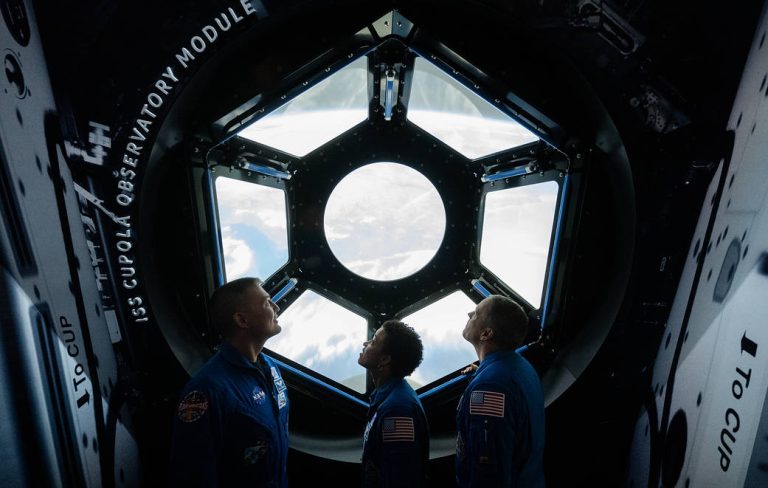
NASA astronauts Kjell Lindgren, left, Jessica Watkins, center, and Bob Hines, right, take in the view from the interactive recreation of the International Space Station’s cupola in the One World Connected gallery at the Smithsonian’s National Air and Space Museum on March 28, 2023. Lindgren, Watkins, and Hines spent 170 days in space as part of Expeditions 67 and 68 aboard the International Space Station; while aboard the orbital laboratory, they conducted maintenance on the space station as well as science experiments.

Image Credit: NASA/Joel Kowsky

By Monika Luabeya
Source NASA

Free Tickets To ‘Explore JPL’ Available Online Soon

0
Visitors are welcome to “Explore JPL” to learn more about space exploration, robotics, and technology being developed at NASA’s Jet Propulsion Laboratory. Tickets for the popular, free event become available on April 2 but go fast. Credit: NASA/JPL-Caltech

After a four-year hiatus, NASA’s Jet Propulsion Laboratory is welcoming back the public for a two-day event. A limited number of tickets will be available online April 2.

For decades, NASA’s Jet Propulsion Laboratory in Southern California has invited the public to its campus at the base of the San Gabriel Mountains to go “behind the scenes” and see the latest technologies and space missions studying Earth, our solar system, and beyond.

This year’s “Explore JPL” – the first since the COVID-19 pandemic began – will take place April 29 to 30, from 8:30 a.m. to 4 p.m. PDT. Tickets are free but very limited and go fast. They will be available online at explore.jpl.nasa.gov at 9 a.m. PDT Sunday, April 2. Be sure to refresh the page after 9 a.m. to check for availability.

Tickets will be distributed on a first-come, first-served basis, with a maximum of five tickets per requestor. Orders for more than five tickets may be subject to cancelation. Tickets will be provided for specific time slots and must be reserved for specific names. Attendees will not be admitted before the designated time printed on their ticket.

Visitors will have the opportunity to view, among other things, full-size models of Mars rovers and the Europa Clipper spacecraft being constructed in the Spacecraft Assembly Facility. Attendees can also see mission control and the machine shop, where precise parts are made for spacecraft, and the Microdevices Laboratory.

To attend, visitors must have their tickets in hand and anyone age 18 or over must show government-issued identification. Tickets are not transferable and cannot be sold. Children under age 2 do not require a ticket, but experiences at the event are not intended for very young guests.

Visitors may not bring these items to JPL: weapons or explosives of any kind, incendiary devices, glass containers, alcohol, cannabis or illegal drugs, pets (except certified service animals), banners or signs, flags, boom boxes, air horns, musical instruments, and professional camera equipment with detachable telephoto lenses. Use of laser pointers or whistles is not allowed. No bags, backpacks, or hard-sided coolers are permitted, either, except small purses and diaper bags. Drones are not allowed to fly over JPL under any circumstances. Skates, skateboards, scooters, Segways, and bicycles are not permitted inside the event, as the venues are crowded with pedestrians.

Vehicles entering JPL property are subject to inspection. Parking is free.

Caltech manages JPL for NASA. Follow @NASAJPL on FacebookTwitter, and Instagram, and join the conversation by using the hashtag #ExploreJPL.

For more information and a link to frequently asked questions, visit:

https://explore.jpl.nasa.gov/

For JPL’s virtual tour, visit:

https://www.jpl.nasa.gov/virtual-tour/