Today Venturi Astrolab, Inc. (Astrolab), announced it has reached an agreement with Space Exploration Technologies (SpaceX) for the company to transport Astrolab’s Flexible Logistics and Exploration (FLEX) rover on an upcoming mission to the Moon. SpaceX will use the Starship launch and landing system for this mission as soon as mid-2026.
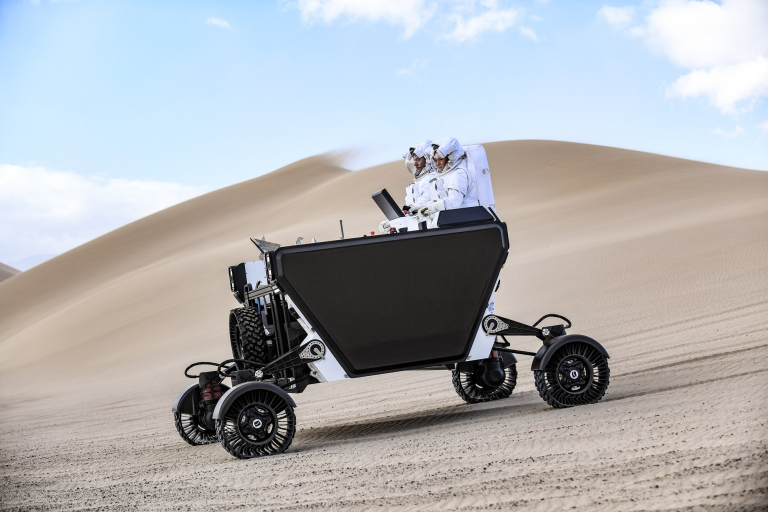
Upon completion of this mission, Astrolab’s FLEX will become the largest and most capable rover to ever travel to the Moon. With a maximum combined rover and cargo mass of more than two tons, the FLEX rover is nearly three times the mass of its largest predecessor. This increased capacity provides significantly more opportunities to conduct scientific experiments and commercial endeavors on the lunar surface. Astrolab has already signed several customer agreements to carry payloads on this mission. The company expects to release details of these agreements later this spring.
FLEX is more than a rover, it’s a logistics system for missions to the Moon and Mars
Historically, planetary rovers have been custom designed for each specific mission. These missions typically have occurred around once every ten years. But with the rapid increase in launch cadence along with the significant increases in payload capacity of launch vehicles, this bespoke approach to rover design is no longer practical or efficient.
That’s why Astrolab designed the FLEX rover to transport and deploy payloads in a modular system. Astrolab seeks to prove the benefits of having a highly capable and versatile rover to establish infrastructure, conduct high-priority science, and deploy technology demos and other specialized systems on the lunar surface. Astrolab plans for this rover to be the first in a fleet of FLEX rovers on the lunar surface that will accelerate the vision of creating a permanent human presence on the Moon, and eventually Mars.
“Our Astrolab team has created much more than a rover for use on the Moon or Mars,” said Jaret Matthews, Founder and CEO of Astrolab. “We’ve created a logistics system that can accommodate a wide variety of cargo. We expect that this approach will help establish a permanent lunar outpost on the Moon at a lower cost and in less time than previously envisioned. We are delighted that this contract with SpaceX will allow Astrolab to demonstrate the advantages of the FLEX rover and its modular payload system.”
“Starship is designed to transport large amounts of cargo, including rovers, to the Moon and Mars for research and exploration,” said Tom Ochinero, Senior Vice President, Commercial Business, SpaceX. “Developing sustainable outposts will require lunar logistics and transportation on the surface of the Moon, like what Astrolab offers. We look forward to working with the Astrolab team to deliver their FLEX Rover to the surface of the Moon.”
In addition to being able to operate FLEX on the lunar surface from Earth, Astrolab designed the vehicle to serve as an unpressurized rover for a crew of two astronauts on the lunar surface. This design is compatible with NASA’s requirements for its Lunar Terrain Vehicle (LTV), the rover which will be a standard component to the agency’s Artemis program long-term.
Testing is ongoing
FLEX is more than just a concept. Last year, the Astrolab team began testing a full-scale, fully-functional terrestrial prototype of the FLEX rover in the California desert. Tests included both crewed and telerobotic operations, deployment of a variety of large payloads, science operations with its robotic arm, and engineering testing of the rover’s mobility performance in challenging terrain. Testing has continued in lunar analog sites around California throughout 2022 and into this year.
To learn more about Astrolab, the FLEX rover, the details of our Mission 1, and how your cargo can accompany FLEX to the Moon in 2026 – please visit: astrolab.space.
About Astrolab
Venturi Astrolab, Inc. (Astrolab) is on a mission to move humanity forward to the next horizon by designing, building and operating a fleet of multi-purpose rovers for all planetary surface needs. Formed by a highly specialized team of NASA veterans, former SpaceXers and JPL engineers, Astrolab is laser-focused on providing adaptive mobility solutions essential for life beyond Earth. The team has industry leading experience in terrestrial and planetary robotics, electric vehicles, human spaceflight and more. Astrolab’s depth of experience and strategic partnerships with a wide array of world-class institutions, including electric vehicle pioneer Venturi Group, enables the delivery of Lunar and Mars mobility offerings at maximum reliability, flexibility and cost effectiveness. The company is headquartered in Hawthorne, California. For more information, visit astrolab.space or follow on Twitter, LinkedIn, YouTube and Instagram.
Contacts John Taylor for Astrolab [email protected] +1 (571) 437-4685
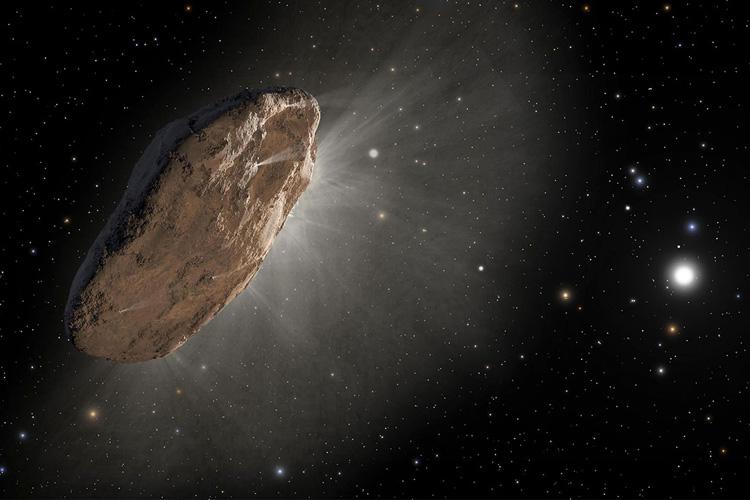
An artist’s depiction of the interstellar comet ‘Oumuamua, as it warmed up in its approach to the sun and outgassed hydrogen (white mist), which slightly altered its orbit. The comet, which is most likely pancake-shaped, is the first known object other than dust grains to visit our solar system from another star. (Image credit: NASA, ESA and Joseph Olmsted and Frank Summers of STScI)
In 2017, a mysterious comet dubbed ‘Oumuamua fired the imaginations of scientists and the public alike. It was the first known visitor from outside our solar system, it had no bright coma or dust tail, like most comets, and a peculiar shape — something between a cigar and a pancake — and its small size more befitted an asteroid than a comet.
But the fact that it was accelerating away from the sun in a way that astronomers could not explain perplexed scientists, leading some to suggest that it was an alien spaceship.
Now, a University of California, Berkeley, astrochemist and a Cornell University astronomer argue that the comet’s mysterious deviations from a hyperbolic path around the sun can be explained by a simple physical mechanism likely common among many icy comets: outgassing of hydrogen as the comet warmed up in the sunlight.
What made ‘Oumuamua different from every other well-studied comet in our solar system was its size: It was so small that its gravitational deflection around the sun was slightly altered by the tiny push created when hydrogen gas spurted out of the ice.
Most comets are essentially dirty snowballs that periodically approach the sun from the outer reaches of our solar system. When warmed by sunlight, a comet ejects water and other molecules, producing a bright halo or coma around it and often tails of gas and dust. The ejected gases act like the thrusters on a spacecraft to give the comet a tiny kick that alters its trajectory slightly from the elliptical orbits typical of other solar system objects, such as asteroids and planets.
When discovered, ‘Oumuamua had no coma or tail and was too small and too far from the sun to capture enough energy to eject much water, which led astronomers to speculate wildly about its composition and what was pushing it outward. Was it a hydrogen iceberg outgassing H2? A large, fluffy snowflake pushed by light pressure from the sun? A light sail created by an alien civilization? A spaceship under its own power?
Jennifer Bergner, a UC Berkeley assistant professor of chemistry who studies the chemical reactions that occur on icy rocks in the cold vacuum of space, thought there might be a simpler explanation. She broached the subject with a colleague, Darryl Seligman, now an National Science Foundation postdoctoral fellow at Cornell University, and they decided to work together to test it.
“A comet traveling through the interstellar medium basically is getting cooked by cosmic radiation, forming hydrogen as a result. Our thought was: If this was happening, could you actually trap it in the body, so that when it entered the solar system and it was warmed up, it would outgas that hydrogen?” Bergner said. “Could that quantitatively produce the force that you need to explain the non-gravitational acceleration?”
Surprisingly, she found that experimental research published in the 1970s, ’80s and ’90s demonstrated that when ice is hit by high-energy particles akin to cosmic rays, molecular hydrogen (H2) is abundantly produced and trapped within the ice. In fact, cosmic rays can penetrate tens of meters into ice, converting a quarter or more of the water to hydrogen gas.
“For a comet several kilometers across, the outgassing would be from a really thin shell relative to the bulk of the object, so both compositionally and in terms of any acceleration, you wouldn’t necessarily expect that to be a detectable effect,” she said. “But because ‘Oumuamua was so small, we think that it actually produced sufficient force to power this acceleration.”
The comet, which was slightly reddish, is thought to have been roughly 115 by 111 by 19 meters in size. While the relative dimensions were fairly certain, however, astronomers couldn’t be sure of the actual size because it was too small and distant for telescopes to resolve. The size had to be estimated from the comet’s brightness and how the brightness changed as the comet tumbled. To date, all the comets observed in our solar system — the short-period comets originating in the Kuiper belt and the long-period comets from the more distant Oort cloud — have ranged from around 1 kilometer to hundreds of kilometers across.
“What’s beautiful about Jenny’s idea is that it’s exactly what should happen to interstellar comets,” Seligman said. “We had all these stupid ideas, like hydrogen icebergs and other crazy things, and it’s just the most generic explanation.”
Bergner and Seligman will publish their conclusions this week in the journal Nature. Both were postdoctoral fellows at the University of Chicago when they began collaborating on the paper.
Messenger from afar
Comets are icy rocks left over from the formation of the solar system 4.5 billion years ago, so they can tell astronomers about the conditions that existed when our solar system formed. Interstellar comets can also give hints to the conditions around other stars surrounded by planet-forming disks.
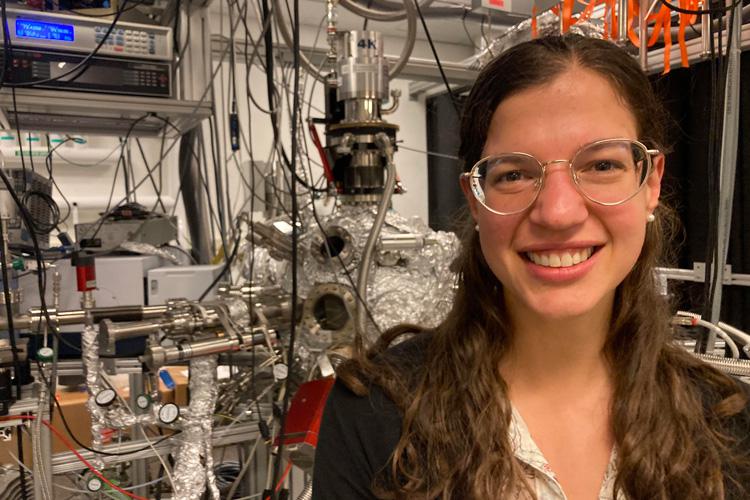
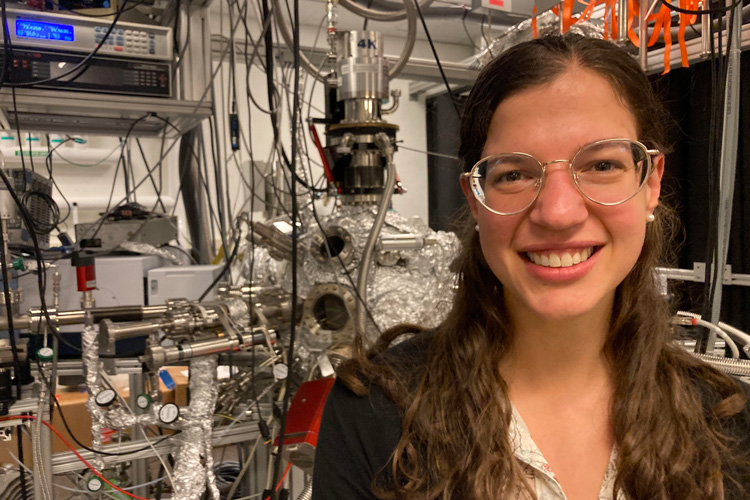
Jennifer Bergner in her Ph.D. lab at Harvard University. In the background is instrumentation for studying ice chemistry at the frigid temperatures characteristic of interstellar space. (Photo credit: Luke Kelley)
“Comets preserve a snapshot of what the solar system looked like when it was in the stage of evolution that protoplanetary disks are now,” Bergner said. “Studying them is a way to look back at what our solar system used to look like in the early formation stage.”
Faraway planetary systems also seem to have comets, and many are likely to be ejected because of gravitational interactions with other objects in the system, which astronomers know happened over the history of our solar system. Some of these rogue comets should occasionally enter our solar system, providing an opportunity to learn about planet formation in other systems.
“The comets and asteroids in the solar system have arguably taught us more about planet formation than what we’ve learned from the actual planets in the solar system,” Seligman said. “I think that the interstellar comets could arguably tell us more about extrasolar planets than the extrasolar planets we are trying to get measurements of today.”
In the past, astronomers published numerous papers about what we can learn from the failure to observe any interstellar comets in our solar system.
Then, ‘Oumuamua came along.
On Oct. 19, 2017, on the island of Maui, astronomers using the Pan-STARRS1 telescope, which is operated by the Institute for Astronomy at the University of Hawaii in Manoa, first noticed what they thought was either a comet or an asteroid. Once they realized that its tilted orbit and high speed — 87 kilometers per second — implied that it came from outside our solar system, they gave it the name 1I/‘Oumuamua (oh MOO-uh MOO-uh), which is Hawai’ian for “a messenger from afar arriving first.” It was the first interstellar object aside from dust grains ever seen in our solar system. A second, 2I/Borisov, was discovered in 2019, though it looked and behaved more like a typical comet.
As more and more telescopes focused on ‘Oumuamua, the astronomers were able to chart its orbit and determine that it had already looped around the sun and was headed out of the solar system.
Because ‘Oumuamua’s brightness changed periodically by a factor of 12 and varied asymmetrically, it was assumed to be highly elongated and tumbling end over end. Astronomers also noticed a slight acceleration away from the sun larger than seen for asteroids and more characteristic of comets. When comets approach the sun, the water and gases ejected from the surface create a glowing, gaseous coma and release dust in the process. Typically, dust left in the comet’s wake becomes visible as one tail, while vapor and dust pushed by light pressure from solar rays produces a second tail pointing away from the sun, plus a little inertial push outward. Other compounds, such as entrapped organic materials and carbon monoxide, also can be released.
Why was it accelerating?
But astronomers could detect no coma, outgassed molecules or dust around ‘Oumuamua. In addition, calculations showed that the solar energy hitting the comet would be insufficient to sublimate water or organic compounds from its surface to give it the observed non-gravitational kick. Only hypervolatile gases such as H2, N2 or carbon monoxide (CO) could provide enough acceleration to match observations, given the incoming solar energy.
“We had never seen a comet in the solar system that didn’t have a dust coma. So, the non-gravitational acceleration really was weird,” Seligman said.
This led to much speculation about what volatile molecules could be in the comet to cause the acceleration. Seligman himself published a paper arguing that if the comet was composed of solid hydrogen — a hydrogen iceberg — it would outgas enough hydrogen in the heat of the sun to explain the strange acceleration. Under the right conditions, a comet composed of solid nitrogen or solid carbon monoxide would also outgas with enough force to affect the comet’s orbit.
But astronomers had to stretch to explain what conditions could lead to the formation of solid bodies of hydrogen or nitrogen, which have never been observed before. And how could a solid H2 body survive for perhaps 100 million years in interstellar space?
Bergner thought that outgassing of hydrogen entrapped in ice might be sufficient to accelerate ‘Oumuamua. As both an experimentalist and a theoretician, she studies the interaction of very cold ice — chilled to 5 or 10 degrees Kelvin, the temperature of the interstellar medium (ISM) — with the kinds of energetic particles and radiation found in the ISM.
In searching through past publications, she found many experiments demonstrating that high-energy electrons, protons and heavier atoms could convert water ice into molecular hydrogen, and that the fluffy, snowball structure of a comet could entrap the gas in bubbles within the ice. Experiments showed that when warmed, as by the heat of the sun, the ice anneals — changes from an amorphous to a crystal structure — and forces the bubbles out, releasing the hydrogen gas. Ice at the surface of a comet, Bergner and Seligman calculated, could emit enough gas, either in a collimated beam or fan-shaped spray, to affect the orbit of a small comet like ‘Oumuamua.
“The main takeaway is that ‘Oumuamua is consistent with being a standard interstellar comet that just experienced heavy processing,” Bergner said. “The models we ran are consistent with what we see in the solar system from comets and asteroids. So, you could essentially start with something that looks like a comet and have this scenario work.”
The idea also explains the lack of a dust coma.
“Even if there was dust in the ice matrix, you’re not sublimating the ice, you’re just rearranging the ice and then letting H2 get released. So, the dust isn’t even going to come out,” Seligman said.
‘Dark’ comets
Seligman said that their conclusion about the source of ‘Oumuamua’s acceleration should close the book on the comet. Since 2017, he, Bergner and their colleagues have identified six other small comets with no observable coma, but with small non-gravitational accelerations, suggesting that such “dark” comets are common. While H2 is not likely responsible for the accelerations of dark comets, Bergner noted, together with ‘Oumuamua they reveal that there is much to be learned about the nature of small bodies in the solar system.
One of these dark comets, 1998 KY26, is the next target for Japan’s Hayabusa2 mission, which recently collected samples from the asteroid Ryugu. The 1998 KY26 was thought to be an asteroid until it was identified as a dark comet in December.
“Jenny’s definitely right about the entrapped hydrogen. Nobody had thought of that before,” he said. “Between discovering other dark comets in the solar system and Jenny’s awesome idea, I think it’s got to be correct. Water is the most abundant component of comets in the solar system and likely in extrasolar systems, as well. And if you put a water rich comet in the Oort cloud or eject it into the interstellar medium, you should get amorphous ice with pockets of H2.”
Because H2 should form in any ice-rich body exposed to energetic radiation, the researchers suspect that the same mechanism would be at work in sun-approaching comets from the Oort cloud at the outer reaches of the solar system, where comets are irradiated by cosmic rays, much like an interstellar comet would be. Future observations of hydrogen outgassing from long-period comets could be used to test the scenario of H2 formation and entrapment.
Many more interstellar and dark comets should be discovered by the Rubin Observatory Legacy Survey of Space and Time (LSST), allowing astronomers to determine if hydrogen outgassing is common in comets. Seligman has calculated that the survey, which will be conducted at the Vera C. Rubin Observatory in Chile and is set to become operational in early 2025, should detect between one and three interstellar comets like ‘Oumuamua every year, and likely many more that have a telltale coma, like Borisov.
Bergner was supported by a NASA Hubble Fellowship grant. Seligman was supported by the National Science Foundation (AST-17152) and NASA (80NSSC19K0444, NNX17AL71A).
NASA has awarded a contract to the University of Colorado Boulder, for the management and operations of the Snow and Ice Distributed Active Archive Center, part of NASA’s Earth Observing System Data and Information System.
The total potential value of this cost-no-fee completion contract is $68,179,012. The initial base period begins on Saturday, April 1, and runs through March 31, 2024. The contract includes up to four additional one-year options, which, if all exercised, would extend the period of performance through May 31, 2028.
The National Snow and Ice Data Center (NSIDC) is responsible for the continued operation of the archive center to perform user services; product generation; data and information management; archival and distribution; and related science support activities. The work will be performed primarily at NSIDC in Boulder, Colorado.
For information about NASA and agency programs, visit:
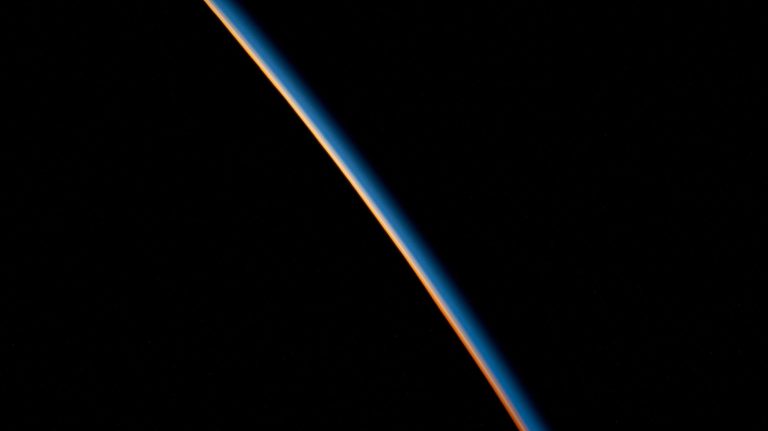
The last rays of an orbital sunset illuminate the Earth’s atmosphere in this Feb. 17, 2023, photograph from the International Space Station as it orbited 269 miles above the Atlantic Ocean off the coast of Argentina. Astronauts aboard the space station see 16 sunrises and sunsets per day.
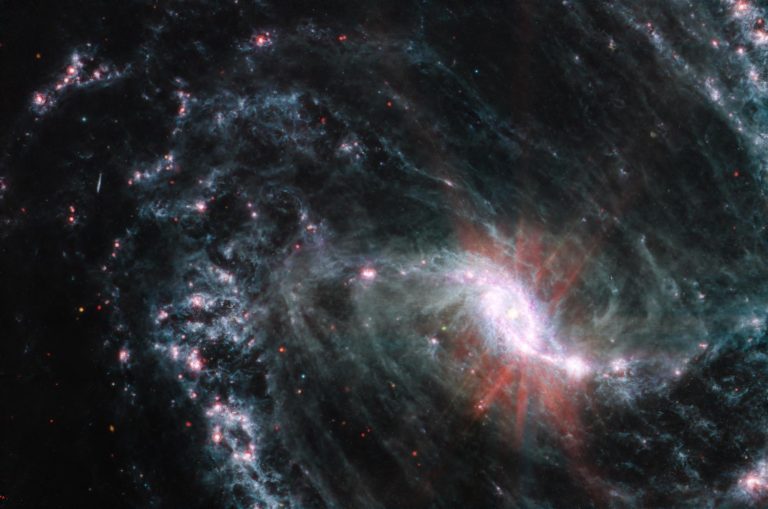
The Webb telescope’s images of NGC 1433, NGC 7496 & NGC 1365 reveal the galaxies’ networks of gas and dust in extraordinary detail. This data is part of an ongoing Webb survey of 19 spiral galaxies. Webb’s high-resolution infrared data fills in missing puzzle pieces, complementing the science from telescopes in other wavelengths. By aligning all of these data sets, the team will be able to accelerate new discoveries. Credits: NASA
NASA is taking home the honor of the Best Place to Work in the Federal Government among large agencies for 11 years in a row, as ranked by the Partnership for Public Service.
The rankings, announced Wednesday, reflect the agency’s dedication to pursue missions of discovery and exploration, including sending humans farther into space than ever before for the benefit of humanity.
“In 2022, NASA unfolded the universe with the James Webb Space Telescope, achieved a watershed moment for planetary protection with DART impact, and took a giant leap in our journey back to the Moon and onward to Mars with launch and recovery of the Artemis I flight test. These missions — and every NASA mission — are an achievement made possible by our unrivaled team,” said NASA Administrator Bill Nelson. “The passion and precision of our workforce makes NASA the best place to work in the federal government. Together, we are poised to accomplish more daring feats with new advancements, more scientific contributions on Earth and in the heavens, and more incredible technological breakthroughs that will help shape the 21st century.”
The Best Places to Work in the Federal Government rankings are based on responses to the Office of Personnel Management’s annual Federal Employee Viewpoint Survey from almost 557,778 federal workers and an additional 326,300 employees at 14 agencies that conducted separate surveys at the same time and had a response rate of more than 50%. The Partnership for Public Service began publishing the rankings in 2003.
This year, the Partnership for Public Service and Boston Consulting Group, in collaboration with The Washington Post, released an advanced look at a portion of the 2022 Best Places to Work in the Federal Government rankings and data. This special edition featured the rankings of the top 10 agencies in four categories — large, midsize, and small agencies as well their subcomponents.
The complete list of rankings for the Best Places to Work is available online.
For more information about NASA’s missions and activities, visit:
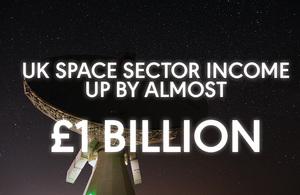
The amount the UK space sector brings to the economy has grown by £1 billion, helping launch new business and create jobs across the country, according to new figures.
New figures show UK space sector income grew by almost £1 billion into 2021
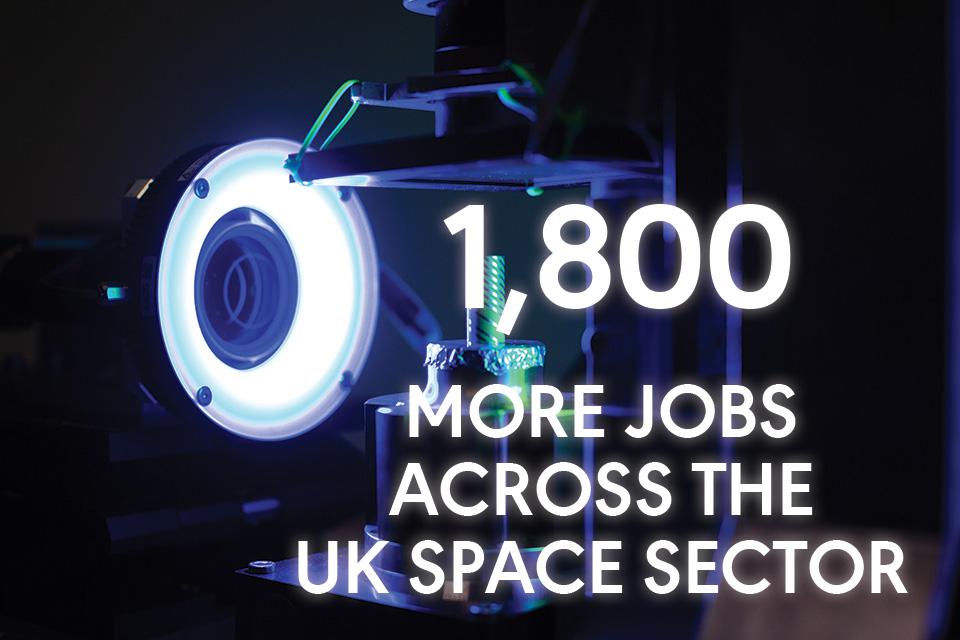
Employment up with almost 1,800 more jobs across the UK space sector
Number of space organisations up by almost 300
Regions such as West Midlands, North West, North East, and Yorkshire and the Humber, saw significant growth, as well as Northern Ireland and Wales
Despite the global disruption caused by the COVID-19 pandemic, space organisations presented a robust picture, generating £17.5 billion in 2021, compared to £16.5 billion the previous year.
Figures in the latest Size & Health of the UK Space Industry report show the number of space organisations identified across the UK rose from 1,293 to 1,590, creating 1,772 jobs. The sector now employs just under 48,800 people and supports an estimated 126,800 UK jobs across the wider supply chain.
Secretary of State for Science, Innovation and Technology, Michelle Donelan, said:
With the global space economy expanding rapidly, investing in UK our space capabilities can unlock new opportunities, bringing more jobs, skills and businesses to the UK.
The government is committed to supporting this high-growth sector, boosting the UK’s reputation as a growing space power, and inspiring the next generation of professionals.
The West Midlands, East of England and Wales saw the highest proportional growth in space sector income, while Northern Ireland, Yorkshire and the Humber and the North East of England experienced the biggest proportional increase in number of space organisations. Employment rose by the largest proportion in the North West and East of England.
Dr Paul Bate, Chief Executive at the UK Space Agency, said:
The £1 billion increase in sector income and £635 million investment generated by UK companies shows the confidence of investors and businesses in the UK space sector. The UK Space Agency will continue to catalyse investment to maintain this positive growth and bring further benefits across the UK economy, the science community and to the planet as a whole.
World-class satellite manufacturing, science and technology expertise have ensured the UK plays a key role in major international missions, and we are increasing our national capabilities in fast-growing areas.
We have seen a significant rise of space organisations in Northern Ireland and northern parts of England, of sector income in the East of England, West Midlands and Wales, and of employment in the North West. To ensure we continue this journey, it’s crucial that we nurture skills and expertise, both established and emerging, all over the UK.
Space applications generally, which incorporate services such as broadcasting and mobile satellite communications, space manufacturing, including satellites and scientific instruments for space missions, and space operations and ancillary services were the biggest growth drivers.
John Hanley, Chair of the UKspace trade body, said:
Further growth in the UK space sector, particularly during what was an incredibly challenging time for most UK industries, demonstrates the sector’s resilience and ingenuity. It is gratifying to see the sector growing in areas of the country that have previously been under represented – we look forward to supporting these new entrants to the space sector through our new cluster membership of UKspace.
These positive figures underline the opportunities that space offers to drive inspiration, aspiration and productive jobs across the UK. In order to capitalise on this, we must further strengthen our partnerships to maintain growth across the whole of the sector, allowing us to extend our reach and support the UK space industry in cementing its position as a leading player in the global space arena.
Confidence withstands more challenges
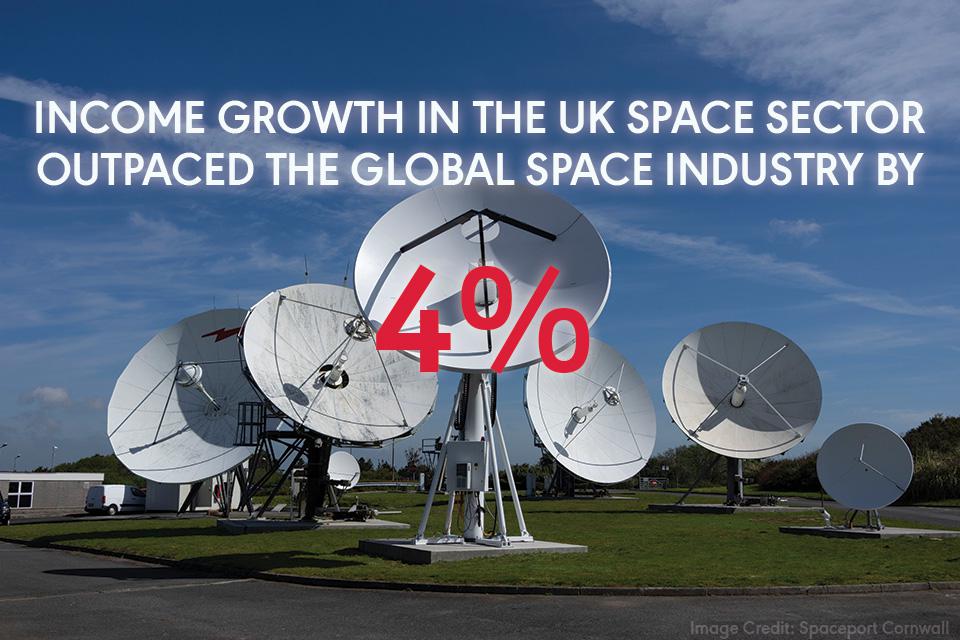
The 5.1% growth in income shows a higher growth rate than recent years and outpaced both the growth of the global space industry in the same period (1.6%) and the general UK economy, which contracted by 7.6%.
Despite the challenges of the cost of living, survey respondents were optimistic about the future, with 3 in 5 expecting to grow their income over the next few years, over half (58%) expecting to employ more staff, and half anticipating higher investments.
Nearly three quarters of survey respondents cited support from the UK Space Agency as a key enabler for commercial success.
Who is investing?
Space continues to attract a diverse range of investors, mostly (89%) from the private sector. Figures for 2022 (using Crunchbase) show that an estimated £635 million was invested in UK-headquartered space companies through 34 identified deals, with acquisitions accounting for three quarters of the total investment value. There has been a steady upward trend in both the number of investments (from one in 2012 to 34 last year) and population of investors (from one in 2012 to 66 last year).
Seraphim Space was the top investor in 2022, followed by Octopus Ventures. Par Equity, Innovate UK and Scottish Enterprise (including its Scottish Investment Bank activity) have also been particularly active over the last 10 years.
Case study: Goonhilly Earth Station
Goonhilly Earth Station in Cornwall is growing its deep space communications and last year supported NASA’s Artemis 1 lunar mission, providing telecommand for six of the cubesats on board.
As well as its ongoing work with the European Space Agency, Goonhilly has been supporting ispace HAKUTO-R mission – the first privately launched lunar lander – the Indian Space Agency’s Chandrayaan 3 and Aditya L1 missions, and it recently acquired COMSAT teleports in the US.
The team is also developing tracking antenna technology for space launches, which was successfully used for Virgin Orbit’s launch from Spaceport Cornwall in January, a giant super-cooled antenna to analyse space-based objects, and a range of simulator equipment.
Ian Jones, Chief Executive at Goonhilly Earth Station, said:
The space sector forms a vital part of modern infrastructure, which we take for granted without giving it a second thought. In a similar way that we expect clean water and electricity to be seamlessly delivered, data from satellites form a key element in enabling and monitoring complex services and systems. It provides scientific knowledge as well as helping us to communicate, navigate, travel, maintain security, monitor the weather and climate, and so much more.
However, none of the advantages enabled by satellites and spacecraft can be achieved without specialist ground communication services which monitor, command and interact with them. This is the role that Goonhilly provides.
Data source
The Size & Health of the UK Space Industry 2022 report by know.space measures figures for the 2020/21 financial year based on research of 1,590 UK-based organisations with space-related activities, including 303 survey responses.
Data have been compared between last year’s report and this publication. While efforts have been made to maintain the methodology to support comparability, there were some methodological improvements, which are detailed in this year’s report. As with any piece of research there are limitations and caveats to the data. These are clearly explained in this year’s report.
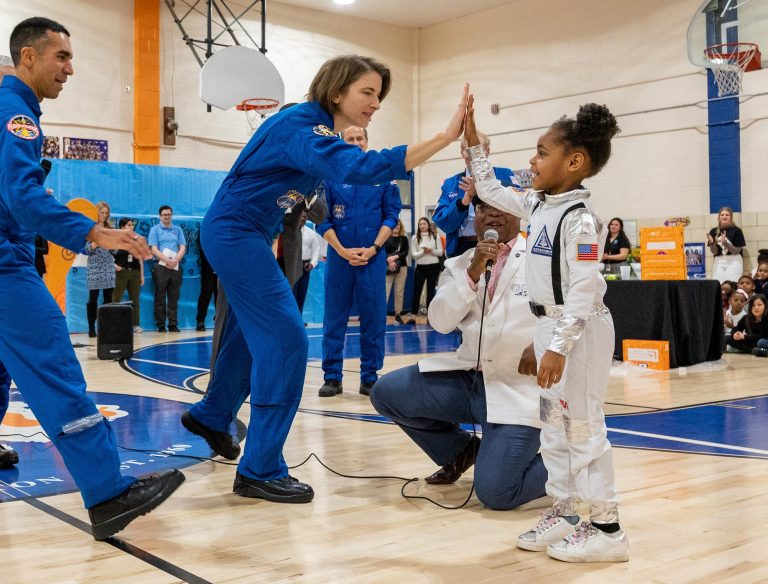
NASA’s SpaceX Crew-3 astronauts answer questions from students during their visit to Amidon-Bowen Elementary School, Thursday, Dec. 8, 2022, in Washington. Credits: NASA/Keegan Barber
Local students will have an opportunity to hear from NASA astronauts and learn more about Artemis lunar exploration, in an event hosted at 11 a.m. EDT Thursday, March 30, at the Martin Luther King Library in Washington.
The event will air live on NASA TV, the NASA app, and the agency’s website at:
During the event, NASA participants will help distribute approximately 200 kits filled with hands-on STEM activities to students. NASA’s Artemis Learning Lunchboxes aim to inspire and educate youth and families about the missions. The initiative is made possible through NASA’s Teams Engaging Affiliated Museums and Informal Institutions program.
Discussions with the students include the diversity of science, technology, engineering, and math efforts at NASA, as well as the agency’s upcoming Artemis missions. Through Artemis, NASA will land the first woman and first person of color on the Moon in preparation for future human exploration of Mars.
The agency’s SpaceX Crew-4 astronauts Jessica Watkins, Kjell Lindgren, and Bob Hines will meet third through fifth grade students from Thomson Elementary School. NASA officials, as well as a library official, will be available for interviews beginning at 12 p.m.
Members of the media interested in covering the event must RSVP no later than two hours before the start of the event to George Williams at: [email protected] or 202-727-1184 and Enrique Gutierrez at: [email protected] or 202-709-2608.
Learn more about how NASA’s Office of STEM Engagement is inspiring the next generation of explorers at:
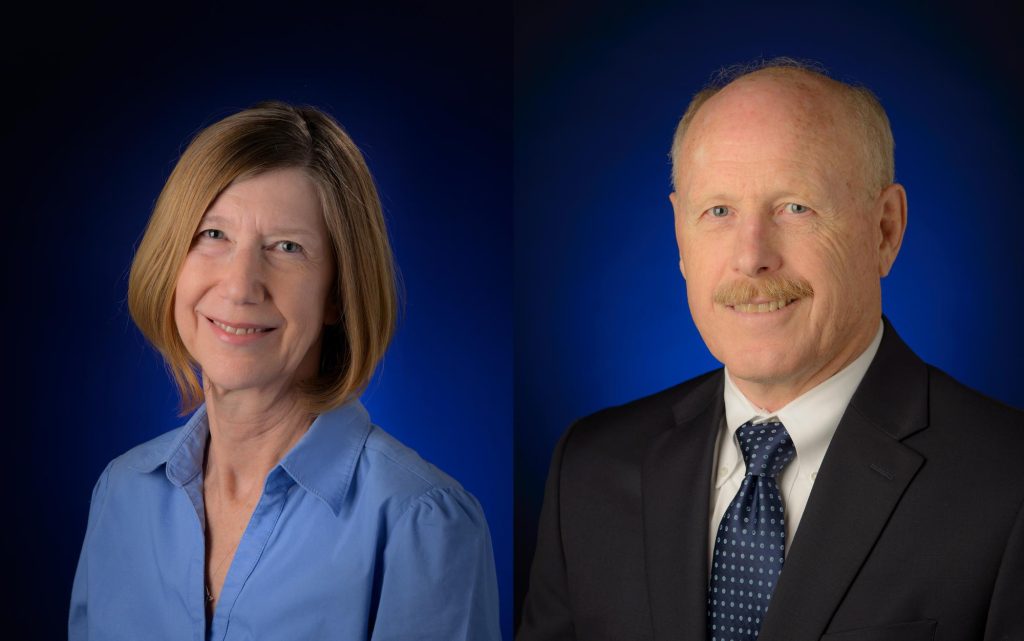
Pictured left to right; NASA’s Kathryn Lueders and Ken Bowersox. Credits: NASA
Kathryn Lueders, associate administrator of NASA’s Space Operations Mission Directorate, announced Monday she will retire from the agency at the end of April. Lueders’ current deputy and astronaut, Ken Bowersox, will become the new head of Space Operations, effective Monday, May 1.
“Kathy is a tremendous public servant and a trailblazer, not only serving as the first woman to head space operations for NASA and the first woman to manage our human spaceflight program, but also championing a new way of doing business in low Earth orbit. The public-private commercial model Kathy and her team helped pioneer will return humanity to the Moon and prepare us for our next giant leap: the first crewed missions to Mars,” said NASA Administrator Bill Nelson. “Ken has been instrumental to advancing NASA’s goals and missions in low-Earth orbit and beyond, and I know Space Operations will be in good hands under his leadership.”
During her 31 years with the agency, Lueders provided strategic guidance for NASA’s human exploration of space, as well as operations that allow the agency to launch science missions to learn about Earth and the universe. Her efforts have helped NASA foster significant change in how it partners with American industry to support and expand research aboard the International Space Station – with crewed and cargo transportation to and from the station.
Lueders started her NASA career at the White Sands Test Facility in Las Cruces, New Mexico, where she was the Shuttle Orbital Maneuvering System and Reaction Control Systems Depot manager. She quickly demonstrated her engineering expertise, leading her through positions in the International Space Station Program and eventually to serve as manager of the Commercial Crew Program at NASA’s Kennedy Space Center in Florida before joining NASA Headquarters in Washington.
Her many honors include several NASA achievement awards, the Distinguished Presidential Rank Award, and the Distinguished Service Medal. In addition, she is a 2022 National Academy of Engineering member, a 2020 SpaceNews Government Leader of the Year, an inductee to the 2021 Space and Satellite Hall of Fame, and recipient of the 2021 American Astronomical Society Spaceflight Achievement Award, 2020 Woman in Aerospace Leadership Award, 2022 Space Pioneer Award by the National Space Society, and IAASS’ 2019 Leonardo da Vinci Lifetime Achievement Award.
Upon Lueders’ retirement, Bowersox will take lead for the mission directorate. His operations experience includes being acting associate administrator of the former Human Exploration and Operations Mission Directorate, will allow NASA to build on its success in human space exploration.
As an astronaut, Bowersox flew five orbital missions for NASA, including two Hubble Space Telescope servicing missions. He served as commander of the sixth expedition at the space station. Following his station mission, Bowersox served as the director of flight operations at NASA’s Johnson Space Center in Houston. He also has experience from working with American industry and serving on the NASA Advisory Council as chair of the Human Exploration and Operations Committee.
“Kathy and Ken have both dedicated their life’s work to NASA and our nation. I wish Kathy well during her retirement. We know countless individuals at NASA – as well as members of the Artemis Generation – will be inspired by Kathy’s service and countless contributions,” Nelson said.
Learn more about Bowersox’s experience in his biography online:
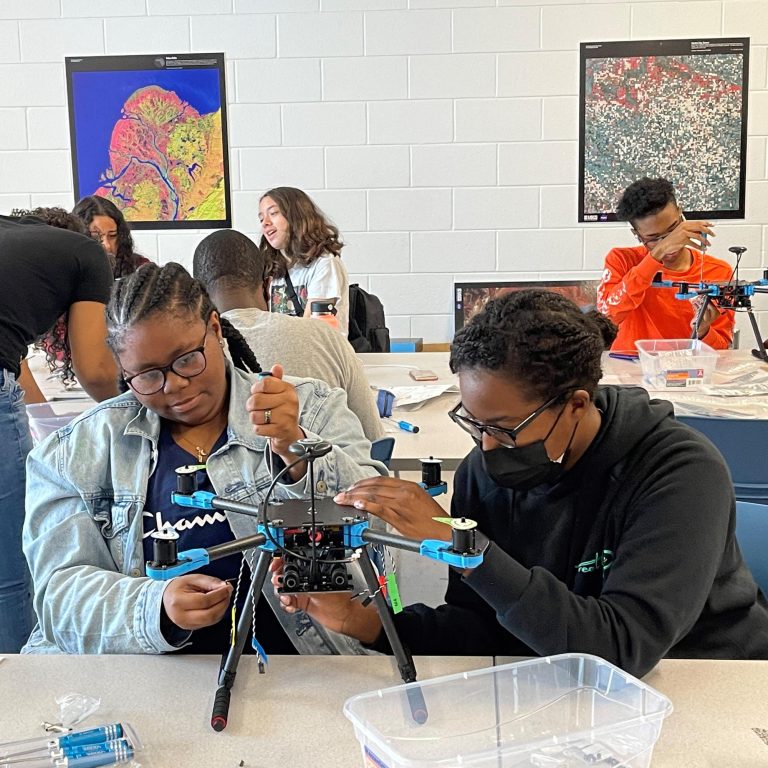
MUREP PSI students constructing a drone during Fayetteville State University’s 2022 summer residential experience. Credits: NASA
High school students from traditionally underrepresented and underserved communities will have a path to pursue careers in STEM with help from NASA. The agency announced Monday it has selected seven Historically Black Colleges and Universities (HBCUs) and one Predominantly Black Institution (PBI) to receive more than $3 million in funding to strengthen their support for students in those communities in precollege summer programs around the nation.
“As we explore the cosmos for the benefit of all humanity, NASA remains steady in its effort to lift as we soar. NASA is not only committed to inspiring the Artemis Generation – we’re working to make sure they have the tools they need to succeed,” said NASA’s Senior Advisor for Engagement and Equity Shahra Lambert. “This funding will help open doors of opportunity for high school students across the country to help prepare and empower them for the future.”
MUREP Precollege Summer Institute (PSIs) uses evidence-based strategies to enhance high school students’ precollege performance, prepare them for college entrance, and ultimately help them achieve success in their higher education pursuits and in science, technology, engineering, and math careers.
“This project gives students an opportunity to experience what it’s like to live on a college campus, attend classes, and build relationships with professors and like-minded peers,” said Torry Johnson, MUREP project manager. “What makes this program special is that it’s tied to NASA research. Students will be participating in engineering design challenges and research related to NASA missions with support from NASA subject matter experts.”
The selected institutions and their proposed projects under NASA’s MUREP (Minority University Research and Education Project) are:
Albany State University,Georgia
ASU Accelerated Research Training Experience and Mentorship in STEM (ARTEMIS) 2.0 PSI Scholars Program
Albany State University (ASU) propose a two-week residential camp for students interested in pursuing a STEM-based career. Using the theme “Mission to Mars,” students will participate in NASA activities related to power generation and transmission; remote and autonomous vehicles and rocket propulsion; the geology of Earth and other planets; and the biology and chemistry of space travel. Students will become immersed in the expectations of life as a STEM student at ASU, gain useful knowledge about the campus, and build support networks to help ensure success in their life and in academics. ASU was awarded $425,000 for its proposal.
Clayton State University, Morrow, Georgia
Artificial Intelligence Study in Earth Exploration Summer Academy
Clayton State University proposes to host a NASA-themed summer program for minority high school students. This program will provide eight-day summer residential STEM camp exposing participants to college life, NASA research, Earth data, and Artificial Intelligence (AI). Participants will gain an understanding of NASA’s missions and learn how to apply AI technology to solve real-world problems in Earth science. Clayton State University was awarded $425,000 for its proposal.
Fayetteville State University, North Carolina
Fayetteville State University’s NASA MUREP Precollege Summer Institute: Cutting-Edge Technologies for Examining Climate Change (FSU-CTECC)
Fayetteville State University (FSU) proposes two-week long residential summer STEM camps over the five-year period of the project. Each year, 20 high school students will be recruited from high schools in Cumberland County and its surrounding counties in North Carolina. Project partners include NASA’s Jet Propulsion Laboratory, NASA’s Goddard Space Flight Center, and multiple academic organizations and industries to provide STEM workshops for the students. FSU was awarded $423,487 for its proposal.
Lincoln University,Jefferson City, Missouri
Digital Agriculture, Data Science, and Robotics: Applied Research and Training for Enhancing Motivation in Science (DDR-ARTEMIS)
In collaboration with the University of Missouri, Lincoln University proposed two identical and intensive nine-day residential summer camps designed to offer keys for success for the participating students to advance their careers in STEM fields as undergraduate students and beyond. Each summer camp will accommodate 12 students for a total of 24 students each year. The educational program will provide hands-on experience for underrepresented minority students in digital agriculture, data science, and robotics to develop a broad understanding of STEM careers along with professional development activities and interaction with STEM professionals and entrepreneurs. Lincoln University was awarded $424,403 for its proposal.
Meharry Medical College, Nashville, Tennessee
Collaborative Interactive Data Science Academy
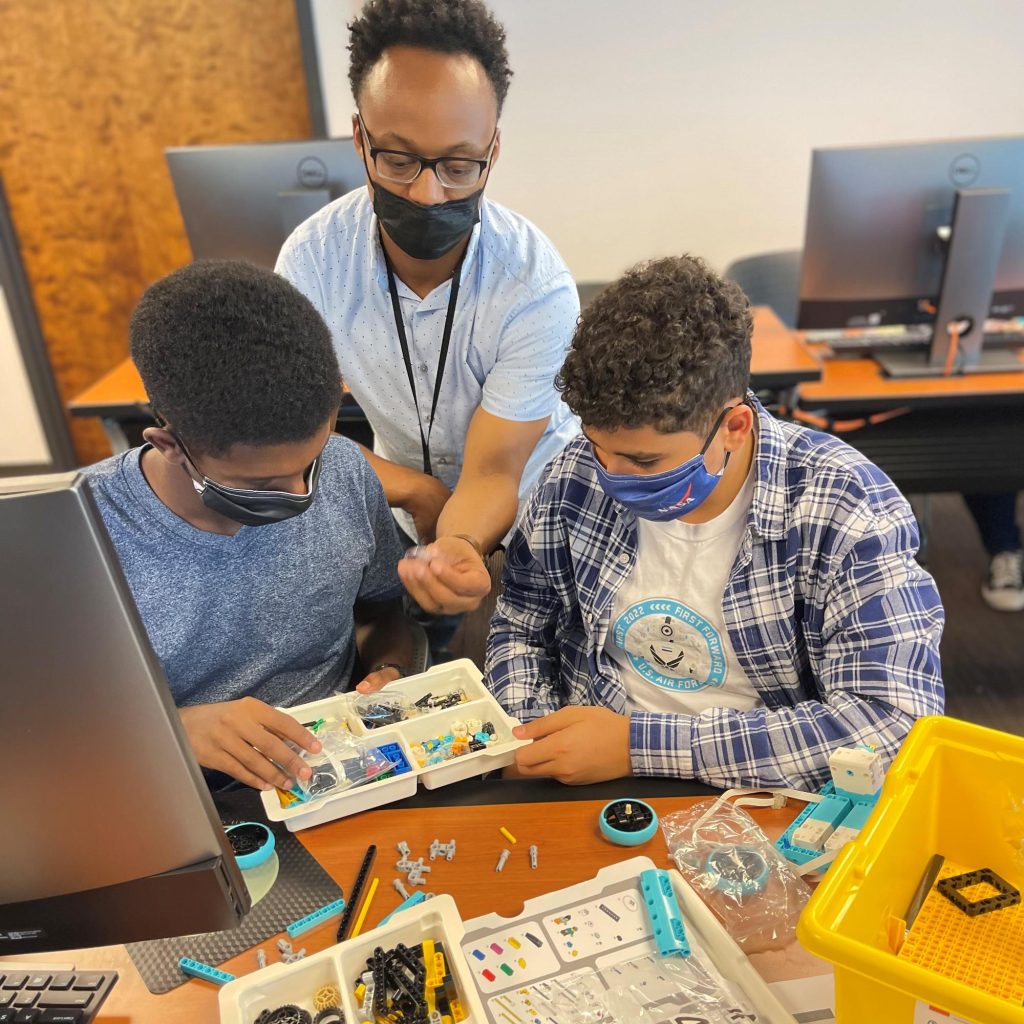
MUREP PSI students completing a robotics engineering design activity during Meharry Medical College’s 2022 summer residential experience. Credits: NASA
With the goal to stimulate curiosity in the cross-cutting field of data science and emerging technologies, Meharry Medical College proposed a discovery-based summer experience that implements virtual reality, augmented reality, and mixed reality control of robotic systems using NASA geospatial and extra-terrestrial big data. This summer program will expose high school students to NASA research and data science tools; build statistical and critical thinking skills; and inspire the next generation of explorers, researchers, and data scientists. Meharry Medical College was awarded $418,448 for its proposal.
Tuskegee University, Alabama
Tuskegee’s Summer Institute for Increasing Diversity Among Incoming STEM Undergraduates
The focus of Tuskegee’s Summer Institute is to prepare students for college and retain students in biology, chemistry, physics, and mathematics. The project will equip prospective college students with basic skills necessary for success in college and close the STEM education gap for students from underserved communities. Tuskegee was awarded $424,939 for its proposal.
University of Maryland Eastern Shore, Princess Anne
HAWKS MUREP Precollege Summer Institute (PSI)
The University of Maryland, Eastern Shore (UMES) proposes to establish a two-week residential program designed to increase the participation and retention of historically underserved and underrepresented high school students in STEM. Learning activities are aligned to NASA’s themes of space exploration, aeronautics, and Earth science. Students will have the opportunity to visit NASA’s Goddard Space Flight Center. UMES partnered with NASA’s Wallops Flight Facility for mentoring, job shadowing, and involvement in real-life STEM projects, research, and activities. UMES was awarded $425,000 for its proposal.
University of The Virgin Islands,Charlotte Amalie
The NASA-UVI Pre-College Engineering Summer Institute
The focus of this proposal is to enroll a minimum of 20 students from the public high schools on St. Thomas and St. Croix in a one-week summer residential experience on-campus at the University of the Virgin Islands (UVI). Students will be exposed to the fundamentals of scientific and engineering methods, engage in discussions about career paths, develop relationships with STEM professionals in the U.S. Virgin Islands and NASA, and engage in professional development activities designed to help them prepare for a successful transition to college. UVI was awarded $424,998 for its proposal.
Administered by NASA’s Office of STEM Engagement, MUREP supports and invests in the research, academic, and technology capabilities of minority-serving institutions. Learn more:
Today, Crescent Space Services LLC announced its entry into the lunar infrastructure sector. Crescent Space is a new commercial company launched by Lockheed Martin (NYSE: LMT) that provides infrastructure-as-a-service for lunar missions.
Why Invest in Lunar Infrastructure?
As humankind expands its presence beyond low-Earth orbit, one of the first key challenges is uninterrupted communications between Earth, the Moon, and the growing number of lunar missions. To do this seamlessly – especially on the far side of the Moon – customers need a network that helps them talk over vast distances, like what cell towers enable here on Earth.
With its agile, services-based business model, Crescent directly responds to this need, offering an initial service called Parsec®: a cislunar communications and navigation network. Parsec uses a constellation of small lunar satellites that will collectively work to provide continuous connection between Earth and the people and assets in lunar orbit, as well as on the surface of the Moon. In addition to communications, Parsec will also provide critical position, timing and navigation services for lunar missions.
Crescent will own and operate the Parsec network upon launch of its first nodes in 2025. Lockheed Martin will produce and deliver the Parsec spacecraft to Crescent, drawing upon its deep expertise developing exploration missions, communications satellites, software and GPS satellites.
A Team of Trailblazers
Crescent is led by CEO Joe Landon, who previously served as vice president of Advanced Programs Development for Lockheed Martin Space. In this role, Landon was responsible for Lockheed Martin’s space exploration strategy. As part of this, he led growth, strategy and research and development for the company’s Commercial Civil Space line of business. He was also instrumental in developing the concept for Crescent and launching the company. Before his time at Lockheed Martin, Landon was an early entrepreneur and investor in the commercial space sector.
For Crescent, Landon has brought together a world-class team whose previous expertise supporting civil, commercial and military space missions makes them a perfect fit to lead the charge in providing services for the lunar economy.
“Crescent is well positioned to serve the upcoming wave of lunar science and exploration missions, including NASA’s crewed Artemis moon landings,” said Landon. “With Lockheed Martin’s investment and access to its technical capabilities and deep space experience, Crescent is set up to ensure Parsec will be ready to provide reliable and affordable communications services for our customers.”
Looking Ahead to the Future
As a subsidiary of Lockheed Martin, Crescent aims to leverage reliable technical heritage from the company and combine that with the speed and agility of a commercial services platform to deliver an array of essential services for lunar operations.
With momentum gaining around humanity’s return to the Moon, this is an immediate area of opportunity for Crescent. In the future, Crescent plans to offer additional services to further enable science, exploration and commerce at the Moon and in deep space.
About Crescent
Crescent is a commercial services company created by Lockheed Martin that provides infrastructure-as-a-service for lunar missions operated by both commercial and government customers. The company leverages Lockheed Martin’s deep technical heritage and reliability in space with the speed and agility of a commercial services platform to deliver critical services needed to operate on and around the moon. Visit www.crescentspace.com to learn more.